
AI dropshipping is changing how ecommerce sellers research products, build stores, create advertisements, manage orders, and support customers. Tasks that once took several hours can now be completed much faster with the right tools and workflow.
However, artificial intelligence does not guarantee that a dropshipping store will succeed.
AI cannot turn a poor product into a profitable one. It cannot fix unreliable suppliers, slow delivery, high advertising costs, or weak customer service. Its main value is helping sellers research faster, reduce repetitive work, and make better decisions with available data.
AI adoption is already becoming normal across many industries. Stanford’s 2026 AI Index reports that 88% of surveyed organizations used AI in at least one business function in 2025. Generative AI was used in at least one business function by 70% of organizations, although the use of AI agents remained relatively early.
This guide explains how to start an AI dropshipping business in 2026. It covers product research, demand validation, supplier selection, content creation, marketing, order automation, and customer support. It also includes tools, prompts, examples, and a practical launch plan.
What Is AI Dropshipping?
AI dropshipping is a method of running a dropshipping business with the help of artificial intelligence and automation.
The basic business model remains the same.
A seller creates an online store and promotes products. When a customer places an order, the order is sent to a supplier or fulfillment partner. That partner prepares and ships the product directly to the customer.
The seller is responsible for:
- Choosing products
- Setting prices
- Building the store
- Marketing the products
- Managing suppliers
- Communicating with customers
- Handling refunds and disputes
AI can support many of these tasks.
For example, an AI-assisted workflow may help you:
- Generate product ideas
- Study customer problems
- Compare market opportunities
- Summarize customer reviews
- Write product descriptions
- Create advertising hooks
- Draft video scripts
- Translate store content
- Analyze campaign results
- Prepare customer service replies
AI should support your decisions. It should not make every important decision for you.
How Does AI Dropshipping Work?
A practical AI dropshipping system can be divided into seven stages:
Discover → Validate → Source → Build → Market → Fulfill → Improve
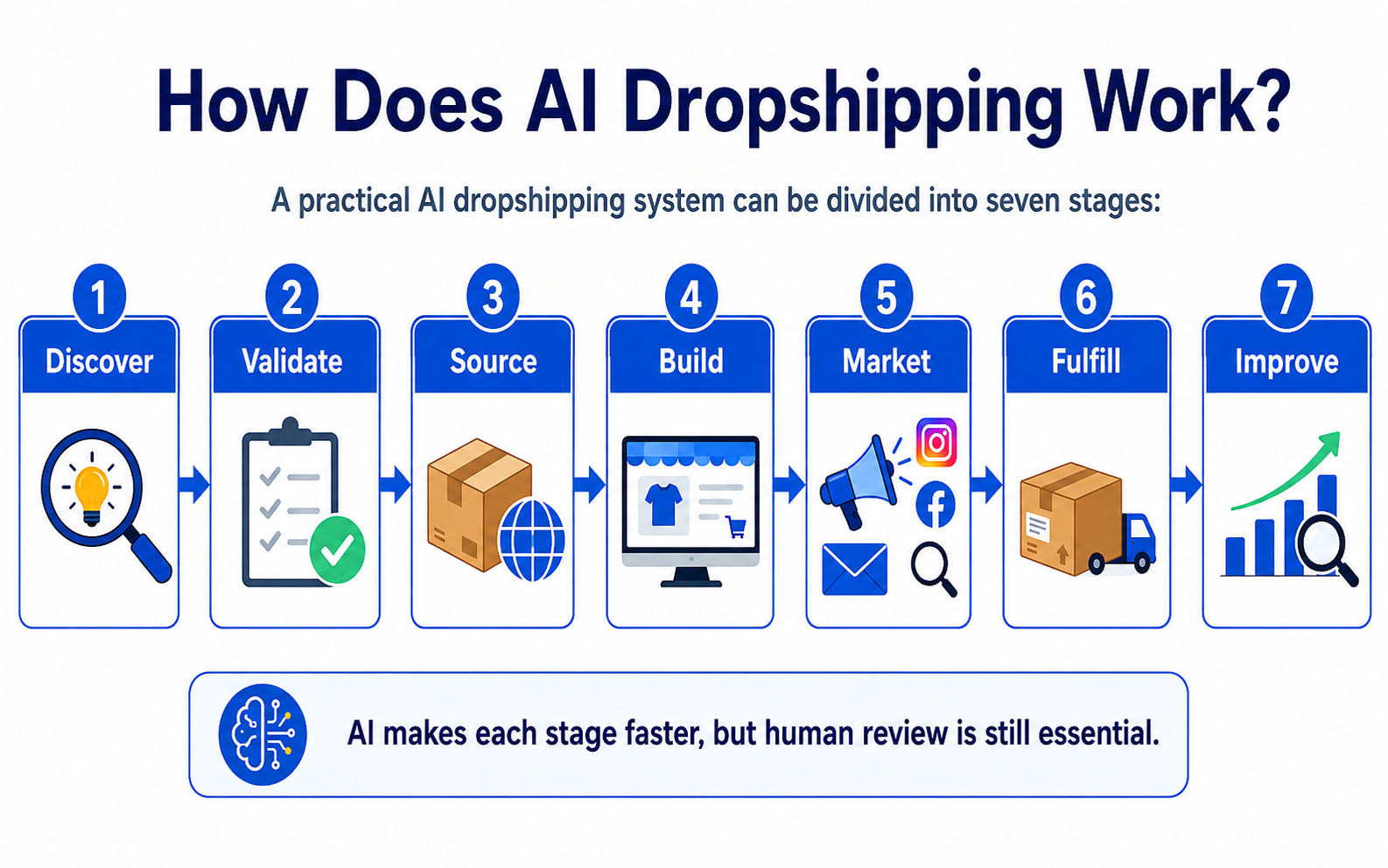
Discover
Find customer problems, product ideas, emerging trends, and seasonal opportunities.
Validate
Check whether there is real demand, acceptable competition, and enough profit potential.
Source
Find a reliable supplier with stable inventory, acceptable quality, and suitable shipping options.
Build
Create the store, product pages, images, FAQs, policies, payment methods, and tracking system.
Market
Develop advertisements, videos, social media content, emails, and search-optimized content.
Fulfill
Process orders, update inventory, synchronize tracking information, and solve delivery problems.
Improve
Review advertising costs, conversion rates, refunds, customer feedback, and delivery performance.
AI can make every stage faster. However, each stage still requires real information and human review.
How Is AI Different From Dropshipping Automation?
AI and automation are related, but they are not the same.
AI can analyze information and generate new outputs.
For example, AI can:
- Summarize hundreds of product reviews
- Identify repeated customer complaints
- Suggest advertising angles
- Write a product description
- Explain why a campaign may be underperforming
Automation performs an action based on a rule or trigger.
For example, automation can:
- Import a product into your store
- Send an order to a supplier
- Update a tracking number
- Notify you when inventory is low
- Send an abandoned-cart email
An automated dropshipping platform may include AI features, automation features, or both.
A complete system often uses several types of tools:
|
Tool Type |
Main Purpose |
|
AI assistant |
Research, analysis, prompts, and content |
|
Product research platform |
Trend and competitor analysis |
|
Store platform |
Website, checkout, and customer management |
|
Fulfillment platform |
Product sourcing, orders, and shipping |
|
Automation platform |
Repeated operational tasks |
You do not need every tool at the beginning. Start with the tools that solve your most important problem.
How to Start AI Dropshipping Step by Step
Starting an AI dropshipping business involves more than choosing an AI tool and importing products. You need a clear process for selecting a market, validating products, finding suppliers, building your store, testing marketing content, and managing fulfillment. Follow the steps below to build a practical AI-assisted dropshipping workflow.
Step 1: Choose a Specific Customer and Market
Do not start with a very broad niche.
“Home products” is too broad.
“Space-saving products for apartment renters” is more specific.
A focused market makes it easier to understand customer problems, select products, and create advertising content.
Before researching products, answer these questions:
- Who is the target customer?
- Where does this customer live?
- What problem does the customer face?
- How often does the problem happen?
- Is the problem frustrating, expensive, or time-consuming?
- Does the customer already spend money on solutions?
- Can the solution be demonstrated in a short video?
You can use ChatGPT or another AI assistant to explore customer problems.
Market Research Prompt
Act as an ecommerce market researcher. Analyze the needs of [customer group] in [country]. List 10 common problems that could be solved with a physical product. Exclude medical products, dangerous products, copyrighted products, and products that are difficult to ship. Explain the problem, buying motivation, possible product category, and main risk.
The response is a starting point. It is not proof of demand.
Step 2: Find Product Ideas With AI
AI is useful for generating a large list of product ideas.
It is not good at guaranteeing which product will become a winner.
A broad prompt such as “Give me ten winning dropshipping products” may produce weak results. It does not include your target market, shipping restrictions, budget, or customer needs.
Use a more detailed prompt.
Product Research Prompt
Suggest 20 dropshipping product ideas for apartment renters in the United States. The target selling price should be between $25 and $60. Each product should be lightweight, easy to demonstrate in a 20-second video, and useful throughout the year. Exclude products with batteries, fragile products, cosmetics, supplements, trademarked products, and products with complex sizing. Explain the customer problem, advertising angle, possible selling price, and main risk.
Remove products that:
- Are expensive to ship
- Are easy to break
- Require complicated sizing
- Make medical or safety claims
- Use protected brands or characters
- Have a high expected return rate
- Are available in every local store
- Have little demonstration value
- Leave very little profit margin
Keep approximately five to ten products for further research.
Step 3: Validate Products With Real Data
AI-generated ideas are only hypotheses.
You need real market signals before investing money.
Check Search Demand
Use Google Trends to study whether interest is growing, stable, seasonal, or declining.
Review:
- The past 12 months
- The past five years
- Your target country
- Related search terms
- Problem-based keywords
- Seasonal peaks
Do not rely only on the exact product name.
A customer may search for “how to organize a small kitchen” instead of searching for the name of a specific kitchen organizer.
Check Social Media Activity
Search for the product and customer problem on TikTok, Instagram, YouTube, and Pinterest.
Look for:
- Recent content
- Product demonstrations
- Questions in the comments
- Complaints about existing solutions
- Signs of buying interest
- Content created by several independent users
Use the TikTok Creative Center to study popular creative formats and advertisements. Do not copy another company’s video, script, images, or branding.
Check Active Advertisements
Use the Meta Ad Library to review advertisements currently running on Meta platforms.
Study:
- The customer problem
- The main product benefit
- The offer
- The landing page
- The advertising format
- The customer comments
An active advertisement does not automatically mean that the product is profitable. It only shows that a business is currently promoting it.
Check Supplier Data
A popular product may still fail if the supplier cannot provide stable inventory or reliable shipping.
Before testing a product, check:
- Product price
- Available variants
- Inventory
- Processing time
- Shipping cost
- Delivery estimate
- Tracking availability
- Product reviews
- Packaging
- Return procedures
A sourcing and fulfillment platform such as CJdropshipping can help sellers search products, submit sourcing requests, connect products to stores, and compare fulfillment options.
CJdropshipping can also be useful when you find a product idea through AI but need to verify whether the product can actually be sourced and shipped. However, supplier information should not replace your own product test.
Use a Product Scorecard
Score each product using the same standards.
|
Factor |
Maximum Score |
|
Demand and trend stability |
20 |
|
Clear customer problem |
15 |
|
Video demonstration potential |
15 |
|
Expected profit margin |
15 |
|
Competition level |
10 |
|
Supplier reliability |
10 |
|
Shipping speed and cost |
10 |
|
Return and compliance risk |
5 |
|
Total |
100 |
Suggested interpretation:
- 80–100: Strong product to test
- 65–79: Continue researching
- 50–64: High-risk product
- Below 50: Do not test yet
This model does not guarantee success. It helps you compare products more objectively.
Suggested screenshot: Add a spreadsheet showing three products and their scores.
Step 4: Select a Reliable Supplier
Your supplier affects product quality, delivery time, customer satisfaction, refunds, and repeat purchases.
Do not choose a supplier based only on the lowest price.
Verify:
- Current inventory
- Product specifications
- Processing time
- Shipping methods
- Estimated delivery time
- End-to-end tracking
- Quality inspection
- Packaging options
- Return procedures
- Capacity for higher order volumes
When a suitable product is unavailable, you can submit a sourcing request through CJdropshipping. This can be helpful when you need a different price, product variation, package, or supplier.
Order a sample before launching advertisements.
Check:
- Product quality
- Materials
- Dimensions
- Packaging
- Instructions
- Color accuracy
- Tracking updates
- Delivery time
- Overall unboxing experience
AI cannot physically inspect a product for you.
Step 5: Calculate the Real Profit Margin
Do not calculate profit by subtracting only the product cost from the selling price.
Use the complete cost.
Estimated profit per order:
Selling price − Product cost − Shipping − Payment fee − Advertising cost − Refund allowance − Other variable costs
Example
Assume you sell a storage product for $39.99.
|
Cost |
Amount |
|
Product cost |
$8.50 |
|
Shipping |
$6.00 |
|
Payment fee |
$1.50 |
|
Advertising cost per sale |
$12.00 |
|
Refund and support allowance |
$2.00 |
|
Other variable costs |
$1.00 |
|
Total variable cost |
$31.00 |
|
Estimated profit |
$8.99 |
The estimated profit margin is about 22.5% before fixed expenses and taxes.
Create three calculations:
- Best-case scenario
- Expected scenario
- Worst-case scenario
A product that is profitable only in the best-case scenario is usually too risky.
Step 6: Choose an Automated Dropshipping Platform
The best automated dropshipping platform is not always the one with the longest feature list.
Choose the platform that removes your largest operational bottleneck.
Compare:
|
Feature |
Why It Matters |
|
Store integration |
Reduces manual product and order entry |
|
Product sourcing |
Helps locate suitable products |
|
Inventory synchronization |
Reduces out-of-stock sales |
|
Order fulfillment |
Sends orders to the supplier |
|
Tracking synchronization |
Keeps customers informed |
|
Shipping comparison |
Balances delivery time and cost |
|
Global warehouses |
May shorten delivery times |
|
Custom packaging |
Supports brand development |
|
API access |
Connects custom systems |
|
AI integration |
Enables natural-language workflows |
CJdropshipping combines product sourcing, store connections, order fulfillment, inventory information, logistics, and warehouse resources. This allows sellers to manage sourcing and fulfillment through one connected system.
AutoDS is another automated dropshipping platform. Its official website presents tools for product discovery, importing, fulfillment, and other automation tasks. Available features may vary by plan, supplier, marketplace, and store integration.
Always complete a test order before depending on automation.
Confirm that:
- The order transfers correctly
- Inventory updates correctly
- The shipping method is correct
- Tracking returns to the store
- Customers receive the right notification
- Order exceptions can be handled manually
Step 7: Build Your Store With AI
AI can help you create a store faster, but the content must be based on verified product information.
AI can help draft:
- Product titles
- Product descriptions
- Benefit sections
- Feature tables
- FAQs
- Image alt text
- Meta titles
- Meta descriptions
- Emails
- Customer support templates
AI should not invent:
- Product materials
- Dimensions
- Certifications
- Performance results
- Medical benefits
- Delivery times
- Compatibility
- Warranty terms
Product Description Prompt
Write a clear product description using the verified information below. Target [customer]. Focus on [customer problem]. Use short sentences and simple words. Start with the main benefit. Explain how the product works, its verified features, who it is for, and what is included. Do not invent materials, dimensions, certifications, or performance claims. Product information: [insert verified data].
After generating the content:
- Check every claim.
- Remove generic sentences.
- Add original observations.
- Add real product photos.
- Explain clear use cases.
- Include delivery information.
- Review the page on mobile.
Google states that generative AI can help with research and content structure. However, creating many pages without adding value may violate its scaled content abuse policy. Google recommends helpful, reliable, people-first content.
Step 8: Create and Test Advertising Content
AI can quickly generate different marketing ideas.
It can help create:
- Video hooks
- Scripts
- Storyboards
- Headlines
- Product benefits
- Email subject lines
- Social posts
- Influencer briefs
Start with the customer’s problem.
Weak message:
Buy this useful organizer today.
Better message:
No cabinet space? Turn unused space into storage in seconds.
The second version includes a situation, problem, and benefit.
Advertising Prompt
Create 10 original advertising angles for [product]. The target customer is [customer]. The main problem is [problem]. For each angle, provide a short hook, emotional motivation, product demonstration, and call to action. Do not copy existing slogans. Avoid false urgency and unsupported claims.
Do not test only one advertisement.
Test different combinations of:
- Hooks
- Product demonstrations
- Offers
- Calls to action
- Video lengths
Track:
- Video view rate
- Click-through rate
- Cost per click
- Add-to-cart rate
- Conversion rate
- Cost per purchase
- Return on advertising spend
AI can summarize results. A person should decide whether there is enough data to change the campaign.
Step 9: Automate Orders and Tracking
After your store starts receiving orders, operational automation becomes more valuable.
A connected process may:
- Receive the customer’s order.
- Send the order to the fulfillment platform.
- Confirm inventory.
- Process the order.
- Generate tracking information.
- Synchronize tracking with the store.
- Notify the customer.
- Flag delayed shipments.
AI can also connect with real business systems through MCP.
CJ MCP allows compatible AI assistants to connect with CJdropshipping. According to CJ’s official documentation, users can use natural-language instructions to search products, query orders, and manage logistics through CJ’s API capabilities.
For example, a seller may ask:
- Find products under a target cost.
- Show products available in a US warehouse.
- Check the status of an order.
- Find orders that have not shipped.
- Compare shipping options.
- Track a package.
Important actions should still require human confirmation. These include refunds, cancellations, address changes, large purchases, and expensive shipping upgrades.
What Are the Best AI Tools for Dropshipping Product Research in 2026?
The best AI tools for dropshipping product research in 2026 can help sellers generate product ideas, check market demand, study competitors, analyze advertisements, and confirm whether a product can be sourced and shipped.
No single tool can guarantee that a product will succeed. A better approach is to use several tools together and compare different types of data.
1. ChatGPT
ChatGPT can help sellers generate product ideas, analyze customer problems, compare niches, summarize product reviews, and create product research plans.
Instead of asking ChatGPT for general winning products, provide detailed requirements such as the target market, customer group, selling price, product weight, shipping restrictions, and preferred advertising channel.
For example:
Suggest 20 dropshipping product ideas for apartment renters in the United States. The target selling price should be between $25 and $60. Each product should be lightweight, useful throughout the year, and easy to demonstrate in a short video. Exclude fragile products, batteries, supplements, cosmetics, and copyrighted products.
ChatGPT is useful for creating an initial list of product ideas. However, it may not have access to current sales, inventory, shipping costs, or supplier information.
Every product idea should be verified with market data and supplier information before testing.
Suggested image: Add a screenshot showing a product research prompt and the results generated by ChatGPT.
2. Google Trends

Google Trends helps sellers understand how search interest changes over time.
You can compare several product keywords, identify seasonal demand, review interest in different countries, and find related search terms.
When researching a product, check:
- Search interest during the past 12 months
- Search interest during the past five years
- Interest in the target country
- Related topics
- Related search queries
- Seasonal changes
Do not search only for the exact product name. Customers may search for the problem they want to solve.
For example, compare:
- Desk cable organizer
- How to organize desk cables
- Cable management for home office
Google Trends shows relative search interest. It does not provide exact product sales or profit data.
Use it to understand market direction rather than making a final product decision.
Suggested image: Add a screenshot comparing three product-related keywords in Google Trends.
3. TikTok Creative Center

The TikTok Creative Center can help sellers study trending content, popular advertisements, keywords, product categories, and creative formats.
It is useful for understanding how products are demonstrated in short-form videos and which customer problems attract attention.
When reviewing a product, look for:
- Recently published videos
- Several creators discussing similar products
- Clear product demonstrations
- Questions showing buying interest
- Repeated customer problems in the comments
- Different advertising angles
- Strong engagement from the target market
You can also use TikTok Top Ads to review advertisement formats by industry, location, campaign objective, and time period.
Do not copy another seller’s video, script, images, music, or branding. Use the platform to understand content patterns and create original advertising materials.
A common product video structure is:
- Show the customer problem.
- Introduce the product.
- Demonstrate how it works.
- Show the result.
- Add a call to action.
A video with many views does not automatically mean that the product is profitable. Social engagement should be combined with search, advertising, supplier, and cost data.
Suggested image: Add a screenshot of a product search or Top Ads result from TikTok Creative Center.
4. Meta Ad Library
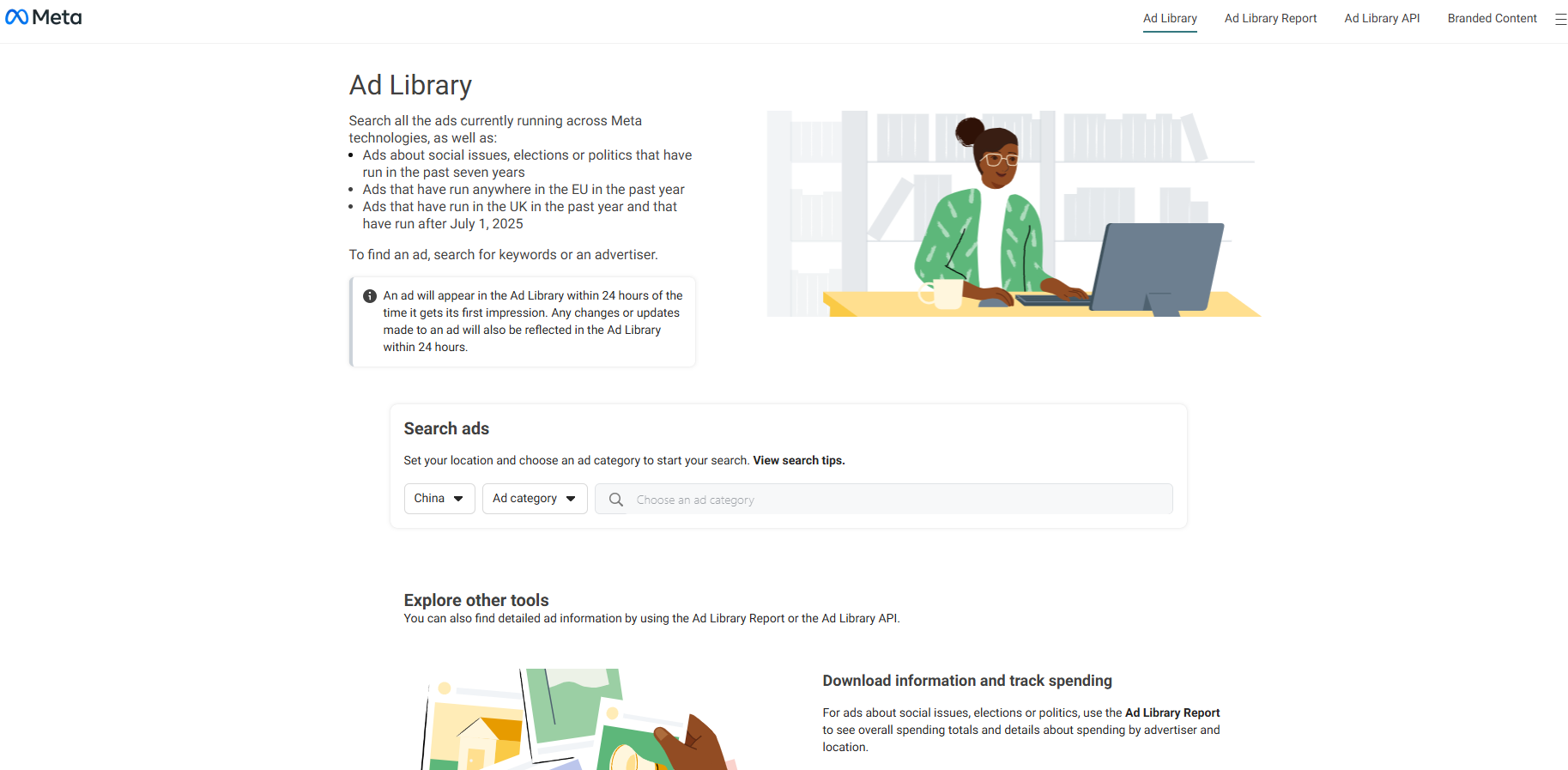
The Meta Ad Library allows sellers to review advertisements currently running across Facebook, Instagram, and other Meta platforms.
You can search using:
- Product names
- Product categories
- Customer problems
- Competitor names
- Brand names
- Benefit-related keywords
When studying an advertisement, review:
- The main customer problem
- Product benefits
- Advertising format
- Offer or discount
- Call to action
- Landing page
- Product presentation
- Public comments
If many sellers are using almost identical advertisements, videos, and offers, the market may already be highly competitive.
You may need to choose a different audience, offer, product bundle, or advertising angle.
An advertisement that has been active for a long period may be worth studying. However, the Meta Ad Library does not show the advertiser’s sales, conversion rate, advertising cost, or profit.
Use it to study competition rather than treating it as proof that a product is successful.
Suggested image: Add a screenshot showing several active advertisements for the selected product.
5. CJdropshipping
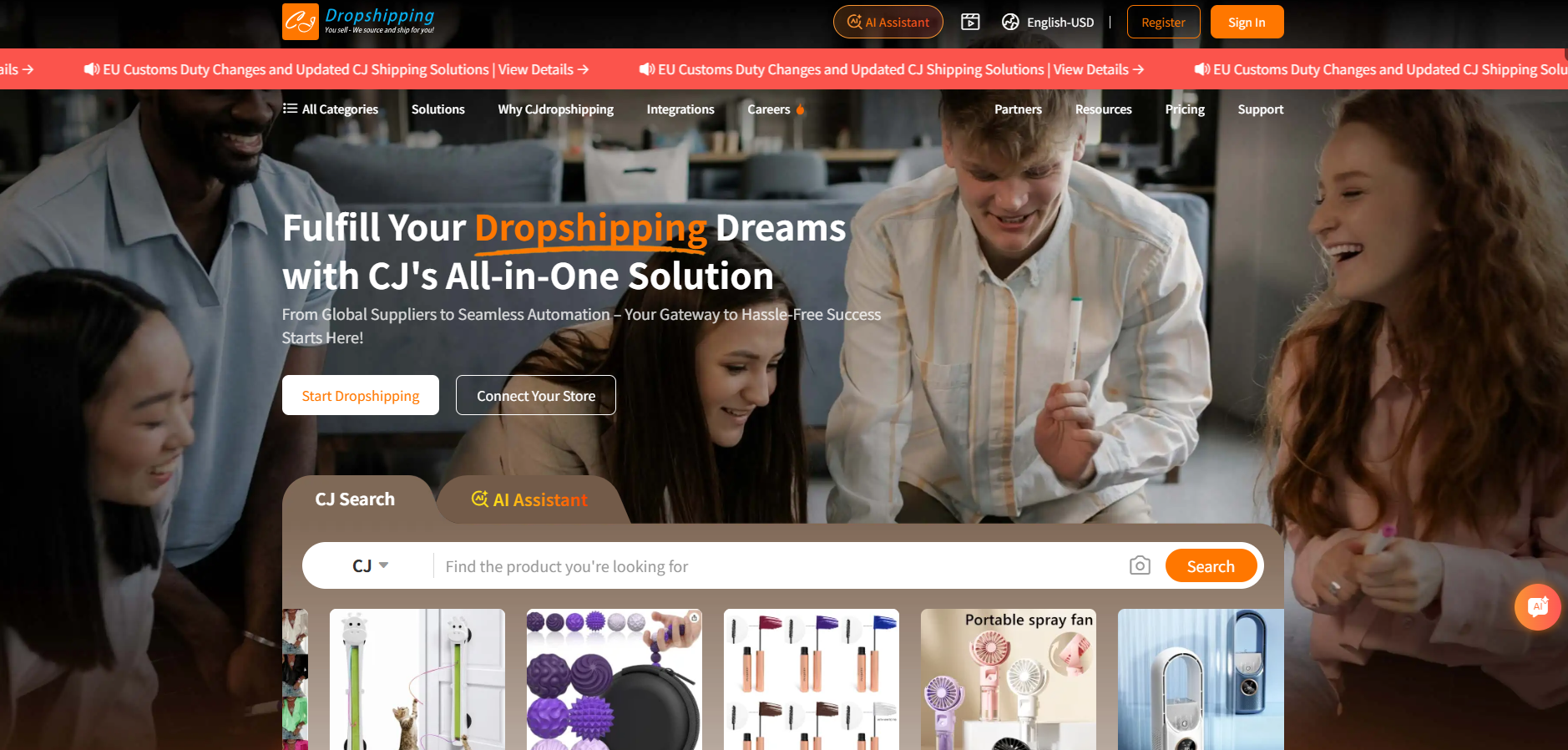
CJdropshipping helps sellers move from product research to sourcing and fulfillment.
After identifying a possible product through ChatGPT, Google Trends, TikTok Creative Center, or Meta Ad Library, sellers can search for the product on CJdropshipping and check whether it is suitable for their target market.
The platform can provide information about:
- Product price
- Available variants
- Product images
- Inventory
- Warehouse location
- Shipping methods
- Estimated delivery time
- Tracking availability
- Product sourcing
- Custom packaging
If a product cannot be found directly, sellers can submit a sourcing request using a product link, image, or description.
CJdropshipping also supports store connections, order processing, inventory management, and logistics. This allows sellers to manage product sourcing and fulfillment through the same platform.
Supplier verification is an important part of AI dropshipping product research. A product may look popular on social media but still have high shipping costs, unstable inventory, or long delivery times.
Before selling a product, order a sample and check:
- Product quality
- Materials
- Dimensions
- Packaging
- Instructions
- Tracking
- Delivery time
- Overall customer experience
Suggested image: Add a screenshot of a CJdropshipping product page showing the product price, warehouse, and shipping information.
6. Minea
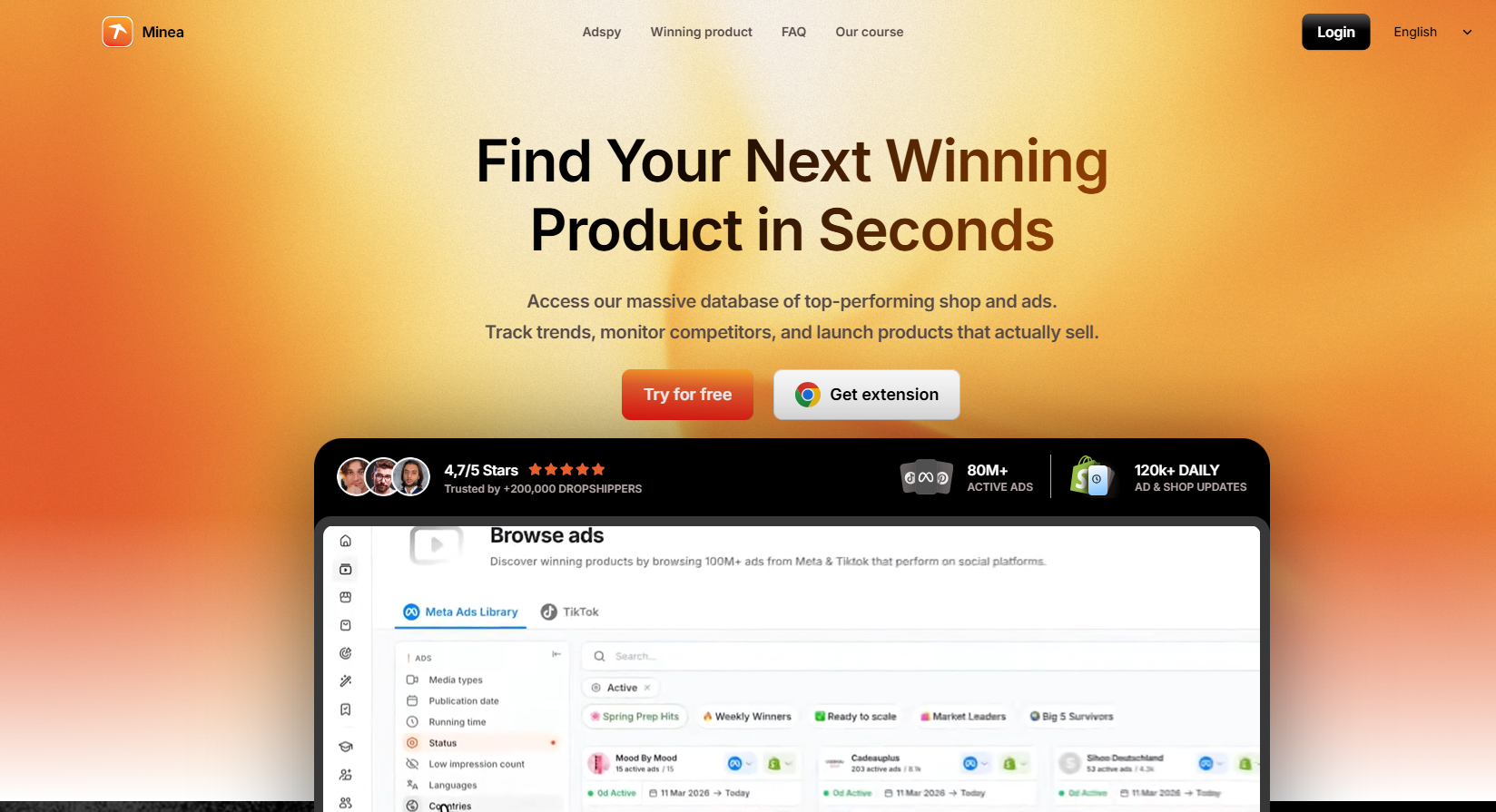
Minea is a product and advertisement research platform that helps sellers study ecommerce trends, advertisements, products, stores, and competitors.
Sellers can use it to review advertisements across different channels and identify products that are receiving attention.
When researching a product, examine:
- Advertisement activity
- Product engagement
- Advertiser information
- Store landing pages
- Creative formats
- Product categories
- Target markets
Minea can reduce the time required to search for products manually. However, its data still needs to be compared with supplier prices, shipping costs, competition, and your own advertising results.
Do not select a product only because it appears in a product research tool.
Suggested image: Add a screenshot of a Minea product or advertisement research result.
7. Sell The Trend
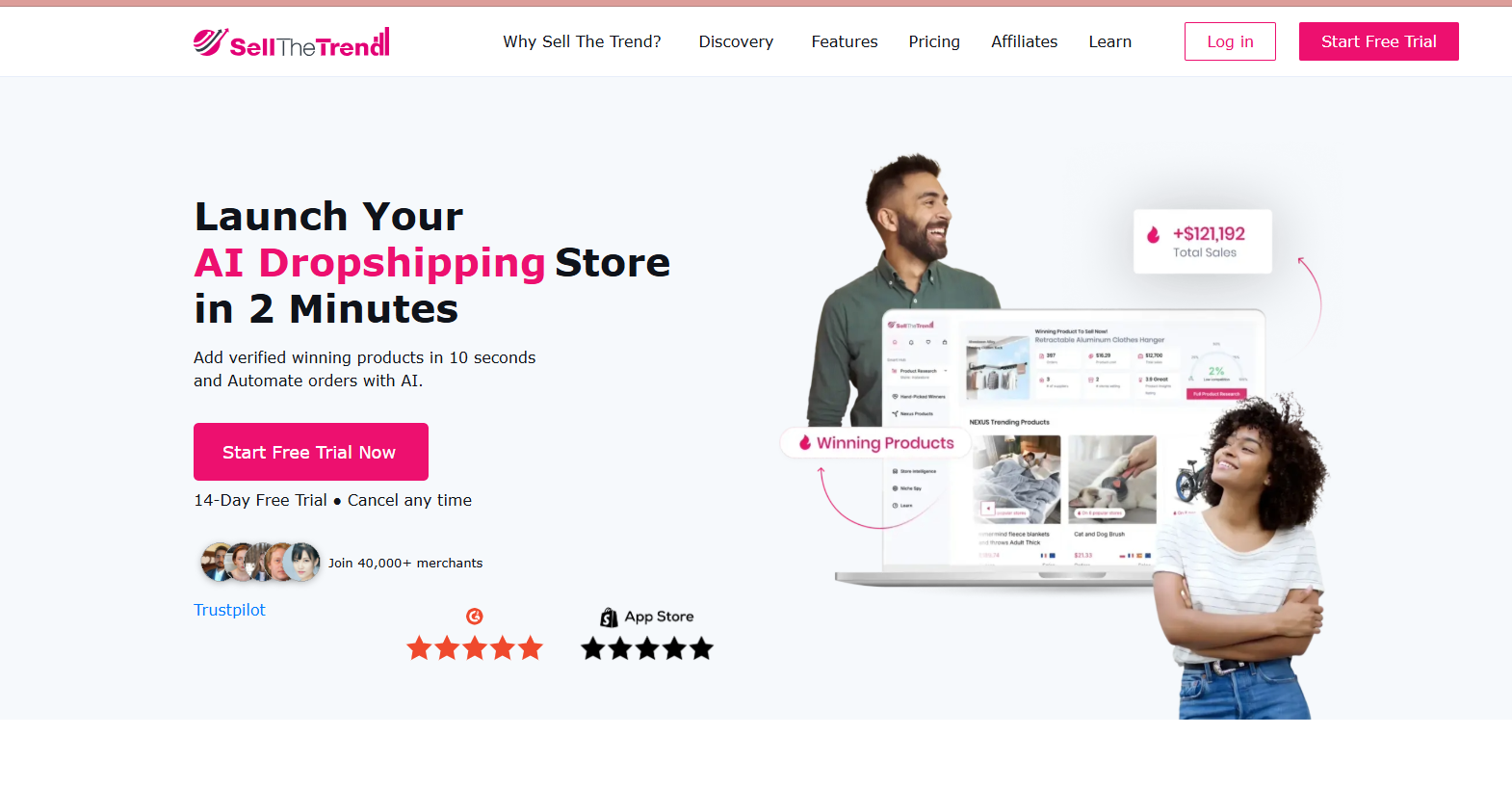
Sell The Trend provides product research, store research, supplier information, and automation features.
Its product research tools can help sellers identify potential products based on available market and engagement signals.
Sellers can use the platform to:
- Discover product ideas
- Study competitor stores
- Review engagement data
- Compare product trends
- Explore supplier options
- Import selected products
The platform can help organize product research, but each product should still be checked using search data, active advertisements, supplier information, and profit calculations.
A product that appears popular may still be unsuitable if the competition is too high or the shipping cost is too expensive.
Suggested image: Add a screenshot of a product research result from Sell The Trend.
8. Pipiads
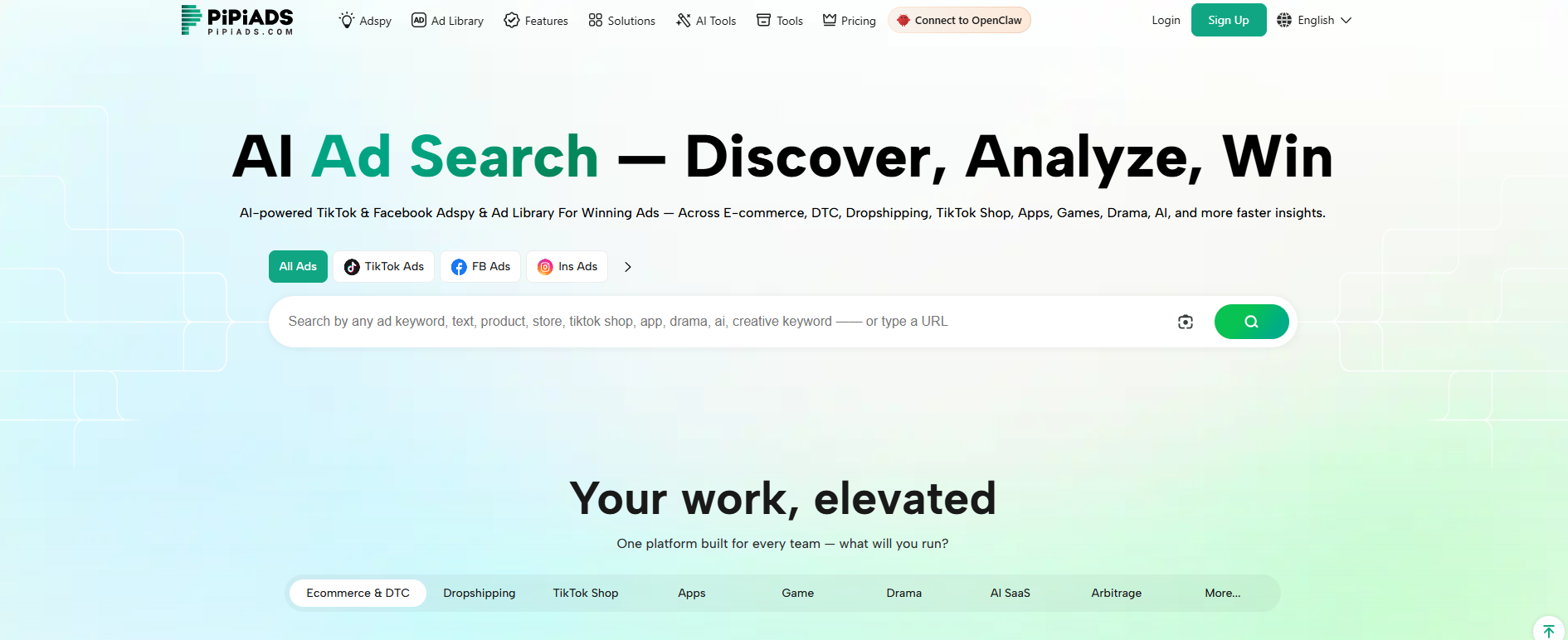
Pipiads focuses on TikTok and Meta advertisement research.
It can help sellers search advertisements, study product trends, review competitor creatives, and analyze TikTok Shop activity.
You can use Pipiads to review:
- Advertisement duration
- Product category
- Creative format
- Advertiser activity
- Engagement
- Landing pages
- Product offers
Long-running advertisements may be useful research signals, but they do not prove that a campaign is profitable.
Use Pipiads to understand how products are marketed. Then confirm the product using supplier data, shipping information, customer reviews, and your own tests.
Suggested image: Add a screenshot showing advertisement results for a product in Pipiads.
9. AutoDS
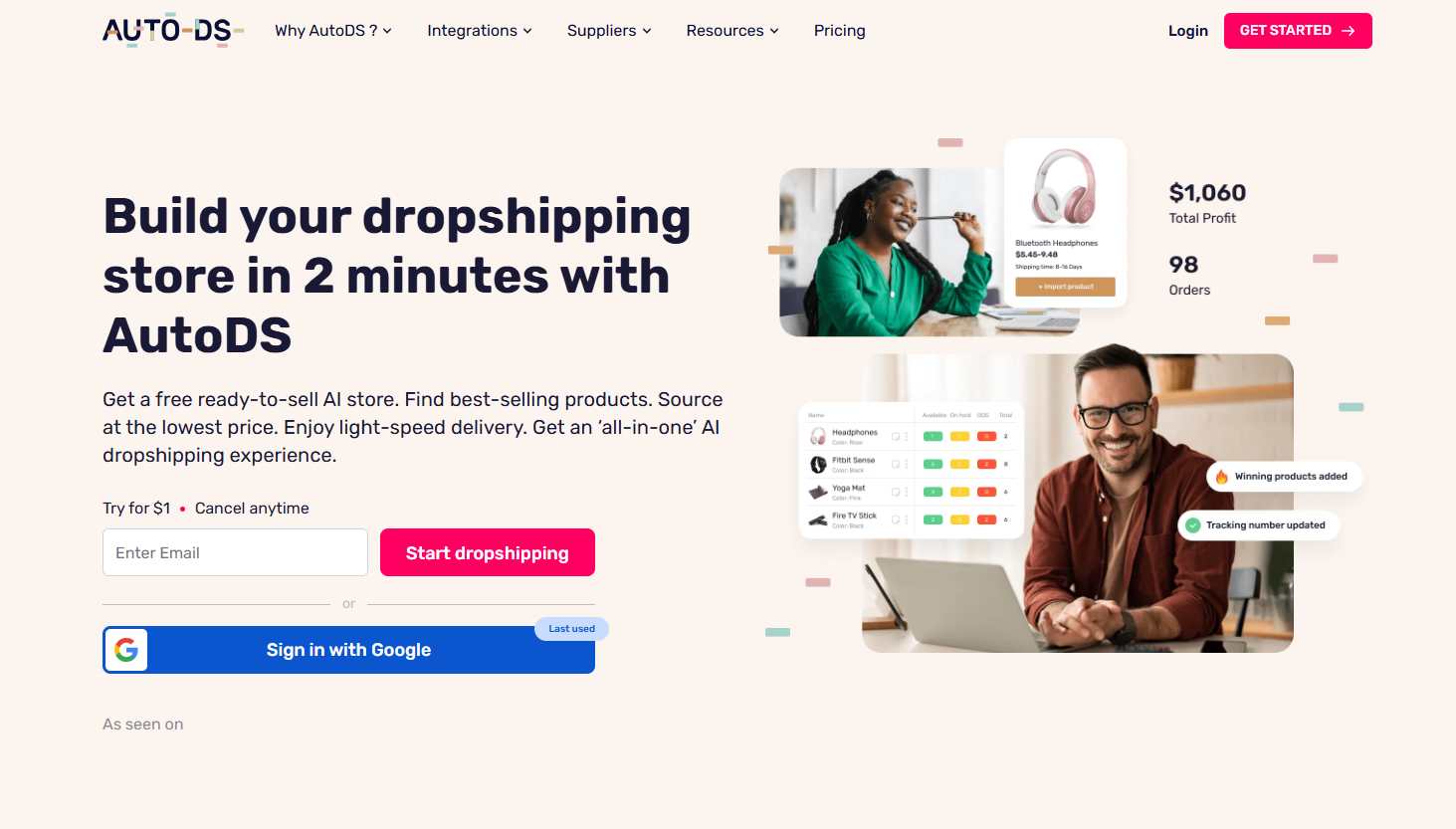
AutoDS provides product research, product importing, price monitoring, inventory monitoring, order processing, and other dropshipping automation features.
It can help reduce repeated tasks after a seller has selected a product.
Depending on the store, supplier, marketplace, and subscription plan, sellers may use AutoDS to:
- Find product ideas
- Import products
- Monitor prices
- Monitor inventory
- Process orders
- Update tracking
- Manage several stores
Automation can save time, but sellers should still test the complete order process before relying on it.
Place a test order and confirm that the correct product, shipping method, customer address, and tracking information are transferred successfully.
Suggested image: Add a screenshot of the AutoDS product research or automation dashboard.
10. CJ MCP
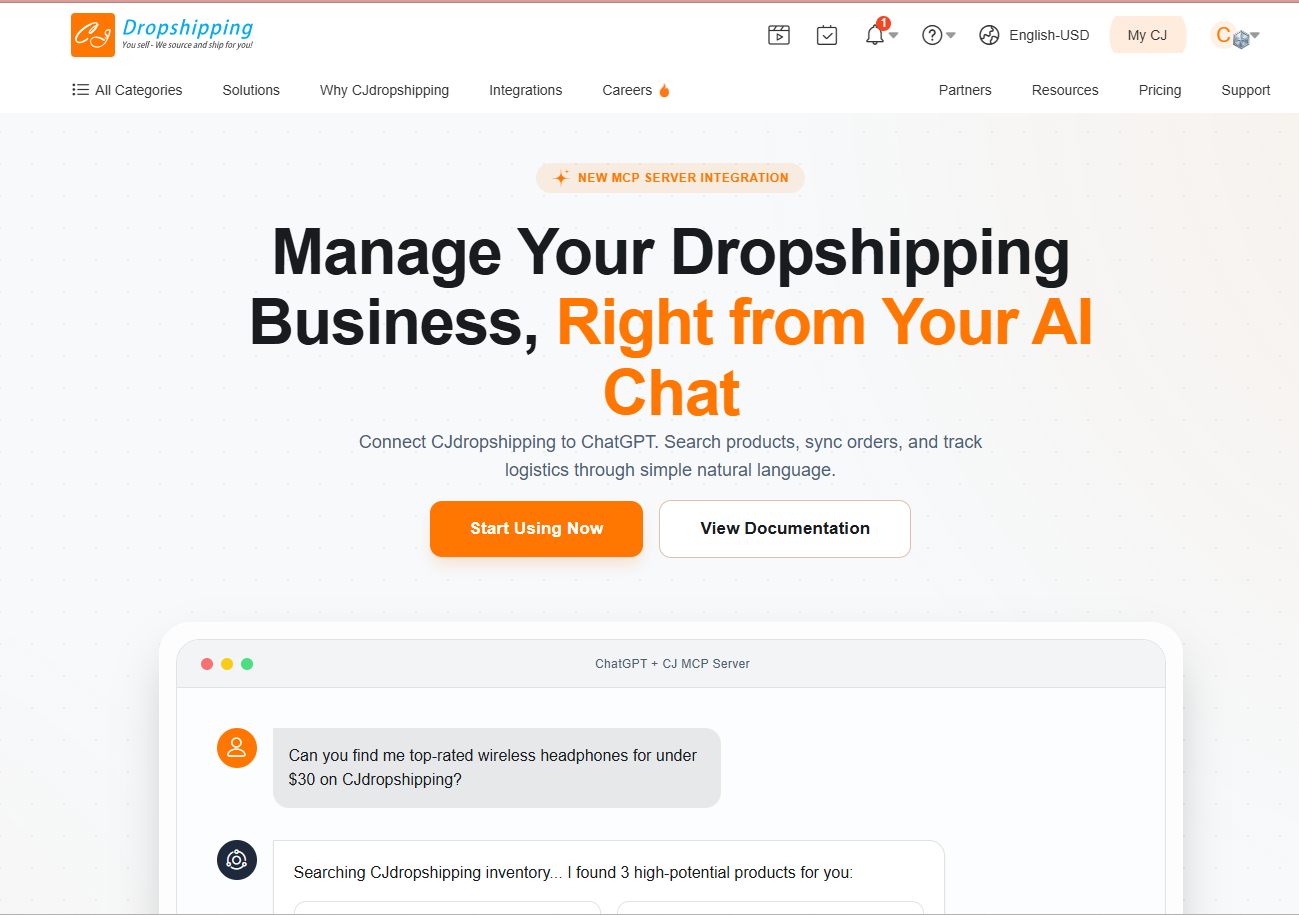
CJ MCP connects compatible AI assistants with CJdropshipping’s product, order, and logistics capabilities.
Instead of using an AI assistant only for general ideas, sellers can use natural-language instructions to work with information from a connected dropshipping platform.
For example, a seller may ask the connected assistant to:
- Find products under a target price
- Search products in a specific category
- Show products available in a local warehouse
- Check an order status
- Find orders that have not shipped
- Compare available shipping methods
- Track a package
This helps connect AI research with real product and fulfillment operations.
Important actions should still require human approval. These include refunds, order cancellations, address changes, large purchases, and expensive shipping upgrades.
Suggested image: Add a screenshot showing a product or order query completed through CJ MCP.
How Should You Use These Tools Together?
Start with ChatGPT to explore customer problems and generate product ideas.
Use Google Trends to review search demand. Check TikTok Creative Center and Meta Ad Library to understand content trends and competitor activity.
Use Minea, Sell The Trend, or Pipiads when you need more detailed product and advertisement research.
Finally, check CJdropshipping to confirm product prices, inventory, warehouses, shipping methods, and fulfillment options.
A simple workflow is:
- Generate product ideas with ChatGPT.
- Check search interest with Google Trends.
- Review product content in TikTok Creative Center.
- Study competitors in Meta Ad Library.
- Use a product research platform for additional data.
- Verify sourcing and shipping through CJdropshipping.
- Select three products for further testing.
- Order samples before launching advertisements.
What Does an AI Dropshipping Example Look Like?
Consider a seller targeting remote workers in small apartments.
The seller wants a product that:
- Sells for less than $60
- Has no battery
- Is easy to ship
- Has no complex sizing
- Can be demonstrated in a video
- Has year-round use
AI suggests:
- Foldable laptop stand
- Cable organizer
- Clamp-on desk shelf
- Compact document holder
- Monitor shelf
The seller checks search demand, social content, active advertisements, supplier prices, shipping, and customer reviews.
The products receive these scores:
|
Product |
Score |
|
Foldable laptop stand |
78 |
|
Cable organizer |
65 |
|
Clamp-on desk shelf |
59 |
|
Document holder |
62 |
|
Monitor shelf |
70 |
The foldable laptop stand becomes the first test product.
The seller then:
- Finds the product on CJdropshipping
- Checks inventory and shipping
- Orders a sample
- Creates original photos
- Records three videos
- Writes a product page
- Tests several advertising hooks
- Tracks the full cost of each sale
AI helped organize the process. It did not make the final decision.
How Should You Measure AI Dropshipping Performance?
Measure business outcomes, not the amount of AI-generated content.
Track:
- Product research time
- Product page conversion rate
- Add-to-cart rate
- Advertising cost per sale
- Profit per order
- Processing time
- Delivery time
- Refund rate
- Chargeback rate
- Customer response time
- Hours saved through automation
Use this formula:
AI ROI = (Additional profit + Labor cost saved − AI tool cost) ÷ AI tool cost × 100
An expensive platform is not valuable if it does not save time or improve performance.
Final Thoughts
AI dropshipping is not a shortcut that removes risk.
It is a more efficient way to manage product research, content, marketing, fulfillment, and store operations.
Start with one customer group. Generate several product ideas. Validate those ideas with real market data. Use a platform such as CJdropshipping to check sourcing, inventory, shipping, and fulfillment. Order a sample before launching.
Then build an original product page, test several creative ideas, and track the complete cost of every order.
Once the process works, automate the repetitive tasks.
That is how to use AI dropshipping tools to build a business based on real information, reliable fulfillment, and better decisions.
FAQ
What Is AI Dropshipping?
AI dropshipping uses artificial intelligence and automation to support product research, content creation, marketing, customer service, order processing, and performance analysis.
Can Beginners Start AI Dropshipping?
Yes. Beginners should start with one customer group, one product category, and several products to validate. Do not automate important financial decisions too early.
Can AI Find Winning Dropshipping Products?
AI can generate ideas and organize market signals. It cannot guarantee that a product will succeed. You must verify demand, competition, costs, suppliers, and shipping.
What Are the Best AI Tools for Dropshipping Product Research?
Useful tools include ChatGPT, Google Trends, TikTok Creative Center, Meta Ad Library, Minea, Sell The Trend, and Pipiads. Product availability and fulfillment can be checked through CJdropshipping.
Can I Use AI to Dropship Without Experience?
You can use AI to dropship as a beginner, but you still need to learn pricing, marketing, supplier management, customer service, and fulfillment.
What Is an Automated Dropshipping Platform?
An automated dropshipping platform connects parts of the store workflow. It may import products, synchronize inventory, process orders, update tracking, and connect suppliers.
Can AI Fully Automate a Dropshipping Store?
AI and automation can handle many repeated tasks. Supplier approval, quality control, refunds, compliance, advertising budgets, and customer complaints should remain under human control.
Is AI Dropshipping Profitable in 2026?
It can be profitable, but AI does not create profit by itself. Profit depends on demand, pricing, supplier cost, shipping, advertising, conversion rate, refunds, and customer retention.
Is AI-Generated Content Good for SEO?
AI can help with research, outlines, and drafts. The published content must be original, accurate, useful, and written for readers. Mass-producing low-value pages may harm search performance.
Which Products Should Beginners Avoid?
Beginners should be careful with supplements, medical products, fragile goods, batteries, copyrighted products, safety equipment, complex sizing, and products that require unsupported claims.