
A product can look promising and still lose money. Strong engagement does not always lead to sales. A low product cost does not always create a healthy margin. Even a profitable advertising campaign can fail when shipping delays and refunds begin to rise. This is why you should test a dropshipping product before committing a large advertising budget.
A useful product test does more than generate a few clicks. It checks demand, pricing, product quality, shipping, advertising angles and customer behavior. It should help you answer three questions:
- Should you continue selling the product?
- Is there a specific part of the offer that needs improvement?
- Should you stop the test before it becomes more expensive?
The aim is not to find a perfect product overnight. It is to remove uncertainty in a controlled way. This guide explains how to do that with research, samples, financial calculations, organic content and small paid campaigns.
What Does It Mean to Test a Dropshipping Product?
To test a dropshipping product means validating the assumptions behind the product before scaling it.
Every product idea contains several assumptions. You may assume people want the item, understand its value and are willing to pay your chosen price. You may also assume that the supplier can deliver it on time and that paid advertising can acquire customers at an acceptable cost.
Those assumptions need separate tests.
A complete product test should examine five areas:
- Demand: Are people actively interested in the problem or product?
- Economics: Can each order generate enough margin to support advertising?
- Supply: Is the product reliable, available and practical to ship?
- Presentation: Can the benefits be explained through a clear page and creative?
- Conversion: Will qualified visitors take meaningful actions, such as adding the item to their cart or completing a purchase?
Testing is therefore a decision process, not just an advertising campaign. At the end of the process, the product should fall into one of three groups.
A product is ready to scale when demand, conversion, margin and fulfillment are all promising. It needs another round of work when the data shows interest but exposes a weak page, price, creative or offer. It should be stopped when the demand, economics or supply chain cannot support a viable business.
Why Do Dropshipping Product Tests Often Give Misleading Results?
Many sellers start by copying a product from a competitor, building a quick page and launching one advertisement. If the campaign does not produce immediate sales, they conclude that the product is saturated or unprofitable.
That conclusion may be wrong.
A campaign is testing more than the product. It is also testing the advertising hook, video, audience, price, page, shipping offer and checkout experience. A failure in any one of these areas can reduce sales.
For example, imagine that an advertisement receives clicks but no orders. The product may not be the problem. The page may load slowly. The shipping fee may only appear at checkout. The video may attract curious viewers instead of potential buyers. The product description may also fail to answer an important concern.
The opposite can happen as well. One or two early purchases may make a product appear successful. However, such a small result could be random. It does not show whether the acquisition cost will remain stable or whether customers will request refunds after receiving the product.
A good test reduces this confusion. It changes a limited number of variables, records the results and uses several stages of the customer journey to diagnose performance.
How Can You Screen a Product Before Paying for Ads?
Advertising should not be the first source of information about a product. You can reject many weak ideas before spending anything.
Start with the customer problem. Write one sentence that explains why someone would buy the product. Avoid vague statements such as “it makes life better.” Use a specific outcome instead.
For example:
This portable pet water bottle lets dog owners give their pets clean water during walks without carrying a separate bowl.
That sentence identifies the buyer, situation, problem and benefit. If you cannot explain the reason to buy in simple language, the product may be difficult to advertise.
Next, consider how often the problem occurs. A frequent and frustrating problem usually creates stronger demand than a rare inconvenience. Products connected to health, safety or regulated claims require additional care, even when the problem is important. Do not sell an item simply because the potential benefit sounds dramatic.
The product should also be easy to demonstrate. A short video should show what it does and why that matters. This does not mean every good product needs a dramatic transformation. However, the viewer should be able to understand the value without reading a long explanation.
How Can You Check Existing Demand?
Use several sources instead of trusting one viral video.
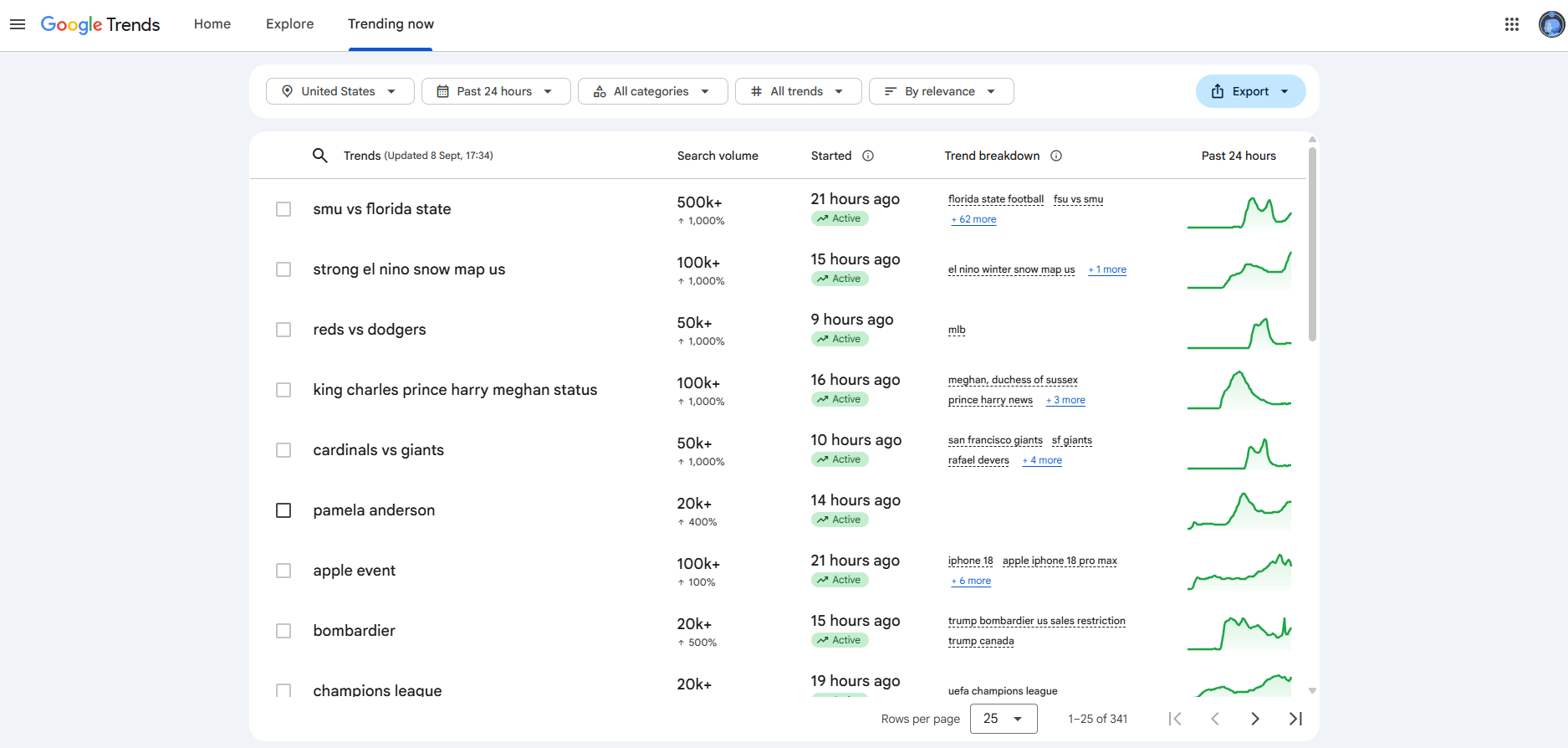
Google Trends can show whether interest in a search topic is growing, stable or seasonal. Compare related terms over 12 months and five years. Check the countries where you plan to sell. A short spike may indicate temporary attention rather than durable demand.
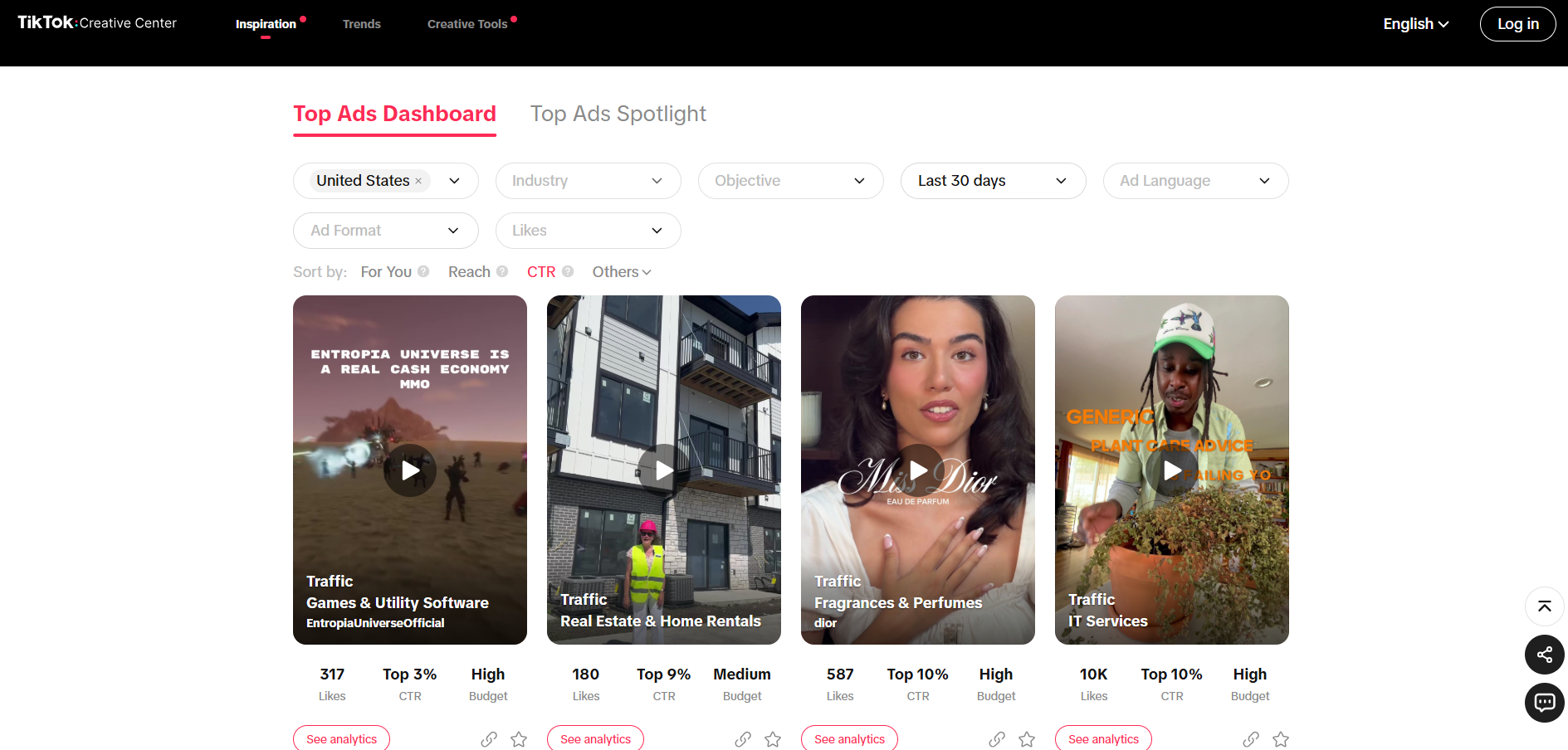
The TikTok Creative Center provides access to trends, popular products and advertising examples. Its Top Ads section can help you study how advertisers present similar products. Look at the sales angle, opening seconds, format and audience response. Do not copy the creative. Use it to understand how the market communicates.
Search major marketplaces for comparable products. Review the price range, sales activity and customer feedback. Positive reviews reveal the outcomes customers value. Negative reviews are often more useful. They can expose weak materials, confusing instructions, inaccurate sizes or poor packaging.
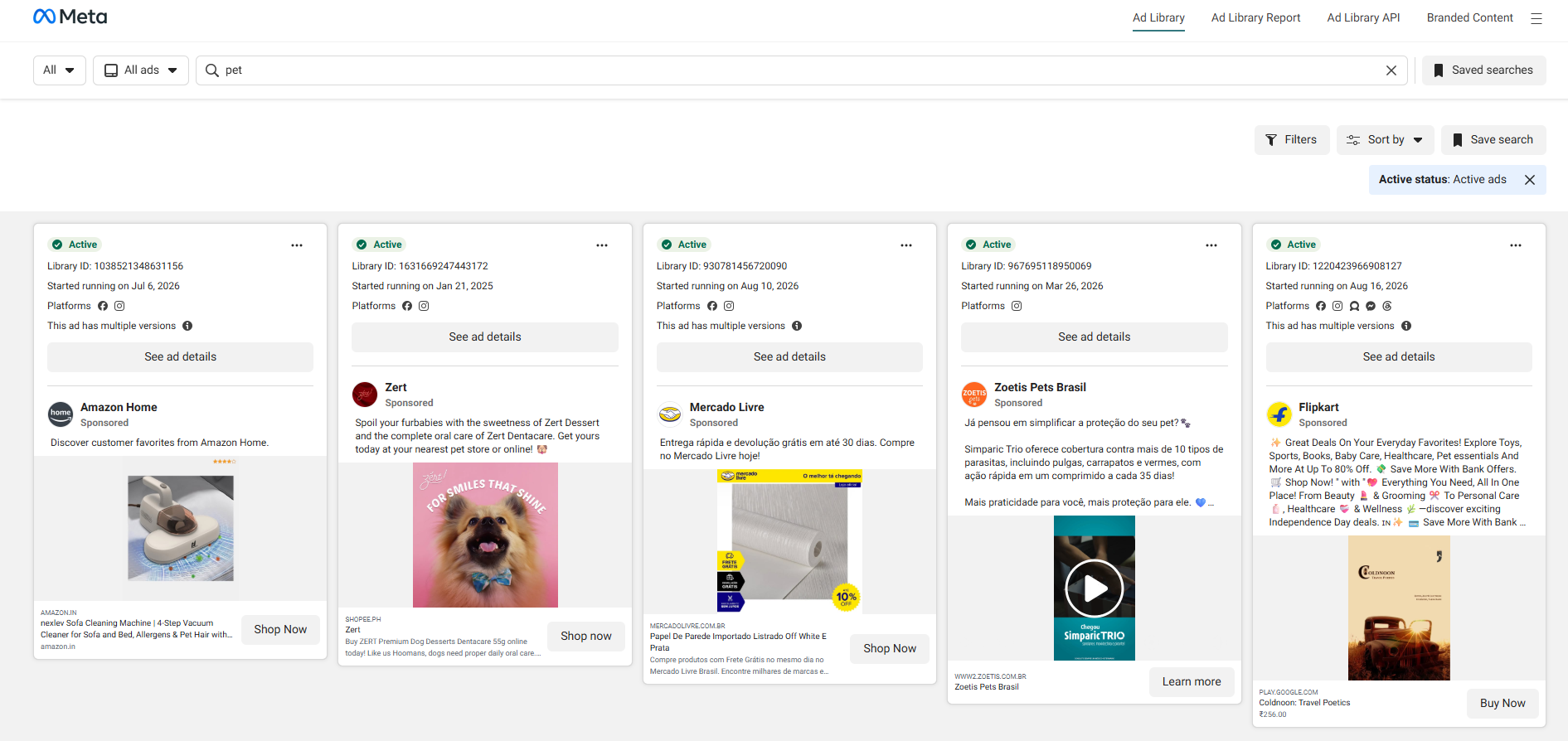
Meta’s Ad Library can show whether brands are currently promoting similar products. A large number of competitors does not automatically make the product unsuitable. Competition can confirm demand. The real question is whether your offer can provide a better angle, bundle, experience or audience fit.
Gather the evidence in one document. Record the date, market, product price, common benefits, frequent complaints and examples of advertising angles. This creates a stronger basis for the next decision.
How Do You Use a Product Validation Scorecard?
Research becomes more useful when it leads to a consistent decision. A simple scorecard can prevent excitement from replacing evidence.
Score each candidate from one to five in the following areas:
|
Evaluation area |
Question |
Weight |
|
Market demand |
Is there clear evidence of ongoing interest? |
20% |
|
Buying motivation |
Does the product solve a visible problem or support a strong desire? |
15% |
|
Creative potential |
Can the benefit be demonstrated in a short video? |
15% |
|
Profit margin |
Is there room for advertising, refunds and operating costs? |
20% |
|
Differentiation |
Can you create a better offer or positioning? |
10% |
|
Supplier reliability |
Can quality and delivery remain consistent? |
15% |
|
Risk |
Is the product practical to advertise and sell legally? |
5% |
Multiply each score by its weight and convert the result to a score out of 100.
A product scoring 80 or more may be suitable for a controlled paid test. A result between 65 and 79 suggests that you should improve the offer, sourcing or positioning first. A score below 65 is a warning against spending on advertising.
These thresholds are not universal rules. They are a screening tool. The purpose is to compare products using the same criteria and expose weak areas before money is at risk.
How Do You Know If the Product Can Support Advertising?
A product with visible demand can still be financially unsuitable. You need to calculate how much you can afford to pay for each customer.
Start by listing every variable cost connected to an order:
- Product cost
- Shipping cost
- Payment processing fee
- Platform fee
- Packaging or customization
- Discounts
- Expected refunds and replacements
- Taxes or duties paid by the seller
Do not calculate margin using product cost alone.
Consider an illustrative product sold for $39.99:
|
Item |
Amount |
|
Selling price |
$39.99 |
|
Product cost |
$9.50 |
|
Shipping |
$7.00 |
|
Payment fee |
$1.50 |
|
Refund and support allowance |
$2.00 |
|
Contribution margin before ads |
$19.99 |
The contribution margin before advertising is:
Contribution Margin=Selling Price−Variable Costs Before Ads
$39.99−($9.50+$7.00+$1.50+$2.00)=$19.99
The $19.99 contribution margin is also the approximate break-even customer acquisition cost, or break-even CPA, before fixed operating costs.
If acquiring one customer costs $24, the product loses money on the first order. If it costs $15, the order contributes about $4.99 before fixed costs.
You can also calculate the break-even return on ad spend:
Break-Even ROAS=Revenue/Contribution Margin Before Ads
Using the same figures:
$39.99÷$19.99≈2.00
The campaign therefore needs a ROAS of approximately 2.00 just to cover the included variable costs. It needs a higher result to contribute to software, payroll and other fixed expenses.
These figures are examples, not industry benchmarks. Your actual costs may be very different. Use current supplier prices, shipping quotes and payment fees.
If the economics are too tight, do not assume better advertising will solve the problem. Consider negotiating the sourcing price, raising the selling price, creating a bundle or increasing average order value.
Why Should You Test the Supplier Before the Advertisement?
A successful advertisement can increase orders quickly. If the product or supplier is not ready, that success can create delayed packages, complaints and payment disputes.
Contact the supplier before launching the test. Confirm the product specifications, available inventory, processing time, shipping methods and tracking coverage. Ask how the supplier handles damaged goods, missing packages and sudden increases in volume.
Then order a sample.
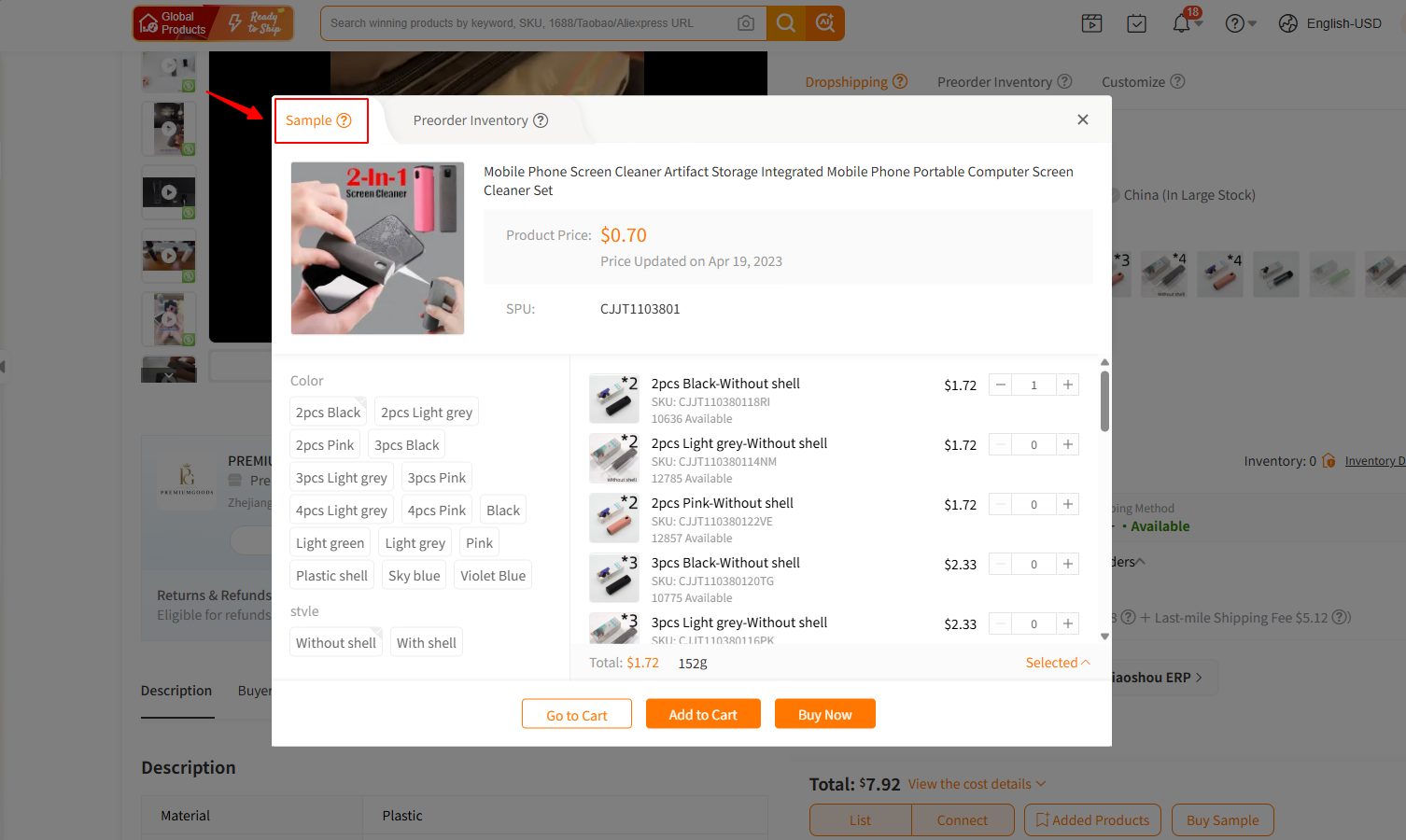
A sample allows you to inspect the material, color, size, function and packaging. Test the product as a customer would. Check whether the instructions are clear and whether the item matches its listing. Record the processing and delivery time instead of relying only on an estimate.
The sample also gives you original material for the product page and advertisements. Original videos are more credible than recycled supplier clips. They also let you demonstrate the product from an angle that fits your specific audience.
Sellers can use CJdropshipping to source products, review available fulfillment options and place sample orders before committing a larger advertising budget. When reviewing a product, compare the total landed cost and available shipping route for the target country. Do not make a decision from the listed product price alone.
One sample cannot guarantee that every future unit will be identical. However, it can reveal obvious problems before customers experience them.
How Can You Test Product Interest Without Paid Ads?
Organic validation will not replace a paid advertising test, but it can provide early signals at a low cost.
Create a basic landing page for the product. It should show the main benefit, key use case, expected price and delivery information. Include a clear action such as “Join the Waitlist,” “Notify Me” or “Shop Now,” depending on whether the product is ready for sale.
Next, publish several short videos. Each video should explore a different customer motivation:
- Show the problem and solution.
- Demonstrate the product in a real situation.
- Compare it with a common alternative.
- Answer a common objection.
- Show an unexpected but relevant use.
- Explain who should and should not buy it.
Avoid measuring the test with views alone. A view requires little commitment. Saves, shares, profile visits, product-page sessions and questions about price show stronger interest. Email registrations, add-to-cart events and checkout starts are closer to purchase intent.
Pay attention to the language in comments. Customers may describe a use case you had not considered. They may also reveal confusion about the product. Those comments can improve your page and paid creative.
Organic reach varies by account and platform. A post that does not go viral is not proof that the product has no demand. Use this stage to collect customer language and identify strong creative angles.
How Do You Build a Fair Product Page Test?
A poor product page can make a good product appear weak.
Above the fold, the visitor should understand what the product is, who it is for and why it is useful. The primary image or video should show the product clearly. The headline should describe the main value, not rely on empty claims such as “revolutionary” or “must-have.”
The page should then answer the questions that could stop a purchase. Explain size, materials, compatibility, care, package contents and limitations where relevant. State the estimated shipping time and return conditions clearly.
Use genuine product photos and accurate claims. Do not add invented reviews, false countdown timers or unsupported discounts. These tactics may create short-term conversions, but they weaken trust and make the data less reliable.
You can test the offer after the base page is ready. Possible variations include a single unit, a multi-unit discount, a useful bundle or a free-shipping threshold. Change one major element at a time. If you change the price, headline, images and audience together, you will not know what caused the result.
Before sending traffic, test the entire checkout on both desktop and mobile. Confirm that buttons work, discount codes apply correctly and conversion events are recorded.
How Should You Run a Small Paid Advertising Test?
A paid test should begin with a written plan. Define the maximum budget, target CPA and decision conditions before the campaign starts. This reduces the temptation to keep spending because you hope the next customer will change the result.
Prepare at least three distinct creative concepts. Changing the music or caption does not create a truly different concept. Each version should use a different reason to buy.
For example:
- Creative A opens with the customer’s problem.
- Creative B begins with a product demonstration.
- Creative C presents a comparison with an existing solution.
- Creative D focuses on a specific use case.
- Creative E answers a common concern.
TikTok’s official Creative Jumpstart guide recommends thinking about the product’s selling points, target audience and ideal use situations. These principles are useful beyond TikTok because they force each creative to communicate a clear idea.
How Much Should You Spend on the Test?
There is no responsible fixed testing budget for every product. A $20 item and a $300 item do not have the same conversion cycle or acceptable acquisition cost.
A more useful starting point is:
Initial Decision Budget=Target CPA×Desired Number of Purchases
Suppose your target CPA is $20 and you want enough budget for five purchases:
$20×5=$100
This does not guarantee five sales. It creates a decision budget related to the product’s economics.
Use a smaller checkpoint before reaching the full limit. If the campaign produces no meaningful engagement, product-page visits or add-to-cart actions, review the creative and page before spending the entire amount.
A higher-priced item may require a longer test. A low-cost impulse purchase may produce faster feedback. The decision should consider data volume, customer journey and margin rather than an arbitrary number of days.
What Metrics Should You Track During the Test?
No single metric can explain the entire result. Read performance as a funnel.
|
Funnel stage |
Metric |
What it helps diagnose |
|
Advertisement |
Video retention or hook rate |
Whether the opening earns attention |
|
Advertisement |
Click-through rate |
Whether the message creates interest |
|
Website |
Landing page views |
Whether visitors reach the page |
|
Website |
Add-to-cart rate |
Whether the product and offer feel relevant |
|
Checkout |
Checkout initiation |
Whether visitors show purchase intent |
|
Sales |
Conversion rate |
Whether the complete offer converts |
|
Finance |
CPA |
Whether customers can be acquired within the margin |
|
Finance |
ROAS |
How efficiently advertising generates revenue |
|
Operations |
Refund and complaint rate |
Whether the result is sustainable |
Platform averages can provide context, but they should not become automatic pass-or-fail rules. Performance changes by country, audience, placement, price and season.
Instead, diagnose where the funnel becomes weak.
If the advertisement has poor retention and a low click-through rate, the hook or creative may be the problem. If it receives quality clicks but few visitors add the item to their cart, review the page, price and product-market fit.
A strong add-to-cart rate followed by weak checkout completion can point to unexpected shipping fees, limited payment methods or low trust. Sales with an unprofitable CPA indicate that the offer or margin needs work. Sales followed by complaints suggest a quality or fulfillment problem.
Track these figures in one spreadsheet. Include the date, platform, audience, creative, spend, clicks, landing page views, carts, checkouts, purchases, revenue, CPA and comments. Also record every change you make.
When Should You Stop, Improve or Scale the Product?
A test becomes useful only when it leads to a decision.
Stop the test when several different creatives fail to create qualified interest, the unit economics cannot support realistic acquisition costs or the supplier cannot meet basic quality and shipping requirements. You should also stop when the product creates unacceptable safety, compliance or intellectual property risks.
Improve the test when users show intent but fail at a specific stage. Good clicks with weak product-page behavior may justify a new value proposition or page. Strong carts with weak purchases may justify changes to shipping, trust information or checkout. One strong creative among several weak versions suggests that the winning angle deserves further development.
Consider scaling only after the product produces repeatable results. A product is more convincing when orders come from several days or creative variations, rather than one unusual period.
Before increasing the budget, confirm that:
- CPA is below your maximum level.
- Revenue converts into real contribution margin.
- Tracking is accurate.
- The supplier has enough stock.
- Processing and shipping remain manageable.
- Refunds and complaints are under control.
- More creative assets are ready.
Increase spend in controlled steps. Watch whether CPA, conversion rate and fulfillment quality remain stable. A product is not truly scalable if advertising volume rises while delivery performance collapses.
What Does a Practical Seven-Day Product Test Look Like?
A seven-day framework can organize the work, although the paid campaign may need more or less time.
Day 1: Research the market. Check search trends, social content, active advertisements, marketplace prices and customer reviews. Save evidence of demand and common complaints.
Day 2: Calculate the economics. Record the full variable cost. Calculate contribution margin, break-even CPA and break-even ROAS. Set the maximum test budget.
Day 3: Check the supplier. Confirm inventory, processing, shipping, tracking and return handling. Order a sample.
Day 4: Build the offer. Choose the audience, value proposition, price and bundle. Explain why the offer is relevant without using false urgency.
Day 5: Finish the page and tracking. Test the product page and checkout on mobile and desktop. Confirm that important events are recorded correctly.
Day 6: Produce creative variations. Prepare at least three different concepts. Use the sample to create original demonstrations where possible.
Day 7: Launch and document. Start with the planned budget. Record results by creative and funnel stage. Do not change several important variables at once.
The process does not end on day seven. Paid traffic, sample delivery and customer feedback may require more time. The value of the framework is that each step has a clear purpose.
What Should You Do Before Increasing the Budget?
A product is ready for more investment when the complete system works.
Demand must be real. The price must leave enough margin. The product must match customer expectations. The page and checkout must convert qualified visitors. Advertising must acquire customers at a manageable cost. The supplier must also maintain service as volume grows.
Write your success target and stopping rule before every test. Start with research, not advertising. Order the product, calculate the economics and prepare several original creative angles.
When the test produces a weak result, locate the weak stage before abandoning the idea or increasing the budget. When it produces a strong result, verify that the profit and fulfillment can continue.
The best product testing process does not eliminate risk. It prevents one unverified assumption from turning into a large and avoidable loss.
FAQs About Testing Dropshipping Products
1. What Is the Cheapest Way to Test a Dropshipping Product?
Start with free research. Use Google Trends, TikTok Creative Center, marketplace reviews and active competitor advertisements to study demand. Build a simple landing page and publish organic product demonstrations. Order a sample before launching paid campaigns. These steps will not confirm profitability, but they can remove weak products before advertising begins.
2. How Much Should I Spend to Test a Dropshipping Product?
Base the amount on your target CPA and the number of purchases needed for an initial decision. If your target CPA is $20 and you want enough budget for five purchases, the decision budget would be around $100. Set earlier checkpoints so you can identify obvious creative, page or tracking problems before using the full budget.
3. How Long Should I Test a Dropshipping Product?
Use data volume rather than a fixed number of days. The time required depends on the product price, traffic volume, customer buying cycle and advertising platform. Do not stop a high-priced product after a few hours, but do not keep an obviously weak campaign running simply to reach a certain date.
4. What Metrics Show That a Dropshipping Product Is Working?
Track the complete funnel. Important metrics include video retention, click-through rate, landing page views, add-to-cart rate, checkout initiation, conversion rate, CPA and ROAS. Profit, refund rate, delivery performance and customer complaints are equally important because they show whether early advertising results can become a sustainable business.
5. How Many Products Should a Beginner Test at Once?
Most beginners should focus on a small number of products. Each product needs enough research, creative variations, traffic and attention to produce useful data. Testing too many items at once spreads the budget and makes it harder to identify what is working. One carefully prepared test often teaches more than several rushed campaigns.
6. When Should I Stop Testing a Dropshipping Product?
Stop when the product cannot support a realistic acquisition cost, several credible creative angles fail to attract qualified interest, or the supplier cannot provide acceptable quality and delivery. Compliance, safety and intellectual property concerns are also valid reasons to stop. If the funnel shows clear purchase intent but one stage is weak, improve that stage before rejecting the product.