
The hidden costs of dropshipping often appear after a seller has calculated product cost, shipping and advertising—but before the money reaches the bank account. Payment fees reduce every transaction. Refunds consume revenue that has already been spent on fulfillment. Software renews whether sales are strong or weak. Currency conversion, chargebacks and replacement orders can remove the rest of the margin.
This is why a product can generate steady sales and still lose money.
A selling price of $50 and a sourcing cost of $15 do not create a $35 profit. The seller still needs to pay for delivery, advertising, payment processing, discounts, returns, customer support and the tools used to run the store. Taxes and compliance costs may also apply.
A better way to evaluate a dropshipping business is to calculate the true profit of each fulfilled order. This guide explains which expenses to include, how to allocate them and what sellers can do to keep those costs under control.
What Do the Hidden Costs of Dropshipping Include?
Most sellers understand the three visible costs of a dropshipping order: the product, delivery and advertising. These costs are easy to find because suppliers and advertising platforms display them clearly.
The less visible expenses are spread across other systems. A payment processor deducts its fee before releasing the money. A currency conversion can change the final payout. A refund may happen weeks after the original sale. Store applications renew monthly. Customer support takes time even if the business owner handles it personally.
Common hidden costs include:
- Payment processing and transaction fees
- International card and currency conversion fees
- Failed advertising tests
- Creative production
- Refunds and replacement orders
- Chargebacks and payment disputes
- Return shipping
- Software subscriptions
- Customer support
- Taxes, duties and compliance
- Product samples and quality checks
- Shipping adjustments and surcharges
Not every expense applies to every order. That does not mean it should be ignored. Monthly and irregular costs should be distributed across the orders that the business fulfills.
The goal is to calculate a realistic average. One order may produce an excellent margin. Another may require a refund or replacement. The average result across all orders gives the seller a better basis for pricing and advertising decisions.
Why Can a Profitable-Looking Product Still Lose Money?
Consider a product sold for $49.99. The supplier charges $14, and delivery costs $8.
|
Initial calculation |
Amount |
|
Selling price |
$49.99 |
|
Product cost |
-$14.00 |
|
Shipping |
-$8.00 |
|
Apparent profit |
$27.99 |
A seller looking only at these figures may conclude that the product has a healthy margin. But the $27.99 is not net profit. It is the amount left before several other costs.
Suppose the seller offers an average discount of $2, pays $1.69 in payment fees and spends $17 to acquire the customer. The business also needs to allocate part of its refunds, chargebacks, software and support costs to the order.
|
Complete calculation |
Amount |
|
Selling price |
$49.99 |
|
Average discount |
-$2.00 |
|
Product cost |
-$14.00 |
|
Shipping and fulfillment |
-$8.00 |
|
Payment processing |
-$1.69 |
|
Customer acquisition |
-$17.00 |
|
Refund allowance |
-$1.68 |
|
Chargeback allowance |
-$0.35 |
|
Software allocation |
-$0.70 |
|
Support allocation |
-$0.80 |
|
Estimated true profit |
$3.77 |
The product appeared to generate $27.99. After the full calculation, it produces an estimated $3.77.
These figures are illustrative. They are not industry benchmarks. The exact result will depend on the product, target country, payment provider, shipping method and advertising performance.
The example still demonstrates an important point: revenue is not profit, and gross margin is not net margin. Advertising platforms can also make results look stronger than they are. A platform’s return on ad spend normally compares attributed revenue with media spend. It does not deduct product costs, fulfillment, refunds or operating expenses.
What Product Costs Are Easy to Underestimate?
A supplier’s displayed price is only the starting point.
Products with several sizes, colors or specifications may have different costs. The lowest price displayed in a catalog may apply to the smallest or simplest variation, while customers prefer a more expensive version.
Packaging can also change the cost. Custom boxes, labels, inserts and protective materials may be charged separately. Quality inspections and product photography require samples. Some customization options become available only after a minimum quantity is purchased.
Supplier prices can change as well. A product that passed its margin test three months ago may no longer be profitable after a price increase. Sellers should therefore record the price paid, not the original price copied into a planning sheet.
One way to calculate the real average product cost is:
Average Product Cost=Total Product Purchasing Cost/Number of Fulfilled Units
The purchasing total should include paid samples, packaging and any units that could not be sold. If ten products are purchased for testing but only eight can be used, the cost of the other two does not disappear.
Sellers should review this average by product variation. If the most popular size costs more than the base model, using the base price will overstate the margin.
How Do Shipping Costs Become More Expensive Than Expected?
Shipping costs vary by weight, dimensions, destination, service and season. A low starting quote may not represent the amount paid for a typical customer order.
One frequently overlooked factor is dimensional weight. A package can be light but occupy a large amount of space. Carriers may then calculate the rate using the package’s volume rather than its physical weight.
UPS explains that dimensional weight is calculated from the package’s length, width and height. The carrier compares dimensional weight with actual weight and may use the higher value as the billable weight. The relevant divisor varies by rate type and service, so sellers should check the terms of the specific shipping method rather than apply one number everywhere. The calculation method is available in the UPS package dimensions and weight guide.
The general formula is:
Dimensional Weight=Length×Width×Height/Carrier Divisor
This matters for products such as pillows, storage containers, large toys and home accessories. Their sourcing prices may look attractive, yet their packaging makes delivery expensive.
Other possible shipping expenses include remote-area fees, fuel surcharges, address corrections, oversized-package charges and return-to-sender fees. Failed delivery may require a second shipment. Peak periods can change prices and delivery times. International orders may also involve customs handling or duties.
Shipping should therefore be checked by destination. Test a major city, a remote area and an international market. Do not use the lowest available quote as the average for every order.
Sellers can use CJdropshipping to source products and review available fulfillment options for specific destination countries. When evaluating a product, compare the sourcing price, shipping fee, warehouse, tracking availability and estimated delivery time. The relevant figure is the total fulfillment cost for the target customer, not the catalog price alone.

What Payment Fees Reduce Dropshipping Profit?
Payment processing fees affect every completed transaction. They are usually charged as a percentage of the order plus a fixed amount.
The exact rate depends on the payment method, country, currency, account and e-commerce plan. Shopify’s official billing documentation explains that stores may face credit card rates and, in some cases, third-party transaction fees. Both can vary by plan and payment setup. Current details should be checked in the Shopify pricing and billing overview.
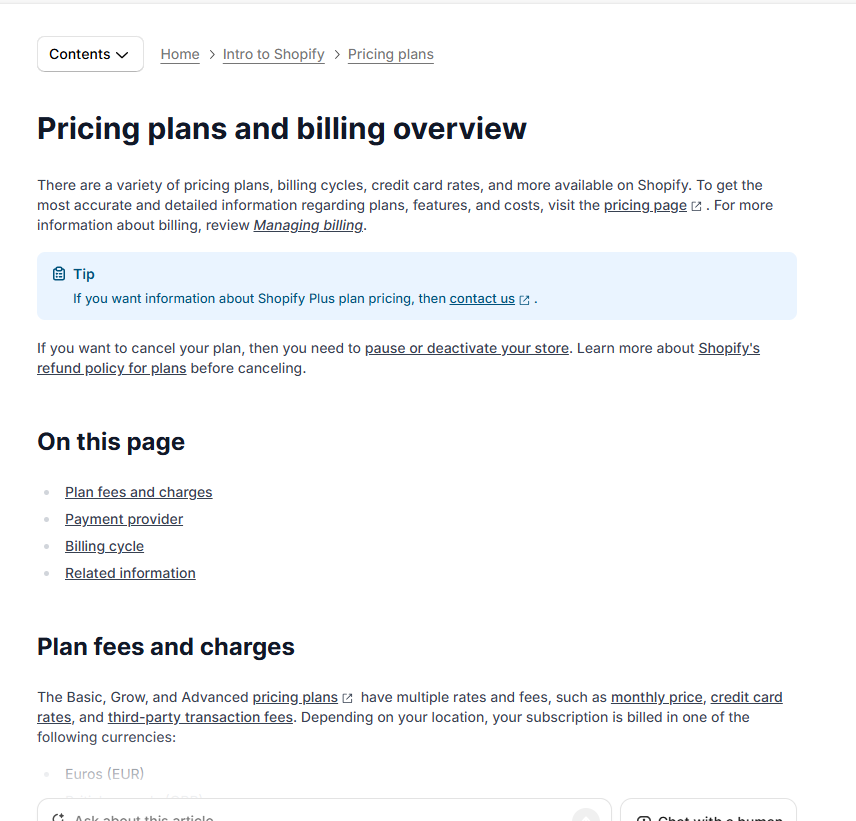
A percentage-plus-fixed-fee structure has a larger effect on low-value orders. The following example uses a rate of 2.9% plus $0.30 only to show the calculation:
|
Order value |
Processing cost |
Effective percentage |
|
$10 |
$0.59 |
5.9% |
|
$25 |
$1.03 |
4.1% |
|
$50 |
$1.75 |
3.5% |
The fixed $0.30 becomes less significant as the order value rises. For a low-priced product, however, the effective fee can be much higher than the headline percentage.
Sellers should also check for international card surcharges, currency conversion and third-party gateway fees. Shopify notes that stores using an external payment provider may be charged by both the provider and Shopify, depending on the plan and location.
The correct figure is the fee shown in the actual payout report. A planning spreadsheet may estimate the cost, but monthly profit calculations should use the amount deducted by the provider.
How Do Currency Conversion and Exchange Rates Affect Profit?
Cross-border dropshipping often involves several currencies. The customer may pay in euros, the store may report in dollars, and the supplier may charge in dollars or yuan. Money can be converted more than once before the order is complete.
Conversion costs can appear as a visible fee or as a spread between the market exchange rate and the rate used by the payment provider. International cards may carry another surcharge. Supplier prices can change when exchange rates move.
Refunds create another complication. The exchange rate on the refund date may differ from the rate on the sale date. A seller can therefore return an amount that is not identical to the original settlement value.
Use the net amount received from the payment provider when calculating revenue. Do not use only the exchange rate shown in a general online search. That rate may not include the provider’s spread or fees.
A simple monthly process is enough:
- Record the gross customer payment.
- Record the settlement currency.
- Record all conversion and payment deductions.
- Compare the net payout with the store’s reported revenue.
- Set a small currency allowance for products with narrow margins.
Sellers operating in several markets should calculate profitability by currency and country. An offer can be profitable in one market but too expensive to fulfill in another.
Why Are Advertising Costs More Than Media Spend?
Advertising cost is often treated as the amount shown in Meta, TikTok or Google Ads. That amount covers media placement. It does not cover everything required to produce and manage the campaign.
A complete advertising budget may include product samples, video editing, graphic design, user-generated content, creator fees, copywriting and landing-page tools. Tracking software and agency fees may also apply.
Failed tests must be counted. If a store spends $1,500 testing three products and only one succeeds, the failed $1,000 is still a business cost. Excluding it creates an unrealistic acquisition cost for the winning product.
A useful calculation is blended customer acquisition cost:
Blended CAC=Total Advertising and Creative Cost/Total New Customers Acquired
Suppose a store spends $5,000 on media and $1,000 on creative production during a month. It acquires 200 new customers.
($5,000+$1,000)÷200=$30
The blended customer acquisition cost is $30. A campaign dashboard may display a $21 cost per purchase for the best campaign, but that number does not represent the full acquisition system.
This distinction becomes more important during scaling. Creative production usually needs to continue because audiences become familiar with old advertisements. A product that is profitable only when creative cost is ignored may not be ready for sustained growth.
How Much Do Refunds, Returns and Replacements Cost?
The cost of a refund is larger than the amount sent back to the customer.
By the time a refund happens, the seller may have already paid for the product, shipping, payment processing and advertising. Some of those expenses are not recovered. If the item is returned, the seller may also pay return shipping or handling. A damaged or customized product may have no resale value.
The average refund cost should be allocated across all orders:
Refund Allowance per Order=Refund Rate×Average Total Cost per Refund
Suppose a store receives 100 orders. Six are refunded, and the average total loss for each refund is $28.
(6×$28)÷100=$1.68
The store should allocate $1.68 to each order when estimating product profitability. This does not mean every order will be refunded. It means the profitable orders must cover the expected losses created by the full group.
Replacement orders should be tracked separately. A free replacement may preserve the customer relationship, but it still requires another product and shipment. Expedited delivery may be needed if the first order was late or damaged.
Track refunds by product, supplier, country and reason. A high level of size-related returns points to a sizing problem. Frequent “not as described” claims may show that the page or supplier images are inaccurate. Delivery complaints may identify a weak shipping route.
What Do Chargebacks Cost a Dropshipping Store?
A refund is normally handled between the seller and customer. A chargeback begins when the customer disputes the transaction through the card issuer.
Stripe explains that a dispute can reverse the payment and deduct the disputed amount and applicable dispute fees from the merchant’s balance. Its official dispute documentation describes the process. Fees vary by country and payment provider, so sellers should check their own agreement and current dispute fee information.
A chargeback can cost the seller:
- The transaction amount
- The product
- The original shipping fee
- A dispute fee
- Time spent collecting evidence
- Possible risk to the payment account
The allowance can be calculated as:
Chargeback Allowance per Order=Chargeback Rate×Average Cost per Chargeback
For example, if 0.5% of orders create a chargeback and the average total loss is $70, the allowance is $0.35 per order.
This is an internal planning figure. Sellers should use their own dispute rate rather than an unverified industry average.
Clear billing descriptors, accurate tracking, prompt support and realistic delivery promises can reduce avoidable disputes. Evidence should be stored from the beginning rather than collected after a case opens.
Which Store and Software Costs Belong to Each Order?
A dropshipping store can accumulate software quickly. One application manages reviews. Another sends emails. Others support tracking, subscriptions, upsells, analytics, customer service or page design.
Each subscription may appear small, but the combined monthly cost can materially reduce profit.
Recurring expenses may include:
- E-commerce platform subscription
- Domain renewal
- Premium theme or page builder
- Email and SMS marketing
- Review and loyalty applications
- Upsell tools
- Order tracking
- Customer support software
- Analytics
- Bookkeeping
- Design or editing subscriptions
Calculate the monthly software cost per fulfilled order:
Software Cost per Order=Monthly Software Expenses/Monthly Fulfilled Orders
If a business spends $420 each month and fulfills 600 orders:
$420÷600=$0.70
At 200 orders, the same software stack would cost $2.10 per order. This is why a tool that makes sense for a large store may be too expensive for a new one.
Audit applications every month. Check whether each tool is being used and whether its function already exists in another subscription. Removing overlapping software can improve margin without changing the customer experience.
How Much Does Customer Support Cost Per Order?
Customer support is a real cost even when the owner does the work.
A customer may ask about product dimensions before buying. After the sale, they may need an address correction, tracking update, replacement or refund. The seller may also need to contact the supplier and prepare evidence for a payment dispute.
Measure support using four figures:
- Tickets per 100 orders
- Average handling time
- Labor cost per hour
- Most common contact reason
The basic allocation is:
Support Cost per Order=Monthly Support Labor Cost/Monthly Fulfilled Orders
If the founder handles support, assign a reasonable hourly value to that time. Ignoring it can make a labor-intensive product appear more profitable than it is.
Support data is also a source of operational insight. Repeated questions about size suggest that the product page needs a better guide. Frequent tracking messages may justify stronger shipping notifications. The cheapest ticket is often the one prevented by clearer information.
What Taxes, Duties and Compliance Costs Can Appear?
Taxes and compliance depend on where the business operates, where customers live, how much the store sells and what products it offers. There is no single tax rate or rule for every dropshipping store.
Potential costs include sales tax, VAT, import duties, customs handling, accounting and product compliance. Some markets also have packaging, recycling or registration requirements. Regulated products may require testing, documentation or insurance.
Tax collected from a customer should not automatically be treated as revenue. It may be money the seller is required to report or remit.
Shipping terms also matter. Under one arrangement, the customer may pay import charges. Under another, the seller may include them in the order. Unexpected duties can lead to rejected packages, refunds and poor reviews even when the seller is not legally responsible for the charge.
Before entering a new market, determine:
- Who collects and remits tax?
- Who pays import duties?
- Which product rules apply?
- Are special labels or documents required?
- How will compliance costs affect the price?
These questions should be reviewed with a qualified local tax or legal professional. They should not be answered through a generic profit calculator alone.
How Do Discounts and Free Shipping Affect Margin?
Discounts are easy to launch and easy to underestimate.
A 10% discount reduces revenue, but the supplier and carrier normally charge the same amount. Payment fees may still be based on the discounted transaction, while advertising costs do not automatically fall.
Common margin reductions include welcome discounts, abandoned-cart coupons, influencer codes, bundle discounts, loyalty points and affiliate commissions.
Use net sales rather than list price:
Net Sales Revenue=Gross Sales−Discounts−Refunds−Taxes Collected
“Free shipping” should also be treated carefully. The delivery is not free. The seller either pays for it from the product margin or includes it in the product price.
Review the average discount per order. A store that advertises a $49.99 product may receive less than that after coupons and promotions. Profit calculations should use the amount customers actually pay.
Affiliate and creator commissions should be included in acquisition cost. Otherwise, partner-driven orders may look more profitable than they are.
How Do You Calculate the True Profit Per Order?
A complete model starts with net revenue and subtracts every cost required to acquire, fulfill and support the order.
True Profit per Order= Net Revenue−Product Cost−Shipping and Fulfillment−Payment Fees−Customer Acquisition Cost−Refund Allowance−Chargeback Allowance−Software Allocation−Support Allocation−Tax and Compliance Cost
Return to the earlier $49.99 product:
|
Cost item |
Amount |
|
Selling price |
$49.99 |
|
Average discount |
-$2.00 |
|
Net revenue before other deductions |
$47.99 |
|
Product cost |
-$14.00 |
|
Shipping and fulfillment |
-$8.00 |
|
Payment processing |
-$1.69 |
|
Customer acquisition |
-$17.00 |
|
Refund allowance |
-$1.68 |
|
Chargeback allowance |
-$0.35 |
|
Software allocation |
-$0.70 |
|
Support allocation |
-$0.80 |
|
Estimated true profit |
$3.77 |
The estimated net margin is:
Net Margin=True Profit/Net Revenue×100
A 7.86% estimated margin offers much less room for error than the original calculation suggested. A small increase in advertising or shipping could remove it.
This model can also calculate the maximum affordable acquisition cost. Add all non-advertising expenses and subtract them from net revenue:
Break-Even CAC=Net Revenue−All Costs Except Acquisition
The business should normally target a CAC below this break-even point. The difference must be large enough to cover fixed business costs and provide profit.
What Numbers Should Sellers Review Every Month?
Profitability should be reviewed with actual transaction data, not old estimates.
Start by exporting orders from the store. Then collect payment settlements, advertising invoices, supplier charges, shipping costs, refunds, disputes and software bills. Reconcile the figures for the same period.
A practical monthly dashboard should include:
|
Metric |
What it reveals |
|
Net revenue |
Revenue after discounts, refunds and collected taxes |
|
Landed product cost |
Product and fulfillment expense |
|
Payment fee rate |
Transaction and cross-border deductions |
|
Blended CAC |
Full cost of acquiring new customers |
|
Refund rate |
Product and fulfillment quality |
|
Chargeback rate |
Payment and service risk |
|
Support cost per order |
Operational workload |
|
Software cost per order |
Recurring overhead allocation |
|
Contribution margin |
Money left after variable costs |
|
True profit per order |
Actual product performance |
Review the figures by product and country. A blended store average can hide a product that loses money or a destination that costs too much to serve.
The sequence should be simple: collect the data, reconcile the totals, allocate irregular costs, calculate product-level profit and compare the result with the previous month.
How Can Sellers Reduce Hidden Dropshipping Costs?
The best savings often come from reducing waste rather than choosing the cheapest supplier.
Start with landed cost. Compare products using the sourcing price plus packaging and destination-specific shipping. A slightly more expensive supplier may provide better quality, faster delivery and fewer refunds.
Packaging should fit the product closely while still protecting it. Reducing unnecessary volume may lower dimensional weight. For products with stable sales, evaluate local inventory or warehouse options where they improve the full financial result.
Next, analyze refunds and support. Improve size charts, product specifications and delivery estimates. Use original photos that represent the product accurately. Send tracking updates before customers need to ask for them.
Review payment and currency costs through actual payout reports. Avoid unnecessary currency conversions. Compare the cost of international cards and third-party gateways where alternatives are available.
Advertising should be managed using blended CAC. Include failed tests and creative production. Establish a break-even CAC before increasing the budget. If acquisition costs rise beyond the product’s margin, pause and diagnose the campaign instead of assuming that additional spend will solve it.
Finally, audit software. Keep tools that save measurable time, improve conversion or reduce support. Remove subscriptions that duplicate another function or remain unused.
What Should You Calculate Before Scaling a Dropshipping Product?
The safest product to scale is not always the one with the highest revenue. It is the one with predictable fulfillment, controlled risk and enough profit left after every cost has been counted.
Before increasing advertising, confirm the landed product cost, net payment received, blended customer acquisition cost and expected refund allowance. Add chargebacks, software and support. Review tax and compliance obligations for the target market.
Use estimates when planning, but replace them with actual data as soon as orders begin. A product that still produces a healthy margin after this complete calculation has a stronger foundation for growth.
The hidden costs of dropshipping cannot be eliminated entirely. They can, however, be measured. Once they are visible, sellers can price more accurately, choose better products and scale with fewer financial surprises.
FAQs About the Hidden Costs of Dropshipping
1. What Are the Most Common Hidden Costs of Dropshipping?
The most common hidden costs include payment processing, currency conversion, refunds, replacement orders, chargebacks, return shipping, software subscriptions, customer support and failed advertising tests. Taxes, duties and compliance expenses may also apply depending on the product and market.
2. How Much Money Do You Really Need to Start Dropshipping?
The required amount depends on the platform, product and marketing method. A realistic starting budget may need to cover a store subscription, domain, samples, essential software, content production, advertising tests and a cash reserve for refunds or delayed payouts. Calculating only the monthly platform fee will underestimate the amount needed.
3. Why Is My Dropshipping Store Making Sales but Not Profit?
Sales can grow while profit falls if customer acquisition, shipping, discounts or refunds increase. Payment fees and software costs can further reduce the margin. Calculate profit from net revenue and include all variable and allocated operating expenses. Do not judge profitability from revenue or advertising ROAS alone.
4. How Do You Calculate the True Profit on a Dropshipping Order?
Start with the amount the customer paid after discounts. Subtract the product, fulfillment, payment fee, acquisition cost, expected refunds, chargebacks, software, support and applicable tax or compliance expenses. The remaining amount is the estimated true profit per order.
5. What Is a Good Profit Margin for Dropshipping?
There is no single margin that works for every dropshipping business. The required margin depends on the product, advertising model, refund rate, target country and operating structure. A useful margin should cover fixed expenses, provide room for cost changes and leave a sustainable profit after fulfillment and acquisition.