
Why Is Your "Customer" Suddenly a Machine?
By late March 2026, the global e-commerce landscape has hit a definitive tipping point. Merchants are no longer just designing storefronts for humans; they are optimizing for AI Shopping Agents. Whether it is a user-deployed OpenClaw instance or Google's Gemini utilizing the Universal Commerce Protocol (UCP), the primary "shopper" is increasingly an algorithm.
This shift means that brand storytelling is taking a backseat to data fidelity and protocol alignment. For high-volume dropshipping and agile retail, being "Agent-Ready" is no longer a luxury—it is the baseline for visibility in 2026.
Who are the Players in Agentic Commerce?
To capture this automated market, businesses must understand the two distinct ways agents interact with a store:
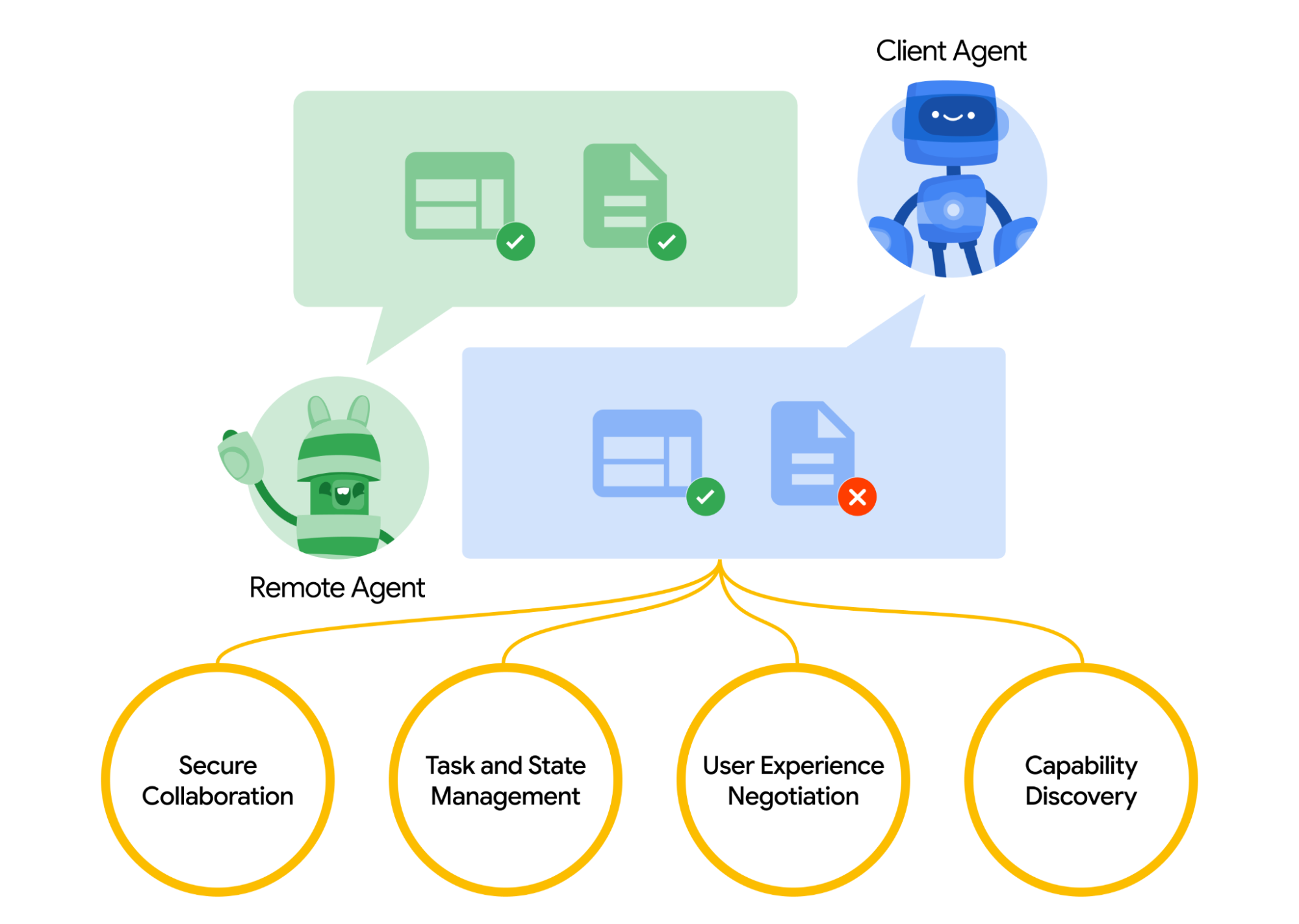
- OpenClaw (The "Computer Use" Agent):This open-source framework physically "browses" a site. It uses visual recognition to find the "Add to Cart" button and executes checkout based on user instructions. It is powerful but fragile; over-complicated UI or slow-loading scripts can cause an OpenClaw agent to fail and move to a competitor.
- Google A2A (The "Protocol" Agent): The Agent-to-Agent (A2A) standard doesn't "scrape"—it "communicates." When a user asks an AI to find a product, the agent pings a store's backend directly for a structured payload. It bypasses the visual UI entirely, favoring stores with the lowest API latency.
Source: Google for Developers
How Does Structured Data Become Your New Storefront?
In an agent-led journey, the AI does not care about your banner ads. It prioritizes Schema.org markup to validate its recommendations. If your product data is not machine-readable, the agent simply cannot "see" your inventory.
Essential 2026 Schema Fields for AI Discovery:
GTIN/MPN: The unique identifier that allows agents to price-match across 50+ sources in milliseconds.shippingDetails: With the March 31 logistics shift, agents now prioritize listings that explicitly confirm "48-hour dispatch."inventoryLevel: Real-time stock status is critical; agents will exclude "Out of Stock" items from the recommendation pool to prevent user friction.material&specifications: Agents require objective data (e.g.,100% Recycled Polycarbonate) over marketing fluff.
What Is the Universal Commerce Protocol (UCP) Update?
On March 19, 2026, Google updated the Universal Commerce Protocol with a new "Cart" capability. This allows agents to build multi-item baskets from a single store before a shopper commits to a purchase.
To support the UCP standard, a merchant's backend must provide:
- Identity Linking: Allowing agents to apply a user's loyalty points or member-only pricing automatically.
- State Machine Logic: A checkout flow that isn't a series of pages, but a State Object. If an agent hits a bank verification check, it must be able to hand the session to a human and resume control once resolved.
- Real-Time Catalog Endpoints: Agents now query live catalog data rather than relying solely on static product feeds.
How Do You Defeat the "Bot Filter" Paradox?
In 2026, the greatest threat to a store's conversion rate isn't a competitor—it is an over-aggressive firewall. Most standard security settings (WAFs) are still tuned to 2024 standards, treating any high-speed automated browser as a malicious DDoS attack or a data scraper.
When a legitimate OpenClaw agent or a Google A2A proxy attempts to verify your stock or execute a checkout for a customer, these "silent" filters often trigger a CAPTCHA or a 403 Forbidden error. For a human, a CAPTCHA is an annoyance; for an autonomous agent, it is a terminal wall. To survive the "Bot Filter" paradox, merchants must shift from a "Block-by-Default" to an "Identity-First" security model.
1. Implement Cryptographic Agent Whitelisting
Stop relying on IP addresses to identify "good" bots. IPs are easily spoofed or rotated. Instead, configure your server to recognize Cryptographic Signatures in the HTTP headers. Major AI providers and agent relays now sign their requests with a unique private key.
- Action: Update your Cloudflare or Akamai settings to allow traffic that carries a verified signature from trusted entities like Googlebot-Shopping, OpenAI, or certified OpenClaw Relay nodes. This ensures the "Machine" can enter the store while malicious scrapers remain locked out.
2. Transition from CAPTCHAs to Tokenized Authentication
If a user has already authenticated their identity with their AI agent (using biometric or multi-factor auth on their device), your store should not ask them to "click on traffic lights" again.
- The 2026 Solution: Implement support for JSON Web Tokens (JWT)or OAuth 2.0 When an agent presents a valid token representing a verified human user, your security layer should automatically grant "Agent-Exemption Status." This allows the bot to proceed directly to the
POST /cartendpoint without ever seeing a login screen.
3. Create a "Dedicated Agent Path" (Subdomain Optimization)
A sophisticated way to manage the paradox is to create an "Agent-Only" lane for your store. By serving a lightweight, JSON-only version of your storefront at agent.yourstore.com, you can offer agents a high-speed environment free from heavy JavaScript, pop-ups, and anti-bot scripts.
- The Benefit: This "headless" path allows you to maintain strict security on your human-facing site while providing a friction-free "API Storefront" for the machines. It reduces server load and ensures that the agent's "Computer Use" skills don't get tripped up by redundant UI elements.
4. Adaptive Rate Limiting vs. Hard Blocks
Instead of a hard block that severs the connection, use Adaptive Rate Limiting. If a request looks like a shopping agent but is hitting your server 100 times per second, don't kill the session—throttle it. Return a 429 Too Many Requests status with a Retry-After header. Modern agents are programmed to respect these headers, allowing them to finish the purchase at a pace your server can handle without triggering a total blackout.
Which Metrics Matter in the Agentic Era?
If a customer never visits your site because their agent bought for them in the background, traditional "Time on Site" metrics are obsolete.
New KPIs for your Dashboard:
- API Latency: If your server takes >200ms to return a price, the agent moves to a faster competitor.
- Data Fidelity Score: Does the price the agent "saw" match the price at final checkout? Inconsistencies lead to "Agent Abandonment."
- GEO Visibility Score: How often is your brand the #1 recommendation in "Zero-Click" Gemini or Perplexity searches?
Conclusion: Are You Ready for Zero-Click Commerce?
Success in 2026 is no longer about how many "clicks" you get; it's about how many "API Handshakes" you complete. By optimizing for OpenClaw and Google A2A, you ensure that when the "Machines of Demand" come looking, your store is the most readable and reliable node in the network. The machine is the new customer. It's time to start speaking its language.
Frequently Asked Questions (FAQ)
Q1: How can I identify if an AI agent like OpenClaw is visiting my store?
A: Monitor your server logs for Cryptographic User-Agent headers and "superhuman" navigation—such as accessing product metadata (JSON-LD) and the checkout API within milliseconds without loading CSS or images.
Q2: Will the March 31 TikTok logistics update affect my AI agent rankings?
A: Yes. Agents prioritize Reliability Metrics. If your metadata doesn't explicitly confirm a 48-hour dispatch window, AI proxies will flag your listing as "High Risk" and drop your ranking.
Q3: Is whitelisting OpenClaw safe or does it invite scrapers?
A: It is safe if you use Signature-Based Whitelisting. By verifying the unique digital signature of the agent relay, you allow legitimate "buyers" while maintaining a hard block on unauthorized scrapers.
Q4: Do I need a separate "Agent-Only" subdomain for Google A2A?
A: It's a best practice, not a requirement. A headless API (e.g., agent.yourstore.com) removes UI friction and prevents heavy JavaScript from breaking the agent's autonomous checkout logic.
Q5: How does "Zero-Click Commerce" impact my traditional analytics?
A: "Session Duration" and "Pageviews" will decline. In 2026, focus on "Conversion-to-Handshake" ratios to track "Ghost Conversions"—sales where the AI agent buys directly via API without a human click.