What are the key limitations of Spocket
While Spocket is a solid starting point for beginners, it does come with several limitations that become more noticeable as your business grows. Understanding these gaps helps you decide whether you need a stronger spocket alternative.
Higher product costs reduce profit margins
One of the most common concerns is pricing. Because Spocket focuses on US and EU suppliers, product costs are generally higher than global sourcing platforms. Many users report that this directly impacts profitability, especially when running paid ads. Even small cost differences can make scaling difficult.
Limited product catalog compared to global platforms
Although Spocket offers tens of thousands of products, its catalog is still smaller than large global marketplaces. This can limit your ability to test niche or trending products quickly. Sellers looking for viral or fast-moving items may find fewer options available.
Restricted branding and customization options
Spocket does offer branded invoicing, but deeper customization like private labeling or custom packaging is limited. In most cases, product packaging remains generic unless you negotiate directly with suppliers. This makes it harder to build a strong brand identity.
Paid plans required for full access
Spocket is not fully functional on a free plan. To unlock premium products and key features, you need a paid subscription starting around $39.99 per month. This can add pressure for beginners who are still testing products.
Less flexibility in supplier control
Spocket operates on a curated supplier model, which ensures quality but reduces flexibility. You cannot easily negotiate pricing, customize products at scale, or switch suppliers quickly when testing new ideas.
Scaling challenges with growing order volume
As your store grows, consistency becomes critical. Since Spocket relies on multiple independent suppliers, maintaining stable inventory, processing speed, and quality control can become more complex at higher order volumes.
These limitations do not mean Spocket is a bad platform. It simply means it is better suited for beginners or early-stage stores. Once you start focusing on margins, branding, and long-term growth, many sellers naturally begin looking for a more scalable spocket alternative.
What is CJdropshipping and how it compares
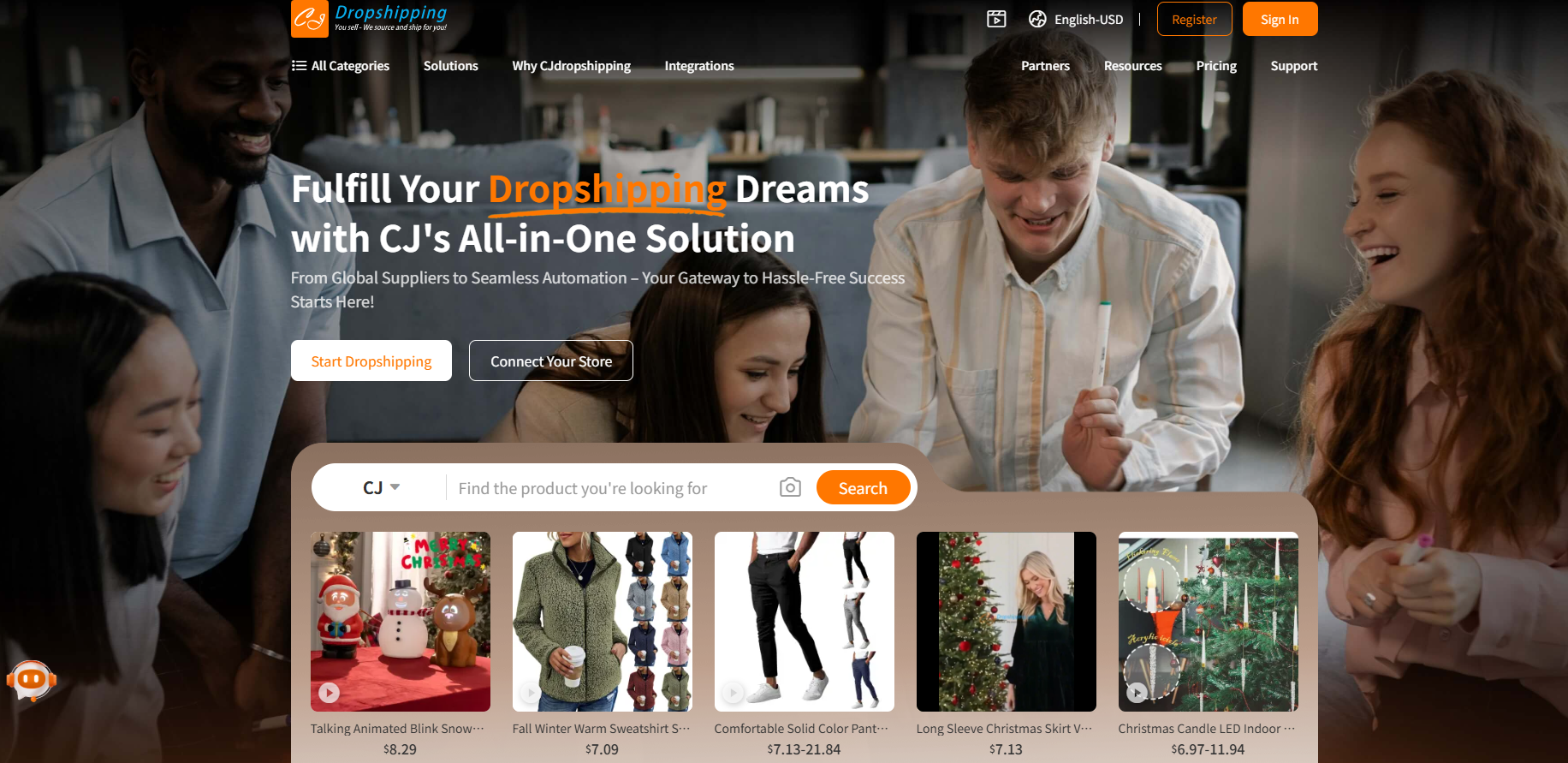
CJdropshipping is an all-in-one dropshipping platform designed to help sellers source products, manage inventory, and fulfill orders within a single system. Unlike marketplace-style platforms, it operates more like a backend supply chain solution that connects you directly with manufacturers and logistics services.
This difference in structure is what makes it a strong spocket alternative, especially for sellers who want more control over pricing, product selection, and branding.
What is CJdropshipping
At its core, CJdropshipping provides three main functions:
- Product sourcing
You are not limited to a fixed catalog. You can request sourcing for almost any product, and agents will help find suppliers and negotiate pricing. This is especially useful for trending products.
- Order fulfillment and logistics
CJ handles picking, packing, and shipping. With warehouses in regions like the US and Europe, it can combine global sourcing with faster local delivery options.
- Automation and integrations
It connects with Shopify, WooCommerce, Amazon, TikTok Shop, and more, syncing orders and tracking automatically.
Another key advantage is its pricing model. CJ is free to use with no monthly subscription, and you mainly pay for product cost and shipping, which lowers the barrier for beginners.
How CJdropshipping compares to Spocket
The biggest difference comes down to business model flexibility vs simplicity.
Product sourcing and variety
Spocket offers a curated catalog focused on US and EU suppliers. CJdropshipping, on the other hand, provides access to a much larger global supply network with hundreds of thousands of products.
This means:
- Spocket is easier to browse
- CJ is more powerful for finding winning products early
Pricing and profit margins
CJ generally offers lower product costs because it connects directly with manufacturers, especially in China. This gives sellers more room for profit or ad spend.
Spocket products tend to be priced higher, which can reduce margins but offer more predictable quality and shipping.
Branding and customization
CJdropshipping stands out in this area. It supports:
- Custom packaging
- Logo printing
- Product customization
These features are critical if you want to build a long-term brand rather than just resell products.
Spocket offers basic branding like invoices, but deeper customization is more limited.
Fulfillment and scalability
CJ operates its own fulfillment system with global warehouses, allowing sellers to scale more efficiently as order volume grows.
Spocket relies more on individual suppliers, which works well for smaller stores but can become harder to manage at scale.
Ease of use vs control
- Spocket is more beginner-friendly with a simpler interface
- CJdropshipping offers more control but may require a bit more hands-on management
When CJdropshipping is the better choice
CJdropshipping becomes a stronger spocket alternative if you:
- Want to test trending products quickly
- Need lower product costs to improve margins
- Plan to build a branded store
- Are preparing to scale beyond the beginner stage
For many sellers, the transition happens naturally. They start with simple tools, then move to platforms that give them more control over sourcing, branding, and fulfillment as their business grows.
In short, Spocket is great for getting started, but CJdropshipping is built for flexibility and scaling. The right choice depends on whether you prioritize simplicity or long-term growth potential.
| Comparison Point |
CJdropshipping |
Spocket |
Why CJ Has the Edge |
| Business Model |
All-in-one dropshipping partner with sourcing, fulfillment, warehousing, POD, branding, and content services. |
Primarily a supplier marketplace focused on connecting sellers with mostly US/EU suppliers. |
CJ offers a more complete operational solution, not just product access. |
| Product Sourcing |
Supports product sourcing requests, helping sellers find products even if they are not already listed. |
Mainly works through its existing supplier catalog. |
CJ is stronger for testing new ideas and custom sourcing. |
| Pricing Structure |
Promotes no monthly fee / free setup for core access. |
Uses subscription-based paid plans for broader feature access. |
CJ is more cost-efficient for beginners and lean operators. |
| Warehousing |
Offers global warehouses and free storage periods in China and US warehouses. |
Emphasizes supplier locations, especially in the US/EU, rather than CJ-style warehouse infrastructure. |
CJ gives sellers more logistics flexibility and control. |
| Customization & Branding |
Provides custom packaging, white label, private labeling, and branding support. |
Offers branded invoicing. |
CJ delivers deeper branding options beyond invoicing. |
| Print on Demand |
Includes built-in POD services. |
Spocket mentions print-on-demand offerings, but its core positioning is supplier access and catalog curation. |
CJ is better positioned for sellers wanting POD plus sourcing and fulfillment in one place. |
| Content Creation Support |
Offers product photo and video shooting services. |
No comparable core content-production service is prominently highlighted on its main feature pages. |
CJ helps with both operations and creative assets. |
| Quality Control |
States quality inspection for each package. |
Focuses more on verified suppliers and curated products. |
CJ adds an extra layer of operational assurance. |
| TikTok Shop Support |
Highlights dedicated TikTok Shop integration and TikTok-oriented product support. |
Spocket’s positioning is broader general ecommerce integration. |
CJ is a better fit for sellers targeting TikTok-driven growth. |
| Scalability for Custom Needs |
Better suited for sellers needing sourcing agents, fulfillment support, warehousing, branding, and operational customization. |
Better suited for sellers who want curated suppliers and simpler marketplace-style sourcing. |
CJ is more flexible for scaling beyond basic dropshipping. |
How to choose the right platform for your business stage
Choosing the right spocket alternative is not about picking the “best” platform overall. It is about choosing what fits your current stage of business. The needs of a beginner are very different from someone handling hundreds of orders per day, so your tools should evolve as you grow.
What platform fits the beginner stage
At the beginning, your main goal is speed and simplicity. You want to launch quickly, test ideas, and understand how the business works without too much complexity.
At this stage, look for:
- Easy store integration
- Simple product import process
- Low upfront cost
- Fast setup without technical skills
You do not need advanced branding or complex supply chain control yet. What matters most is getting your first sales and learning what works.
What platform fits the testing stage
Once your store is live, your focus shifts to finding winning products. This is where many sellers test multiple products each week.
At this stage, you need:
- Flexible sourcing options
- Competitive product pricing
- Fast product listing and replacement
- Access to trending items
This is where a more advanced spocket alternative becomes valuable. Instead of being limited to a fixed catalog, you can quickly source new products and stay ahead of trends.
What platform fits the scaling stage
When you start getting consistent orders, your biggest challenge becomes operational stability.
At this stage, prioritize:
- Reliable order fulfillment
- Consistent product quality
- Faster processing times
- Stable shipping lines
For example, using a system that combines sourcing with fulfillment can reduce delays and improve customer satisfaction. This is also where working with a platform that offers integrated logistics support, like CJ’s fulfillment network, can help reduce errors and manual work.
What platform fits the brand-building stage
Once your store is profitable, the goal is no longer just selling products. It becomes about building a long-term brand.
At this stage, you should focus on:
- Custom packaging and private labeling
- Strong supplier relationships
- Consistent product quality
- Better customer experience
Branding can increase your perceived value and improve repeat purchase rates. Even small upgrades like logo packaging can make your store feel more professional and trustworthy.
How to transition between stages smoothly
One common mistake is switching platforms too late or too early. The key is to upgrade when your current system starts limiting your growth.
A simple way to think about it:
- If you cannot find enough winning products → upgrade sourcing
- If your margins are too low → improve pricing and suppliers
- If customers complain about delivery → upgrade fulfillment
- If your store looks generic → invest in branding
The best spocket alternative is not static. It should grow with your business. By choosing the right tools at the right time, you can avoid unnecessary costs, reduce operational stress, and build a more scalable dropshipping business.
How to start dropshipping with a better alternative
Starting with a strong spocket alternative gives you an advantage from day one. Instead of being limited by product selection or pricing, you can build a more flexible system that supports both testing and scaling. The key is to follow a clear, practical process.
How to find a winning product
Product selection is the foundation of your business. Focus on items that solve a clear problem, have strong visual appeal, or are already trending.
You can validate ideas by checking:
- TikTok trending products
- Amazon Best Sellers
- Competitor ads on Facebook
A good product usually has a selling price between $15–$50 and enough margin for at least 20%–30% profit after costs.
How to validate demand quickly
Before investing heavily, test your product with small ad budgets. Start with $10–$30 per day and monitor key metrics.
Look for early signs such as:
- Click-through rate above 2%
- Add-to-cart activity within the first 1–2 days
- At least one sale within 2–3 days
If a product shows traction, you can scale gradually. If not, move on quickly and test another product.
How to optimize sourcing for better margins
This is where choosing the right spocket alternative matters most. Instead of relying on fixed suppliers, use a sourcing model that allows you to compare pricing and shipping options.
For example, with CJ’s sourcing service, you can submit a product request and typically receive supplier quotes within 24 hours. This helps you:
- Lower product costs
- Access trending items faster
- Avoid saturated supplier listings
Even a small cost reduction can significantly improve your ad performance and profitability.
How to improve your branding early
You do not need a fully developed brand at the start, but adding simple branding elements can make a difference.
Start with:
- A clean, niche-focused store design
- Consistent product images
- Basic logo and brand colors
As you scale, you can upgrade to custom packaging and private labeling. Many sellers see conversion rates improve by 10%–30% once branding becomes more consistent.
How to streamline fulfillment from the beginning
Fast and reliable fulfillment is critical, even in the early stages. Delays can lead to refunds, chargebacks, and negative reviews.
Using an integrated fulfillment system helps you:
- Automate order processing
- Reduce manual errors
- Provide tracking updates faster
For example, CJ’s fulfillment service connects sourcing and shipping in one place, which reduces delays and keeps operations smooth as you grow.
How to scale sustainably
Once you find a winning product, focus on scaling without breaking your operations.
Key priorities include:
- Increasing ad spend gradually
- Monitoring profit margins closely
- Ensuring supplier stability
- Improving customer experience
Stores that scale successfully usually combine good sourcing, consistent branding, and reliable fulfillment rather than relying on a single factor.
FAQ
What is the best spocket alternative for beginners
A good spocket alternative for beginners should be easy to use while still offering room to grow. Look for platforms that provide flexible product sourcing and low upfront costs so you can test multiple products without high risk. Simplicity matters at the start, but having access to better pricing and product variety will help you scale faster later.
Is Spocket still worth using in 2026
Spocket can still be useful for beginners who want quick access to US and EU suppliers. It is a solid option for learning the basics. However, as competition increases and margins become tighter, many sellers transition to more flexible solutions that offer better pricing and broader sourcing options.
How important is product cost in dropshipping
Product cost plays a major role in profitability. A difference of just $3–$5 per unit can significantly impact your ability to run ads and scale. Most successful stores aim for at least 20%–40% net profit margins after ad spend, which is easier to achieve with more competitive sourcing.
Can I build a real brand with dropshipping
Yes, but it depends on your approach. Stores that invest in branding such as custom packaging, consistent design, and better customer experience tend to perform much better long term. Many sellers start with simple product testing and gradually move into branding once they find winning products.
How fast should shipping be to stay competitive
In most major markets like the US, shipping times between 7–12 days are generally acceptable. Faster shipping improves customer satisfaction and reduces refund rates. As your store grows, offering more reliable and predictable delivery becomes more important than just speed.
Do I need a sourcing agent or platform
If you are only testing a few products, you may not need advanced sourcing right away. But as you scale, having access to a sourcing system can help you find better pricing, improve product quality, and secure more stable suppliers. This becomes especially important when handling larger order volumes.
When should I switch to a spocket alternative
You should consider switching when your current platform starts limiting your growth. Common signs include low profit margins, difficulty finding new products, lack of branding options, or fulfillment issues. Upgrading your system at the right time helps you scale more smoothly.