
Sweden is one of the most attractive dropshipping markets in Northern Europe for one simple reason: customers expect a high standard, but they are also highly comfortable buying online. That combination creates a real opportunity for EU sellers who can offer fast delivery, clear policies, and products that feel useful rather than gimmicky. At the same time, Sweden is not a market where low-effort dropshipping stores tend to last. Buyers care about trust, transparency, product safety, and the overall shopping experience. EU sellers that treat Sweden like a serious e-commerce market can build a durable business; sellers who rely on vague shipping times, weak product pages, and poor support usually struggle. Swedish and EU consumer rules also matter. Distance selling generally comes with a 14-day right of withdrawal, businesses must provide required pre-contract information, and product safety obligations apply across the EU under the General Product Safety Regulation. For imported low-value goods, the EU’s IOSS scheme exists to simplify VAT collection for consignments not exceeding €150.
This guide is written for EU-based sellers who want to enter Sweden in a more strategic way. Instead of promising “easy money,” it focuses on practical choices: what kind of supplier model works best, how to think about compliance, what product types fit Swedish buying behavior, which suppliers are worth considering, and which product categories are more likely to win in 2026. The point is not to chase random viral items. The point is to build a Sweden-ready store with products that solve everyday problems, ship fast enough, and can be marketed honestly.
Why Sweden is a strong dropshipping market for EU sellers
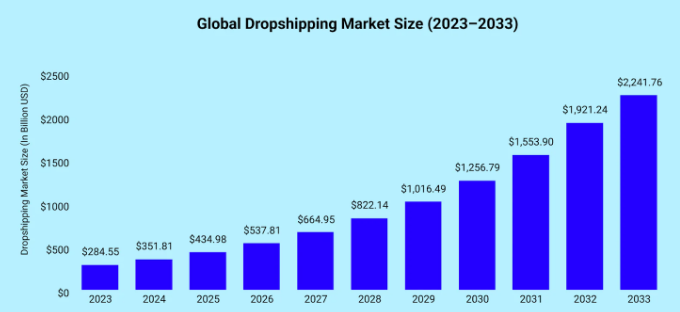
Sweden rewards stores that look reliable, feel local, and minimize friction. In many dropshipping markets, you can sometimes get away with long shipping times if the price is low enough. In Sweden, that tradeoff is weaker. Customers are used to polished online experiences, good product information, straightforward returns, and predictable delivery. That is why EU sellers often have an edge over non-EU competitors: they can use EU or nearby fulfillment, clearer VAT handling, and easier customer-service workflows.
Another reason Sweden is appealing is that it is a good “quality-first” market. You do not need the cheapest possible product to succeed. You need the product to make sense. Stores that position themselves around practical daily-use products, home organization, pet care, outdoor comfort, family convenience, and tasteful home or lifestyle upgrades tend to fit the market better than stores filled with novelty junk. In other words, Sweden is a market where thoughtful merchandising matters.
For EU sellers, there is also a structural advantage. If you already operate inside the EU, you are better placed to understand EU VAT rules, consumer information requirements, and product-safety expectations. The EU’s VAT e-commerce framework and IOSS were designed to simplify cross-border e-commerce compliance, while consumer law across EU markets gives shoppers rights that businesses need to reflect in their store policies and support processes.
That does not mean Sweden is effortless. It means the market is attractive if you run your business like a real retailer.
The Sweden-specific mindset: what customers actually want
Before choosing products, it helps to understand the customer mindset you are selling into.
Swedish shoppers generally respond better to products that are functional, durable-looking, clean in design, and easy to explain. Overhyped landing pages with exaggerated claims may still get clicks, but trust drops quickly if the offer feels cheap or manipulative. A store aimed at Sweden should usually lean into clarity over hype. Product pages should explain what the item does, who it is for, what materials or features matter, realistic delivery timing, and how returns work.
Three broad themes perform especially well in Sweden-oriented stores.
The first is practical simplicity. Products that reduce clutter, improve routine, or save time fit naturally. This includes home organizers, ergonomic accessories, kitchen tools, pet accessories, and baby convenience products.
The second is comfort plus lifestyle. Sweden has long winters, variable weather, and a strong culture around home comfort and functional living. That makes products tied to cozy interiors, seasonal convenience, home care, and light outdoor use appealing.
The third is sustainability-adjacent buying behavior. This does not mean every winning product must be explicitly “eco.” It means Swedish buyers are more likely to care whether an item looks reusable, long-lasting, low-waste, or locally fulfilled. Even when a product is not overtly green, your offer performs better if you emphasize quality, utility, and reduced waste rather than impulse consumption.
The lesson is simple: if a product looks disposable, misleading, or badly matched to the Nordic lifestyle, it becomes harder to sell.
What EU sellers must get right before launching in Sweden
Too many dropshipping blogs jump straight to products without covering the commercial basics. For Sweden, that is a mistake. Your success depends as much on operations and compliance as on your ad creative.
Start with VAT and import structure. If you are selling imported low-value goods into the EU, the Import One Stop Shop can simplify VAT declaration and payment for consignments up to €150, and the old small-consignment VAT exemption has already been removed. That matters because “surprise charges on delivery” are poison for conversion and customer retention. EU buyers want to know the real delivered price up front.
Next is consumer information. Swedish and EU consumer rules require businesses selling at a distance to provide clear information, including the right of withdrawal. As a general rule, consumers have 14 days to withdraw from remote purchases, and if a business fails to provide the required information, the withdrawal period can be extended dramatically.
Then there is product safety. The General Product Safety Regulation applies across the EU/EEA, and the Swedish Consumer Agency highlights it as part of the applicable framework. If you are selling general consumer products, you need to think beyond “Can I source this?” and ask “Can I stand behind this product if something goes wrong?” That is especially important for children’s items, electronics, chargers, cosmetics-adjacent products, and any item making health or safety claims.
Finally, logistics must be believable. Sweden is not a market where “7–20 business days” feels premium unless the product is niche, personalized, or clearly worth the wait. In practice, EU stock or at least Europe-based fulfillment gives you a major conversion advantage.
How Dropshipping Works in Sweden
Dropshipping in Sweden works much like it does in other e-commerce markets, but the expectations around trust, delivery, and consumer protection are higher. Instead of holding inventory yourself, you list products on your online store, collect customer orders, and then forward those orders to a supplier, who ships the items directly to the customer in Sweden. Your profit is the difference between the retail price you charge and the supplier’s product and fulfillment cost.
In practice, the process usually looks like this:
1) You build a store and choose products
The first step is creating an online store, usually on a platform like Shopify or WooCommerce, and selecting products that match a clear niche. For Sweden, this works best when the catalog feels practical and trustworthy rather than random or overly trend-driven. Products for home organization, pet care, family convenience, outdoor comfort, and minimalist lifestyle stores tend to fit the market better than low-quality novelty gadgets.
2) A customer in Sweden places an order
When a Swedish customer buys from your store, they pay the retail price shown on your website. At this point, your store should already make key details clear, including shipping time, return terms, product information, and pricing transparency. Swedish consumers are used to polished online shopping experiences, so unclear policies or vague delivery estimates can quickly reduce trust.
3) You pass the order to your supplier
After receiving the order, you send the customer details to your supplier manually or through an automated integration. The supplier then prepares the package and ships it directly to the customer. In a standard dropshipping model, you never physically handle the product yourself.
This is why supplier choice matters so much. If the supplier is slow, ships poor-quality items, or provides inaccurate stock information, your customer blames your store, not the supplier.
4) The supplier ships the product to Sweden
This is the stage where many dropshipping businesses either succeed or fail. Sweden is not an ideal market for extremely long shipping times unless the product is highly unique or personalized. That is why EU sellers often perform better when they use suppliers with EU warehouses or at least reliable European shipping lines. Faster and more predictable delivery improves both conversion rate and customer satisfaction.
5) You handle customer service, returns, and brand experience
Even though the supplier ships the product, your business remains responsible for the overall customer experience. That includes answering questions, resolving complaints, handling refunds, and making sure your policies align with Swedish and EU consumer expectations. In other words, dropshipping is not “hands-off retail.” It is a fulfillment model, not an excuse to avoid service quality.
Why Sweden is different from some other dropshipping markets
The basic mechanics of dropshipping are simple, but Sweden adds a few important layers. Customers expect transparent pricing, realistic shipping promises, and clear return rights. Trust signals such as professional design, detailed product pages, accessible customer support, and reliable order tracking matter more than aggressive sales tactics. This means the classic “cheap product + hype ad + vague shipping” model is much harder to sustain in Sweden than in lower-trust markets.
A simple example
Imagine you run a Sweden-focused pet store and list a reusable pet hair remover for SEK 299. A customer places an order on your store. You then purchase the item from your supplier for the equivalent of SEK 120, including fulfillment costs. The supplier ships the product directly to the customer in Sweden, and your gross margin is the difference between your selling price and sourcing cost. From the customer’s perspective, however, they bought from your store, so your branding, communication, and support determine whether the experience feels premium or disappointing.
The key takeaway
Dropshipping in Sweden works best when you think like a retailer, not just a middleman. The model itself is simple: market products, collect orders, and let the supplier fulfill them. But long-term success comes from choosing the right suppliers, selecting products that fit Swedish demand, and creating a store experience that feels reliable, clear, and worth trusting.
How to choose a supplier for Sweden
The right supplier for Sweden is not necessarily the supplier with the biggest catalog. It is the supplier whose operating model matches the type of store you want to build.
If you want trend-driven general dropshipping, you need a supplier that can source quickly, offer a broad catalog, and ideally provide European warehousing or reliable line-haul options into Europe.
If you want a cleaner brand with more stable products, a curated supplier marketplace with verified EU suppliers is often stronger than an ultra-open catalog.
If you want a customized brand based on apparel, posters, accessories, or gifts, print-on-demand suppliers with European fulfillment are usually a better fit than classic dropshipping platforms.
For Sweden specifically, these five criteria matter most:
Fast or at least predictable delivery into Sweden.
Transparent processing times and inventory sync.
Product pages with usable data, images, and variants.
Reasonable return and issue-resolution workflows.
A catalog that fits a quality-first market instead of only cheap impulse buys.
With that in mind, here are five suppliers worth considering.
1) CJdropshipping
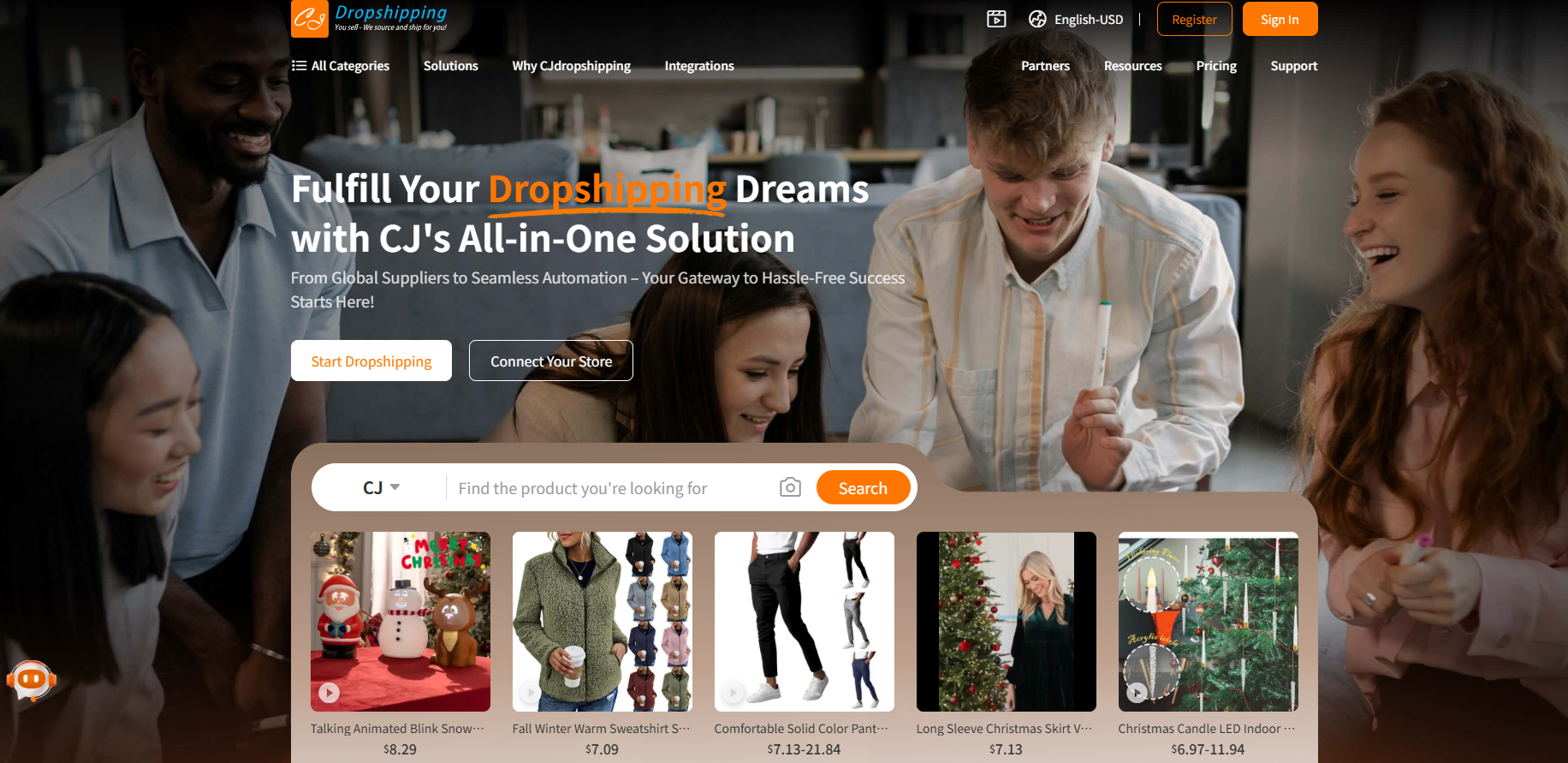
CJdropshipping is one of the most widely used all-in-one dropshipping platforms and belongs on any serious shortlist for Sweden-focused EU sellers. Its main strength is flexibility. CJ combines product sourcing, a very large catalog, fulfillment services, POD options, and international logistics inside one ecosystem. The company also promotes sourcing-agent support and positions itself as a broad solution for dropshippers and DTC brands.
For EU sellers, CJ is attractive because it can bridge the gap between “cheap source markets” and “acceptable customer experience.” Instead of being limited to whatever happens to be listed by a small set of local suppliers, you can search for trend products, request sourcing, and in some cases rely on European warehouse options. That gives you more room to test products aggressively while still improving delivery times compared with direct-from-factory shipping only. CJ’s own materials also emphasize global logistics and sourcing resources.
Best for
General dropshipping stores, product testing, trend products, hybrid sourcing, and sellers who want breadth.
Advantages
CJ’s biggest advantage is catalog flexibility. If you are testing many offers, building one-product stores, or pivoting fast, CJ is usually more adaptable than a narrowly curated marketplace. Another strength is its sourcing capability: you are not limited to a fixed set of “pre-approved” items. That matters when you identify a potential winner and want a better version, custom packaging, or a more competitive cost structure. It also combines multiple functions in one place, which helps operators who want fewer moving parts.
Downsides
The huge catalog is also a weakness. Quality and consistency vary by item, so you have to vet products aggressively. Processing and shipping performance can differ across products and routes, which means operational discipline matters. CJ can work very well, but it is not a “set it and forget it” supplier. For Sweden, that means you should prioritize EU stock when available, avoid fragile/problematic categories, and order samples before scaling.
Bottom line
CJdropshipping is the most versatile option on this list and arguably the strongest choice for sellers who want access to trending products without giving up the possibility of a more polished EU-facing store. It is especially good when you want to validate offers fast, then optimize.
2) Spocket
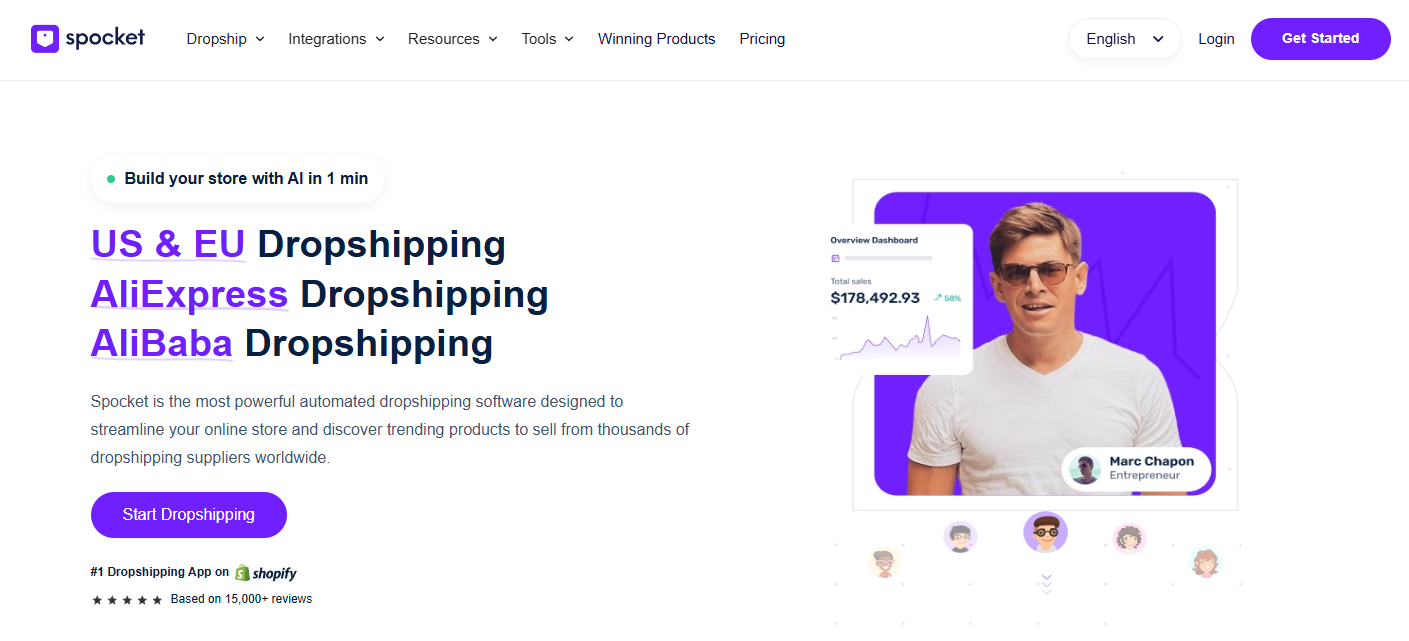
Spocket built its reputation around access to US and EU suppliers and positions itself as a more curated alternative to old-school mass-catalog dropshipping. Its messaging emphasizes top-rated US and EU suppliers, easier importing, and product sourcing designed to streamline store operations.
For Sweden, Spocket makes sense because it aligns with one of the key market requirements: local or regionally close fulfillment. If your store strategy is to sell products that can arrive faster and feel more premium, a marketplace built around EU suppliers can reduce the number of bad customer experiences caused by long cross-border shipping.
Best for
Beginner to intermediate sellers who want a cleaner catalog and more EU-based fulfillment options.
Advantages
The biggest advantage is supplier geography. Since Spocket is centered on US and EU sourcing, it is easier to build a store with delivery promises that Swedish customers find credible. The platform also tends to appeal to sellers who prefer a more curated sourcing experience instead of digging through a very broad open catalog. In addition, order management and store integrations are built to be beginner-friendly.
Downsides
The main tradeoff is breadth and price competitiveness. A more curated marketplace often means you may have fewer ultra-trendy “test anything” options than on a platform like CJ. Product costs can also be higher, which reduces room for reckless pricing. That is not necessarily bad for Sweden, but it does mean you need better positioning, bundles, or average order value strategy.
Bottom line
Spocket is a solid choice if your priority is a cleaner EU-focused sourcing model rather than maximal product experimentation. It fits stores that want to look more premium from day one.
3) Syncee
Syncee operates as a wholesale and dropshipping marketplace connecting online stores and suppliers across multiple regions, including the EU. Its marketplace positioning emphasizes partnerships with premium suppliers and access to many brands worldwide, while its EU-facing materials specifically highlight verified EU-based suppliers, competitive pricing, and fast local fulfillment.
That makes Syncee a very interesting option for Sweden if you want less of a “trend hacker” supplier and more of a catalog built from real suppliers and brands. In practice, Syncee can work well for niche stores, home/lifestyle stores, pet stores, and retailers who want more stable assortments.
Best for
Niche stores, brand-adjacent stores, EU-oriented product sourcing, and sellers who prefer stable catalogs over fast-moving fads.
Advantages
Syncee’s core advantage is the marketplace structure. You are sourcing from suppliers that are more likely to look like genuine wholesale partners rather than anonymous low-information listings. This improves your chances of getting better product data, clearer fulfillment expectations, and more sustainable long-term assortment planning. For Sweden, that is helpful because you can build a store around consistency and trust.
Downsides
Compared with a platform like CJ, Syncee may feel less ideal for wild product testing at speed. Some sellers may also find that the best supplier opportunities require more careful evaluation and a more retail-like mindset. You usually need stronger merchandising discipline to succeed with Syncee because the play is not merely “find a TikTok winner and move fast.”
Bottom line
If you want to build a more durable, niche-focused store for Sweden and value supplier quality over sheer catalog chaos, Syncee is one of the strongest options available.
4) Avasam
Avasam is best known as an automated dropshipping platform built around verified UK-based suppliers, automation, inventory synchronization, multi-channel selling, and operational governance. Its public positioning emphasizes verified suppliers, automated order processing, stock sync, pricing sync, and support for multiple sales channels. Older company materials also note UK and Europe-based suppliers.
Although it is UK-centered, Avasam can still be relevant for EU sellers targeting Sweden, especially if your store strategy prioritizes operational stability and vetted supplier relationships over maximum product novelty.
Best for
Marketplace sellers, operations-focused businesses, and stores that care deeply about automation and supplier verification.
Advantages
Avasam’s main strength is process reliability. Inventory synchronization, automated order workflows, and verified suppliers are not glamorous features, but they matter a lot when scaling. If your goal is to reduce overselling, manual admin, and supplier surprises, Avasam is appealing. It can also fit sellers using multiple channels, not just a single Shopify storefront.
Downsides
Its UK focus means it may not always be the first-choice platform for a pure EU localization play after Brexit, depending on your fulfillment setup and specific suppliers. It is also less associated with flashy trend-finding than CJ. So if your entire strategy is viral-product testing, Avasam is not the most natural first pick.
Bottom line
Avasam is best seen as an operations-first supplier platform. It is a smart option for sellers who want supplier governance and automation more than endless catalog breadth.
5) Printful
Printful is not a classic general dropshipping supplier, but it absolutely deserves a place in this guide because Sweden is a very good market for selective print-on-demand. Printful positions itself around custom print-on-demand dropshipping and global fulfillment, and its help materials state that it has three fulfillment centers in Europe, including facilities in Spain and Latvia.
Why does that matter? Because POD solves one of the biggest problems in general dropshipping: lack of defensibility. If your store sells the same generic product everyone else sells, competition becomes brutal. With Printful, you can create Sweden-friendly products with your own designs, local humor, minimalist aesthetics, Nordic-themed graphics, pet-owner messaging, family gift angles, or hobby-specific concepts. That gives you a stronger brand moat.
Best for
Print-on-demand apparel, posters, tote bags, mugs, wall art, niche communities, and branded lifestyle stores.
Advantages
The biggest advantage is differentiation. You can create products that are hard to compare directly with generic catalog items. European fulfillment helps support more reasonable delivery expectations, and POD works especially well when you have a clear audience or theme. A Sweden-facing niche store built around pets, outdoors, home comfort, coffee culture, or minimalist design can perform very well with the right creative.
Downsides
Margins and production economics can be tricky if your designs are weak or your brand positioning is generic. POD is not a shortcut; it rewards taste, audience understanding, and creative execution. Also, Printful is less suitable if your goal is to test dozens of unrelated trend products.
Bottom line
Printful is the best choice here for sellers who want to build a more original, design-led store instead of another generic product catalog.
Which supplier is best overall?
There is no one universal winner. The best supplier depends on the store model.
If you want the broadest testing power and sourcing flexibility, choose CJdropshipping.
If you want curated EU-oriented sourcing, choose Spocket.
If you want a more wholesale-style, stable niche store, choose Syncee.
If you want automation and verified supplier workflows, choose Avasam.
If you want a differentiated POD brand, choose Printful.
For most EU sellers entering Sweden in 2026, the strongest practical recommendation is this:
Use CJdropshipping for product discovery and testing, but be strict about sample checks, supplier communication, and using EU stock when possible. If your brand direction becomes clearer, graduate toward a more curated model or combine CJ with a more niche-specific supplier strategy.
How to evaluate a product for Sweden before you test it
Not every “winning product” is actually right for Sweden. A product can be a winner on social media and still be a bad fit operationally.
Run every candidate through five filters.
First, does it solve a believable everyday problem?
Second, can the product be advertised without ridiculous claims?
Third, can it survive returns, refunds, and customer scrutiny?
Fourth, is the delivered experience good enough for the price?
Fifth, does the product fit Swedish lifestyle preferences such as practicality, organization, comfort, family usefulness, pet care, or tasteful design?
If a product fails two or more of these, skip it.
Now let’s look at ten product types that are strong bets for Sweden-focused EU sellers.
10 Winning Products for Dropshipping Sweden
1) Pet hair remover roller for furniture and clothing
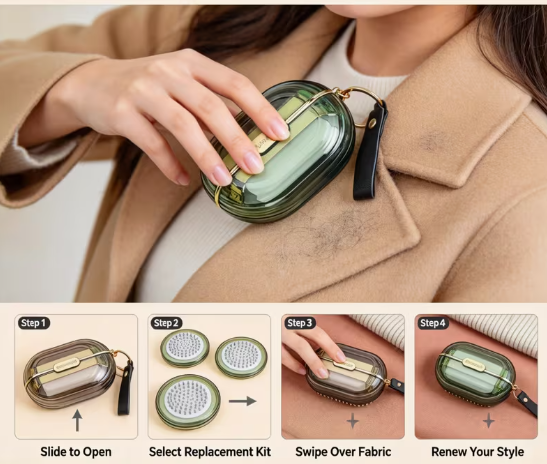
Pet products remain one of the most reliable e-commerce categories because they combine repeat emotional relevance with everyday use. In Sweden, where clean interiors and practical living matter, a reusable pet hair remover roller fits naturally. It solves an obvious problem, demonstrates well in video, and avoids the trust issues that come with ingestibles or heavy safety claims.
Why it can win:
It has a clear before-and-after effect, which is perfect for paid social creatives. It appeals to both dog and cat owners, is lightweight to ship, and can be positioned as reusable and low-waste compared with disposable lint solutions. It also bundles well with pet grooming gloves or couch covers.
2) Minimalist cable organizer set for home office and bedside use
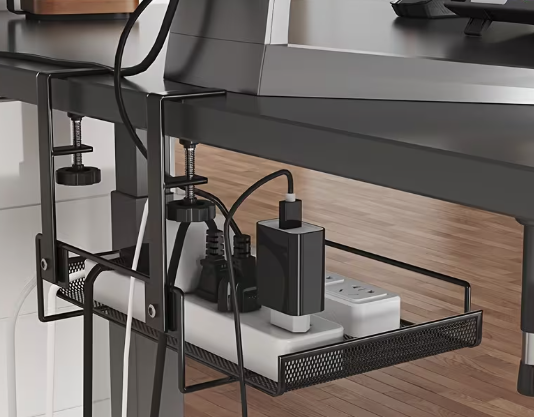
Sweden is a strong market for products that reduce visual clutter. A clean-looking cable management kit is exactly the sort of low-drama product that performs well when presented with good lifestyle imagery. It works especially well if your store has a home, productivity, or organization angle.
Why it can win:
The problem is universal, the price point is impulse-friendly, and the product aligns with minimalist interiors. It also lends itself to bundle offers such as “desk reset kit” or “clean workspace bundle.”
3) Rechargeable motion-sensor wardrobe or hallway light
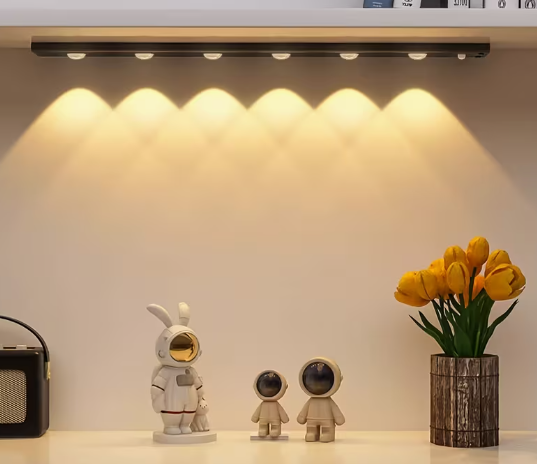
Lighting products with a practical use case are often strong performers in Nordic markets because they fit seasonal darkness, home comfort, and convenience. A rechargeable motion-sensor light for closets, stairs, hallways, or kitchens is easy to explain and easy to demonstrate.
Why it can win:
The value is visual and immediate. Customers can understand the benefit in seconds. It feels more premium than many novelty gadgets, and it matches Swedish preferences for functional home improvement without requiring complicated installation.
4) Shower shelf or bathroom organizer with drill-free installation
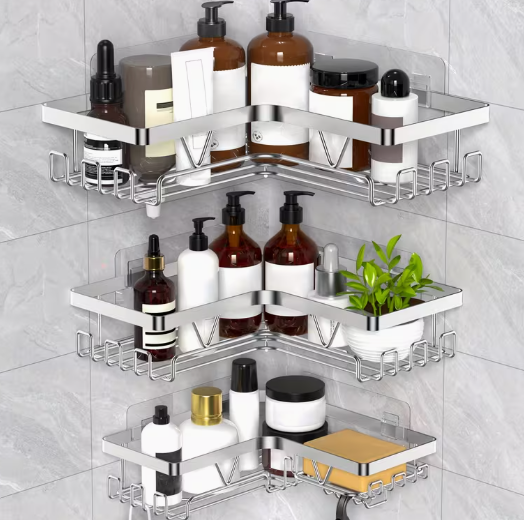
Bathroom organization products do well when they look durable, simple, and space-saving. A drill-free shower shelf or organizer suits renters, small apartments, and anyone trying to tidy up limited bathroom space.
Why it can win:
It is practical, broadly relevant, and easy to present with clean product visuals. It works especially well when marketed around “declutter,” “small-space storage,” or “daily routine upgrade.” Sweden’s strong design culture means aesthetics matter, so choose versions that look neat rather than bulky.
5) Insulated stainless-steel food jar or lunch container
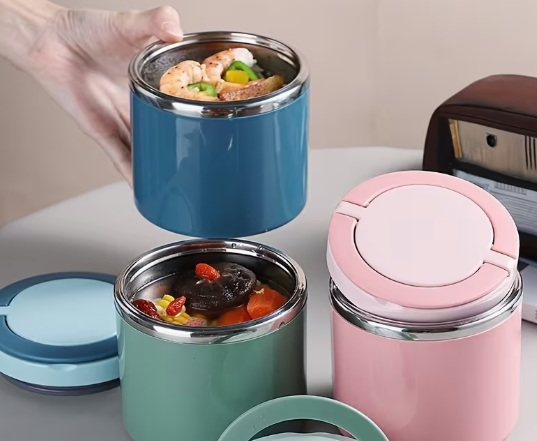
Products that support commuting, office lunches, school routines, or outdoor use perform well across the Nordics. An insulated food jar works for soups, oatmeal, pasta, leftovers, and cold meals, which gives it broad utility across seasons.
Why it can win:
It combines practical value, reusable positioning, and giftability. It can be marketed to parents, office workers, students, and outdoor users. It also fits the broader European consumer preference for reusable everyday items rather than disposable convenience products.
6) Orthopedic-style dog bed with washable cover
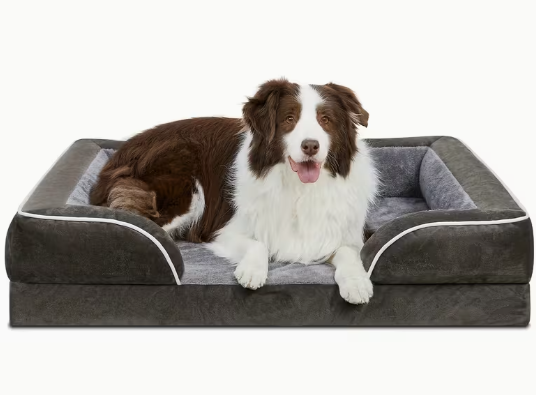
This is a higher-ticket pet product with strong emotional appeal. Sweden is a market where pet owners are willing to spend when the product feels thoughtful and useful rather than gimmicky. A dog bed marketed around comfort, washable materials, and home-friendly design can work especially well.
Why it can win:
It sits in a category where customers often care more about perceived quality than rock-bottom price. It is also ideal for UGC-style content, pet-owner storytelling, and seasonal comfort angles. Choose designs that look elegant and home-compatible.
7) Stroller organizer bag or compact parent travel caddy
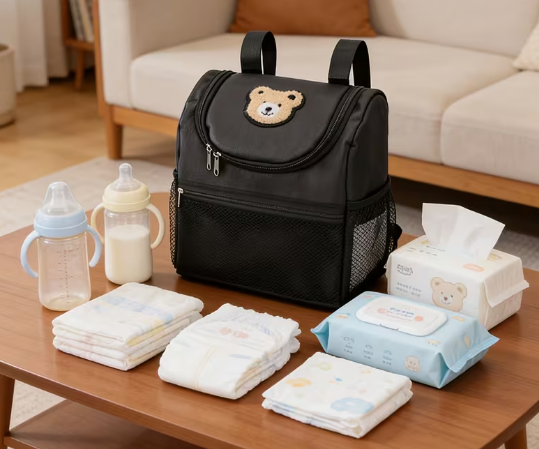
Baby and family convenience products can be strong if you stay far away from anything medically sensitive or safety-critical. A stroller organizer is a safer, more commercially attractive choice than products that make health claims or involve complex safety concerns.
Why it can win:
It solves a real parent problem, has visible compartments and use cases, and can be marketed with honest utility. Parents do not need to be “sold” on the category; they simply need to see that your product is well designed and functional.
8) Foldable car trunk organizer
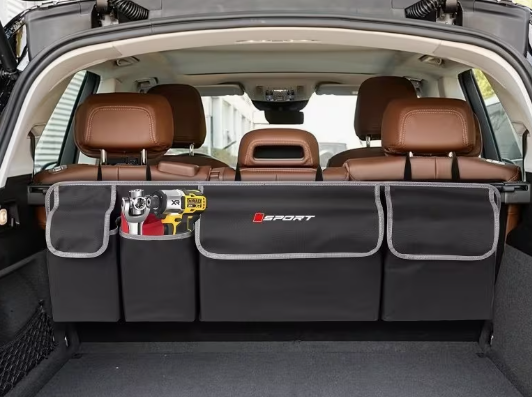
Sweden has a strong outdoor and mobility culture, and a good trunk organizer suits groceries, sports gear, family travel, pet accessories, and road trips. This type of product performs best when positioned as an organization upgrade rather than a “car gadget.”
Why it can win:
It is useful across customer segments and carries high perceived practicality. It is also good for seasonal marketing, from winter gear storage to summer cabin trips. Product visuals make the benefit obvious.
9) Nordic-style washable kitchen mat or anti-fatigue standing mat
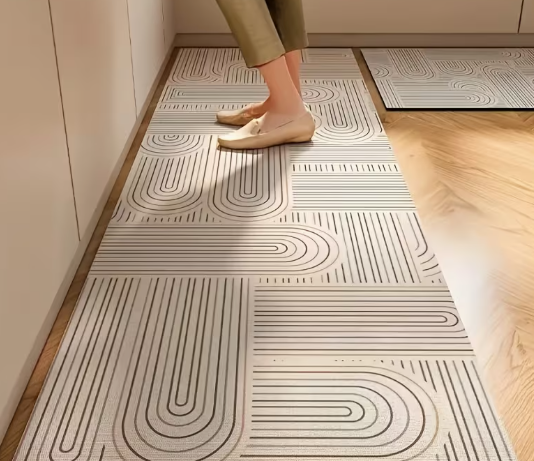
This is a less saturated but very market-appropriate category. Kitchen comfort, easy cleaning, and understated design fit well with Sweden-oriented merchandising. A kitchen mat with a clean aesthetic can be sold as both a comfort item and a home upgrade.
Why it can win:
It feels lifestyle-driven yet practical. It can work in creative aimed at home refresh, family routine, cooking comfort, or small upgrades that improve daily life. It also fits nicely with a branded home/living store.
10) Custom minimalist print-on-demand poster set
If you want a differentiated product rather than a generic catalog item, minimalist poster sets are a very strong fit for Sweden. This is where a supplier like Printful becomes especially valuable. Scandinavian-inspired typography, nature themes, line art, city posters, pet illustrations, or family-name prints can all perform if designed well.
Why it can win:
It aligns closely with local taste, allows strong branding, and avoids direct commodity competition. The emotional and decorative angle gives you more room for storytelling and gifting. POD also lets you test themes without holding inventory.
What makes these products better than typical viral items
These ten products share important characteristics.
They solve ordinary, repeatable, easy-to-understand problems.
They can be marketed honestly.
They fit home, family, pet, or comfort-oriented lifestyles.
They do not depend on extreme claims or suspicious demos.
They can support a cleaner, more premium store identity.
That is the difference between building a Sweden-ready brand and just copying yesterday’s trend.
Products to avoid in Sweden
Just as important as picking winners is avoiding the wrong categories.
Avoid products with serious safety exposure unless you truly understand compliance and supplier quality. That includes baby sleep products, electrical products with weak documentation, chargers from questionable sources, anything ingestible, anything cosmetic touching medical claims, and products that could create injury risk.
Avoid “miracle” products that rely on unbelievable promises. Swedish customers are generally too discerning for that style to build a sustainable brand.
Avoid bulky low-margin items unless you have a supplier and logistics arrangement that makes the economics work.
And avoid selling random unrelated products in one store. Sweden is much more forgiving of focused, coherent stores than of obvious “general junk shops.”
Store setup tips for Sweden-focused conversion
If you want better conversion in Sweden, the store experience matters as much as the item itself.
Use a clean store design.
Lead with product clarity, not noise.
Show realistic delivery times.
Include clear return and refund information.
Make product pages look editorial and useful, not spammy.
Use lifestyle images that feel modern, calm, and believable.
Highlight product dimensions, materials, and use cases.
Avoid fake urgency unless it is legitimate.
If possible, offer prices in SEK. Even if your backend operations are EU-wide, presenting the store in Swedish kronor can improve local trust. Also consider local-language support or at least key pages translated into high-quality Swedish if Sweden is a core market rather than an experiment.
Pricing strategy for Sweden
One of the biggest mistakes dropshippers make is thinking “higher-income market = charge anything.” Swedish consumers are not naïve. They will pay for convenience, design, and trust, but they still compare value.
A better model is value-based pricing. Ask yourself:
Can I justify the price through delivery speed, presentation, bundling, or design?
Does the item feel premium enough once it arrives?
Would I be embarrassed if a customer compared my page with a major retailer?
For Sweden, bundles often work better than extreme single-item markups. For example, instead of selling one cable clip at a weak margin, sell a desk organization bundle. Instead of selling one pet roller, bundle it with a grooming accessory. Bundles increase average order value and help the offer feel more intentionally curated.
Marketing angles that work well in Sweden
You do not need “crazy” creative. You need relevant creative.
The strongest angles tend to be:
Daily routine improvement.
Cleaner home, less clutter.
Comfort during darker or colder months.
Pet-owner love and convenience.
Parenting made a little easier.
Simple design for modern living.
Reusable and long-lasting everyday tools.
For ad style, straightforward user-generated or demo-driven content usually works better than overproduced hype. Show the problem, show the use, show the result, then reinforce why the product fits real life.
How to test products without burning budget
For Sweden, product testing should be tighter than in broad global campaigns. Since the market is smaller than the US and more trust-sensitive, you want to pre-filter products before launch.
Order a sample if possible.
Check delivery route realism.
Review the product from a customer perspective.
Write a product page that sounds like a retailer, not a dropshipper.
Launch with one or two core angles, not ten random hooks.
Kill fast if the product page cannot support the ad promise.
A smart approach is to test a small collection of products within one coherent niche rather than running a fully general store. A pet store, home organization store, minimalist living store, or Nordic POD decor store is often a better bet than a chaotic “everything” store.
A realistic launch model for EU sellers
If I were launching into Sweden today as an EU seller, I would pick one of these three routes:
Route 1: Practical Home Store
Supplier mix: CJdropshipping or Syncee
Products: organizers, sensor lights, kitchen mats, bathroom storage
Angle: modern home convenience with clean Scandinavian visuals
Route 2: Pet Comfort Store
Supplier mix: CJdropshipping plus curated higher-quality pet items
Products: hair remover roller, dog bed, grooming tools, pet travel accessories
Angle: everyday comfort for pets and cleaner living for owners
Route 3: Nordic POD Decor Brand
Supplier mix: Printful
Products: minimalist posters, mugs, totes, pet-themed art, seasonal wall sets
Angle: tasteful design, gifting, local aesthetic relevance
All three are more credible for Sweden than a generic trend store filled with unrelated gadgets.
Final thoughts
Dropshipping Sweden is absolutely viable for EU sellers, but the market rewards discipline. The winning formula is not “find the cheapest item and run ads.” It is to combine useful products, reliable fulfillment, clear compliance, honest marketing, and a store experience that feels intentionally built.
If you want flexibility and trend access, CJdropshipping is the best all-round starting point. If you want a more curated EU supplier environment, Spocket and Syncee are strong choices. If you care most about automation and verified workflows, Avasam is worth a look. And if you want real differentiation instead of copycat products, Printful is the strongest path through print-on-demand.
The best products for Sweden are rarely the loudest products on the internet. They are the ones that make daily life better in simple, visible, credible ways. That is exactly why categories like pet care, home organization, comfort products, parent convenience, and minimalist decor remain so powerful. When you combine those categories with EU-friendly fulfillment and strong store presentation, Sweden becomes not just a possible market, but a very attractive one.
FAQ for Dropshipping Sweden
1) Is Sweden a good country for dropshipping?
Yes. Sweden is a strong market for dropshipping if you approach it with a quality-first strategy. Online buyers expect trust, clear delivery information, and good customer service, so EU sellers with stronger operations often have an edge.
2) Which supplier is best for dropshipping Sweden?
For most sellers, CJdropshipping is the best all-round option because it offers broad sourcing, flexibility, and the ability to test many products. If you want a more curated EU-focused model, Spocket or Syncee may be better.
3) Do I need to worry about EU VAT and returns when selling to Sweden?
Yes. EU e-commerce VAT rules matter, and for some imported low-value goods the IOSS scheme can simplify VAT handling. Consumers also generally have a 14-day withdrawal right in distance selling, and you must provide required information clearly.
4) What products sell best in Sweden?
Products that are practical, well-designed, and easy to trust tend to perform best. Good examples include pet accessories, home organization, comfort-focused items, family convenience products, and minimalist POD decor.
5) Should I build a general store or a niche store for Sweden?
A niche store is usually the better choice. Swedish customers tend to respond better to stores that feel coherent and intentional rather than random. Pet, home organization, family convenience, and Nordic-style decor are all promising directions.