
In 2025, launching a beauty brand no longer requires owning a factory or investing in massive inventory. Thanks to white label dropshipping, it's now possible to start your own skincare or cosmetics line with minimal upfront costs—while still maintaining control over branding, packaging, and product selection.
Consumers today are more selective than ever. They want gentle ingredients, clean labels, cruelty-free commitments, and brands that feel personal. White label dropshipping allows you to tap into that demand by offering high-quality, ready-made beauty products under your own label. It's the perfect mix of flexibility and focus—you're building a real brand while letting your supplier handle production and fulfillment.
This guide is for anyone ready to take their first steps in the beauty space. We'll walk through how to pick a niche, design your brand, choose the right supplier, and build a store that actually converts. Whether you're new to eCommerce or looking to expand into beauty, this is your roadmap to getting started with confidence.
Why White Label Beauty Dropshipping Works in 2025?
The beauty industry has always been a space for innovation and reinvention—but in 2025, it's also become a space for accessibility. White label dropshipping is flourishing because it aligns perfectly with how today's beauty consumers shop and how modern entrepreneurs build brands.
- A Perfect Fit for a Trend-Driven Market
Beauty trends move fast. Whether it's a new botanical ingredient gaining traction on TikTok, or a minimalist skincare routine going viral on YouTube, consumer attention is shifting quickly—and brands need to keep up. With white label dropshipping, you're able to test products without the long wait times of traditional manufacturing. You can swap in trending formulas, scents, or packaging styles with minimal risk.
- Branding is Everything—And Now It's Easier
Consumers are drawn to brands that reflect their values and lifestyle. A white label model lets you create a fully branded experience—from your logo and packaging to your tone of voice and product collections. And in today's saturated marketplace, a clear brand identity is what sets you apart. You're not just selling eye cream—you're selling trust, style, and alignment with your customer's beauty goals.
- No Inventory, Low Barrier to Entry
With traditional beauty businesses, upfront investment in inventory and production runs can be a major barrier. White label dropshipping eliminates that hurdle. You only pay for what you sell, which means more flexibility and less financial risk. For new entrepreneurs, this allows you to enter a competitive industry without the stress of managing stock or storage.
- Consumers Are Ready for Indie Brands
Shoppers in 2025 are actively seeking out indie beauty labels, especially those that offer transparency, ethical sourcing, and a personal touch. Many would rather support a small brand that feels real and relatable than buy from a corporate giant. With white label dropshipping, you can launch with professional-grade products while building the type of authentic, values-driven brand today's consumers want to support.
This combination of speed, flexibility, and personalization is exactly why white label beauty dropshipping isn't just a passing trend—it's a strong, scalable model built for the current eCommerce era.
White Label Beauty Products Dropshipping Step
Step 1: Choose Your Beauty Niche Wisely
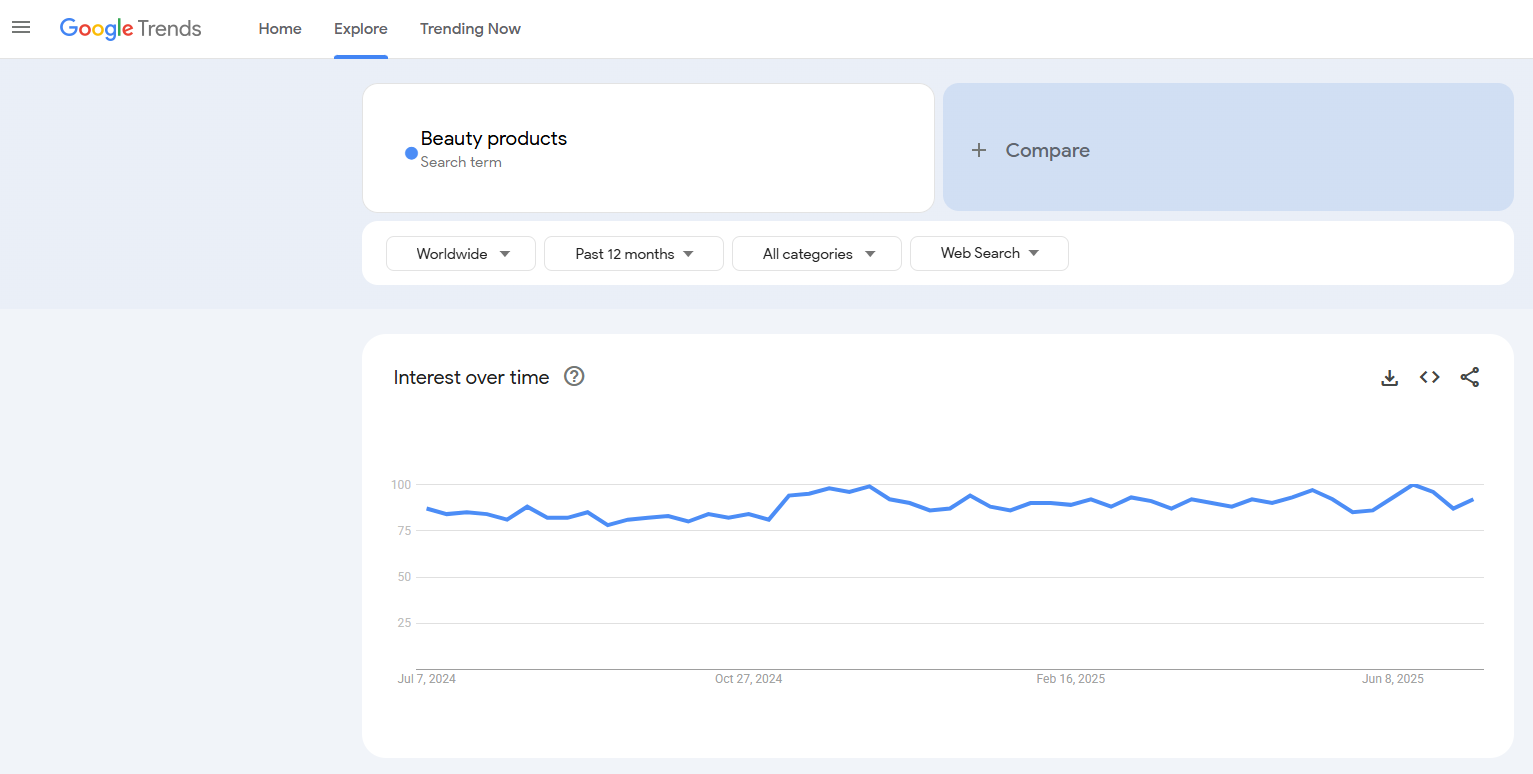 source:google trends
Success in white label beauty dropshipping starts with picking the right niche. Instead of trying to sell every kind of product, focus on a specific category that speaks to a clear audience and allows you to build a strong brand identity.
1.Know Your Customer
Think about your ideal buyer—whether it's Gen Z looking for clean skincare, men exploring grooming products, or busy moms needing gentle solutions. The more specific your target, the more tailored and effective your product selection will be.
2.Follow Demand and Passion
- Look for niches that align with your interests and market trends. Examples include:
- Natural Skincare – A strong and growing demand for clean, non-toxic products.
- Men's Grooming – Beard oils, facial washes, and skincare sets are gaining traction.
- K-Beauty Inspired Lines – Viral potential and unique formats.
- Inclusive Makeup – Products catering to diverse skin tones.
- Targeted Skincare – Solutions for acne, aging, or pigmentation.
- Let Trends Guide You
Use tools like TikTok, Google Trends, or beauty platforms to see what's popular. Look at customer reviews, social buzz, and competitor offerings to spot gaps in the market.
3.Keep It Cohesive
Start with a product set that fits a theme—like a nighttime skincare trio or minimalist daily essentials. Cohesion makes your brand easier to market and helps build trust with shoppers.
Choosing the right niche isn't just about what sells—it's about what makes your brand memorable and scalable.
Step 2: Find a White Label Supplier That Supports Growth
Once you've chosen your niche, the next step is finding a supplier who can deliver quality products, flexible customization, and dependable fulfillment. In white label beauty, your supplier is your behind-the-scenes partner—so this choice can directly impact your brand's credibility and customer satisfaction.
1.Look for Proven White Label Experience
A reliable supplier should offer pre-formulated products ready for your branding. These formulas should be tested, compliant with regulations, and ideally backed by certifications like GMP (Good Manufacturing Practices) or cruelty-free standards. Don't hesitate to ask for documentation or third-party lab results.
2.Prioritize Product Range and Customization
The best suppliers offer a variety of skincare and cosmetic products, along with options to customize labels, packaging, ingredients, and scent. Some even support full formulation development if you plan to grow beyond white label into private label.
3.Ensure Fast and Global Fulfillment
Look for suppliers that offer automatic fulfillment and worldwide shipping. This reduces overhead and ensures your customers get their orders quickly. Bonus points if the supplier supports warehousing in key markets like the US or Europe—even if they manufacture in Asia.
4.Consider Platform Integration
To streamline operations, it helps if your supplier integrates directly with your store platform (like Shopify). Seamless syncing reduces manual errors and allows you to focus on building your brand rather than managing logistics.
5.Explore Support Services
Good suppliers go beyond shipping. Look for those that offer:
- Sample testing before you commit to inventory
- Custom packaging design
- Branding consultation or product photography
6.A Word on CJdropshipping
CJdropshipping is one such supplier that fits this profile. It offers custom sourcing for beauty products, print-on-demand packaging, automatic fulfillment, and platform integration with Shopify and other major platforms. For entrepreneurs new to white label beauty, having an all-in-one solution like this simplifies the launch process significantly.
Step 3: Design a Brand That Feels Premium
In the beauty space, your branding does more than help you stand out—it builds trust. Shoppers are especially sensitive to the way a beauty brand presents itself, from packaging design to product tone and overall identity. With white label products, where formulations may be similar across brands, strong branding is how you create differentiation and long-term customer loyalty.
1.Clarify Your Brand Values
Start by asking: what does your brand stand for? Whether it's clean beauty, skincare for sensitive skin, eco-conscious values, or luxury aesthetics—clarity in your brand mission helps guide all future decisions. Make sure this message is reflected consistently across your visuals, voice, and product selection.
2.Invest in Custom Visuals
Even if you're not ready for full private label, white label suppliers often allow packaging and label customization. Use this opportunity to create packaging that feels thoughtful and aligned with your brand. Minimalist fonts, elegant color palettes, or vibrant youthful tones—whatever fits your niche, make it intentional.
Consider professional help for your logo and label design. Platforms like Canva are good starting points, but a unique identity often benefits from the input of a skilled designer.
3.Tell a Story
Consumers connect with brands that feel personal. Use your website, about page, and product descriptions to tell a compelling brand story. Share why you chose this niche, what your products aim to solve, and how your brand fits into your customers' lifestyle. Strong storytelling adds depth and emotion to your store, increasing engagement and conversion.
4.Add Premium Touchpoints
Details like branded thank-you cards, tissue wrapping, or custom box inserts can elevate the unboxing experience. These small touches make a big impression, especially for first-time buyers, and increase the likelihood of word-of-mouth or UGC (user-generated content) from satisfied customers.
5.Keep It Cohesive
Every touchpoint—your website, emails, ads, packaging, and even TikTok videos—should reinforce the same visual and emotional language. A cohesive identity makes your brand feel established and trustworthy, even if it's brand new.
Step 4: Set Up Your Storefront and Fulfillment
It's time to bring your brand to life with a storefront that reflects your identity and a backend system that supports smooth order fulfillment.
1.Build a Store That Reflects Your Brand
Whether you choose Shopify, WooCommerce, or another platform, focus on building a store that looks clean, modern, and trustworthy. Use your custom-labeled product images, define your brand voice, and write copy that speaks to your ideal customer—whether they're looking for cruelty-free skincare, wellness-driven cosmetics, or luxury beauty essentials.
2.Make sure your product pages include:
High-quality visuals (photos, lifestyle shots, and optional demo videos)
Ingredient transparency and usage instructions
Clear pricing and return policy information
A user-friendly, mobile-optimized design is especially important for beauty shoppers, many of whom browse and buy directly from their phones.
3.Sync Fulfillment and Inventory
To ensure customer satisfaction and avoid missed orders, integrate your store with your supplier's fulfillment system. Ideally, choose a supplier that offers:
- Real-time order syncing and tracking;
- Automatic inventory updates;
- Global shipping options...
4.Branding and packaging services
You need a supplier who supports custom beauty product sourcing, automatic fulfillment, and integrations with the platform you are going to selling on. The backend of supplier system should be able to monitor order status, print custom labels, and fulfill white label products without manual processing—freeing you up to focus on content and customer experience.
5.Optimize for Post-Sale Experience
After the sale, your fulfillment and packaging are what customers remember. Make sure your packaging aligns with your brand values—minimalist, sustainable, luxurious, or fun. Add small touches like thank-you notes, skincare usage tips, or loyalty incentives to increase repeat purchases.
Step 5: Create Strong Product Listings and UGC Strategy
In the world of white label beauty, your product may be incredible—but if your listing doesn't communicate its value clearly, it won't convert. In 2025, especially in visually driven spaces like beauty, content and storytelling matter just as much as formulation.
1.Craft High-Converting Product Listings
Effective listings are more than just bullet points. They should educate, persuade, and inspire trust.
Focus on:
- Clear product benefits: Instead of listing ingredients like hyaluronic acid or niacinamide alone, explain what they do. For example, "hydrates and plumps dry skin within hours."
- Skin type or concern alignment: Shoppers want to know if it works for oily skin, anti-aging, sensitive skin, etc.
- Certifications and values: Highlight cruelty-free, vegan, fragrance-free, or dermatologically tested status.
- Before & after visuals: These speak louder than text in the beauty space.
Tip: Use natural language that speaks to your target audience—whether it's minimal skincare lovers, eco-conscious beauty fans, or bold makeup enthusiasts.
2.Leverage User-Generated Content (UGC)
UGC has become one of the most powerful tools in beauty product marketing. Authentic reviews, videos, and testimonials feel more trustworthy than polished ads.
To encourage and utilize UGC:
- Send samples to micro-influencers or TikTok creators who align with your brand values.
- Include calls-to-action like "Tag us for a chance to be featured" on your packaging or thank-you cards.
- Create a brand hashtag to collect and showcase content across social channels.
- Incorporate UGC into product pages for additional social proof—especially videos showing real results.
Shoppers in 2025 expect to see how a product performs before buying. A well-timed TikTok demo or an Instagram reel showing the glow-up effect of your serum could easily outperform traditional ads.
3.Make It Easy to Share
Design your unboxing and packaging with content in mind. Whether it's a soft-touch label, mirror-finish lid, or an elegant insert card, every detail should invite a "wow" moment worth sharing. Visual storytelling starts from the moment the package is opened.
Final Thoughts: Focus on Brand, Not Just Products
Building a white label beauty business in 2025 is no longer just about selling good-looking packaging or chasing viral ingredients. What sets successful stores apart today is the ability to craft a brand that feels real—one that speaks directly to a specific kind of customer and grows with them over time.
You might start with a simple cleanser or a basic lash serum, but what keeps people coming back isn't only what's in the bottle—it's how the brand makes them feel. Do your visuals feel thoughtful? Is your tone consistent? Are you showing up in ways that feel human, not automated?
This is where white label dropshipping really shines. It gives you the flexibility to shape your product line without massive upfront costs, but more importantly, it gives you space to listen, test, and refine. You can experiment with messaging, try different UGC styles, work with creators who genuinely use your products, and evolve your packaging or positioning as your audience responds.
It's tempting to focus on short-term sales, especially early on—but don't rush the brand-building process. A store can get attention, but a brand earns loyalty. And in the beauty world, loyalty is everything. The more care you put into crafting something that feels like you, the more likely your audience will want it to become part of them.
So take your time. Think about what your beauty brand stands for beyond the surface. Then use the tools of dropshipping—flexible sourcing, low-risk fulfillment, and custom branding—to bring that vision to life.