
For a U.S. e-commerce seller, the supply-chain question is often framed incorrectly.
Should you dropship, or should you buy wholesale?
That sounds like a choice between two business models. In practice, it is usually a question of timing.
Dropshipping is exceptionally good at one job: reducing the cost of being wrong. It allows a seller to put a product in front of customers before committing large amounts of cash to inventory.
Wholesale inventory is good at a different job: making a proven product more efficient. Once demand becomes predictable, bulk purchasing can improve unit economics, packaging control, fulfillment speed and product consistency.
The strongest operators do not become emotionally attached to either model. They use each where it creates the most economic value.
A new SKU with uncertain demand may belong in a dropshipping workflow. A product selling hundreds of units each week may belong in a U.S. warehouse. A seasonal accessory might remain hybrid. A long-tail SKU that sells only a handful of units each month may never deserve domestic inventory at all.
This distinction matters more in 2026 because the U.S. e-commerce market is still growing while the economics of cross-border small-parcel fulfillment have changed.
U.S. Census Bureau data show that seasonally adjusted retail e-commerce sales reached $340.2 billion in the second quarter of 2026, up 12.2% year over year. E-commerce represented 17.1% of total U.S. retail sales during the quarter.
At the same time, the old assumption that low-value international parcels can simply enter the United States duty-free is no longer valid. Duty-free de minimis treatment for shipments valued at $800 or less was suspended globally effective August 29, 2025. CBP states that affected low-value shipments are now subject to applicable duties, taxes and fees, with non-postal shipments requiring an appropriate entry process.
That makes supply-chain design more important than it was during the era when many sellers could rely indefinitely on cheap individual parcels moving directly from overseas factories to U.S. consumers.
The question is no longer simply:
What is the cheapest product cost?
It is:
What supply-chain structure gives this product the best combination of margin, cash efficiency, delivery speed and inventory risk at its current stage of growth?
Dropshipping and Wholesale Solve Different Problems
Dropshipping and wholesale are often compared using a simple list of advantages and disadvantages.
That misses the more important economic difference.
Dropshipping transfers inventory risk upstream. Wholesale brings inventory risk onto the seller's balance sheet in exchange for more control.
| Factor | Dropshipping | Wholesale Inventory |
|---|---|---|
| Upfront inventory cash | Low | Higher |
| Demand testing | Excellent | Expensive if wrong |
| Unit product cost | Usually higher | Usually lower |
| Product control | Limited | Stronger |
| Packaging control | Limited to moderate | Stronger |
| Delivery control | Supplier-dependent | Stronger |
| Domestic fulfillment | Possible only if supplier stocks locally | Straightforward |
| Dead-stock risk | Low | Seller carries it |
| Stockout risk | Supplier-dependent | Seller manages it |
| Best use | Uncertain demand | Predictable demand |
A seller launching a completely new product has very little information.
The store may not know:
-
which creative angle will convert;
-
what price customers will accept;
-
which variant will sell;
-
whether refunds will be unusually high;
-
whether the product works outside a short trend cycle;
-
whether paid acquisition can scale profitably.
Buying 2,000 units at that stage does not create operational sophistication. It creates a large bet on weak information.
Dropshipping is valuable because it allows information to arrive before a major inventory commitment.
Once the seller has information, however, the economics reverse.
If the same product is selling every day, the merchant is repeatedly paying the higher variable cost of uncertainty even though much of that uncertainty has already disappeared.
That is when wholesale begins to earn its place.
A Better Model: Let the Supply Chain Change With the Product
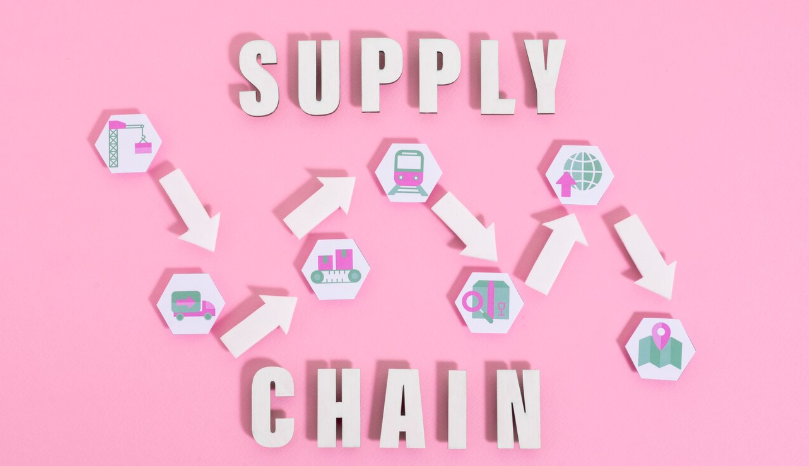
A useful way to structure a U.S. e-commerce supply chain is to think in four stages.
Stage 1: Use Dropshipping to Buy Information
The first stage is not primarily about maximizing margin.
It is about gathering reliable demand data without creating a large inventory position.
Suppose a seller launches five products.
Instead of purchasing 1,000 units of each, the business fulfills orders individually while measuring:
-
conversion rate;
-
customer acquisition cost;
-
refund rate;
-
complaint rate;
-
actual delivery time;
-
variant mix;
-
average selling price;
-
repeat sales consistency.
At this stage, a $2 higher fulfillment cost can be completely rational if it prevents the company from putting $20,000 into inventory customers do not want.
This is why the phrase “dropshipping has lower margins” can be misleading.
Sometimes the lower per-order margin is effectively the price paid for optionality.
The seller is buying the right to stop selling the product without liquidating hundreds of unsold units.
Stage 2: Use Small Wholesale Orders to Test Supply-Side Economics
A product does not need to jump directly from zero inventory to a container-sized purchase.
When demand becomes more credible, a smaller bulk order can answer a different set of questions.
Can the supplier maintain quality across 200 units?
Does bulk packaging reduce freight cost?
How long does production really take?
Do the most popular variants match the dropshipping data?
How quickly does inventory turn?
What happens to cash flow when the company pays for goods before customers buy them?
This stage might involve 100 units, 300 units or 500 units depending on the product. There is no universal number.
The important change is conceptual.
Dropshipping tested the market.
The first wholesale order tests the supply chain.
Stage 3: Put Proven SKUs Closer to U.S. Customers
Once sales become repeatable, the next question is where inventory should sit.
A product manufactured abroad but sold primarily in the United States may eventually be better served by a U.S. fulfillment center.
The flow changes from:
Factory → individual international parcel → customer
to:
Factory → bulk freight → U.S. warehouse → domestic parcel → customer
The second model introduces inventory commitment, but it also changes several important economics at once.
International transportation is consolidated.
Orders travel shorter distances after purchase.
Tracking becomes more predictable.
Returns can be processed domestically.
Packaging can be standardized.
Inventory is visible and controllable.
This does not automatically make the second model cheaper, but it gives the seller more levers to optimize.
Stage 4: Manage Mature Products With Forecasting Rather Than Reaction
At scale, “we are almost out of stock” is not an inventory strategy.
A mature SKU needs a replenishment model built around:
sales velocity + replenishment lead time + variability + safety stock
The basic reorder logic is:
Reorder Point = Expected Demand During Lead Time + Safety Stock
If a product sells 100 units per day and replenishment requires 40 days from purchase order to usable U.S. inventory, the business already has approximately 4,000 units of expected lead-time demand before adding any buffer.
That makes the timing of a purchase order much more important than the day inventory physically reaches zero.
The same principle applies in the opposite direction.
If sales velocity falls, the purchasing plan should respond early rather than continuing to reorder based on last quarter's performance.
Do Not Switch to Wholesale Because a Product Went Viral
One of the most expensive supply-chain mistakes is confusing a spike with demand.
A TikTok video can generate 500 orders in several days and almost nothing the following week.
That does not necessarily justify a 5,000-unit purchase order.
A better wholesale decision requires several forms of evidence.
Demand Has to Persist
Look for repeatable weekly sales rather than one exceptional day.
A useful test is whether demand survives changes in creative, advertising conditions and traffic source.
If one single advertisement creates virtually all demand, the product may be less stable than the sales chart suggests.
Customer Acquisition Needs to Be Understandable
If customer acquisition cost changes dramatically from day to day, inventory forecasting becomes fragile.
Suppose a product is profitable when CAC is $18 but loses money at $28.
If advertising performance has not stabilized, committing heavily to inventory can turn a marketing problem into an inventory problem.
The Product Itself Must Survive Validation
Do not buy more of a product customers dislike simply because the advertisement works.
A high conversion rate with a high refund rate is not a healthy winning product.
Watch:
-
refund reasons;
-
one-star reviews;
-
damage;
-
sizing problems;
-
product expectation gaps;
-
repeat complaints.
A bad SKU gets more expensive when purchased wholesale because the seller now owns hundreds of future complaints.
The Bulk Discount Must Be Economically Meaningful
A wholesale price reduction only matters if it survives the extra costs wholesale creates.
The correct comparison is not:
$11 dropshipping product vs. $6 wholesale factory price
It is:
total cost of one successfully delivered dropshipping order vs. total cost of one successfully delivered wholesale order
That difference is much harder to calculate, but it is also much more useful.
Calculate the Cost of a Delivered Order, Not the Supplier Price
Consider a hypothetical product.
Under a dropshipping model:
| Cost | Per Order |
|---|---|
| Product | $11.50 |
| International fulfillment | $7.80 |
| Import / processing allocation | $2.20 |
| Expected replacement and loss allocation | $1.10 |
| Total pre-marketing fulfillment cost | $22.60 |
Now consider a wholesale version:
| Cost | Per Unit |
|---|---|
| Factory cost | $6.20 |
| Bulk freight + import allocation | $2.50 |
| Warehouse receiving | $0.40 |
| Storage allocation | $0.25 |
| Pick and pack | $2.10 |
| Domestic parcel shipping | $5.20 |
| Expected returns/rework allocation | $0.80 |
| Total pre-marketing fulfillment cost | $17.45 |
The wholesale structure saves $5.15 per delivered order in this illustration.
At 1,000 successful orders, that is $5,150.
But that is not yet the whole calculation.
Wholesale has fixed and semi-fixed costs.
There may be:
-
freight minimums;
-
packaging setup;
-
inspection;
-
receiving;
-
customs brokerage;
-
label preparation;
-
software or warehouse minimums.
If moving to wholesale creates $1,500 in one-time or batch-level setup costs, a simple break-even estimate would be:
Break-even volume = Fixed wholesale cost ÷ Per-order savings
$1,500 ÷ $5.15 ≈ 291 orders
That calculation is more useful than saying “wholesale is cheaper.”
It tells the merchant approximately how much volume is needed before the structural savings recover the additional setup cost.
And there is still one major risk missing:
unsold inventory.
Sell-Through Can Destroy an Apparently Great Wholesale Price
Suppose the seller buys 1,000 units.
Factory and inbound landed inventory cost:
$8.70 per unit.
Total inventory investment:
$8,700
If all 1,000 units sell, the landed product cost is $8.70 per sold unit.
But suppose only 850 sell before demand disappears.
The 150 remaining units are not free.
If they ultimately have little recoverable value, the $8,700 investment has to be economically supported by the 850 units that did sell.
Effective landed inventory cost:
$8,700 ÷ 850 = $10.24 per sold unit
The supposed $8.70 product has effectively become a $10.24 product before warehouse fulfillment and domestic delivery.
This is why high sell-through can matter more than negotiating another 20 cents off the supplier's quote.
A disciplined merchant asks:
What will my cost look like if I sell 100%?
Then:
What if I sell only 85%?
Then:
What if I have to discount the final 15%?
That sensitivity analysis is how inventory risk becomes visible before the purchase order is sent.
Cash Flow Is Usually the Hardest Part of Wholesale Scaling
Wholesale can improve accounting margin and still damage the business.
The reason is timing.
A dropshipping cash flow may look roughly like:
Customer orders → merchant receives payment → supplier is paid → order ships
Wholesale reverses part of that timing:
Merchant pays deposit → factory produces → balance is paid → goods move internationally → customs clears → warehouse receives inventory → customers gradually buy stock
Cash leaves much earlier.
The gap can last weeks or months.
Consider a retailer planning a $50,000 inventory purchase.
That $50,000 may no longer be available for:
-
Meta advertising;
-
Google Shopping;
-
payroll;
-
creator campaigns;
-
software;
-
refunds;
-
emergency freight;
-
the next product launch.
This is why a profitable business can run into a cash crisis while growing.
Inventory is an asset on a balance sheet.
It is not cash in the bank.
Separate Inventory Cash From Growth Cash
A sensible purchase plan should leave room for the rest of the company to operate.
Do not spend nearly all available cash simply because the supplier offers a better price at a larger MOQ.
The difference between:
5,000 units at $5.00
and
2,500 units at $5.50
may look significant.
But the larger order requires an extra $11,250 of capital.
If that cash allows the seller to acquire profitable customers or respond to a new winning product, preserving liquidity may create more value than saving 50 cents per unit.
Good procurement is not maximizing discount.
It is allocating capital.
The 2026 Import Environment Makes Direct-to-Consumer Shipping More Complex
For years, a large part of the cross-border dropshipping model was built around low-value parcels entering the United States under de minimis rules.
That assumption needs to be removed from current models.
CBP states that from August 29, 2025, imported goods from all countries valued at or below $800 generally stopped qualifying for duty-free de minimis treatment and became subject to applicable duties, taxes and fees. For non-postal shipments, appropriate entry must be made through the U.S. customs process. The suspension remained in effect in 2026.
For e-commerce operators, the practical implication is not that every product now has one simple universal tariff.
It is almost the opposite.
Landed cost must increasingly reflect:
-
country of origin;
-
HTS classification;
-
product value;
-
applicable tariffs;
-
entry method;
-
brokerage;
-
transportation mode;
-
product-specific restrictions.
Tariff conditions can change, so sellers should avoid hard-coding an old duty assumption into a product margin calculator and forgetting about it.
Before committing to a large wholesale order, verify the current classification and import treatment with the relevant customs or brokerage professionals.
This change also strengthens the case for comparing two full supply chains rather than assuming low-value direct fulfillment is automatically cheaper than bulk importation.
A U.S. Warehouse Is More Than a Faster Shipping Address
Many sellers move inventory into the United States because they want faster delivery.
That is only part of the benefit.
A domestic warehouse can become infrastructure for:
-
returns;
-
exchanges;
-
product inspection;
-
replacement inventory;
-
bundles;
-
kitting;
-
branded inserts;
-
multi-channel orders.
This becomes especially important when return volume grows.
The National Retail Federation estimated that 19.3% of online sales would be returned in 2025, while 82% of consumers said free returns were an important consideration when shopping online. The same research found 71% of consumers were less likely to shop with a retailer again after a poor returns experience.
That makes reverse logistics part of customer acquisition economics.
A merchant can spend $30 to acquire a customer and then lose the future relationship because returning a $40 product requires mailing it to another country.
A U.S. returns location does not solve every return problem, but it gives the seller options.
A returned item may be:
-
inspected;
-
restocked;
-
repackaged;
-
refurbished;
-
used for replacement stock;
-
consolidated for liquidation.
That is much harder when every reverse shipment needs to cross an ocean.
One U.S. Warehouse or Several?
Multi-warehouse fulfillment sounds automatically more sophisticated.
It is not always better.
Every additional location creates inventory fragmentation.
Imagine a store with 1,000 units.
In one warehouse:
1,000 units available to every order
Split across two warehouses:
500 West / 500 East
Now imagine demand shifts.
West Coast orders accelerate while East Coast demand slows.
The business can be technically “in stock” nationally while the correct location is out of stock.
That can result in:
-
cross-country parcel shipping;
-
inventory transfers;
-
split orders;
-
stock imbalance.
A second warehouse is therefore justified when the delivery and postage savings exceed the inventory complexity it creates.
West Coast Inventory
West Coast locations can work well for products entering through Pacific trade routes and brands with heavy demand in California and neighboring states.
East Coast Inventory
An East Coast warehouse can improve access to dense population centers in the Northeast and Southeast.
Central Inventory
A central location may offer a compromise for brands that need national coverage without splitting inventory too early.
Distributed Inventory
Multi-node fulfillment becomes more attractive as:
-
order volume rises;
-
demand by region becomes predictable;
-
the catalog becomes concentrated;
-
inventory systems become more sophisticated.
Platforms with both sourcing and local fulfillment can also make this transition easier. CJdropshipping, for example, currently operates four major U.S. fulfillment locations in California, New Jersey, Texas and Indiana, allowing sellers to test products through cross-border sourcing and later pre-stock proven SKUs domestically rather than changing the entire supplier relationship at once.
The important point is not the number of warehouses.
It is whether the inventory network matches real customer geography.
Do Not Put the Entire Catalog Into U.S. Inventory
A mature e-commerce business can use several fulfillment models at the same time.
Suppose a store has 50 SKUs.
Five products generate 55% of revenue.
Ten generate another 30%.
The remaining 35 generate only 15%.
It would make little sense to purchase and warehouse all 50 products equally.
A more efficient structure could look like:
Tier A: Stable Winners
5 SKUs
Wholesale + U.S. inventory
These products have predictable volume, stable advertising economics and strong sell-through.
Tier B: Growing Products
10 SKUs
Small-batch inventory or hybrid fulfillment
These products are promising but do not yet deserve deep stock.
Tier C: Long-Tail Products
25 SKUs
Dropshipping
These products add catalog breadth but have low volume.
Tier D: New Tests
10 SKUs
Dropshipping only
Their job is to generate information.
This structure solves an important problem.
The business receives the customer-experience benefit of domestic fulfillment where it matters most without tying up cash in every marginal SKU.
Inventory Planning Should Start With Lead Time
Many sellers forecast inventory by looking at last month's sales.
That is not enough.
Inventory exists to bridge the time between ordering more product and having that product available for customers.
A proper replenishment timeline may include:
Purchase order confirmation
→ raw material preparation
→ manufacturing
→ quality inspection
→ export preparation
→ international transport
→ customs clearance
→ domestic transfer
→ warehouse receiving
→ inventory available for sale
If the complete cycle takes 50 days, the business needs to place a purchase order long before it has only 20 days of inventory remaining.
Track Days of Supply
A simple operating metric is:
Days of Supply = Usable On-Hand Inventory ÷ Average Daily Sales
If a product has 3,000 sellable units and averages 100 sales per day:
30 days of supply
If total replenishment takes 45 days, that business is already late unless additional inventory is inbound.
Add Safety Stock Intentionally
Safety stock protects against uncertainty.
The uncertainty may come from:
-
demand spikes;
-
factory delays;
-
customs;
-
weather;
-
carrier disruption;
-
quality rejection.
The right safety-stock level depends on how volatile the product and supply chain are.
A stable SKU produced domestically may need less buffer than a seasonal product sourced overseas with a long manufacturing cycle.
The purpose of safety stock is not to eliminate every possible stockout.
It is to balance the cost of stockouts against the cost of holding excess inventory.
Seasonality Can Make Historical Averages Dangerous
A product selling 100 units per day in September does not necessarily sell 100 per day in November.
Q4 creates obvious demand spikes for many e-commerce businesses, but other categories have their own cycles:
-
back-to-school;
-
summer;
-
Valentine's Day;
-
Mother's Day;
-
Halloween;
-
Black Friday;
-
Christmas.
Forecasts should therefore distinguish between:
baseline demand
and
event-driven demand
If a major campaign is planned, marketing and purchasing teams need to share the same forecast.
A warehouse should not learn about a Black Friday promotion after the ads are already live.
Supplier Negotiation Should Cover More Than Unit Price
Weak supplier negotiation sounds like:
Can you make it cheaper?
Professional procurement asks a broader set of questions.
1, MOQ
Can the first order use a lower quantity?
Can variants be mixed to reach MOQ?
Can the MOQ increase gradually as the business proves volume?
2, Payment Terms
How much is required as a deposit?
When is the balance due?
Can repeat order terms improve once the relationship is established?
3, Production Lead Time
How quickly can the supplier manufacture the normal quantity?
What happens during peak season?
4, Quality
What is the approved product specification?
What defect criteria are acceptable?
How are defective units handled?
5, Packaging
Can packaging be lighter?
Can dimensions be reduced?
Can products be packed in a way that lowers downstream fulfillment cost?
Packaging optimization is often more valuable than a small factory discount because dimensional weight affects every future shipment.
6, Reorders
What happens if demand doubles?
Can the supplier reserve capacity?
Can raw materials be staged for repeat production?
A good supplier relationship improves total economics, not only purchase price.
Quality Control Changes When You Buy 2,000 Units
With dropshipping, one defective item usually creates one customer problem.
With wholesale, a production error can affect the entire batch.
That changes how quality should be managed.
A professional workflow can include:
approved reference sample
→ production
→ inspection
→ release approval
→ shipment
rather than:
production → shipment → customer discovers problem
For larger orders, sellers may use pre-shipment inspections based on a defined sampling plan.
Inspection criteria should reflect the product.
For apparel:
-
measurements;
-
stitching;
-
fabric;
-
color;
-
labeling.
For hard goods:
-
dimensions;
-
function;
-
material;
-
assembly;
-
finish.
For packaging:
-
barcode;
-
inserts;
-
carton labeling;
-
quantity per carton.
The goal is not to inspect randomly.
It is to define what “acceptable” means before the factory finishes thousands of units.
U.S. Product Compliance Needs to Be Built Into Procurement
Supply-chain strategy cannot treat compliance as paperwork added after the product is purchased.
Requirements vary dramatically by category.
Products can fall under agencies and rules involving:
-
CPSC;
-
FDA;
-
FCC;
-
FTC;
-
state regulations;
-
product-specific federal requirements.
Consumer products subject to CPSC certification rules are particularly important in 2026. Beginning July 8, 2026, importers of most regulated consumer products subject to CPSC certification requirements must electronically file compliance certificate data with U.S. Customs and Border Protection.
CPSC also makes clear that the responsible importer cannot simply outsource legal responsibility to a laboratory or customs broker. For products requiring a General Certificate of Conformity, the manufacturer or importer is responsible for ensuring the applicable testing and certification requirements have been met.
This matters operationally.
If a seller discovers the required testing only after 3,000 units arrive at the port, the supply-chain problem is no longer theoretical.
Before issuing a wholesale purchase order, determine:
-
product classification;
-
applicable standards;
-
required testing;
-
certificate requirements;
-
labeling;
-
importer responsibilities.
Compliance should be part of supplier qualification.
Returns Need Their Own Supply Chain
Forward logistics gets most of the attention.
The order goes:
Warehouse → customer
But e-commerce also has a reverse flow:
Customer → return facility → inspection → disposition
The disposition decision matters.
A returned product can become:
-
A-grade restock;
-
B-grade inventory;
-
replacement stock;
-
refurbishment inventory;
-
liquidation;
-
disposal.
Without a returns process, the company often defaults to the most expensive option: refund the customer and lose the entire product value.
This is another reason the economics of U.S. inventory can differ from direct dropshipping.
A domestic reverse-logistics workflow can sometimes recover value from inventory that would otherwise be uneconomical to return internationally.
Build for Disruption Before Disruption Happens
Supply chains fail in predictable ways.
Factories miss production dates.
A supplier runs out of material.
A freight lane becomes slower.
Customs treatment changes.
A carrier has capacity problems.
Demand unexpectedly rises.
One of the goals of moving beyond beginner dropshipping should be reducing the number of single points of failure.
A Primary Supplier Is Not Enough for a Critical SKU
A backup supplier does not need to receive equal volume.
But the business should know:
-
whether another factory can produce the product;
-
how long qualification would take;
-
whether tooling is portable;
-
whether packaging files are accessible;
-
whether material specifications are documented.
Finding the backup after the primary factory fails is usually too late.
Maintain More Than One Logistics Option
Air and ocean freight solve different problems.
Ocean is often appropriate for planned bulk replenishment.
Air can become useful when inventory is at risk of stocking out.
Express services can solve smaller emergency replenishment needs.
The lowest-cost freight mode should not be the only mode the company understands.
Do Not Confuse Efficiency With Fragility
An inventory system with no buffer may look extremely efficient on a spreadsheet.
It can also lose sales immediately when production slips by five days.
The goal is not minimum inventory at any cost.
The goal is the right level of inventory for the business's service target and risk tolerance.
A Hybrid Supply Chain Is Often More Efficient Than a Pure One
The choice between dropshipping and wholesale becomes much easier when sellers stop trying to force the entire catalog into one model.
Use dropshipping where uncertainty is high.
Use inventory where certainty is high.
Use small batches where certainty is growing.
This creates a portfolio approach to fulfillment.
A product can even move backward.
Suppose a previously stable SKU begins declining.
Instead of continuing large wholesale purchases because “this is a warehouse product,” the business can reduce inventory exposure and return the product to smaller-batch or dropshipping fulfillment.
Supply-chain architecture should respond to data.
It should not become an identity.
The Metrics That Actually Tell You When to Change the Model
A seller deciding whether to move a SKU from dropshipping to wholesale should watch a small set of metrics together.
Contribution Margin
Not gross margin.
Contribution margin after product, fulfillment, shipping, transaction costs, refunds and variable acquisition costs.
Sales Velocity
Units per day or week.
This drives inventory planning.
Demand Variability
A product selling 100 ± 10 units per day is easier to forecast than a product selling between 20 and 250.
Sell-Through
How quickly inventory actually converts into customer orders.
Refund and Return Rate
High-volume products with high returns deserve caution before deep inventory.
Lead Time
The longer replenishment takes, the more inventory planning matters.
Cash Payback
How long does it take from paying the supplier to recovering that cash through customer sales?
Stockout Cost
How much profitable demand is lost if inventory is unavailable?
A high-margin bestseller can justify more safety stock than a marginal SKU.
When these metrics become predictable, wholesale becomes easier to justify.
When they remain unstable, dropshipping continues to provide valuable flexibility.
The Supply Chain Should Change as the Product Earns Certainty
The mistake is not using dropshipping.
The mistake is continuing to pay for maximum flexibility after a product no longer needs it.
The mistake is not buying wholesale.
The mistake is purchasing inventory before the business has earned enough confidence to carry the risk.
For U.S. e-commerce sellers, a healthier progression is:
Source
→ Dropship
→ Validate
→ Buy a small batch
→ Measure sell-through
→ Stock proven inventory in the U.S.
→ Forecast
→ Optimize replenishment
→ Build redundancy
The same business can run all of those stages simultaneously across different SKUs.
That is what a mature hybrid supply chain looks like.
Dropshipping is not the opposite of wholesale.
It is often the stage that comes before wholesale.
Wholesale is not the automatic upgrade from dropshipping.
It is the right move only when the reduction in variable cost and improvement in customer experience outweigh inventory risk, cash requirements and operational complexity.
And a U.S. warehouse is not valuable simply because domestic shipping sounds better.
It earns its place when order volume, customer geography, returns economics and delivery expectations justify the inventory commitment.
The best supply chain is therefore rarely the one with the absolute lowest unit price.
It is the one that puts cash, inventory and fulfillment capacity in the right place after demand has provided enough evidence to justify the decision.
For a new product, that may mean shipping one order at a time.
For a proven bestseller, it may mean thousands of units in domestic inventory.
Knowing when to move from one to the other is where supply-chain strategy begins.