
TikTok has changed how customers discover products online.
Instead of actively searching for an item, shoppers can discover it while watching a short video, viewing a product demonstration, or joining a livestream. With TikTok Shop, they may be able to purchase the product without leaving the TikTok app.
This creates an attractive opportunity for dropshipping sellers. You can use short-form content to generate demand, receive orders through TikTok Shop, and work with a supplier or fulfillment provider to deliver products to customers.
However, TikTok Shop dropshipping is not as simple as copying products from a marketplace and waiting for a video to go viral.
TikTok Shop sellers are responsible for product accuracy, inventory, shipping, tracking, returns, customer service, and compliance. A supplier may fulfill the order, but your store remains responsible for the customer experience.
This guide explains how TikTok dropshipping works in 2026, how to set up a TikTok Shop, how to select products and suppliers, and how to build a more sustainable business around TikTok content.
Important policy note: TikTok Shop registration, logistics, product, and performance rules differ by country. This guide links to publicly available TikTok Shop US policies as practical examples. Always check the latest policies inside the Seller Center for the market in which your shop operates.
1. What Is TikTok Dropshipping?
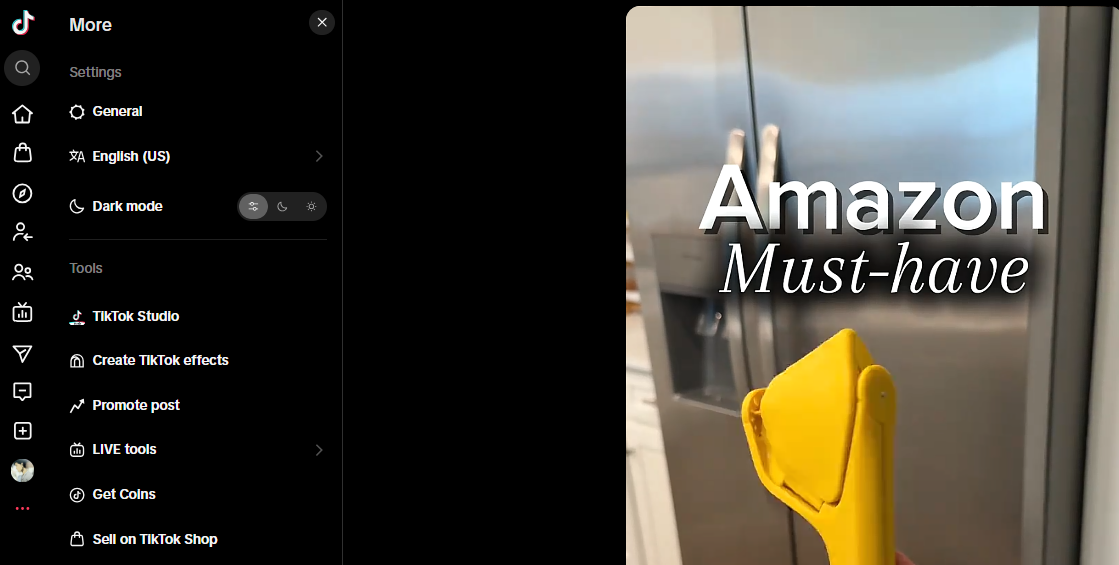
TikTok dropshipping is an ecommerce model in which a seller promotes products through TikTok without necessarily keeping every product in their own warehouse.
When a customer places an order, the seller sends the order information to a supplier or fulfillment provider. That partner prepares and ships the product to the customer.
The seller manages the customer-facing side of the business, including:
-
Product selection
-
TikTok content
-
Product listings
-
Pricing
-
Promotions
-
Customer communication
-
Returns and refunds
-
Store performance
-
Regulatory compliance
The supplier or fulfillment provider usually manages:
-
Product storage
-
Order processing
-
Packing
-
Shipping
-
Tracking updates
-
Quality inspection, depending on the provider
-
Custom packaging, depending on the arrangement
Two Types of TikTok Dropshipping
There are two primary ways to combine TikTok and dropshipping.
TikTok Traffic Dropshipping
In this model, TikTok is primarily a traffic source.
You publish videos or run advertisements that direct viewers to an external store, such as:
-
WooCommerce
-
A branded ecommerce website
-
An approved marketplace listing
The customer leaves TikTok and completes the purchase on the external website.
This gives the seller more control over website design, email collection, product bundling, checkout, and customer data. However, the additional step between content and checkout can reduce conversion.
TikTok Shop Dropshipping
In this model, products are listed directly on TikTok Shop.
Customers can discover them through:
-
Shoppable videos
-
TikTok LIVE
-
Creator affiliate videos
-
Product showcases
-
TikTok search
-
The Shop Tab
-
TikTok Shop advertisements
The customer completes the purchase through TikTok Shop. The seller or an approved fulfillment partner then ships the order according to the platform’s requirements.
TikTok Shop’s built-in buying experience can create a shorter journey from product discovery to purchase. At the same time, sellers have less flexibility because they must follow the platform’s product, pricing, content, customer service, and fulfillment policies.
How TikTok Shop Dropshipping Works
A typical order follows these steps:
-
The seller chooses a product and confirms supplier availability.
-
The seller creates a compliant TikTok Shop listing.
-
The seller publishes shoppable videos, works with creators, or hosts livestreams.
-
A customer places an order through TikTok Shop.
-
The order enters TikTok Shop Seller Center.
-
The order is sent to the supplier or fulfillment provider.
-
The supplier packs and dispatches the product.
-
Valid tracking information is uploaded to TikTok Shop.
-
The seller monitors delivery and handles customer support.
-
The seller manages any return, refund, or product issue.
This workflow may be automated through a direct supplier integration, an ecommerce platform, or order management software.
TikTok Shop vs. Traditional Dropshipping
| Factor | Traditional Dropshipping | TikTok Shop Dropshipping |
|---|---|---|
| Customer discovery | Search engines, social ads, blogs, marketplaces | Short videos, LIVE, creators, Shop Tab and search |
| Checkout | Usually on an independent website | Inside TikTok Shop |
| Content | Useful but not always essential | Central to product discovery |
| Creator marketing | Usually arranged externally | Built-in affiliate tools |
| Store control | Greater website and checkout control | More platform requirements |
| Fulfillment | Determined mainly by the seller | Must meet TikTok Shop standards |
| Customer data | More control through an independent store | More limited platform environment |
| Main challenge | Generating traffic and trust | Maintaining content and operational performance |
2. Is Dropshipping Allowed on TikTok Shop?
TikTok Shop does not publish one universal global rule stating that every type of dropshipping is automatically approved or prohibited.
Instead, sellers are evaluated based on whether their products, listings, shipping, tracking, customer service, and business practices comply with the applicable TikTok Shop policies.
In practical terms, a third-party supplier may fulfill an order, but the seller must still meet all platform requirements.
Your TikTok Shop is responsible for ensuring that:
-
The product is available
-
Inventory information is accurate
-
The customer receives the product shown in the listing
-
Orders are dispatched within the required time
-
Tracking information is valid
-
The product meets local legal and safety requirements
-
Returns and refunds are processed correctly
-
Customer inquiries are answered
-
Promotional content is accurate
The official TikTok Shop Fulfillment Policy requires sellers to meet shipping service-level agreements and provide valid tracking information. TikTok Shop may automatically cancel orders that do not reach the required fulfillment status within the applicable time.
Dropshipping Models That Create High Risk
Not every supplier-fulfilled model is suitable for TikTok Shop.
The following practices can create serious account risk:
-
Purchasing a product from another retailer after receiving the customer’s order
-
Allowing another marketplace’s invoice to appear inside the package
-
Shipping products in another retailer’s branded packaging
-
Uploading duplicated or invalid tracking numbers
-
Marking an order as shipped before the carrier receives it
-
Listing products without confirming supplier inventory
-
Substituting a different product without the customer’s approval
-
Shipping from a location that conflicts with the listing or logistics setup
-
Using untrackable international shipping
-
Providing unrealistic delivery estimates
-
Asking suppliers to send empty or incomplete packages
-
Using counterfeit shipping labels
TikTok Shop’s Customer Order Shipping Requirements specifically address issues such as tracking misrepresentation, duplicated tracking numbers, incorrect products, unpaid postage, and suspicious delays between tracking creation and actual carrier movement.
You Remain Responsible for Your Supplier
A common mistake is assuming the supplier will be responsible if something goes wrong.
From the customer’s perspective, the purchase was made from your TikTok Shop. The supplier is an operational partner that the customer may never know exists.
You therefore remain responsible when:
-
The supplier runs out of stock
-
An incorrect variation is shipped
-
The product arrives damaged
-
Tracking stops updating
-
The supplier changes the product design
-
Processing takes longer than promised
-
The parcel includes the wrong invoice
-
The product does not match the video
-
A customer requests a return
Your supplier fulfills the order, but your TikTok Shop owns the customer experience.
New Shop Probation and Order Limits
New TikTok Shops may begin in a probation or ramp-up period.
For TikTok Shop US, the Shop Probation Program can limit the number of products a new seller lists and the number of orders the shop receives each day. Limits may increase as the seller completes platform tasks and demonstrates reliable fulfillment and customer service.
TikTok Shop may also apply an Order Volume Limit, which caps the number of orders a shop can receive in one day. When the limit is reached, products may temporarily appear unavailable to customers.
This is one reason beginners should not upload hundreds of untested products or launch a large creator campaign before confirming that the supplier can fulfill orders consistently.
Prohibited and Restricted Products
A product being legal or available on another marketplace does not automatically mean it can be sold on TikTok Shop.
TikTok Shop separates products into several categories.
Prohibited products cannot be listed or sold on the platform.
Restricted products may require category approval, product documentation, special qualifications, or an invitation from TikTok Shop.
Before choosing a product, review the current:
Restricted categories may require documentation at the category or individual product level. Some categories may be available only to invited sellers. TikTok Shop can also request additional evidence after a product has been listed.
Beginners should be especially careful with:
-
Dietary supplements
-
Medical devices
-
Products making health claims
-
Cosmetics
-
Food and beverages
-
Alcohol
-
Products containing batteries
-
Children’s products
-
Wireless electronics
-
Adult products
-
Branded merchandise
-
Products containing restricted chemicals
-
Dangerous goods
Starting with low-risk, non-regulated products makes it easier to learn the platform without immediately facing complex documentation requirements.
Intellectual Property
Do not assume that you can sell a branded item simply because a supplier provides product images.
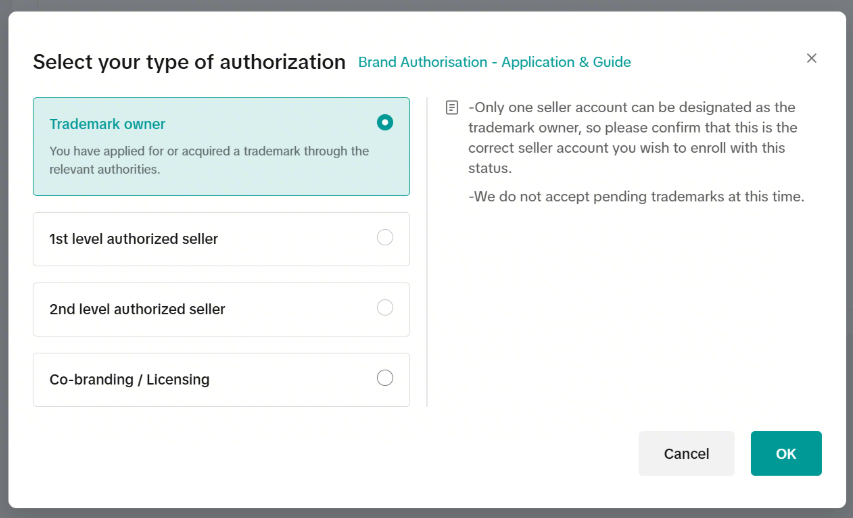
You may need evidence that you own the brand or are authorized to distribute it. TikTok Shop’s Brand Authorization Requirements explain that sellers may need trademark or authorization documentation before listing protected branded products.
Avoid:
-
Counterfeit products
-
Unauthorized logos
-
Trademarked characters
-
Copied packaging
-
Supplier images owned by another seller
-
Videos taken from another creator
-
Products that imitate a patented design
-
Brand names added only to attract search traffic
The safest beginner strategy is to sell unbranded products, your own branded products, or products for which you have clear authorization.
3. How to Start TikTok Shop Dropshipping
TikTok Shop availability and seller requirements differ by market. Before building the store, decide where you intend to sell.
Step 1: Choose One Target Market
Do not begin by trying to sell everywhere.
Select one primary market based on:
-
Your business registration
-
Seller eligibility
-
Customer demand
-
Available warehouse locations
-
Supplier delivery times
-
Supported carriers
-
Return address availability
-
Tax obligations
-
Product regulations
-
Content language
A seller targeting the United States will have different registration, tax, shipping, and product requirements from a seller targeting the United Kingdom or Southeast Asia.
Starting with one market makes it easier to manage pricing, inventory, customer service, shipping, and compliance.
Step 2: Prepare Your Registration Information
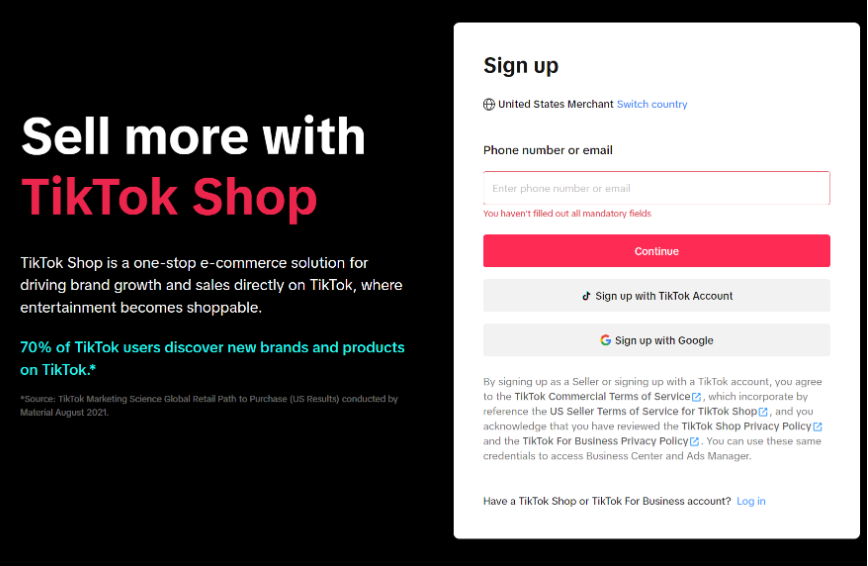
Depending on the market and account type, TikTok Shop may request:
-
Government-issued identification
-
Proof of address
-
Business registration documents
-
Tax information
-
Bank account information
-
Business contact details
-
Warehouse address
-
Return address
-
Information about company representatives
-
Brand authorization
-
Product compliance documents
Information across your identification, business registration, bank account, and Seller Center account should be consistent.
For example, TikTok Shop US provides separate onboarding guidance for individual seller registration and business sellers. These requirements should not be assumed to apply to every market.
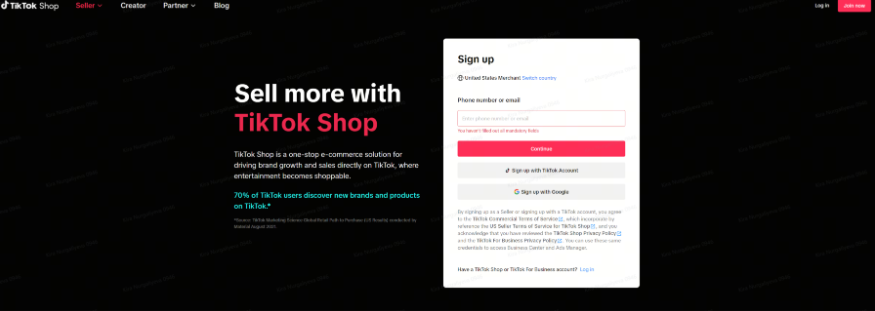
Step 3: Register Through Seller Center
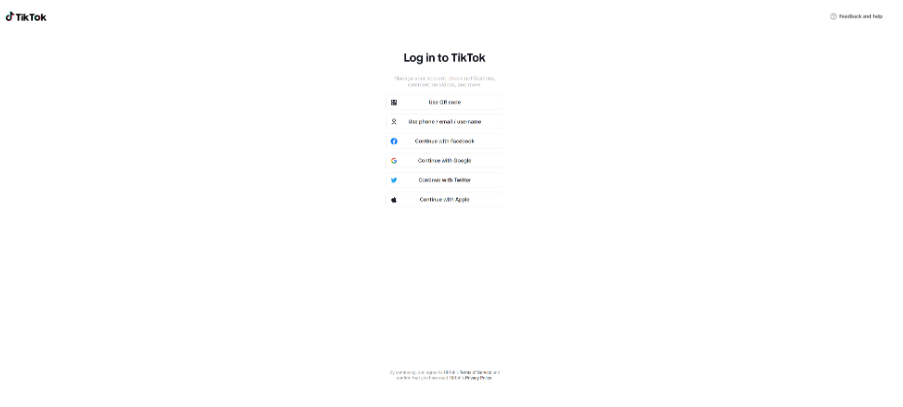
The general process includes:
-
Open the Seller Center for your target market.
-
Choose the appropriate seller type.
-
Create an account.
-
Complete identity verification.
-
Enter business information.
-
Submit tax and bank details.
-
Add warehouse and return addresses.
-
Wait for verification.
-
Complete the shop profile.
-
Review the local policies before listing products.
Do not use false addresses or documents simply to access a market. The platform may request identity re-verification, and inconsistent information can lead to restrictions.
Step 4: Connect a TikTok Account
After setting up the store, connect a TikTok account that will represent the business.
A connected official or marketing account may be used to:
-
Publish shoppable videos
-
Add products to a showcase
-
Host livestreams
-
Build a branded profile
-
Direct viewers to product pages
-
Promote new releases
TikTok Shop US currently states that there is no minimum follower requirement for binding an official shop account, although the account still needs to meet the platform’s eligibility and compliance checks.
The rules for affiliate creators are different from the rules for a shop’s official account. Do not assume that every creator automatically has access to every ecommerce feature.
Step 5: Complete Your Shop Settings
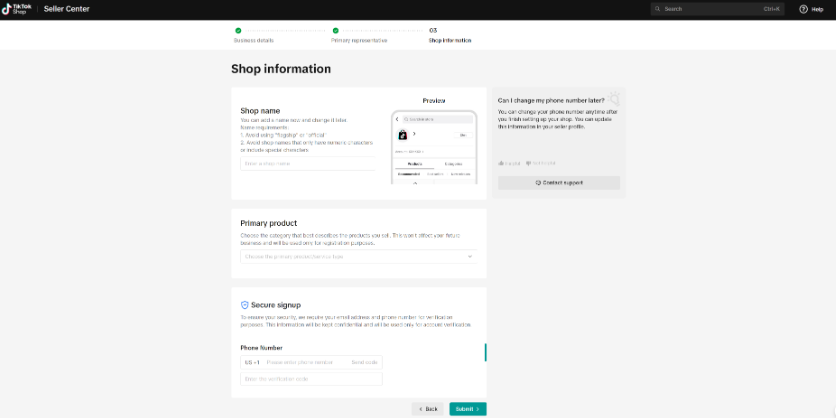
Before listing products, configure:
-
Shop name
-
Logo
-
Customer service contact details
-
Warehouse address
-
Return address
-
Shipping settings
-
Handling time
-
Tax information
-
Notification preferences
-
User access permissions
-
Refund procedures
Your warehouse and return addresses should reflect your actual operation.
If a supplier ships products from a US warehouse, confirm that the warehouse can consistently fulfill your TikTok Shop orders and process any required returns. Do not simply select a warehouse location because it creates a shorter estimated delivery time.
Step 6: Connect Your Supplier or Ecommerce System
You may manage orders through:
-
A direct supplier integration
-
An approved TikTok Shop application
-
An enterprise resource planning system
-
Order management software
-
A fulfillment platform
-
Manual processing during early testing
An integration should ideally synchronize:
-
Product information
-
SKUs
-
Variations
-
Inventory
-
Supplier prices
-
Orders
-
Customer addresses
-
Tracking numbers
-
Cancellations
-
Refund statuses
The purpose of automation is not only to save time. It also reduces the risk of incorrect SKUs, overselling, delayed tracking uploads, and missed orders.
Step 7: Create a Complete Order Workflow
Map the entire order process before launching.
A practical workflow looks like this:
TikTok Shop order → inventory verification → supplier order → picking and packing → carrier collection → tracking synchronization → delivery monitoring → after-sales support
Assign responsibility for each stage.
For example:
| Task | Responsible Party |
|---|---|
| Inventory confirmation | Seller and supplier |
| Product picking | Supplier or warehouse |
| Quality check | Supplier or fulfillment provider |
| Packing | Supplier or warehouse |
| Carrier handoff | Fulfillment provider |
| Tracking upload | Integration or seller |
| Delivery monitoring | Seller |
| Customer support | Seller |
| Return approval | Seller |
| Replacement shipment | Seller and supplier |
Step 8: Place a Test Order
Do not wait for a real customer to discover that the workflow is broken.
Place a test order and check:
-
Does the order enter your system?
-
Is the correct SKU selected?
-
Does the supplier receive the full address?
-
Is the inventory reduced correctly?
-
Can the supplier dispatch within the required time?
-
Is the tracking number uploaded automatically?
-
Does the carrier scan the parcel promptly?
-
Does the package contain the correct product?
-
Is there another retailer’s invoice inside?
-
Does the delivery time match your expectations?
-
What happens when a cancellation is requested?
Repeat the test for important product variations and warehouse locations.
4. How to Choose Products for TikTok Shop
A good TikTok product needs more than an attractive supplier price.
It must perform in four areas:
-
Content potential
-
Customer demand
-
Unit economics
-
Fulfillment reliability
A product can receive millions of views and still fail as a business if the margin is weak, quality is poor, or delivery is unreliable.
Characteristics of a Good TikTok Product
Products suited to TikTok often have:
-
A clear visual effect
-
A benefit that can be shown quickly
-
A recognizable customer problem
-
An interesting demonstration
-
A simple explanation
-
An impulse-friendly price
-
Enough margin for creator commissions
-
Low shipping costs
-
Low breakage risk
-
Reliable inventory
-
Low regulatory risk
-
Potential for bundles or related products
The product does not need to be completely new. Familiar products can still perform when presented to a specific audience through a better story, use case, bundle, or demonstration.
Product Categories to Research
These are research directions rather than guaranteed winning products.
Home Organization
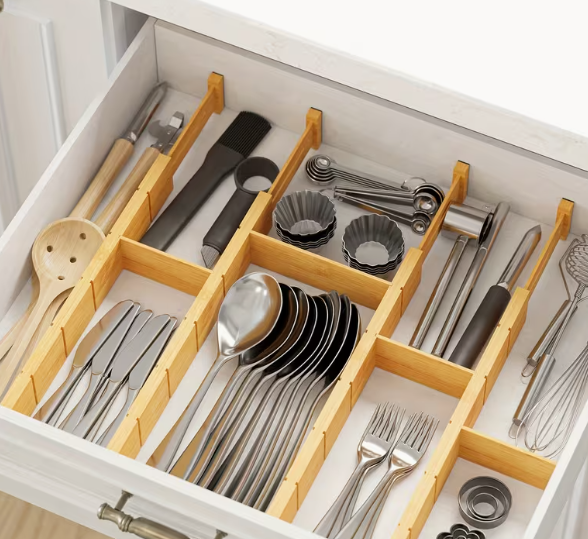
Examples include:
-
Drawer organizers
-
Cable management products
-
Compact storage products
-
Cleaning tools
-
Kitchen organization accessories
-
Small-space home products
These products can work well in before-and-after videos.
Beauty Accessories
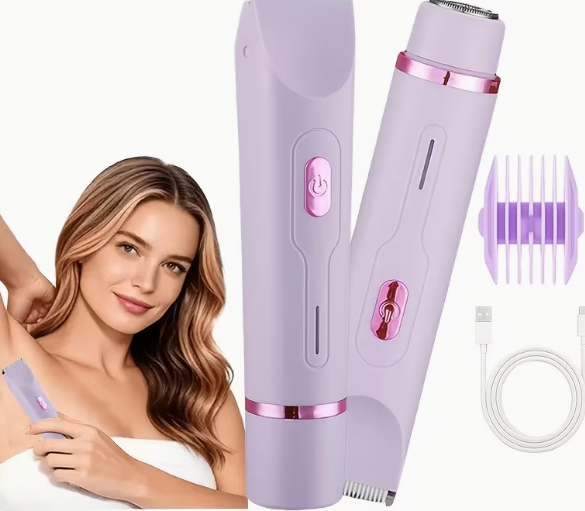
Examples include:
-
Makeup organizers
-
Cosmetic bags
-
Hair accessories
-
Non-medical skincare tools
-
Travel beauty storage
Avoid unsupported claims about curing skin conditions, changing the body, or producing guaranteed results.
Pet Accessories
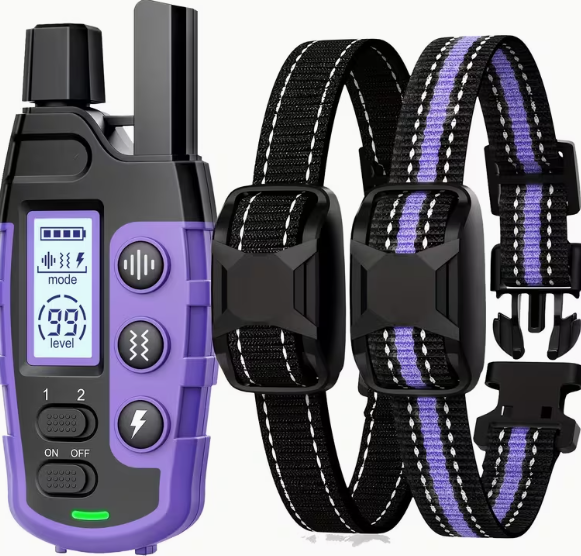
Examples include:
-
Grooming tools
-
Feeding accessories
-
Pet travel products
-
Cleaning accessories
-
Interactive toys
Check material safety, durability, and choking risk before listing any pet product.
Kitchen Products
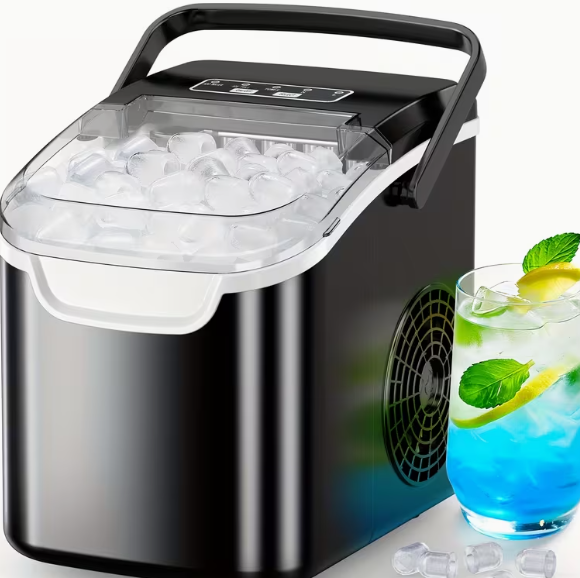
Examples include:
-
Storage tools
-
Preparation accessories
-
Portable containers
-
Cleaning products
-
Simple time-saving tools
Products that can be demonstrated in a few seconds may be easier to promote through short-form content.
Travel Accessories
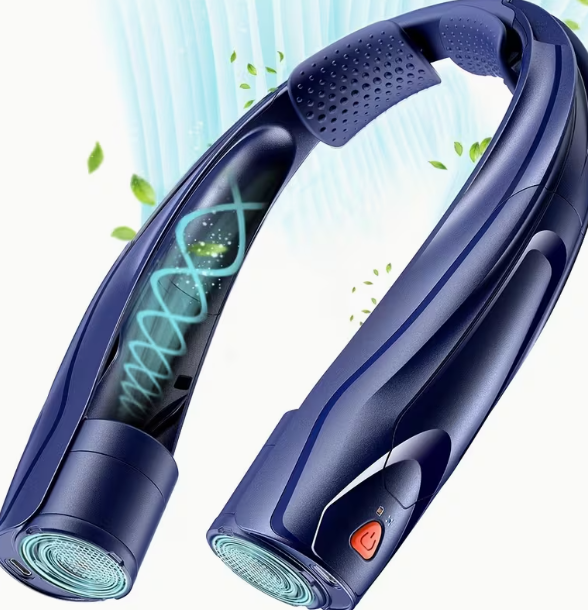
Examples include:
-
Packing organizers
-
Portable storage
-
Luggage accessories
-
Cable organizers
-
Travel document holders
Travel products can support useful tutorials, packing videos, and comparison content.
Desk and Workspace Products
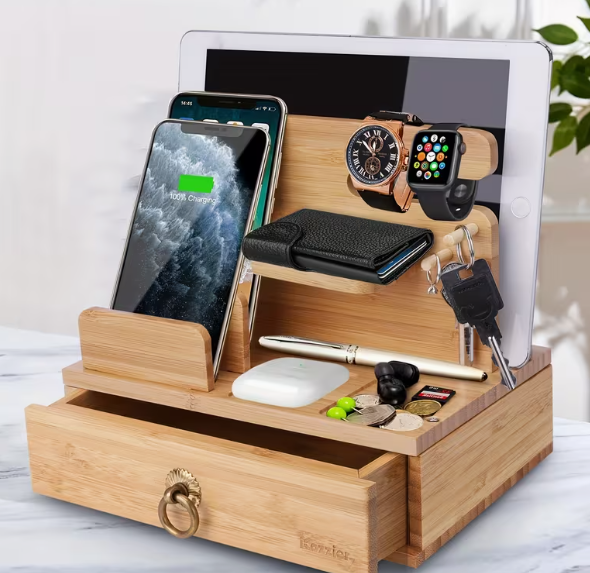
Examples include:
-
Cable holders
-
Laptop accessories
-
Desk organizers
-
Lighting accessories
-
Portable productivity tools
Be careful with electrical products and avoid unsupported health or ergonomic claims.
Hobby Products
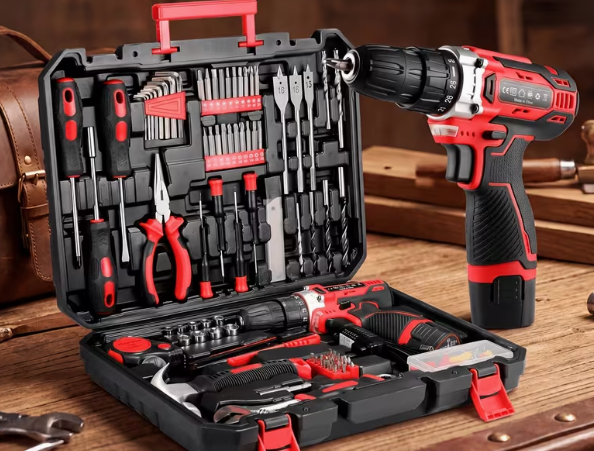
A product serving a focused hobby can sometimes perform better than a general viral gadget because the audience has a clear reason to purchase.
Possible niches include:
-
Crafting
-
Journaling
-
Gaming accessories
-
Gardening tools
-
Photography accessories
-
Collectible storage
Products Beginners Should Avoid
Beginners should generally avoid or carefully investigate:
-
Counterfeit branded products
-
Dietary supplements
-
Products making medical claims
-
Complex electronics
-
High-powered batteries
-
Safety equipment
-
Baby products
-
Fragile glass products
-
Heavy products
-
Products with difficult sizing
-
Products with unstable inventory
-
Products with unclear certifications
-
Products with high return rates
-
Products that cannot meet local delivery requirements
Use TikTok Creative Center for Research
The official TikTok Creative Center is a useful starting point for studying trends, advertisements, keywords, and product-related creative ideas.
Its Top Products feature highlights products appearing in TikTok advertisements and provides related creative examples. TikTok notes that the feature is intended to help advertisers identify products and creative approaches, but it should not be treated as a guarantee of future profitability.
When researching a product, ask:
-
Are recent videos still receiving engagement?
-
Are viewers asking where they can buy it?
-
Are multiple creators promoting it?
-
Are customers leaving positive reviews?
-
What complaints appear repeatedly?
-
Is the product already dominated by one seller?
-
Can you create a different angle?
-
Can the margin support creator commissions?
-
Is the supplier inventory stable?
-
Can delivery meet platform expectations?
Study Customer Reviews
Read reviews on TikTok Shop and other major ecommerce platforms.
Pay particular attention to repeated complaints about:
-
Product size
-
Weak materials
-
Missing parts
-
Misleading photographs
-
Difficult instructions
-
Poor packaging
-
Short battery life
-
Color differences
-
Shipping damage
-
Product odor
-
Complicated assembly
Negative reviews can help you identify a better supplier or improve the listing before launching.
Order Samples
Never depend entirely on supplier photographs and descriptions.
Order at least one sample to the target market and evaluate:
-
Product quality
-
Dimensions
-
Materials
-
Packaging
-
Processing time
-
Delivery time
-
Tracking quality
-
Carrier handoff
-
Instructions
-
Product labeling
-
Damage risk
-
Customer unboxing experience
-
Video demonstration potential
When possible, compare the same product from two suppliers.
The least expensive option may have weaker packaging, inconsistent materials, or slower processing. Paying slightly more per unit can reduce refunds and protect store ratings.
Validate With a Small Test
A simple product validation process is:
-
Select one customer problem.
-
Shortlist three to five products.
-
Check policy and regulatory risks.
-
Compare suppliers.
-
Order samples.
-
Create original content.
-
Build complete listings.
-
Publish organic videos.
-
Run a controlled affiliate or advertising test.
-
Evaluate clicks, conversions, margins, and refunds.
Do not judge a product only by video views.
A video can attract attention without generating purchase intent. Product clicks, conversion rate, customer acquisition cost, creator commission, and return rate provide a more complete picture.
5. How to Find TikTok Dropshipping Suppliers
Your supplier directly affects your TikTok Shop performance.
A poor supplier can cause:
-
Seller-fault cancellations
-
Late dispatch
-
Invalid tracking
-
Incorrect products
-
Damaged orders
-
Negative reviews
-
Return requests
-
Account restrictions
The cheapest product is rarely the cheapest option after refunds, reshipments, and customer support are included.
Types of Suppliers
You may work with:
-
Dropshipping platforms
-
Sourcing agents
-
Manufacturers
-
Local wholesalers
-
Regional distributors
-
Print-on-demand suppliers
-
Third-party fulfillment companies
-
Local warehouses
Local Supplier vs. Overseas Supplier
| Factor | Overseas Supplier | Local Supplier or Warehouse |
|---|---|---|
| Product range | Usually larger | Often more limited |
| Product cost | May be lower | May be higher |
| Initial inventory | Often not required | May require stocking |
| Delivery speed | Depends on shipping line | Usually faster |
| Returns | More complicated | Usually easier |
| Product testing | Flexible | May require purchasing inventory |
| Tracking | Varies significantly | Often more reliable |
| TikTok Shop suitability | Depends on SLA and carrier | Often better for strict delivery requirements |
Supplier Evaluation Checklist
Before listing a product, confirm:
-
Is inventory updated in real time?
-
What is the actual processing time?
-
Which warehouse will ship the order?
-
Which carriers are used?
-
Is tracking recognized by TikTok Shop?
-
How soon does the first carrier scan appear?
-
What is the average delivery time?
-
How are damaged products handled?
-
How are lost parcels handled?
-
Does the supplier accept returns?
-
Is a local return address available?
-
Can the supplier remove invoices and promotional inserts?
-
Are product documents available?
-
Can the supplier manage sudden order increases?
-
Is a backup warehouse available?
-
Can packaging be customized?
-
Can inventory and orders be synchronized?
Ask for actual order data or test shipments rather than accepting a general statement such as “fast delivery.”
Use a Backup Supplier
Depending on one supplier creates unnecessary risk.
The supplier may:
-
Run out of stock
-
Increase prices
-
Change materials
-
Stop offering a shipping route
-
Experience a warehouse delay
-
Change packaging
-
Close for a holiday
-
Discontinue the product
Identify a backup for your best-selling products before a problem occurs.
The backup product should be tested for quality, size, packaging, and shipping. Do not switch to a visually similar product without verifying that it matches the TikTok Shop listing.
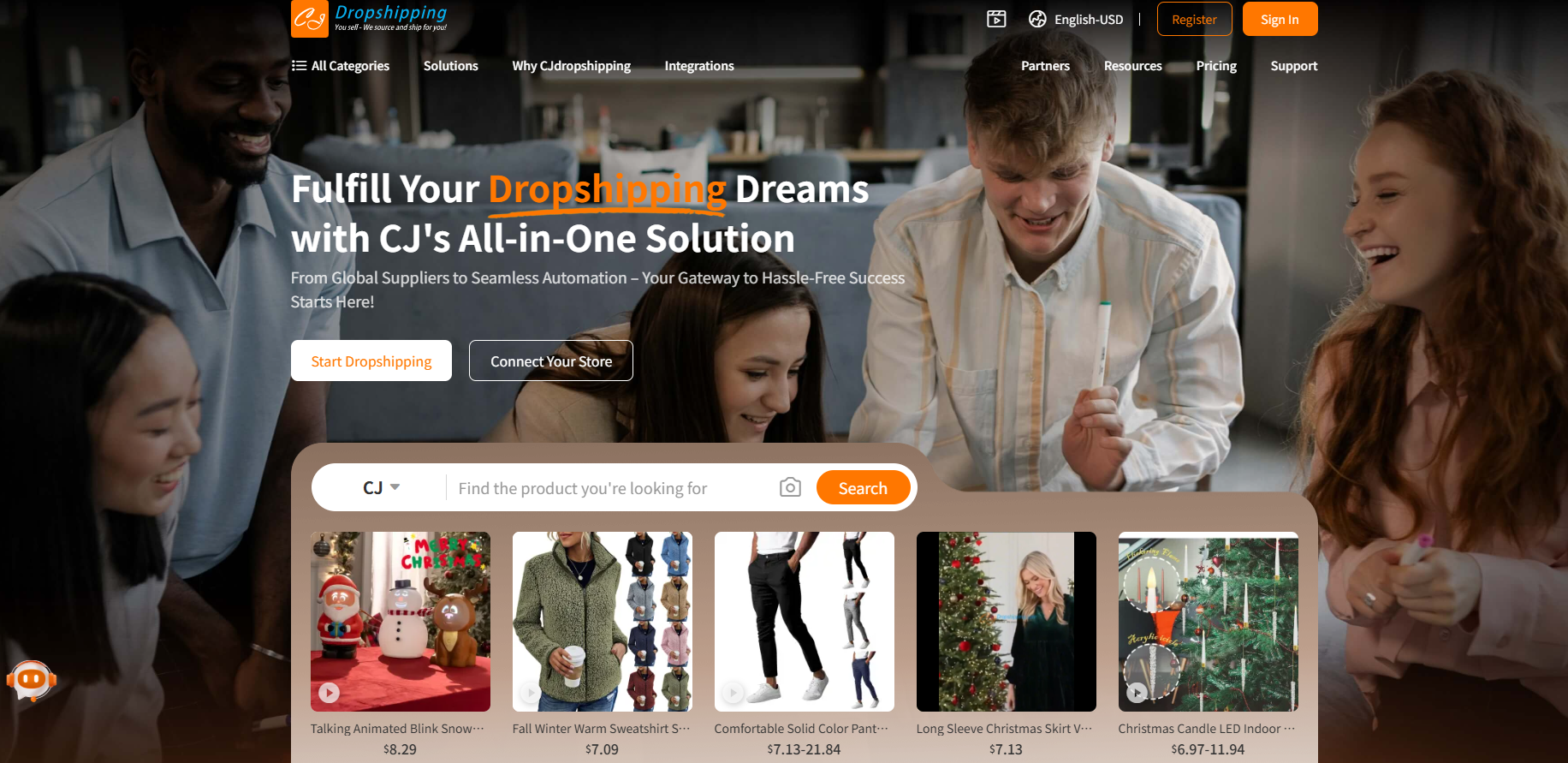
Using CJdropshipping With TikTok Shop
For sellers who want to combine sourcing, store connection, and fulfillment, CJdropshipping’s TikTok Shop integration supports product importing, order synchronization, inventory management, and shipping workflows.
Depending on the product and market, sellers can use CJdropshipping for:
-
Product sourcing
-
Order synchronization
-
Quality inspection
-
Custom packaging
-
Print on demand
-
Global warehouse fulfillment
-
Tracking synchronization
-
Inventory stocking
CJdropshipping also offers a 3PL fulfillment service, allowing sellers to send products from their own manufacturers to CJ warehouses for storage, packing, and shipping.
A supplier integration does not automatically guarantee compliance. Sellers should still verify that the selected product, warehouse, carrier, processing time, and delivery route meet the requirements of their TikTok Shop market.
6. How to List and Fulfill TikTok Shop Orders
Create an Accurate Product Listing
A complete listing should include:
-
A clear product title
-
The correct product category
-
Accurate brand information
-
Original or authorized images
-
A complete product description
-
Materials
-
Dimensions
-
Package contents
-
Variation information
-
Safety warnings
-
Required certifications
-
Accurate inventory
-
Clear pricing
The TikTok Shop Product Listing Policy requires product listings to represent products accurately and prohibits attempts to avoid platform requirements.
Do Not Copy Supplier Listings Directly
Supplier listings often contain:
-
Repetitive keywords
-
Poor translations
-
Incorrect measurements
-
Unsupported claims
-
Unauthorized brand names
-
Watermarked images
-
Inconsistent variations
-
Specifications for several different models
Rewrite the title and description for your target customer. Verify every specification against the sample.
Use Clear Product Images
Your image set should ideally include:
-
A clean main image
-
Multiple product angles
-
Product-in-use photographs
-
A size reference
-
Package contents
-
Variation differences
-
Important product details
-
Safety or compatibility information
The product shown in videos, images, livestreams, and the listing must be consistent.
Follow Fair Pricing Rules
Avoid using one extremely inexpensive variation to display a low starting price when the main product costs significantly more.
Also avoid:
-
Fake discounts
-
Inflated reference prices
-
Unreasonably high pricing
-
Unrelated products placed in one listing
-
Accessories used to create a misleading starting price
-
Excessive shipping fees
TikTok Shop’s Fair Pricing Policy prohibits misleading variation pricing, unreasonable overcharging, and price gouging.
Understand the Fulfillment Options
TikTok Shop US currently describes three main fulfillment methods:
-
Seller Shipping
-
TikTok Shipping
-
Fulfilled by TikTok
Availability and terminology can differ in other markets.
Seller Shipping
The seller chooses an eligible logistics provider and is responsible for providing the tracking number, shipping provider, and service information.
This may be appropriate for a dropshipping supplier or independent fulfillment warehouse, provided the partner meets the platform’s requirements.
TikTok Shipping
The seller uses a logistics provider supported through TikTok Shop’s shipping solution.
The seller still needs to prepare the parcel and complete the carrier handoff.
Fulfilled by TikTok
With Fulfilled by TikTok, sellers send inventory to TikTok Shop fulfillment centers. TikTok then manages storage, packing, and delivery for eligible products.
FBT is not traditional no-inventory dropshipping because the seller needs to purchase and send inventory in advance.
However, it can be part of a practical growth strategy:
-
Test demand through supplier fulfillment.
-
Identify a consistent best seller.
-
Purchase a small batch.
-
Send inventory to FBT or another local warehouse.
-
Improve delivery speed and customer experience.
Meet Tracking Requirements
Valid tracking should:
-
Match the actual order
-
Belong to the correct customer
-
Use the correct carrier
-
Show real carrier movement
-
Be uploaded within the required time
-
Match the actual warehouse and shipping route
-
Continue updating through delivery
Do not:
-
Reuse a tracking number
-
Upload a fake tracking number
-
Upload tracking before the parcel is ready
-
Select the wrong carrier
-
Use an unsupported carrier
-
Mark an order as shipped while it remains at the supplier
-
Change shipping methods without updating the order
For TikTok Shop US Seller Shipping, the Valid Tracking Rate Requirements currently require sellers to maintain a valid, verifiable tracking rate of at least 95%. Platform enforcement can include reduced visibility, account health deductions, or restrictions on Seller Shipping.
Because thresholds can change, always check the current Seller Center policy rather than treating any number as permanent.
Synchronize Inventory
Inventory problems can quickly damage a TikTok Shop.
Common causes include:
-
Supplier stock not updated
-
Incorrect SKU mapping
-
Product variations connected incorrectly
-
Inventory shared across multiple stores
-
Supplier price changes
-
Sudden viral demand
-
Warehouse transfer delays
Use inventory synchronization where possible and create a safety buffer.
For example, if the supplier reports 20 available units, you might list fewer than 20 until you know how frequently the inventory updates.
Seller-fault cancellations can affect store performance. TikTok Shop US maintains specific Seller-Fault Cancellation Rate Requirements, and sellers must also comply with the broader fulfillment policy.
Prepare for Viral Demand
A successful TikTok video can create a sudden increase in orders.
Before launching a large creator campaign, ask the supplier:
-
How many units are available?
-
How many orders can be processed daily?
-
Can inventory be reserved?
-
Is there a backup warehouse?
-
Can production be increased?
-
Will processing time change during high demand?
-
Who will notify you when inventory becomes low?
A viral video can become an operational problem when the supplier cannot keep up.
Plan Returns and Refunds
Before accepting orders, decide:
-
Where products will be returned
-
Who pays return shipping
-
Whether the supplier accepts returns
-
What evidence is required for damaged products
-
Who pays for replacements
-
How lost parcels are handled
-
When a refund without return is appropriate
-
How the supplier reimburses the seller
Do not create a return policy that promises a local return solution unless you actually have one.
TikTok Shop evaluates return and refund performance. For TikTok Shop US, the Non-Buyer Fault Return and Refund Rate can contribute to the overall Shop Performance Score.
Provide Responsive Customer Service
Prepare answers for common questions:
-
Where is my order?
-
Can I change my address?
-
Can I cancel the order?
-
Why is tracking not updating?
-
I received the wrong variation.
-
The product arrived damaged.
-
The item is different from the video.
-
How do I return the product?
-
When will I receive my refund?
Create response templates, but personalize them to the customer’s situation.
A supplier should also provide a fast escalation channel for:
-
Incorrect orders
-
Missing parcels
-
Damaged products
-
Inventory problems
-
Carrier delays
-
Replacement requests
7. How to Promote Products on TikTok
TikTok Shop gives sellers several ways to generate sales:
-
Organic shoppable videos
-
Creator affiliate content
-
TikTok LIVE
-
Shop advertisements
-
Search discovery
-
Shop Tab visibility
Create Native TikTok Content
A TikTok video should feel like useful or entertaining content, not a traditional product commercial.
A simple structure is:
Hook
Capture attention within the first few seconds.
Examples:
-
“I finally found a way to organize all these cables.”
-
“This is why my suitcase was always overweight.”
-
“Three things I wish I knew before getting a cat.”
-
“I tested the product that keeps appearing on my feed.”
Problem
Show a situation the target customer recognizes.
Demonstration
Show how the product works rather than only describing it.
Proof
Use details, comparisons, testing, or a real use case.
Call to Action
Tell the viewer where to find the product without making the video feel forced.
Content Formats to Test
-
Problem and solution
-
Before and after
-
Product demonstration
-
Honest review
-
Unboxing
-
Product comparison
-
Three ways to use the product
-
Common mistake
-
Frequently asked question
-
Customer reaction
-
Behind the scenes
-
Packing an order
-
Testing a viral product
-
Product durability test
-
Gift recommendation
Do not depend on one video.
A product may need multiple hooks, formats, creators, and audiences before you understand its real potential.
Keep Content Accurate
Your content should match the actual product.
Avoid:
-
Fake demonstrations
-
Unsupported health claims
-
Guaranteed results
-
Misleading before-and-after images
-
Fake reviews
-
False scarcity
-
False discounts
-
Different products in the video and listing
-
Stolen creator content
-
Spam videos
-
Misleading AI-generated demonstrations
TikTok Shop’s Content Policy prohibits misleading claims, fraudulent promotions, spam, and other manipulative behavior. AI-generated content may also violate the policy when it misrepresents a product or deceives viewers.
Use TikTok Shop Affiliate
TikTok Shop Affiliate allows sellers to make products available to creators who can earn commission from attributed sales.
A typical process is:
-
The seller adds a product to the affiliate program.
-
The seller sets a commission.
-
A creator selects the product or accepts an invitation.
-
The creator produces shoppable content.
-
Customers purchase through the creator’s content.
-
The creator receives commission from qualifying sales.
TikTok Shop offers both open and targeted collaboration options through its Affiliate Collaboration tools.
Open Collaboration
With open collaboration, eligible creators can discover the product and choose to promote it.
This is useful for:
-
Reaching more creators
-
Testing different content styles
-
Discovering unexpected audiences
-
Generating affiliate content at scale
The disadvantage is that sellers have less control over who chooses the product and how it is presented.
Target Collaboration
With target collaboration, the seller invites selected creators.
This is useful when:
-
The creator serves a specific niche
-
The seller wants more control
-
The product requires explanation
-
The seller wants to negotiate deliverables
-
The creator has demonstrated sales performance
-
The brand wants long-term partnerships
How to Choose Creators
Do not judge creators only by follower count.
Evaluate:
-
Audience relevance
-
Recent average views
-
Engagement quality
-
Content style
-
Product category experience
-
Posting consistency
-
Comment quality
-
Sales performance, when available
-
Content compliance
-
Communication
-
Reliability
A smaller creator with a relevant audience and strong demonstrations may generate more sales than a large general entertainment account.
How to Set Creator Commission
Calculate the commission before inviting creators.
Consider:
-
Selling price
-
Product cost
-
Shipping
-
TikTok Shop fees
-
Expected refunds
-
Sample cost
-
Advertising cost
-
Desired profit
-
Competitive commission rates
A high commission may attract creators, but it can also make each sale unprofitable.
Example Creator Outreach Message
Hi [Name],
I enjoyed your recent content about [specific topic]. We think our [product] could be a strong fit for your audience because [specific reason].
We can provide a complimentary sample and offer commission on qualifying TikTok Shop sales. Please let us know if you would be interested in testing it.
Best,
[Brand Name]
Personalize the message. Generic outreach sent to hundreds of unrelated creators usually produces weak results.
Use TikTok LIVE
TikTok LIVE allows sellers and creators to demonstrate products, answer questions, and present several products during one session.
Prepare:
-
A livestream structure
-
Product demonstration order
-
Talking points
-
Common questions
-
Product links
-
Inventory limits
-
Offers and bundles
-
A moderator
-
Compliance reminders
-
Customer service support
Do not make false claims or create fake urgency during a livestream.
A good LIVE session should help viewers understand the product, not pressure them into buying something they do not understand.
Use Paid Advertising Carefully
Paid advertising can amplify:
-
Seller-created videos
-
Creator affiliate videos
-
Product listings
-
Livestreams
-
Retargeting campaigns
Before increasing advertising spend, confirm:
-
The product converts
-
The listing is accurate
-
The margin is sufficient
-
The supplier can fulfill additional orders
-
Inventory is stable
-
Returns are manageable
-
Tracking is reliable
Advertising cannot solve a poor product or weak fulfillment system. It only sends more customers into the existing system.
Optimize for TikTok Search
Customers increasingly use TikTok to search for products, solutions, reviews, and tutorials.
Optimize:
-
Product titles
-
Video captions
-
Spoken keywords
-
On-screen text
-
Product descriptions
-
Relevant hashtags
-
Creator talking points
For example, instead of using only a general caption such as “You need this,” use a specific phrase such as:
A compact cable organizer for business travel.
Use keywords naturally. Repeating unrelated keywords can make the content less useful and may reduce trust.
8. How to Calculate Profit and Scale
Revenue does not equal profit.
TikTok Shop sellers need to account for costs that are often ignored in simple dropshipping calculations.
TikTok Dropshipping Profit Formula
Use this formula:
Selling price − product cost − shipping − platform costs − creator commission − advertising − refund allowance = estimated contribution margin
Example Calculation
| Item | Amount |
|---|---|
| Selling price | $39.99 |
| Product cost | $8.00 |
| Shipping | $5.00 |
| Platform and transaction costs | $3.00 |
| Creator commission | $6.00 |
| Advertising cost | $7.00 |
| Refund allowance | $2.00 |
| Estimated contribution margin | $8.99 |
This $8.99 is not necessarily final net profit.
You may still need to pay for:
-
Software
-
Product samples
-
Customer service
-
Accounting
-
Business registration
-
Packaging design
-
Creator management
-
Chargebacks
-
Storage
-
Employee costs
TikTok Shop fees, incentives, and commission structures can change by market, seller program, category, and promotional campaign. Check the current Seller Center rather than relying on a permanent fee number from a third-party article.
Metrics to Track
Content Metrics
Track:
-
Video views
-
Average watch time
-
Completion rate
-
Engagement
-
Product clicks
-
Click-through rate
Conversion Metrics
Track:
-
Product page views
-
Add-to-cart rate
-
Checkout initiation
-
Conversion rate
-
Cost per order
-
Affiliate conversion rate
Profit Metrics
Track:
-
Revenue
-
Product cost
-
Shipping cost
-
Platform costs
-
Creator commissions
-
Advertising spend
-
Contribution margin
-
Average order value
-
Refund cost
Operational Metrics
Track:
-
Processing time
-
Late dispatch rate
-
Valid tracking rate
-
Delivery time
-
Seller-fault cancellation rate
-
Return and refund rate
-
Customer response time
-
Product ratings
-
Shop Performance Score
Diagnose the Real Problem
Use the following framework:
| Result | Possible Problem |
|---|---|
| Videos receive few views | Weak hook, content quality, account distribution or topic |
| Videos get views but few product clicks | Weak product interest or call to action |
| Product gets clicks but few add-to-carts | Price, listing, trust or product issue |
| Customers add to cart but do not purchase | Shipping, checkout, reviews or total price |
| Product generates sales but no profit | Weak unit economics |
| Product generates sales but many refunds | Quality problem or misleading content |
| Orders are canceled | Inventory or supplier problem |
| Tracking is frequently invalid | Fulfillment integration or carrier problem |
Do not immediately blame the product for every weak result.
Sometimes the product is acceptable, but the content, offer, listing, price, or audience is wrong.
When to Stop Testing
Consider pausing a product when:
-
Multiple content angles fail
-
Product clicks remain low
-
Conversion remains weak
-
The margin cannot support creator commission
-
Product quality is inconsistent
-
Delivery cannot meet platform requirements
-
Refund rates are too high
-
The product creates policy risk
-
Inventory is unstable
-
The supplier is unresponsive
Do not continue spending simply because you already invested money in samples and advertisements.
How to Scale a Winning Product
When a product produces consistent profitable orders:
-
Negotiate a lower supplier price.
-
Reserve inventory.
-
Add a backup supplier.
-
Improve quality control.
-
Create more videos around proven hooks.
-
Recruit additional creators.
-
Reuse strong creator content in advertising with permission.
-
Create bundles.
-
Add related products.
-
Improve packaging.
-
Move inventory closer to customers.
-
Build a recognizable brand.
Scale gradually.
A sudden increase in orders can create cash-flow pressure, stockouts, customer service problems, and fulfillment failures.
Move From Dropshipping to Local Inventory
Consider stocking inventory when:
-
Sales become predictable
-
The product has a stable conversion rate
-
Supplier stockouts occur frequently
-
Cross-border delivery reduces conversion
-
Local fulfillment improves margins
-
Creator campaigns require stable supply
-
Faster delivery could improve customer ratings
-
Return costs are increasing
A practical hybrid model is:
-
Test new products through dropshipping.
-
Stock proven products locally.
-
Continue using supplier fulfillment for low-volume tests.
-
Move winners to faster fulfillment.
-
Discontinue weak products.
Build a Brand
TikTok can produce fast product demand, but long-term value comes from building something customers recognize.
A brand-building path may include:
-
Improving product materials
-
Adding branded packaging
-
Creating instructions
-
Developing custom colors
-
Registering a trademark
-
Producing original content
-
Building creator relationships
-
Adding complementary products
-
Collecting customer feedback
-
Improving fulfillment
The goal is to move from selling a product that happens to be trending to serving a specific customer with a consistent product line.
9. Common TikTok Dropshipping Mistakes
Choosing Products Only by Video Views
High views do not guarantee purchase intent or profit.
Always evaluate margin, quality, competition, delivery, and refund risk.
Listing Products Before Testing Samples
Customers should not become your product testers.
Order samples and verify the complete customer experience.
Using Slow or Untrackable Shipping
A low product cost does not compensate for failed delivery performance.
Choose shipping based on actual tracking and delivery data.
Copying Competitor Videos
Copied content can create intellectual property problems and rarely builds a sustainable brand.
Create original demonstrations and obtain permission before reusing creator content.
Ignoring Product Restrictions
A product may be available from a supplier but restricted on TikTok Shop.
Review the platform policy before creating content or buying samples.
Uploading Too Many Products
A focused store is easier to manage than a catalog of hundreds of untested products.
Start with a small collection that serves one audience.
Failing to Synchronize Inventory
Overselling can lead to cancellations and damaged shop performance.
Use inventory synchronization and maintain a safety buffer.
Offering Unrealistic Delivery Times
Do not promise local delivery when the product ships internationally.
Clear expectations reduce complaints and chargebacks.
Setting Affiliate Commission Without Calculating Profit
Creator sales are not useful when every order loses money.
Calculate the full contribution margin first.
Depending on One Supplier
Create a tested backup plan for important products.
Scaling Before Fixing Operations
A viral campaign increases every weakness in the business.
Confirm inventory, fulfillment, support, and cash flow before expanding.
Treating Customer Service as the Supplier’s Job
The supplier may help resolve a product problem, but communication with the customer remains your responsibility.
10. Frequently Asked Questions
Can I use AliExpress for TikTok Shop dropshipping?
It may be technically possible to source a product from an AliExpress supplier, but many suppliers may not meet TikTok Shop’s processing, tracking, packaging, inventory, and return requirements.
Do not automatically send TikTok Shop orders to a random marketplace seller. Test the supplier and confirm that packages will not contain another retailer’s branding or invoice.
Do I need a warehouse?
You may not need your own warehouse during early product testing.
However, you need a supplier or fulfillment provider capable of meeting the target market’s shipping and tracking requirements. A local warehouse may become necessary as the store grows.
Can a supplier ship directly to my TikTok Shop customer?
Yes, a supplier can potentially ship directly to the customer when the arrangement meets the applicable TikTok Shop requirements.
Your store remains responsible for the product and order.
Do I need Shopify to use TikTok Shop?
No. TikTok Shop can operate as its own sales channel.
Shopify may still be useful for managing an independent store, centralizing products, or building an additional customer channel.
Can I connect Shopify to TikTok Shop?
Integration availability depends on the market and the software you use.
Before connecting systems, confirm how products, inventory, orders, cancellations, and tracking information will synchronize.
How fast must TikTok Shop orders be shipped?
Shipping requirements differ by market, service, order type, and fulfillment method.
TikTok Shop US regular orders generally need to reach the required fulfillment stages within specific business-day deadlines. Refer to the latest Fulfillment Policy for the current requirements rather than relying on a fixed number from an older article.
What products sell well on TikTok Shop?
Products with strong demonstrations, clear benefits, reliable quality, manageable prices, and content potential may be suitable.
There is no permanent list of winning products.
How do I find TikTok dropshipping suppliers?
Compare suppliers based on processing time, inventory, product quality, tracking, carriers, return options, and integration capabilities.
Order samples and test the full delivery process.
Can I use CJdropshipping with TikTok Shop?
CJdropshipping provides TikTok Shop connection and fulfillment workflows for supported stores and regions.
Sellers should verify each product, warehouse, shipping route, and market configuration before launching.
Do I need followers to start selling?
Seller and creator requirements are not the same.
For TikTok Shop US, an official shop account can currently be bound without a minimum follower count, subject to account eligibility and compliance checks. Affiliate creator access may have separate requirements.
What is TikTok Shop Affiliate?
TikTok Shop Affiliate allows eligible creators to promote products and earn commission from attributed sales.
Sellers can use open collaboration or invite selected creators.
How much commission should I offer creators?
The commission should be competitive while leaving enough margin after product, shipping, platform, advertising, and refund costs.
There is no single commission rate suitable for every product.
Can I dropship branded products?
Only when you have the legal right and any documentation required by TikTok Shop to sell the brand.
Avoid counterfeit or unauthorized products.
Is TikTok dropshipping profitable in 2026?
It can be profitable when a seller combines:
-
A useful product
-
Reliable fulfillment
-
Accurate pricing
-
Original content
-
Creator distribution
-
Policy compliance
-
Strong customer service
-
Controlled scaling
It becomes difficult when sellers copy products, hide shipping times, use unreliable suppliers, or focus on revenue without calculating the full cost of each order.
Conclusion
TikTok Shop gives dropshipping sellers a powerful way to combine content, creators, product discovery, and checkout.
But it is not a shortcut around ecommerce operations.
Content generates attention. Your product, supplier, shipping, and customer service determine whether that attention becomes a sustainable business.
Start with a small number of low-risk products. Order samples, confirm shipping performance, build accurate listings, and publish original content. Work with creators only after calculating the full margin.
As demand grows, reserve inventory, add backup suppliers, improve packaging, and move proven products closer to customers.
Platforms such as CJdropshipping can help sellers connect product sourcing, order synchronization, quality inspection, custom packaging, and fulfillment. However, every seller should still verify that the selected products and logistics methods meet the latest TikTok Shop requirements for their target market.
The strongest TikTok dropshipping businesses in 2026 will not be the stores that upload the most products. They will be the stores that turn customer attention into a reliable product and fulfillment experience.