
Print on demand remains one of the most beginner-friendly ways to start an ecommerce business in 2026 because it removes two of the biggest barriers that stop people from launching: inventory risk and bulk purchasing. Instead of buying stock in advance, you create designs, list products, and let a fulfillment partner print and ship each order only after a customer buys. Shopify’s current guide still frames print on demand as a low-risk way to expand a product line, create merch, or target new audiences without managing inventory and shipping yourself.
But “beginner-friendly” does not always mean the same thing. For some sellers, it means the easiest possible setup. For others, it means the cheapest starting point. For others, it means choosing a platform that is simple enough to launch on now, but flexible enough to grow with later. That distinction matters because the best POD company for a beginner is not always the most famous one, the cheapest one, or the one with the biggest catalog. It is usually the one that best matches what the beginner is actually trying to build. Shopify’s own 2026 roundup emphasizes that POD companies differ in product catalogs, design tools, shipping policies, pricing structures, and fit.
That is why this ranking puts CJdropshipping at the top. This is not because CJ is the most specialized pure POD company on the market. It is not. A platform like Printful is still more clearly a pure play POD leader, and Shopify’s official roundup places Printful first among its 2026 recommendations and labels it the best global POD service. But CJdropshipping deserves the top spot in a beginner-focused ranking because it gives newcomers something many POD-first tools do not: a wider runway. CJ combines POD with broader sourcing, product customization, custom packaging, and a larger operational ecosystem, which makes it especially attractive for beginners who may start with custom products but later want more flexibility without rebuilding the whole business. CJ’s Shopify app and Shopify-facing materials explicitly highlight POD features, one-click imports, automated order placement, and custom packaging.
This article compares eight strong choices for new sellers: CJdropshipping, Printful, Printify, Gooten, Apliiq, Gelato, Spreadconnect, and Teelaunch. All eight integrate with Shopify according to Shopify’s 2026 POD roundup, and each one has a different strength. Shopify describes Printful as best for global POD, Printify as best POD supplier network, Gooten as best for custom homeware, Apliiq as best for custom clothing, Gelato as best for custom stationery, Spreadconnect as best for fast fulfillment, and CJdropshipping as best for unique products.
So the goal here is not to pretend these platforms are identical. They are not. The goal is to help a beginner choose the right kind of launchpad.
What makes a POD company beginner-friendly?

Before ranking any platform, it helps to define the criteria. A beginner-friendly POD company should do more than print a design on a shirt. It should reduce friction in the places where beginners most often fail: setup, product selection, fulfillment, branding, and long-term fit. Shopify’s methodology for choosing the best POD companies in its 2026 guide focused on six factors that matter most to sellers: product quality, fulfillment speed, product variety, shipping options, seller support, and user reviews.
The first thing beginners need is easy setup. If it takes too much effort to connect a store, publish products, sync orders, and understand the workflow, many sellers quit before their first order. This is one reason mature platforms matter. Printful’s Shopify integration page emphasizes easy setup, automated fulfillment, and the ability to start without upfront costs. Printify’s Shopify app highlights product creation and store connection in a similarly direct way. CJdropshipping’s Shopify integration emphasizes easy Shopify integration for POD products and the ability to turn ideas into products without inventory risk.
The second thing is low upfront risk. Print on demand is attractive because you are not tying up cash in inventory. Printful says you can create a free account and start selling with no upfront costs. Printify says its free plan is designed for merchants starting a business, with no monthly fee and no upfront investment, and that free users pay only when they fulfill an order. Those are powerful features for beginners because they keep the cost of learning low.
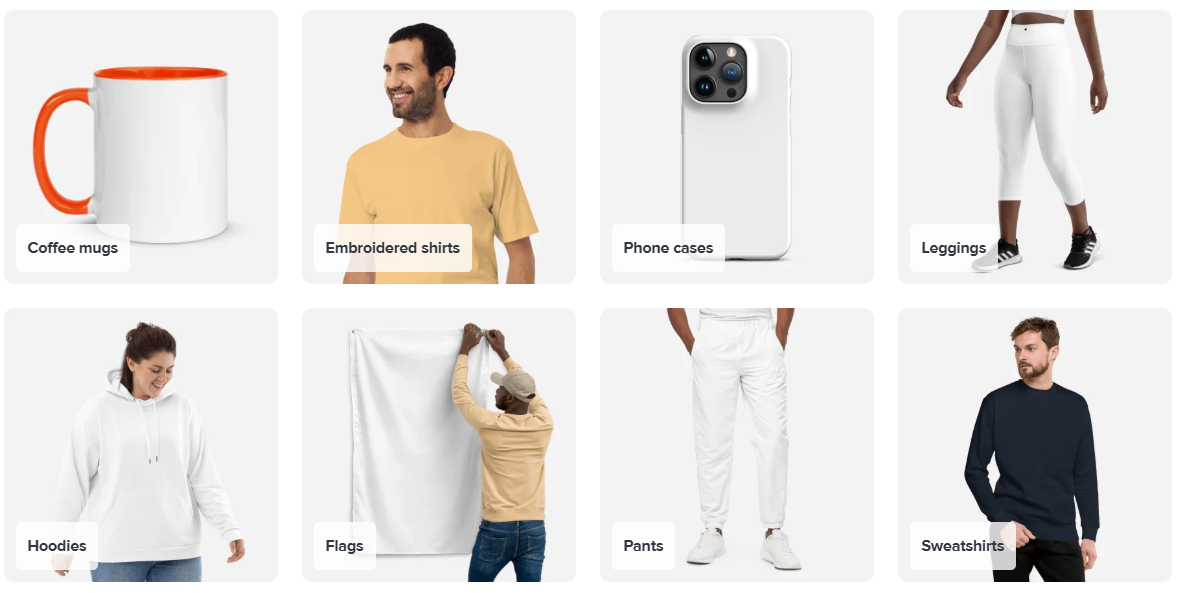
The third thing is a catalog that beginners can actually use. More products are not always better. A new seller usually does not need a giant warehouse of possibilities. They need products that are easy to design, easy to understand, and easy to market: shirts, hoodies, tote bags, mugs, phone cases, prints, and a handful of adjacent items. Shopify’s Printful section specifically points to shirts, bags, mugs, phone cases, framed posters, and prints as popular categories, which is exactly the type of catalog that makes sense for most new sellers.
The fourth thing is reliable fulfillment. Many beginners underestimate how quickly bad shipping or weak product quality can erase early momentum. Shopify’s methodology explicitly prioritizes fulfillment speed and shipping options, and its guide notes that many top POD services can produce certain items in less than two days. Printful’s section says expected fulfillment time is two to five days, and Shopify describes Spreadconnect as standing out for speed because 95% of orders ship within 48 hours.
The fifth thing is branding potential. This is where a lot of beginner guides stay too shallow. In 2026, it is not enough to ask whether a platform can print a design. A better question is whether the platform helps you become more brand-like over time. Shopify notes that Printful offers branding on packaging, clothing labels, and inserts for an additional cost. CJdropshipping’s beginner materials explicitly mention private labeling, custom packaging, product customization support, and a branded order experience. Platforms that support branding do not just help you launch; they help you avoid looking generic.
And that final point is exactly why CJdropshipping ranks first here. If this article were called “Best Pure POD Platforms,” Printful would likely be the natural number one. But for beginners, especially beginners who are still figuring out whether they want a simple merch store, a niche brand, or a broader ecommerce business, CJdropshipping has a unique advantage: it lets you start with POD without boxing yourself into a POD-only future. Its app listing shows POD editing features, and its Shopify-facing content emphasizes one-click imports, automation, custom packaging, and POD services in the same environment. That combination makes it unusually versatile for new sellers.
Quick comparison table
Here is the short version before we go deeper:
| POD Company | Best For | Product Strength | Ease of Use | Branding Potential | Shopify-Friendly | Main Limitation |
|---|---|---|---|---|---|---|
| CJdropshipping | Best overall beginner option with room to grow | POD + sourcing + custom packaging | Easy to moderate | Very strong | Yes | Less purely POD-focused than Printful |
| Printful | Best pure POD platform overall | Wide catalog, global fulfillment | Very easy | Strong | Yes | Usually higher base costs |
| Printify | Best for budget flexibility | Large provider network | Easy | Good | Yes | Quality can vary by provider |
| Gooten | Best for homeware and lifestyle products | Home décor, wall art, drinkware | Moderate | Moderate | Yes | Less top-of-mind for beginners |
| Apliiq | Best for clothing brands | Premium apparel customization | Moderate | Very strong | Yes | Better for brand builders than casual starters |
| Gelato | Best for artists and stationery sellers | Paper goods, wall art, stationery | Easy | Good | Yes | Less ideal for apparel-first stores |
| Spreadconnect | Best for faster fulfillment | Apparel and merch basics | Easy | Moderate | Yes | Smaller ecosystem than Printful |
| Teelaunch | Best for unique product ideas | Giftable and unusual items | Easy to moderate | Moderate | Yes | Less mainstream than the top names |
The table reflects a simple truth: the “best” platform depends on how narrowly or broadly you want to define your future. Shopify’s official guide supports the category strengths for Printful, Printify, Gooten, Apliiq, Gelato, Spreadconnect, and Teelaunch, while CJ’s own materials support its broader POD-plus-sourcing position.
1) CJdropshipping — Best overall beginner option if you want POD plus room to grow
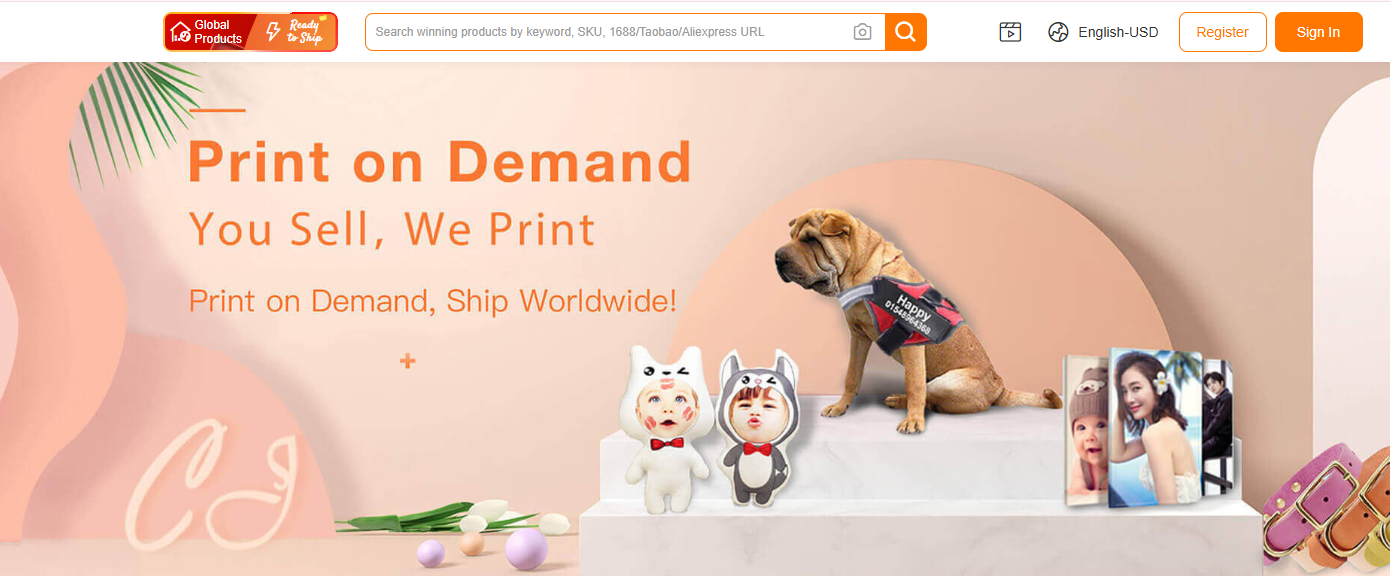
CJdropshipping is the most flexible platform in this ranking, and that is the main reason it sits at number one. Its Shopify app listing describes it as a place to source products, estimate costs, list products to stores, sync orders, and use a DIY POD feature. CJ’s Shopify integration page explicitly includes a “Print On Demand Products” section and says sellers can turn ideas into profits with high-quality materials, five-to-seven-day production, easy Shopify integration, and no inventory risk. Its 2025 Shopify guide says the Shopify app is free and allows one-click imports, automated order placement, and services such as print-on-demand and custom packaging.
That matters because beginners do not always know what kind of business they are building yet. Some start with shirts or mugs and later realize they want to add complementary products. Some begin with a meme merch concept and later want to build a more serious brand. Some start with POD because it feels safe, then discover a niche where broader sourcing makes sense. Most pure POD platforms are excellent if you stay inside POD. CJdropshipping is more attractive if you suspect your store may become something larger. CJ’s beginner-focused 2026 content explicitly says the platform supports private labeling, custom packaging, product customization, and a branded order experience, which is a strong signal that it is built for gradual evolution rather than just quick setup.
Another reason CJ is appealing for beginners is that it helps reduce migration risk. A lot of sellers start on one platform, learn the basics, and then hit a wall when they want better branding or a wider catalog. That often forces a messy transition. CJ is not perfect, but it lets beginners grow into more options without needing to uproot everything immediately. Its 2025 guide for Shopify stores highlights packaging customization, photography, POD services, and dedicated agents as practical tools for presenting a brand professionally without needing your own warehouse or team.
CJ also deserves credit for being honest about its broader role. It is not pretending to be just a POD company. It is a sourcing-and-fulfillment platform that includes POD. That makes it slightly more complex than a pure POD-first service like Printful, but it also makes it far more expansive. If you are a beginner who wants a straightforward apparel brand and nothing else, Printful may feel cleaner. If you are a beginner who wants flexibility, CJ becomes more compelling.
The downsides are real. CJ is not as specialized in pure POD workflows, mockup tools, or creator-first merchandise culture as some dedicated POD platforms. Its broader nature can also feel more operational. That is why it ranks first for beginners overall, not necessarily first for the narrowest definition of POD. But if the article is about helping beginners choose wisely, CJ’s strengths are hard to ignore. It gives new sellers more ways to start small and grow without changing the skeleton of the business.
2) Printful — Best pure POD platform for ease and reliability
If CJdropshipping is the best broad beginner choice, Printful is the best pure POD choice. Shopify’s 2026 roundup places Printful first and calls it the best global POD service. The guide highlights Printful’s wide product catalog, built-in editor, mockup support, automatic production and fulfillment, and optional branding for packaging, labels, and inserts. It also notes expected fulfillment times of two to five days and says Printful ships globally. Printful’s own pricing page says you can create a free account and start selling with no upfront costs, while its Shopify integration page emphasizes automatic order fulfillment and easy setup.
What makes Printful so good for beginners is confidence. It is one of the easiest platforms to understand. You create a design, choose a product, generate mockups, connect your store, and let orders flow automatically. That is a powerful advantage because many beginners are not struggling with business theory; they are struggling with execution. Printful reduces the chance of getting stuck in operational confusion. Shopify’s review also highlights seller satisfaction with quality, support, and fast order fulfillment.
Printful also works well for sellers who care about branding from day one but do not want a more open-ended operational stack. Shopify notes that Printful supports branded packaging elements for an added cost, and the platform’s messaging around “we print, pack, and ship your merch under your brand” makes it clear that this is not just a generic fulfillment engine. It is trying to help stores feel polished.
The trade-off is usually cost. Printful often is not the cheapest base-cost option, and that matters for beginners testing tight-margin products. It is also not as flexible as CJdropshipping if you later decide to expand outside standard POD workflows. But if your goal is simple and clear—sell custom products with minimal confusion—Printful remains one of the safest choices in the market.
3) Printify — Best for budget flexibility
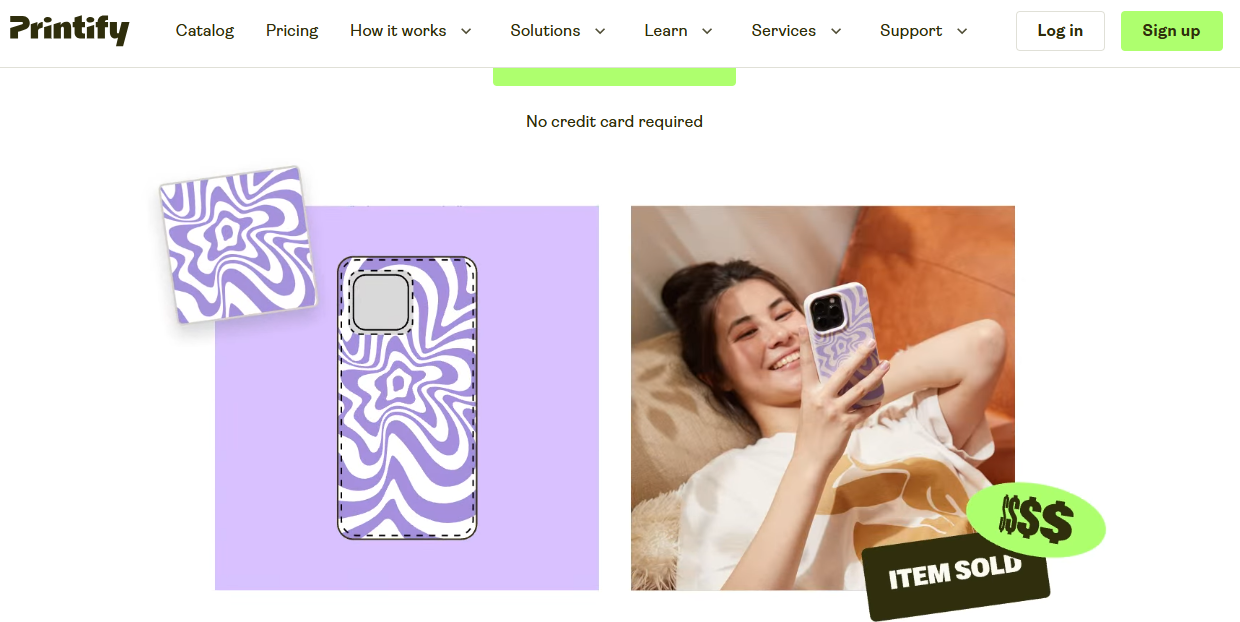
Printify is the most obvious alternative to Printful for beginners who care a lot about cost control. Shopify’s 2026 roundup labels Printify the best POD supplier network, and both the Printify pricing page and Shopify app listing make the free plan very clear: there is a $0 option, five online stores on the app listing, unlimited product designs, and product and shipping costs billed only when a sale is made. Printify’s own recent comparison content says the free plan gives full access to the platform with no monthly cost, and free users only pay the product cost and shipping when an order is fulfilled.
The main reason beginners choose Printify is optionality. Instead of relying on one vertically integrated fulfillment path, sellers can compare providers and often find cheaper routes or different product types. That can be a huge advantage if you are trying to protect margin on lower-ticket items or if you enjoy optimizing details. For budget-conscious beginners, Printify often feels more flexible than Printful. Shopify’s guide supports that positioning by framing Printify as a network rather than a single-service workflow.
But that flexibility comes with a trade-off: consistency. Because Printify works through a provider network, product quality, production speed, and shipping experience can vary more from provider to provider. That is not a dealbreaker. It just means beginners need to behave like operators and not assume every listing performs equally well. If you are the kind of beginner who likes comparing options, Printify is great. If you want maximum simplicity and fewer moving parts, Printful may feel better.
This is also why Printify ranks below CJ and Printful in this article. It is extremely good at what it does, but it asks a little more of the seller. For some beginners, that is a benefit. For others, it is one more source of uncertainty.
4) Gooten — Best for homeware and lifestyle products
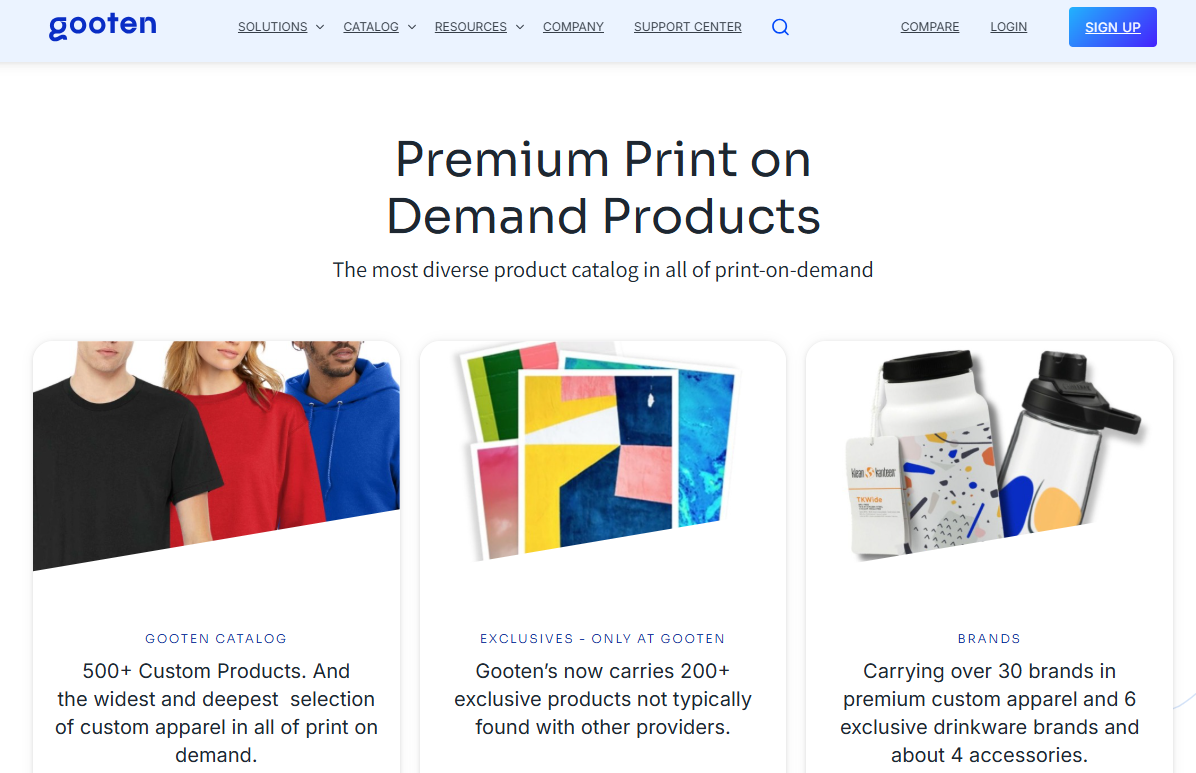
Gooten is a strong option for beginners who want to avoid the most crowded corners of POD. Shopify’s 2026 roundup specifically calls Gooten the best option for custom homeware, which makes it especially interesting for sellers who do not want to build yet another generic T-shirt store. The value here is not that Gooten is more famous than Printful or Printify. It is that it helps beginners choose a product lane that may be less saturated.
This matters because beginner success often depends more on category fit than on platform hype. A new seller trying to compete in generic POD apparel is walking into one of the most crowded spaces in ecommerce. A new seller focused on custom home décor, wall art, drinkware, or lifestyle-oriented gifts may find it easier to stand out. Shopify’s categorization of Gooten as best for custom homeware makes that use case clear.
Gooten’s weakness is not that it is bad. It is that it has less natural beginner mindshare. When people think “POD,” they usually think Printful or Printify first. But for sellers who already know they want a lifestyle angle or a home-focused niche, Gooten can be a smarter first fit than the most obvious options. It is one of those platforms that becomes more attractive the more specific your store concept is.
5) Apliiq — Best for beginner clothing brands
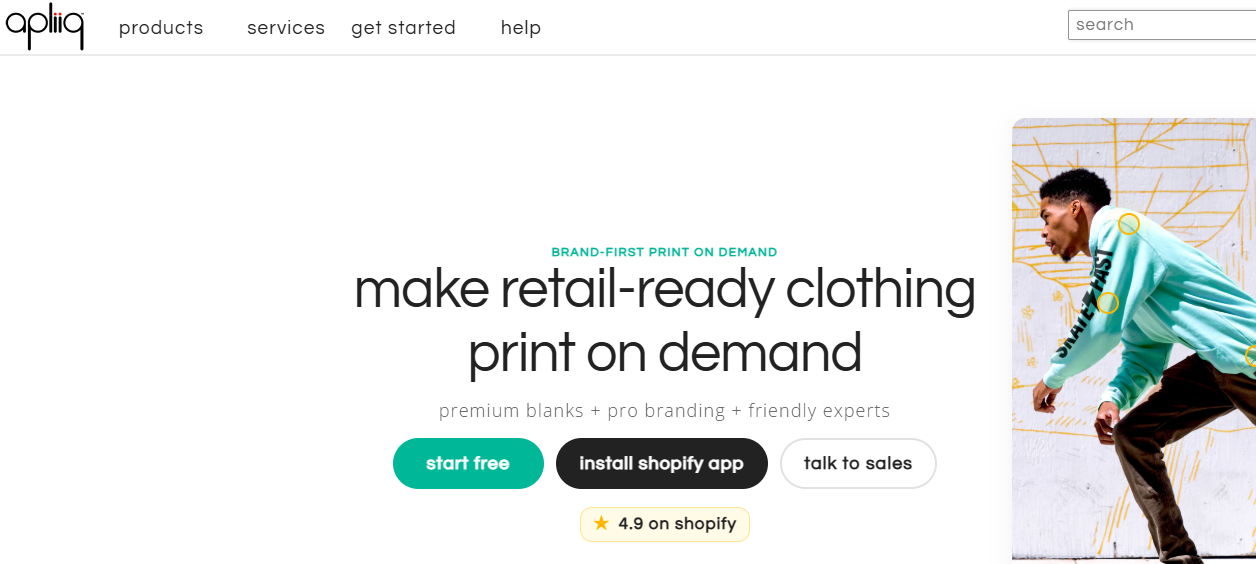
Apliiq is the best platform on this list for beginners who want to build a clothing brand rather than simply sell printed basics. Shopify’s 2026 guide names Apliiq the best choice for custom clothing. That alone tells you how to think about it: this is a branding-first apparel tool, not just a print-on-demand engine.
Apliiq becomes compelling when the beginner’s goal is identity. If you want woven labels, stronger apparel customization, and a more fashion-oriented outcome, Apliiq is much more relevant than a generic mug-and-shirt platform. It fits sellers who are trying to create a streetwear, niche fashion, or premium clothing feel from the beginning. Shopify’s category choice reflects exactly that.
The reason Apliiq ranks fifth rather than higher is that it is not the easiest general starting point. It is a better fit for intentional clothing-brand founders than for casual first-time POD sellers. That does not make it worse. It just makes it narrower. For the right beginner, though, it may be a better choice than Printful or Printify because it aligns more closely with the business they actually want to build.
6) Gelato — Best for artists, paper goods, and local-production appeal
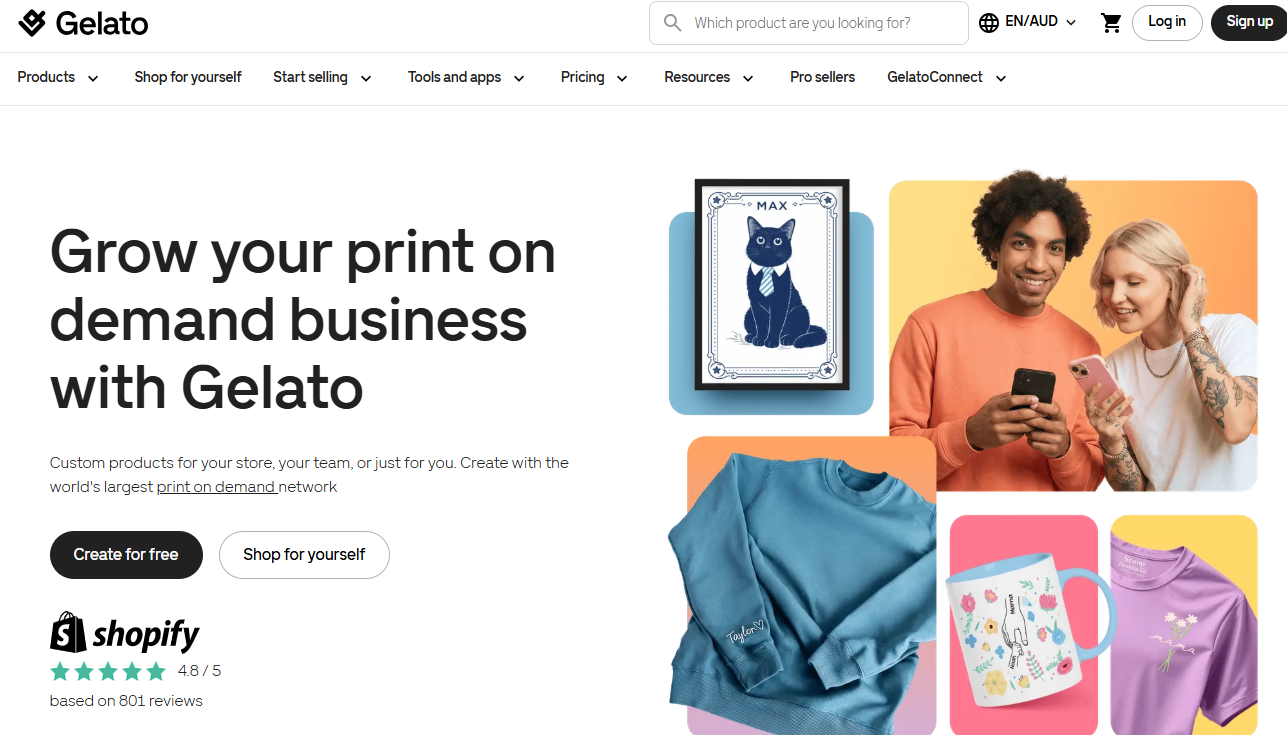
Gelato is especially attractive for creators who lean toward prints, posters, stationery, paper goods, and wall art rather than apparel-first merchandise. Shopify’s 2026 roundup calls Gelato the best option for custom stationery, which is an important distinction because many beginners in POD are artists, illustrators, designers, or writers rather than merch-first entrepreneurs.
That framing matters. Not every beginner wants to sell T-shirts. Some want to sell art prints, calendars, cards, notebooks, or desk products. Gelato is easier to understand and more attractive when you see it through that lens. It helps visual creators build stores around the kind of products their audience actually wants. Shopify’s own guide explicitly recommends Gelato to people who love creating custom paper goods.
Gelato ranks sixth because its sweet spot is narrower than the all-purpose leaders. If you are an illustrator or stationery-focused beginner, it may be one of the best choices in the entire list. If you are trying to build a broad POD clothing business, it is less naturally aligned. This is another reminder that beginner-friendliness is not universal; it is contextual.
7) Spreadconnect — Best for faster fulfillment
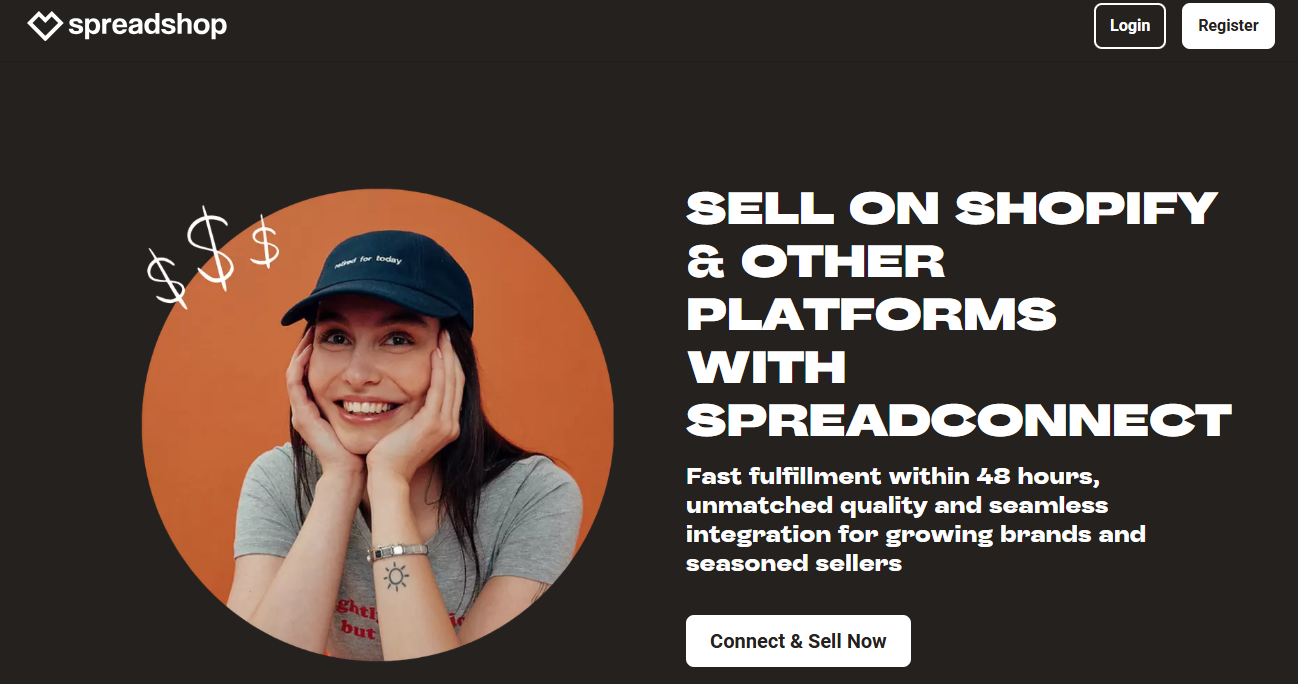
Speed matters more than many beginners expect. A store can survive slightly higher costs, but it struggles to survive slow and frustrating delivery expectations. Shopify’s 2026 roundup calls Spreadconnect the best option for fast fulfillment and says 95% of orders ship within 48 hours. For a new seller worried about customer experience, that is a serious advantage.
Spreadconnect’s value is straightforward: it helps beginners compete on one of the most visible parts of ecommerce performance. If customers receive products quickly, the store feels more trustworthy. If orders lag, support tickets rise and repeat purchase becomes harder. Beginners often underestimate this because they spend most of their attention on design and product choice. Shopify’s emphasis on fulfillment speed as one of its core evaluation factors is a good reminder that the backend matters as much as the storefront.
Spreadconnect ranks lower mainly because it is less comprehensive as a beginner ecosystem than some of the bigger names. It may not have the same educational gravity, brand-recognition advantage, or broad product conversation as Printful or Printify. But if speed is your biggest anxiety, Spreadconnect is absolutely worth serious consideration.
8) Teelaunch — Best for unique product ideas
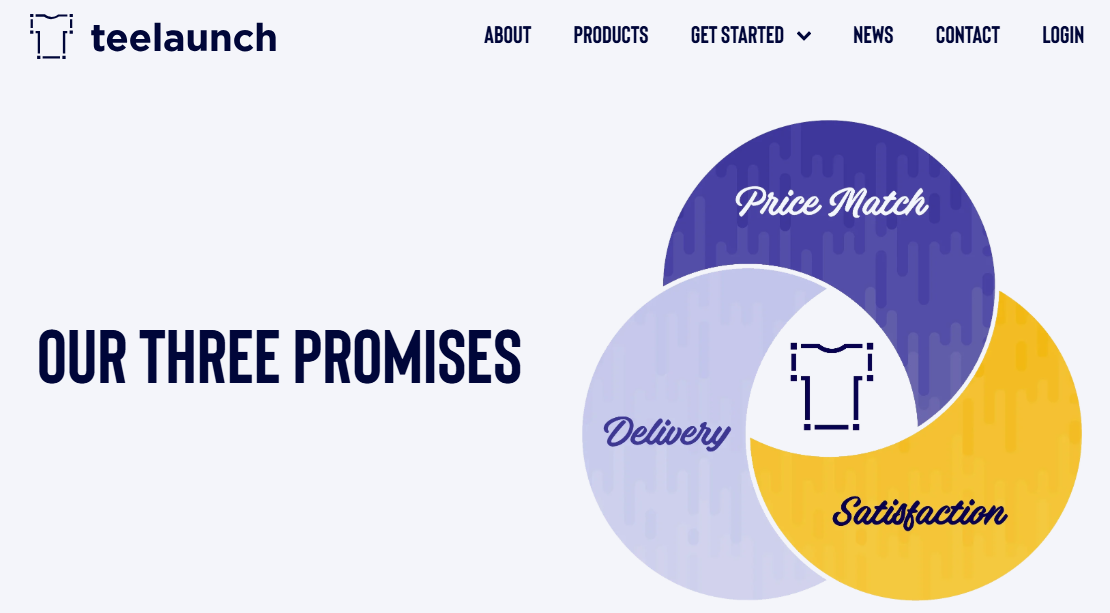
Teelaunch earns its place because Shopify’s 2026 roundup names it the best option for unique products. That is a meaningful distinction. One of the biggest mistakes beginners make is entering a saturated market with the exact same product format as everyone else. Teelaunch is appealing when your strategy depends on giftable, unusual, or niche-specific products that help you stand out.
This platform is especially useful for sellers whose edge is concept rather than scale. If your store is based on humor, novelty, gifting, fandom, seasonal products, or quirky niche items, Teelaunch can be more useful than a platform optimized mainly around standard apparel basics. It gives you another way to compete besides “my shirt design is different.”
The reason it ranks eighth is not that it lacks value. It is that its value depends heavily on store concept. For a general beginner, broader or more established platforms are easier recommendations. For a beginner with a distinctive gifting or novelty angle, Teelaunch can be the better choice.
Best POD companies by beginner type
Not all beginners need the same thing, so the best way to apply this ranking is by use case.
If you are a complete beginner who wants the safest all-around launchpad, the top three are CJdropshipping, Printful, and Printify. CJ comes first because it combines POD with broader growth options, Printful is the best pure POD choice for ease and reliability, and Printify is best for low-cost flexibility. CJ’s branding and broader sourcing support make it especially useful for sellers who are still figuring out what they want the store to become.
If you are budget-conscious, Printify, CJdropshipping, and Gooten stand out. Printify gives the most obvious free-plan flexibility, CJ offers a free Shopify app and a broad operational range, and Gooten becomes attractive if your product concept fits homeware or lifestyle items where competition may be lower.
If you want to build a real brand, especially one that may grow beyond basic POD, the best three are CJdropshipping, Apliiq, and Printful. CJ wins on flexibility through custom packaging, private labeling, product customization, and broader sourcing. Apliiq wins for clothing-brand specificity. Printful wins for polished branding support within a simpler workflow.
If you are an artist or designer, Gelato, Printful, and Gooten make the most sense. Gelato fits stationery and paper goods, Printful supports prints and visual-merch categories well, and Gooten is strong for homeware and art-adjacent products. Shopify’s 2026 roundup supports those use cases directly.
If you want more than POD, this is the category where CJdropshipping separates itself most clearly. For beginners who suspect they may later add sourced products, custom packaging, or a more hybrid ecommerce model, CJdropshipping is the strongest fit. Printful and Printify are excellent, but they are much easier to outgrow if your ambitions move beyond custom-product fulfillment. CJ’s official beginner materials make that broader brand-building path explicit.
How to choose the right POD company as a beginner
The easiest way to choose is to start with your business model, not the ranking.
If you want a pure POD workflow, where your whole business is custom products and you want the least operational complexity, choose Printful or Printify. Printful is the safer choice if you care more about consistency and simplicity. Printify is the better choice if you care more about pricing flexibility and provider comparison. Shopify’s roundup and the platforms’ own pricing pages support that trade-off clearly.
If you want POD plus broader ecommerce flexibility, choose CJdropshipping. This is where CJ stands out. Most POD platforms are designed to help you sell custom products only. CJ is more useful if you want to start with POD but later expand into sourcing, custom packaging, or a wider catalog without switching your whole backend. Its Shopify materials and app listing support exactly that positioning.
If you want to build a fashion label, choose Apliiq or Printful, with CJ as a hybrid alternative if you want stronger long-term flexibility. Shopify’s guide clearly positions Apliiq as best for custom clothing. Printful works well if you want fashion-adjacent products with an easier learning curve. CJ works if fashion is part of a broader store concept.
If you want global reach with an emphasis on design-led products, choose Printful or Gelato. Shopify highlights Printful’s global shipping and Gelato’s strength in stationery and paper goods, both of which make sense for creators selling internationally.
If you are nervous about shipping speed, take a hard look at Spreadconnect and then compare that promise against Printful and CJ. Shopify’s guide gives Spreadconnect the strongest speed-focused positioning of the group, while CJ and Printful both emphasize automated fulfillment and faster operational flows in their own ways.
Common mistakes beginners make in POD
The biggest mistake is choosing a platform based only on base cost. Cheap production means very little if quality is weak, mockups are poor, or fulfillment disappoints customers. Shopify’s methodology for evaluating POD services gives equal importance to fulfillment speed, support, reviews, and shipping practices, which is a strong reminder that product cost is just one variable.
Another common mistake is trying to sell too many products too early. A new seller usually does better with a small, coherent product set than a huge unfocused catalog. POD businesses are easier to market when the store has a clear identity. This is true whether you are using Printful, Printify, or CJdropshipping. The platform can help, but it cannot fix a scattered concept.
A third mistake is ignoring mockups and product presentation. POD depends heavily on visual selling. A weak presentation makes even a good product look amateur. Shopify’s descriptions of Printful’s mockup tools and built-in editor underline how important this is. Beginners often obsess over product choice while underinvesting in the visuals that actually drive clicks and conversions.
A fourth mistake is failing to order samples. This matters even more on network-based or provider-variable platforms like Printify, where the same type of product can behave differently depending on the production partner. It also matters on broader hybrid platforms like CJdropshipping, where the platform gives you flexibility but still expects you to choose wisely.
The fifth mistake is choosing a platform that is too narrow for the business you actually want to build. This is where many beginners accidentally create future headaches. If you only ever want a simple custom mug or shirt store, a pure POD platform is fine. But if you think you may later want broader sourcing, custom packaging, private labeling, or a hybrid catalog, starting on a platform like CJdropshipping can save you a painful migration later. That is one of the strongest reasons CJ ranks first in this article.
Final verdict
If we separate “best pure POD platform” from “best beginner platform overall,” the picture becomes much clearer.
Best overall for beginners: CJdropshipping
Best pure POD platform: Printful
Best for budget flexibility: Printify
Best for homeware: Gooten
Best for clothing brands: Apliiq
Best for artists and stationery sellers: Gelato
Best for fast fulfillment: Spreadconnect
Best for unique product ideas: Teelaunch
For complete beginners who want the easiest, cleanest, most traditional POD workflow, Printful is still one of the safest choices in the market. Shopify’s own ranking strongly supports that. But if the goal is broader beginner value—not just ease of launch, but flexibility after launch—CJdropshipping deserves the top spot. It supports POD, custom packaging, branding improvements, sourcing expansion, and a more gradual path from “first store” to “real ecommerce business.” That combination makes it exceptionally useful for new sellers who want to start small without thinking too small.
FAQ for Print on Demand Companies
What is the best print on demand company for beginners in 2026?
If you want the best pure POD platform, Printful is one of the strongest answers because of its ease of use, global fulfillment, and strong Shopify integration. If you want the best overall beginner platform with more long-term flexibility, CJdropshipping is a strong choice because it combines POD with sourcing, custom packaging, and broader ecommerce support.
Is CJdropshipping really a print on demand company?
CJdropshipping is better described as a broader sourcing-and-fulfillment platform that includes print on demand rather than as a pure POD specialist. Its Shopify integration page explicitly markets POD products, and its Shopify app listing shows POD-related DIY editing features.
Is Printful better than CJdropshipping?
It depends on what you mean by “better.” Printful is usually better if you want a simple, dedicated, pure POD workflow with a mature global ecosystem. CJdropshipping is often better if you want POD now but also want broader sourcing, branding, custom packaging, and more room to grow later.
Is Printify cheaper than Printful?
Printify is often more flexible on pricing because of its supplier-network model and free plan structure, while Printful is usually positioned more around reliability, branding support, and simplicity. That is why Printify ranks higher for budget flexibility and Printful ranks higher for pure POD ease and consistency.
Which POD company is best for clothing brands?
For beginners who want to build a true clothing brand, Apliiq is one of the most relevant options because Shopify specifically categorizes it as best for custom clothing. Printful is also strong if you want an easier all-purpose route, while CJdropshipping can work well if apparel is just one part of a broader brand plan.
Should beginners choose a pure POD platform or a hybrid platform?
Beginners should choose a pure POD platform like Printful or Printify if they know they only want to sell custom products. They should choose a hybrid platform like CJdropshipping if they want POD now but may later add sourced products, custom packaging, or broader store functionality.