
Today, AppLovin is positioning itself as a performance advertising platform for a much wider range of businesses. Ecommerce stores, subscription companies, digital services, lead-generation businesses, mobile apps, and established consumer brands can all use the platform to reach potential customers.
This expansion became especially important in June 2026, when AppLovin Ads opened to all advertisers. Businesses no longer need to be part of a limited referral program to start exploring the platform.
So, what exactly is AppLovin? How does its advertising technology work? Where do its ads appear, and how can advertisers or app developers use it?
This guide explains the AppLovin ecosystem in practical terms, including its AI-powered advertising engine, campaign process, publisher monetization tools, costs, benefits, limitations, and the steps required to get started.
What Is AppLovin?
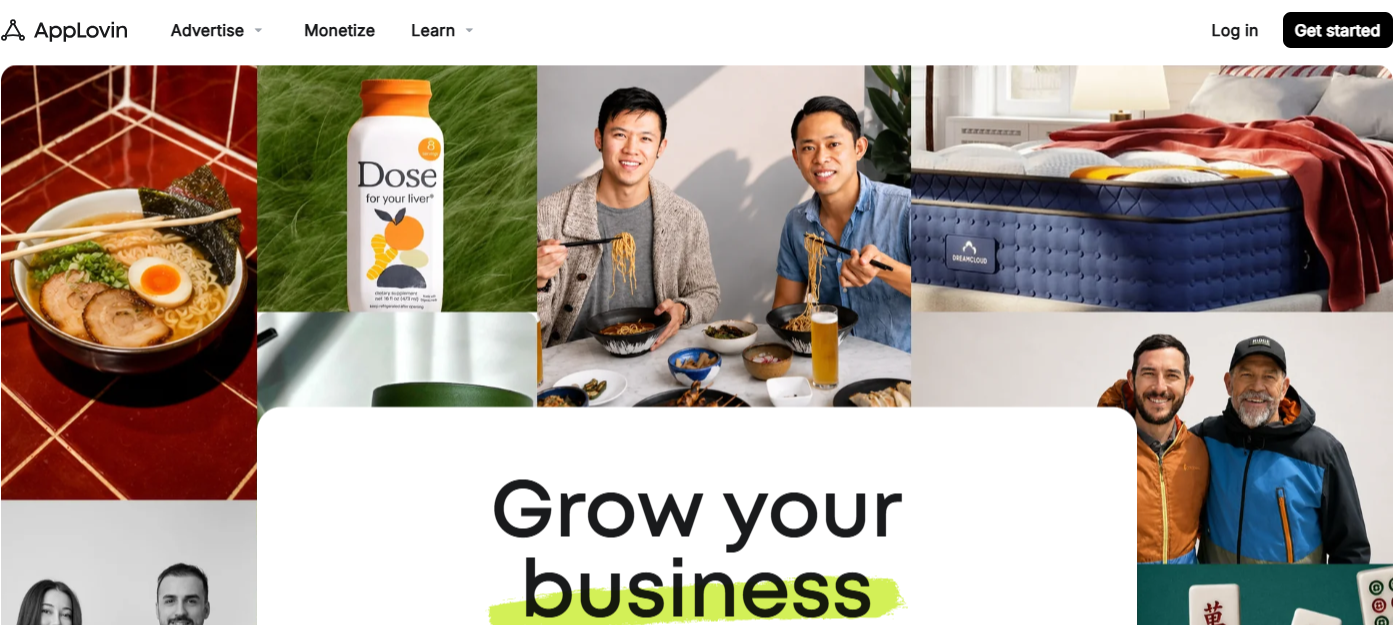
AppLovin is an advertising technology company that helps businesses acquire customers and helps app publishers generate revenue from advertising.
The company originally built its reputation in mobile gaming. Its technology connected game advertisers looking for new users with mobile game publishers that had advertising space available inside their apps.
Over time, AppLovin expanded beyond gaming. The company’s current platform supports advertising for physical products, digital products, subscriptions, services, mobile apps, and lead-generation businesses.
The central advertising product is AppLovin Ads, a self-service platform powered by predictive technology. Advertisers create campaigns, upload advertising materials, define their business goals, and provide conversion data. AppLovin then uses its technology to determine where, when, and to whom an ad should be shown.
On the publisher side, AppLovin offers MAX, an in-app monetization platform. MAX helps mobile app publishers connect with multiple advertising demand sources and run auctions for their available ad impressions.
In simple terms, AppLovin serves two connected groups:
-
Advertisers that want to acquire users, leads, or customers
-
App publishers that want to earn money from their audiences
AppLovin’s technology operates between these groups. It evaluates available advertising opportunities and attempts to match each impression with an advertiser that is likely to generate value from it.
Unlike a social media platform, AppLovin does not depend primarily on users scrolling through a consumer-facing feed. Much of its advertising inventory appears inside third-party mobile apps, particularly mobile games.
This creates an alternative customer acquisition channel for brands that may already advertise through Google, Meta, TikTok, or other major platforms.
According to AppLovin, its MAX ecosystem reaches more than one billion daily active users, with a large share of its audience interacting with casual mobile games such as puzzle, card, and word games. oes AppLovin Work?
AppLovin works through an advertising marketplace that connects advertiser demand with publisher inventory.
To understand the process, imagine a person playing a mobile game. The player completes a level and reaches a natural break in the game. The app now has an opportunity to display an advertisement.
Behind the scenes, an automated auction may take place. Advertising platforms evaluate the impression and decide how much it may be worth. AppLovin’s system considers whether one of its advertisers is likely to benefit from showing an ad to that particular user.
If AppLovin predicts that the user has a strong chance of clicking, purchasing, subscribing, installing an app, or completing another valuable action, it can submit a competitive bid for the impression.
When AppLovin wins the auction, the selected advertiser’s creative is shown.
The complete process can be simplified into six stages:
1. An Advertiser Creates a Campaign
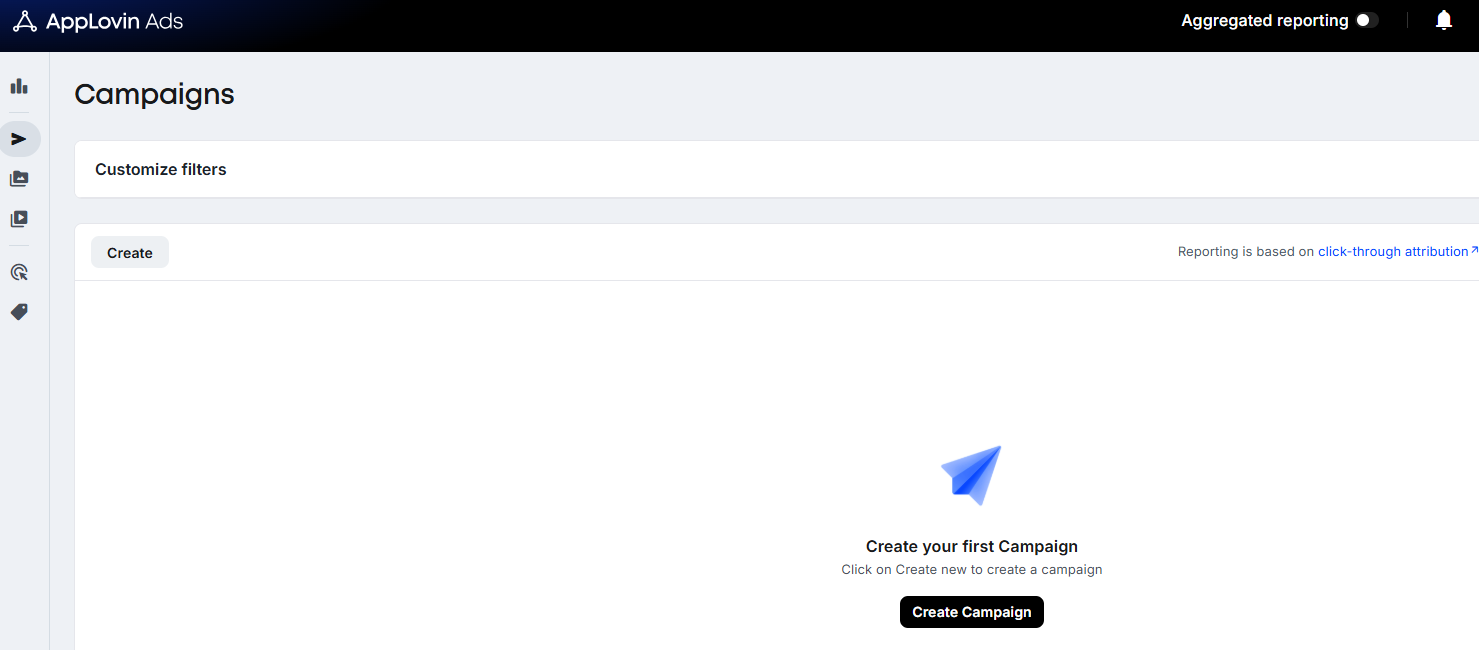
The advertiser adds a website or mobile app, installs the required tracking system, chooses a campaign objective, sets a budget, and uploads advertising creatives.
A campaign objective might focus on:
-
Generating purchases
-
Increasing revenue
-
Acquiring leads
-
Driving app installations
-
Encouraging in-app actions
-
Acquiring new customers
2. A Publisher Makes an Ad Impression Available
A mobile app creates an opportunity to display an advertisement. This might happen between game levels, after a user completes an activity, or when a player voluntarily chooses to watch an advertisement in exchange for an in-game reward.
3. AppLovin Evaluates the Opportunity
AppLovin’s AI-powered advertising system analyzes available data and estimates the expected value of showing a particular advertisement to that user.
The system may evaluate factors related to the advertisement, campaign goal, previous conversion patterns, creative performance, device environment, location, and the likelihood of a valuable action.
4. An Automated Auction Takes Place
AppLovin and other eligible advertising demand sources may compete for the available impression.
The winning advertisement is generally the one that creates the strongest combination of bid value, predicted performance, and publisher revenue.
5. The User Sees the Advertisement
The advertisement appears inside the mobile app. Depending on the placement, it may be a full-screen video, a rewarded advertisement, a static creative, or an interactive experience.
The user may then visit the advertiser’s website, install an application, submit information, or complete a purchase.
6. Conversion Data Is Sent Back
When tracking is installed correctly, the advertiser sends information about valuable events back to AppLovin.
For an ecommerce business, those events could include:
-
Page views
-
Product views
-
Add-to-cart actions
-
Checkout starts
-
Purchases
-
Purchase value
For a lead-generation business, the important event may be a completed form or registered lead.
For a mobile app, the system may receive installation, registration, subscription, purchase, or retention events through a mobile measurement partner.
This data helps AppLovin understand which advertisements, users, and placements are producing valuable results. The platform can then use those signals to improve future bidding and creative selection.
What Is Axon AI?
Axon AI is the predictive advertising engine behind AppLovin Ads.
Its primary purpose is to match advertiser demand with publisher supply. In other words, it helps determine which advertiser should compete for a specific ad impression and how much that opportunity may be worth.
This process is more complicated than simply selecting an advertisement based on a user’s age or general interests.
A performance advertising system needs to estimate a chain of possible events. It may need to predict whether a person will:
-
Pay attention to the advertisement
-
Watch enough of the creative to understand the offer
-
Click the advertisement
-
Remain on the landing page
-
Browse the website or application
-
Complete a purchase or another conversion
-
Generate enough revenue to make the advertising cost worthwhile
A person might have a high chance of clicking but a low chance of buying. Another user might click less frequently but have a greater probability of completing a high-value purchase.
Axon attempts to estimate the expected economic value of each opportunity, not merely the probability of a click.
AppLovin introduced an expanded version of its technology, commonly referred to as Axon 2, in 2023. The company says this development improved its ability to predict longer-term value and support advertisers outside the mobile gaming industry. Conversion Data Matters
AI-based advertising systems depend on signals. If an advertiser provides incomplete or inaccurate conversion data, the platform has less information to determine which users are valuable.
For example, imagine that an online store tracks page views but fails to report purchases. AppLovin may learn which users visit the website, but it cannot reliably distinguish visitors from actual customers.
A correctly installed AppLovin Pixel allows website advertisers to send important events back to the platform.
App advertisers generally use a mobile measurement partner to track installations and post-install events.
The quality of this data can directly affect campaign measurement and optimization. Broken tracking parameters, missing purchase values, duplicated events, or incorrect attribution settings can lead to misleading reports and weaker campaign decisions.
What Does AppLovin Automate?
After an advertiser sets a goal, Axon can automate several major parts of media buying, including:
-
Real-time bidding
-
User selection
-
Creative selection
-
Budget distribution
-
Placement selection
-
Performance optimization
This does not mean advertisers can ignore their campaigns. They still need to provide strong creatives, accurate tracking, realistic goals, competitive offers, and effective landing pages.
Automation can improve how a campaign is delivered, but it cannot turn an unappealing product or poor customer experience into a profitable business.
How AppLovin Works for Advertisers
AppLovin Ads is built for performance advertising. The platform is designed around measurable outcomes rather than broad awareness alone.
In its June 2026 public launch announcement, AppLovin stated that advertisers on the platform buy based on measurable performance. The platform currently supports purchase, revenue, and lead-focused models for relevant businesses. merce and Consumer Brands
Ecommerce businesses can use AppLovin to promote physical products through mobile advertising placements.
The platform can support businesses selling categories such as:
-
Fashion and accessories
-
Beauty products
-
Home goods
-
Furniture
-
Consumer electronics
-
Fitness products
-
Pet supplies
-
Jewelry
-
Food and beverages
-
Hobby products
Ecommerce advertisers typically install the AppLovin Pixel or connect their stores through the official Shopify integration.
They can then create campaigns optimized around purchases, cost per purchase, revenue, or return on ad spend.
Subscription and Digital Businesses
AppLovin also supports digital products, subscription services, and other online businesses.
Examples may include:
-
Fitness memberships
-
Educational programs
-
Digital tools
-
Consumer software
-
Online communities
-
Entertainment subscriptions
-
Personal finance services
-
Dating or social applications
These businesses may optimize campaigns toward subscriptions, purchases, registrations, or other measurable events.
Lead-Generation Businesses
Lead buying became one of the newer additions to AppLovin Ads in 2026.
Instead of focusing on immediate online purchases, a lead-generation advertiser assigns a value to a qualified lead. AppLovin then attempts to deliver leads below that value.
The company has identified categories such as insurance and home services as potential use cases for this model.
The quality of a lead still depends on the advertiser’s qualification process, offer, form design, location targeting, and follow-up system. A low cost per lead does not automatically mean the leads will become paying customers.
Mobile App Advertisers
Mobile app developers can use AppLovin Ads to acquire new users.
Campaigns may optimize toward installations or more valuable post-install actions, such as:
-
Account registrations
-
Trial starts
-
Subscriptions
-
First purchases
-
In-app purchases
-
Specific levels completed
-
Longer-term revenue
For mobile apps, an installation is often only the beginning. Two campaigns may generate the same number of installations but produce completely different business results.
One campaign may attract users who uninstall the app within a day. Another may attract subscribers or repeat purchasers.
For this reason, app advertisers should measure user quality and revenue, not only cost per installation.
AppLovin Campaign Goals and Audience Strategies
Website advertisers can choose optimization approaches based on their business objectives.
According to AppLovin’s current campaign launch checklist, available campaign goals may include cost per lead, cost per purchase, and return on ad spend.
The platform also offers different audience strategies for eligible purchase campaigns.
Universal Campaigns
Universal campaigns optimize toward total purchases or total revenue.
New and returning customers are treated as valuable. This approach can be appropriate for advertisers focused on overall efficiency rather than separating existing and new customers.
Prospecting Campaigns
Prospecting campaigns focus on new customer acquisition.
This strategy is more useful when an advertiser wants to measure the cost of attracting first-time buyers rather than receiving repeat purchases from existing customers.
Discovery Campaigns
Discovery campaigns focus on people who have not previously visited the advertiser’s website.
This can help a business reach entirely new website visitors rather than users who already know the brand.
AppLovin may require additional historical purchase information for some customer acquisition strategies. Shopify integrations and uploaded historical data can give the system more context about existing customers and previous purchasers. ppLovin Works for App Publishers
Advertisers are only one side of the AppLovin ecosystem. The other side consists of mobile app publishers that provide advertising inventory.
An app publisher may have thousands or millions of active users but charge nothing for the application itself. Advertising allows the publisher to generate revenue without requiring every user to make a purchase.
AppLovin’s main publisher monetization solution is MAX.
What Is MAX?
MAX is an in-app mediation and monetization platform.
Mediation technology connects an app to multiple advertising demand sources. Instead of relying on a single advertising network, the publisher can allow different networks and demand-side platforms to compete for impressions.
The objective is to increase competition and help the publisher receive a stronger price for each advertising opportunity.
How the MAX Auction Works
Suppose a mobile game has an opportunity to display a rewarded video.
Multiple advertising buyers may be interested in that impression. MAX collects eligible bids and helps determine which advertisement should be displayed.
The advertiser that wins gains access to the user’s attention. The publisher receives advertising revenue.
This process can happen automatically and at large scale.
Publishers can also use MAX reporting tools to evaluate performance across:
-
Applications
-
Countries
-
Ad units
-
Advertising networks
-
Placements
-
Ad formats
-
Revenue
-
Impressions
-
Fill rates
Integrating MAX
To start using MAX, a publisher generally needs to:
-
Create an account
-
Add the mobile application
-
Create ad units
-
Integrate the AppLovin SDK
-
Connect eligible advertising networks
-
Configure bidding or waterfall settings
-
Test the integration
-
Launch advertising placements
-
Monitor revenue and user experience
Technical implementation should be handled carefully. Incorrect SDK setup can lead to missing advertisements, reporting errors, crashes, or reduced revenue.
Monetization Is Not Only About Showing More Ads
Adding more advertising placements can increase short-term revenue, but it can also frustrate users.
Publishers need to balance monetization with:
-
App retention
-
Session length
-
User satisfaction
-
Reviews and ratings
-
In-app purchase revenue
-
Long-term customer value
For example, showing a full-screen advertisement after every small action may generate more impressions but cause more users to leave the app.
Rewarded advertisements often create a more voluntary experience. The user chooses to watch an advertisement in exchange for an extra life, virtual currency, a gameplay advantage, or another benefit.
The right monetization strategy depends on the type of app, user expectations, geography, and business model.
What Types of Ads Can You Run on AppLovin?
AppLovin is strongly associated with full-screen mobile advertising. Its environment differs from a traditional social feed where users scroll quickly past posts.
Many AppLovin advertisements appear at natural breaks inside mobile games or as optional rewarded experiences.
Full-Screen Vertical Video Ads
Video is one of the most important creative formats on AppLovin.
For website advertisers, AppLovin currently supports vertical 9:16 videos with a maximum duration of 60 seconds. The video component can be unskippable for up to 60 seconds, depending on the placement and user experience.
The company encourages advertisers to test different video lengths, including videos longer than 30 seconds. It also recommends captions because many mobile users keep their sound turned off. e video concepts may include:
-
Product demonstrations
-
Before-and-after results
-
Customer testimonials
-
Problem-and-solution stories
-
Founder-led explanations
-
Unboxing videos
-
Product comparisons
-
Tutorial-style videos
-
User-generated content
-
Limited-time promotions
A longer video is not automatically better. The creative still needs a strong opening, clear structure, and enough visual movement to hold attention.
AppLovin Interactive Pages
An AppLovin Interactive Page appears after the video portion of an advertisement.
This screen can reinforce the offer and encourage the user to take the next action.
It may contain:
-
A product image
-
A call-to-action button
-
Brand visuals
-
Product benefits
-
A promotional message
-
Interactive elements
-
A product selection experience
Advertisers can create an interactive page from portrait images or approved HTML assets.
Static Image Ads
Static creative can also be used in eligible placements and creative sets.
Images may be useful for:
-
Simple product offers
-
Strong discounts
-
Recognizable products
-
Clear before-and-after comparisons
-
Retargeting or catalog-style messages
However, because much of AppLovin’s environment is video-focused, advertisers should generally avoid relying only on static images.
Playable and Interactive Ads
Playable advertisements allow users to interact with an experience before visiting a website or installing an app.
They are especially familiar in mobile game advertising, where users may play a short demonstration of a game.
Non-gaming advertisers can also use interactive concepts when the format makes sense. For example, an interactive advertisement might allow a user to explore product choices, answer a short question, or experience a simplified demonstration.
Rewarded Video Ads
Rewarded advertising is common inside mobile games.
Users voluntarily watch an advertisement in exchange for a benefit, such as:
-
Additional lives
-
Virtual coins
-
Extra moves
-
Bonus content
-
Faster progress
-
Access to an item
Because the user has chosen to participate, rewarded ads can generate strong attention. However, attention does not always equal purchase intent. The offer and targeting still need to be relevant.
Interstitial Ads
Interstitial advertisements appear at transitions or natural breaks in an app.
For example, an ad may appear after a game level, between activities, or before the user returns to a main menu.
A well-timed interstitial feels less disruptive than an advertisement that interrupts a user in the middle of an important action.
Banner and Native Ads
App publishers may also use banner and native formats through supported monetization integrations.
Banner ads occupy a smaller area of the screen, while native advertisements are designed to fit more naturally into the surrounding interface.
These formats may offer lower interruption but also receive less attention than full-screen video.
How to Start Advertising on AppLovin
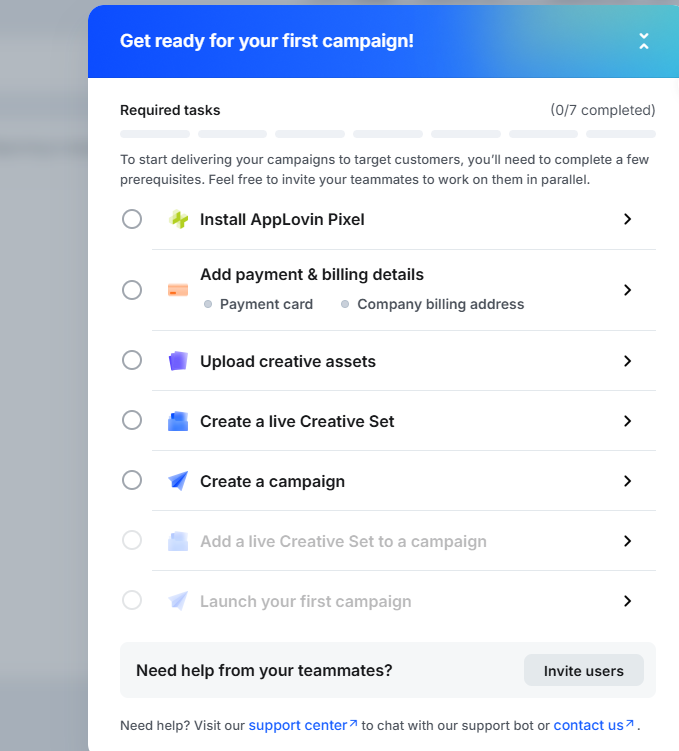
AppLovin presents its platform as a self-service advertising system. A business can create an account and begin setting up campaigns without working through a traditional advertising sales team.
Still, a successful launch requires more than uploading a video and adding a credit card.
Step 1: Confirm That Your Business Is Eligible
Before creating a campaign, review AppLovin’s ad content policies.
Your products, landing pages, claims, and advertising creatives must comply with the platform’s requirements.
Restricted or regulated industries may face additional limitations. Misleading claims, deceptive interfaces, prohibited products, or nonfunctional landing pages can lead to rejected advertisements or account enforcement.
Step 2: Create an AppLovin Ads Account
Visit the AppLovin Ads platform and create an advertiser account.
You may need to provide:
-
Business information
-
Contact information
-
Billing details
-
Website or application details
-
Relevant account verification
Make sure the information matches your actual business. Using inconsistent company, payment, or domain details can create avoidable verification problems.
Step 3: Connect Your Website or Mobile App
Website advertisers can connect their online store or install the AppLovin Pixel.
Shopify merchants can use AppLovin’s Shopify connection, while other websites may install tracking through Google Tag Manager or a manual implementation.
Mobile app advertisers generally connect an appropriate mobile measurement partner.
Step 4: Configure Conversion Events
Choose the events that represent meaningful progress in your customer journey.
For an ecommerce store, the recommended flow may include:
-
Page view
-
Product view
-
Add to cart
-
Begin checkout
-
Purchase
For lead generation, the main event may be a completed registration or submitted form.
Purchase events should include accurate values and currency information. Without revenue data, a return-on-ad-spend campaign cannot measure actual sales value correctly.
Step 5: Validate Tracking
Do not assume that tracking works simply because the code has been installed.
Use the AppLovin Pixel Helper to check whether events are being sent correctly.
Test the complete conversion journey:
-
Open the website
-
View a product or service
-
Add an item to the cart
-
Begin checkout
-
Complete a test purchase
-
Confirm that each event appears correctly
AppLovin also uses click-tracking parameters to connect website activity to the original advertisement. Redirects that remove these parameters can prevent accurate attribution and weaken optimization.
Step 6: Prepare Multiple Creatives
Creative variety gives the platform more options.
Instead of launching with one video, prepare several versions that test different:
-
Hooks
-
Benefits
-
Customer problems
-
Product demonstrations
-
Testimonials
-
Offers
-
Video lengths
-
Calls to action
-
Visual styles
Do not create ten nearly identical videos with only minor text changes. Meaningful variety helps reveal which marketing angles attract valuable customers.
Step 7: Choose a Campaign Objective
Select the goal that reflects your actual business priority.
Possible website goals include:
-
Cost per lead
-
Cost per purchase
-
Return on ad spend
Do not choose a purchase goal when your tracking only reports page views. Do not choose a revenue goal when purchase values are missing.
The optimization goal and tracking setup need to match.
Step 8: Set a Realistic Performance Target
An unrealistic target can prevent a campaign from spending.
For example, a business with an average historical customer acquisition cost of $60 may struggle if it immediately demands a $10 cost per purchase from a completely new advertising channel.
Your target should consider:
-
Product price
-
Gross margin
-
Fulfillment costs
-
Refund rate
-
Payment processing costs
-
Repeat purchase behavior
-
Customer lifetime value
-
Existing acquisition costs
A brand can tighten its targets after collecting reliable performance data.
Step 9: Set the Budget
AppLovin says businesses can technically launch with a budget as low as $10 per day. However, the minimum available budget should not be confused with the budget required for stable optimization. iness needs 15 purchases to generate useful daily data and its expected cost per purchase is $40, a $10 daily budget is unlikely to produce enough information.
Budget planning should be based on expected conversion cost and the volume of events needed for meaningful evaluation.
Step 10: Launch and Monitor the Campaign
Once the campaign is live, monitor:
-
Spending
-
Delivery
-
Event tracking
-
Purchase volume
-
Revenue
-
Cost per purchase
-
Return on ad spend
-
Creative performance
-
Landing-page behavior
Avoid making major decisions based on a few clicks or one sale. At the same time, do not allow a campaign with broken tracking to continue spending.
The first priority is confirming that the technical setup works. The second is gathering enough data to evaluate actual business performance.
AppLovin Costs, Budgets, and Performance Metrics
AppLovin does not have one universal advertising price.
Advertising costs depend on factors such as:
-
Campaign objective
-
Target countries
-
Expected customer value
-
Competition
-
Conversion probability
-
Creative quality
-
Product category
-
Seasonality
-
Available inventory
-
Performance target
AppLovin participates in real-time auctions. The system estimates the value of an impression based on the probability and value of a future outcome.
Important Metrics to Track
Cost per Purchase
Cost per purchase is calculated by dividing advertising spend by the number of attributed purchases.
A low cost per purchase is generally positive, but it should be compared with profit per order rather than product revenue alone.
Return on Ad Spend
Return on ad spend compares attributed revenue with advertising cost.
If a campaign spends $1,000 and generates $3,000 in attributed revenue, the reported ROAS is 3.0.
A 3.0 ROAS may be profitable for one business and unprofitable for another. Profitability depends on product cost, shipping, payment fees, discounts, returns, and overhead.
Cost per Lead
Cost per lead measures the advertising cost required to generate a submitted lead.
Businesses should also monitor:
-
Lead quality
-
Contact rate
-
Appointment rate
-
Close rate
-
Revenue per lead
Cheap leads that never answer the phone or qualify for the service may have little value.
Conversion Rate
Conversion rate measures the percentage of visitors or users who complete the desired action.
A campaign may produce high-quality traffic but still struggle if the website loads slowly, lacks trust, or has a confusing checkout process.
Customer Acquisition Cost
Customer acquisition cost may include more than media spend.
A complete calculation can include:
-
Advertising spend
-
Creative production
-
Agency fees
-
Software costs
-
Sales commissions
-
Promotional discounts
Customer Lifetime Value
Customer lifetime value estimates how much gross value a customer generates over the relationship with the business.
Subscription companies and repeat-purchase brands may be able to accept a higher first-purchase acquisition cost because customers generate additional revenue later.
Benefits of AppLovin
Access to a Different Audience Environment
AppLovin can help brands reach consumers outside search engines and social media feeds.
This does not mean its audience never uses Meta, TikTok, or Google. Rather, AppLovin reaches people during a different activity and in a different advertising environment.
High-Attention Ad Placements
Full-screen video and rewarded placements can provide more uninterrupted viewing time than a small advertisement in a fast-moving feed.
This can be valuable for products that require explanation, demonstration, or storytelling.
Performance-Based Optimization
AppLovin’s system is designed to optimize toward measurable actions such as purchases, revenue, app events, and leads.
This can help businesses evaluate the channel based on business results rather than impressions alone.
Automated Bidding and Creative Selection
Advertisers do not need to manually choose individual apps or bid for every impression.
AppLovin automates much of the bidding, targeting, and creative delivery process.
Support for Both Websites and Apps
The platform can support ecommerce stores, web-based services, subscription businesses, lead generation, and mobile applications.
Publisher Monetization Tools
MAX gives app publishers a way to connect multiple demand sources and manage in-app advertising revenue.
This makes AppLovin relevant to both sides of the digital advertising market.
Limitations of AppLovin
Creative Requirements Can Be Demanding
AppLovin recommends consistent creative testing and significant creative variety.
Businesses with only one or two simple advertisements may find it difficult to maintain performance or scale.
Tracking Must Be Accurate
Pixel errors, missing revenue values, broken redirects, or incorrect mobile attribution can interfere with both reporting and optimization.
It Is Not a Guaranteed Source of Profit
No advertising platform can guarantee profitable results.
Product demand, pricing, margins, landing-page quality, competition, fulfillment, and customer experience all affect campaign performance.
Low Budgets May Limit Learning
Although the platform allows relatively small starting budgets, very low spending may not produce enough conversion data for stable evaluation.
Mobile-First Creative May Require Adaptation
Brands that mainly use square images, search ads, or desktop-focused creative may need to produce vertical videos specifically for AppLovin’s environment.
Reported Attribution May Differ From Other Platforms
AppLovin, Google Analytics, Shopify, mobile measurement platforms, and internal business systems may not report identical results.
Differences can come from attribution windows, click identifiers, event timing, duplicate handling, time zones, and cross-device behavior.
Businesses should define a consistent measurement method before scaling spend.
AppLovin vs. Other Advertising Platforms
AppLovin should not necessarily replace an advertiser’s existing channels. In many cases, it works as an additional source of customer acquisition.
AppLovin vs. Meta Ads
Meta Ads reaches users across Facebook, Instagram, Messenger, and related placements.
Meta offers detailed social advertising tools, broad creative formats, interest signals, customer lists, and mature ecommerce integrations.
AppLovin focuses more heavily on in-app advertising inventory, particularly full-screen placements inside mobile games.
A brand may use Meta to reach people while they browse social content and AppLovin to reach them during mobile entertainment.
AppLovin vs. Google Ads
Google Ads can capture existing demand through search campaigns. A user searching for “best standing desk” is already expressing interest.
AppLovin is more focused on creating or identifying purchase opportunities before a user actively searches for the product.
Google may be stronger for high-intent search demand, while AppLovin can help advertisers reach new audiences through recommendation-based advertising.
AppLovin vs. TikTok Ads
TikTok is built around short-form video and creator-style content.
AppLovin also relies heavily on vertical video, but the user experience is different. TikTok users scroll through content, while AppLovin ads often appear as full-screen experiences inside third-party apps.
Creative that performs on TikTok may provide a useful starting point, but it should still be adapted and tested for AppLovin placements.
AppLovin vs. Traditional Display Advertising
Traditional display advertising often uses banners placed across websites.
AppLovin’s most recognizable inventory is more immersive. Full-screen videos and interactive pages can communicate more information than a small banner.
However, immersive advertising requires stronger creative production and careful attention to the user experience.
Who Should Consider AppLovin?
AppLovin may be worth testing for businesses that:
-
Already have a proven product or offer
-
Can accurately track purchases, leads, or app events
-
Have enough margin to test paid acquisition
-
Can produce multiple vertical video creatives
-
Want to diversify beyond social and search
-
Have a mobile-friendly website
-
Can process orders or leads reliably
-
Understand their customer acquisition targets
It may be less suitable for businesses that:
-
Have not confirmed product demand
-
Cannot track conversions
-
Have extremely low margins
-
Depend on misleading claims
-
Have a slow or broken website
-
Cannot produce new advertising creatives
-
Lack the budget to collect meaningful data
-
Cannot fulfill additional customer demand
Is AppLovin Safe and Legit?
AppLovin is a legitimate advertising technology company and publicly traded business. It provides advertising, measurement, and monetization technology for advertisers and app publishers.
However, “legitimate platform” does not mean every campaign will be profitable or every advertisement shown through the ecosystem will be equally useful.
Advertisers should still:
-
Protect account access
-
Monitor billing
-
Review campaign performance
-
Validate conversion tracking
-
Follow advertising policies
-
Avoid misleading creative claims
-
Protect customer information
-
Comply with applicable privacy laws
AppLovin maintains a privacy policy explaining how its advertising services process information across mobile apps, websites, and other digital properties.
Advertisers and publishers also have their own legal responsibilities. Depending on their markets and data practices, they may need to comply with regulations such as GDPR, CCPA, and other privacy or consumer protection requirements.
Businesses should provide appropriate privacy notices and obtain consent where legally required.
Frequently Asked Questions
What is AppLovin mainly used for?
AppLovin is used for performance advertising and app monetization.
Advertisers use AppLovin Ads to acquire customers, users, purchases, revenue, or leads. Mobile app publishers use MAX to manage advertising demand and generate revenue from in-app advertisements.
Can Shopify stores advertise on AppLovin?
Yes.
Shopify merchants can connect their stores to AppLovin Ads through its Shopify integration. The connection can help simplify pixel installation, purchase tracking, and historical data sharing.
Merchants should still validate all events before spending significantly.
How much does it cost to advertise on AppLovin?
There is no single fixed advertising price.
AppLovin says campaigns can be launched with budgets as low as $10 per day, but practical testing budgets depend on expected conversion cost, business margins, target markets, and the amount of data required.
A low technical minimum does not guarantee that the campaign will collect enough conversions for useful optimization.
What is the difference between AppLovin Ads and MAX?
AppLovin Ads is primarily used by advertisers to acquire customers or app users.
MAX is primarily used by app publishers to monetize their audiences by connecting multiple advertising demand sources.
The two systems operate on opposite sides of the AppLovin advertising ecosystem.
What creatives work best on AppLovin?
AppLovin emphasizes vertical video, creative variety, captions, clear product benefits, and strong calls to action.
Advertisers should test multiple concepts rather than relying on a single video.
Creative effectiveness varies by product and audience, so no single format is guaranteed to work for every advertiser.
Is AppLovin better than Meta Ads?
Neither platform is universally better.
Meta offers a mature social advertising ecosystem. AppLovin provides access to a different in-app environment and uses its own performance optimization technology.
The better platform is the one that produces profitable, measurable customer acquisition for a specific business.
Many advertisers may benefit from using both rather than depending entirely on one channel.
Final Thoughts
AppLovin has evolved from a mobile gaming-focused advertising company into a broader performance marketing platform.
Its ecosystem connects businesses looking for growth with app publishers that have advertising inventory. AppLovin Ads helps advertisers acquire customers, users, purchases, revenue, and leads, while MAX helps mobile publishers monetize their audiences.
At the center of this system is Axon AI, which evaluates advertising opportunities and attempts to predict which impressions are most likely to produce valuable business outcomes.
The platform’s main strengths include automated performance optimization, high-attention mobile placements, access to a large in-app audience, and support for both website and mobile app campaigns.
Its main challenges include demanding creative requirements, dependence on accurate tracking, attribution differences, and the need for enough budget and conversion volume to evaluate performance properly.
For a business with a proven offer, strong margins, reliable tracking, and the ability to create multiple vertical videos, AppLovin can provide an additional customer acquisition channel beyond search and social media.
The smartest approach is not to assume the platform will automatically succeed. Start with accurate measurement, realistic goals, several meaningful creative concepts, and a budget based on expected conversion costs. Evaluate actual profit, not only clicks, impressions, or platform-reported revenue.
When the fundamentals are in place, AppLovin can become a valuable part of a diversified performance marketing strategy.