
Baby products are not a small niche built around a handful of newborn essentials. They form a large consumer market that stretches across feeding, travel, bath time, storage, clothing, gifting, nursery organization, and everyday convenience.
Grand View Research estimates that the global baby products market will grow from $355.9 billion in 2025 to $375.8 billion in 2026, with revenue projected to reach $579.5 billion by 2033. That represents a forecast CAGR of 6.4% from 2026 through 2033. In the United States alone, the baby products market is estimated at approximately $60.62 billion in 2026.
The customer base also continually renews itself. CDC provisional data recorded 3,606,400 births in the United States in 2025. Although that figure was down 1% from 2024, more than 3.6 million new babies in one year still translates into millions of households moving through feeding, bathing, travel, clothing, nursery and gifting needs at roughly the same time.
Online buying strengthens the opportunity. U.S. retail eCommerce sales reached $340.2 billion in Q2 2026, up 12.2% from the same quarter a year earlier. eCommerce accounted for 17.1% of total U.S. retail sales during the quarter. For baby-product sellers, that broader shift matters because parents increasingly expect to compare products, read specifications and order everyday essentials without visiting several stores.
Still, a large market does not mean every baby product belongs in a dropshipping store.
A crib, car seat or infant sleeper may have enormous consumer demand, but the regulatory requirements, shipping costs and potential consequences of a defective product make it a very different business from selling a diaper organizer or personalized nursery product. On the other hand, an extremely cheap accessory may be easy to ship but leave too little margin to absorb advertising, payment processing, refunds and customer service.
The strongest products for baby products dropshipping tend to sit somewhere in the middle. They solve a recognizable parenting problem, are reasonably compact, photograph well, have enough perceived value to support a healthy retail price, and can be combined with related products to increase order value.
What Makes a Good Baby Product for Dropshipping?
The baby market is unusually broad. Grand View Research divides it into categories including cosmetics and toiletries, food, safety and convenience products, toys and play equipment, clothing, nursery and furniture, and feeding and nursing products. Baby cosmetics and toiletries represented the largest global segment in 2025, with a 29.5% share, while feeding and nursing is forecast to be one of the fastest-growing areas, at a projected 7.7% CAGR from 2026 to 2033.
But market size should not be the only selection criterion.
For a dropshipper, operational simplicity matters just as much. A skin-care product might generate repeat demand, for example, but it also introduces formulation, ingredient, labeling, shelf-life and skin-sensitivity considerations. A lightweight nursery organizer may have a smaller total market but be far easier for an independent store to test and fulfill.
A good product should therefore perform well across several dimensions: useful enough that parents immediately understand why they need it; light or compact enough that shipping does not destroy the margin; distinctive enough to create strong product photography or video; flexible enough to fit into bundles; and straightforward enough that the seller can obtain the necessary product information and compliance documentation.
The product also needs room between cost and perceived value. Selling a $3 accessory for $5.99 is not particularly attractive after fulfillment and acquisition costs. A better opportunity may be taking several inexpensive but complementary items and turning them into a $29, $39 or $59 solution-focused bundle.
With that in mind, these are some of the most practical baby products to consider in 2026.
20 Best Baby Products to Dropship in 2026
| Product | Demand Potential | Shipping | Bundle Potential | Product Complexity |
|---|---|---|---|---|
| Muslin swaddle wraps | High | Excellent | High | Medium |
| Baby bib sets | High | Excellent | Very high | Medium |
| Portable changing mats | High | Good | Very high | Medium |
| Diaper caddies | High | Good | Very high | Low-Medium |
| Stroller organizers | High | Good | High | Medium |
| Diaper bags | High | Medium | Very high | Low-Medium |
| Hooded towels | High | Good | High | Medium |
| Baby washcloth sets | Medium-High | Excellent | Very high | Low-Medium |
| Bath organizers | Medium-High | Good | High | Low |
| Parent bath kneeling pads | Medium | Good | High | Low |
| Feeding placemats | High | Excellent | Very high | Medium-High |
| Food storage accessories | High | Good | High | Medium-High |
| Bottle travel bags | Medium-High | Good | High | Medium |
| Baby clothing organizers | Medium-High | Excellent | High | Low |
| Milestone blankets | Medium-High | Good | Very high | Medium |
| Milestone cards | Medium-High | Excellent | High | Medium |
| Personalized baby clothing | High | Excellent | Very high | Medium |
| Personalized nursery decor | Medium-High | Good | High | Medium |
| Baby shower gift sets | High | Depends on set | Excellent | Medium |
| Baby travel bundles | High | Good | Excellent | Medium |
1. Muslin Swaddle Wraps and Receiving Blankets
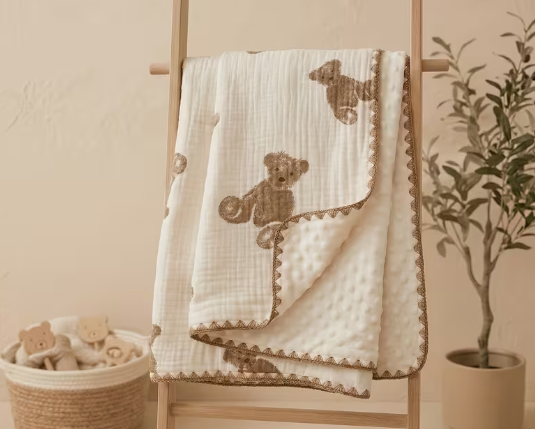
Muslin products combine several qualities that work well in dropshipping: they are lightweight, visually attractive, easy to fold and inexpensive to ship compared with large nursery products.
They can also be positioned in several ways. A store might focus on minimalist neutral designs, botanical patterns, animal prints, seasonal designs or personalized options. Instead of competing only on the material itself, the seller can build collections around a recognizable visual identity.
Multipacks are particularly interesting. One plain muslin wrap is easy for customers to compare with dozens of alternatives. A coordinated three-piece collection with complementary patterns feels more complete and can support a higher order value.
Personalization adds another layer. A name, initial or custom pattern can turn an ordinary textile product into a baby-shower or newborn gift.
There is an important safety distinction, however. Sellers should not casually market loose blankets as safe infant sleep products. CPSC safe-sleep guidance recommends keeping pillows, loose blankets and other soft objects out of an infant sleep space and specifically advises against weighted blankets and weighted swaddles. Product copy should accurately describe the intended use rather than making unsupported sleep claims.
For dropshippers, the opportunity is therefore better framed around lightweight wraps, receiving blankets, stroller use where appropriate, photography, gifting and general caregiver use rather than promises about improving infant sleep.
2. Baby Bib Sets
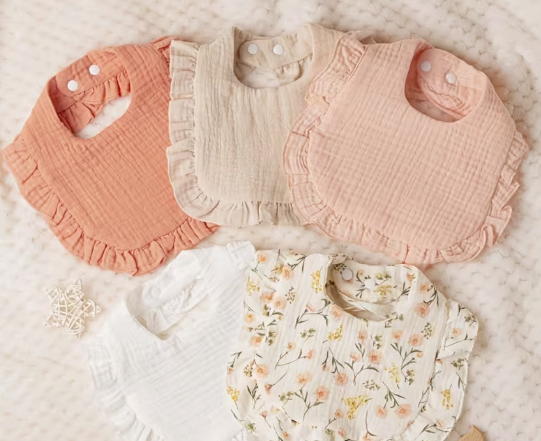
Few products demonstrate the value of multipack selling better than bibs.
Parents rarely need only one. Bibs are washed frequently, become stained and are used throughout feeding and teething stages. That creates a natural case for three-, five- or seven-piece sets.
Cotton bandana bibs work well for stores with a softer lifestyle aesthetic. Waterproof bibs appeal more to parents focused on practicality and cleanup. Silicone-style feeding bibs can fit into a broader feeding collection, although material and food-contact requirements should be checked carefully for the target market.
The strongest commercial angle is usually not “one cute bib.” It is a coordinated set.
A retailer can match colors and patterns with towels, changing accessories, muslin products or personalized apparel. That increases the perceived completeness of the collection and gives customers fewer reasons to compare each individual item solely on price.
Bibs are also lightweight, which leaves more room for shipping economics than bulky equipment.
3. Portable Baby Changing Mats
A good dropshipping product often solves a problem that can be demonstrated in five seconds.
Portable changing mats do that.
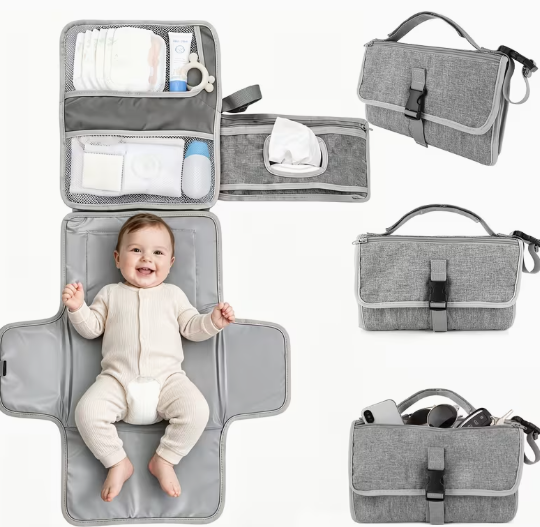
A parent is outside the home, needs to change a baby, opens a compact folded mat, and suddenly has a cleaner and more organized changing surface. The use case requires very little explanation.
That makes portable changing mats suitable for product pages, short-form videos and travel-focused bundles.
The strongest versions are usually compact rather than oversized. Foldability, waterproof or wipe-clean surfaces, storage pockets and easy closure can all increase perceived value.
This category also creates obvious cross-sells. A changing mat can sit beside a diaper bag, bottle travel bag, wipes pouch and stroller organizer without making the store feel random.
Product classification still matters. Baby-changing products can be subject to product-specific and general children's product requirements depending on their design and intended use. In the U.S., CPSC guidance notes requirements that can include testing, certification, tracking labels and other standards for covered products. Sellers should determine exactly which rules apply to the specific changing product they source rather than assuming all mats are regulated in the same way.
4. Diaper Caddies
Diaper caddies sell organization rather than technology.
That simplicity is a strength.
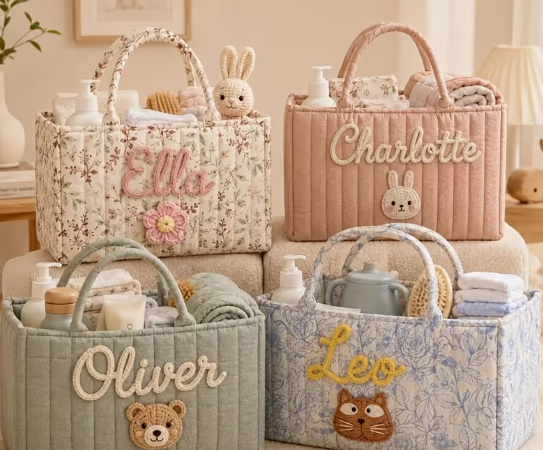
A typical caddy holds diapers, wipes, creams, clothing, washcloths or feeding items in one place. It can move between rooms and help reduce the clutter that quickly accumulates around newborn care.
The product is particularly suited to visual merchandising. An empty organizer beside a fully arranged organizer instantly communicates the benefit.
Neutral felt, cotton-look fabrics and minimal designs can work well for nursery-focused stores, while wipe-clean materials may suit a more practical positioning.
A diaper caddy also acts as a container for additional products. Instead of simply shipping the organizer empty, a store can build a “Changing Station Set” around it with compatible accessories.
That is often a better business than selling the caddy alone.
5. Stroller Organizers
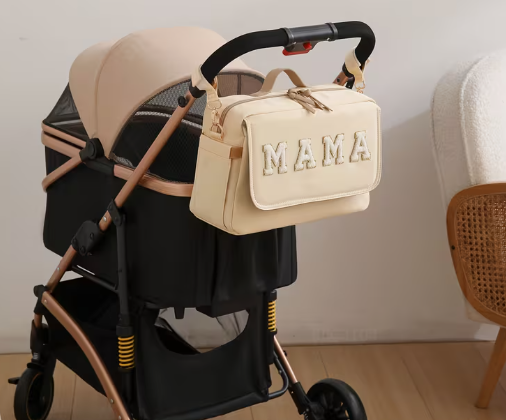
The broader baby safety and convenience category is expected to grow steadily. Grand View Research projects the U.S. baby safety and convenience segment to expand at a 6.4% CAGR from 2026 to 2033. While that category also includes heavily regulated products such as car seats and strollers themselves, smaller convenience accessories can give dropshippers exposure to the same consumer demand without immediately entering the most complex end of the market.
A stroller organizer is a good example.
Parents need somewhere accessible for phones, keys, wipes, snacks, bottles and other small necessities. A well-designed organizer takes that everyday inconvenience and turns it into a relatively straightforward product.
Important differentiators include compartment layout, bottle pockets, closure systems, water resistance and compatibility with different stroller handle arrangements.
Avoid vague “fits every stroller” claims unless they are actually verified. Measurements and attachment details are more trustworthy than universal compatibility promises.
The organizer can also anchor an “On-the-Go” collection alongside changing mats, travel storage and diaper bags.
6. Diaper Bags
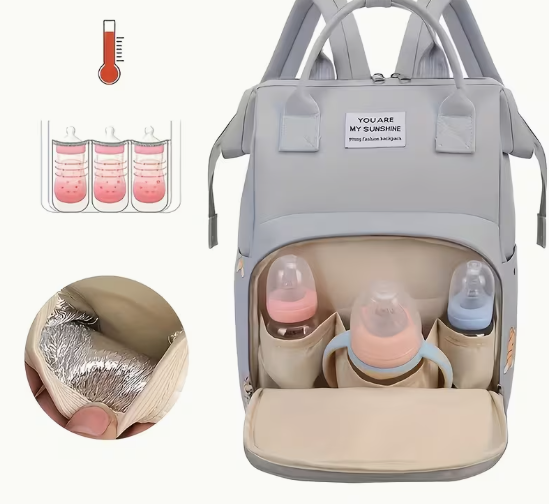
If smaller baby accessories are good add-ons, the diaper bag can become the hero product.
It has a higher perceived value than bibs, washcloths or organizers, giving sellers more room to create a meaningful offer.
Backpack-style diaper bags are particularly practical because parents can keep both hands free. Other useful features include insulated bottle compartments, waterproof sections, wide openings, stroller attachment points, laptop or tablet pockets and separate wet-item storage.
Design matters just as much as capacity.
Many parents do not necessarily want a bag that looks like traditional baby equipment. Minimalist backpacks in neutral colors can appeal because they continue to look usable after the baby stage.
That opens a stronger positioning opportunity: instead of selling “a bag for diapers,” sell an organized everyday travel system for parents.
The biggest operational consideration is dimensional weight. Before setting a retail price, compare the packed dimensions and actual shipping cost. An inexpensive bag can quickly become a poor-margin product if packaging is unnecessarily bulky.
7. Hooded Baby Towels
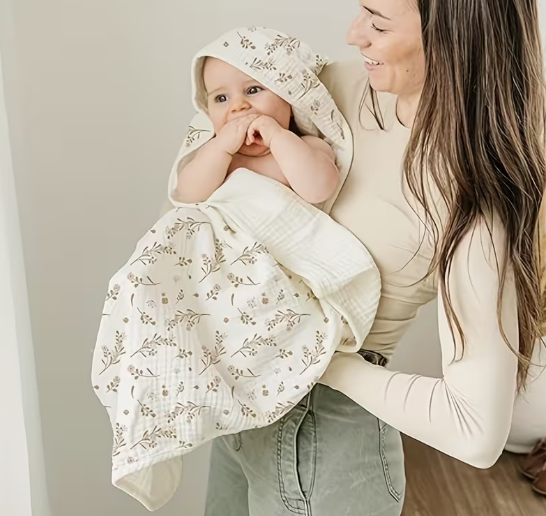
Hooded towels work well because they combine function, gifting and visual appeal.
Animal ears, embroidered details, minimalist designs and personalized names can turn a basic bath item into something that feels giftable.
They also fit naturally into baby-shower and newborn gift sets.
A single towel might be paired with washcloths, a bath organizer and another caregiver bath accessory. The customer is no longer evaluating the price of one towel; they are evaluating a complete bath set.
Material should be described accurately. Rather than using vague phrases such as “ultra-premium fabric,” product pages should specify fiber composition, dimensions and care instructions.
For textiles used around babies, consistency matters. Sellers should sample the product, wash it and check shrinkage, loose threads, dye transfer and the security of decorative elements before scaling.
8. Baby Washcloth Sets
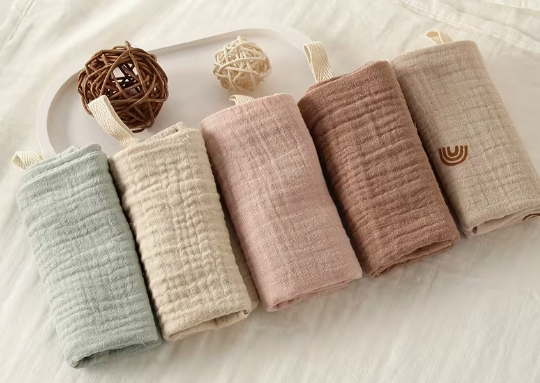
Washcloths are rarely the product that makes someone discover a new baby store.
That does not make them unimportant.
They are exactly the kind of low-cost, frequently useful product that can raise average order value when sold correctly.
Rather than selling one washcloth, offer coordinated sets. A set of six or eight pieces provides an obvious convenience advantage and looks more substantial on a product page.
They also pair naturally with hooded towels and bath collections.
From a merchandising perspective, washcloths are better treated as a supporting product than a main advertising product. Use higher-perceived-value items to acquire the customer, then use washcloth multipacks as an add-on.
That distinction is important in dropshipping. Not every SKU needs to carry the cost of acquiring a customer.
9. Baby Bath Storage Organizers
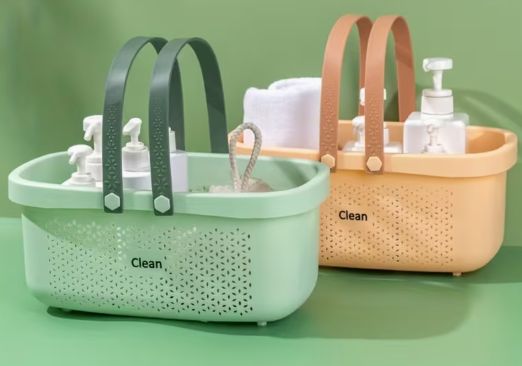
Bath-time storage is another problem-solution category that avoids sizing issues.
Mesh organizers, hanging storage and caregiver-accessible bathroom organizers can help keep bath products or toys contained and allow wet items to drain.
The strongest versions are easy to install, easy to clean and visually simple.
They can also generate strong before-and-after imagery. A scattered group of bath items becomes an organized space, which communicates value without a long explanation.
Product selection still requires common sense. Anything designed to attach near the child should be assessed for straps, detachable components and mounting security. For a baby-focused store, convenience should never come at the expense of basic product safety.
10. Bath Kneeling Pads for Parents
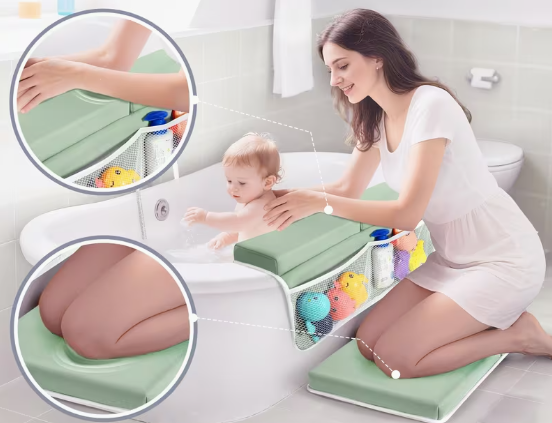
Not every successful baby product needs to be used by the baby.
Products designed for parents can sometimes be operationally easier.
A padded kneeling mat used beside a bathtub addresses a straightforward discomfort: caregivers may spend significant time kneeling on a hard bathroom floor while bathing a child.
Because the product is primarily for the caregiver rather than a toy or infant sleep product, it can also fit a useful strategy for baby stores that want to expand beyond products the baby directly touches.
The product works best as part of a bath system rather than as an isolated SKU.
A store could combine the kneeling pad, towel set and bath organizer into a bath-time bundle with a stronger overall value proposition.
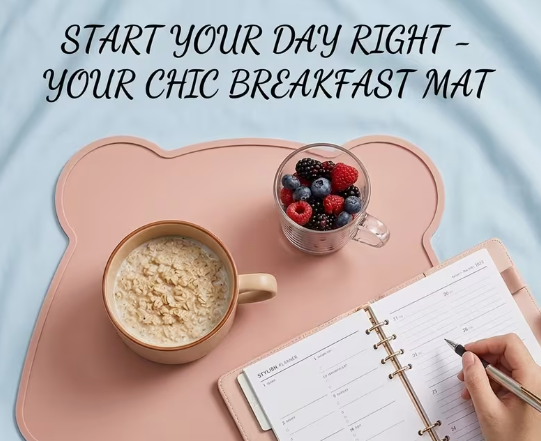
11. Silicone Feeding Placemats
Feeding and nursing is one of the most interesting parts of the baby market from a growth perspective. Grand View Research expects baby feeding and nursing to post a 7.7% CAGR from 2026 to 2033, making it the fastest-growing product segment in its global baby-products outlook.
For independent sellers, however, there is a major difference between selling an accessory such as a placemat and entering complex categories such as breast pumps or other devices.
A feeding placemat is relatively simple to understand. It protects the table, provides a designated feeding area and can often be rolled or folded for storage.
Visual differentiation is possible through shapes, colors and coordinated feeding collections.
Because the product may contact food, sourcing standards need to be higher than for a general storage organizer. Material declarations, applicable food-contact requirements, testing information and market-specific compliance should be verified rather than replaced with generic claims such as “100% safe.”
The broader lesson applies throughout this niche: the closer a product comes to a baby’s food, mouth, skin or sleep environment, the more seriously documentation should be treated.
12. Baby Food Storage Accessories
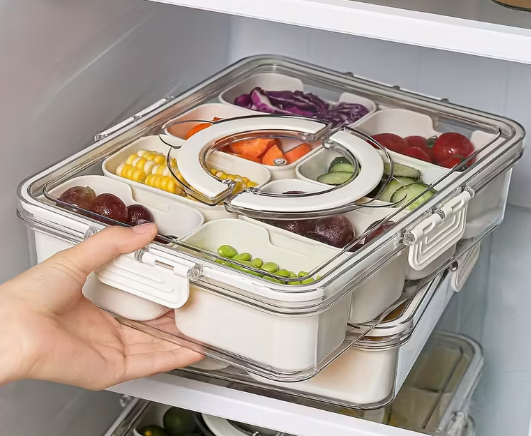
Food storage products appeal to parents who prepare or portion food in advance.
Portable snack containers, portion trays and freezer storage systems can all fit this category.
The strongest products solve one specific problem clearly. Leak resistance, stackability, freezer organization, portion control or travel convenience are stronger selling points than simply offering another plastic container.
Sets are generally more attractive than single units.
A coordinated storage kit can be positioned around meal preparation, travel or daycare preparation, depending on the target customer.
As with feeding placemats, food-contact products should be sourced from suppliers able to provide clear material specifications and applicable compliance information. A cheap supplier price is not enough reason to stock an item that will directly contact food.
13. Insulated Bottle and Feeding Travel Bags
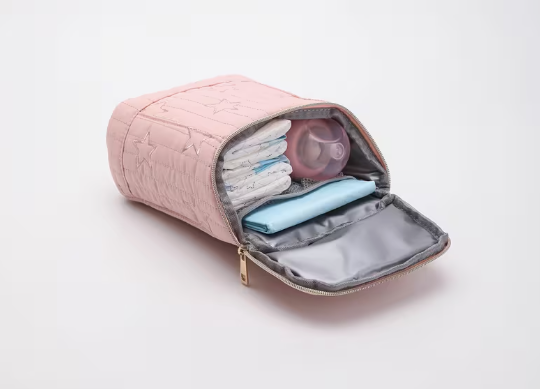
Travel accessories provide useful opportunities because they sell convenience in a specific scenario.
An insulated bottle bag can be marketed for outings, daycare, road trips or everyday errands. The use case is easy to understand and naturally complements a diaper bag.
The key is not to exaggerate performance.
If a supplier claims that a bag maintains a specific temperature for a certain number of hours, the seller should be able to substantiate that claim rather than copying it blindly.
Size information is equally important. Show how many bottles or containers the bag is designed to hold and provide internal dimensions where possible.
This reduces mismatched expectations and gives customers a more realistic sense of capacity.
14. Baby Clothing and Travel Organizer Bags
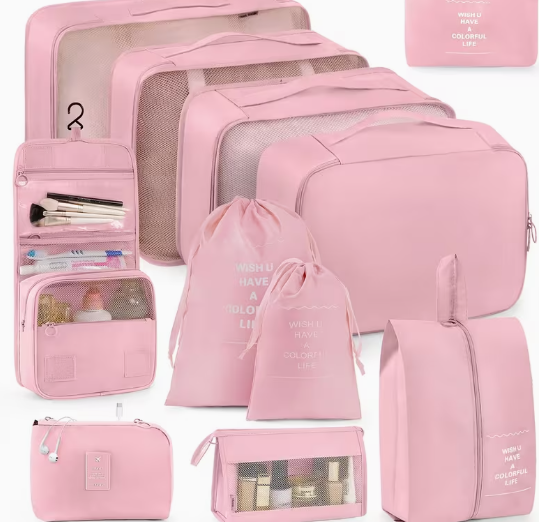
Parents traveling with a baby quickly discover that one bag can contain a remarkable number of tiny items.
Packing cubes and labeled organizer bags solve that problem without requiring electronic components or complicated sizing.
Sets might separate clothing, diapers, feeding supplies, laundry and toiletries.
They are particularly appealing because their usefulness extends beyond infancy. The same organizers can later hold children's clothing, travel accessories or household items.
That longer usable life can be a worthwhile selling point.
These products are also good candidates for personalization. Initials, family names or simple embroidered labels can make an ordinary organizer feel more premium.
15. Baby Milestone Blankets
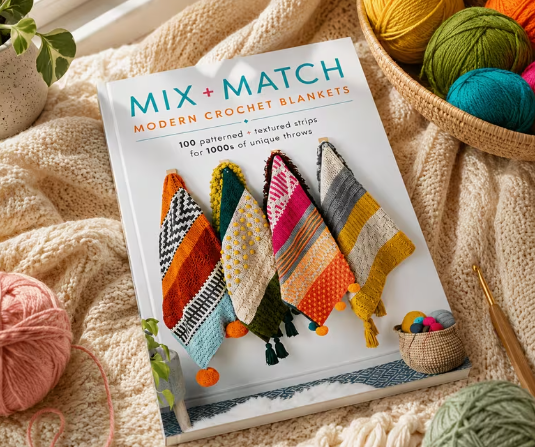
A milestone blanket is not primarily purchased because a parent needs another piece of fabric.
It is purchased because parents want to record a moment.
That emotional difference matters.
Monthly growth photos, birth announcements and first-year memories make milestone products highly visual and naturally giftable.
Patterns can target different aesthetics: botanical, celestial, minimalist, floral, safari, neutral or seasonal.
The product also works well with personalization. A baby's name or custom birth information can significantly reduce direct price comparison because the final product is no longer identical to a mass-market version.
As with other blankets, marketing should distinguish photography and keepsake use from infant sleep claims. CPSC safe-sleep recommendations say loose blankets should not be placed in an infant's sleep space.
16. Baby Milestone Cards
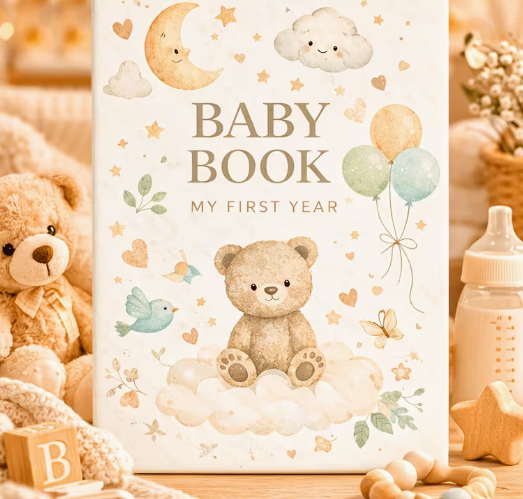
Milestone cards deliver much of the emotional appeal of milestone blankets with even lower shipping weight.
A set can cover events such as the first week, monthly milestones, first smile, first steps or first birthday.
Wooden-style cards may have premium visual appeal, while printed card sets are lighter and simpler to ship.
Because some milestone props contain small components, the product should be clearly marketed and used as intended. CPSC regulations restrict small parts in products intended for children under three when those parts create choking, aspiration or ingestion hazards. Decorative photography props should not automatically be treated as toys for the baby to handle.
This category is a good reminder that product presentation changes compliance expectations. A decorative keepsake and a product advertised as a baby toy are not necessarily treated the same way.
17. Personalized Baby Clothing
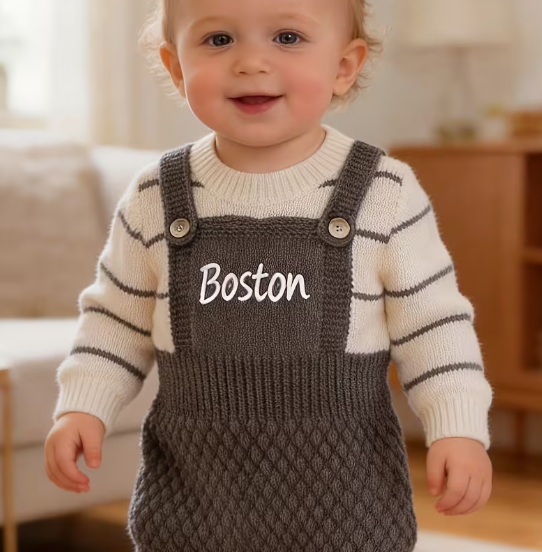
Personalization can move a store away from direct competition with enormous marketplaces.
Instead of selling another generic bodysuit, the retailer can offer a name, initial, birthday design or family announcement.
Common occasions include newborn announcements, first birthdays, holidays, family photographs and baby showers.
Print-on-demand can make this particularly attractive because the personalized version is produced after an order is placed rather than pre-manufacturing every possible name.
The underlying garment still matters. Check fabric composition, printing quality, seam quality, sizing accuracy and how the design looks after washing.
Children's apparel may also be subject to applicable product safety and certification requirements. CPSC notes that children's products subject to federal children's product safety rules can require third-party testing and a Children's Product Certificate. As of July 8, 2026, importers of most regulated consumer products also face CPSC certificate eFiling requirements at U.S. Customs and Border Protection.
18. Personalized Nursery Decor
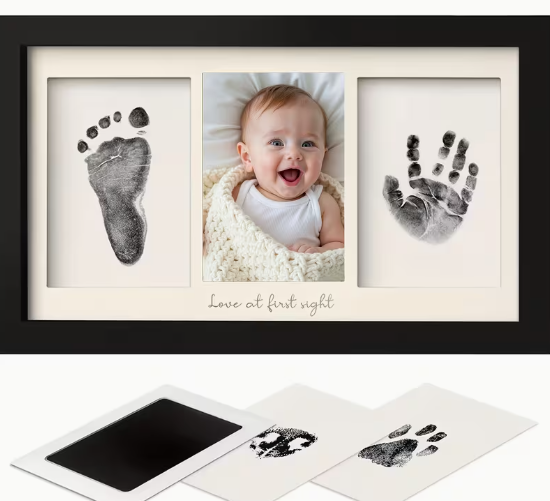
Personalized nursery decor offers another way to sell around the arrival of a baby without competing entirely in basic essentials.
Products may include name signs, growth charts, wall art and customized decorative pieces.
The commercial advantage is perceived value.
A generic nursery print is easy to compare on price. A coordinated piece built around a child's name, nursery palette or birth details feels personal and is more likely to be purchased as a gift.
Placement and installation matter. Decorative items should be designed and marketed for appropriate locations, securely installed and kept away from the infant sleep area when required.
For sellers, this category is best approached as decor for parents creating a nursery, not as something designed for a baby to play with.
19. Baby Shower Gift Sets
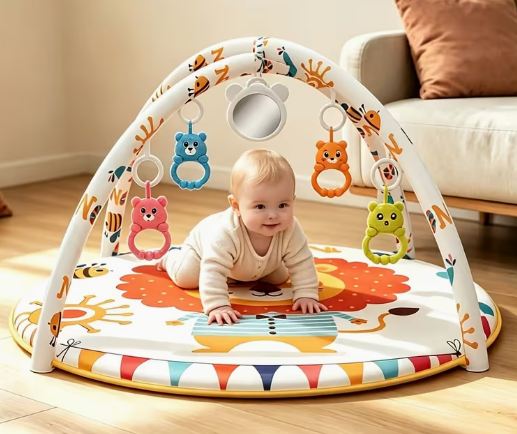
Bundles deserve to be treated as products in their own right.
A baby shower shopper does not necessarily know the technical difference between ten versions of a bib or twenty kinds of muslin fabric. They often want a gift that looks thoughtful, useful and complete.
That creates an opportunity to combine several ordinary products into something that feels much more valuable.
A newborn gift box, for example, could combine a textile item, bib set, washcloths and a personalized element. A bath-focused box could combine a towel, washcloths and caregiver bath accessories.
The exact contents matter less than coherence.
Everything should look as if it belongs together. Matching colors, patterns and packaging can turn inexpensive individual pieces into a premium presentation.
This is also where custom packaging has a disproportionate effect. A customer buying a gift is more likely to care about the unboxing experience than someone purchasing a purely functional replacement item.
20. Baby Travel Essentials Bundles
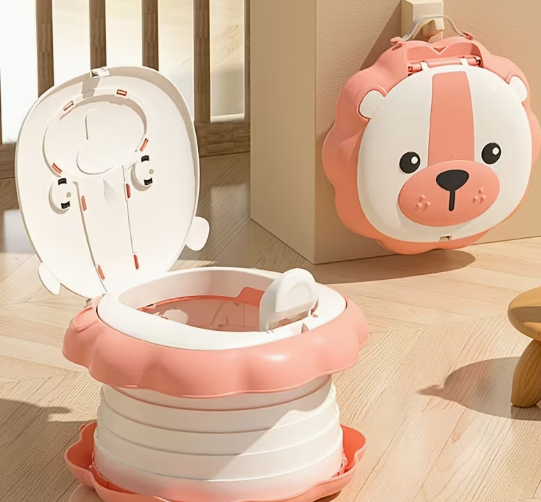
Travel is one of the strongest themes for building a baby-products collection because several practical products naturally belong together.
A portable changing mat, stroller organizer, bottle bag and packing organizer all address the same underlying problem: leaving the house with a baby requires far more preparation than leaving alone.
Selling that problem-solving system can be more effective than presenting each accessory as an unrelated SKU.
The bundle also creates flexibility.
A basic travel kit might include two or three accessories, while a premium version could include a larger diaper bag and matching organizers.
That provides an opportunity to build different price points without introducing completely different product categories.
For a store trying to establish a recognizable identity, “baby travel made easier” is also a much clearer proposition than simply “we sell baby products.”
Which Baby Products Have the Strongest Dropshipping Potential?
Looking across these products, three commercial patterns stand out.
The first is organization. Diaper caddies, stroller organizers, packing cubes, bath storage and diaper bags all address a recurring reality of parenthood: babies require many small items, and those items need to be carried or stored somewhere.
The second is gifting and personalization. Milestone products, customized clothing, personalized textiles and nursery decor are harder to compare purely by price because the product carries emotional value.
The third is bundling. Bibs, washcloths, changing accessories and travel items may look ordinary individually, but they become more valuable when arranged around a clear use case.
This matters because the global market remains heavily oriented toward accessible products. Grand View Research found that mass-market products represented 74.6% of global baby-products revenue in 2025, while the U.S. mass segment accounted for 75.4%. For a dropshipper, that suggests the opportunity does not require turning every product into a luxury purchase. The better approach is often to take practical, affordable items and improve their presentation, convenience, customization or bundling.
Best Baby Products for Bundling
Some products make more commercial sense together than alone.
A Newborn Essentials Set can pair muslin products, bibs and washcloths. A Baby Bath Set can combine a hooded towel, washcloths and a caregiver kneeling pad. A Travel Essentials Set can combine a changing mat, stroller organizer, bottle bag and packing organizers. A Baby Shower Gift Box can use personalized clothing, textiles and milestone products. A Nursery Organization Set can combine diaper caddies and storage accessories.
The advantage is not simply a higher selling price.
Bundles reduce direct comparison.
If another store sells the same bib for $8.99, the customer can compare the two products immediately. It becomes harder to make that comparison when your $39.99 offer includes a coordinated bib set, muslin item, washcloths and gift packaging.
Bundles also make the store feel more intentionally curated.
That is important in baby products, where trust and presentation often matter more than having thousands of SKUs.
Products Beginners Should Approach Carefully
The largest market opportunities are not automatically the best dropshipping opportunities.
Baby cosmetics and toiletries, for example, represented 29.5% of the global baby products market in 2025, while the broader global baby toiletries market is projected to reach $126.7 billion in 2026. Those are impressive numbers. Yet lotions, shampoos, creams and similar products introduce formulation, ingredient, labeling, shelf-life and skin-contact considerations that make them harder for inexperienced sellers to control than ordinary storage products.
The same principle applies even more strongly to infant sleep products, cribs, bassinets, car seats, baby walkers, pacifiers, teethers and other products covered by specific safety rules.
CPSC defines infant sleep products as products marketed or intended to provide sleeping accommodation for infants up to five months old when they are not already covered by another sleep-product regulation. Such products are subject to specific federal requirements. CPSC also identifies separate requirements for products including cribs, bassinets, bedside sleepers and play yards.
Products intended for children under three also need particular attention to small components. Under the CPSC small-parts ban, products intended for children under three cannot present certain choking, aspiration or ingestion hazards from small parts.
For U.S. sales more broadly, a children's product designed primarily for children 12 or younger can require third-party testing and certification when subject to applicable children's product safety rules. The importer is responsible for issuing the CPC for covered products manufactured overseas.
That does not mean these categories can never be sold online. It means they should not be treated as casual “winning products” selected solely because a social-media video is getting views.
For a new baby-products store, convenience accessories, textiles, organization products, caregiver products, gift products and carefully sourced personalized products generally offer a more manageable starting point.
How to Evaluate a Baby Product Before Selling It
A supplier catalog can make almost everything look appealing. The real test begins after the product reaches your hands.
Start with the use case. A strong product should answer a specific need quickly. “Keeps changing supplies organized in one place” is clearer than “cute baby accessory.”
Then examine physical quality. For textiles, inspect seams, stitching, fabric feel, shrinkage and decorative elements. For bags and organizers, test zippers, straps, handles, stitching and capacity. For waterproof products, actually expose them to water. For anything that makes a performance claim, verify whether the supplier can substantiate it.
Next, examine shipping.
Product cost alone tells you very little. A $7 item packed in an oversized carton may be less profitable than a $12 product that folds flat. Compare packed dimensions and shipping cost to the countries you expect to target before deciding the retail price.
Finally, look beyond the first sale.
Can the product be sold in another color? Can it join a bundle? Can it be personalized? Can improved packaging make it giftable? Could a proven version eventually be purchased in bulk or stocked closer to customers?
Products with several paths forward are more valuable than one-off trend items.
From Generic Baby Products to a Branded Collection
The long-term opportunity in baby products dropshipping is not building the biggest possible catalog.
It is discovering which products customers repeatedly choose and then improving those products.
A seller might begin by testing a standard diaper bag. If it performs well, the next step could be sourcing a better version with improved compartments or materials. Then the seller might introduce a matching changing mat and organizer. Later, custom packaging or private-label elements can make the collection harder to compare with generic marketplace listings.
The same approach works with personalized textiles, travel products and gift sets.
CJdropshipping can support this kind of progression through product sourcing, custom packaging, bulk purchasing, ODM, print on demand and global fulfillment services. Its current platform also supports sourcing requests when a seller cannot find the required product in the existing catalog.
For personalized products, CJ's print-on-demand service covers sourcing, custom production, quality control, order fulfillment, global shipping and branding support. Sellers can also order samples before selling, which is particularly important for baby products where material feel, print quality and construction need to be checked directly.
Custom packaging can become particularly useful for baby-shower sets and personalized gifts. CJ currently offers more than 500 packaging options and states that some custom-packaging options can begin with an MOQ as low as one unit, giving smaller stores a way to test branded presentation without immediately committing to very large quantities.
The important point is not to brand everything on day one.
Test the demand first. Improve products that earn repeat orders and good customer feedback. Remove products that create quality problems. Use sourcing, packaging and inventory only where the sales data justify the extra commitment.
FAQs About Baby Products Dropshipping
1. What are the best baby products to dropship?
The strongest options usually combine clear usefulness, manageable shipping costs, strong perceived value and bundling potential. Diaper bags, diaper caddies, portable changing accessories, stroller organizers, baby bath textiles, travel organizers, milestone products and personalized gifts are good examples. The right choice depends on the store's positioning and the compliance requirements of the target market.
2. What baby products are easiest for beginners to dropship?
Products primarily used by caregivers or for organization are often simpler starting points than highly regulated infant equipment. Examples include diaper bags, caregiver organizers, travel packing products and certain nursery storage products. Product-specific regulations still need to be checked before listing anything.
3. Are personalized baby products good for dropshipping?
They can be particularly attractive because personalization reduces direct price comparison and increases gifting value. Name-based clothing, personalized textiles, milestone items and nursery decor can all work well with print-on-demand or custom-production models.
4. Which baby products have the best bundle potential?
Bath products, travel accessories, newborn textiles and organization products work especially well. A customer buying a diaper bag may also need a changing mat and organizer; someone buying a hooded towel may also need washcloths. The best bundles revolve around one situation rather than grouping unrelated products together.
5. Can I dropship baby sleep products?
Baby sleep products can be subject to strict product-specific regulations. In the United States, CPSC regulates infant sleep products and several categories such as bassinets, cribs, play yards and bedside sleepers. New sellers should understand the applicable standards and obtain the required compliance documentation before entering these categories.
Final Thoughts
The best baby product is not necessarily the one with the highest search volume, the lowest factory price or the most impressive viral video.
For dropshipping, a better product is one that makes life easier for parents while remaining practical to source, inspect, ship and support.
That is why products such as diaper bags, caddies, travel organizers, changing accessories, bath textiles, milestone products and personalized gifts deserve attention. Their appeal is easy to understand, many can be bundled, and several offer a natural path from generic dropshipping to customization and branding.
The market data supports looking seriously at the category. Global baby products revenue is projected at $375.8 billion in 2026, with feeding and nursing among the faster-growing segments. U.S. eCommerce sales, meanwhile, grew 12.2% year over year in the second quarter of 2026.
But the baby niche has a higher standard than ordinary impulse-product dropshipping.
Quality needs to be checked rather than assumed. Materials need to be accurately described. Products that interact with food, sleep or a baby's body deserve additional scrutiny. Applicable testing and certification should be treated as part of sourcing rather than an afterthought.
Start with products that solve obvious problems. Build collections around situations such as bath time, travel, nursery organization and gifting. Use bundles to increase value instead of filling the store with hundreds of unrelated listings. When a product proves itself, improve the sourcing, packaging and fulfillment around it.
That is where baby products dropshipping becomes more than a catalog business.
It becomes the foundation for a baby brand customers can recognize and trust.