
Finding the best dropshipping women's clothing products to sell in 2027 requires more than following the latest runway looks or copying what appears on social media. Women's fashion offers plenty of product opportunities, but it also presents challenges that are easy to underestimate: inconsistent sizing, fabric quality, seasonal demand, returns, and competition from established retailers.
A clothing product can attract attention and still fail commercially. An appealing dress might generate clicks but disappoint customers because the fabric is thinner than expected. A pair of trousers might sell well in one market but produce expensive returns because the inseam does not match the product description. A matching set may improve average order value, yet create fulfillment problems when one size or color becomes unavailable.
The strongest opportunities are therefore not necessarily the most fashionable products. They are garments with identifiable customer demand, reliable suppliers, clear product specifications, and enough margin to support marketing and fulfillment.
The selections are based on established apparel use cases, publicly available fashion research through November 2026, and practical ecommerce sourcing considerations. They are recommendations for testing, not a verified ranking of 2027 sales or a promise of profitability.
What Makes a Women's Clothing Product Worth Selling in 2027?
Fashion demand changes constantly, but not every change represents a useful business opportunity. Some products attract short-lived attention because of a particular aesthetic. Others remain commercially relevant because they serve consistent needs such as everyday dressing, layering, workwear, leisure, or travel.
For dropshipping sellers, both approaches can work. The important question is whether the product fits your store's customer, positioning, and operating model.
Use Fashion Forecasts as Research Signals, Not Sales Guarantees
Pinterest's 2026 trend research identified growing interest in several fashion directions, including relaxed tailoring, utility-inspired clothing, and expressive layering.
For example, Pinterest reported an increase of 90% in searches for "baggy suit" and 30% for "pleated trousers." Its fashion-related research also highlighted interest in utility clothing, including a 45% increase in searches for "utility shirt."
These figures refer to changes in Pinterest search interest during the report's measurement period. They are not product sales figures or forecasts of what consumers will purchase in 2027.
The practical value of these signals is that they help sellers identify silhouettes, materials, and styling preferences worth investigating. They should be combined with current search demand, competitor pricing, customer reviews, and supplier quotations before making a product decision.
Pay Attention to Returns Before Selecting a Product
Clothing requires special attention because buyers cannot physically examine the fit, fabric, and construction before purchasing online.
The National Retail Federation estimated that 19.3% of U.S. online retail sales would be returned in 2025. This figure covers online retail broadly, not women's apparel or dropshipping specifically, but it illustrates why return costs should be included in ecommerce planning.
A practical clothing product should be evaluated across five areas:
- Customer demand: Is there evidence that shoppers actively look for this product or use case?
- Fit clarity: Can customers choose the correct size using accurate measurements and product information?
- Product consistency: Can the supplier maintain fabric, color, construction, and sizing standards?
- Order economics: Does the selling price leave sufficient margin after fulfillment, marketing, and expected returns?
- Brand potential: Can the product become part of a coherent collection rather than an isolated trend?
The following ten product types provide a balanced starting point across everyday essentials, coordinated outfits, workwear, denim, and seasonal fashion.
Quick Comparison: 10 Women's Clothing Products to Dropship
| Product | Primary Selling Angle | Seasonality | Main Sourcing Risk |
|---|---|---|---|
| Relaxed Tailored Blazers | Workwear and versatile layering | Year-round, depending on fabric | Shoulder fit and tailoring quality |
| Pleated Wide-Leg Trousers | Work-to-weekend outfits | Year-round | Waist and inseam accuracy |
| Linen-Blend Matching Sets | Travel and warm-weather dressing | Spring and summer | Fabric composition and shrinkage |
| Midi Shirt Dresses | Easy everyday outfits | Spring through early autumn | Length, opacity, and construction |
| Lightweight Utility Jackets | Transitional outerwear | Spring and autumn | Hardware and material quality |
| Cotton-Poplin Button-Down Shirts | Everyday wardrobe essentials | Year-round | Fabric transparency and stitching |
| Fine-Knit Cardigans | Layering and coordinated outfits | Year-round, weight dependent | Pilling and dimensional changes |
| Straight-Leg and Relaxed Denim Jeans | Casual everyday clothing | Year-round | Fit, wash consistency, and shipping weight |
| Matching Loungewear Sets | Comfortable everyday dressing | Year-round | Fabric recovery and set sizing |
| Pleated Midi Skirts | Smart-casual and occasion styling | Year-round | Pleat durability and transparency |
This comparison is intended to help sellers identify products worth investigating. It does not rank current sales volume. Actual performance will depend on the target market, product specification, supplier, presentation, and pricing.
10 Best Dropshipping Women's Clothing Products to Sell in 2027
1. Relaxed Tailored Blazers
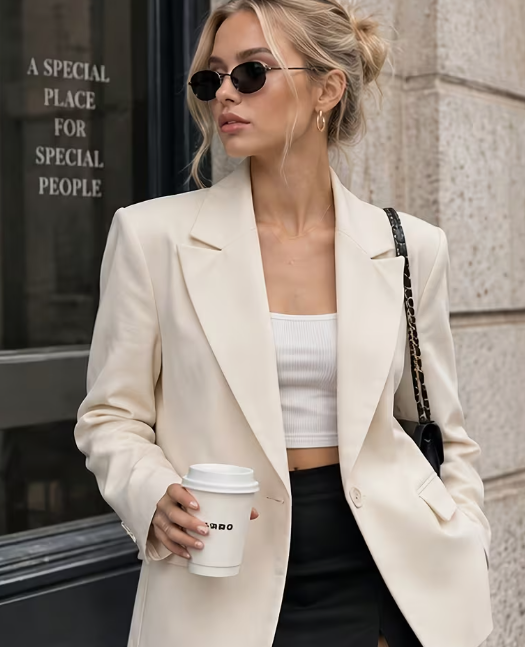
Relaxed blazers are an interesting product to test because they connect several practical wardrobe needs. A customer may wear one over a shirt for work, with jeans for a casual outfit, or as an extra layer when traveling.
The value comes from versatility rather than relying entirely on a particular fashion moment.
Pinterest's interest data around relaxed tailoring provides an additional reason to investigate the category, although sellers still need to confirm demand in their own market.
What to Look for When Sourcing
- Single-breasted designs with practical closures.
- Relaxed cuts with clearly specified shoulder measurements.
- Lightweight options for spring and summer.
- Fully described lining and fabric composition.
- Reliable stitching around lapels, pockets, and cuffs.
Recommended Selling Approach
Position the product around useful styling combinations, such as three ways to wear one blazer. Product videos should demonstrate the garment from multiple angles and show how it layers over other clothing.
A particularly useful product page will provide garment measurements, fabric details, lining information, and photographs showing the actual length and structure.
Best suited to: Workwear, contemporary casualwear, and capsule-wardrobe stores.
Main risk: Poor shoulder construction or inconsistent sleeve length can make a low-cost blazer feel unsuitable for the advertised occasion.
2. Pleated Wide-Leg Trousers
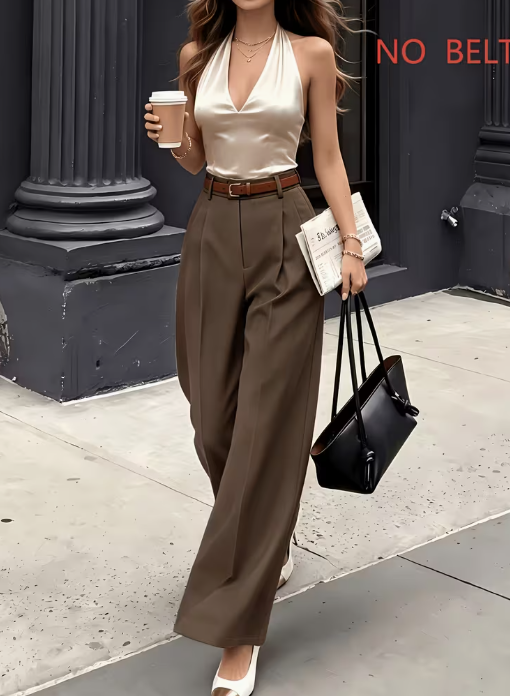
Pleated wide-leg trousers are a versatile option for retailers that want to connect office clothing with everyday fashion.
Unlike products dependent on a specific graphic or print, trousers can be positioned through fabric, comfort, styling flexibility, and practical details.
They also create opportunities for coordinated outfit recommendations when paired with blazers, knitwear, and button-down shirts.
What to Look for When Sourcing
- Accurate waist, hip, and inseam measurements.
- Clearly defined pleat construction.
- Fabric with suitable drape for the advertised silhouette.
- Consistent hems and pocket construction.
- Reliable color matching across available variants.
Recommended Selling Approach
Use videos to show how the trousers move during everyday activities and how they look with different tops.
Offer separate length options where the supplier supports them. Avoid describing one universal inseam as suitable for every customer.
Best suited to: Workwear stores, minimal-style boutiques, and coordinated-outfit collections.
Main risk: Inaccurate trouser length or waist measurements can cause size-related returns.
3. Linen-Blend Matching Sets
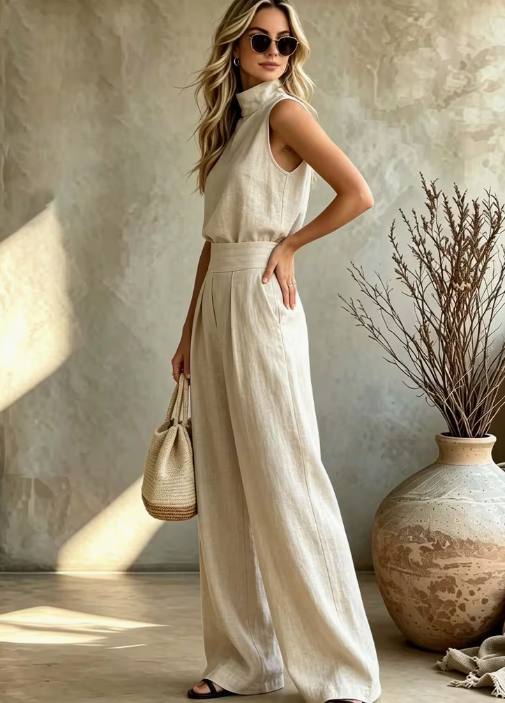
Matching sets offer a useful merchandising advantage: customers can buy a coordinated outfit instead of selecting every piece individually.
For warm-weather collections, a lightweight shirt-and-shorts or shirt-and-trousers set may be worth testing. These products can be marketed around travel packing, relaxed weekends, and everyday comfort.
However, the fabric description must be precise. Not every product marketed as "linen style" contains linen.
What to Look for When Sourcing
- Verified fiber composition and fabric weight.
- Consistent color between the top and bottom.
- Measurements for both pieces.
- Care instructions and washing behavior.
- Clear information about whether pieces are sold together or separately.
Recommended Selling Approach
Show the outfit worn together and the two pieces styled separately. This demonstrates the number of ways a customer can use the purchase without making unsupported quality claims.
If the supplier supports separate top and bottom sizes, make that option clear. If only fixed-size sets are available, explain the sizing limitation before checkout.
Best suited to: Resortwear, vacation clothing, and warm-weather lifestyle stores.
Main risk: Misleading fabric claims, different sizing between pieces, and inconsistent fabric shrinkage.
4. Midi Shirt Dresses
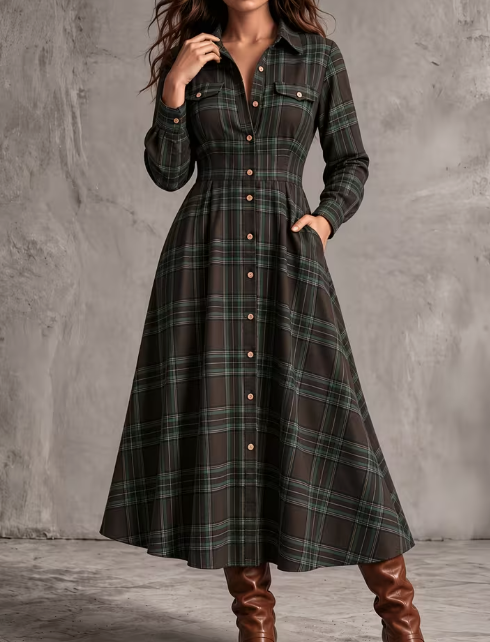
Midi shirt dresses provide a recognizable clothing format with several styling possibilities. Depending on the material and construction, they can be worn as a standalone outfit or layered with other garments.
For dropshipping, the advantage is that a store can build a focused collection around a familiar silhouette rather than chasing completely new designs every season.
What to Look for When Sourcing
- Accurate garment length and shoulder measurements.
- Reliable button construction.
- Appropriate fabric opacity.
- Clear belt or tie details where included.
- Consistent color and pattern placement.
Recommended Selling Approach
Choose a specific customer occasion rather than marketing the dress as suitable for every situation. Everyday casualwear, travel outfits, and smart-casual dressing are examples of distinct positioning approaches.
Use the product description to explain fabric feel, whether the dress is lined, how the buttons function, and the measurements customers need for choosing a size.
Best suited to: Everyday fashion, travel collections, and versatile wardrobe boutiques.
Main risk: Unexpected fabric transparency, dress length, or differences between product photographs and the delivered garment.
5. Lightweight Utility Jackets
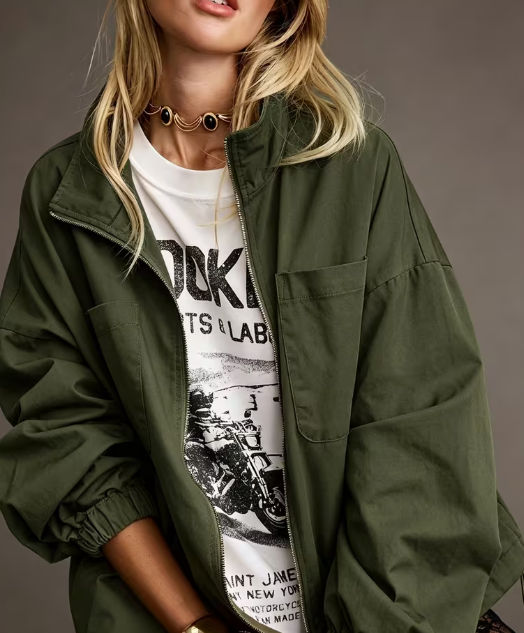
Utility-inspired outerwear deserves attention because it combines visual style with practical features such as pockets, adjustable cuffs, and layering space.
Pinterest's 2026 research identified growing interest in utility shirts and related styling themes, providing a useful signal for future product research.
For a dropshipping store, a lightweight utility jacket may be more manageable than heavy winter outerwear because its packing volume and weight can be lower, depending on the specific construction.
What to Look for When Sourcing
- Functional buttons, zippers, and pockets.
- Durable stitching at areas of repeated use.
- Verified fabric composition.
- Accurate jacket length and sleeve measurements.
- Realistic product weight and packing dimensions.
Recommended Selling Approach
Focus product demonstrations on actual features. Show pocket capacity, closures, layering options, and the construction details that distinguish the jacket from similar products.
Do not advertise water resistance, protective performance, or technical outdoor capabilities without reliable supporting evidence.
Best suited to: Casualwear, travel lifestyle, and transitional-season collections.
Main risk: Hardware failures, poor seams, and unsupported technical performance claims.
6. Cotton-Poplin Button-Down Shirts
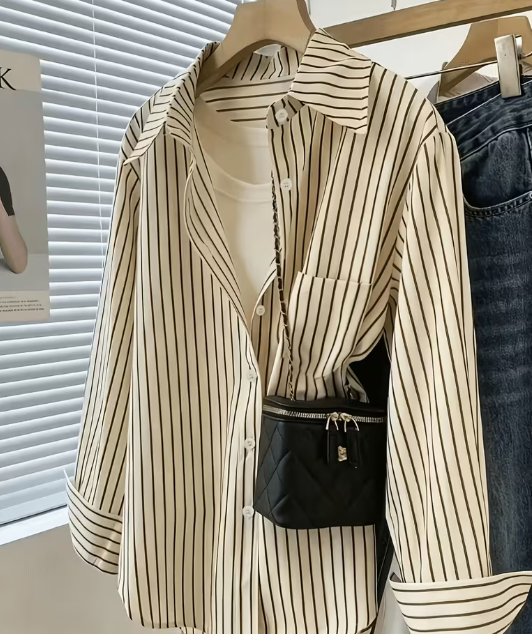
A well-specified button-down shirt may not be the most visually dramatic product in a fashion catalogue, but it can support a more stable merchandising strategy.
Customers can wear a shirt for work, casual occasions, or layering. Different sleeve lengths, collar styles, colors, and fabrics can create a focused collection without requiring an entirely new customer audience.
This makes the category particularly useful for stores built around wardrobe essentials rather than short-lived trends.
What to Look for When Sourcing
- Accurate cotton content and fabric composition.
- Button and seam quality.
- Neck, shoulder, sleeve, and overall length measurements.
- Fabric transparency and texture.
- Care requirements and shrinkage performance.
Recommended Selling Approach
Create original product photographs showing the shirt buttoned, open as a layer, and paired with different bottoms.
Explain the fabric and cut in plain language. Customers should not need to guess whether the garment is structured, lightweight, oversized, or designed for layering.
Best suited to: Everyday essentials, workwear, and minimalist fashion brands.
Main risk: Low-quality construction, inaccurate fabric descriptions, and excessive similarity to competing offers.
7. Fine-Knit Cardigans
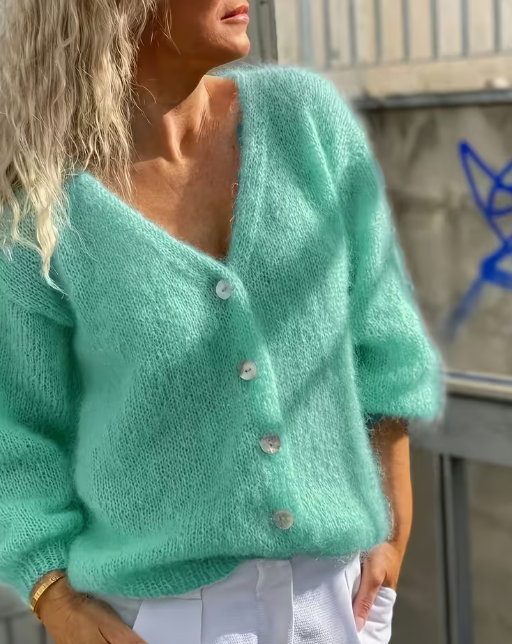
Fine-knit cardigans can work as transitional clothing and as a complementary product in collections built around dresses, shirts, and trousers.
Compared with heavier winter knitwear, lightweight options may be useful across more seasons, depending on the target market's climate.
The commercial opportunity comes from layering, fabric choice, color coordination, and repeatable wardrobe combinations.
What to Look for When Sourcing
- Clear fiber composition.
- Fabric weight appropriate to the intended season.
- Stable buttonholes and reinforced closures.
- Consistent sleeve length and garment measurements.
- Testing for pilling, stretching, and dimensional change after washing.
Recommended Selling Approach
Show how the cardigan coordinates with other products in your collection. An outfit-based recommendation can be more useful to shoppers than a generic product description.
Avoid unsupported claims such as "cashmere quality" when the material does not match the description.
Best suited to: Capsule wardrobes, smart-casual clothing, and transitional collections.
Main risk: Pilling, fabric inconsistency, and changes after washing.
8. Straight-Leg and Relaxed Denim Jeans
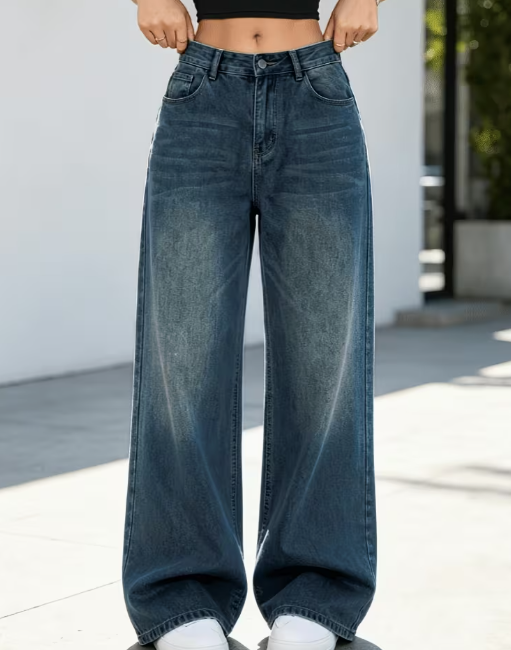
Denim remains an important category for everyday clothing stores because jeans can be paired with a wide range of tops and outerwear.
Straight-leg and relaxed designs are useful options for research because they offer recognizable silhouettes and allow sellers to develop multiple outfit combinations.
For dropshipping, however, denim should be approached carefully. Fit varies between factories, washes, and garment constructions, while heavier fabrics can increase fulfillment costs.
What to Look for When Sourcing
- Actual waist, hip, inseam, and rise measurements.
- Fabric composition and stretch information.
- Consistent washing and color treatment.
- Reliable zippers, buttons, and pocket stitching.
- Exact product and packaged shipping weight.
Recommended Selling Approach
Provide measurements for the finished garment instead of relying entirely on generic size labels.
Use original photographs and videos showing the product's structure, fabric, and movement. If different washes have different measurements or fabric composition, document those differences separately.
Best suited to: Denim-focused stores, casualwear boutiques, and everyday wardrobe collections.
Main risk: Inconsistent sizing, differences between washes, and higher return or shipping costs.
9. Matching Loungewear Sets
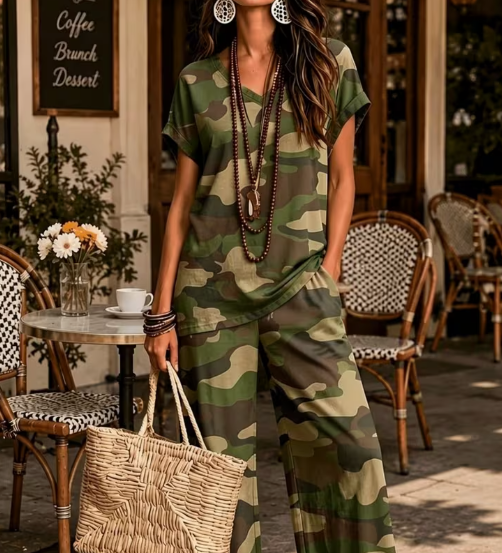
Matching loungewear sets combine two useful merchandising characteristics: coordinated styling and practical everyday use.
Customers may buy a set for home, travel, or relaxed casual occasions. The exact selling angle should depend on the material, weather suitability, and intended use.
A store can also create collections based on fabric weight and season, such as lightweight warm-weather sets or more substantial cold-weather options.
What to Look for When Sourcing
- Consistent fabric quality between both pieces.
- Measurements for the top and bottom separately.
- Stretch and recovery after washing.
- Accurate drawstring, pocket, and cuff details.
- Availability of individual replacement pieces where possible.
Recommended Selling Approach
Focus on fabric, everyday use, and practical features rather than vague promises about appearance.
Show the set together and individual pieces styled with existing wardrobe basics. This can help communicate its usefulness beyond one coordinated outfit.
Best suited to: Loungewear, leisurewear, and lifestyle boutiques.
Main risk: One garment fitting differently from the other or inconsistent fabric quality across sets.
10. Pleated Midi Skirts
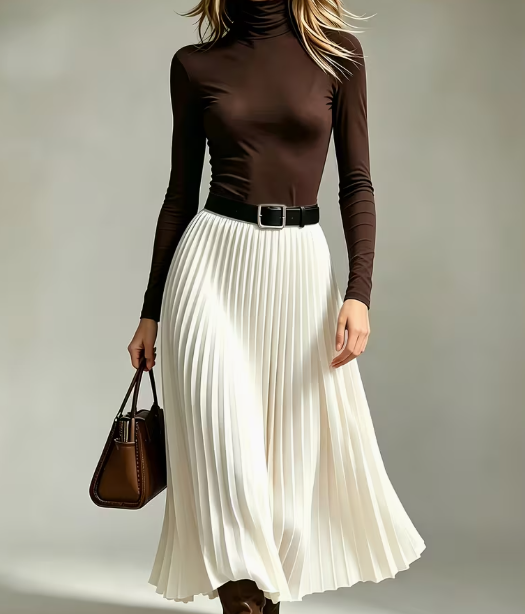
Pleated midi skirts are worth evaluating for stores focused on smart-casual dressing and coordinated outfits.
They can be merchandised with button-down shirts, fine-knit cardigans, and lightweight jackets, making them a useful addition to a focused collection.
The opportunity is not dependent on a single print or color. Sellers can investigate different materials, pleat styles, and seasonal weights while maintaining a consistent product concept.
What to Look for When Sourcing
- Pleat consistency after packaging and washing.
- Accurate waist and garment-length measurements.
- Suitable lining and opacity.
- Waistband construction and closure quality.
- Care instructions for maintaining the pleats.
Recommended Selling Approach
Show the skirt in several complete outfits, including casual and smart-casual combinations.
Product pages should provide clear instructions for garment care, especially when the pleats require specific cleaning or storage methods.
Best suited to: Contemporary fashion, workwear, and coordinated wardrobe stores.
Main risk: Pleats losing their structure, fabric transparency, or inconsistent garment length.
How to Choose the Right Women's Clothing Products for Your Store
A list of promising products is only the beginning. The next step is deciding which products match your customer and can be delivered profitably.
Start With a Specific Customer, Not a General Fashion Catalogue
Consider three possible store directions:
- Contemporary workwear: Relaxed blazers, wide-leg trousers, button-down shirts, and midi skirts.
- Vacation and warm-weather clothing: Lightweight matching sets, shirt dresses, and breathable layering pieces.
- Everyday casualwear: Denim, fine-knit cardigans, shirts, and comfortable coordinated sets.
Each direction can support a coherent collection and related content.
A store attempting to sell all ten products immediately may struggle to communicate who it serves. A smaller collection with consistent styling, pricing, and quality standards can provide a better starting point.
Compare Demand Across Your Target Market
Use current search and marketplace data to investigate product interest.
Useful research sources include:
- Google Trends for seasonality and search interest.
- Pinterest Trends for fashion-related discovery behavior.
- Marketplace search results and customer reviews.
- Competitor product collections and pricing.
- Actual advertising and customer conversion data.
Compare specific product names rather than extremely broad terms such as "women's fashion."
For example, "pleated wide-leg trousers" provides a more focused research direction than "pants."
Search interest should be interpreted alongside actual purchasing behavior. A rising search term does not guarantee profitable demand.
Evaluate Seasonality Before Launching
Fashion products have different selling windows depending on geography and climate.
Lightweight matching sets may be more relevant during warm-weather periods, while layering garments can become more useful when temperatures change.
Plan supplier testing, product photography, and marketing before the intended selling season. Avoid waiting until a product has already reached peak attention before checking whether it can be delivered on time.
How to Source Women's Clothing for Dropshipping
A reliable supplier is particularly important for women's fashion because quality problems may not be obvious from product photographs.
Before listing an item, verify the fabric, measurements, construction, packaging, and fulfillment process.
What Should You Ask a Clothing Supplier?
- What is the exact fiber composition?
- Are size charts based on actual garment measurements?
- Do measurements vary across colors or production batches?
- Are physical product samples available?
- Which warehouse will fulfill orders to the target country?
- How frequently is inventory information updated?
- What happens when a customer receives the wrong size or a defective product?
- Can the supplier support customization or packaging changes if demand grows?
For a complete supplier verification process, see How to Vet a Dropshipping Supplier: A Complete Due Diligence Checklist .
Using CJdropshipping for Women's Clothing Sourcing
CJdropshipping's women's clothing catalogue provides a starting point for comparing apparel products and sourcing options.
Sellers can explore available products, review product information, compare shipping options, and investigate sourcing assistance when a suitable product is not readily available.
CJdropshipping also offers ecommerce integrations and fulfillment services that can help merchants manage products and orders through connected workflows.
However, product availability, warehouse location, processing times, and customization capabilities vary by product. These should be verified for the exact SKU and target country before advertising.
For Shopify stores, see CJdropshipping for Shopify .
When Should You Consider Customization?
Customization is more useful after demand has been validated.
Possible improvements include:
- Branded garment labels where supported.
- Customized packaging.
- Improved product photography.
- Consistent collection colors.
- Original print designs.
- Changes to garment specifications through suitable manufacturing arrangements.
Do not assume every product can be private-labeled without a minimum order. Confirm the supplier's requirements, lead times, and additional charges.
How to Reduce Sizing Problems and Clothing Returns
Sizing deserves more attention in apparel than in many other dropshipping categories. A product may be well made and correctly shipped but still disappoint a customer because the measurements were unclear.
A 2025 peer-reviewed study published in the Journal of Innovation & Knowledge examined size-finder use and returns using data from a fashion ecommerce platform. Its findings suggest that sizing technology is not a simple guarantee of fewer returns, reinforcing the need to evaluate the complete buying experience.
Source: Fits Like a Glove? Knowledge and Use of Size Finders and High-End Fashion Retail Returns .
Use Actual Garment Measurements
Avoid relying exclusively on labels such as S, M, L, or XL.
Depending on the garment, provide relevant measurements:
- Chest or garment width.
- Shoulder width.
- Sleeve length.
- Waist and hip measurements.
- Inseam and rise.
- Total garment length.
- Fabric stretch information.
Explain how the measurements were taken. Measurement instructions should match the values in the size chart.
Photograph Real Products
Supplier images are useful for initial research, but original sample photography can help reduce uncertainty.
Show:
- Front and back views.
- Fabric texture and construction details.
- Garment movement.
- Closures, seams, and pockets.
- Color in consistent lighting.
- Relevant fit and length references.
Do not digitally change the product's shape, fabric appearance, or construction in ways that misrepresent the item customers will receive.
Make Return Reasons Part of Product Research
Track returns by product, size, color, supplier, and reported reason.
If customers repeatedly report that a particular garment is shorter than described, investigate whether the measurement chart or production specification is inaccurate.
If complaints relate to fabric transparency, consider additional product photographs, clearer descriptions, or a different supplier.
Use returns as evidence for improving the offer, rather than treating every return as an unavoidable cost.
How Much Profit Can You Make Dropshipping Women's Clothing?
There is no reliable universal profit margin for women's clothing dropshipping. Product costs, customer acquisition, fulfillment, discounts, and return rates vary significantly between stores.
The more useful approach is to calculate contribution profit for each product before increasing advertising spend.
Calculate the Full Cost of an Apparel Order
Consider a hypothetical women's clothing item sold for $54.
| Revenue or Cost | Amount |
|---|---|
| Net selling price | $54.00 |
| Product sourcing cost | -$16.00 |
| Shipping and fulfillment | -$6.00 |
| Payment processing | -$2.10 |
| Customer acquisition | -$14.00 |
| Expected returns and replacements allowance | -$4.00 |
| Other variable costs | -$1.00 |
| Contribution profit | $10.90 |
Under these illustrative assumptions, the order produces $10.90 in contribution profit, approximately 20.2% of net sales revenue, before fixed operating costs and other expenses not included in the example.
These figures are not actual supplier quotes or industry averages.
Why Returns Change the Calculation
Clothing returns can create costs beyond the refunded product price. Advertising may already have been paid, original shipping may not be recoverable, and returned items may require additional inspection or handling.
Calculate an expected return allowance using your own operating data:
Expected Return Allowance per Order = Return Probability × Average Net Financial Loss per Returned Order
Avoid double-counting costs already included elsewhere in the calculation.
For example, if your estimated return probability is 8% and the average additional financial loss per return is $30, the expected additional return allowance is $2.40 per order.
The 8% and $30 figures are hypothetical. Replace them with your own data as orders accumulate.
Do Not Ignore Variant-Level Costs
Apparel variants may have different sourcing and shipping costs. A garment's lowest displayed catalogue price may apply only to one version.
Compare the actual cost of the sizes, colors, and fabrics you expect to sell.
For a more complete financial framework, read The Hidden Costs of Dropshipping: What Sellers Often Forget to Calculate .
How to Test Women's Clothing Products Before Scaling
A successful clothing test should establish more than whether people click an advertisement. It should help determine whether the product can be sold repeatedly at an acceptable margin and delivered with consistent quality.
Step 1: Shortlist Three Products
Choose three products that serve the same customer group.
For example, a contemporary workwear store might compare a blazer, a pair of pleated trousers, and a button-down shirt.
This creates a more useful test than comparing unrelated products aimed at entirely different audiences.
Step 2: Compare Suppliers and Order Samples
Record:
- Product cost and shipping cost.
- Garment measurements.
- Fabric composition.
- Processing and delivery estimates.
- Sample quality.
- Supplier return and replacement procedures.
Reject products that cannot meet essential quality or compliance requirements before spending on advertising.
Step 3: Create Original Product Content
Use the samples to create product photographs and short demonstrations.
Develop separate content angles, such as:
- Different outfit combinations.
- Fabric and construction details.
- Practical use situations.
- Care and maintenance guidance.
- Answers to common sizing questions.
Avoid changing the product's actual appearance or using unsupported marketing claims.
Step 4: Set a Maximum Test Budget
Calculate the maximum sustainable customer acquisition cost before launching paid advertising.
Set a test budget and decision criteria based on the product's economics rather than choosing an arbitrary advertising amount.
Track conversion rate, customer acquisition cost, order contribution, delivery performance, and customer feedback.
Step 5: Make a Clear Decision
Classify the product into one of four outcomes:
- Continue: Demand, product quality, and unit economics support further testing or controlled growth.
- Improve: A specific issue such as product presentation, sizing, or sourcing may be repairable.
- Pause: Seasonal demand, inventory shortages, or incomplete data prevent a fair decision.
- Stop: Persistent quality problems or unfavorable economics make further investment difficult to justify.
For more detailed testing guidance, see How to Test a Dropshipping Product Before Spending Big on Ads and When Should You Stop Selling a Product? .
How to Build a Women's Fashion Brand Beyond Generic Dropshipping
Women's clothing offers opportunities for brand development, but a large catalogue does not automatically create a brand.
The strongest starting point is understanding a specific customer's preferences and building a reliable product experience around them.
Develop a Cohesive Collection
Instead of listing unrelated garments, build a collection around coordinated products.
For example, a contemporary everyday-wear collection could include:
- A relaxed blazer.
- Two complementary trouser styles.
- A button-down shirt.
- A fine-knit cardigan.
- A midi skirt.
Customers can more easily understand the collection when its pieces work together.
Improve Product Information Before Investing in Packaging
Brand development does not need to begin with expensive custom boxes or labels.
Start with improvements that customers can directly benefit from:
- Clearer measurements and sizing guides.
- Better fabric descriptions.
- Consistent product photography.
- Reliable fulfillment expectations.
- Useful care instructions.
- Responsive customer service.
Once the store has proven demand, evaluate custom labels, packaging, original designs, and supplier-led product development.
Review Clothing Labeling Requirements
When selling apparel, check the applicable labeling and product rules in your target market.
For example, the U.S. Federal Trade Commission explains that most covered textile and wool products require information such as fiber content, country of origin, and the identity of the responsible business. Care-label requirements may also apply.
Source: FTC: Clothing and Textiles .
The specific requirements depend on the product and destination. Verify them before selling or applying private-label branding.
For a deeper brand-development framework, see How to Turn a One-Product Store Into a Sustainable Ecommerce Brand .
Frequently Asked Questions About Women's Clothing Dropshipping in 2027
1. What are the best women's clothing products to dropship in 2027?
Products worth evaluating include relaxed blazers, pleated wide-leg trousers, linen-blend matching sets, midi shirt dresses, utility jackets, button-down shirts, fine-knit cardigans, relaxed denim, loungewear sets, and pleated midi skirts. These are product research recommendations, not verified 2027 bestsellers. Their suitability depends on demand, sourcing, sizing, and profitability.
2. Is women's clothing a good dropshipping niche?
Women's clothing can support a focused ecommerce business because it offers multiple customer needs, price points, seasons, and collection opportunities. However, competition, inconsistent sizing, product quality, and returns can make the category challenging. Strong supplier evaluation and accurate product information are essential.
3. How do I find reliable women's clothing dropshipping suppliers?
Compare product specifications, fabric composition, sizing information, stock availability, shipping routes, and return terms. Order samples and test fulfillment before launching large campaigns. A supplier should be evaluated on consistent quality and complete order economics, not just its lowest advertised price.
Final Thoughts: Choose Clothing Products That Customers Can Buy With Confidence
The best dropshipping women's clothing products to sell in 2027 will not necessarily be the products receiving the most attention on social media.
A stronger selection process considers customer demand, garment quality, fit information, supplier reliability, delivery performance, and the margin remaining after every variable cost.
The ten product types in this guide provide different opportunities for building a focused collection, from relaxed tailoring and everyday shirts to matching sets and seasonal outerwear.
Start with a small number of products that fit the same customer. Order samples, verify sizing, create accurate product content, and test demand before expanding the catalogue or advertising budget.
As the store grows, use customer feedback and purchasing data to improve the collection, sourcing arrangements, and brand experience.
If you need product sourcing and fulfillment support, explore CJdropshipping's Women's Clothing Catalogue and review the available options for your target market.
The goal is not simply to sell more clothing styles. It is to create a dependable fashion business with products that customers understand, suppliers that can deliver consistently, and financial performance that supports long-term growth.