
Starting an ecommerce business involves more than choosing products. Before a store can accept its first order, someone needs to build the website, organize product collections, configure its design, prepare product information, and establish the foundation for day-to-day operations.
For entrepreneurs who want to focus on selling rather than spending weeks building a website, starting with a prebuilt store can be a practical alternative.
That's the idea behind CJ Store Market, a newly launched store marketplace from CJdropshipping that offers ready-made Shopify stores developed in advance for different ecommerce industries.
Instead of paying for a website development project and waiting for the store to be built, customers can browse available stores, preview their designs, and purchase an existing storefront that can be transferred to their ownership.
The service combines prebuilt ecommerce storefronts with product data and access to CJ's support resources, giving merchants a more direct path from choosing a business concept to preparing their store for launch.
What Is CJ Store Market?
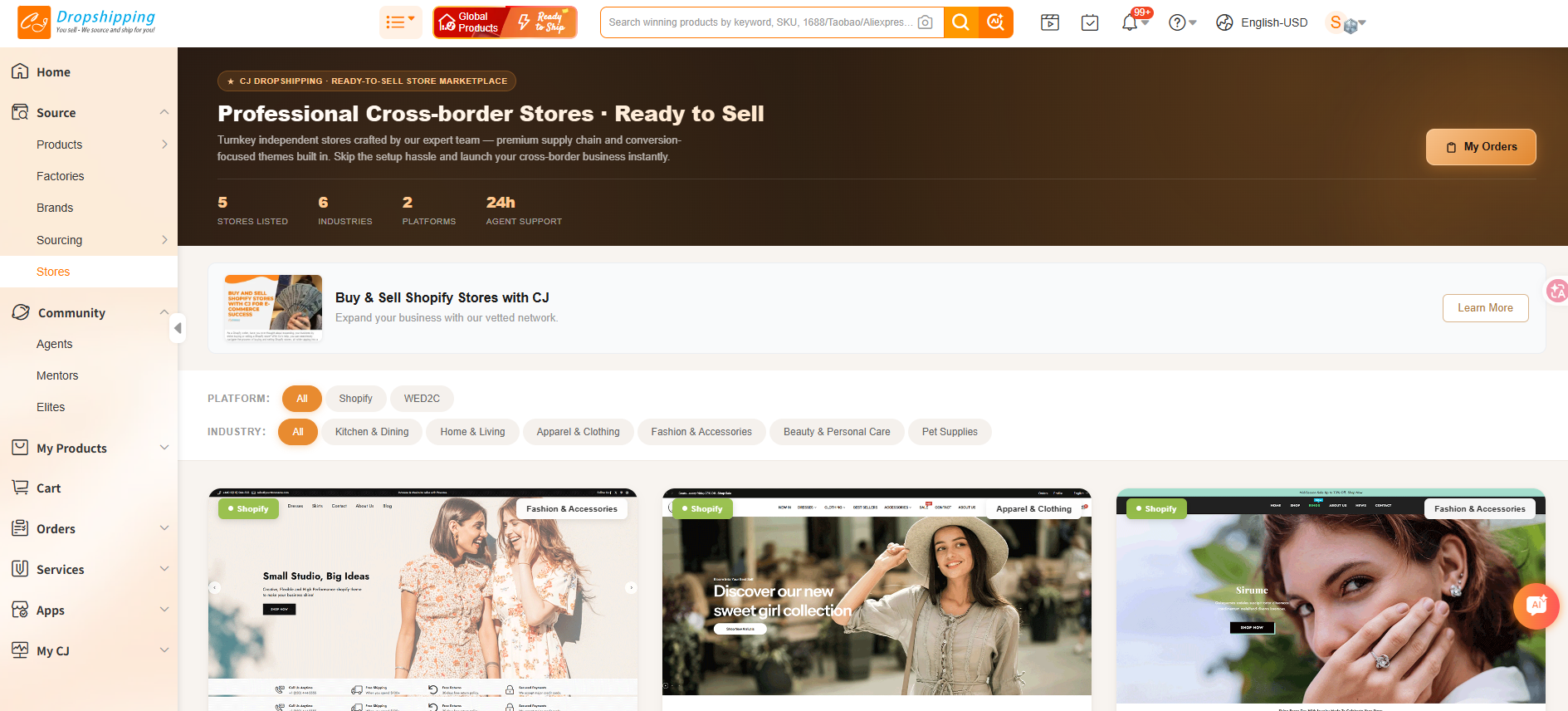
CJ Store Market is a marketplace for prebuilt ecommerce stores developed by CJdropshipping's team.
Its purpose is to make the early stages of ecommerce store creation more accessible by offering existing storefronts that customers can review and purchase instead of commissioning a new website from the beginning.
The concept is straightforward: choose an existing store, complete the purchase, arrange the ownership transfer, and prepare the store for your business.
This is different from a traditional website development service. The stores are prepared before they are listed, allowing buyers to evaluate the available designs and industry concepts before making a decision.
The marketplace currently features Shopify stores and provides platform filtering that also includes WED2C. Availability depends on the listings published at the time of purchase.
What Makes the Store Market Model Different?
A typical ecommerce store creation project begins with planning, design decisions, website development, and product organization.
CJ Store Market changes the starting point.
Instead of beginning with an empty storefront, buyers can review a completed store concept with an existing design and product data.
This can help reduce the amount of preliminary website work required before moving to more commercially important tasks, such as validating products, setting up payment methods, arranging fulfillment, and developing marketing campaigns.
It is important to understand what the marketplace offers. These are prebuilt storefronts, not automatically established businesses with proven sales, existing customers, or guaranteed revenue.
The value lies in having an ecommerce foundation already prepared, while the buyer remains responsible for building and operating the business.
What Does a Ready-Made Store Include?
CJ Store Market is designed around three visible elements: a prepared ecommerce storefront, product data, and access to agent support.
1. A Prebuilt Storefront
The available stores have already been developed with designs suited to their intended ecommerce categories.
Rather than selecting a theme and assembling every website section yourself, you can review a prepared store and decide whether its design fits your business idea.
This can be useful for merchants who want a professionally organized starting point but do not have extensive website design or development experience.
Store appearance, functionality, and included design assets may vary by listing. Buyers should review the actual storefront preview and confirm the scope of the purchase before checkout.
2. Product Data Included
Store listings on CJ Store Market identify product data as an included feature.
Having product information prepared can reduce the work involved in building an initial catalogue.
However, product data should always be reviewed before a store goes live.
Merchants should confirm:
- Product names and descriptions.
- Images and available variants.
- Product prices and potential margins.
- Actual stock availability.
- Shipping options for their target market.
- Applicable product and labeling requirements.
Included product data does not necessarily mean that physical inventory has been purchased or reserved for the new store owner.
3. Access to CJdropshipping's Broader Ecommerce Services
Beyond the store marketplace, CJdropshipping provides product sourcing, order fulfillment, shipping options, and ecommerce integrations.
These services can be useful as a store develops, particularly when a merchant needs to source additional products or establish a suitable order fulfillment workflow.
For example, a merchant purchasing a pet supplies store may later want to expand its product range or explore customized packaging.
Similarly, a fashion store owner may want to investigate alternative products, compare suppliers, or improve fulfillment economics as sales develop.
These are services merchants can evaluate separately. Availability, additional costs, and operational requirements depend on the specific service and product.
Learn more about CJdropshipping's Shopify integration .
Explore Ready-Made Stores Across Different Ecommerce Categories
One useful feature of CJ Store Market is the ability to browse storefronts by industry rather than beginning with a completely open-ended website project.
The marketplace offers filters for several categories, including:
- Kitchen & Dining.
- Home & Living.
- Apparel & Clothing.
- Fashion & Accessories.
- Beauty & Personal Care.
- Pet Supplies.
These filters help merchants identify relevant store concepts. Not every category necessarily has an available listing at all times.
Fashion and Apparel Stores
Clothing and accessories are suitable for businesses interested in building collections around a particular customer group or fashion style.
A prebuilt fashion storefront can provide an initial visual structure for organizing products, collections, and promotional content.
After purchasing, the merchant can focus on refining product selection, verifying garment quality, planning seasonal collections, and developing a consistent brand identity.
Pet Supplies Stores
Pet supplies provide opportunities to build a focused business around pet owners and their practical needs.
CJ Store Market currently features a pet supplies storefront under the PAWLY name.
For this type of business, product sourcing and quality verification are particularly important. Merchants should evaluate product specifications, intended use, materials, and applicable safety information before selling.
Home and Living Stores
Home and living storefronts can be developed around household organization, everyday convenience, decorative products, and other practical categories.
A focused collection can help customers understand the purpose of the store instead of presenting a disconnected selection of products.
For example, a home organization brand could develop collections around kitchens, bedrooms, storage, and small-space living.
Beauty and Personal Care Stores
Beauty and personal care is another category available through the marketplace's industry filters.
Merchants considering this category should pay particular attention to product descriptions, safety documentation, labeling, and regulations in their intended sales markets.
The most suitable niche is not necessarily the one with the largest catalogue. It is the one that matches your knowledge, target audience, sourcing capabilities, and marketing strategy.
View Available Stores by Category
Why Start With a Ready-Made Shopify Store?
A prebuilt store can offer a practical alternative for entrepreneurs who prefer to spend less time on initial website development.
However, the advantages should be understood in terms of preparation and workflow, not guaranteed business performance.
1. Spend Less Time on Initial Website Setup
Building a Shopify store involves decisions about themes, navigation, page layouts, collections, product information, and presentation.
For someone unfamiliar with ecommerce website development, these tasks can require considerable effort.
Starting with a prebuilt storefront means that part of this work has already been completed.
The merchant can then concentrate on reviewing and adjusting the existing website rather than creating every page from the beginning.
2. Preview the Store Before Choosing
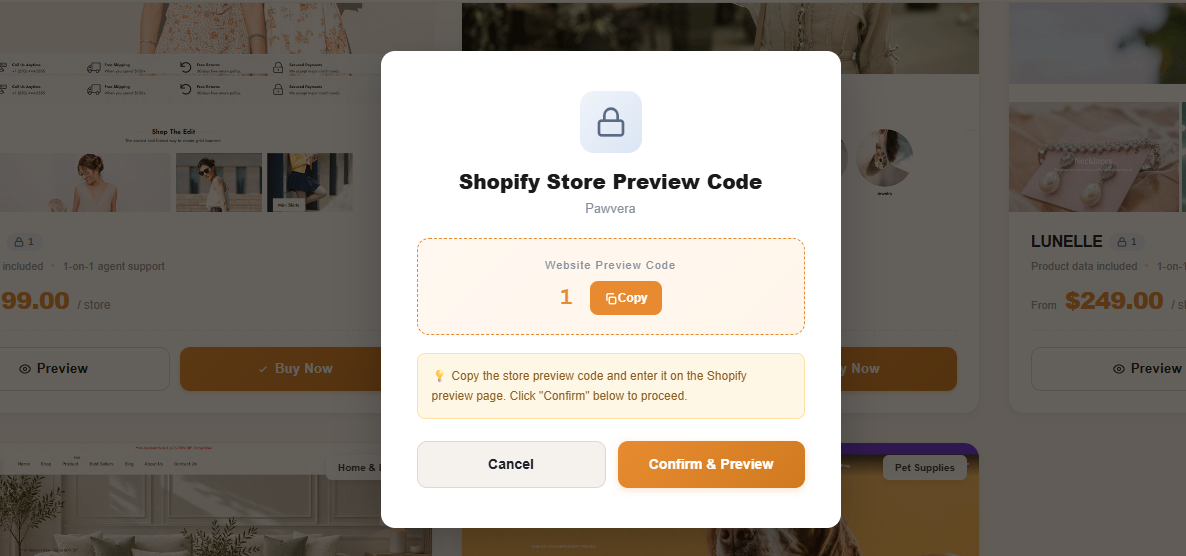
CJ Store Market provides preview options for its listed storefronts.
This gives potential buyers an opportunity to evaluate the design before selecting a store.
During the preview, examine:
- Homepage organization.
- Product collection structure.
- Product page presentation.
- Navigation and information hierarchy.
- Mobile usability.
- Overall visual consistency.
A store preview is not just an opportunity to judge appearance. It is also a chance to identify which elements may need to be adapted to your intended audience.
3. Begin With an Existing Product Catalogue Structure
Preparing product information and organizing collections can take time, particularly when a store features multiple products and variations.
A prebuilt store with product data can reduce this initial workload.
Nevertheless, the owner should independently verify product availability, costs, specifications, and shipping arrangements before accepting orders.
4. Focus More Attention on Business Operations
A functioning website is only one part of an ecommerce business.
Merchants still need to solve several important problems:
- Which customers should the store target?
- What makes its product offering competitive?
- How will customers discover the store?
- Can orders be fulfilled consistently?
- How much does it cost to acquire a customer?
- What happens when a customer requests a refund?
A ready-made storefront can reduce the initial website workload and allow more attention to be directed toward these operational decisions.
That is where the practical business value lies.
How to Buy a Ready-Made Store Through CJ Store Market
The following process explains how prospective buyers can approach store selection, purchase, and handover.
Step 1: Browse the Store Marketplace
Visit CJ Store Market to view the currently available storefronts.
Use the platform and industry filters to narrow the options.
Review the store's category, displayed starting price, and included information before deciding which listings to investigate.
Step 2: Preview Your Preferred Store
Use the available preview feature to examine the storefront.
Consider how well the design matches the business you want to build. Look beyond colors and images to assess navigation, product organization, and the clarity of the shopping experience.
If you plan to make significant design changes, confirm which elements can be edited and whether any theme, application, or asset license affects those changes.
Step 3: Review the Purchase Details
Before proceeding, confirm exactly what the selected store includes.
Questions worth resolving include:
- Which store and assets will be transferred?
- Is a custom domain included?
- What product data is included?
- Which themes or applications are used?
- Are any separate software subscriptions required?
- What support is included after the purchase?
- What is the expected handover process?
Also review the applicable purchase terms and any refund or cancellation conditions.
Step 4: Complete the Purchase and Store Handover
Once the purchase is completed according to the marketplace's current process, the store must be handed over to its new owner.
For Shopify stores, ownership transfer follows the platform's requirements. The buyer should receive and complete the relevant transfer acceptance process where applicable.
Shopify distinguishes between client transfer stores built for handover and development stores used for testing. Client transfer stores can be transferred to merchants, while ordinary development stores cannot.
Official reference: Shopify Help Center: Client Transfer Stores .
Step 5: Configure the Store Under Your Business
After ownership is transferred, the merchant should review the store's configuration before accepting real customer orders.
This includes activating an appropriate Shopify plan, setting up an eligible payment provider, reviewing billing information, configuring the domain, and updating business and customer service details.
Merchants should also verify shipping rates, taxes, product information, and relevant store policies.
The store may already be built, but the merchant's business and payment arrangements still need to be established.
Ready-Made Shopify Store vs. Building a Store From Scratch
Neither approach is universally better. The right choice depends on the merchant's requirements, experience, and willingness to handle website development.
Comparing two approaches to launching a Shopify store
| Factor | Ready-Made Shopify Store | Build From Scratch |
|---|---|---|
| Initial design | Existing storefront available for preview | Merchant chooses and configures the design |
| Product information | Product data included in listed CJ Store Market offerings | Merchant sources and prepares product data |
| Time spent on initial setup | Potentially reduced | Depends on development experience and complexity |
| Design flexibility | Can be adapted within the included theme and asset limitations | Greater freedom to plan the initial structure |
| Initial store cost | Purchase price varies by listing | Depends on themes, development, and other services |
| Payment configuration | Merchant must configure eligible payment services | Merchant must configure eligible payment services |
| Marketing | Merchant responsibility | Merchant responsibility |
| Sales performance | Not guaranteed | Not guaranteed |
A ready-made store is worth considering when a suitable storefront already exists and the buyer wants to reduce initial design work.
Building from scratch may be preferable when the business requires a highly customized shopping experience, specialized integrations, or a unique design system that cannot be accommodated by the available stores.
The decision should be based on what is included, the cost of any additional modifications, and the amount of work still required before launch.
What Should You Do After Receiving Your Shopify Store?
Buying a ready-made Shopify store is an early milestone, not the end of the launch process.
The next step is preparing the website to operate as a real ecommerce business.
1. Personalize the Brand
Review the store's name, logo, colors, product selection, and communication style.
Adapt these elements where permitted to match the customers you want to serve.
A brand should communicate a consistent reason for customers to choose its products, rather than simply presenting an attractive website.
2. Verify the Products
Even when product data is already available, merchants should confirm that every product intended for sale meets their requirements.
Check current sourcing prices, shipping fees, specifications, stock availability, and order fulfillment options.
For products with material quality or safety considerations, order samples before investing heavily in advertising.
3. Connect and Test Fulfillment
If you plan to use CJdropshipping for order fulfillment, verify that the store is properly connected and that the intended products are mapped to the correct fulfillment options.
Place a test order where appropriate to confirm:
- Order synchronization.
- Correct product and variant selection.
- Shipping method availability.
- Tracking information.
- Customer notification workflows.
See How to Connect Shopify Store to CJdropshipping for additional integration guidance.
4. Prepare Customer-Facing Policies
Before launch, review all customer-facing information.
This should include shipping and delivery estimates, contact information, refund and return terms, privacy information, and any other disclosures required by your sales market.
Do not assume that prewritten store policies automatically match your business location, shipping arrangements, or legal obligations.
5. Develop a Marketing Strategy
A completed website does not automatically generate traffic or sales.
Once the store is operational, develop a customer acquisition strategy using channels that fit your products and audience.
Depending on the business, these may include search engine optimization, product demonstrations, paid advertising, email marketing, and relevant content partnerships.
Measure customer acquisition cost, conversion rate, contribution profit, and fulfillment performance rather than focusing on traffic alone.
6. Grow the Product Collection Based on Demand
As customers begin to purchase, use sales data and feedback to identify which products deserve more attention.
A store may eventually expand through additional sourcing, product customization, bundled offers, or more structured inventory arrangements.
CJdropshipping's broader sourcing and fulfillment services can be evaluated as those needs develop.
Who Is CJ Store Market Designed For?
Ready-made stores can serve different types of merchants, but the value they provide depends on the buyer's experience and business objectives.
Entrepreneurs Starting Their First Ecommerce Store
For someone entering ecommerce without website development experience, a prepared storefront can reduce the amount of technical setup required.
The merchant can focus on learning product research, supplier management, customer acquisition, and store operations.
Existing Dropshippers Exploring Another Niche
A seller who already operates one store may want to investigate a different category.
Rather than creating another website from the beginning, the seller can review an existing store concept and decide whether it fits the new audience.
This can reduce initial preparation work, although the new category still requires independent product and market validation.
Marketing-Focused Entrepreneurs
Some entrepreneurs are more experienced with advertising, content creation, or customer acquisition than website development.
A ready-made store can give them an existing storefront to adapt while they focus on their core strengths.
Small Businesses Looking to Expand Online
A business with an existing customer audience may want to develop a separate ecommerce sales channel.
A suitable prebuilt store can be a starting point, provided its structure and capabilities meet the business's operational needs.
However, businesses requiring complex integrations, highly customized features, or ownership of an established revenue-generating company should evaluate whether a prebuilt storefront is the appropriate solution.
Frequently Asked Questions About CJ Store Market
1. What is CJ Store Market?
CJ Store Market is a newly launched marketplace from CJdropshipping featuring prebuilt ecommerce storefronts. Customers can browse available stores, review their designs, and purchase a prepared store for ownership transfer. Current listings include Shopify stores in categories such as fashion, home and living, and pet supplies.
2. Are the stores already built before purchase?
Yes. CJ Store Market offers prebuilt storefronts rather than a conventional development service in which work begins only after payment. Buyers can review available store previews before choosing a listing. The specific included features and assets should be confirmed before purchase.
3. How much does a ready-made Shopify store cost?
Pricing varies by listing. As of November 12, 2026, the CJ Store Market page displays stores starting at $199. Prices, store availability, and included services may change. Buyers should review the current listing and purchase terms for the exact store they select.
4. Do I own the Shopify store after purchasing it?
The service is designed around purchasing a prepared storefront and transferring it to the buyer. For Shopify stores, ownership must be transferred according to Shopify's applicable procedures. Buyers should confirm the transfer status, included assets, and any relevant licensing or contractual conditions before considering the handover complete.
5. Does the purchase include a Shopify subscription?
The marketplace's general listings do not establish that ongoing Shopify subscription fees are included. Merchants should confirm which costs are covered by the store purchase and separately budget for the appropriate Shopify plan, payment processing, domain services, applications, and other operating expenses.
6. Will a ready-made store automatically generate sales?
No. A prebuilt store provides an ecommerce website foundation, not guaranteed traffic, customers, or revenue. Sales depend on product demand, marketing, pricing, customer experience, and fulfillment performance. Buyers should distinguish a newly prepared storefront from an established operating business with a verified sales history.
7. Can I customize the store after purchasing it?
Shopify stores generally support editing store content, products, collections, and theme settings. However, the changes available for a particular purchased store can depend on its theme, applications, licensing, and included assets. Confirm these details before purchasing if extensive customization is important to your business.
8. Can I use CJdropshipping to fulfill orders from the store?
CJdropshipping offers Shopify integration, product sourcing, and fulfillment services. Buyers can evaluate connecting the acquired store with these services, subject to product availability, shipping routes, account configuration, and other applicable requirements.
Start With a Store. Build a Business Around It.
Launching an ecommerce business does not necessarily require building every part of a website from scratch.
With CJ Store Market, entrepreneurs can explore ready-made Shopify stores designed for different product categories, review available storefronts, and purchase a prepared store rather than commissioning an entirely new website.
The marketplace combines an initial ecommerce foundation with product data and access to support, allowing buyers to direct more attention toward the next stages of business development.
Those stages still matter. A store must have accurate products, suitable payment methods, reliable fulfillment, clear policies, and a marketing strategy before it can become a sustainable business.
For merchants who value a more direct starting point, CJ Store Market offers an additional way to begin.
Explore the available storefronts, compare industries, and choose a starting point that fits your ecommerce goals.