
If you run an ecommerce business in 2026, fulfillment is no longer a back-end function you can “figure out later.” It shapes shipping speed, conversion rate, repeat purchase behavior, return costs, and customer trust. Shopify’s current fulfillment guidance makes that clear: brands are increasingly comparing fulfillment partners inside Shopify admin and using third-party logistics providers to scale faster without building everything in-house. Shopify specifically highlights Flexport, ShipBob, and ShipMonk among the trusted partners connected through Shopify Fulfillment Network.
That shift matters because customer expectations have not cooled off. ShipBob’s 2026 fulfillment trends coverage says brands increasingly design networks around faster delivery, broader reach, and lower parcel costs, while providers across the industry now market one- to three-day delivery coverage as a baseline advantage rather than a luxury. In other words, “fast and affordable” in 2026 does not mean picking the cheapest warehouse quote. It means choosing a partner that can keep total fulfillment costs under control while still delivering quickly enough to protect the customer experience.
This is why the best fulfillment service depends on the kind of seller you are. A Shopify dropshipper often needs sourcing plus fulfillment. A DTC brand needs inventory visibility, packaging control, and multichannel support. An Amazon-heavy seller may value Prime-speed logistics more than branding. A bulky-goods merchant needs a provider that will not break under oversized freight. So instead of pretending one company is perfect for everyone, this article ranks 10 strong ecommerce fulfillment services for 2026 and explains who each one fits best. The list keeps CJdropshipping in the number-one position, because for many modern Shopify and dropshipping sellers, its mix of sourcing, fulfillment, automation, and branding support makes it more practical than a warehouse-only 3PL.
What makes a fulfillment service fast and affordable in 2026?
The best providers in 2026 usually do four things well.
First, they reduce delivery time without forcing you to overpay for air shipping. That usually means distributed inventory, smart routing, and enough carrier relationships to reach customers by ground in one to three days. ShipBob, ShipNetwork, Red Stag, and Stord all explicitly market fast ground coverage as part of their value proposition.
Second, they integrate cleanly with the platforms where you actually sell. For Shopify sellers, that means direct Shopify connectivity, order syncing, inventory visibility, returns tracking, and multichannel support. Shopify’s own material now treats partner comparison and monitoring as part of the admin experience, which shows how important software fit has become.
Third, they support your business stage. A startup may need no minimums and low onboarding friction. A growth-stage brand may need kitting, subscription handling, retail prep, and analytics. A more mature business may need freight, omnichannel orchestration, and global expansion support. Different providers are optimized for different points on that curve.
Fourth, they help protect margin beyond the quoted pick-and-pack fee. A fulfillment partner can save money by shortening shipping zones, lowering split shipments, preventing damage, and reducing support tickets caused by late or wrong orders. That is why “cheap” and “affordable” are not the same thing.
With that in mind, here are the 10 best ecommerce fulfillment services to consider in 2026.
1. CJdropshipping
website:cjdropshipping.com
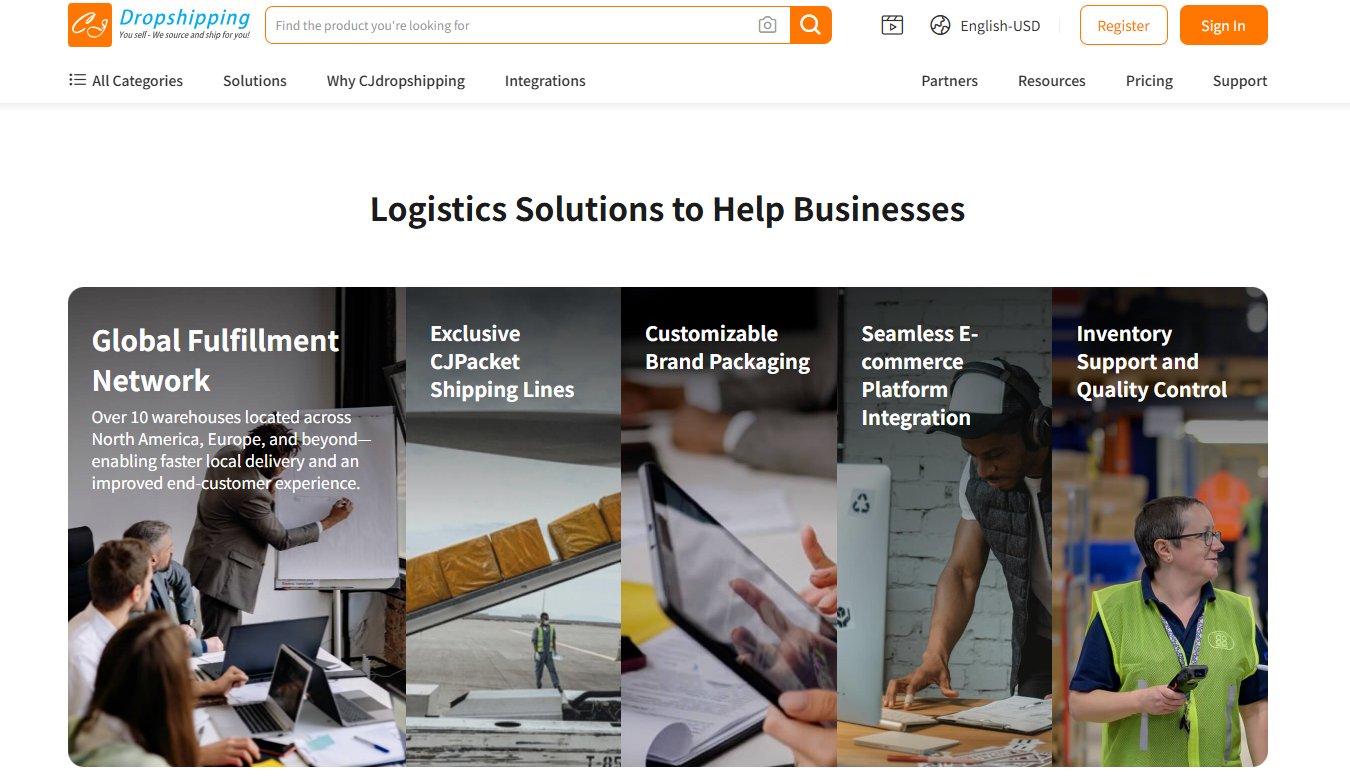
CJdropshipping takes the top spot because it is more than a storage-and-shipping vendor. CJ positions itself as a platform for product sourcing, order fulfillment, POD, and DTC brand growth, and its Shopify-related materials describe one-click product importing, automated order placement, Shopify integration, and access to global warehouses. It also promotes sourcing agents, manufacturers, fulfillment services, and branding-related support under one system.
That matters because many ecommerce sellers in 2026 do not only need a warehouse. They need help finding products, syncing Shopify orders, automating fulfillment, and moving from testing to scaling without rebuilding their supply chain from scratch. For that kind of seller, CJ often feels more practical than a traditional 3PL. It fits the way many Shopify stores actually grow: start lean, test fast, then improve delivery speed and branding as products begin to work. CJ’s own 2026 educational content also reflects that shift toward branded Shopify stores, shorter delivery windows, and more local-warehouse fulfillment.
CJ is especially strong for Shopify sellers, dropshipping stores, general-product stores, product testers, and merchants who want sourcing and fulfillment in one place. It is also useful for sellers interested in POD or light branding support without switching platforms later. The tradeoff is that performance can vary by product, route, and warehouse selection, so sampling and operational testing still matter. But for merchants who want a fulfillment service that matches the reality of Shopify-based ecommerce in 2026, CJdropshipping deserves to be first.
Best for: Shopify sellers, dropshippers, product testing, sourcing + fulfillment in one system
Why it stands out: broader ecommerce workflow, not just warehouse services
Main caution: quality and speed still vary by product and route
2. ShipBob
website:www.shipbob.com
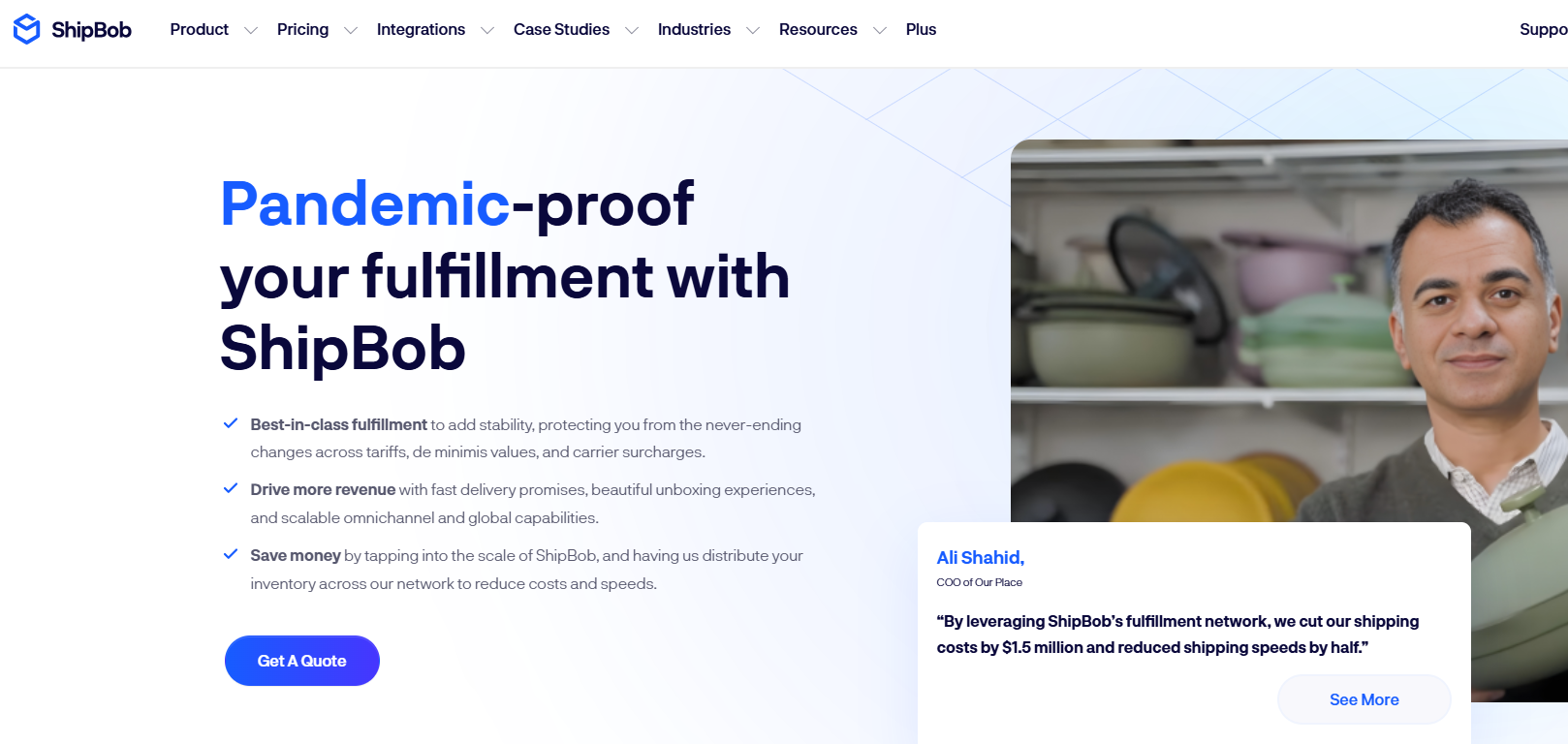
ShipBob remains one of the clearest all-around choices for DTC and multichannel ecommerce brands. Its official site says it offers ecommerce fulfillment across all channels, 60+ fulfillment centers, 2-day shipping across the continental US, customized unboxing, and a global network spanning the US, Canada, Europe, and Australia. ShipBob’s current trends content also emphasizes broad destination coverage and distributed inventory planning as core advantages.
ShipBob is attractive because it balances network scale, ecommerce software, and merchant usability. It is not just selling warehouse space. It is selling a platform that helps brands route inventory, manage orders across channels, and improve delivery speed as they grow. That makes it particularly good for DTC brands that have moved beyond the earliest stage and now care about nationwide coverage, operational visibility, and scaling into multiple channels without creating logistics chaos. Shopify also lists ShipBob among the fulfillment partners merchants can compare inside Shopify’s fulfillment tooling.
ShipBob is strongest for growth-stage brands, multichannel merchants, and Shopify stores that want a traditional 3PL with enough network scale to improve delivery times. It is less specialized than Red Stag for oversized goods and less integrated into sourcing than CJdropshipping, but as a mainstream DTC fulfillment partner it is still one of the safest names to shortlist in 2026.
Best for: DTC brands, multichannel sellers, scaling Shopify stores
Why it stands out: network breadth + ecommerce software + 2-day coverage
Main caution: may be more than very early-stage sellers need
3. ShipMonk
website:www.shipmonk.com
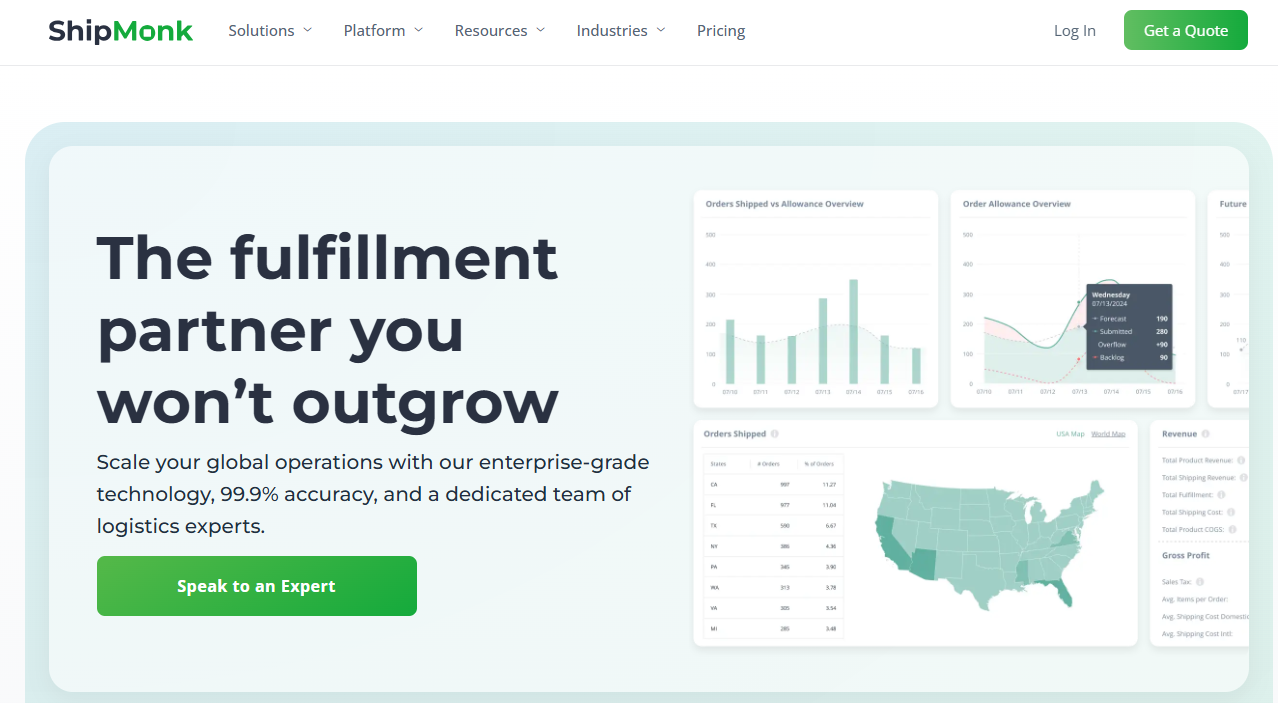
ShipMonk continues to be a major ecommerce-focused fulfillment provider. Its official site markets faster delivery, lower costs, and enhanced visibility, and its Shopify integration page says merchants can import products, sync orders, and manage inventory directly from ShipMonk’s 3PL platform. ShipMonk also highlights robust integrations across the ecommerce stack and continues publishing 2026 content around B2B growth and retail connectivity.
What makes ShipMonk compelling is depth. It tends to fit brands that need more than simple pick-pack-ship execution. Subscription businesses, kitting-heavy brands, fast-growing omnichannel stores, and companies that want better billing visibility and operational transparency often find ShipMonk attractive. It still feels ecommerce-native rather than enterprise-corporate, which helps it sit in a strong middle zone between startup-friendly and scale-capable. Shopify also includes ShipMonk among the trusted 3PL partners merchants can compare through its ecosystem.
ShipMonk is often a great fit for brands that have outgrown basic fulfillment but are not yet ready for a complex end-to-end logistics provider like DHL or UPS. If your store needs stronger integrations, more process support, or more operational visibility than entry-level 3PLs usually provide, ShipMonk is one of the best options to examine.
Best for: growth-stage ecommerce brands, subscriptions, kitting, omnichannel
Why it stands out: strong integrations and operational depth
Main caution: less ideal if you only need the cheapest simple warehouse service
4. Flexport Fulfillment
website:www.flexport.com
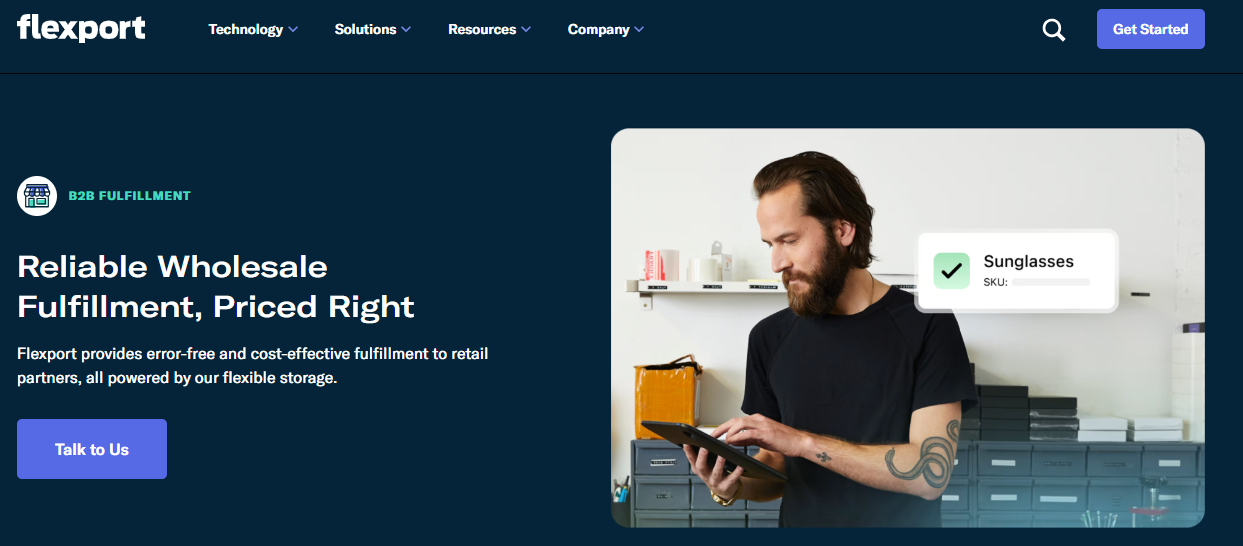
Flexport is especially relevant in 2026 because it sits closer to the full supply chain than many ecommerce fulfillment brands do. Its ecommerce fulfillment page says it offers end-to-end logistics, including freight, distribution, and DTC fulfillment, and it explicitly supports connecting a Shopify store through the Shopify Fulfillment Network app. Shopify’s own fulfillment materials name Flexport as the preferred end-to-end logistics partner in the Shopify Fulfillment Network ecosystem.
That positioning makes Flexport particularly valuable for brands that import at scale or want fewer handoffs between inbound freight and outbound fulfillment. If you are moving inventory internationally, managing multiple sales channels, and trying to create a cleaner bridge between supply chain visibility and customer delivery, Flexport can make more sense than a warehouse-only provider. Its main strength is strategic scope: it can help brands think beyond last-mile delivery and into broader inventory movement and logistics visibility.
Flexport is not necessarily the most beginner-friendly or lowest-friction option on this list, and it is usually better suited to sellers with more mature operations. But for Shopify merchants who want a partner spanning freight and fulfillment, it deserves a very serious look.
Best for: importing brands, larger Shopify sellers, end-to-end logistics needs
Why it stands out: freight + fulfillment + Shopify SFN alignment
Main caution: usually more strategic than startup-simple
5. Fulfillment by Amazon (FBA)
website:sell.amazon.com/fulfillment-by-amazon
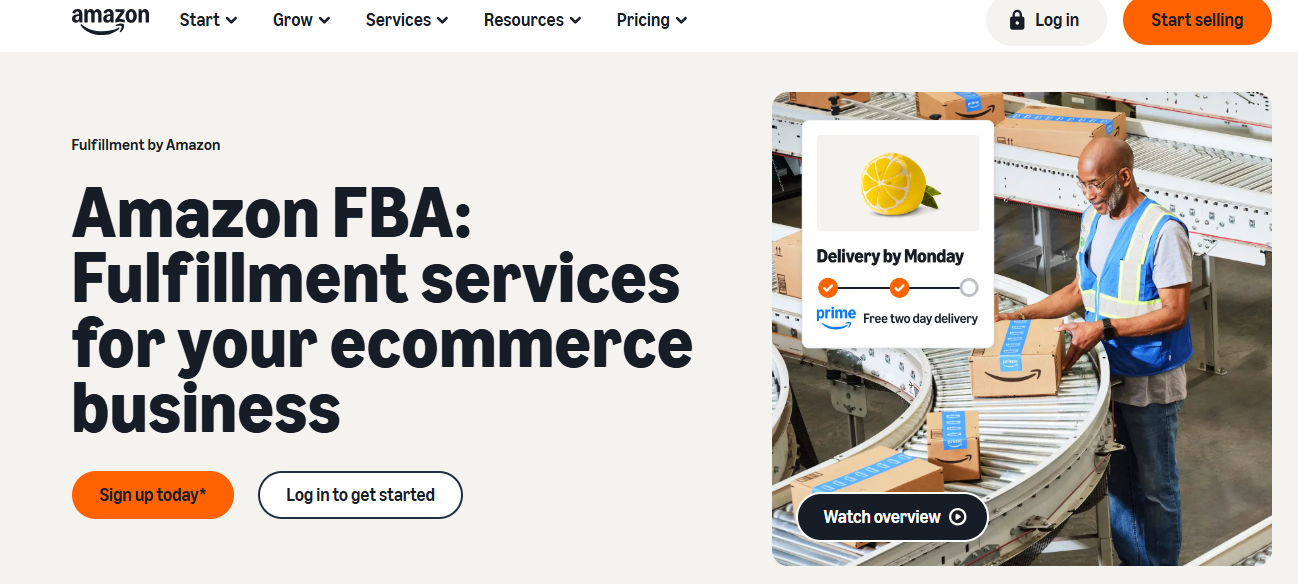
If Amazon is one of your biggest sales channels, FBA is still one of the strongest fulfillment tools available. Amazon’s official FBA materials say sellers can outsource pick, pack, ship, customer service, and returns while leveraging Amazon’s fulfillment network and Prime-linked customer expectations. That is a huge advantage for brands whose success depends heavily on Amazon conversion and fast marketplace delivery.
FBA’s main value is channel fit. It is not simply a 3PL. It is the logistics engine inside the most powerful marketplace in ecommerce. For Amazon-first brands, that can outweigh a lot of disadvantages. But affordability needs closer scrutiny in 2026. Amazon’s official fee materials say US FBA fulfillment fees increased in 2026, and beginning April 17, 2026, a 3.5% fuel and logistics-related surcharge applies to FBA fulfillment fees in the US.
That does not make FBA a bad choice. It just means it is best viewed as a powerful marketplace fulfillment system, not automatically the cheapest option. If Amazon is core to your business, FBA still belongs near the top of your list. If your main business is branded DTC on Shopify, other providers may offer more control and flexibility.
Best for: Amazon-first sellers, Prime-speed marketplace fulfillment
Why it stands out: Amazon ecosystem fit and fast delivery expectations
Main caution: 2026 fee increases and surcharges require careful margin analysis
6. Red Stag Fulfillment
website:https://redstagfulfillment.com/
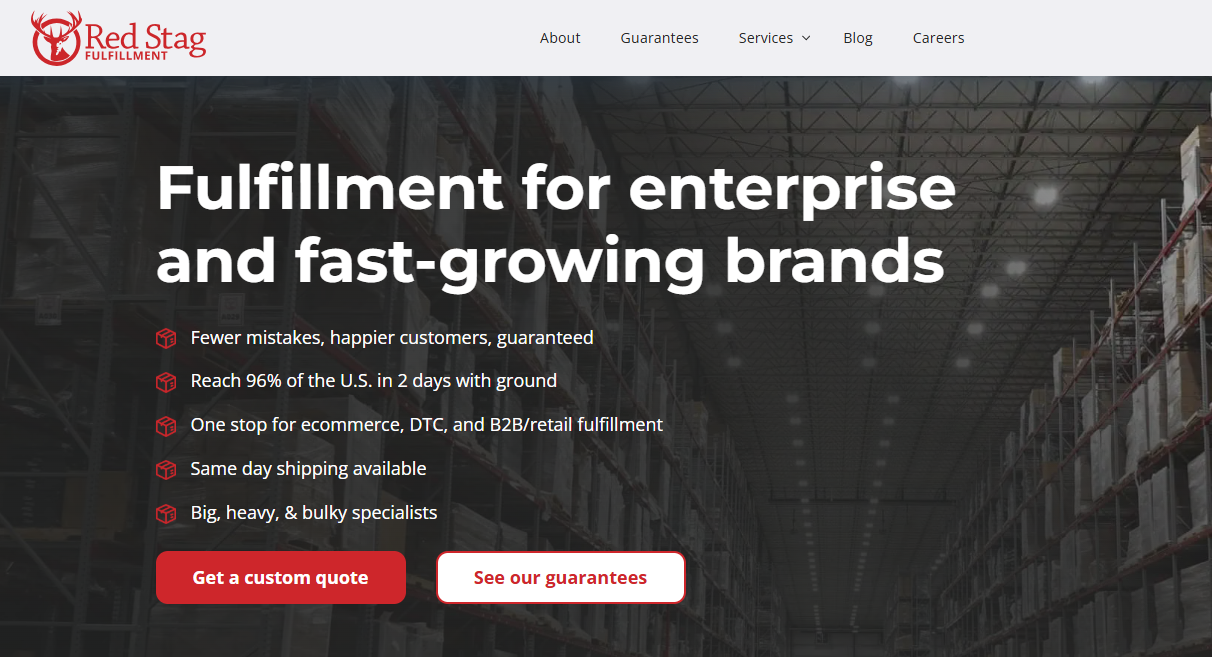
Red Stag stands out because it specializes where many generalist 3PLs struggle. Its official site says it supports ecommerce, DTC, and B2B/retail fulfillment, offers same-day shipping, and specializes in big, heavy, and bulky products. It also says it can reach 96% of the US in two days with ground shipping, and its detailed bulky-fulfillment pages explain how its network is optimized specifically for that kind of inventory.
This matters because oversized or fragile products change the economics of fulfillment. Standard 3PLs may look cheaper on paper but become operationally painful when damage rates, carrier complexity, and oversized parcel costs start showing up. Red Stag is built for that harder category mix. That makes it especially attractive for merchants selling fitness equipment, furniture accessories, larger electronics accessories, heavy home goods, or other products that do not fit the “small parcel beauty brand” model many 3PLs are designed around.
If you sell small, lightweight, low-value products, Red Stag is probably not the first provider to call. But if your products are big, heavy, expensive, or breakable, it becomes one of the most compelling specialists in the market.
Best for: bulky, heavy, fragile, high-value products
Why it stands out: specialization in difficult-to-fulfill inventory
Main caution: less relevant for ordinary lightweight ecommerce catalogs
7. eFulfillment Service
website:www.efulfillmentservice.com
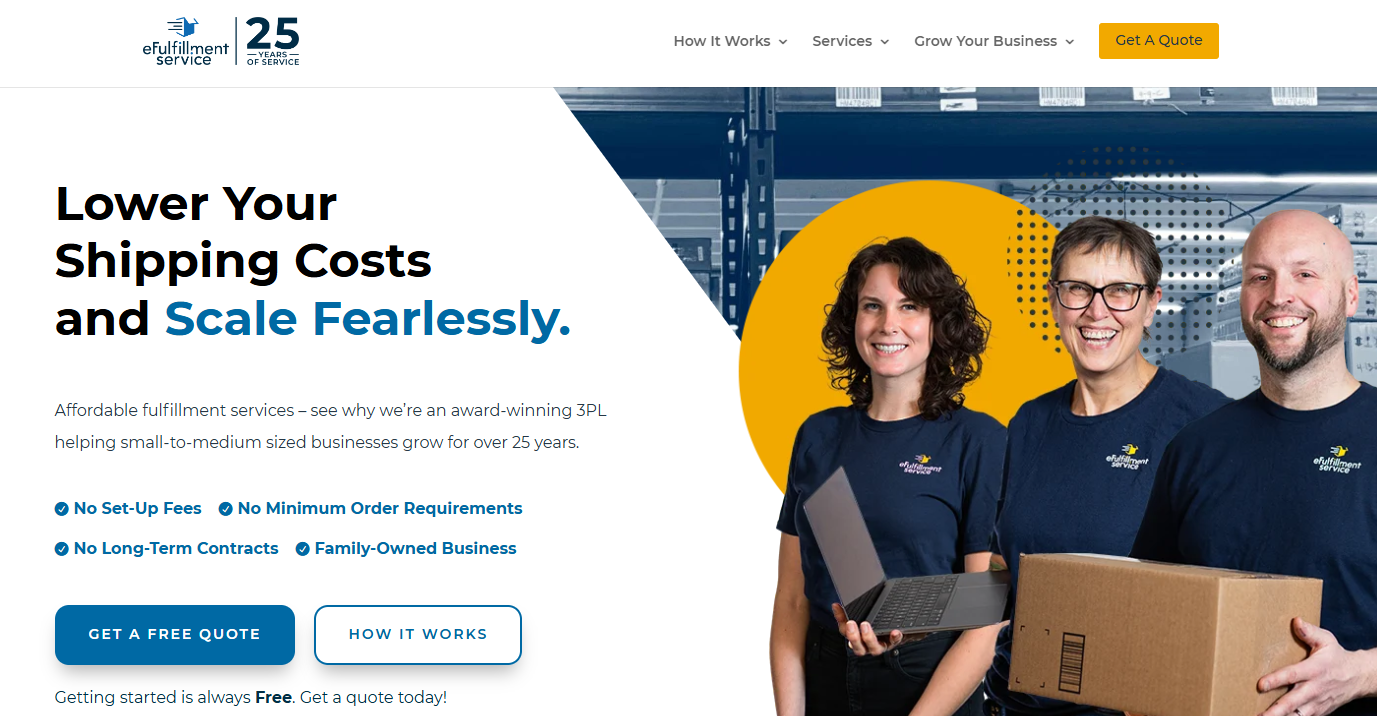
For smaller sellers and lean startups, eFulfillment Service remains one of the most attractive budget-conscious options. Its official site says it has zero hidden fees, no setup fees, no integration fees, no order minimums, and freedom from long-term contracts. It also promotes 99.9% order accuracy and explicitly targets ecommerce businesses that want simpler, lower-friction outsourced fulfillment.
That combination is a big deal for early-stage merchants. Many 3PL relationships become expensive before your order volume is large enough to absorb the cost comfortably. eFulfillment Service is appealing because it lowers the commitment barrier. If you are a smaller Shopify seller, an SMB on multiple channels, or a brand that wants to outsource fulfillment without taking on major fixed costs, it can be one of the easiest providers to justify financially.
The obvious tradeoff is scale and sophistication. You should not expect the same network reach or enterprise stack as larger providers built for growth-stage omnichannel brands. But if the goal is “get me out of my garage without locking me into an intimidating contract,” eFulfillment Service is still one of the strongest answers in 2026.
Best for: startups, SMBs, low-commitment outsourcing
Why it stands out: no minimums, no setup fees, no long-term contracts
Main caution: not the most network-heavy or enterprise-oriented option
8. ShipNetwork
website:www.shipnetwork.com
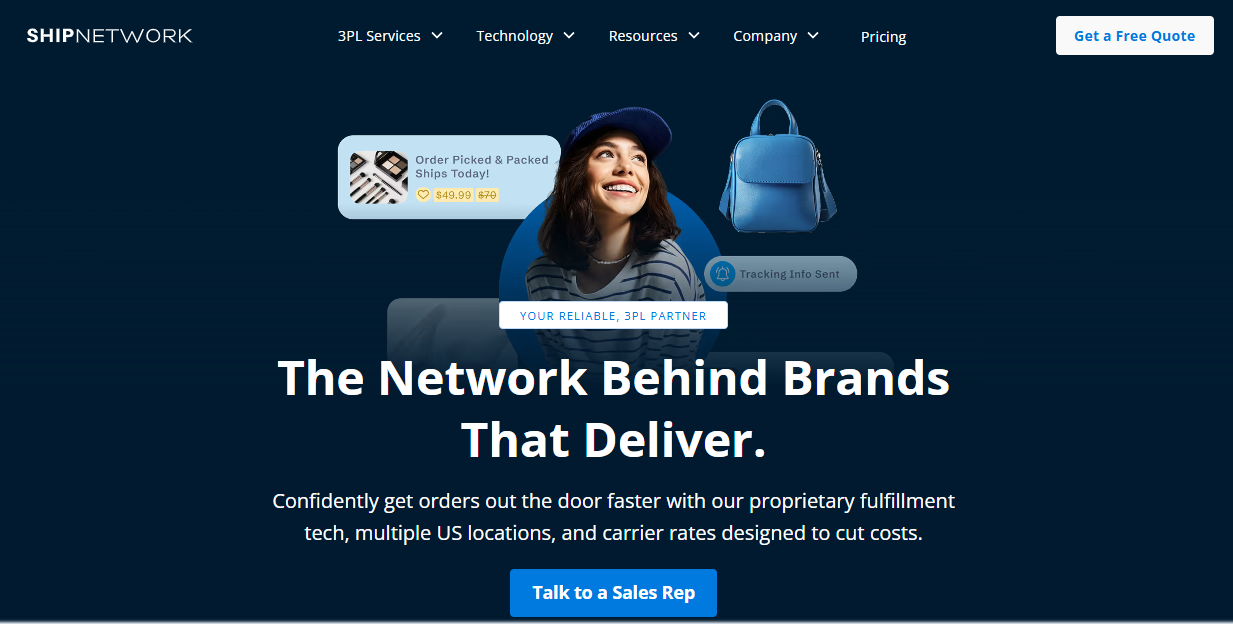
ShipNetwork is one of the more underrated fulfillment providers on this list. Its official site says orders leave the facility within 24 hours, offers 1–2 day ground fulfillment, and promotes 100% order accuracy. Its order-fulfillment materials say the company’s US network can reach 98% of customers within 1–2 business days via ground shipping.
That is an attractive combination for brands focused mainly on US fulfillment. ShipNetwork is not trying to be everything to everyone. Its pitch is straightforward: reliable ecommerce fulfillment, fast ground delivery reach, and strong execution standards. For many brands, especially those shipping mostly domestic orders, that is exactly what matters.
ShipNetwork works well for ecommerce and omnichannel brands that want strong US coverage and a provider focused tightly on fulfillment performance. It is not as sourcing-driven as CJ or as end-to-end global as Flexport, but for straightforward domestic ecommerce execution, it belongs on the shortlist.
Best for: US-focused ecommerce and omnichannel brands
Why it stands out: 1–2 day ground reach and fast order processing
Main caution: less compelling if you need broader inbound/global logistics support
9. DHL Supply Chain Fulfillment
website:www.dhl.com/us-en/home.html
DHL is one of the strongest names for brands that need international strength and scalable infrastructure. DHL Fulfillment Network materials say onboarding is plug-and-play, integrations can connect with webshops and ERP systems, and merchants gain visibility into inventory, orders, and deliveries. DHL also emphasizes that brands can store stock in multiple locations close to end consumers to lower last-mile costs and timelines.
This is where DHL becomes especially relevant: when your fulfillment questions are no longer just about shipping cartons out of one warehouse. If you are expanding internationally, entering more channels, or trying to create a stronger European or global logistics structure, DHL’s network and process maturity can be a real advantage. It is less “startup ecommerce tool” and more “serious logistics platform with ecommerce-friendly onboarding.”
DHL is best for larger or internationally ambitious brands, especially those willing to work with a more structured logistics organization. It is usually not the easiest fit for a tiny brand shipping its first few hundred orders a month, but for businesses with bigger ambitions, its global footprint is hard to ignore.
Best for: internationally growing brands, Europe/global logistics needs
Why it stands out: global network, ecommerce onboarding, visibility
Main caution: often better for larger operations than very small sellers
10. Stord
website:www.stord.com
Stord has become increasingly relevant because it blends fulfillment with a broader commerce-enablement approach. Its official site says it powers commerce for omnichannel and DTC brands, offers 99% coverage in under two days via ground, and claims 15–20% savings through dynamic parcel optimization. Its location materials also emphasize strategically placed nodes and a network designed to lower costs and improve customer experience.
That makes Stord especially interesting for growth-stage and larger brands that want a partner in optimization, not just a storage provider. Its language is very much about building custom plans, increasing speed, and improving economics through better network design. In other words, it is not just competing on “we have warehouses.” It is competing on network intelligence and operational strategy.
Stord is usually strongest for brands with enough volume to benefit from that added sophistication. If you are still early, simpler providers may be easier. But if you are already scaling and want a fulfillment partner that thinks in terms of coverage, parcel optimization, and omnichannel growth, Stord is one of the strongest modern contenders.
Best for: growth-stage and larger omnichannel/DTC brands
Why it stands out: network optimization and strategic fulfillment design
Main caution: may be more advanced than very early-stage sellers need
Which fulfillment service is best for different seller types?
If you are a typical Shopify seller or dropshipper who still needs product flexibility, sourcing help, and automated order sync, CJdropshipping is the most practical place to start. It aligns well with how many modern stores are actually built and scaled.
If you are a growing DTC brand that mainly needs a reliable traditional 3PL, ShipBob and ShipMonk are the most balanced mainstream options. They both bring strong ecommerce workflows, integrations, and fulfillment visibility, and Shopify itself surfaces both as trusted partners.
If Amazon is your main channel, FBA is still the obvious fit because no outside 3PL can fully replicate the marketplace advantages Amazon offers sellers inside its own ecosystem.
If your products are oversized or unusually difficult, Red Stag is the specialist to prioritize. If your budget is tight and you want low onboarding friction, eFulfillment Service is especially appealing. If your customers are mainly in the US and speed through ground shipping matters, ShipNetwork deserves a closer look.
And if your needs are broader—freight, international scale, omnichannel infrastructure, or network optimization—then Flexport, DHL, and Stord become more interesting.
How to choose the right fulfillment partner
The best way to choose is not by reading a ranking and stopping there. It is by comparing your actual business profile against the provider’s strengths.
Look at your current order volume, average order value, SKU count, package size, storage footprint, main sales channels, geography, and return profile. Then ask the 3PL how it prices your actual mix. A provider that looks cheap on a homepage can become expensive after storage, receiving, special projects, oversized handling, and multi-node inventory balancing are included. Conversely, a provider that seems pricier may save money through better shipping zones, fewer support issues, and faster delivery.
You should also ask operational questions, not just pricing questions. How do they handle returns? Can they support kitting or bundles? Do they integrate with Shopify cleanly? Can they support Amazon, wholesale, or other marketplaces later? What happens during peak season? Do they offer custom packaging or inserts? The right partner is not just the one with the best quote. It is the one whose system breaks the least when your business grows.
Final thoughts
The best ecommerce fulfillment service in 2026 is the one that matches the way your business actually works.
For many Shopify and dropshipping sellers, that makes CJdropshipping the strongest first choice because it combines sourcing, fulfillment, automation, and flexibility in one platform. For more traditional DTC fulfillment, ShipBob and ShipMonk remain two of the strongest all-around options. For Amazon-centric businesses, FBA still delivers unmatched marketplace fit. For bulky inventory, Red Stag is unusually strong. And for more advanced logistics needs, Flexport, DHL, and Stord are the names most likely to matter.
Fulfillment is no longer a support function. In 2026, it is one of the clearest competitive advantages an ecommerce brand can build. Pick the right partner, and your logistics become quieter, faster, and more profitable. Pick the wrong one, and every other part of the business feels harder than it should.
FAQ for Best E-commerce Fulfillment Services
What is the best ecommerce fulfillment service in 2026?
For many Shopify and dropshipping sellers, CJdropshipping is one of the most practical choices because it combines sourcing, fulfillment, Shopify integration, and automation in one system. For more traditional DTC brands, ShipBob and ShipMonk are among the strongest all-around 3PLs.
Which fulfillment service is best for Shopify sellers?
It depends on the store model. Shopify sellers who want sourcing and automated fulfillment often fit well with CJdropshipping, while brands that want a more classic network-based 3PL often fit better with ShipBob, ShipMonk, or Flexport through Shopify Fulfillment Network.
Which fulfillment service is the most affordable for small businesses?
For small businesses and early-stage stores, eFulfillment Service stands out because it advertises no setup fees, no minimums, no integration fees, and no long-term contracts. That makes it one of the easiest options to try without taking on a large operational commitment.
Is CJdropshipping a real fulfillment service or just a dropshipping supplier?
It is both. CJ positions itself as a platform for sourcing, fulfillment, POD, and DTC scaling, which means it sits between a classic dropshipping supplier and a broader ecommerce operations platform. That is one reason it works so well for Shopify sellers who need more than warehouse storage.