
Introduction: Why Ecommerce Fulfillment Matters More Than Ever
In ecommerce, the sale does not end when a customer clicks “Buy Now.” In many ways, that is where the most important part of the customer experience begins.
Customers expect fast shipping, accurate orders, real-time tracking, easy returns, and professional packaging. If a brand fails at fulfillment, even great products and strong marketing may not be enough to keep customers coming back.
That is why ecommerce fulfillment services have become essential for online sellers. Whether you run a Shopify store, sell on Amazon, operate through TikTok Shop, or manage a multi-channel ecommerce business, the right fulfillment partner can help you store inventory, process orders, ship products, and handle returns more efficiently.
In this guide, we will explain what ecommerce fulfillment services are, how they work, why they matter, and which fulfillment platforms are worth considering.
What Are Ecommerce Fulfillment Services?
Ecommerce fulfillment services refer to the end-to-end process of receiving, storing, picking, packing, shipping, and sometimes returning online orders.
Instead of managing every order manually from your home, office, or private warehouse, you can work with a fulfillment provider. The provider stores your inventory in its warehouse or fulfillment center. When a customer places an order, the provider picks the product, packs it, ships it, and updates the tracking information.
A typical ecommerce fulfillment service includes:
- Inventory receiving
- Warehousing and storage
- SKU management
- Order processing
- Picking and packing
- Shipping and carrier selection
- Tracking updates
- Returns management
- Inventory reporting
- Sometimes custom packaging, kitting, labeling, or cross-border logistics
Some fulfillment providers focus on traditional third-party logistics, also known as 3PL. Others, such as CJdropshipping, combine product sourcing, warehousing, dropshipping, packaging, and shipping into one platform.
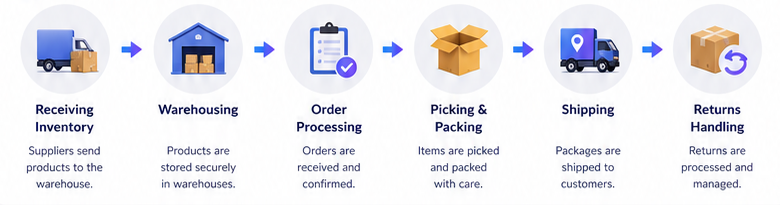
How Ecommerce Fulfillment Services Work
Although each provider has its own workflow, most ecommerce fulfillment services follow a similar process.
1. Inventory Is Sent to the Fulfillment Center
The process begins when a merchant sends products to the fulfillment provider’s warehouse. The products may come from a manufacturer, supplier, wholesaler, or sourcing agent.
Once the inventory arrives, the fulfillment center checks the shipment, counts the units, inspects product condition, and assigns each SKU to a storage location.
For ecommerce sellers, this step is important because accurate receiving helps prevent inventory errors later.
2. Products Are Stored and Managed by SKU
After receiving, products are stored in warehouse shelves, bins, pallets, or designated storage zones. Each product is tracked by SKU, quantity, location, and sometimes batch or lot number.
Modern fulfillment providers usually offer inventory dashboards so sellers can monitor stock levels in real time. This helps businesses avoid stockouts, overselling, and unnecessary storage costs.
Inventory management is especially important for brands selling across multiple channels. For example, a seller may receive orders from Shopify, Amazon, TikTok Shop, eBay, Etsy, WooCommerce, or Walmart. Without synchronized inventory, it is easy to sell products that are no longer available.
3. Orders Are Synced Automatically
Once your ecommerce store is connected to the fulfillment platform, customer orders can be imported automatically.
For example, when a customer places an order on your Shopify store, the fulfillment system receives the order details, including product SKU, customer address, shipping method, and order notes.
Many platforms support integrations with popular ecommerce channels. CJdropshipping, for instance, states that its fulfillment service is compatible with Shopify, eBay, WooCommerce, Etsy, TikTok Shop, Temu, AliExpress, Mercado, Lazada, and more.
4. Items Are Picked and Packed
After the order is received, warehouse staff or automated systems pick the correct items from storage.
The products are then packed according to the merchant’s requirements. This may include standard packaging, branded packaging, inserts, thank-you cards, custom labels, protective materials, or bundled items.
Good picking and packing directly affect customer satisfaction. A wrong item, damaged package, or missing product can lead to refunds, bad reviews, and lost trust.

5. The Order Is Shipped
Once packed, the order is handed off to a shipping carrier. Depending on the provider, the system may automatically select the best carrier based on destination, cost, delivery speed, package weight, and service level.
The customer then receives a tracking number, and the merchant’s store is updated automatically.
Some fulfillment providers specialize in domestic fast shipping, while others focus on international delivery or cross-border ecommerce. For example, DHL Fulfillment Network highlights ecommerce logistics, global network capabilities, and integration with web shops and ERP systems.
6. Returns Are Processed
Returns are part of ecommerce. A strong fulfillment provider can receive returned items, inspect product condition, restock sellable inventory, dispose of damaged goods, or support exchange workflows.
A smooth returns process improves customer confidence and helps brands recover value from returned inventory.
Why Ecommerce Fulfillment Services Matter
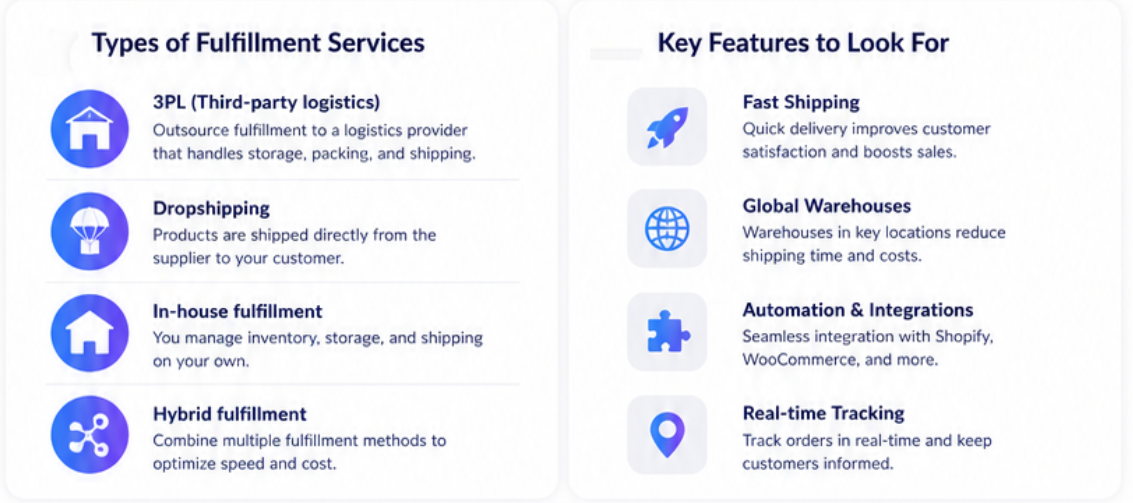
Ecommerce fulfillment is not just an operational task. It directly affects customer experience, profit margins, brand reputation, and scalability.
Faster Delivery
Shipping speed can influence whether a customer buys from you or a competitor. By storing products closer to customers, fulfillment providers can reduce transit times and improve delivery performance.
ShipBob, for example, promotes a network of more than 60 global fulfillment locations and says brands can strategically split inventory to reduce shipping costs and transit times.
Lower Operational Burden
Managing fulfillment in-house can become expensive and time-consuming. You need warehouse space, staff, packaging materials, inventory systems, carrier accounts, quality control, and return procedures.
Outsourcing fulfillment allows ecommerce teams to focus more on product development, marketing, customer acquisition, branding, and sales strategy.
Better Customer Experience
Customers notice fulfillment quality. They notice whether the package arrives on time, whether the product is correct, whether the packaging looks professional, and whether tracking updates are clear.
A reliable fulfillment process can increase customer satisfaction and encourage repeat purchases.
Easier Business Scaling
Order volume can change quickly, especially during holidays, product launches, influencer campaigns, or seasonal promotions.
A fulfillment partner can help brands handle order spikes without hiring temporary warehouse staff or expanding physical storage space.
This is especially useful for fast-growing DTC brands, dropshipping sellers, subscription box companies, and international ecommerce businesses.
Multi-Channel Selling Support
Many ecommerce sellers no longer rely on one sales channel. They may sell through a website, online marketplaces, social commerce platforms, and wholesale channels.
A fulfillment provider that supports multi-channel order management can help centralize inventory and reduce operational complexity.
8 Recommended Ecommerce Fulfillment Platforms
Below are eight fulfillment platforms worth considering. The best choice depends on your business model, sales channels, product size, target market, order volume, and budget.
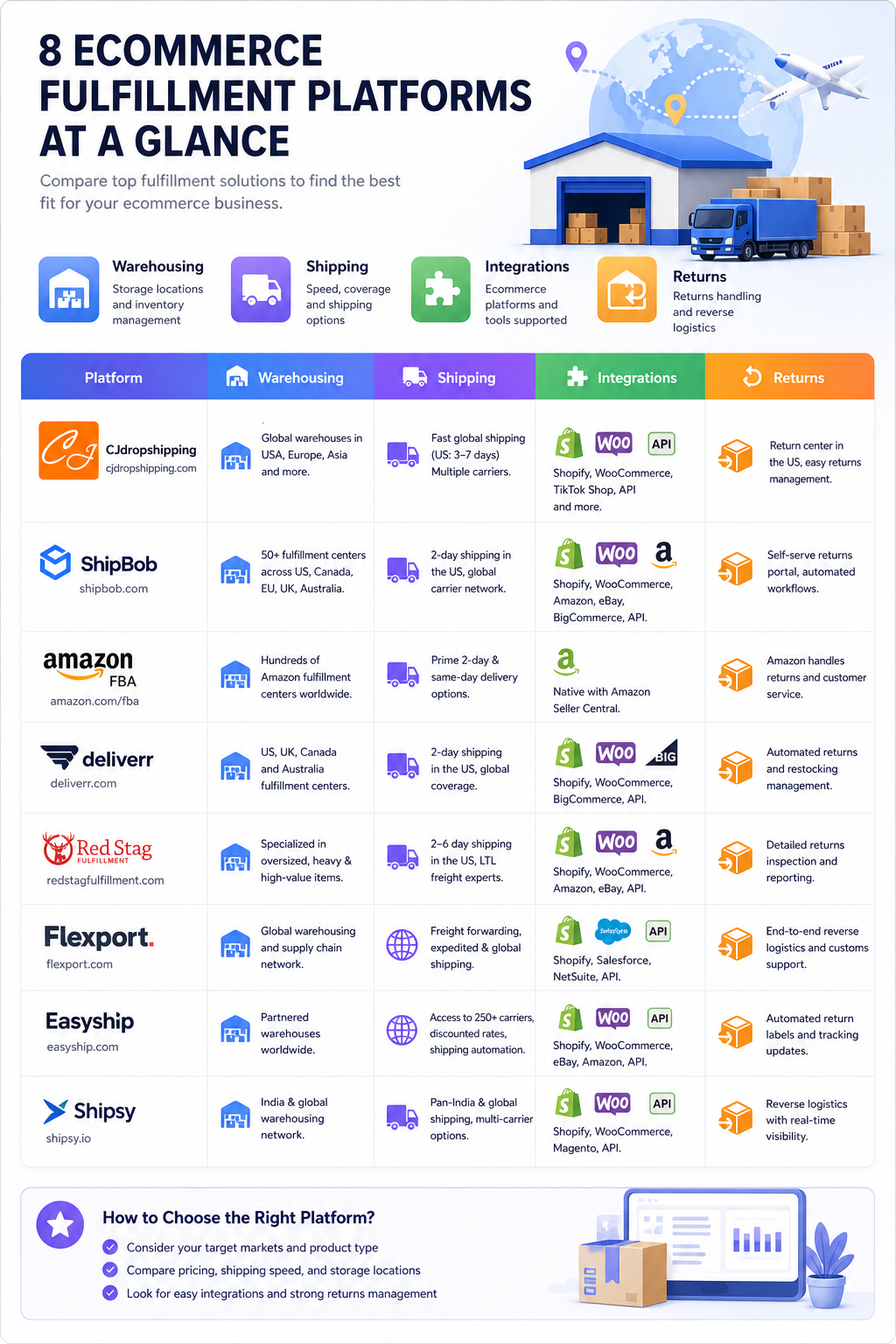
1. CJdropshipping
Website: https://cjdropshipping.com
Best For: Dropshipping sellers, cross-border ecommerce brands, Shopify stores, TikTok Shop sellers, multi-platform merchants, and sellers who need sourcing plus fulfillment.
CJdropshipping is more than a traditional fulfillment provider. It combines product sourcing, warehousing, order fulfillment, shipping, product listing, and custom packaging services in one platform.
This makes it especially useful for sellers who do not want to manage separate suppliers, warehouses, shipping agents, and fulfillment systems.
CJdropshipping’s 3PL fulfillment page states that it supports online store integrations with platforms such as Shopify, eBay, WooCommerce, Etsy, TikTok Shop, Temu, AliExpress, Mercado, Lazada, and more. It also offers manual and automatic order import and fulfillment, multiple shipping options, and customized packaging features such as logos, stickers, cards, and bags.
Key Features:
- Product sourcing
- Dropshipping fulfillment
- Global warehouse support
- Store integrations
- Automated order fulfillment
- Custom packaging
- Private inventory options
- Cross-border logistics
Why Choose CJdropshipping:
Choose CJdropshipping if you want an all-in-one ecommerce fulfillment solution that can help with sourcing, inventory storage, packaging, and shipping. It is particularly strong for dropshipping and cross-border sellers who want to simplify supply chain operations.
2. ShipBob
Website: https://www.shipbob.com
Best For: DTC brands, Shopify sellers, fast-growing ecommerce stores, and brands that need distributed warehousing.
ShipBob is a well-known ecommerce fulfillment platform for direct-to-consumer brands. It offers warehousing, inventory distribution, order fulfillment, shipping, and analytics.
ShipBob says it uses a network of fulfillment centers to help brands split and manage inventory strategically, reducing shipping costs and transit times. It also promotes shipping from more than 60 global locations.
Key Features:
- Global fulfillment network
- Inventory distribution
- Ecommerce platform integrations
- 2-day shipping options
- Order and inventory analytics
- Branded packaging support
Why Choose ShipBob:
Choose ShipBob if you are a growing DTC brand that wants faster delivery, better inventory visibility, and access to a large fulfillment network.
3. Amazon Multi-Channel Fulfillment
Website: https://supplychain.amazon.com/mcf
Best For: Amazon sellers, marketplace sellers, and brands that want to use Amazon’s fulfillment network for non-Amazon orders.
Amazon Multi-Channel Fulfillment, also known as MCF, allows sellers to use Amazon’s fulfillment network to pick, pack, ship, and deliver orders from off-Amazon sales channels. Amazon describes MCF as a third-party logistics solution that helps businesses fulfill customer orders from channels outside Amazon.
This can be useful for merchants who already store inventory with Amazon and want to fulfill orders from their own website or other marketplaces.
Key Features:
- Access to Amazon’s fulfillment network
- Multi-channel order fulfillment
- Fast delivery options
- Integration with off-Amazon sales channels
- Suitable for existing Amazon sellers
Why Choose Amazon MCF:
Choose Amazon MCF if you already use Amazon FBA or want to leverage Amazon’s logistics network for orders from multiple ecommerce channels.
4. ShipMonk
Website: https://www.shipmonk.com
Best For: DTC brands, subscription boxes, high-SKU merchants, and businesses with kitting or bundling needs.
ShipMonk provides ecommerce fulfillment, warehousing, pick-and-pack, inventory management, and shipping services. Its ecommerce fulfillment page says it supports warehousing, pick and pack, fast shipping, and a global fulfillment network with warehouses in the United States, Canada, the United Kingdom, and mainland Europe.
ShipMonk can be a good fit for sellers with more complex fulfillment needs, such as subscription boxes, product bundles, promotional kits, or high SKU counts.
Key Features:
- Ecommerce fulfillment
- DTC and B2B support
- Kitting and bundling
- Subscription box fulfillment
- Multi-channel order management
- Global warehouse network
Why Choose ShipMonk:
Choose ShipMonk if your business needs more flexible fulfillment workflows, including bundles, kits, or subscription-based orders.
5. Red Stag Fulfillment
Website: https://redstagfulfillment.com
Best For: Large, heavy, bulky, fragile, or high-value products.
Red Stag Fulfillment specializes in ecommerce fulfillment for products that are harder to store, handle, and ship. Its big, heavy, and bulky fulfillment page says it is built to receive, store, pick, pack, and ship large products, with warehouses designed for oversized items and teams experienced in heavy SKUs.
The company also emphasizes fulfillment guarantees, including zero shrinkage, order accuracy, on-time shipping, and fast receiving.
Key Features:
- Heavy and bulky product fulfillment
- High-value product handling
- Same-day shipping availability
- Accuracy and shrinkage guarantees
- Omnichannel fulfillment
- Freight and parcel support
Why Choose Red Stag Fulfillment:
Choose Red Stag if your products are too large, heavy, expensive, or fragile for a standard fulfillment provider.
6. eFulfillment Service
Website: https://www.efulfillmentservice.com
Best For: Startups, small ecommerce businesses, low-volume sellers, and brands with seasonal order volume.
eFulfillment Service is attractive for small and growing ecommerce sellers because it promotes no setup fees, no minimum order requirements, and a pay-as-you-go model.
This makes it easier for newer merchants to start outsourcing fulfillment without committing to large monthly minimums or long-term contracts.
Key Features:
- No setup fees
- No minimum order requirements
- Pay-as-you-go fulfillment
- Ecommerce order fulfillment
- Inventory management
- Returns processing
Why Choose eFulfillment Service:
Choose eFulfillment Service if you are a small business, startup, or seasonal seller looking for a flexible fulfillment provider with fewer entry barriers.
7. DHL Fulfillment Network
Website: https://www.dhl.com
Best For: International ecommerce brands, cross-border sellers, and businesses that need global logistics support.
DHL Fulfillment Network provides ecommerce logistics and fulfillment services backed by DHL’s international logistics expertise. DHL says its fulfillment services can integrate with web shops, ERP systems, delivery partners, and other systems. It also highlights its global fulfillment network and local logistics knowledge.
This makes DHL a strong option for businesses that need reliable international fulfillment and cross-border logistics support.
Key Features:
- Global fulfillment network
- Ecommerce logistics
- Web shop and ERP integrations
- International shipping support
- Scalable fulfillment operations
- Enterprise logistics expertise
Why Choose DHL Fulfillment Network:
Choose DHL if your business needs global reach, cross-border logistics experience, and a fulfillment partner with strong international infrastructure.
8. Flexport
Website: https://www.flexport.com
Best For: Growing brands that need ecommerce fulfillment, freight, distribution, and end-to-end logistics.
Flexport is known for freight forwarding and supply chain technology, but it also offers ecommerce fulfillment. Its ecommerce fulfillment page describes Flexport as a 3PL that can handle end-to-end logistics, including freight, distribution, ecommerce fulfillment, and DTC fulfillment.
Flexport can be especially useful for brands that need more than warehouse fulfillment. If your business imports products, manages freight, distributes inventory, and sells through multiple ecommerce channels, Flexport may offer a broader supply chain solution.
Key Features:
- Ecommerce fulfillment
- Freight forwarding
- Distribution
- DTC fulfillment
- Inventory planning
- Supply chain visibility
- Multi-platform support
Why Choose Flexport:
Choose Flexport if you need a fulfillment partner that can connect upstream supply chain operations with downstream ecommerce delivery.
Quick Comparison Table
| Platform | Website | Best For | Main Advantage |
|---|---|---|---|
| CJdropshipping | https://cjdropshipping.com | Dropshipping, cross-border ecommerce, multi-platform sellers | Sourcing, warehousing, fulfillment, and shipping in one platform |
| ShipBob | https://www.shipbob.com | DTC brands and Shopify sellers | Global fulfillment network and fast shipping options |
| Amazon MCF | https://supplychain.amazon.com/mcf | Amazon sellers and multi-channel merchants | Uses Amazon’s fulfillment network for off-Amazon orders |
| ShipMonk | https://www.shipmonk.com | DTC, subscription, high-SKU brands | Flexible fulfillment, kitting, and bundling |
| Red Stag Fulfillment | https://redstagfulfillment.com | Heavy, bulky, fragile, or high-value products | Specialized handling and fulfillment guarantees |
| eFulfillment Service | https://www.efulfillmentservice.com | Startups and small ecommerce brands | No setup fees and no minimum order requirements |
| DHL Fulfillment Network | https://www.dhl.com | International ecommerce brands | Global logistics and cross-border fulfillment |
| Flexport | https://www.flexport.com | Growing brands with complex supply chains | End-to-end freight, distribution, and fulfillment |
Common Challenges of Ecommerce Fulfillment
Even with a fulfillment provider, ecommerce sellers should be aware of common challenges.
Inventory Inaccuracy
If inventory data is not updated correctly, your store may sell products that are out of stock. This can lead to canceled orders and unhappy customers.
Shipping Delays
Weather, carrier issues, customs clearance, peak seasons, and warehouse backlogs can delay delivery. Sellers should communicate clearly with customers when delays happen.
High Fulfillment Costs
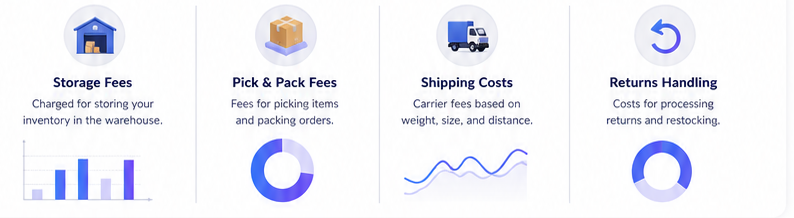
Storage fees, pick-and-pack fees, shipping fees, return fees, and special handling charges can add up. Always review the provider’s pricing structure before committing.
Poor Packaging Control
If packaging is part of your brand experience, make sure your fulfillment provider supports custom packaging, inserts, labels, or branded boxes.
Complicated Returns
Returns can be expensive and time-consuming. A clear return policy and a fulfillment partner with reliable return processing can help reduce friction.
How to Choose the Right Ecommerce Fulfillment Provider
There is no single best fulfillment service for every business. The right choice depends on your products, sales channels, customers, and growth stage.
Before choosing a provider, consider the following factors.
Warehouse Locations
Choose a provider with warehouses close to your target customers. This can reduce delivery time and shipping costs.
Platform Integrations
Make sure the fulfillment platform integrates with your ecommerce store, marketplace, ERP, or order management system.
Pricing Structure
Review all fees carefully, including storage, receiving, pick-and-pack, packaging, shipping, returns, long-term storage, and account fees.
Product Fit
Some providers are better for lightweight products. Others specialize in bulky, fragile, high-value, or temperature-sensitive goods.
Shipping Speed
Check whether the provider can support your expected delivery promise, such as same-day, 2-day, standard domestic, or international shipping.
Customer Support
Fulfillment problems can affect revenue quickly. Choose a provider with responsive support and clear communication.
Scalability
Your fulfillment partner should be able to support your business as order volume grows, especially during seasonal peaks.
Tips to Optimize Your Ecommerce Fulfillment Process
A fulfillment provider can do a lot, but sellers still need to manage the process strategically.
Here are a few ways to improve fulfillment performance:
- Forecast inventory based on sales trends
- Keep safety stock for best-selling products
- Use accurate SKU naming and product data
- Optimize package size to reduce shipping costs
- Offer clear shipping options at checkout
- Set realistic delivery expectations
- Track fulfillment KPIs such as order accuracy, delivery time, return rate, and shipping cost per order
- Review fulfillment invoices regularly
- Use branded packaging when it improves customer experience
- Build a clear return policy
Conclusion: Fulfillment Is a Growth Driver, Not Just a Shipping Task
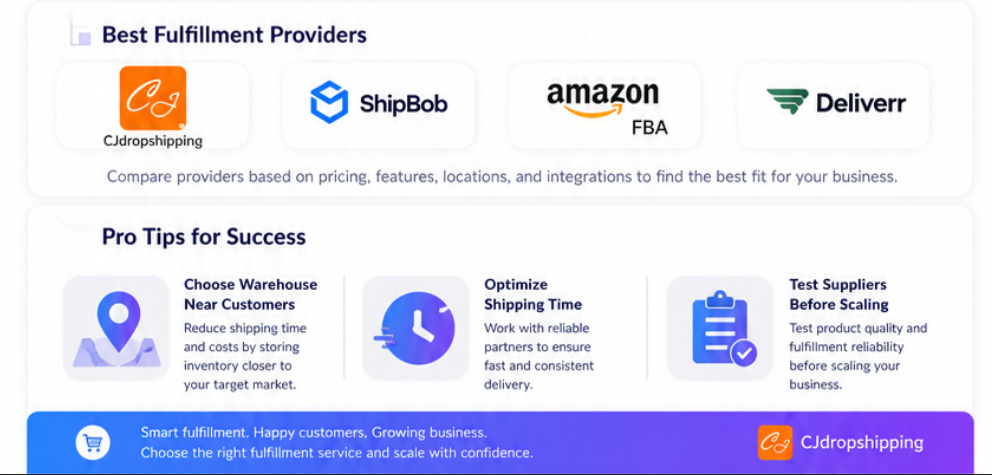
Ecommerce fulfillment is one of the most important parts of running an online business. It affects delivery speed, customer satisfaction, operating costs, repeat purchases, and brand reputation.
For small sellers, fulfillment services can reduce manual work and make operations more professional. For growing brands, the right fulfillment partner can support multi-channel sales, international expansion, faster shipping, and better customer experiences.
If you are a dropshipping or cross-border ecommerce seller, CJdropshipping is a strong first option because it combines sourcing, fulfillment, warehousing, custom packaging, and shipping in one platform. If you are a DTC brand, ShipBob, ShipMonk, Red Stag, Amazon MCF, eFulfillment Service, DHL, and Flexport each offer different advantages depending on your needs.
The best fulfillment provider is not simply the cheapest one. It is the one that helps your business deliver the right product, to the right customer, at the right time, with the least operational friction.
FAQ: Ecommerce Fulfillment Services
1. What is an ecommerce fulfillment service?
An ecommerce fulfillment service is a third-party solution that helps online sellers store inventory, process orders, pick and pack products, ship packages, and sometimes handle returns. Instead of fulfilling every order manually, merchants can outsource these tasks to a fulfillment provider or 3PL company.
2. How does ecommerce fulfillment work?
Ecommerce fulfillment usually starts when a merchant sends inventory to a fulfillment center. Once a customer places an order, the fulfillment system receives the order details, warehouse staff pick and pack the items, and the package is shipped through a carrier. Tracking information is then sent back to the seller and customer.
3. What is the difference between dropshipping and ecommerce fulfillment?
Dropshipping usually means the seller does not own or store inventory in advance. When a customer places an order, the supplier or dropshipping platform ships the product directly to the customer. Ecommerce fulfillment usually means the seller already owns inventory and stores it in a warehouse or fulfillment center before orders are placed.
However, some platforms, such as CJdropshipping, combine both models by offering product sourcing, dropshipping fulfillment, warehousing, custom packaging, and shipping services in one platform.
4. How much do ecommerce fulfillment services cost?
The cost depends on the provider, product size, order volume, storage time, shipping destination, and service requirements. Common fees include receiving fees, storage fees, pick-and-pack fees, packaging fees, shipping fees, return processing fees, and sometimes account management fees. Sellers should always review the full pricing structure before choosing a fulfillment partner.
5. How do I choose the best ecommerce fulfillment provider?
To choose the best ecommerce fulfillment provider, consider your sales channels, target markets, product type, shipping speed requirements, budget, and growth plans. For example, CJdropshipping may be suitable for dropshipping and cross-border sellers, ShipBob may fit DTC brands needing fast delivery, Red Stag may be better for heavy or bulky products, and DHL may be stronger for international logistics.