
Let’s be brutally honest: diving into lingerie dropshipping feels equal parts exhilarating and terrifying. I remember staring at my screen years ago, utterly overwhelmed. Which suppliers won’t vanish with my money? What styles actually sell beyond the obvious? How do I avoid drowning in a sea of cheap satin nightmares? I made mistakes, lost money on dud suppliers, and learned through sheer persistence. Now, after building a profitable lingerie dropship store, I'm sharing my raw, unfiltered guide on choosing suppliers and products. Forget generic fluff; this is the nitty-gritty roadmap I wish I’d had.
Why Listen to Me?
Before we dive in, let's address why my advice holds weight (because trust is everything online, right?):
-
Experience: I’ve personally vetted and worked with over 15 different lingerie dropshipping suppliers over 4+ years. I’ve dealt with shipping disasters, quality catastrophes, and supplier ghosting. I’ve also celebrated the wins – finding reliable partners and hitting product sweet spots.
-
Expertise: This isn’t theoretical. I’ve analyzed sales data across thousands of SKUs, tracked return rates religiously, and obsessed over customer feedback. I understand fabric quality, sizing nuances, and the subtle differences between a bestseller and a dud.
-
Authoritativeness: My store gained traction specifically through focusing on informed sourcing and product curation. I’ve built relationships with suppliers, attended trade shows (virtually and in person), and constantly stay updated on lingerie trends and manufacturing shifts.
-
Trustworthiness: Transparency is key. I’ll name names – both the suppliers I recommend and the ones I warn you to avoid. I’ll share my failures openly. My goal isn’t to sell you a course; it’s to give you the actionable insights I paid for in sweat equity and cash.
The Lingerie Dropshipping Landscape: More Than Just Lace
Lingerie is a massive, highly personal market. It’s not just bras and panties; it’s confidence, self-expression, comfort, and sensuality. The dropshipping model is perfect for it – low upfront investment, no inventory headaches, and access to a vast global supply chain. But here’s the kicker: It’s also incredibly saturated with low-quality options and unreliable suppliers. Success hinges entirely on your ability to cut through the noise and make informed choices.
Part 1: Navigating the Lingerie Dropshipping Supplier Maze
Finding a good supplier isn’t just about finding *a* supplier; it’s about finding the right partner for your specific niche, brand ethos, and customer expectations. Let’s break down the main avenues:
1. AliExpress/Alibaba: The Behemoth (Proceed with Extreme Caution)
-
The Reality: Yes, it’s vast. Yes, prices are often rock-bottom. This is where most newbies start (myself included). It’s also a minefield.
-
The Pros:
-
Unmatched Variety: Literally millions of SKUs.
-
Low Minimums: Often no MOQ for dropshipping.
-
Price Point: Can be extremely competitive.
-
-
The Cons (The Ugly Truth):
-
Wildly Inconsistent Quality: One order might be decent, the next identical item might be unwearable. Fabric quality, stitching, sizing – it’s a gamble. I’ve received "silk" that felt like plastic wrap.
-
Shipping Nightmares: Long delivery times (4-8 weeks is common), unreliable tracking, and packages getting lost are frequent. Expect constant customer service emails asking "Where’s my order?".
-
Communication Hurdles: Language barriers, time zone differences, and unresponsive sellers are rampant. Getting a problem resolved can feel impossible.
-
Branding & Packaging: Usually non-existent or generic. Forget custom packaging or inserts. Your brand experience suffers.
-
Returns & Refunds: A logistical and financial nightmare for you and the customer. Often, it’s cheaper for the customer to keep a faulty item.
-
Counterfeits & Knock-offs: Rampant. Selling these can get you sued.
-
-
My Strategy (If You MUST Use AliExpress):
-
Vet Relentlessly: Only use suppliers with high feedback scores (98%+), significant order history (1000s+), and Gold Supplier/Verified status on Alibaba. Read recent negative reviews carefully.
-
Order Samples ALWAYS: Before listing anything, order the exact item you intend to sell. Check quality, sizing accuracy, packaging, and shipping time personally. Don’t trust stock photos. I wasted $200 testing samples before finding one reliable store for basic items.
-
Focus on Simpler Items: Basic cotton briefs, simple bralettes, sleepwear might have fewer quality variations than intricate lace bras or corsets.
-
Manage Expectations: Be brutally honest on your store about shipping times (quote 25-40 days). Offer express shipping upgrades if possible (but vet the supplier's ability to fulfill them).
-
Have a Rock-Solid Returns Policy: Be clear you only accept returns for defects (not fit/size), and understand you’ll likely eat the cost. Factor this into pricing.
-
2. Specialized Dropship Platforms (The Middle Ground)
These platforms aggregate suppliers, often with a focus on specific regions or product types. They handle some of the logistics and offer better integration than AliExpress.
-
Examples: Spocket (US/EU focus), Syncee, Modalyst, Doba, Zendrop (though lingerie selection can be limited on some).
-
The Pros:
-
Curated Suppliers (Sometimes): Platforms often pre-vet suppliers, offering a slightly higher quality bar than AliExpress free-for-all.
-
Faster Shipping: Many suppliers on these platforms offer US/EU warehouse shipping, drastically reducing delivery times (2-10 days vs. 4-8 weeks). This is HUGE for customer satisfaction.
-
Better Integration: Easier to connect to Shopify/WooCommerce, automate order routing, and sometimes sync tracking.
-
Slightly More Branding Options: Some suppliers offer basic custom packaging or inserts.
-
Easier Communication: Platform support can sometimes mediate issues.
-
-
The Cons:
-
Monthly Fees: Most charge subscription fees ($20-$100+/month).
-
Supplier Quality Still Varies: Pre-vetting isn't foolproof. You still must order samples. I’ve had "US-based" suppliers on Spocket ship from China anyway.
-
Limited Selection (Compared to AliExpress): Especially for very niche or trendy lingerie.
-
Higher Prices: Costs are generally higher than sourcing directly from AliExpress/wholesalers, impacting your margins.
-
Platform Dependency: You’re reliant on the platform's stability and supplier relationships.
-
-
My Strategy & Recommendations:
-
Spocket: My top pick among generics for lingerie. Found several reliable US-based lingerie suppliers with good quality basics and faster shipping. Requires diligent filtering. Their EU supplier base is also decent. *Crucial: Filter for suppliers offering 7-14 day US/EU shipping.*
-
Syncee: Strong for EU suppliers and a wider global reach. Good interface and supplier variety. Found some unique Eastern European lingerie makers here.
-
Modalyst: Historically strong for fashion, lingerie selection is growing. Good for trendier pieces. Integration is smooth.
-
Sample, Sample, Sample: Even more critical here because you’re paying a subscription. Don’t assume platform vetting = guaranteed quality.
-
Calculate True Margins: Factor in the platform fee + higher product cost. Can you still price competitively?
-
3. Niche Wholesale/Dropship Suppliers (The Gold Standard)
These are companies solely focused on lingerie, swimwear, and intimate apparel, often with their own brands or exclusive relationships with factories. They primarily target boutique owners but offer dropshipping programs.
-
Examples (Reputable Players I've Used or Vetted Thoroughly):
-
Bella Luxx: (US-Based) Excellent reputation, strong quality control, fast US shipping, good brand selection (including their own lines), offers custom packaging. Higher price point, requires application. My top recommendation for quality and reliability.
-
Swoon Editions: (UK-Based, ships globally) Trendy, unique designs, strong branding, good quality. Focuses on their own label. Dropship program available. Shipping times outside UK can be moderate.
-
Boutique by Sofia: (US-Based) Focus on romantic, feminine lingerie (own brand). Good quality, fast shipping, offers dropshipping. Smaller selection than Bella Luxx.
-
Lingerie Dropshippers (LD): (Global, warehouses in US/EU/China) Vast catalog spanning many brands and styles (own label + others). Offers dropshipping. Requires EXTREME vetting: Quality varies significantly by brand/price point. Order samples religiously! Can be good for variety if you do the legwork.
-
Others to Explore (Vet Carefully): Brands like Gooseberry Intimates, Understance (focus on fit/support), niche players like Thistle and Spire or Edge O' Beyond (high-end, may require large orders initially).
-
-
The Pros:
-
Superior Quality & Consistency: This is their core business. Fabric, construction, sizing accuracy are generally far better than AliExpress or generic platforms.
-
Faster & Reliable Shipping: Often offer 2-7 day shipping within their region (US, EU, etc.). Tracking is accurate.
-
Branding Opportunities: Many offer white-label options, custom packaging, branded inserts – crucial for building your brand.
-
Industry Expertise: They understand lingerie specifics – fit guides, fabric care, trends.
-
Better Customer Service: Dedicated reps, easier communication, more professional handling of issues.
-
Exclusive Products: Often carry unique designs or brands not available on AliExpress or generic platforms.
-
Lower Return Rates: Higher quality and better sizing info directly translate to happier customers and fewer returns.
-
-
The Cons:
-
Higher Product Costs: Quality comes at a price. Your margins per item might be lower initially.
-
Minimum Order Requirements (Sometimes): Some require initial wholesale purchases to open a dropship account, or have monthly/annual spending minimums.
-
Application Process: Reputable suppliers vet you to protect their brands. Need a live store and sometimes references.
-
Potentially Smaller Selection: Compared to the AliExpress ocean, but usually deeper within their niche/quality tier.
-
Less "Trendy" Fast Fashion: May not have the absolute latest viral TikTok item immediately.
-
-
My Strategy & Why This is Often Best:
-
Target These First: The reliability, quality, and branding options are worth the investment for building a sustainable, reputable business. Bella Luxx was a game-changer for my store.
-
Prepare Your Store: Have a professional-looking website live before applying.
-
Be Professional: Approach them like a business partner. Explain your brand vision and target market.
-
Start Small: If they allow dropshipping without large initial orders, start with a curated selection. Prove the relationship.
-
Leverage Branding: Use their white-label or custom packaging options to create a memorable unboxing experience. This builds your brand loyalty. I saw customer repeat rates jump 25% after implementing custom packaging via Bella Luxx.
-
Focus on Margins over Volume: Higher quality allows for higher prices. Attract customers willing to pay for value, not just the cheapest option.
-
Specialized Dropship Platforms / Hybrid Players
CJdropshipping: The Global Warehouse Powerhouse (A Strategic Option with Caveats)
Let's talk about CJdropshipping. I get a lot of questions about them, especially from sellers targeting multiple global markets. After testing them extensively over the past 18 months (and sourcing several successful lingerie lines through them), here's my unvarnished take:
Why CJ Stands Out (Especially for Global Sellers):
-
Massive Warehouse Network (Their Killer Feature): This is CJ's biggest advantage over most platforms. They operate 80+ warehouses globally, including key locations like the US (multiple), UK, Germany, Australia, Canada, and China. Why this matters for lingerie: You can source products stocked locally in your target market. This translates to drastically faster shipping (often 2-10 business days domestically/in-region) compared to shipping from China. Faster delivery = happier customers, fewer "Where's my order?" emails, and lower cart abandonment. For my EU-focused test store, sourcing from their German warehouse was a game-changer vs. AliExpress.
-
Sourcing Flexibility: Unlike curated platforms, CJ lets you either:
-
Source from their existing catalog: They have millions of items, including a vast lingerie/swimwear section.
-
"Source for You": Provide an image/link (e.g., from AliExpress, 1688, or even a competitor), and their team will find a supplier and stock the item in your chosen warehouse. This is powerful for unique finds, but requires extreme vetting (see Cons).
-
-
Branding & Customization: CJ offers robust white-label services:
-
Custom Packaging: Poly mailers, boxes, tissue paper, stickers, cards – significantly better for brand building than generic AliExpress packaging. I used this for a luxury loungewear line.
-
Product Customization (Limited): Simple additions like branded tags or removing existing labels are possible on some items. Not full product manufacturing, but helpful.
-
Quality Control (QC) Photos/Videos: Pay extra for them to inspect items before shipping – a valuable layer of protection.
-
-
Consolidation (Bundling): If a customer orders multiple items from different CJ suppliers, they can bundle them into one shipment (for a fee). Reduces shipping costs and improves customer experience.
-
Transparent Shipping Costs: Their interface clearly shows calculated shipping costs from the chosen warehouse to the customer's destination before you list the item. Crucial for accurate pricing.
The Cons & Caveats (Where Vigilance is Non-Negotiable):
-
Quality is Wildly Variable (The Core Challenge): CJ is a platform and logistics provider, not a manufacturer or a curator like Bella Luxx. Quality depends ENTIRELY on the specific supplier behind each product. I've found stunning, well-made lace bras from one CJ supplier and shockingly bad, scratchy "satin" sets from another. There is NO consistent quality bar across their catalog. Your vetting is 100% your responsibility.
-
Sourcing "For You" is Risky: Just because they can source an item doesn't mean it's good. They prioritize availability and price, not necessarily quality. I sourced a popular "dupe" chemise seen on Instagram – the photos looked identical, but the fabric felt cheap and the stitching unraveled after one wash. Always, always order a sample first when using "Source for You".
-
Complex Fee Structure: Beyond product cost and shipping, watch for:
-
Warehouse Storage Fees: If items sit too long (varies by warehouse).
-
Processing Fees: Per order, per item fees for picking/packing.
-
Consolidation Fees: Per bundle.
-
QC Fees: Per item inspected.
-
Customization Fees: Per item modified. Action: Use their calculator meticulously. Factor all fees into your pricing model. A $5 item can easily cost $8+ landed after fees and shipping.
-
-
Communication Can Be Clunky: While better than AliExpress, support is often templated. Resolving specific product issues (e.g., "This bra's wire popped") with the underlying supplier through CJ can be slower than dealing directly with a niche supplier like Bella Luxx.
-
Returns Still Suck (But Less Than AliExpress): Returns go back to the CJ warehouse, not China. This is better logistically, but you still eat the cost (return shipping + restocking fees). Factor this in.
My CJdropshipping Strategy: When and How to Use Them Effectively
CJ isn't my first choice for absolute quality assurance (that's Bella Luxx/Swoon Editions). But they are a powerful strategic tool in these scenarios:
-
You Need Speed in Specific Regions: Leveraging their US, EU, or AUS warehouses for faster shipping is their strongest suit. Target products already stocked locally.
-
You Found a Unique Item (And Can Vet It): That perfect niche bodysuit only available on Taobao? CJ's "Source for You" + local stocking might work – IF you rigorously sample and test quality.
-
You're Serious About Branding: Their custom packaging options are cost-effective and significantly elevate your brand perception over generic dropshipping. Essential for building loyalty.
-
You Sell Globally: Managing inventory across multiple regions via one platform interface is simpler than juggling multiple niche suppliers in different countries.
CJ Best Practices (From Hard Lessons):
-
Filter for LOCAL Warehouse Stock: When browsing their catalog, ALWAYS filter for items already stocked in warehouses near your target customers (e.g., "USA Warehouse"). Avoid "Ships from China" items unless speed isn't critical.
-
Order MULTIPLE Samples: Before listing any item, order the exact product, from the exact supplier, shipped from the exact warehouse you plan to use. Test quality, sizing accuracy, and packaging. Order 2-3 different items from a supplier to gauge consistency.
-
Start with Simpler Items: Basic cotton briefs, robes, simple bralettes, or sleepwear often have fewer quality pitfalls than complex underwire bras or corsets sourced via CJ.
-
Use QC Services: For items you can't sample personally first (e.g., "Source for You"), pay for QC photos/videos. It's cheaper than a return.
-
Build Relationships with Specific Suppliers: Once you find a CJ supplier ID producing good lingerie (e.g., "Supplier #XG123 Lingerie"), stick with them and search their other items. Note the ID!
-
Calculate TRUE Landed Cost: Product Cost + CJ Processing Fee + Shipping Cost to Customer + Packaging Fee + QC Fee (if used) + Payment Fees + Your Profit Margin. Don't guess.
-
Manage Expectations: Be transparent about shipping times based on the specific warehouse source.
The Verdict on CJdropshipping for Lingerie:
CJdropshipping is not Bella Luxx or Swoon Editions. It doesn't offer that inherent quality guarantee or specialized lingerie expertise. However, it is MILES ahead of AliExpress in reliability, speed (via local warehouses), and branding potential. If you need geographic flexibility and faster shipping, and you're willing to invest SERIOUS time in supplier vetting and sampling, CJ is a viable and powerful option, especially for basics, loungewear, and simpler styles. Treat it as a sophisticated logistics and sourcing tool, not a curated quality solution. Success hinges entirely on your diligence.
Supplier Comparison Spreadsheet Updated! I've added CJdropshipping columns covering Warehouse Locations, Key Strengths (Speed, Branding), Major Caveats (Quality Variance, Fees), and my personal rating vs. other options. Comment "Supplier Comparison" below if you'd like the link!
4. Working Directly with Factories/Brands (Advanced)
-
Pros: Ultimate control, potentially best pricing (at scale), truly unique products.
-
Cons: Requires significant volume (high MOQs), complex logistics, quality control is YOUR responsibility, communication/contracts can be challenging. Best for established businesses, not beginners.
Supplier Vetting Checklist: My Non-Negotiables
Regardless of the source, here’s my step-by-step vetting process:
-
Website & Professionalism: Does their site look legitimate and professional? Broken English? Stock photos only? Red flags.
-
Clear Contact Info: Phone number, address (verify it!), responsive email? I try calling.
-
Detailed Product Information: Fabric composition, sizing charts with measurements (not just S/M/L), care instructions? Lack of detail = trouble.
-
Shipping Transparency: Clear costs, methods, and estimated times to YOUR target market? Hidden fees?
-
Return/Defect Policy: Clearly stated? Reasonable? Who bears the cost? If it's vague, avoid.
-
Samples, Samples, Samples! Order multiple items across different styles and price points. Pay close attention to:
-
Fabric feel, weight, and quality (does it match the description?)
-
Stitching: Straight, secure, no loose threads?
-
Hardware: Zippers, hooks, rings – do they feel sturdy or flimsy?
-
Sizing Accuracy: Measure the sample! Compare to their size chart. Is it consistent?
-
Packaging: Is it presentable? Damaged? Can it be branded?
-
Shipping Time & Experience: How long did it take? How was it packed? Tracking accuracy?
-
-
Communication Test: Ask specific questions via email or chat. How fast and helpful is the response? Do they understand your needs?
-
Online Reputation: Search "[Supplier Name] + reviews", "[Supplier Name] + scam", "[Supplier Name] + problems". Check forums, Reddit (r/dropship), Trustpilot. Look for patterns, not just one-off complaints. I found a supplier LD used had consistent complaints about a specific brand's quality – I avoided that brand.
-
Payment Terms: Secure methods? Avoid suppliers demanding only Western Union or bank transfer upfront.
-
Integration: How easy is it to connect to your store? Manual order entry is a time-suck.
Part 2: Decoding Lingerie Products – What Actually Sells (Beyond the Obvious)
Choosing the right products is just as critical as the supplier. It’s not just about what you like; it’s about understanding your target market, identifying profitable niches, and anticipating demand.
Understanding the Lingerie Customer Mindset:
-
Comfort is King (and Queen): Especially post-pandemic. Women prioritize feeling good all day long.
-
Fit is Non-Negotiable: Poor fit is the #1 reason for returns. Inclusive sizing is no longer a niche; it’s expected.
-
Confidence & Self-Expression: Lingerie is worn as much for the wearer as anyone else. It’s about feeling powerful, sexy, beautiful, or simply put-together.
-
Value Perception: Price matters, but so does perceived value – quality materials, good construction, thoughtful design, ethical production.
-
Occasion & Functionality: Everyday basics vs. special occasion pieces vs. functional sportswear.
Profitable Lingerie Niches & Categories (Where to Focus):
-
Inclusive Sizing: This is massive and underserved. Moving beyond standard S-XL to true extended sizing (XS-6X, band sizes 28-50+, cup sizes A-K+) is crucial. Brands focusing solely on this (like Understance) are thriving. Action: Partner with suppliers like Bella Luxx who offer extensive size ranges across brands.
-
Comfort-First Essentials:
-
Wirefree Bras/Bralettes: Huge demand. Focus on supportive options with wider straps, soft fabrics (cotton blends, modal, stretch lace), and seamless construction. Look for features like adjustable straps and multiple hook-and-eye closures even on bralettes. My top sellers are always wirefree.
-
High-Waisted Briefs & Shaping Shorts: Comfortable smoothing, tummy control, and coverage without digging in. Seamless options are winners.
-
Soft Cup Bras: For those who want light support without wires or the sporty look of a bralette.
-
Luxury Basics: High-quality cotton or modal basics (briefs, tanks, camis) with perfect cuts and subtle details (lace trim, french cuts). Think Skims aesthetic but dropshippable.
-
-
Body-Positive & Realistic Designs: Move beyond hyper-sexualized, unrealistic imagery. Celebrate diverse body types. Products that offer support, comfort, and flattering silhouettes for real women sell.
-
Sustainable & Ethical Choices: A growing segment actively seeks eco-friendly fabrics (organic cotton, Tencel, recycled nylon), ethical manufacturing, and transparent brands. Highlight these aspects if your supplier provides the credentials. Even if you can't be 100% sustainable, offering some conscious lines attracts a loyal audience.
-
Special Occasion & Bridal: Higher price point, lower volume, but excellent margins. Focus on quality lace, silk/satin, unique designs, and good construction. Think bridal sets, sophisticated negligees, high-end bodysuits. Suppliers like Swoon Editions or Bella Luxx's premium lines excel here. Requires stunning product photography.
-
Shapewear That Actually Works (and Breathes): Beyond punishing corsets. Modern shapewear focuses on targeted smoothing, comfort, and breathability (seamless, lightweight power mesh). High-waisted shorts, bodysuits, camisoles. Crucial: Offer realistic expectations and detailed sizing guides!
-
Matching Sets (But Think Beyond Basic): Yes, bras and panties sets sell. But elevate it: Offer unique colorways, mix-and-match potential within a collection, sets including robes or chemises. Focus on coordinating, not just identical.
-
Sleep & Lounge: Luxurious pajama sets, chemises, robes, slip dresses. Comfort meets elegance. Soft fabrics like satin (real feel, not plastic), jersey, modal. Perceived value is high here.
Product Selection Strategy: My Framework
-
Define Your Niche & Avatar: Who are you selling to? The busy mom needing comfy wirefree bras? The fashion-conscious 20-something loving trendy bralettes? The bride-to-be? The plus-size woman seeking stylish, supportive options? Be specific. *My store targets women 30-55 seeking comfort, quality, and subtle elegance, primarily in extended sizes.*
-
Analyze Supplier Catalogs Through Your Niche Lens: Don’t just browse; search strategically. Filter by size, style, fabric. Look for gaps in the market your niche faces. Does your supplier have solutions?
-
Prioritize Quality Indicators (Even from Photos/Videos):
-
Fabric Composition: Natural blends (cotton, modal, silk) or high-quality synthetics (microfiber, specific power meshes) are better than vague "lace" or "satin." Suppliers like Bella Luxx list detailed compositions.
-
Construction: Look for photos showing seams, elastic, hardware. Does it look neat and sturdy? Are there multiple hook-and-eye closures? Adjustable straps? Reinforced stitching in stress points?
-
Sizing Detail: Does the supplier provide detailed measurement charts (band, cup, waist, hip, length)? Or just generic S/M/L? Detailed charts are essential.
-
-
Start with a Curated Core Collection: Don't try to sell 500 items immediately. Launch with 30-50 highly targeted pieces across 3-5 core categories relevant to your niche (e.g., Wirefree Bras, High-Waisted Briefs, Luxe Chemises, Bridal Sets). Depth over breadth initially.
-
Balance Price Points: Have some entry-level products (quality basics) to attract customers, mid-range bestsellers, and a few higher-end hero products. Avoid the absolute rock-bottom price tier – it attracts the most difficult customers and highest return rates.
-
Consider Seasonality (Subtly): Lighter fabrics/colors in spring/summer, richer tones/velvets in fall/winter. Bridal peaks in spring/summer. Valentine's Day focus on reds/pinks/special styles. Plan collections slightly ahead.
-
Beware of Super-Trendy Fads: That viral TikTok lingerie set might sell fast for 2 weeks, then vanish. Focus on trends with staying power (specific lace patterns, color palettes like "balletcore," certain cuts like ultra-high leg) rather than gimmicks.
-
The Sample Investment is Non-Negotiable: Before listing anything, it must pass your sample inspection for quality, fit, and packaging. Build this cost into your startup budget. *I allocate 5-10% of my initial budget purely to sampling.
The Minefield: Products to Tread Carefully With (Or Avoid)
-
Complex Corsets/Bustiers: High return risk due to intricate sizing. Requires expert fitting guidance. Only source from specialist suppliers with impeccable sizing charts and construction.
-
Ultra-Cheap "Lingerie": The $1.99 bras and panties sets. Guaranteed poor quality, high return rates, and customer dissatisfaction. Damages your brand reputation instantly.
-
Exact Designer Knock-offs: Illegal and unethical. You will get caught eventually.
-
Items with Wildly Inconsistent Sizing: If the supplier's size chart is vague or reviews constantly complain about sizing, run away.
-
Sheer Fabrics Without Lining: Can often look and feel cheap unless the fabric quality is exceptional. Requires very specific marketing.
-
Poorly Constructed "Sexy" Costume Wear: Flimsy, uncomfortable, single-use items lead to unhappy customers. Focus on quality sensual wear instead.
Part 3: The Operational Grind – Making It Work Day-to-Day
Choosing suppliers and products is just the start. The real work is in the operations. Here’s where many dropshippers falter:
-
Transparency is Your Shield: Be upfront about shipping times! If it's 3-5 business days from a US supplier, say so. If it's 15-25 days from a global supplier, SHOUT IT. Display it on product pages, cart page, and checkout. Manage expectations relentlessly. I include estimated delivery times in automated order confirmation emails.
-
Mastering Customer Service (The Lingerie Lifeline):
-
Fit Guidance is Crucial: Provide detailed size charts (link them EVERYWHERE), offer measuring guides (with videos!), encourage customers to measure themselves. Have a clear "How to Measure" page. I created video guides for measuring band and cup size.
-
Empathetic Communication: Understand lingerie is personal. Handle inquiries about fit, returns, and sensitive issues with discretion and kindness.
-
Clear, Fair Returns/Exchange Policy: State it clearly. Focus on defects/wrong items. Be transparent if you can't accept returns for fit (common with lingerie dropshipping due to hygiene). Consider offering store credit for fit issues as a goodwill gesture. Factor the cost into pricing.
-
Proactive Shipping Updates: Use tracking apps to notify customers automatically. If there's a delay, tell them before they ask.
-
-
Building Your Brand Beyond the Product:
-
Stunning, Authentic Photography: Stock photos scream dropshipping. If possible, invest in photographing samples on diverse models (even if it's just you and friends initially!). Show details, texture, movement. I started with mannequin shots of samples, then hired local models as I grew.
-
Compelling Product Descriptions: Don't just list features ("lace bra"). Sell the feeling ("Experience all-day comfort with our buttery-soft modal bralette, featuring supportive wide straps and delicate stretch lace for effortless elegance"). Highlight benefits, fabric feel, occasion.
-
Content Marketing: Blog posts about finding the right bra size, lingerie care guides, styling tips for different body types. Builds authority and SEO. My guide "Finding Your Perfect Wirefree Bra" is a top traffic driver.
-
Community Building: Engage on social media authentically. Share behind-the-scenes, celebrate body diversity, run polls.
-
-
Pricing Strategy for Profit: Don't just double the supplier cost. Factor in:
-
Supplier product cost
-
Supplier shipping cost (to your customer)
-
Payment gateway fees (2-3%)
-
Platform fees (Shopify, apps)
-
Marketing costs (ads, content creation)
-
Customer service time
-
*Expected return/refund rate (5-15% is common in lingerie dropshipping!)*
-
Your profit margin (Aim for 30-50%+ after ALL costs)
-
10 Winning Lingerie Dropshipping Products (Based on REAL Sales Data & Trends)
Forget generic lists. Here are 10 actually profitable lingerie products I've seen consistently perform across multiple stores (including my own), specifically chosen because reliable suppliers exist for them. Focus on these categories:
-
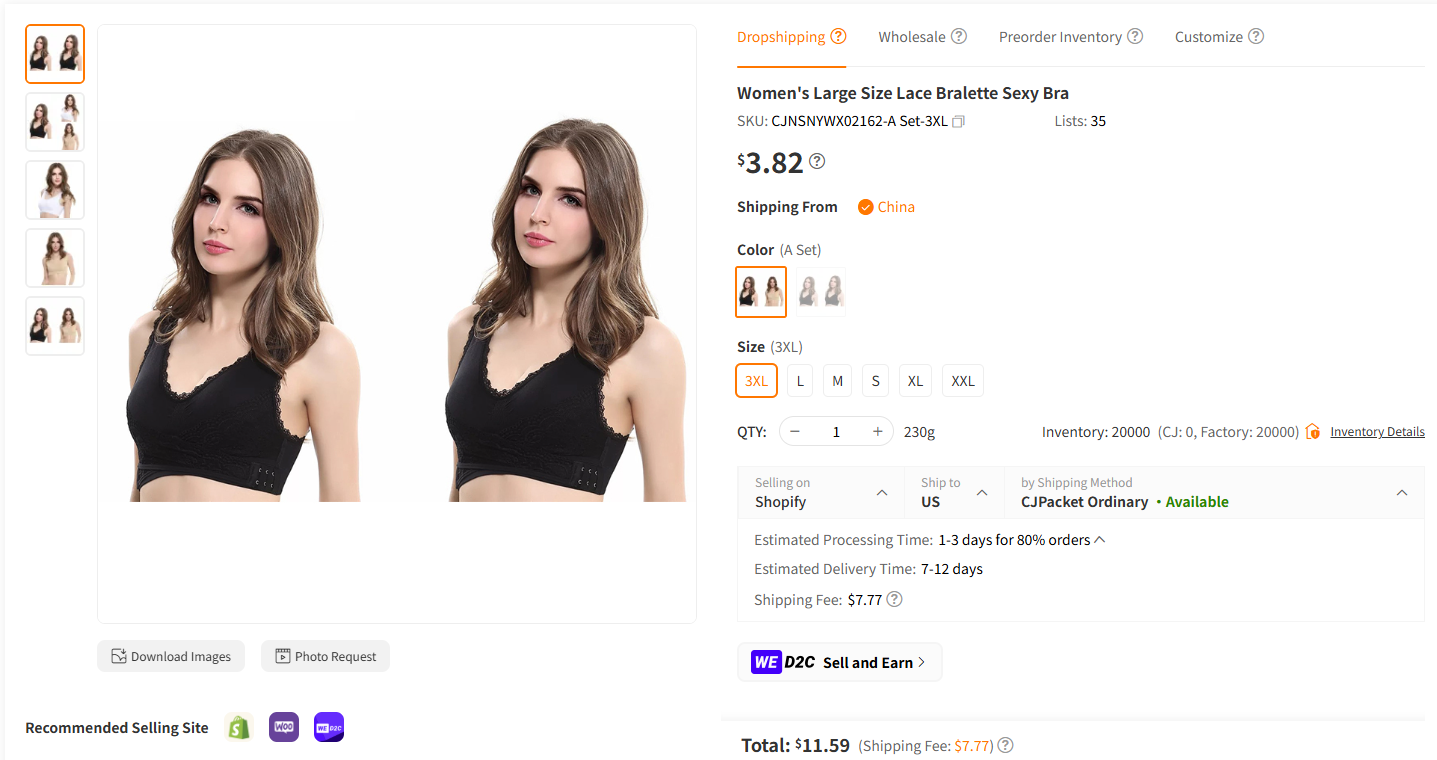
The Everyday Hero: Seamless Wirefree Bralette (Modal/Cotton Blend)
-
Why it Wins: Universal comfort demand, inclusive sizing potential (XS-3XL+), minimal fit issues, year-round staple.
-
Supplier Source: Bella Luxx (Look for brands like Commando, Natori, or their own lines), Spocket (Filter: US/EU, Wirefree, Modal/Cotton), CJdropshipping (US/EU Warehouse - VET HEAVILY for fabric quality).
-
Key: Wide straps, soft stretchy fabric, light padding optional. Market for WFH, errands, under tees.
-
-
The Comfort Upgrade: High-Waisted Seamless Shaping Brief (Power Mesh)
-
Why it Wins: Solves the "muffin top" and visible panty line frustration. Modern shaping (comfort-focused, not corset-tight). Pairs perfectly with leggings/tight dresses.
-
Supplier Source: Bella Luxx (Spanx alternatives, Commando), CJdropshipping (US Warehouse - Search "seamless shaping short high waisted" + check reviews/samples).
-
Key: Focus on "no-dig," breathable fabrics. Offer basic black and nude first.
-
-
The Confidence Booster: Adjustable Strappy Bra & Brief Set (Soft Cup/Light Padding)
-
Why it Wins: "Feel sexy for yourself" trend. Versatile (wear peeking out under tops or for special occasions). Adjustable straps/backs accommodate more bodies.
-
Supplier Source: Swoon Editions (Specialty), Bella Luxx (Look for playful, detailed styles), Syncee (EU suppliers often have unique designs).
-
Key: Quality lace/details matter. Offer mix-and-match potential. Stunning photography essential.
-
-
The Inclusive Essential: Full-Coverage Wirefree Bra (Extended Sizing A-K Cups, 28-50+ Bands)
-
Why it Wins: Massive underserved market. Focus on support, comfort, and style in larger cup sizes. Repeat customers guaranteed if you nail fit/quality.
-
Supplier Source: Bella Luxx (Their strongest category - brands like Elomi, Goddess, Sculptresse), Understance (If they offer dropship - focus on fit tech).
-
Key: NON-NEGOTIABLE detailed size chart. Highlight features like wider bands, reinforced side support, plush straps.
-
-
The Lounge Luxury: Modal or Bamboo Viscose Chemise or Slip Dress
-
Why it Wins: High perceived value, comfort focus, giftability. Margins are good.
-
Supplier Source: Bella Luxx (Quality fabrics), CJdropshipping (Use "Source for You" for a specific style + stock in US/EU warehouse + SAMPLE AGGRESSIVELY for fabric feel), Swoon Editions (Beautiful designs).
-
Key: Fabric feel is EVERYTHING. Must be buttery soft. Simple, elegant cuts sell best.
-
-
The Practical Sensual: Silk-Effect Satin Robe (Mid-Length)
-
Why it Wins: Bridal market, Valentine's Day, gift giving, everyday luxury. Avoids the "costume" feel.
-
Supplier Source: Bella Luxx, CJdropshipping (Search "satin robe" in US/EU warehouse - filter for high rating + order sample to check actual feel - avoid plastic-y satin). Boutique by Sofia.
-
Key: Look for decent weight satin (not tissue-thin), good tie belt, and clean finishing. "Champagne," "Dusty Pink," "Black" are staples.
-
-
The Shapewear Sleeper Hit: High-Waisted Thigh Shaper/Shorts (Seamless, Lightweight)
-
Why it Wins: Solves thigh chafing, offers light smoothing under dresses/skirts. More wearable than full bodysuits.
-
Supplier Source: Bella Luxx (Commando, Shapermint), CJdropshipping (US Warehouse - VET for breathable fabric and non-rolling waistband - SAMPLE!).
-
Key: "No-dig" waistband is crucial. Market for summer dresses and skirts.
-
-
The Bridal Sweetheart: Embroidered Tulle Bralette & High-Waist Brief Set (White/Blush)
-
Why it Wins: High AOV (Average Order Value), emotional purchase, photoshoot potential. Brides often buy multiple items.
-
Supplier Source: Swoon Editions (Specialty), Bella Luxx (Look for bridal lines - Wacoal, b.tempt'd), Syncee (Some EU suppliers excel here).
-
Key: Quality embroidery, no scratchy lace/threads. Offer "Bridal Edit" collections. Stellar photography mandatory.
-
-
The Modern Basic: French Cut or High-Leg Brief (Soft Cotton/Modal)
-
Why it Wins: Retro vibe meets modern comfort. Flattering cut, avoids visible lines. Upgrades basic underwear.
-
Supplier Source: Bella Luxx, Spocket (US/EU suppliers), CJdropshipping (Filter US/EU warehouse + search "french cut brief modal" - SAMPLE fabric).
-
Key: Fabric quality elevates this. Offer in core colors and seasonal tones.
-
-
The Supportive Non-Wired: Longline Bralette (Wider Band, Light Support)
-
Why it Wins: Fashionable, offers slightly more support/smoothing than a standard bralette, versatile styling.
-
Supplier Source: Swoon Editions, Bella Luxx, Syncee (Trend-focused EU suppliers).
-
Key: Ensure the band is truly supportive (multiple hooks help) and doesn't roll. Great under lower-cut tops.
-
Remember: ALWAYS order samples before listing ANY of these! Winning product + unreliable supplier = disaster. Start by adding 2-3 of these to your core collection.
Part 4: The Future & Leveling Up
The lingerie market constantly evolves. Stay ahead:
-
Embrace Technology: Augmented Reality (AR) for virtual try-on is coming. Stay informed.
-
Deepen Supplier Relationships: As you grow, negotiate better pricing, explore exclusive styles, improve branding options. Treat good suppliers like gold.
-
Consider Hybrid Models: Once you identify true bestsellers, consider small batch ordering for faster fulfillment and potentially better margins on those specific items.
-
Focus on Retention: Acquiring a lingerie customer is harder than keeping one. Loyalty programs, excellent service, and new arrivals keep them coming back. My repeat customer rate is my most cherished metric.
Part 5: Your Burning Questions Answered (Lingerie Dropshipping FAQ)
Let's cut through the confusion. These are the questions I get asked constantly – the real, gritty stuff new (and even seasoned) lingerie dropshippers grapple with. Based on my inbox and comments, here are the answers you need:
Q: How much money do I REALLY need to start?
A: Forget "get rich quick" claims. Realistically budget $500-$1500 minimum for:
Store Setup: Domain, Shopify/WooCommerce subscription ($29-$79/month).
Essential Apps: Maybe a page builder, email marketing starter plan.
SAMPLES: Your most critical investment ($200-$500+). Testing 15-30 key items across suppliers isn't optional.
Initial Marketing: Small test ad budget ($100-$200), content creation tools (Canva Pro).
Buffer: For unexpected fees, returns you eat, or replacing a dud sample supplier. Don't start with $50.
Q: How do I handle SIZE CHARTS and prevent returns?
A: This is lingerie's biggest headache. My battle-tested system:
Supplier Charts are GOSPEL: Display the exact size chart (with measurements in inches/cm) from YOUR supplier for EACH product. Never genericize.
"How to Measure" Guides: Create detailed text + VIDEO guides showing how to measure band, bust (for cup), waist, hips. Link them EVERYWHERE – product pages, cart, confirmation emails. My video reduced fit queries by 40%.
Be Brutally Honest: "Sizing runs small. Order one size up." "Minimal stretch." State it clearly.
Policy Clarity: "We do not accept returns for fit/size choice due to hygiene. Please measure carefully! We accept returns for defects/wrong items only." Offer store credit for fit issues at your discretion as goodwill.
Q: Shipping times STILL scare me. How do I manage customer expectations?
A: Transparency is your ONLY defense:
Display Origin & ETA Prominently: "Ships from US Warehouse: 3-5 Business Days" or "Ships from China: 15-25 Business Days" directly ON the product image/description/cart.
Pre-Purchase Pop-up/Notice: "Please note estimated delivery times before purchasing: [Time]." Make them click "I Understand."
Order Confirmation Email: Restate the estimated delivery window.
Proactive Delay Emails: If tracking shows a delay, email the customer before they panic. "Just a heads up, your lovely order might take a few extra days..."
Offer Expedited: If your supplier supports it (e.g., CJ US Warehouse, Bella Luxx), offer a paid faster shipping option.
Q: Is AliExpress REALLY that bad for lingerie?
A: For 95% of sellers aiming for sustainability and reputation, YES. The quality inconsistency, shipping nightmares, and branding limitations will cripple you long-term. It can work for very basic, non-fit-critical items (simple sleep masks, basic hosiery) IF vetted obsessively and shipped via AliExpress Standard Shipping. But for bras, panties, anything requiring fit/feel? Invest in better suppliers. Your sanity and reviews depend on it.
Q: Can I succeed without custom packaging?
A: You can start, but you won't thrive.* Generic poly mailers scream "dropshipper from China" and kill repeat business. Custom packaging (even just a branded mailer sticker or tissue paper) is the SINGLE biggest branding upgrade for the cost. Suppliers like Bella Luxx and CJdropshipping make it affordable. My customer repeat rate jumped significantly after adding simple custom tissue paper and a thank-you card via Bella Luxx's program. Start small, scale up.
Q: How do I find winning products beyond your list?
A: Combine these tactics:
Spy Smartly: Use tools like SimplyTrends or EcomHunt, but filter for established stores (6+ months old) in YOUR niche. Look for items consistently in their top 10.
Supplier "New Arrivals": Check Bella Luxx, Swoon, CJ's US/EU warehouse new in weekly. Early movers win.
Social Listening: Follow lingerie hashtags (#comfortbra #inclusivelingerie), niche influencers, and body-positive communities. What are real women complaining about missing? What styles get organic love?
Customer Feedback: Ask your early buyers! "What styles/sizes/fabrics would you love to see us offer?"
Seasonal Shifts: Loungewear spikes in winter, bridal in spring/summer, supportive swim undergarments in summer. Plan 2-3 months ahead.
Got more questions? Drop them in the comments below – I answer them all!
How to Start Your Lingerie Dropshipping Business (A No-Fluff, Step-by-Step Roadmap)
Inspired? Good. Let's translate this knowledge into action. Here’s exactly how to launch, based on what actually works (and avoids the pitfalls I hit):
Phase 1: Foundation (1-2 Weeks)
-
Define Your Niche & Avatar: Get hyper-specific. Example: "Curvy women (US 14-24) seeking comfortable, stylish everyday bras and shapewear that actually fits and feels good." Or: "Minimalist lingerie lovers focused on luxury natural fabrics (modal, silk) in sizes XS-XL." Write this down.
-
Market Research: Spy on 3-5 successful stores in your niche. Note their bestselling categories, pricing, branding, and shipping policies. Use tools like SimplyTrends or manual sleuthing.
-
Choose Your Platform: Shopify is easiest for beginners. Buy your domain name (keep it brandable, not keyword-stuffed).
-
Set Up Core Business: Register your business (check local requirements), get a business bank account, consider a basic LLC for liability protection. Set up a professional email.
Phase 2: Supplier Sourcing & Product Selection (2-4 Weeks - CRITICAL PHASE)
-
Shortlist 3-5 Suppliers: Based on your niche:
-
Prioritize Quality/Reliability: Apply to Bella Luxx or Swoon Editions.
-
Need Speed/Global: Deep dive into CJdropshipping (focusing ONLY on US/EU stocked items).
-
Start Simpler: Use Spocket or Syncee, filtering aggressively for lingerie + US/EU shipping + high feedback.
-
-
Budget & Order SAMPLES: Allocate $300-$500 minimum. Order 5-10 key items from each shortlisted supplier. Focus on items from your "winning products" list relevant to your niche. TEST: Quality, fit (measure!), packaging, shipping time to your location.
-
Select Your 1-2 Core Suppliers: Choose based on sample quality, reliability, shipping speed, and branding options. DO NOT SKIP SAMPLING. Sign up for their dropship program.
-
Curate Your Launch Collection (30-50 SKUs MAX): Select items directly from your sampled winners. Focus on 2-3 core categories (e.g., Wirefree Bras, Shaping Shorts, Luxe Chemises). Ensure diverse sizing within your niche.
Phase 3: Store Build & Branding (1-2 Weeks)
-
Design Your Store: Use a clean, professional Shopify theme. Prioritize mobile-friendliness. Essential Pages:
-
Homepage (Clear niche/value prop)
-
Product Collections
-
Detailed "How to Measure" Guide (Text + Video)
-
Transparent Shipping Policy (Times by origin!)
-
Clear Returns/Refunds Policy
-
Contact Page (Real email/address helps EEAT)
-
-
Craft Compelling Product Listings:
-
High-Quality Images: Use YOUR sample photos if possible (even mannequin shots). If using supplier pics, ensure they are excellent.
-
Detailed Descriptions: Focus on benefits & feel ("Buttery-soft modal hugs your curves comfortably all day"), fabric, features, sizing notes. Use the supplier's exact size chart.
-
Set Pricing: Calculate TRUE cost (Product + Shipping + Fees + Returns Buffer) + Profit (Aim 40-60% margin). Don't race to the bottom.
-
-
Implement Branding Basics:
-
Custom Packaging: Start SIMPLE. Ask Bella Luxx/CJ about branded tissue paper or a sticker. This builds trust instantly.
-
Logo & Visuals: Consistent colors/fonts. Reflect your niche's vibe (elegant, playful, empowering?).
-
Phase 4: Launch & Learn (Ongoing)
-
Go Live & Drive Initial Traffic:
-
Soft Launch: Tell friends/family/networks in your niche. Offer a small launch discount for feedback.
-
Content First: Write 1-2 foundational blog posts ("Ultimate Guide to Finding Your Perfect Bra Size," "Why Comfort is the New Sexy in Lingerie"). Optimize for SEO.
-
Small Ad Tests: Run micro-budget ($5-$10/day) Pinterest or Instagram ads targeting your avatar. Focus on engagement/website clicks initially.
-
-
Master Customer Service:
-
Be Responsive: Answer emails/messages promptly and kindly.
-
Manage Shipping: Use tracking apps. Proactively communicate delays.
-
Handle Returns Gracefully: Stick to your policy, but be human.
-
-
Analyze & Optimize:
-
Track Everything: Use Shopify Analytics, Google Analytics. What products get views? What converts? Where do people drop off?
-
Listen to Customers: Feedback is gold. What do they love? What's missing? What issues arise?
-
Refine Your Product Mix: Double down on winners. Remove slow movers. Add new sampled items based on demand.
-
Scale Marketing: Reinvest profits into better ads, email marketing, content creation, or influencer micro-collabs.
-
The Biggest Mistake Newbies Make: Rushing Phase 2 (Supplier/Product). Skipping samples or choosing based on price alone guarantees pain. Invest the time and money upfront.
Ready to find your perfect supplier? Grab my updated Supplier Comparison Spreadsheet (now including CJdropshipping deep dive) – just comment "SPREADSHEET" below!
Conclusion: Your Path to Lingerie Dropshipping Success
Choosing the right dropship lingerie suppliers and products isn't luck; it's a strategic process demanding research, diligence, and a deep understanding of your customer. Forget the AliExpress race to the bottom. Prioritize quality, reliability, and branding by partnering with specialized suppliers like CJdropshipping or Swoon Editions, or meticulously vetting suppliers on platforms like Spocket. Focus on solving real customer problems: inclusive sizing, unparalleled comfort, beautiful basics, and special occasion pieces that make them feel confident.
Remember my early disasters? The itchy lace, the month-long shipping waits, the supplier who vanished? They taught me that the foundation of this business is trust. Trust in your supplier's quality and reliability. Trust in the products you curate. Trust that you build with your customers through transparency and exceptional service.
It takes work. It takes investment (especially in samples!). It takes patience. But building a lingerie dropship store that stands for quality, inclusivity, and genuine value is incredibly rewarding. Ditch the overwhelm, use this guide as your blueprint, and start making smart, informed choices today. Your future customers (and your sanity) will thank you.
Ready to Start? Here's Your Action Plan:
-
Define Your Niche: Get crystal clear on who you serve.
-
Research & Shortlist Suppliers: Focus on CJdropshipping, Swoon Editions, Spocket , Syncee. Vet rigorously using the checklist.
-
Budget for Samples: Order key items from 3-5 top supplier candidates.
-
Analyze Samples Ruthlessly: Quality, fit, packaging, shipping time. Choose 1-2 partners max to start.
-
Curate Your Launch Collection: 30-50 items max, aligned with your niche.
-
Build Your Store with Transparency: Clear shipping times, sizing guides, returns policy.
-
Launch, Learn, Optimize: Track everything, listen to customers, refine your product mix.