
Payment is one of the first things most dropshipping beginners set up, but it is also one of the most underestimated parts of the business. Many new sellers treat payment as a simple checkout setting: add PayPal, connect a card processor, and start selling. In reality, payment affects almost every part of a dropshipping store, including conversion rate, cash flow, supplier payments, fulfillment speed, chargebacks, customer trust, and long-term account stability.
In 2026, dropshipping payment methods are no longer limited to credit cards and PayPal. Customers expect more flexible checkout options, including digital wallets, local payment methods, Buy Now, Pay Later services, real-time bank payments, and mobile-first checkout experiences. Stripe’s payment method documentation, for example, groups payment methods into cards, bank debits, bank redirects, bank transfers, Buy Now Pay Later, real-time payments, vouchers, and wallets, which shows how much online checkout has expanded beyond traditional card payments.
For dropshipping sellers, the challenge is not simply choosing the most popular payment method. The real question is: which payment setup helps customers pay easily, allows the seller to receive funds reliably, supports supplier payments smoothly, and reduces the risk of frozen funds, disputes, and chargebacks?
This complete guide explains the best dropshipping payment methods for 2026 from both sides of the business: how customers pay your store and how you pay your suppliers. It also covers PayPal, Stripe, Shopify Payments, digital wallets, BNPL, local payment methods, supplier payment options, chargeback prevention, and how to build a safer payment strategy as your store grows.
What Are Dropshipping Payment Methods?
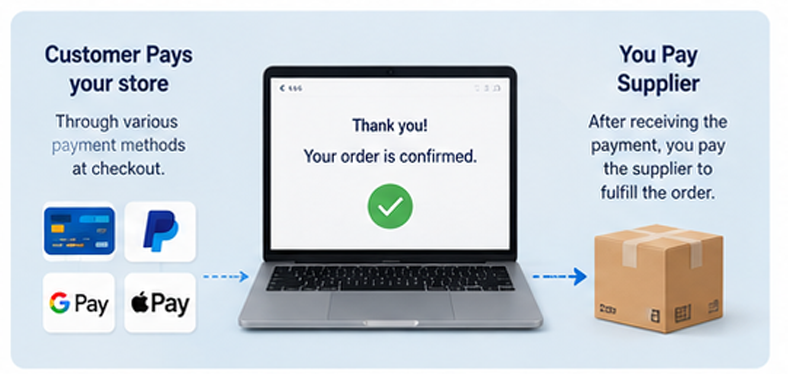
Dropshipping payment methods are the ways money moves in and out of a dropshipping business. This includes how customers pay for products on your online store and how you pay your supplier or fulfillment partner after receiving an order.
A typical dropshipping transaction looks simple on the surface. A customer visits your store, places an order, and pays through a checkout method such as credit card, PayPal, Apple Pay, Google Pay, Klarna, or another local payment option. After the payment is received, you purchase the product from a supplier or fulfillment platform. The supplier then ships the product directly to the customer.
That simple flow creates two different payment layers.
Customer-Side Payment Methods
Customer-side payment methods are the options available at checkout. These may include:
Credit cards
Debit cards
PayPal
Shop Pay
Apple Pay
Google Pay
Klarna
Afterpay
Affirm
Local bank transfer methods
Cash on Delivery in selected markets
Digital wallets
QR code payments
Crypto payments in limited cases
These payment methods directly influence checkout conversion. If your target customers do not recognize or trust your payment options, they may abandon the cart even if they like the product.
Supplier-Side Payment Methods
Supplier-side payment methods are the ways you pay for products, shipping, sourcing, packaging, warehouse storage, private label services, or fulfillment fees. These may include:
Credit card
PayPal
Bank transfer
Wire transfer
Wise
Payoneer
Platform wallet balance
Trade credit
Prepaid balance
Enterprise payment terms
Supplier payment matters because dropshipping depends on fast fulfillment. If customer money is delayed, frozen, or held by a payment processor, you may struggle to pay your supplier on time. That delay can slow down order processing, tracking uploads, and delivery.
Payment Method vs Payment Gateway
A payment method is the way a customer chooses to pay. A payment gateway or payment processor is the service that handles the transaction.
For example, Visa is a payment method. Stripe is a payment processor. PayPal can work as both a wallet-style payment method and a payment processor. Shopify Payments is a payment solution built into Shopify stores and is designed to simplify online payment acceptance for eligible merchants. Shopify says Shopify Payments removes the need to set up a separate third-party provider or merchant account and automatically enables major payment methods after setup.
Understanding this difference helps sellers avoid a common mistake. Adding more payment methods is not always the same as adding more payment security. A store also needs reliable processors, strong fraud controls, clear policies, and backup payment options.
Why Payment Methods Matter More in Dropshipping
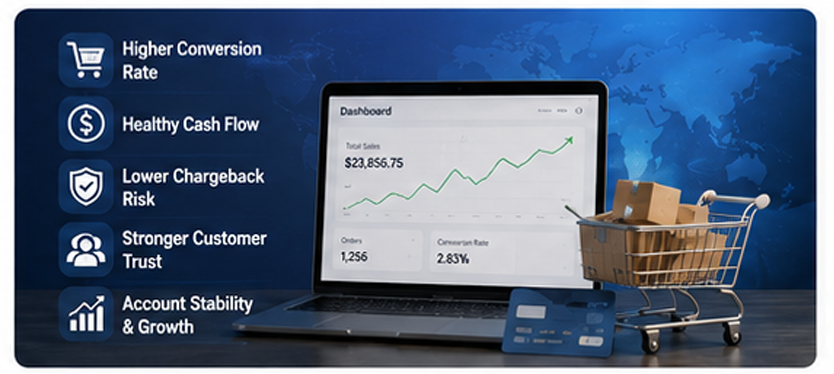
Payment matters in every ecommerce business, but it is especially important in dropshipping because the seller often receives payment before buying inventory. That creates a cash flow gap. When managed well, this gap allows a seller to test products with lower upfront risk. When managed poorly, it can cause delays, complaints, and frozen accounts.
Dropshipping Depends on Cash Flow Timing
In a traditional retail model, a business usually buys inventory first and sells it later. In dropshipping, the seller often sells first and pays the supplier after the order comes in. This is one of the biggest advantages of dropshipping, but it also makes payout timing extremely important.
If your payment gateway releases funds quickly, you can pay suppliers and fulfill orders without much pressure. If your gateway places money on hold, applies a rolling reserve, delays payouts, or limits your account, your operations can become stressful very quickly.
This is why dropshipping sellers should not only ask, “Which payment method has the lowest fee?” A better question is, “Which payment setup gives me stable access to funds while keeping customers comfortable at checkout?”
Payment Options Affect Conversion Rate
Customers want payment to feel familiar. A U.S. customer may be comfortable using credit cards, PayPal, Apple Pay, Google Pay, Shop Pay, or BNPL. A Dutch customer may prefer iDEAL. A Brazilian customer may expect Pix. A customer in some Southeast Asian markets may prefer local wallets or bank transfers.
Stripe notes that different payment methods dominate in different regions, and not all customers have or prefer card payments. That point is important for dropshipping stores because many sellers sell internationally without adapting checkout to local expectations.
A store can have strong product pages, attractive ads, and competitive pricing, but still lose sales if the checkout feels unfamiliar or inconvenient. Payment is part of the customer experience, not just a backend setting.
Payment Stability Affects Account Health
Payment processors care about risk. If a store receives too many complaints, refund requests, chargebacks, suspicious orders, or “item not received” claims, the processor may review the account. In dropshipping, this risk can be higher because sellers may use overseas suppliers, longer shipping times, or trending products with inconsistent quality.
The Federal Reserve’s payment research also shows that remote payments continue to be a major part of consumer payment behavior, with credit card payments driving growth in 2024 and much of the increase occurring in remote payments. For online sellers, this means card and remote payment disputes remain a key area to manage carefully.
A stable payment setup is not only about accepting money. It is about proving that your store delivers what it promises.
Best Customer Payment Methods for Dropshipping in 2026
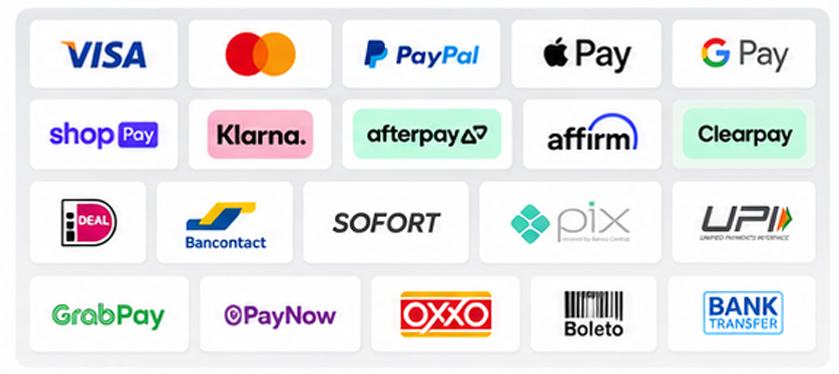
There is no single best payment method for every dropshipping store. The right setup depends on your selling country, target market, product price, risk level, platform, and customer expectations. Still, most stores should consider a mix of the following payment options.
Credit and Debit Cards
Credit and debit cards remain the foundation of online payments in many markets. Visa, Mastercard, American Express, and Discover are familiar to customers and widely supported by major payment gateways.
For dropshipping stores, card payments are important because they create a smooth checkout experience. Customers can enter card details directly or use saved cards through digital wallets and accelerated checkout tools. Many ecommerce platforms also support fraud analysis, 3D Secure, address checks, and risk scoring for card transactions.
The main drawback is chargeback risk. A customer who does not recognize a charge, receives an item late, claims the product was not as described, or suspects fraud may contact their card issuer. Once a chargeback starts, the seller must provide evidence such as tracking, delivery confirmation, customer communication, product descriptions, refund policy, and supplier invoices.
For low-ticket and mid-ticket dropshipping stores, card payments are almost always necessary. For high-ticket products, sellers should add stronger fraud checks before fulfillment.
PayPal
PayPal is one of the most common payment methods for dropshipping because many customers trust it. It allows buyers to pay without directly entering card details on a store, which can increase confidence for first-time purchases from unfamiliar brands.
For sellers, PayPal can be helpful because it is easy to set up and widely recognized. However, PayPal can also be strict with stores that receive many disputes, sudden sales spikes, delayed shipping, unclear tracking, or high refund rates.
PayPal’s Seller Protection terms explain that sellers can check transaction details to see whether a transaction may be eligible for protection. At the same time, PayPal also states that Seller Protection no longer applies to certain Item Not Received transactions received after January 16, 2024, when the transaction is subject to a card issuer chargeback.
That means dropshippers should not assume PayPal automatically protects every order. The safest approach is to upload tracking quickly, use reliable shipping, provide realistic delivery estimates, and keep strong fulfillment records.
Stripe
Stripe is widely used by online sellers because it supports card payments, wallets, local payment methods, BNPL, and many payment tools through one platform. Stripe’s payment methods page highlights cards, wallets, bank transfers, BNPL, real-time payments, and other options for businesses selling across markets.
For dropshipping stores, Stripe can be a strong option if the business is based in a supported country and meets Stripe’s compliance requirements. It works well with Shopify, WooCommerce, BigCommerce, custom websites, and many checkout systems.
The advantages include clean checkout, flexible integrations, fraud tools, digital wallet support, and access to multiple payment methods. The risks include account reviews, reserves, chargebacks, and possible restrictions if the store sells products that violate terms or shows high dispute rates.
Stripe is not a shortcut around compliance. A store using Stripe should have a professional website, clear contact details, transparent shipping policy, refund policy, privacy policy, product details, and reliable fulfillment.
Shopify Payments
Shopify Payments is often the most convenient option for Shopify dropshipping stores in supported countries. It allows sellers to accept major payment methods without connecting a separate third-party gateway. Shopify also lists payment gateway integrations across more than 100 payment providers globally, which gives sellers flexibility based on country and market.
Shopify Payments can simplify operations because sellers manage payments inside the Shopify admin. It also supports accelerated checkout options such as Shop Pay in supported markets, which can help reduce checkout friction.
However, Shopify Payments is not available everywhere. It also has rules around prohibited products, chargebacks, fraud, and business verification. Dropshippers should review eligibility before building their entire payment setup around it.
Digital Wallets
Digital wallets include Apple Pay, Google Pay, Shop Pay, PayPal wallet, Samsung Pay, and other regional wallet systems. They are especially important for mobile shoppers.
A digital wallet reduces typing. Instead of entering card number, billing address, shipping address, and security code, customers can pay with saved credentials. On mobile, this can be the difference between a completed order and an abandoned cart.
Digital wallets also feel safer to many customers because they do not need to share card details directly with every store. For dropshipping stores that rely on paid social traffic, wallet checkout can be valuable because many visitors come from mobile apps such as TikTok, Instagram, Facebook, and YouTube Shorts.
Buy Now, Pay Later
Buy Now, Pay Later services allow customers to split a purchase into smaller payments. Common providers include Klarna, Afterpay, Affirm, Clearpay, PayPal Pay Later, and other regional options.
BNPL can be useful for mid-ticket and high-ticket products because it lowers the immediate payment barrier. A customer who hesitates to pay $120 today may feel more comfortable splitting the purchase into four payments.
Still, BNPL should be used carefully. It is not ideal for every store or every product. If a seller uses BNPL to push low-quality products, long shipping times, or misleading offers, customer disputes may increase. BNPL works best when product value, delivery expectations, and post-purchase support are strong.
Local Payment Methods
Local payment methods are essential for international dropshipping. Many sellers make the mistake of using one checkout setup for every country. That may work in some English-speaking markets, but it can hurt conversion in regions where customers prefer local payment options.
Examples include:
iDEAL in the Netherlands
Bancontact in Belgium
SEPA payment options in Europe
Pix in Brazil
UPI in India
Boleto in Brazil for selected use cases
GrabPay in parts of Southeast Asia
PayNow in Singapore
OXXO in Mexico
KakaoPay and Naver Pay in South Korea
Local payment options can increase trust and reduce payment friction. They can also help sellers look more serious in a market instead of appearing like a generic overseas store.
Bank Transfers and Real-Time Payments
Bank transfers are not always the best option for impulse-buy products, but they can be useful for larger orders, B2B dropshipping, wholesale-style transactions, and high-ticket products. Real-time payment systems are also growing in many countries because they allow faster settlement than traditional bank transfers.
For dropshipping sellers, bank-based payments can reduce card chargeback exposure in some cases. However, they may also create more manual work and slower checkout if not integrated properly.
Cash on Delivery
Cash on Delivery, often called COD, is still used in some markets where customers prefer to pay after receiving goods. It can help conversion in markets with lower card trust, but it also creates operational risk.
COD orders can have higher refusal rates, failed delivery attempts, and return shipping costs. It is usually not recommended for beginners unless they work with a fulfillment partner that already supports COD properly in the target country.
Crypto Payments
Crypto payments are still a niche option for most dropshipping stores. They may appeal to certain tech-focused customers or international buyers, but they should not replace mainstream methods such as cards, PayPal, wallets, and local payments.
The bigger trend to watch is not necessarily customers paying with volatile coins. It is the use of digital assets and blockchain-based settlement in the payment infrastructure behind the scenes. McKinsey’s 2025 Global Payments Report highlights diverse payment rails, digital assets, and AI as major themes in the evolving payment ecosystem.
For most dropshippers, crypto should be considered optional, not essential.
PayPal for Dropshipping: Benefits, Risks, and Best Practices
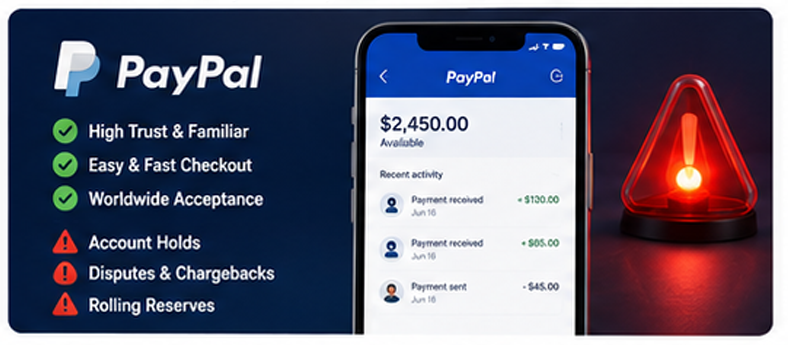
PayPal deserves its own section because it is both useful and risky for dropshipping sellers. Many beginners rely on PayPal because customers know it. Many experienced sellers also use it, but with more careful risk management.
Why PayPal Is Popular for Dropshipping
PayPal gives customers a sense of protection. When someone buys from a new store, especially one they found through an ad, PayPal can make the purchase feel safer. This can increase conversion for stores that do not yet have strong brand recognition.
PayPal is also relatively easy to add to many ecommerce platforms. A seller can often connect PayPal faster than setting up a full merchant account or applying for a more advanced payment processor.
Another benefit is international recognition. If a store sells to multiple countries, PayPal may be more familiar than some local gateways.
Why PayPal Can Be Risky for Dropshipping
PayPal is sensitive to disputes, shipping delays, tracking issues, sudden sales spikes, and unclear business models. Dropshipping stores can trigger risk reviews if they grow quickly without enough fulfillment proof.
Common PayPal issues include:
Payment holds
Account limitations
Rolling reserves
Disputes
Item Not Received claims
Unauthorized transaction claims
Requests for invoices or supplier proof
Delayed fund access
These problems do not mean PayPal is bad for dropshipping. They mean sellers need to operate professionally.
How to Use PayPal Safely
The first rule is to upload tracking as quickly as possible. If tracking is delayed, customers may become nervous and open disputes. Payment processors also want proof that orders are moving.
The second rule is to avoid unrealistic shipping promises. If your supplier needs 2 to 4 days for processing and 7 to 12 days for delivery, do not advertise “3-day delivery” just to increase conversion. That short-term tactic can create long-term payment problems.
The third rule is to keep records. Save supplier invoices, product cost details, tracking numbers, delivery screenshots, customer emails, refund records, and product page screenshots. If a dispute happens, evidence matters.
The fourth rule is to communicate early. If a package is delayed, tell the customer before they complain. A short, honest message can prevent a dispute.
The fifth rule is to avoid selling risky products through a fresh PayPal account. High-ticket electronics, branded-looking items, cosmetics with strong claims, supplements, and products with unclear compliance requirements can increase risk.
Stripe and Shopify Payments for Dropshipping Stores
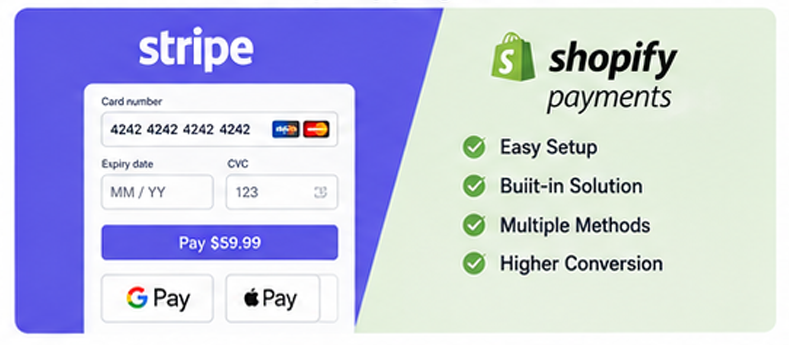
Stripe and Shopify Payments are common choices for dropshipping sellers who want a clean card checkout experience. They are especially useful for stores targeting the United States, Canada, the United Kingdom, Australia, and many European markets.
Why Sellers Use Stripe
Stripe is flexible. It supports cards, wallets, BNPL, bank-based payments, and local payment methods depending on the country and integration. It also provides fraud tools, payment analytics, subscriptions, invoicing, and developer-friendly checkout options.
For a dropshipping store, Stripe works well when the website looks professional and the products are clearly presented. It is especially suitable for sellers who want to build a branded store instead of sending all customers through PayPal.
Why Sellers Use Shopify Payments
Shopify Payments is convenient because it is built into Shopify. Sellers can manage payouts, chargebacks, orders, and payment settings from one admin area. For eligible sellers, this removes the need to connect a separate processor.
Shopify Payments can also work well with Shop Pay, which is useful for mobile checkout and returning customers.
What Dropshippers Should Prepare Before Using Stripe or Shopify Payments
Before applying or activating payment processing, make sure your store has the following:
A real domain name
Professional brand email
Clear product descriptions
Transparent shipping policy
Refund and return policy
Privacy policy
Terms of service
Contact page
Order tracking page
Accurate delivery estimates
No fake countdowns or misleading claims
No unauthorized branded products
Clear pricing and tax information
A payment processor does not only look at transactions. It may also review the store itself. A messy website, missing policies, copied product descriptions, exaggerated claims, and unclear shipping details can all make the business look risky.
Alternative Payment Gateways for Dropshippers
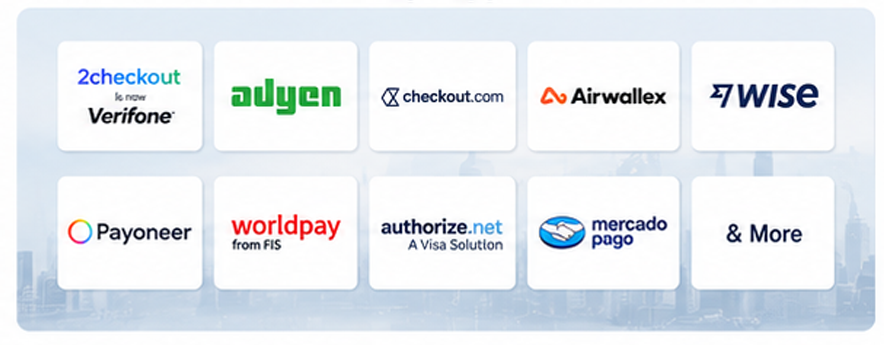
Not every dropshipping seller can use Stripe or Shopify Payments. Some countries are unsupported. Some sellers need more international coverage. Others want backup processors to reduce risk.
Here are several alternatives to consider.
2Checkout / Verifone
2Checkout, now part of Verifone, is often considered by international sellers who need broader payment coverage. It can be useful for digital and physical goods sellers, but approval and fees may vary by business model and region.
For dropshippers, the key is to check product restrictions, payout timing, dispute management, and supported countries before relying on it.
Adyen
Adyen is more suitable for larger ecommerce brands, marketplaces, and scaling businesses with international payment needs. It supports many local payment methods and is used by established companies that need advanced payment infrastructure.
For small beginner dropshipping stores, Adyen may be more advanced than necessary. For sellers building a serious brand with multiple markets, it can become relevant later.
Checkout.com
Checkout.com is another option for businesses that need international payment processing, advanced routing, fraud tools, and multi-market support. It is usually more relevant for established sellers than beginners.
Airwallex
Airwallex can be useful for global ecommerce businesses that need multi-currency accounts, international transfers, and business payment tools. It may not replace a full checkout gateway in every case, but it can help with cross-border financial operations.
Wise Business
Wise Business is useful for paying suppliers, receiving international transfers, and reducing currency conversion costs. It is not mainly a storefront checkout gateway, but it can support the supplier-side payment layer of a dropshipping business.
Payoneer
Payoneer is often used by cross-border sellers, marketplace sellers, and businesses paying or receiving funds internationally. It can be helpful when dealing with suppliers, marketplaces, or global business accounts.
Local Gateways
In some countries, local payment gateways may be better than global processors. For example, sellers targeting Latin America, Southeast Asia, the Middle East, or Europe may benefit from gateways that support regional wallets, local cards, bank transfers, or installments.
The best gateway is not always the biggest name. It is the one that matches your target customers, business location, product category, and payout needs.
How to Choose Payment Methods by Market
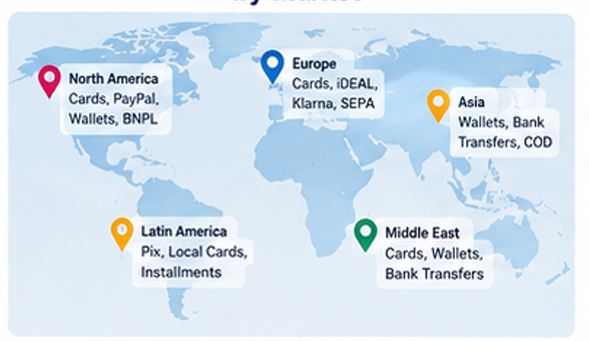
A dropshipping store should not choose payment methods based only on what is easiest for the seller. It should choose based on how customers in the target market prefer to pay.
United States
For the U.S. market, most dropshipping stores should support credit cards, debit cards, PayPal, Apple Pay, Google Pay, and Shop Pay if available. BNPL can also work well for products above impulse-buy pricing, especially home goods, beauty devices, electronics accessories, fitness products, and lifestyle products.
For high-ticket items, add fraud checks and avoid automatically fulfilling suspicious orders.
United Kingdom
For the UK, cards, PayPal, Apple Pay, Google Pay, Klarna, and Clearpay are common options. Customers expect fast checkout and clear delivery information. If shipping from overseas, be transparent about delivery time.
Europe
Europe is not one payment market. Payment preferences vary widely by country. Cards and PayPal are useful, but local methods are often important.
Examples include iDEAL in the Netherlands, Bancontact in Belgium, SEPA options in the EU, and Klarna in several European markets. A store targeting Europe should research each country rather than using one generic checkout setup.
Canada and Australia
Cards, PayPal, Apple Pay, Google Pay, and BNPL are useful in both markets. Customers in these countries are used to international ecommerce, but they still expect clear shipping estimates and reliable tracking.
Latin America
Latin America often requires more localization. Cards are important, but local options such as Pix in Brazil, installments, vouchers, bank methods, and regional wallets can matter depending on the country.
Sellers should be careful with fraud review, address validation, and logistics reliability when selling cross-border to this region.
Southeast Asia
Southeast Asia has strong mobile shopping behavior and diverse local payment habits. Wallets, bank transfers, QR payments, local cards, and COD may matter depending on the country.
A seller targeting Southeast Asia should not assume that U.S.-style checkout will work everywhere. Local trust signals and local payment options can make a major difference.
Middle East
Cards, Apple Pay, local wallets, bank transfers, and COD may be relevant depending on the country and product type. Customers often care about trust, delivery reliability, and clear support.
For higher-value products, sellers should be cautious with fraud and failed deliveries.
How to Pay Dropshipping Suppliers Safely
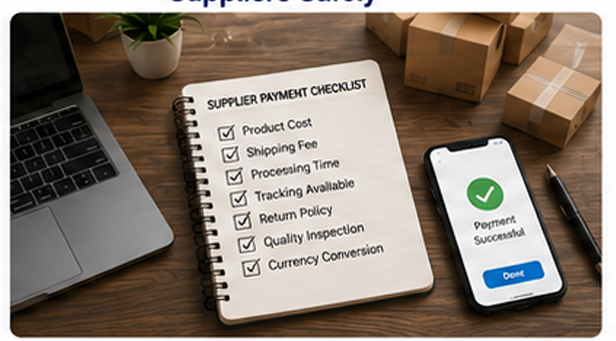
Customer payments are only half of the payment story. Supplier payments are just as important because they determine whether orders can be fulfilled quickly.
Common Supplier Payment Methods
Most dropshipping suppliers and fulfillment platforms support one or more of the following:
Credit card
PayPal
Bank transfer
Wire transfer
Wise
Payoneer
Platform wallet balance
Prepaid account balance
Trade credit for qualified sellers
Enterprise billing terms
For beginners, credit card and PayPal are often the easiest. For scaling sellers, prepaid balances, bank transfers, and business payment accounts can be more efficient.
Why Supplier Payment Speed Matters
When a customer places an order, the clock starts. If you cannot pay the supplier quickly, the order may sit unfulfilled. That delay can affect tracking upload, delivery time, customer satisfaction, and dispute risk.
Payment delays can also damage your relationship with suppliers. A reliable seller who pays on time may receive better support, faster processing, product sourcing help, or priority handling during busy seasons.
Check the Total Cost Before Paying
Before paying a supplier, review the full landed cost. This includes:
Product cost
Domestic handling fee if any
International shipping fee
Packaging cost
Private label cost
Warehouse fee
Currency conversion fee
Payment processing fee
Return or reshipment responsibility
Many beginners calculate profit only from product cost and selling price. That is not enough. Payment fees and currency conversion can quietly reduce margins.
Use a Platform Wallet Carefully
Some fulfillment platforms allow sellers to top up a wallet balance and use it to pay for orders quickly. This can speed up fulfillment because sellers do not need to manually pay every order.
However, sellers should manage wallet balances carefully. Do not put more funds than your business can comfortably use. Review refund rules, withdrawal policies, and account security settings.
Keep Supplier Payment Records
Supplier payment records are useful for accounting, dispute defense, and business analysis. Keep invoices, receipts, transaction IDs, payment screenshots, and order matching records.
If a payment processor asks for proof that you are fulfilling orders, supplier records can help show that your business is real and operational.
Common Payment Risks in Dropshipping
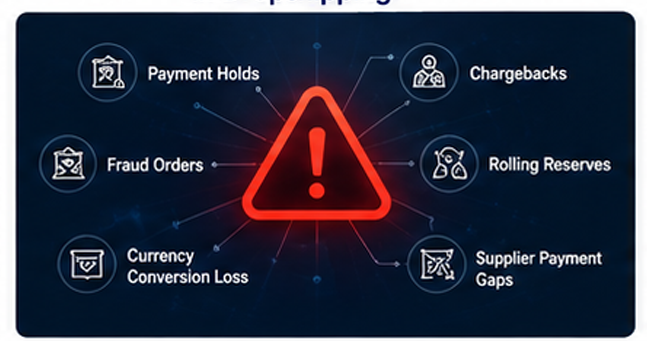
Payment risk is not only about fraud. It includes cash flow risk, policy risk, customer dispute risk, supplier risk, and compliance risk.
Payment Holds
A payment hold happens when a processor temporarily delays access to funds. This can happen to new accounts, stores with sudden sales growth, high-risk products, high refund rates, or unclear fulfillment.
For dropshippers, payment holds are stressful because supplier payments still need to be made. If all working capital is trapped in a payment account, orders may be delayed.
Rolling Reserves
A rolling reserve means the processor holds a percentage of each transaction for a period of time. For example, it may hold 10% or 20% of revenue for several weeks or months. The exact terms depend on the processor and risk review.
Rolling reserves can protect processors against chargebacks, but they can hurt seller cash flow. Sellers with thin margins should plan carefully.
Chargebacks
Chargebacks occur when a customer disputes a card transaction through the card issuer. Common reasons include item not received, unauthorized transaction, product not as described, duplicate charge, or dissatisfaction with service.
Visa dispute categories include issues such as merchandise or services not received and goods not matching the description, which are especially relevant for ecommerce and dropshipping sellers.
Chargebacks are more serious than normal refund requests. Too many chargebacks can increase fees, trigger reserves, or lead to account termination.
Currency Conversion Loss
Dropshipping often involves selling in one currency and paying suppliers in another. A seller may receive USD, pay suppliers in CNY, use a payment gateway in EUR, or run ads in another currency.
Small conversion fees can add up quickly. Sellers should track the real exchange rate, payment gateway fee, supplier payment fee, and payout currency.
Fraud Orders
Fraud orders can cause chargebacks, product loss, and processor warnings. Watch for:
Large first-time orders
Multiple failed payment attempts
Different billing and shipping countries
Suspicious email addresses
Unusual shipping destinations
High-risk IP locations
Requests to change address after payment
Orders using many cards from the same device
Do not fulfill suspicious high-ticket orders automatically. Review them first.
Supplier Payment Gaps
A supplier payment gap happens when a seller receives an order but cannot pay the supplier on time. This may happen because funds are held, ad spend consumed available cash, or the seller underestimated processing fees.
The safest sellers keep working capital separate from ad budget and personal funds. They do not rely only on same-day payout to fulfill orders.
How to Reduce Chargebacks and Payment Holds
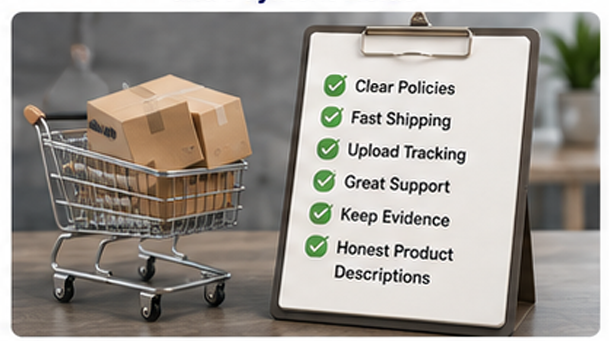
The best way to protect payment accounts is to reduce the reasons customers complain in the first place.
Set Clear Shipping Expectations
Shipping time should be visible before purchase. Add delivery estimates to product pages, shipping policy, FAQ, checkout, and order confirmation emails.
Avoid vague promises such as “fast worldwide shipping” if delivery depends on country, warehouse, product type, or season. Use realistic ranges.
A clear message such as “Estimated delivery: 7 to 12 business days after processing” is better than a promise you cannot keep.
Upload Tracking Quickly
Tracking is one of the strongest forms of trust in dropshipping. Customers become anxious when they pay for an order and receive no shipping update.
Upload tracking numbers as soon as possible. If tracking takes time to activate, explain that in the confirmation email.
Payment processors also value tracking because it helps prove fulfillment.
Use Reliable Shipping Methods
Cheap shipping can become expensive if it creates disputes. A low-cost shipping line with poor tracking, slow updates, or unstable delivery may increase chargebacks.
When choosing shipping methods, compare more than price. Look at delivery time, tracking quality, destination coverage, lost package rate, customer expectations, and dispute evidence quality.
Improve Customer Support Speed
Many disputes happen because customers feel ignored. A customer who receives a reply within 12 to 24 hours may wait. A customer who receives no reply for five days may open a PayPal dispute or card chargeback.
Use simple support templates for common situations:
Where is my order?
Tracking has not updated.
My package is delayed.
I entered the wrong address.
I want to cancel my order.
The item arrived damaged.
I received the wrong product.
Fast support can save payment accounts.
Make Refund Rules Easy to Understand
A refund policy should not be hidden, confusing, or overly strict. Customers should understand when they can request a refund, return, replacement, or reshipment.
For dropshipping, explain:
Order cancellation window
Return eligibility
Damaged item policy
Wrong item policy
Lost package policy
Return address process
Refund processing time
A clear refund policy reduces emotional disputes.
Keep Evidence for Every Order
For dispute defense, keep:
Order confirmation
Payment record
Customer IP and risk score if available
Product page screenshot
Supplier invoice
Tracking number
Delivery confirmation
Customer messages
Refund policy version
Shipping policy version
Photos or videos for damaged item claims
Do not wait until a dispute happens to collect evidence. Build the habit early.
Avoid Misleading Product Pages
Many chargebacks begin with a mismatch between expectation and reality. Avoid using fake reviews, unrealistic product photos, exaggerated claims, hidden shipping times, or unclear sizing.
If a product is smaller than it looks in photos, show dimensions. If it requires batteries, say so. If colors may vary slightly, explain it. If delivery takes longer during peak season, update the page.
Truthful product pages may reduce conversion slightly in the short term, but they protect the business.
How CJdropshipping Supports Payment and Fulfillment Stability
Payment stability is not only about gateways. It is also about fulfillment. A seller with fast tracking, reliable suppliers, clear order records, and stable shipping has a better chance of keeping customers satisfied and defending payment disputes.
This is where using a fulfillment platform such as CJdropshipping can help.
Centralized Sourcing, Payment, and Fulfillment
CJdropshipping supports sellers with product sourcing, order fulfillment, packaging options, product connection, and shipping management. Instead of contacting many separate suppliers manually, sellers can manage more of the fulfillment workflow in one place.
This can help reduce operational confusion, especially when a store starts receiving more orders.
Better Order Records for Payment Disputes
When disputes happen, sellers need proof. A centralized fulfillment workflow can make it easier to find order details, supplier payment records, tracking numbers, shipping status, and fulfillment timelines.
For payment processors, proof matters. A seller who can provide clear tracking and fulfillment records is in a stronger position than one who cannot explain where the product came from or when it shipped.
Support for Scaling Sellers
As a dropshipping store grows, payment pressure increases. More orders mean more supplier payments, more tracking updates, more customer questions, and more potential disputes.
CJdropshipping can support sellers who need product sourcing, automatic order fulfillment, global warehouse fulfillment, custom packaging, and more organized supply chain operations. This is especially helpful for sellers moving from simple product testing to a more stable branded store model.
Why Fulfillment Quality Protects Payment Accounts
Payment processors do not only care about how customers pay. They care about whether customers receive what they paid for. Reliable fulfillment reduces the chance of “item not received” claims, delayed delivery complaints, and refund pressure.
A strong payment setup and a strong fulfillment setup should work together. If one side is weak, the whole business becomes unstable.
How to Build a Safer Dropshipping Payment Strategy for 2026
A safer payment strategy is not complicated, but it must be intentional. Beginners often add one payment method and react only when problems happen. Experienced sellers prepare before problems occur.
Step 1: Start with Your Target Market
Do not choose payment methods based only on what is easy to set up. Choose based on your customers.
Ask:
Where are my customers located?
Do they prefer cards, PayPal, wallets, BNPL, or local methods?
Are they buying on mobile or desktop?
Are my products low-ticket, mid-ticket, or high-ticket?
Do I need local payment methods for better conversion?
Can my gateway support my business location?
A U.S.-focused Shopify store may start with Shopify Payments, PayPal, Shop Pay, Apple Pay, Google Pay, and BNPL. A Europe-focused store may need more local methods. A Latin America-focused store may need Pix, installments, or regional gateways.
Step 2: Use at Least Two Customer Payment Options
Relying on one payment method is risky. If PayPal limits your account or your card processor applies a reserve, your store may stop accepting orders or struggle with cash flow.
At minimum, many stores should offer:
A card processor
PayPal or another trusted wallet
Digital wallet checkout if available
As the store grows, add BNPL or local payment methods where relevant.
Step 3: Prepare a Backup Payment Gateway
A backup gateway is easier to set up before there is a crisis. If your main processor is suddenly limited, applying for a new processor under pressure can be difficult.
A backup does not mean you need to use every gateway at the same time. It means your business has options.
Step 4: Separate Operating Cash from Ad Spend
One of the most dangerous mistakes in dropshipping is spending all incoming revenue on ads before supplier payments are covered.
A safer cash flow structure looks like this:
First reserve money for product cost and shipping
Then reserve money for refunds and chargebacks
Then pay ad costs
Then calculate profit
If you run ads aggressively while payment payouts are delayed, you can create a cash flow problem even when the store is technically profitable.
Step 5: Monitor Chargeback Rate and Refund Rate
Track payment health weekly. Watch:
Chargeback rate
Refund rate
PayPal dispute rate
Average delivery time
Orders without tracking
High-risk orders
Customer support response time
Gateway payout delay
Reserve percentage
If dispute rates increase, do not simply increase ad spend. Fix the cause first.
Step 6: Match Payment Methods with Product Type
Different products need different payment setups.
Low-ticket impulse products usually work well with cards, PayPal, and wallets.
Mid-ticket products may benefit from BNPL and stronger product pages.
High-ticket products need fraud checks, better customer support, clear delivery proof, and sometimes manual review before fulfillment.
B2B or bulk orders may work better with bank transfers, invoices, or business payment accounts.
Step 7: Use Payment Data to Improve the Store
Payment data can reveal store problems. If many customers abandon checkout when PayPal is missing, add PayPal. If many card payments fail from a certain country, check whether you need a local payment option. If BNPL users have higher order value, consider promoting bundles.
Payment is not just a transaction tool. It is a source of business insight.
Dropshipping Payment Methods Comparison Table
| Payment Method | Best For | Main Advantages | Main Risks | Recommended For |
|---|---|---|---|---|
| Credit/Debit Cards | Most ecommerce stores | Familiar, fast, widely accepted | Chargebacks, fraud | Almost all dropshipping stores |
| PayPal | New brands and international buyers | High customer trust, easy checkout | Holds, disputes, limitations | Stores with clear tracking and support |
| Stripe | Branded ecommerce stores | Flexible, clean checkout, wallets, local methods | Account review, reserves | Sellers in supported countries |
| Shopify Payments | Shopify stores | Easy setup, built into Shopify | Country limits, policy rules | Eligible Shopify sellers |
| Apple Pay / Google Pay | Mobile shoppers | Fast checkout, fewer form fields | Requires gateway support | Mobile-first stores |
| BNPL | Mid-ticket and high-ticket products | Can increase purchasing comfort | Refund complexity, dispute risk | Stores with reliable fulfillment |
| Local Payment Methods | International markets | Higher trust in specific countries | More setup and localization work | Sellers targeting specific regions |
| Bank Transfer | B2B and high-ticket orders | Lower card dispute exposure | Slower checkout | Wholesale or larger orders |
| COD | Selected local markets | Helps customers who avoid prepaid orders | Refusals, returns, cash handling | Only with reliable local fulfillment |
| Crypto | Niche audiences | Cross-border potential | Volatility, low mainstream demand | Optional, not essential |
Dropshipping Payment Methods FAQ
1. What is the best payment method for dropshipping?
The best payment method depends on your target market, but most dropshipping stores should start with credit and debit cards, PayPal, and digital wallets. Shopify stores in supported countries may use Shopify Payments, while international sellers may need Stripe, PayPal, local gateways, or alternative processors.
2. Can I use PayPal for dropshipping?
Yes, PayPal can be used for dropshipping, but sellers need to manage it carefully. Upload tracking quickly, use reliable shipping methods, keep supplier invoices, avoid misleading delivery promises, and respond to disputes early.
3. Can I use Stripe for dropshipping?
Yes, many dropshipping stores use Stripe. However, Stripe availability depends on your country, business type, products, and compliance status. Your store should have clear policies, transparent shipping times, real contact information, and low dispute rates.
4. Is Shopify Payments good for dropshipping?
Shopify Payments can be a good option for eligible Shopify sellers because it is built into Shopify and simplifies payment management. However, sellers must follow Shopify Payments rules, avoid restricted products, and manage chargebacks properly.
5. Should dropshipping stores offer Buy Now, Pay Later?
BNPL can be useful for mid-ticket and high-ticket products, especially when customers may hesitate to pay the full amount upfront. It is less important for very low-ticket impulse products. Sellers should only use BNPL when fulfillment and customer support are reliable.
6. How do I pay dropshipping suppliers?
Most sellers pay suppliers through credit card, PayPal, bank transfer, Wise, Payoneer, or platform wallet balance. The best option depends on supplier support, fees, currency conversion, processing time, and your cash flow needs.
7. What should I do if PayPal or Stripe holds my funds?
Prepare fulfillment evidence, upload tracking numbers, provide supplier invoices, reply to customer disputes, reduce refund and chargeback rates, and contact the processor with clear documentation. You should also have backup payment options and working capital so orders can still be fulfilled.
Final Thoughts
Dropshipping payment methods in 2026 are not just about accepting money. They are about building a checkout system that customers trust, a cash flow structure that keeps orders moving, and a risk management process that protects the store as it grows.
For beginners, the best setup is usually simple: cards, PayPal, and digital wallets. For growing sellers, the strategy should become more advanced, with BNPL, local payment methods, backup gateways, better fraud review, supplier payment planning, and stronger dispute prevention.
The most successful dropshipping sellers do not chase every payment trend. They choose payment methods based on customer behavior, product type, target country, fulfillment capability, and risk level.
A good payment setup should help customers buy with confidence. A good supplier payment system should help sellers fulfill orders without delay. A good fulfillment partner should provide the tracking, order records, and operational stability needed to protect payment accounts.
That is why payment and fulfillment should be planned together. When your checkout, supplier payment process, shipping workflow, and customer support are aligned, your dropshipping store becomes easier to scale and harder to disrupt.
For sellers who want to simplify sourcing, order fulfillment, shipping, tracking, and operational management in one place, CJdropshipping can be a practical partner to support a more stable dropshipping business in 2026.