
If you want to build a real Shopify dropshipping business in 2026, your supplier matters more than almost anything else.
A lot of beginners obsess over product research, ad creatives, and landing pages, but the supplier is what quietly controls the part customers remember most: product quality, shipping speed, order accuracy, tracking, packaging, and how painful refunds become when something goes wrong. Shopify’s own guidance on dropshipping and supplier sourcing keeps coming back to the same themes—shipping times, product quality, fees, and supplier reliability are core selection criteria, not side details.
That is why the “best” Shopify dropshipping supplier is never just the cheapest one.
The best supplier for a beginner testing products is often different from the best supplier for a branded store, and both are different from the best supplier for print-on-demand or for faster US/EU fulfillment. In 2026, the supplier landscape is broader than the old “just use AliExpress” era. Shopify highlights a wider ecosystem of dropshipping apps and methods, and the market now includes all-in-one sourcing platforms, supplier directories, POD specialists, and North America or EU-focused catalogs.
I’ll walk through 12 strong supplier options for Shopify sellers in 2026, who each one is best for, their strengths and weaknesses, and the official website for each.
What makes a great Shopify dropshipping supplier in 2026?
Before jumping into the list, it helps to define what “good” actually means.
A strong supplier in 2026 usually checks most of these boxes:
- smooth Shopify integration
- reliable product syncing and order flow
- acceptable shipping times for your target market
- product quality that matches your pricing
- useful support when something breaks
- enough catalog depth for your niche
- options for branding or packaging if you want to scale
- a workflow that still makes sense when order volume grows
Shopify specifically recommends looking at supplier fees, product quality, delivery speed, and seller reviews when evaluating sourcing partners. That advice sounds simple, but it eliminates a lot of bad decisions.
The truth is, no supplier is perfect. The smarter question is: which supplier fits your current business stage?
Quick list: 12 Shopify dropshipping suppliers worth considering in 2026
- CJdropshipping
- DSers
- AliExpress
- Zendrop
- Spocket
- AutoDS
- Modalyst
- Printful
- Printify
- SaleHoo
- HyperSKU
- Syncee
1. CJdropshipping
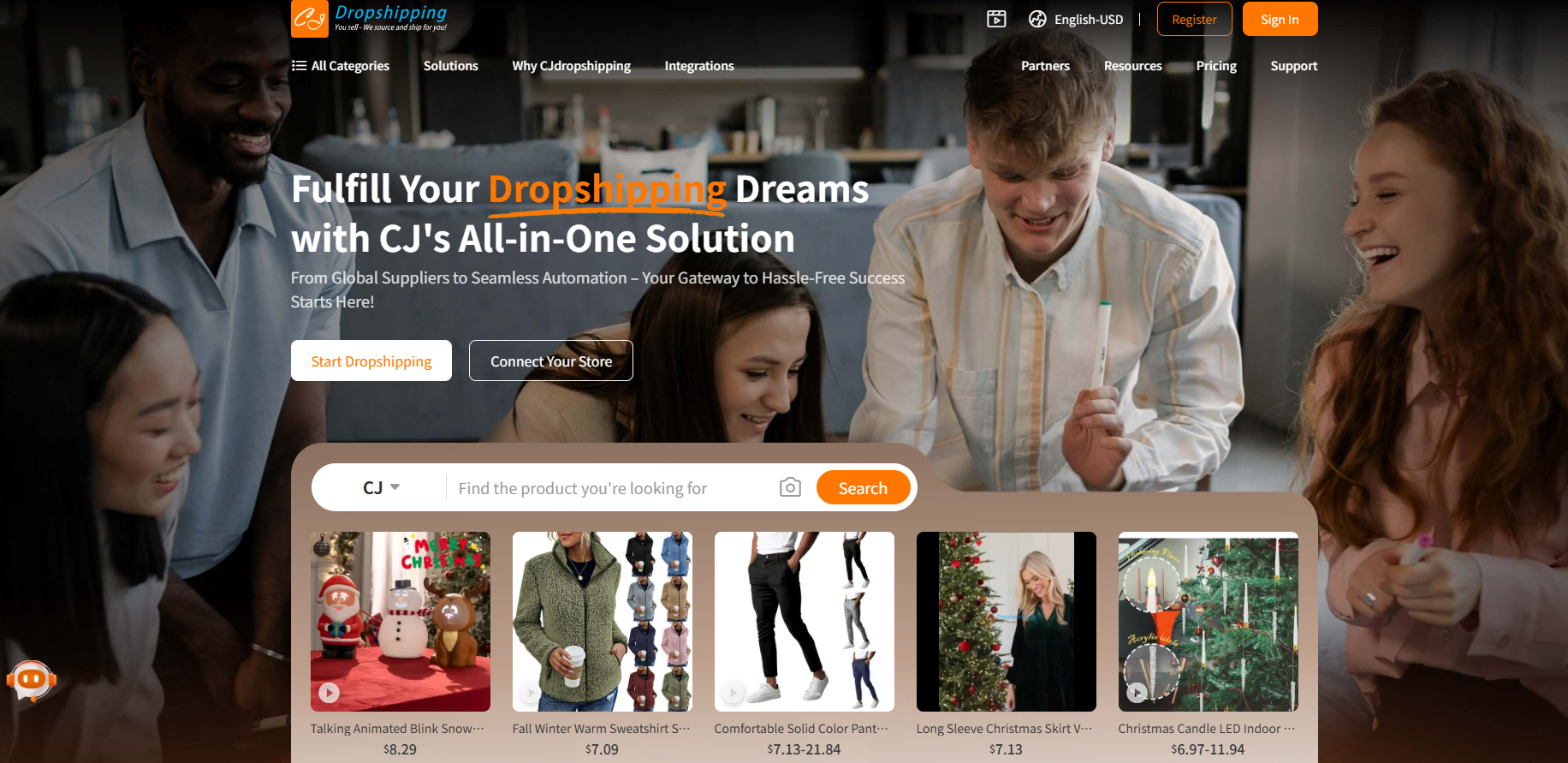
Website: cjdropshipping.com
CJdropshipping remains one of the strongest all-around options for Shopify sellers who want more than basic marketplace importing. Its official site positions it as a platform for sourcing, POD, and scaling DTC brands, while its Shopify app emphasizes one-click listing, order syncing, sourcing support, and shipping workflows.
That combination is why CJ keeps showing up in serious Shopify discussions. It sits in a middle ground that a lot of sellers like: more structured than raw marketplace sourcing, but still flexible enough for testing and general-product stores.
CJ is especially attractive for sellers who want:
- product sourcing help
- broader category coverage
- Shopify-friendly workflows
- room to move into branding, bundling, or POD later
Its biggest advantage is versatility. If you are not yet running a highly specialized store and want one supplier environment that can handle testing plus growth, CJ is often one of the safest places to start. That does not mean every product inside CJ is equally good, but as a platform, it is built for ecommerce sellers rather than casual retail buyers.
Best for: beginners through intermediate sellers, general stores, product testers, sellers who may want branding later.
Biggest strength: flexible sourcing + Shopify workflow.
Main weakness: quality and speed can still vary by product, so sampling is important.
2. DSers
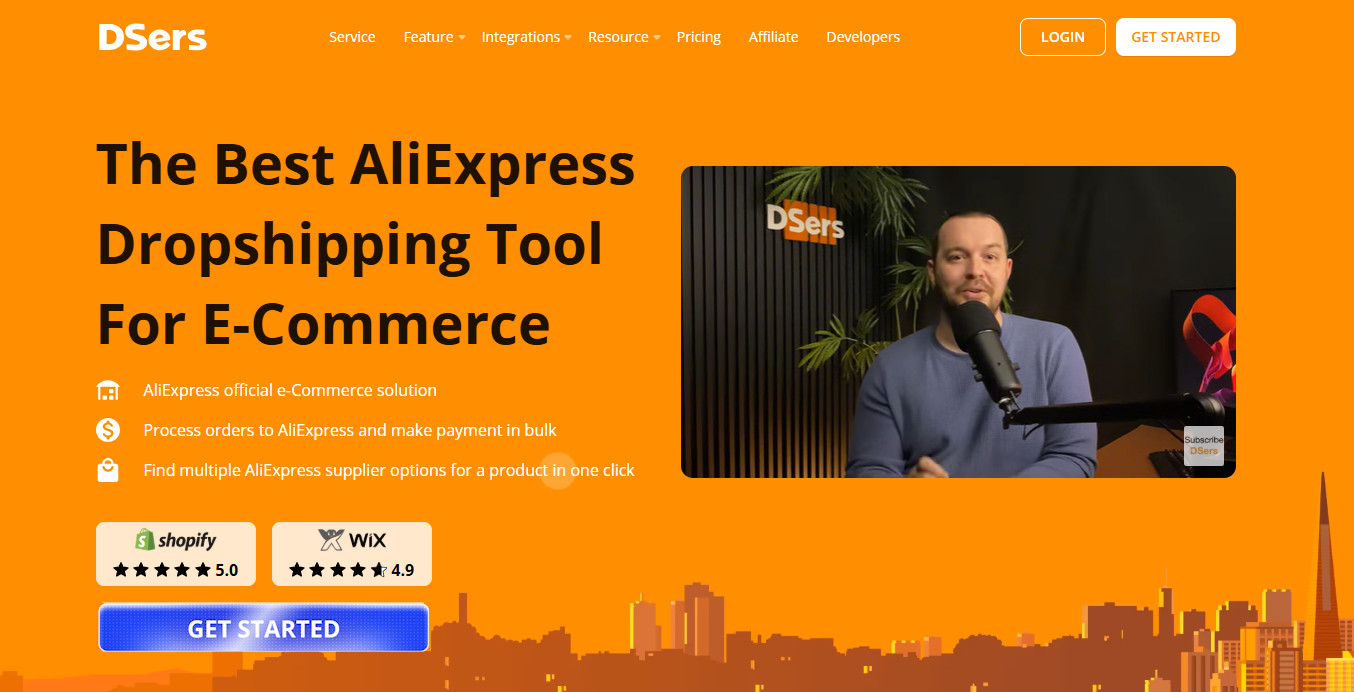
Website: dsers.com
DSers is still one of the most relevant names in Shopify dropshipping because it is tightly associated with the AliExpress workflow. Its official site describes it as an AliExpress dropshipping tool focused on supply-chain streamlining, profit optimization, and supplier selection, while its Shopify App Store listing highlights bulk orders, product importing, inventory syncing, and tracking automation.
If you want to use AliExpress suppliers without drowning in manual work, DSers is one of the most established tools for that setup.
What makes DSers useful is not that it magically fixes every AliExpress problem. It doesn’t. The value is that it makes the AliExpress model much more workable inside Shopify by helping with product import, supplier management, and bulk order handling. That matters a lot once you stop being a hobby seller.
DSers makes the most sense for:
- beginners starting with AliExpress
- sellers managing lots of SKUs
- stores that want easier bulk ordering
- merchants who still rely on broad marketplace sourcing
The limitation is obvious: it is still tied to the strengths and weaknesses of AliExpress-based sourcing. So while DSers improves workflow, it does not turn every AliExpress seller into a premium brand overnight.
Best for: AliExpress-based Shopify stores.
Biggest strength: strong order and supplier management.
Main weakness: still dependent on AliExpress ecosystem quality.
3. AliExpress
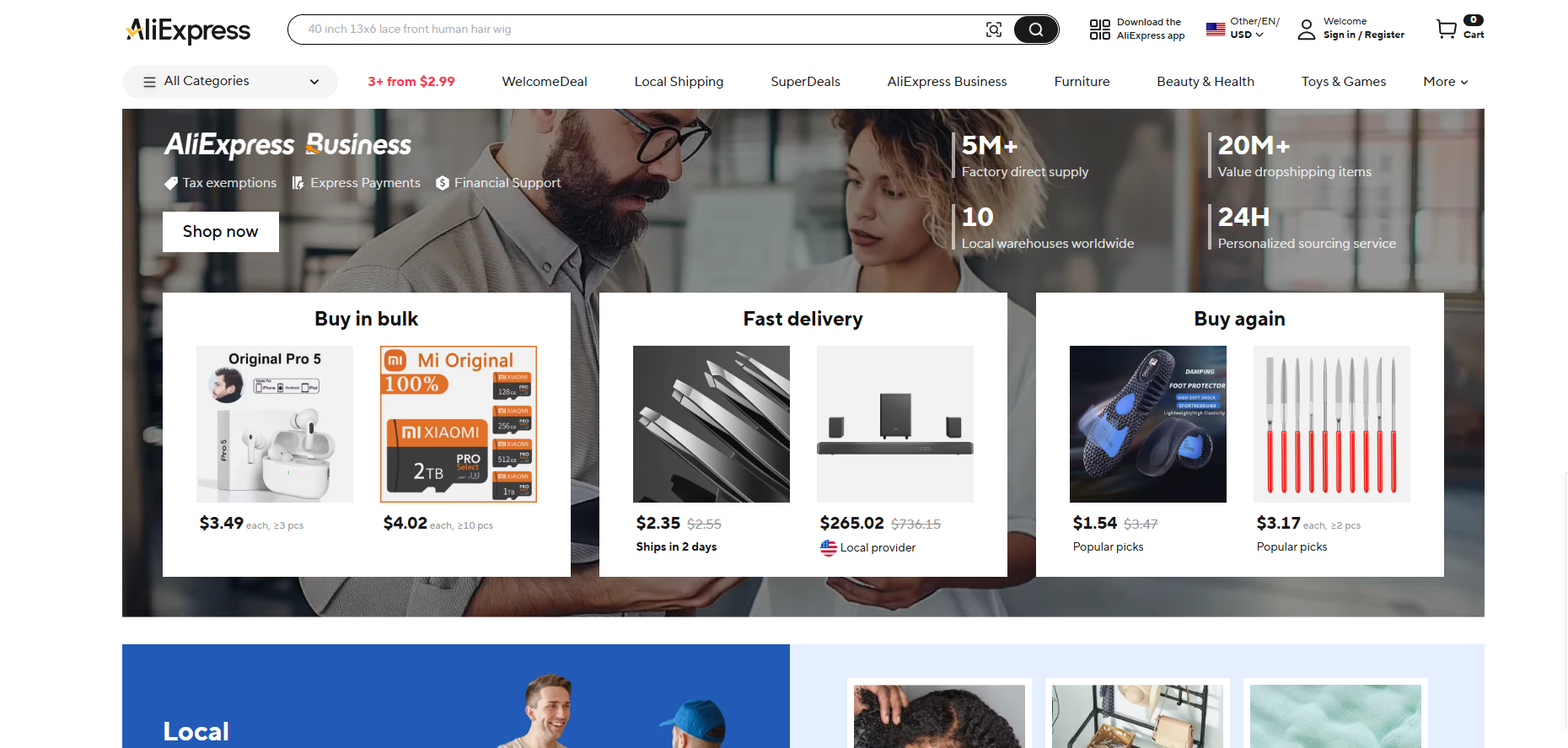
Website: aliexpress.com
AliExpress is not a classic “supplier platform” in the same way as CJ, Zendrop, or Spocket, but it still matters because it remains one of the biggest product-sourcing ecosystems used in Shopify dropshipping. Shopify’s current AliExpress dropshipping guide still explicitly describes using Shopify with a dropshipping app that sources inventory from AliExpress.
That alone is enough reason to include it.
AliExpress is still strong for:
- low-cost product research
- testing wide product ranges
- browsing trend-heavy categories
- comparing supplier variants quickly
Its biggest advantage is obvious: sheer size. You can find almost anything there. That makes it great for idea generation and early validation.
Its downside is also obvious: it is a marketplace, not a curated fulfillment partner. Product consistency, shipping performance, packaging, and communication can vary heavily from seller to seller. Shopify’s own sourcing guidance about product quality, shipping times, and supplier reviews is especially relevant here.
In 2026, AliExpress still makes sense as a testing ground. It is just no longer the only serious option, and in many cases it is no longer the best long-term option.
Best for: product testing, broad sourcing, budget-conscious beginners.
Biggest strength: huge catalog and low entry barrier.
Main weakness: inconsistency across suppliers.
4. Zendrop
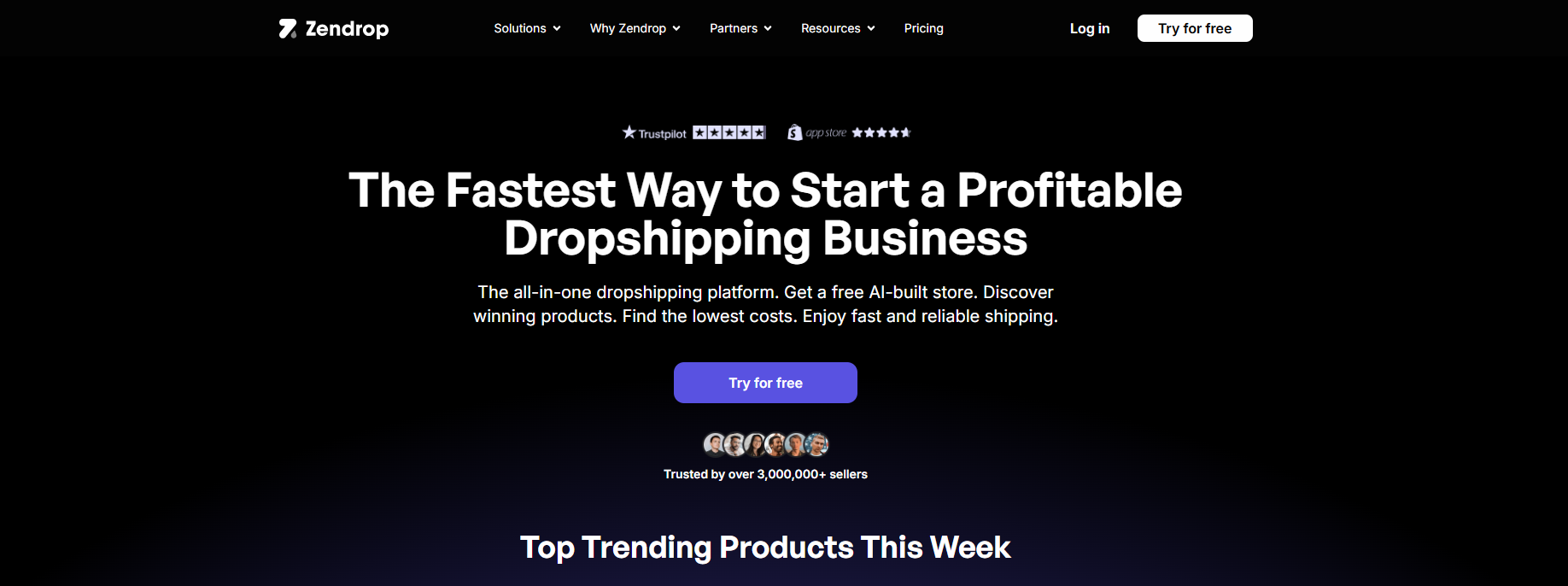
Website: zendrop.com
Zendrop positions itself as an all-in-one dropshipping platform with auto-fulfillment, a large product catalog, and fast shipping support. Its Shopify App Store listing also emphasizes custom branding, US drop shipping acceleration, POD features, and automation.
That makes Zendrop appealing to Shopify sellers who want a more polished “platform experience” instead of piecing together their workflow from multiple tools.
Zendrop’s appeal in 2026 comes from simplicity. A lot of merchants do not want to manage a messy network of spreadsheets, Chrome extensions, and supplier chats. They want one dashboard that feels modern and beginner-friendly. Zendrop leans into that.
It is often a good fit for:
- beginners who want a cleaner start
- sellers who value automation
- merchants who want easier onboarding than raw marketplace sourcing
- Shopify-first stores that want a more guided workflow
The tradeoff is that convenience can come with higher product costs versus hunting manually on broader marketplaces. That means Zendrop is usually strongest when you value workflow, speed, and usability more than squeezing every possible cent out of sourcing.
Best for: beginners who want a simple all-in-one setup.
Biggest strength: usability and automation.
Main weakness: some sellers may find pricing less aggressive than open marketplaces.
5. Spocket
Website: spocket.co
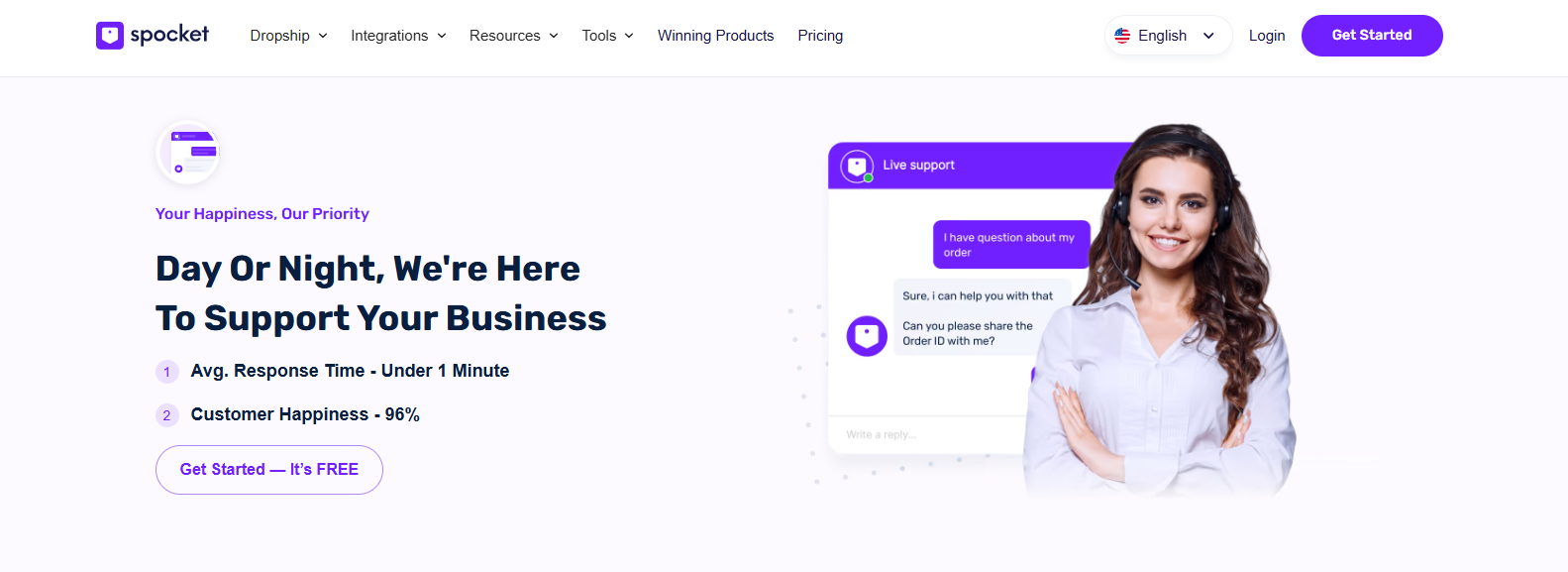
Spocket continues to stand out because of its emphasis on US and EU suppliers. Its official site describes it as a platform for dropshipping top products from US and EU suppliers, with easy import and order management.
That positioning matters because one of the biggest dropshipping problems is customer patience. Long shipping windows can kill conversion and increase refund pressure. Spocket’s core pitch is basically: sell products closer to your buyers.
Spocket tends to work best for:
- sellers targeting US or European shoppers
- stores that want a somewhat more premium feel
- merchants who care about faster delivery perception
- sellers in niches where branding and trust matter more than bargain-bin pricing
This is especially useful if you are building a cleaner niche store instead of a chaotic general store. For example, home decor, beauty accessories, lifestyle goods, and giftable products often benefit from the more curated feel that platforms like Spocket try to offer.
The tradeoff is product cost. Faster-region suppliers often mean tighter margins unless your positioning supports higher retail prices.
Best for: US/EU-focused stores and more polished niche brands.
Biggest strength: local-supplier angle and easier premium positioning.
Main weakness: product costs can be higher.
6. AutoDS
Website: autods.com
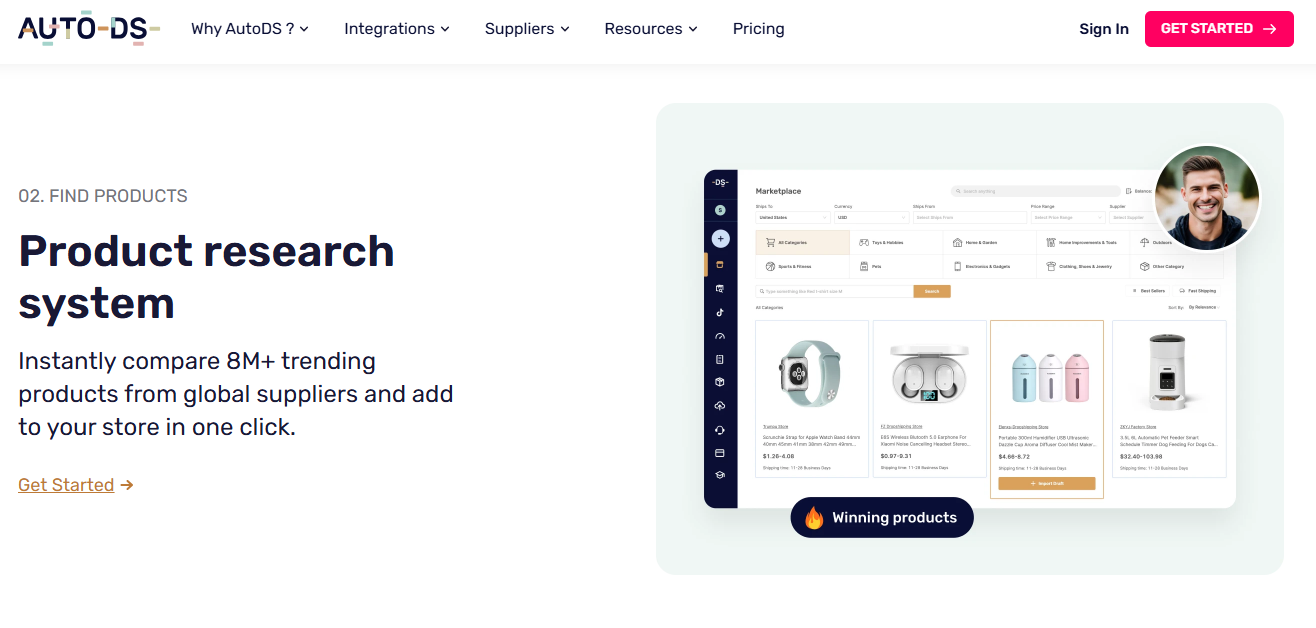
AutoDS markets itself as an all-in-one automation platform for dropshippers, with tools for product finding, importing, monitoring, and fulfillment. Its Shopify-specific pages and app listing highlight product sourcing, auto orders, custom branding support, and supplier access across multiple regions.
In practice, AutoDS is often less about “this is my one supplier” and more about “this is my operations layer.”
That distinction matters. Some platforms are strongest because of their own product network. AutoDS is strongest when a seller wants automation, catalog handling, and centralized workflow improvements.
It is particularly useful for:
- sellers managing many listings
- merchants who want operational efficiency
- intermediate users trying to reduce manual tasks
- people scaling beyond hobby level
For pure beginners, AutoDS can feel a little heavier than simpler tools. But for sellers who already understand the basics and want better systems, it becomes more attractive.
Best for: automation-focused sellers and operators managing larger catalogs.
Biggest strength: workflow automation.
Main weakness: can feel more complex for complete beginners.
7. Modalyst
Website: modalyst.co
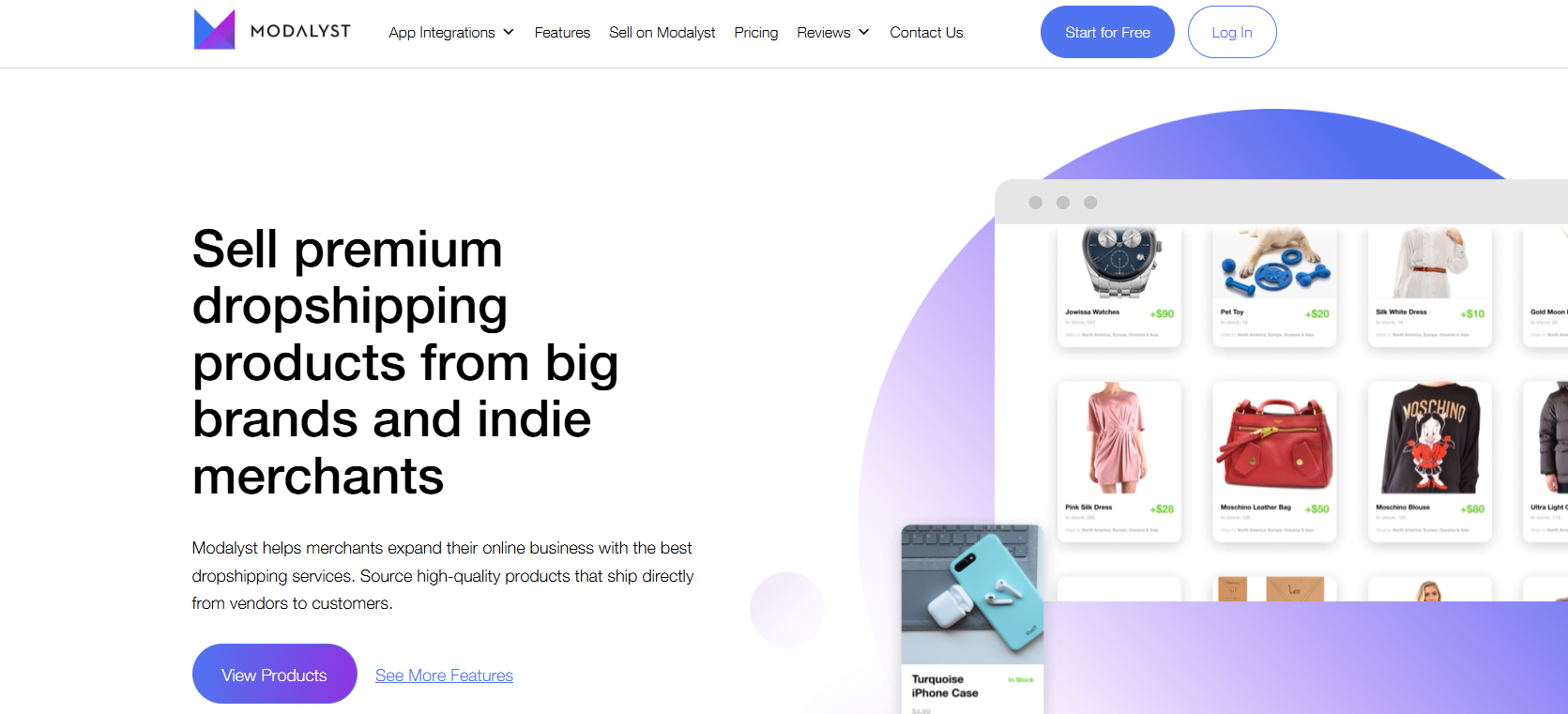
Modalyst is another long-running Shopify-friendly supplier platform, and its official site emphasizes premium products from big brands and independent merchants. Its Shopify-specific page says merchants can install the Modalyst Shopify app to launch a dropshipping store with products from top suppliers.
What makes Modalyst interesting is its positioning. It is less about “tons of random products” and more about products that feel more brandable or curated.
That gives it a place in the market for:
- fashion and accessories stores
- lifestyle and boutique-style shops
- creators or niche brands
- merchants who want something less generic than mass-market sourcing
If your whole business model is built around ultra-low-cost impulse products, Modalyst may not be the best fit. But if your store depends on aesthetics, presentation, and a more boutique feel, it can make more sense than broader supplier platforms.
Best for: fashion, lifestyle, boutique, and creator-led stores.
Biggest strength: more curated product style.
Main weakness: not ideal for low-ticket mass testing.
8. Printful
Website: printful.com
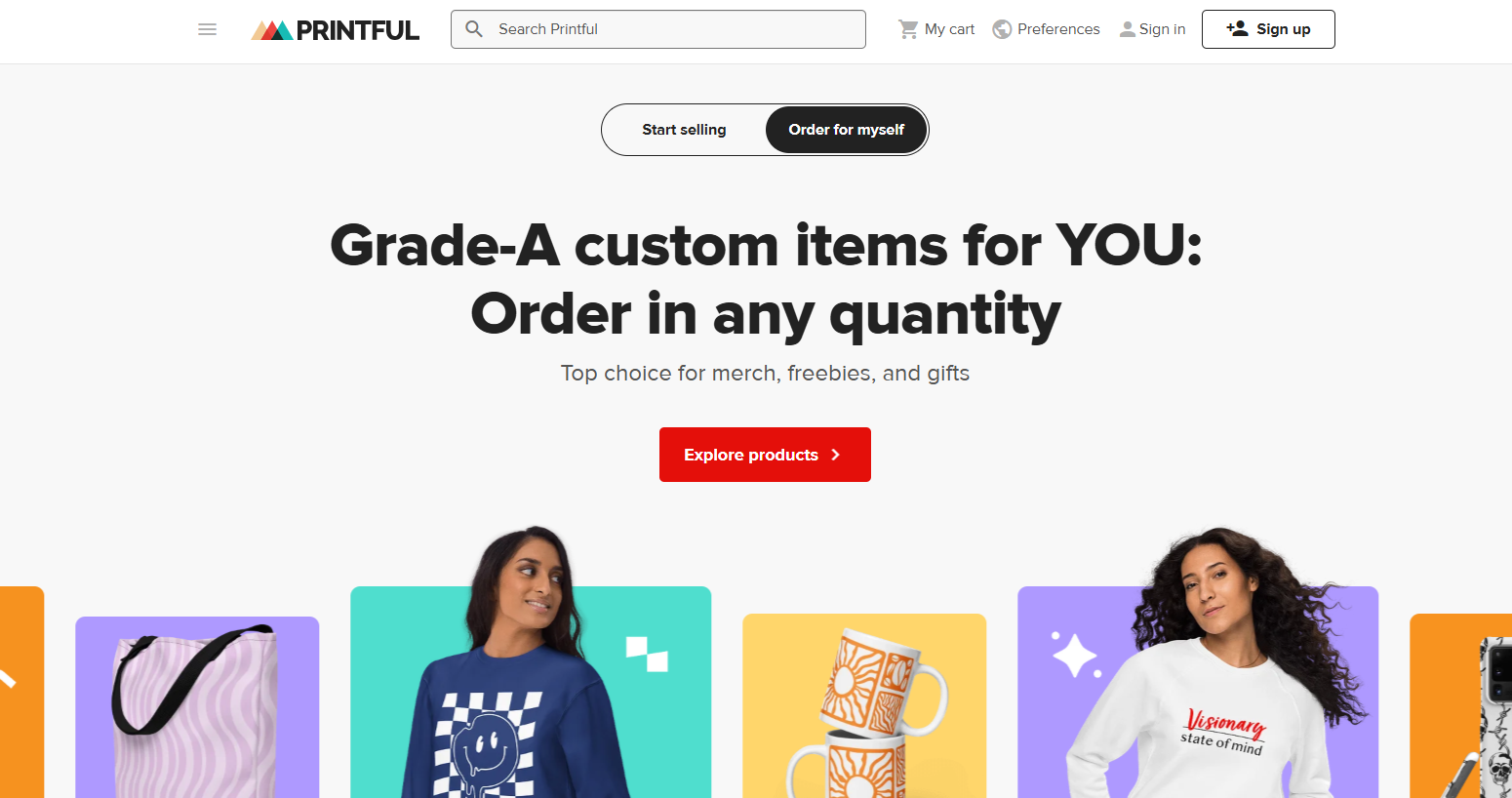
Printful is one of the most established print-on-demand platforms in ecommerce. Its official site presents it as a platform for custom products with print-on-demand dropshipping, while its Shopify app listing highlights printing, packing, and shipping custom products directly to customers.
It belongs on this list because a lot of Shopify sellers in 2026 are no longer choosing between “traditional dropshipping” and “POD.” They are choosing whichever model lets them create a more defensible store.
That is where Printful shines.
Rather than selling the same generic products as everyone else, Printful helps you build:
- branded apparel stores
- artist shops
- merch businesses
- niche identity brands
- creator stores
- custom gift stores
The major advantage is differentiation. If you are selling your own designs, you are harder to compare directly against every other dropshipper.
The downside is margin pressure and design responsibility. You need stronger branding and product creation discipline. POD is not easier than normal dropshipping. It is just different.
Best for: branded POD stores and creators.
Biggest strength: customization and brand differentiation.
Main weakness: lower margins unless your brand is strong.
9. Printify
Website: printify.com
Printify is another major POD supplier, but with a different model from Printful. Its official site emphasizes a broad catalog and a network of print providers, and its Shopify app listing says sellers can create and sell custom products while providers print, pack, and ship orders.
The biggest difference is flexibility. Printify gives sellers access to a wider provider network, which can be useful for price-shopping, location preferences, and product selection.
That makes Printify attractive for:
- POD stores that want supplier choice
- sellers trying to compare margins across providers
- brands selling many SKUs
- merchants who want broader catalog experimentation
The tradeoff is consistency. Because you work through a network of providers, results can vary more by provider than on a vertically controlled platform. That means sample ordering matters even more.
Still, for many Shopify sellers, Printify is one of the best “build your own custom catalog” options in 2026.
Best for: POD sellers who want variety and flexibility.
Biggest strength: large product range and provider choice.
Main weakness: provider-to-provider consistency can vary.
10. SaleHoo
Website: salehoo.com
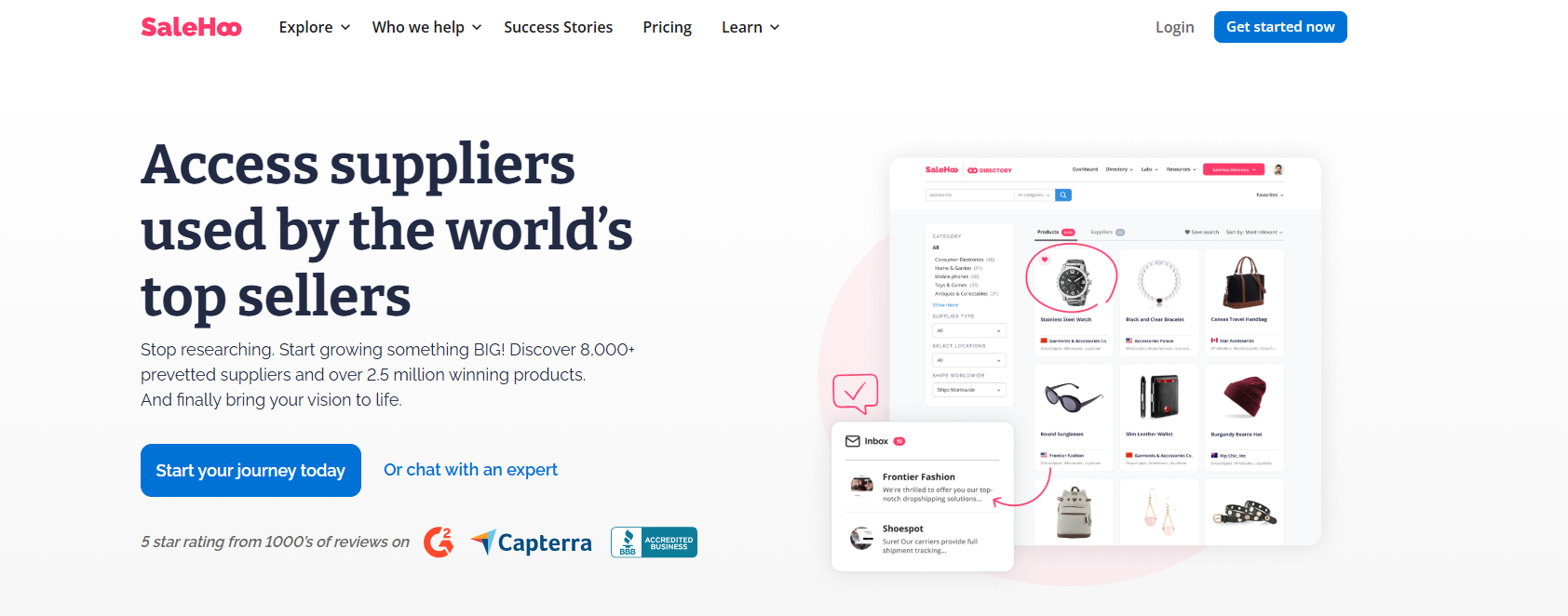
SaleHoo is a little different from the others because it is best understood as a supplier directory and sourcing platform rather than a single fulfillment engine. Its official site describes it as a way to access pre-vetted suppliers, and its supplier directory page says it includes thousands of vetted global suppliers across wholesalers, manufacturers, and dropshippers.
That means SaleHoo is often better for discovery than for one-click ease.
It works well for:
- sellers who want more supplier research control
- merchants comparing options before committing
- niche store owners looking for less-obvious suppliers
- people who want vetted contacts rather than just app-based importing
SaleHoo is useful because it helps reduce one common beginner mistake: trusting random suppliers too quickly. A vetted directory can save time and reduce scam risk. The tradeoff is that it is less turnkey than an all-in-one app.
If you like the idea of researching a supply chain rather than accepting the first platform you see, SaleHoo is still very relevant in 2026.
Best for: supplier discovery and research-heavy sellers.
Biggest strength: vetted supplier directory.
Main weakness: less plug-and-play than app-first platforms.
11. HyperSKU
Website: hypersku.com
HyperSKU positions itself around streamlined sourcing, custom branding, and fast global fulfillment. Its official pages highlight sourcing, branding, and scale-oriented fulfillment, and its Shopify App Store listing presents it as a serious dropshipping supplier built for sellers who want easier sourcing and fulfillment support.
HyperSKU tends to appeal more to sellers who already have some traction. It is less of a “browse a million random items” platform and more of a “help me run this business better” supplier relationship.
That makes it strong for:
- stores with existing winning products
- sellers scaling paid traffic
- merchants who care about branding and fulfillment quality
- operators moving beyond beginner-stage systems
If you are still trying to figure out whether anyone wants your product, HyperSKU may be more than you need. But if you already have demand and want stronger backend support, it becomes much more interesting.
Best for: scaling stores and sellers who need better fulfillment structure.
Biggest strength: sourcing + branding + fulfillment support.
Main weakness: less ideal as a pure beginner discovery tool.
12. Syncee
Website: syncee.com
Syncee describes itself as a premium dropshipping and wholesale marketplace connecting online stores with suppliers across multiple regions and platforms. Its site and Shopify app listing emphasize vetted suppliers, broad geography coverage, no inventory risk, product import, and automated sync.
What makes Syncee stand out is its marketplace structure plus geography mix. It is not only about China-based sourcing or pure POD. It is more of a retailer-supplier connection layer across regions.
That makes Syncee appealing for:
- stores looking for regional product variety
- merchants who want supplier diversity
- sellers who prefer a marketplace of vetted partners
- businesses mixing wholesale and dropship logic
It can be especially useful if you want products from the US, Canada, Europe, the UK, Australia, and beyond without being locked into one narrow sourcing lane.
Best for: supplier diversity and regionally varied sourcing.
Biggest strength: broad vetted marketplace model.
Main weakness: not always the cheapest route for raw product testing.
Which supplier is best for different types of Shopify sellers?
The most useful way to choose is by business stage.
Best for complete beginners
If you are just starting and want simple setup, Zendrop, CJdropshipping, and DSers are the easiest places to begin. They are built around Shopify workflows more clearly than trying to patch together random sourcing manually.
Best for broad product testing
If your goal is to test lots of products quickly, AliExpress, DSers, and CJdropshipping usually make the most sense. AliExpress gives range, DSers improves workflow, and CJ gives more platform structure.
Best for branding and cleaner customer experience
If you care about branding, HyperSKU, CJdropshipping, and Zendrop are more aligned with that path than raw marketplace sourcing, and Shopify specifically notes that branded dropshipping depends on packaging and collateral support from the supplier.
Best for US/EU shipping perception
If faster local fulfillment matters, Spocket and Syncee are strong choices because both emphasize regional supplier networks beyond the usual China-only model.
Best for POD
For print-on-demand, Printful and Printify are the most established picks on this list. Both integrate with Shopify and handle print, packing, and shipping without inventory.
Best for scale-stage sellers
Once you already have orders coming in, HyperSKU, AutoDS, and CJdropshipping become more attractive because the bottleneck shifts from “finding something to sell” to “fulfilling efficiently and consistently.”
Common mistakes when choosing a dropshipping supplier
The biggest supplier mistakes are surprisingly repetitive.
A lot of sellers choose based only on low product cost. But Shopify’s supplier guidance makes it clear that quality, shipping speed, and reviews matter just as much. Cheap products with unstable delivery often become expensive through refunds, chargebacks, and support headaches.
Another mistake is skipping samples. Even a good platform can contain weak individual products. A polished app does not guarantee that every item inside it is worth selling.
The third mistake is using the wrong supplier for the wrong stage. A beginner trying to build a premium brand through the cheapest open marketplace often runs into packaging and trust problems. A scale-stage store still relying on highly manual fulfillment usually hits operational pain fast.
And one more mistake is expecting one supplier to do everything. In reality, many strong Shopify stores end up with a main supplier plus backups, or a testing supplier plus a scaling supplier, or one workflow for general products and another for POD.
Should you use one supplier or multiple suppliers?
In the beginning, one main supplier is usually simpler. It keeps your workflow cleaner, reduces catalog chaos, and makes support easier.
But as your store matures, multiple supplier relationships can make sense:
- one for broad testing
- one for branded winners
- one for POD
- one for faster regional fulfillment
Shopify’s own ecosystem reflects that there is no single “official” model. There are apps, directories, POD services, and various sourcing methods depending on your experience and goals.
So the goal is not maximum simplicity forever. It is using the simplest setup that still fits your stage.
Final verdict: which Shopify dropshipping supplier is best in 2026?
If I had to reduce the whole article to a practical answer, it would look like this:
- Best all-around option: CJdropshipping
- Best AliExpress workflow tool: DSers
- Best raw marketplace for testing: AliExpress
- Best beginner-friendly all-in-one: Zendrop
- Best for US/EU supplier positioning: Spocket
- Best for automation-heavy operators: AutoDS
- Best for boutique/premium catalog feel: Modalyst
- Best POD for strong branding: Printful
- Best POD for product range and provider choice: Printify
- Best for supplier research: SaleHoo
- Best for scaling and branding support: HyperSKU
- Best for broad vetted supplier diversity: Syncee
The most important thing is not picking the internet’s “number one” supplier.
It is choosing the supplier that matches your business right now.
If you are brand new, use a platform that makes testing easier. If you already have traction, move toward a supplier that improves fulfillment quality. If you are building a defensible brand, stop thinking like a commodity seller and use suppliers that support branding, differentiation, or custom products.
That is how supplier choice stops being a beginner checkbox and starts becoming a real growth decision.
Official supplier websites at a glance
- CJdropshipping — https://cjdropshipping.com/
- DSers — https://www.dsers.com/index.html
- AliExpress — https://www.aliexpress.com/
- Zendrop — https://www.zendrop.com/
- Spocket — https://www.spocket.co/
- AutoDS — https://www.autods.com/
- Modalyst — https://www.modalyst.co/
- Printful — https://www.printful.com/
- Printify — https://printify.com/
- SaleHoo — https://www.salehoo.com/
- HyperSKU — https://www.hypersku.com/
- Syncee — https://syncee.com/
FAQ
What is the best Shopify dropshipping supplier in 2026?
For most general Shopify sellers, CJdropshipping is one of the strongest all-around options because it combines sourcing, Shopify integration, and room to scale.
Which supplier is best for beginners?
Zendrop, CJdropshipping, and DSers are all beginner-friendly in different ways: Zendrop for simplicity, CJ for flexibility, and DSers for AliExpress-based workflow.
Which supplier is best for fast shipping?
Spocket and Syncee are strong if you want access to more US, EU, and other regional suppliers, which can help with shipping expectations.
Is AliExpress still worth using in 2026?
Yes, especially for product testing and broad sourcing, but it is no longer the only serious option. Shopify still supports AliExpress-style workflows through apps, but quality and shipping consistency vary by seller.
What is the best supplier for branded dropshipping?
HyperSKU, CJdropshipping, Zendrop, and POD platforms like Printful can all make more sense than raw marketplace sourcing if branding is your priority.