
Ecommerce fulfillment is one of the most important parts of building a successful online store. A customer may discover your product through TikTok, Google, Amazon, Shopify, or Instagram, but what they remember most is whether the order arrives on time, in good condition, and with clear tracking.
In 2026, fulfillment is no longer just a backend task. It directly affects conversion rate, customer trust, refund risk, reviews, and repeat purchases. The fulfillment services market is projected to grow from about $106.71 billion in 2025 to $115.42 billion in 2026, showing how important outsourced logistics has become for ecommerce brands.
For beginners, this can feel confusing. Some fulfillment services are traditional 3PL warehouses. Some are dropshipping platforms. Some are shipping software tools. Some are better for Amazon sellers, while others are better for Shopify, TikTok Shop, DTC brands, or bulky products.
This guide explains how ecommerce fulfillment services work in 2026, which providers are worth knowing, and how beginners can choose the right option without overcomplicating their business.
What Ecommerce Fulfillment Services Mean in 2026
Ecommerce fulfillment services help online sellers store products, process orders, pick and pack items, ship packages, update tracking, and sometimes handle returns. Instead of doing everything yourself from a garage, office, or small warehouse, you work with a fulfillment partner that manages the physical order process.
For beginners, fulfillment usually falls into three main models.
The first model is dropshipping fulfillment. You do not buy inventory upfront. When a customer places an order, the supplier or fulfillment partner ships the product directly to the buyer. This is beginner friendly because it lowers inventory risk.
The second model is 3PL fulfillment. You send inventory to a third party warehouse. When orders come in, the warehouse picks, packs, and ships the products for you. This works better when a product already has stable sales.
The third model is shipping software or self fulfillment support. You still store and pack your own products, but software helps you manage orders, buy labels, compare carriers, print shipping labels, and upload tracking.
In 2026, many ecommerce sellers use a mix of these models. A beginner may start with dropshipping, move winning products into a 3PL warehouse, and use shipping software for special orders or small batch inventory.
The best fulfillment setup is not always the biggest or most expensive one. It is the one that matches your product size, order volume, target country, budget, and customer expectations.
What Beginners Should Know Before Outsourcing Fulfillment
Outsourcing fulfillment can save time, but it does not remove responsibility. Customers still buy from your store. If the package arrives late, damaged, or with the wrong item, they will contact you first.
Before choosing a fulfillment service, beginners should understand a few basic points.
First, fulfillment cost is more than shipping. You may pay for storage, receiving, pick and pack, packaging materials, returns, special handling, inventory counting, oversized items, and monthly minimums. A service that looks cheap at first may become expensive if your products are large, slow moving, or frequently returned.
Second, shipping speed depends on warehouse location. If most of your customers are in the United States, a U.S. warehouse can help shorten delivery times. If you sell in Europe, EU stock may be more practical. For international sellers, global warehouse coverage can make a big difference.
Third, product type matters. Small accessories, supplements, apparel, furniture, electronics, beauty products, and fragile items all need different fulfillment support. A fulfillment service that works well for T shirts may not be ideal for heavy furniture or battery powered products.
Fourth, integrations save time. If your fulfillment service connects with Shopify, WooCommerce, Amazon, eBay, TikTok Shop, Etsy, or other channels, orders can sync more smoothly and tracking can update faster.
Finally, beginners should not move too quickly into warehouse inventory. If a product has not been tested, buying stock can create pressure. It is often safer to test demand first, then use 3PL fulfillment when the product has stable sales.
What Are the Best Ecommerce Fulfillment Services in 2026
Below are some of the best ecommerce fulfillment services and platforms worth considering in 2026. They are not all the same type of provider, so the right choice depends on your product, store stage, and target market.
1. ShipBob
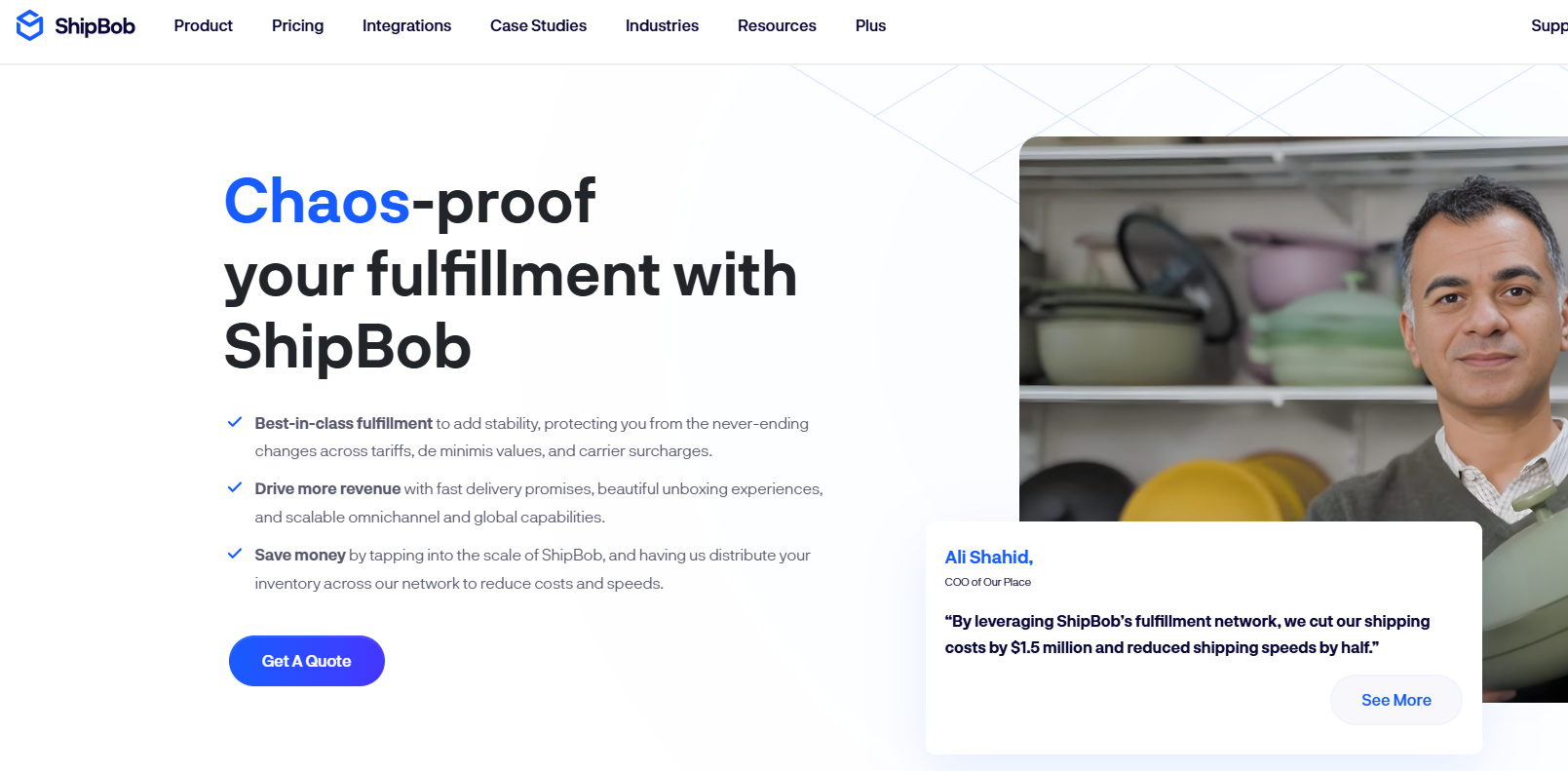
Best for: Growing ecommerce brands, DTC stores, multi channel fulfillment
ShipBob is one of the most recognized ecommerce fulfillment providers. It offers fulfillment across multiple sales channels and has a global network of more than 60 fulfillment centers across the U.S., Canada, the UK, the EU, and Australia. ShipBob also states that it can ship to over 250 destinations worldwide.
For beginners who are starting to get consistent orders, ShipBob can be useful because it combines warehouse fulfillment, inventory management, order management, analytics, and integrations.
It is especially suitable for brands that want to grow beyond manual shipping and offer faster delivery across multiple regions. The main thing to check is pricing. Make sure your order volume and margin can support 3PL fees before moving inventory.
2. CJdropshipping
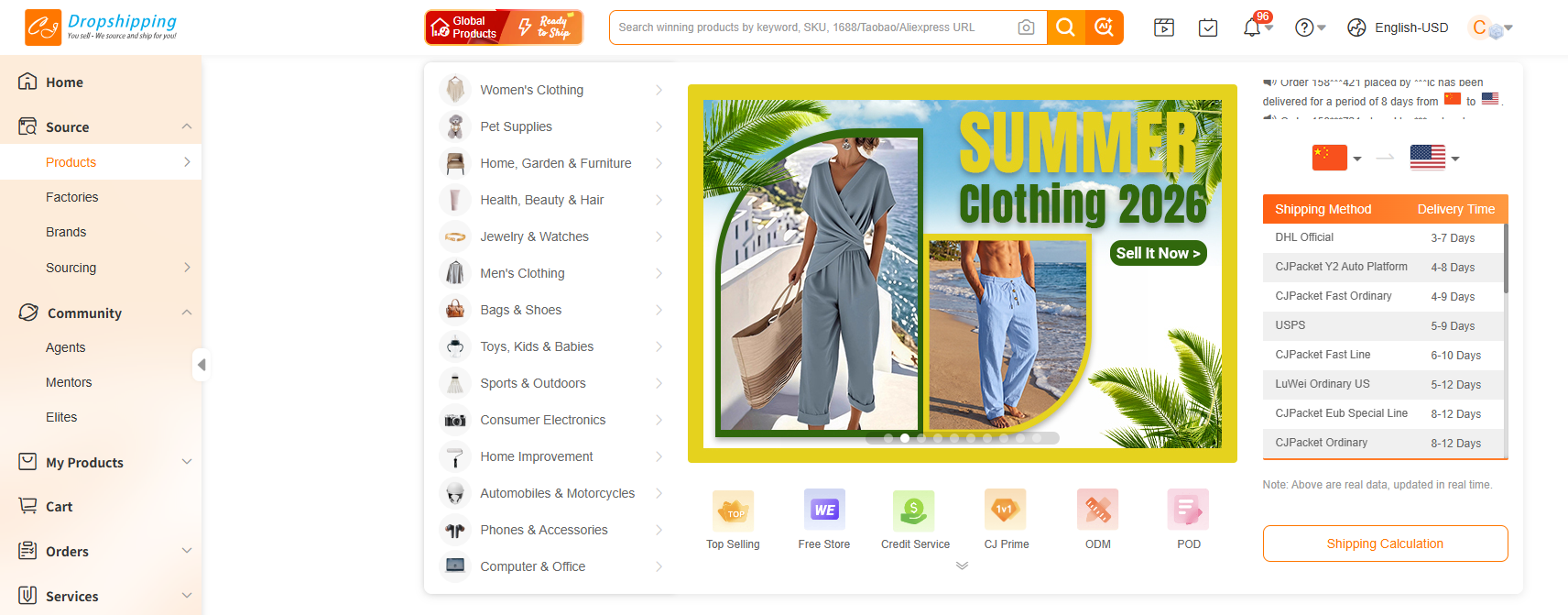
Best for: Dropshipping fulfillment, product sourcing, packaging, and global warehouse support
CJdropshipping is useful for sellers who want sourcing and fulfillment connected in one workflow. Its 3PL fulfillment service highlights flexible storage, real time tracking, worldwide delivery, custom packaging, and compatibility with platforms such as Shopify, eBay, WooCommerce, Etsy, TikTok Shop, Temu, Lazada, and more.
For beginners, the advantage is flexibility. You can start with product sourcing and dropshipping fulfillment, then explore packaging, branding, or warehouse storage once a product begins to sell steadily.
This is especially helpful for sellers who do not want to manage separate suppliers, packaging providers, and logistics partners too early. The key is to choose products carefully and confirm shipping methods, processing times, and destination coverage before scaling.
3. Amazon Multi-Channel Fulfillment
Best for: Sellers who want to use Amazon’s fulfillment network across non-Amazon channels
Amazon Multi-Channel Fulfillment, also called MCF, lets sellers use Amazon’s fulfillment network to pick, pack, ship, and deliver orders from channels outside Amazon. Amazon describes MCF as a third party logistics solution for orders across multiple sales channels.
This can be useful if you already use Amazon FBA or want access to Amazon’s strong logistics network. It can work for Shopify, BigCommerce, WooCommerce, and other channels through integrations.
The main consideration is branding and cost. Some sellers may prefer more control over packaging or customer experience. You should also check current MCF fees, surcharges, and product restrictions before choosing this option.
4. ShipMonk
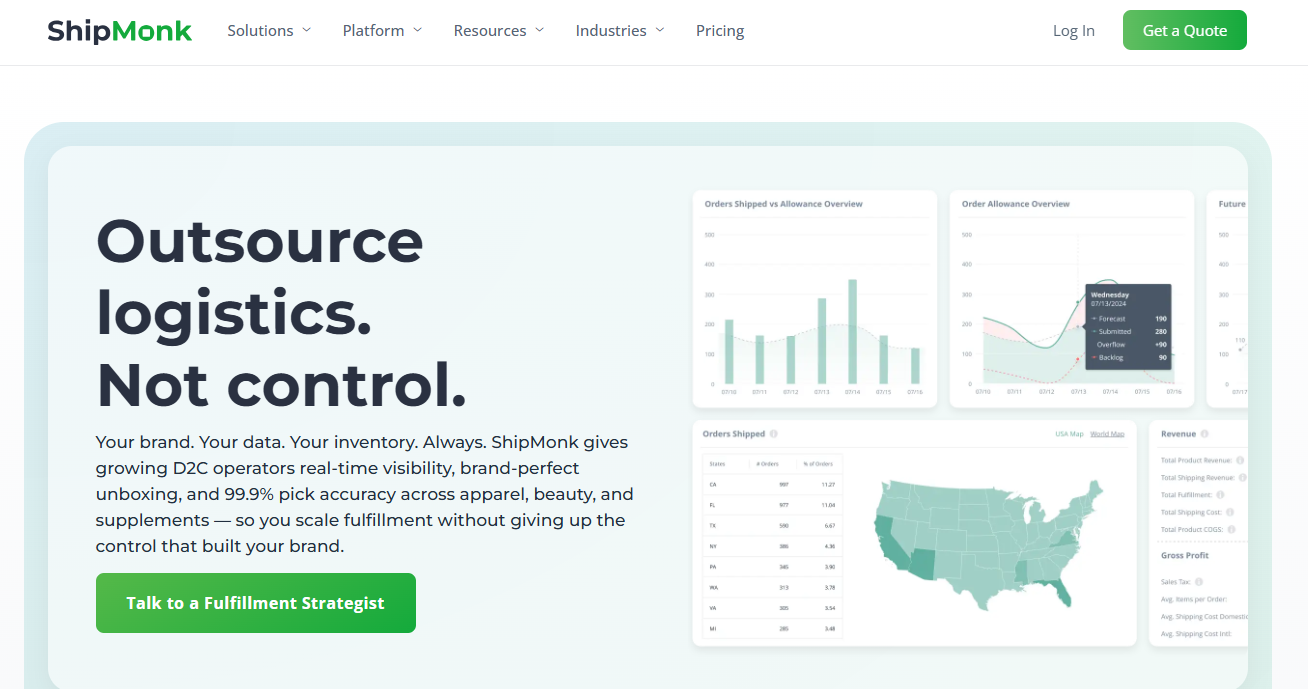
Best for: DTC brands that want scalable 3PL technology
ShipMonk is a 3PL provider focused on ecommerce and DTC brands. Its platform highlights order management, inventory management, real time visibility, optimized shipping, analytics, and more than 100 integrations. ShipMonk also promotes 99.9% order accuracy and technology built to scale with growing brands.
For beginners who are already seeing stable orders, ShipMonk can be a good option when manual fulfillment starts becoming difficult. It is especially useful for sellers who care about inventory visibility and automation.
The main thing to check is whether your product volume, product size, and margin fit its pricing structure.
5. Flexport
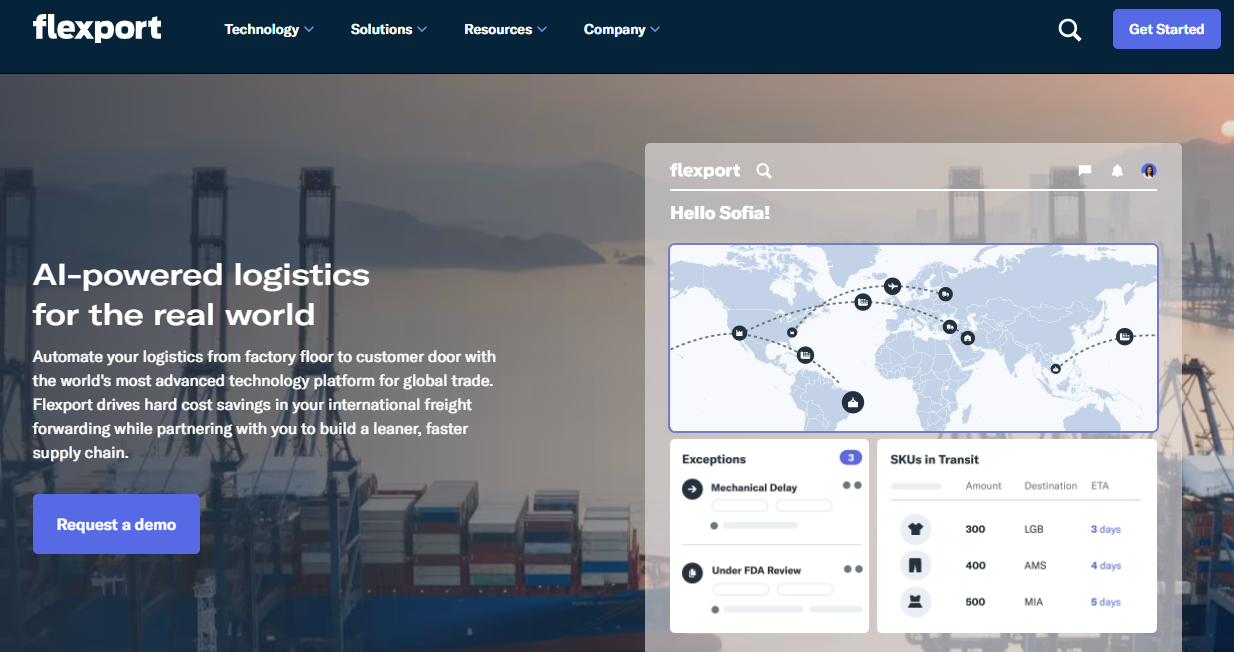
Best for: Shopify sellers, global logistics, and brands that need fulfillment plus freight support
Flexport offers ecommerce fulfillment and connects with Shopify through the Shopify Fulfillment Network app. Shopify’s own help documentation explains how merchants can connect Flexport from the Shopify admin through Fulfillment Network.
Flexport can be useful for sellers who need more than basic parcel fulfillment. It can support brands thinking about freight, inventory placement, global logistics, and fulfillment in a more connected way.
This may be better for growing brands than very early beginners. Before using Flexport, sellers should review pricing carefully, especially if they have low order volume or limited inventory.
6. Red Stag Fulfillment
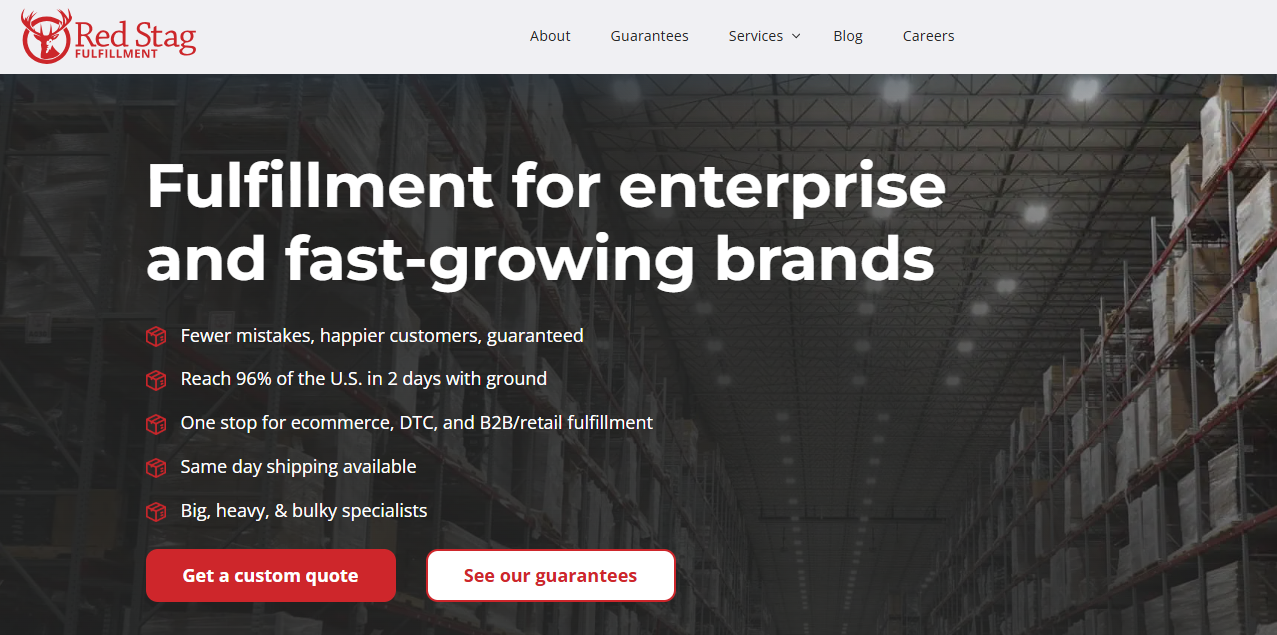
Best for: Heavy, bulky, high value, and fragile products
Red Stag Fulfillment is known for ecommerce fulfillment with a focus on big, heavy, bulky, and high value items. Its site highlights same day shipping, financially backed guarantees, and the ability to reach 96% of the U.S. in 2 days with ground shipping.
This makes Red Stag a strong option for products that many standard fulfillment centers may not handle well, such as furniture, fitness equipment, large home goods, premium electronics, and fragile products.
For beginners, Red Stag may not be necessary if you sell small accessories. But if your store sells heavier items, choosing a specialist can reduce damage risk and shipping mistakes.
7. eFulfillment Service
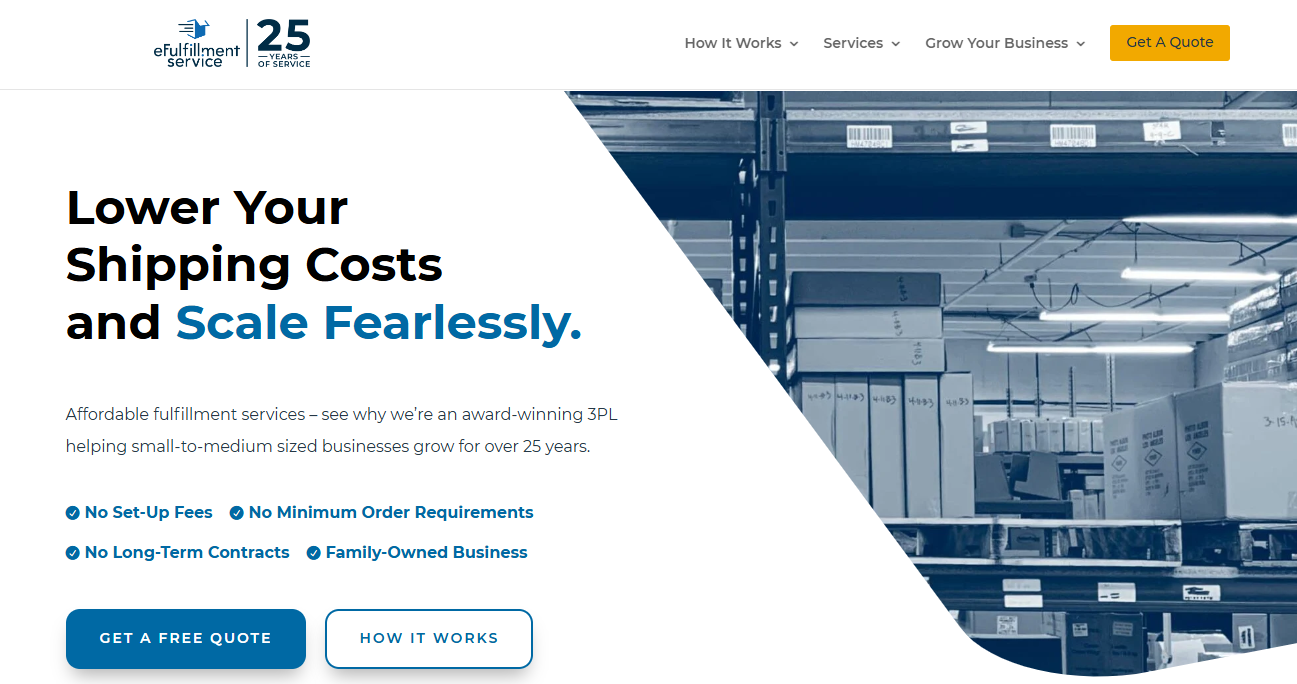
Best for: Startups, small businesses, and sellers with low order volume
eFulfillment Service is a good option for beginners because it promotes no setup fees, no minimum order requirements, no long term contracts, and a 99.9% order accuracy rate.
This can be helpful for small ecommerce sellers who are not ready for large monthly minimums. If you are moving from self fulfillment to your first 3PL, flexible terms can make the transition less stressful.
It is especially suitable for small to medium sized sellers who want to outsource fulfillment without committing too early to high volume requirements.
8. ShipHero
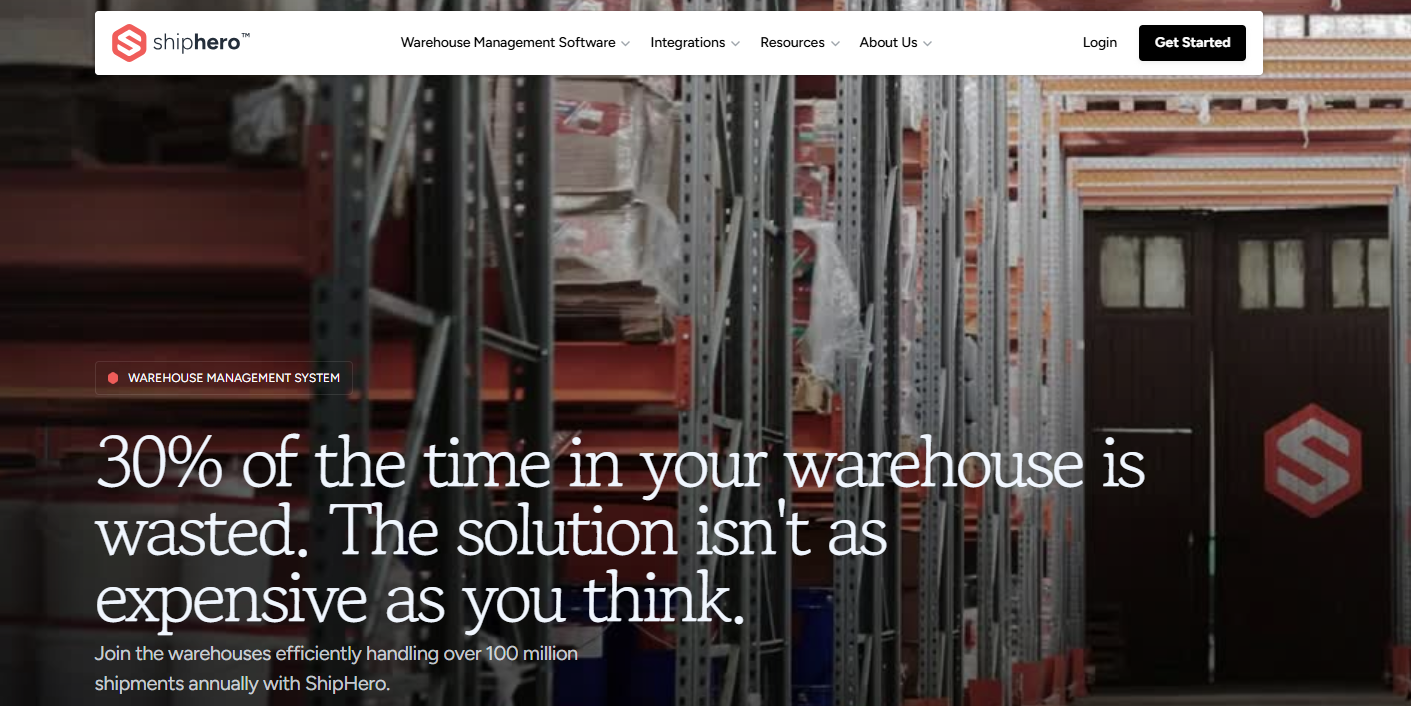
Best for: Brands that need warehouse management, 3PL operations, or strong integrations
ShipHero offers warehouse management software and fulfillment related tools for DTC brands and 3PL providers. Its help center says ShipHero provides direct integrations with popular ecommerce platforms and marketplaces, allowing stores to sync orders, products, and inventory.
ShipHero can be useful for sellers that are building a more advanced operation or working with warehouses that use its system. It is also relevant for brands that need better visibility across orders, inventory, and shipments.
For complete beginners, ShipHero may feel more advanced than necessary. But for growing stores, it can support a more serious fulfillment workflow.
9. ShipStation
Best for: Sellers who still self fulfill but need better shipping software
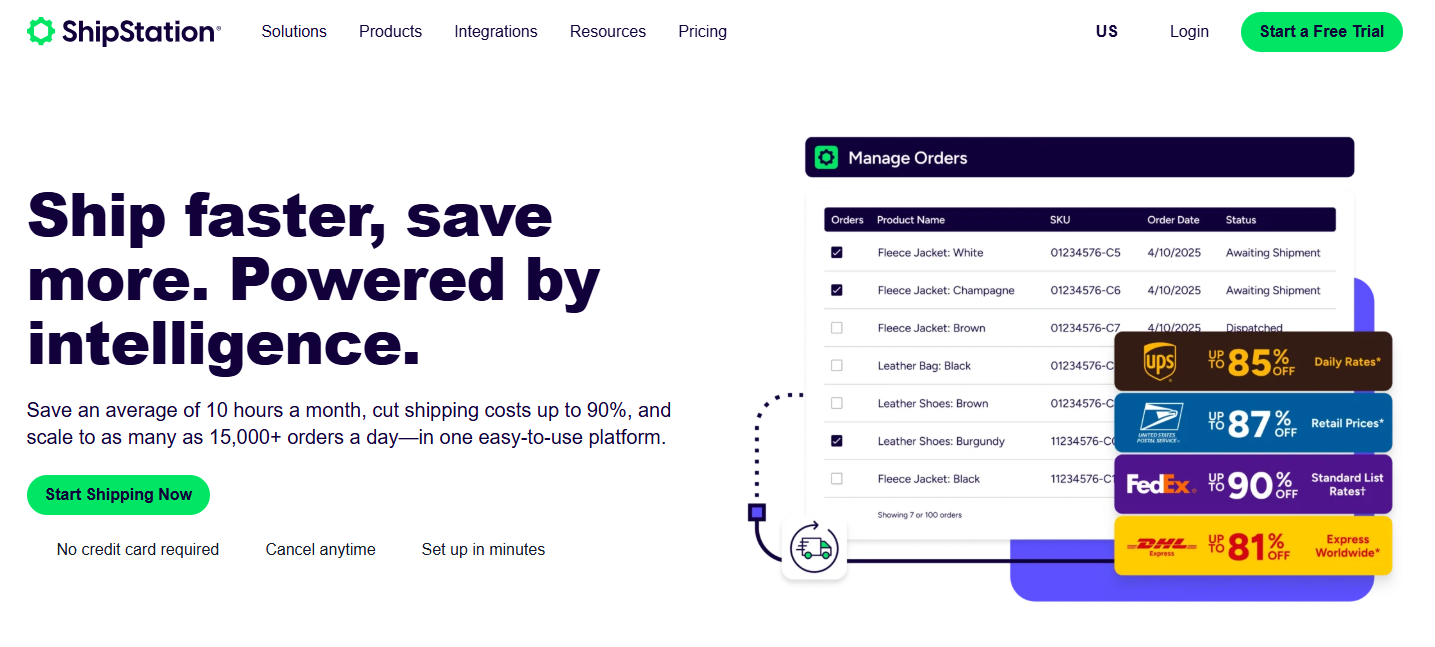
ShipStation is not a traditional 3PL warehouse. It is shipping and fulfillment software that helps sellers import orders, manage shipping, compare rates, print labels, automate workflows, and connect orders, shipping, inventory, tracking, and returns in one dashboard.
This is useful if you are still packing orders yourself but want to ship faster and reduce manual mistakes. For beginners with small inventory, ShipStation can be a practical step before moving into full 3PL fulfillment.
It works best when you want control over packaging and inventory but need better shipping efficiency.
10. Shopify Fulfillment Network Partners
Best for: Shopify stores that want integrated 3PL partner access
Shopify now connects merchants with trusted logistics partners through Shopify Fulfillment Network. The Shopify app listing says sellers can connect with partners including Flexport, ShipBob, Shipfusion, and ShipMonk through an integrated solution.
For Shopify beginners, this can simplify the search process because fulfillment partners are connected through the Shopify ecosystem. It may reduce the need to switch between too many tools.
Still, you should compare each partner carefully. Warehouse locations, fees, minimums, product restrictions, returns, and shipping promises can vary.
How to Choose the Right Fulfillment Service for Your Product Type
The right fulfillment service depends heavily on what you sell. A provider that works well for small beauty tools may not work well for furniture, supplements, electronics, or oversized products.
If you sell small, lightweight products, look for fast picking, affordable shipping, low storage costs, and strong tracking updates. Beauty tools, phone accessories, fashion accessories, and small home products usually fit this model.
If you sell apparel or print on demand products, make sure the fulfillment provider can handle variants, sizes, colors, returns, and packaging consistency. Apparel can create return issues if sizing is unclear.
If you sell supplements or beauty products, check storage conditions, expiration handling, packaging protection, labeling requirements, and return rules. Products related to health or personal care need extra attention.
If you sell electronics, check battery rules, packaging strength, quality control, and warranty expectations. Electronics can create more support tickets if customers do not understand usage or compatibility.
If you sell furniture or heavy products, choose a provider that understands oversized items, damage prevention, freight cost, and return complexity. A general small parcel 3PL may not be enough.
Beginners should start with products that are easy to ship, easy to describe, and less likely to break. The more complicated the product, the more important your fulfillment partner becomes.
How to Compare Costs, Shipping Speed, Returns, and Integrations
When comparing ecommerce fulfillment services, beginners should avoid looking only at the lowest pick and pack fee. The real cost includes multiple parts.
Start with storage fees. If your product sells slowly, storage costs can eat into profit. This is especially important for bulky products.
Next, check pick and pack fees. Some providers charge per order, per item, or extra for special packaging. If you sell bundles, make sure the cost still works.
Shipping rates are another major factor. A provider with better carrier discounts may save money even if its pick and pack fee is slightly higher.
Returns also matter. Ask how returns are received, inspected, restocked, discarded, or reported. For categories like apparel, beauty, supplements, furniture, and electronics, returns can become a serious cost.
Integrations are important because manual order handling creates mistakes. A good fulfillment partner should connect with your ecommerce platform and update tracking automatically. This becomes more important as order volume grows.
Finally, check customer support. When an order goes wrong, you need fast answers. A provider with slow support can make your customer service harder.
A good fulfillment service should not only ship orders. It should help you reduce mistakes, protect margins, and create a better customer experience.
When to Move from Dropshipping to 3PL Fulfillment
Dropshipping is useful for testing products because you do not need to buy inventory upfront. But once a product starts selling consistently, 3PL fulfillment may become a better option.
You should consider moving to 3PL fulfillment when a product has stable demand, low refund rates, positive customer feedback, and predictable order volume. At that point, holding inventory closer to customers can improve delivery speed and customer trust.
Another sign is when supplier processing time becomes a problem. If customers are waiting too long for tracking updates, storing inventory in a fulfillment warehouse may reduce delays.
You may also move to 3PL when branding becomes important. If you want custom packaging, inserts, bundles, better unboxing, or consistent packaging, a fulfillment warehouse can give you more control.
However, beginners should not move too early. If the product is untested, inventory can become a financial burden. Start with dropshipping or small batch testing, then move winning products into a warehouse once the numbers are clear.
A safe growth path looks like this: test the product, validate demand, improve product pages, review customer feedback, prepare small inventory, then use a 3PL partner to improve shipping and customer experience.
Q&A for Beginners - Best Ecommerce Fulfillment
1. What is an ecommerce fulfillment service?
An ecommerce fulfillment service stores products, processes orders, packs items, ships packages, updates tracking, and may also handle returns. It helps online sellers deliver orders without managing the full warehouse process themselves.
2. What is the difference between dropshipping and 3PL fulfillment?
Dropshipping means the supplier usually ships orders directly to customers without you buying inventory upfront. 3PL fulfillment means you send inventory to a warehouse, and the warehouse ships customer orders for you.
3. When should beginners use a fulfillment service?
Beginners can use dropshipping fulfillment when testing products. They should consider 3PL fulfillment when a product has stable sales, predictable demand, and enough margin to support storage and fulfillment fees.
4. What is the best ecommerce fulfillment service for beginners?
There is no single best service for everyone. eFulfillment Service may suit low volume startups, CJdropshipping can support sourcing and dropshipping fulfillment, ShipBob and ShipMonk are useful for growing DTC brands, and ShipStation works well for sellers who still self ship.
5. How much does ecommerce fulfillment cost?
Costs vary by provider, product size, storage time, order volume, packaging needs, shipping destination, and return handling. Always calculate storage, pick and pack, packaging, shipping, returns, monthly minimums, and special handling fees.