
Shopify dropshipping is still one of the most accessible ways to start an ecommerce business in 2026. You can launch a store, test products, and fulfill customer orders without purchasing a large amount of inventory in advance.
However, accessible does not mean easy.
The days of importing random products, copying supplier descriptions, and expecting immediate sales are largely over. Customers now expect professional product pages, reliable delivery estimates, responsive support, and a brand they can trust. At the same time, merchants must manage advertising costs, payment fees, refunds, taxes, and product compliance.
A successful Shopify dropshipping business is therefore not just a store connected to a supplier. It is a coordinated system involving:
-
Product research
-
Supplier management
-
Store conversion
-
Customer acquisition
-
Order fulfillment
-
Financial control
-
Customer retention
-
Product compliance
This guide explains how Shopify dropshipping works in 2026, how much it costs, how to select products and suppliers, how to build your store, and how to grow without losing control of profitability.
Last updated: August 2026. Shopify prices, features, regulations, and third-party services can change. Always verify current terms before making a business decision.
What Is Shopify Dropshipping?
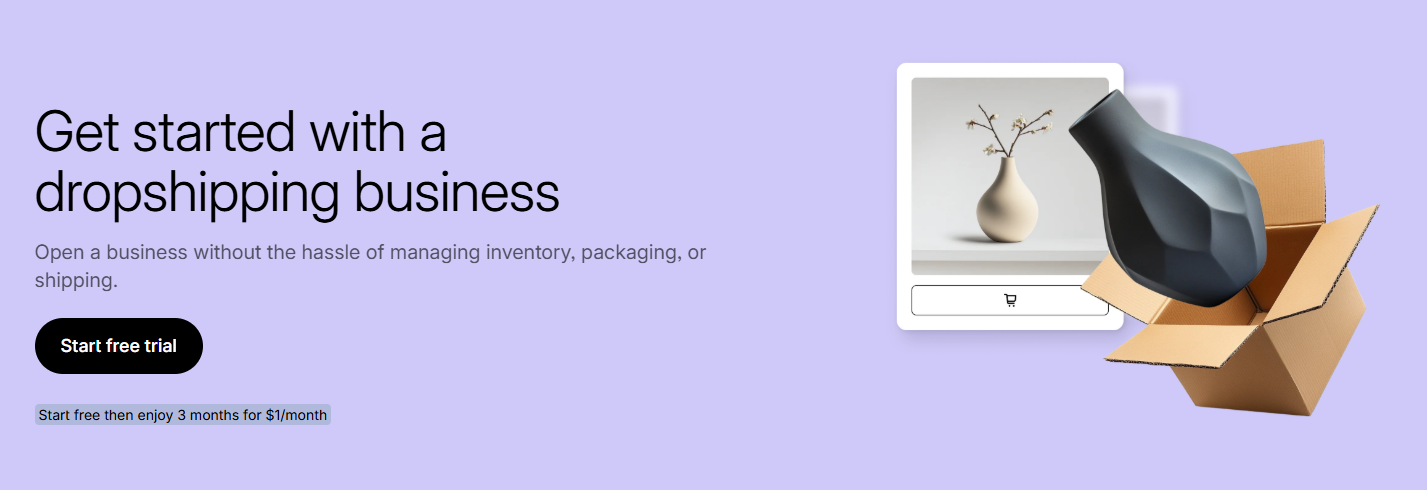
Shopify dropshipping is an ecommerce fulfillment model in which you sell products through a Shopify store without keeping every product in your own warehouse.
When a customer places an order, the order information is sent to a supplier. The supplier prepares the package and ships it directly to the customer. You manage the storefront, marketing, pricing, customer communication, and overall buying experience.
Shopify describes dropshipping as a model in which the supplier ships the product directly to the customer, allowing the merchant to operate without holding inventory or managing the physical shipping process.
How a Shopify Dropshipping Order Works
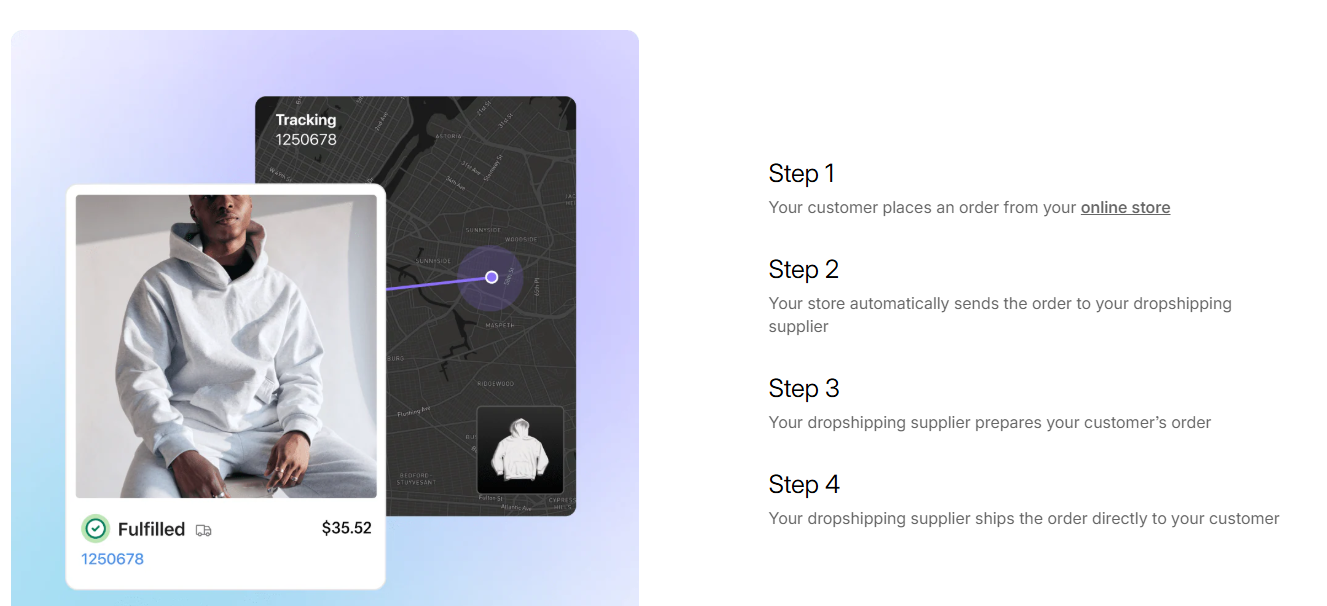
A standard order follows this process:
-
A customer visits your Shopify store.
-
The customer purchases a product for your retail price.
-
Shopify records the payment and creates the order.
-
The order is sent to your connected supplier.
-
You pay the supplier for the product and shipping.
-
The supplier processes, packs, and ships the product.
-
Tracking information is added to the order.
-
The customer receives delivery updates.
-
You handle questions, returns, refunds, and after-sales support.
For example, suppose a customer pays $49.99 for a product. Your product and shipping cost is $20. The difference is not automatically your profit. You still need to deduct payment fees, advertising, app subscriptions, refunds, and other operating expenses.
Who Is Responsible for the Customer?
The supplier may ship the product, but the customer purchased from your store.
That means you remain responsible for:
-
Accurate product descriptions
-
Shipping promises
-
Customer communication
-
Refund policies
-
Product safety
-
Advertising claims
-
Chargebacks
-
The overall customer experience
This distinction matters. A merchant cannot simply blame a supplier when a product arrives late or does not match the description. From the customer’s perspective, your business accepted the payment and made the promise.
Shopify Dropshipping vs. Traditional Ecommerce
A traditional ecommerce business often purchases products in bulk, stores them, and fulfills orders internally or through a third-party logistics provider.
Dropshipping reduces the need for upfront inventory, but it also reduces your direct control over:
-
Product quality
-
Packaging
-
Processing time
-
Inventory availability
-
Shipping performance
Traditional inventory provides more control and potentially better unit costs. Dropshipping provides more flexibility and lower inventory risk.
Many successful businesses use a hybrid approach. They test products through dropshipping, then purchase inventory for products with proven demand.
Shopify Dropshipping vs. Marketplace Selling
Shopify differs from marketplaces such as Amazon, Etsy, eBay, and TikTok Shop.
A marketplace may provide built-in traffic, but it also controls more of the customer relationship, search visibility, product rules, and account policies.
With Shopify, you have greater control over:
-
Store design
-
Brand presentation
-
Product collections
-
Pricing
-
Email marketing
-
Customer data
-
Upsells and bundles
-
Retention campaigns
The trade-off is that Shopify does not automatically send large numbers of shoppers to a new store. You must create your own traffic through advertising, social media, creators, search engines, partnerships, or existing audiences.
Is Shopify Dropshipping Still Profitable in 2026?
Shopify dropshipping can still be profitable, but profitability depends on execution.
A store with high revenue can still lose money. A smaller store with controlled advertising costs and strong repeat purchases can be more financially sustainable.
Shopify itself notes that dropshipping has relatively low barriers to entry, but this also creates strong competition and can limit margins when many merchants sell similar products.
Why the Model Still Works
Dropshipping remains useful because it allows merchants to:
-
Test products without committing to large inventory
-
Enter new categories more quickly
-
Sell to different markets
-
Change products when demand changes
-
Validate customer interest before private labeling
-
Reduce unsold inventory risk
-
Automate parts of fulfillment
It is especially useful as a product-validation model.
Instead of ordering 1,000 units of an untested product, you can launch a smaller test, evaluate customer response, and purchase inventory only after demand becomes more predictable.
What Has Changed
Customers have become less tolerant of generic stores and unclear delivery information.
A store that relies on copied supplier images, exaggerated claims, and hidden shipping times may still generate clicks, but it is unlikely to build lasting customer trust.
In 2026, successful stores are more likely to focus on:
-
A defined niche
-
Original product content
-
Faster or clearer fulfillment
-
Better supplier communication
-
Stronger product-page conversion
-
Customer retention
-
Brand development
-
Accurate compliance information
Automation has also become easier, but excessive automation creates new problems. Automatically generated descriptions, imported reviews, and unverified product data can produce inaccurate claims or inconsistent customer experiences.
Calculate Real Profit, Not Revenue
Use the following formula:
Net profit = Revenue − product cost − shipping − payment fees − advertising − refunds − apps − operating costs − taxes
Consider this example:
-
Selling price: $49.99
-
Product and shipping: $20.00
-
Payment processing: $1.75
-
Advertising cost per order: $15.00
-
App and software allocation: $1.00
-
Refund and replacement allowance: $2.00
Estimated net contribution before tax:
$49.99 − $20 − $1.75 − $15 − $1 − $2 = $10.24
The store generated nearly $50 in revenue, but only about $10 remained before tax and other overhead.
Track at least these numbers for each product:
-
Revenue
-
Cost of goods
-
Shipping
-
Transaction fees
-
Advertising spend
-
Customer acquisition cost
-
Average order value
-
Refund rate
-
Contribution margin
-
Net profit
Do not scale a product simply because it is generating sales.
The Real Cost of Shopify Dropshipping in 2026
The following estimates are based on a beginner Shopify dropshipping store targeting the U.S. market and operating in U.S. dollars. Shopify subscription prices, payment fees, and available features may vary by country, billing cycle, currency, and payment provider.
| Cost Category | Typical Cost | Billing Method | Is It Necessary? | Notes |
|---|---|---|---|---|
| Shopify Basic plan | $39/month, or about $29/month when billed annually | Monthly or annually | Required | The Basic plan is usually sufficient for a new store. Pricing varies by region, so merchants should confirm the current rate on the official Shopify pricing page. |
| Custom domain | $10–$25/year | Annually | Strongly recommended | The exact price depends on the domain extension and registrar. Shopify hosting and SSL are included with the subscription, so separate web hosting is usually unnecessary. |
| Shopify theme | $0–$400 | One-time | Optional | A free Shopify theme is enough for most beginners. Premium themes may provide better filtering, merchandising, and promotional features. |
| Dropshipping app | $0–$100/month | Monthly or usage-based | Usually required | The CJdropshipping Shopify app is free to install, but product, shipping, packaging, and fulfillment costs are charged separately. |
| Reviews and social-proof apps | $0–$20/month | Monthly | Optional | Many review apps offer free plans. Avoid installing multiple apps with overlapping features. |
| Email marketing software | $0–$50/month | Monthly or contact-based | Recommended | Used for welcome emails, abandoned-cart recovery, post-purchase communication, cross-selling, and win-back campaigns. Costs usually increase as the contact list grows. |
| Order tracking and customer-support tools | $0–$50/month | Monthly | Recommended | Beginners can start with Shopify’s built-in tools or free apps, then upgrade as order volume increases. |
| Product samples | $50–$300 | During launch and product testing | Strongly recommended | Includes the product cost, shipping, and possible taxes or duties. Samples help merchants check product quality, packaging, delivery speed, and tracking reliability. |
| Product photos and videos | $0–$500/month | One-time or ongoing | Strongly recommended | Self-produced content can reduce costs. Professional photography, models, or user-generated content may increase the budget. |
| Logo and basic brand design | $0–$300 | One-time | Optional | May include a logo, color palette, typography, and basic visual guidelines. A large branding budget is not necessary during the validation stage. |
| Advertising test budget | $300–$1,500/month | Ongoing | Depends on the acquisition strategy | Stores using Meta Ads, TikTok Ads, or Google Ads need enough budget to test several creatives, audiences, and products. |
| Influencer or UGC content | $50–$500 per video | Per project or collaboration | Optional | Pricing depends on the creator’s audience, production quality, usage rights, advertising rights, and campaign duration. |
| Product cost | Usually 20%–40% of the selling price | Per order | Required | Includes the supplier price and possible customization charges. The actual percentage varies by product category, supplier, and order volume. |
| International shipping | Usually $5–$20 per order | Per order | Required | Costs depend on weight, dimensions, destination, shipping method, warehouse location, and delivery speed. |
| Shopify Payments processing fee | Usually starts at 2.9% + $0.30 per online transaction for the U.S. Basic plan | Per transaction | Required | Rates may be lower on higher Shopify plans. Merchants should confirm their actual rate in the Shopify admin. |
| Third-party payment transaction fee | Up to approximately 2% on the Basic plan | Per transaction | Only in certain cases | This may apply when using an external payment provider instead of Shopify Payments. The payment provider may also charge its own processing fee. |
| Refund and replacement reserve | Around 3%–8% of revenue | Ongoing reserve | Strongly recommended | Covers damaged products, lost parcels, delayed shipments, sizing issues, refunds, and replacements. High-return categories may require a larger reserve. |
| Chargeback and fraud reserve | Around 0.5%–2% of revenue | Ongoing reserve | Recommended | Merchants may lose the order value and pay an additional dispute fee when a chargeback occurs. |
| Business registration, tax, and accounting | $0–$1,000+ | One-time or annually | Depends on location | May include business registration, sales-tax or VAT setup, accounting software, tax filing, and professional advice. |
| Custom packaging | $0.20–$3+ per order | Per order or bulk purchase | Optional | Includes branded mailers, boxes, stickers, inserts, and instruction cards. It is usually better to invest after product demand has been validated. |
| Return address or local warehouse | Varies by storage time, item quantity, and handling volume | Monthly and per order | Optional | A local return address or warehouse may become useful when order volume increases or faster domestic delivery is required. |
Estimated Startup Budgets
| Launch Model | Estimated First-Month Cost | Ongoing Monthly Budget | Best For |
|---|---|---|---|
| Lean, organic-first launch | $150–$500 | $50–$250, excluding per-order costs | Merchants who can build the store, create content, and generate organic traffic themselves |
| Balanced beginner launch | $500–$1,500 | $400–$1,200, excluding per-order costs | Beginners combining organic content, email marketing, and small paid-advertising tests |
| Paid-advertising launch | $1,500–$4,000+ | $1,000–$3,000+, excluding per-order costs | Teams with stronger creative-production capabilities, testing experience, and working capital |
| Branded dropshipping launch | $2,000–$8,000+ | Depends on advertising, packaging, and inventory | Merchants with validated products who are ready to invest in custom packaging, UGC, and local fulfillment |
Key Takeaway
The real cost of Shopify dropshipping is much higher than the Shopify subscription alone. For most stores, the largest expenses are product costs, international shipping, payment processing, advertising, refunds, and replacements.
A merchant relying mainly on organic traffic may begin testing with a few hundred dollars. A store that depends on paid advertising normally needs more working capital to test multiple products, creatives, audiences, and landing pages.
Before increasing advertising spend, calculate the contribution margin for every order.
How Much Does Shopify Dropshipping Cost?
There is no single startup cost that applies to every store.
Your actual cost depends on your country, Shopify plan, apps, products, samples, content strategy, and marketing method.
Shopify pricing varies by region, currency, and billing cycle. Shopify also states that it does not charge setup fees, although payment processing and third-party transaction fees may apply depending on the plan and payment provider.
Shopify Subscription
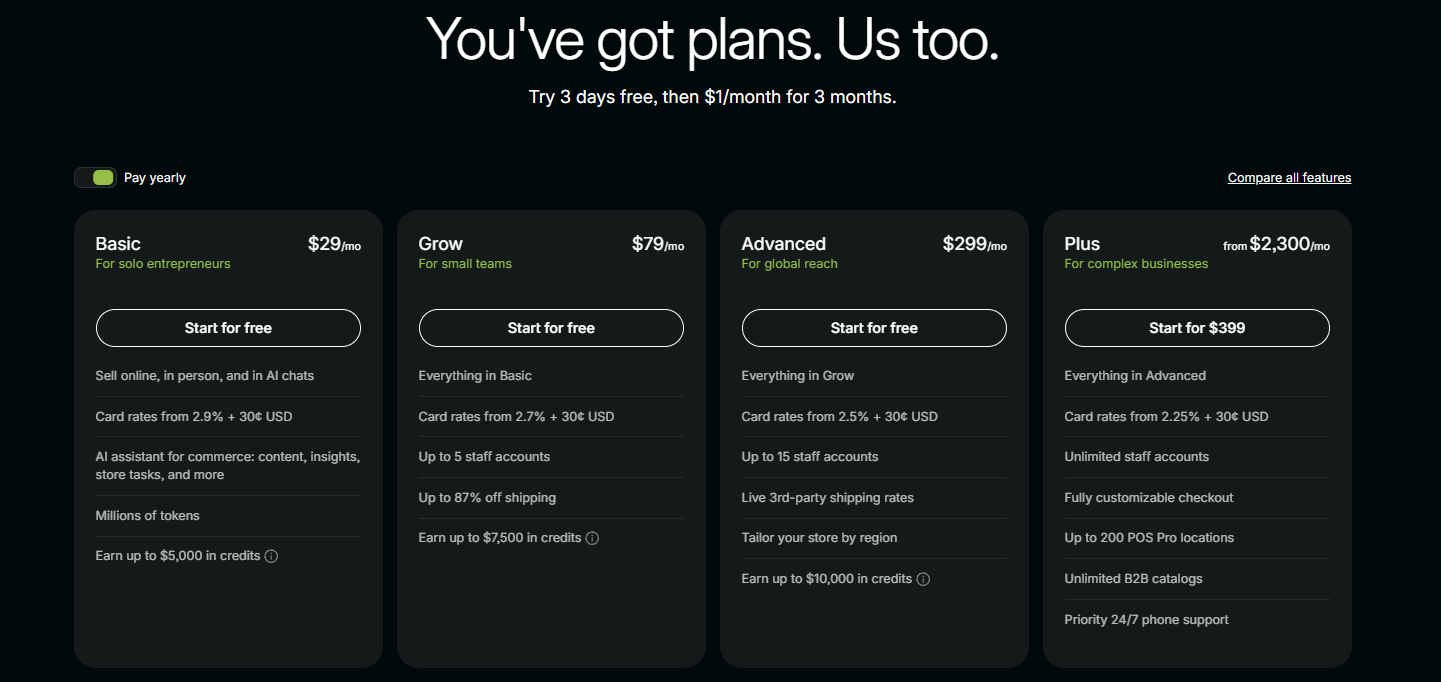
Most beginners need a plan that supports a complete online store, product pages, checkout, and payment processing.
Before selecting a plan, review:
-
Monthly and annual pricing
-
Staff account limits
-
Reporting
-
International selling features
-
Transaction fees
-
Third-party shipping rates
-
Inventory locations
-
Available payment methods
A higher plan does not make a weak product profitable. Start with the plan that supports your current operating needs and upgrade when the financial benefit justifies the additional cost.
Domain and Store Design
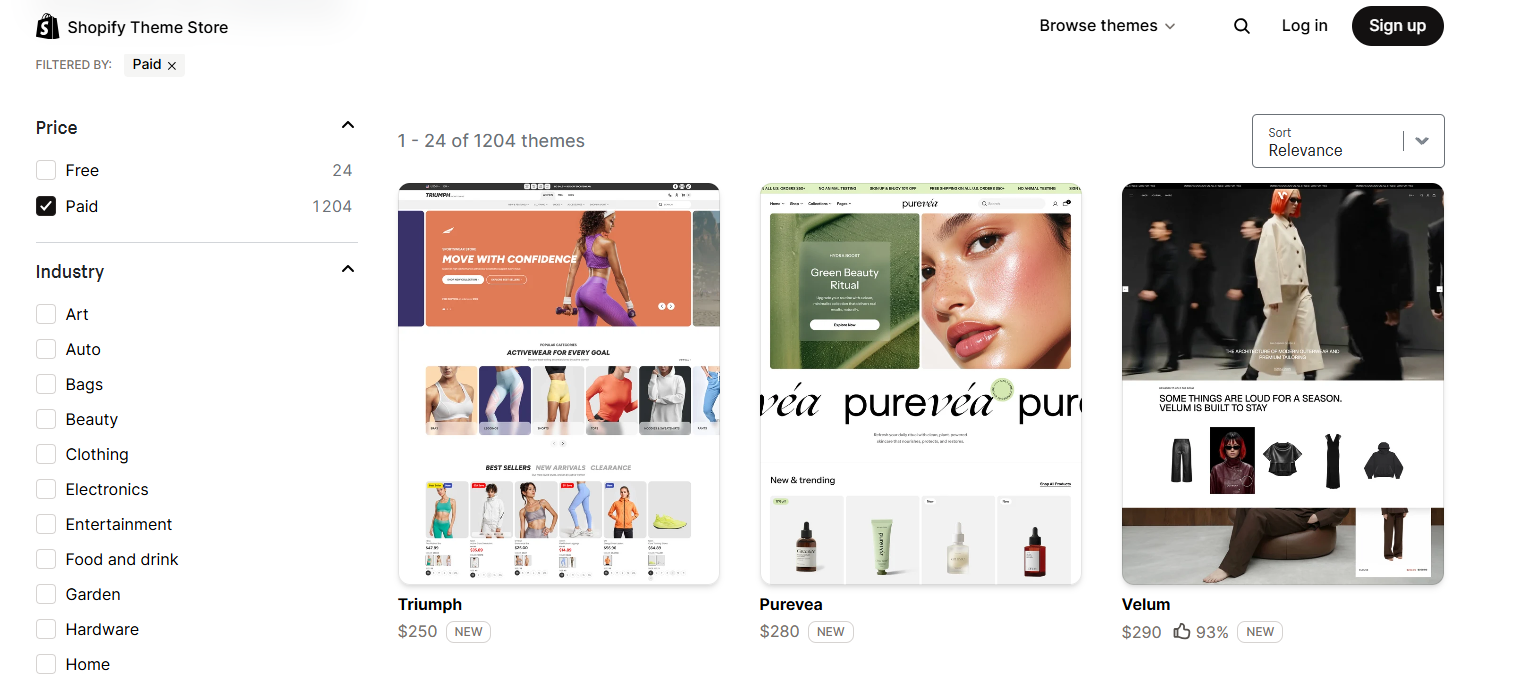
A custom domain makes the store appear more credible and gives you a consistent brand address.
Potential design costs include:
-
Domain registration
-
Premium Shopify theme
-
Logo design
-
Product photography
-
Video production
-
Page-building apps
-
Custom development
A paid theme is not essential for launching. A fast, well-organized free theme is often better than an expensive theme overloaded with unnecessary animations.
Apps and Software
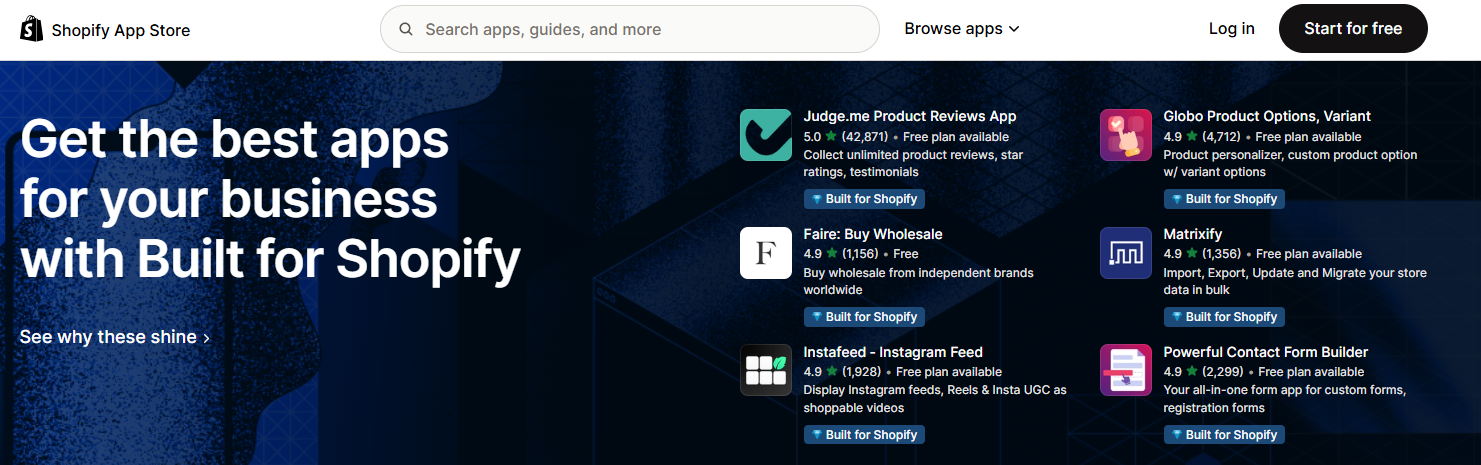
The Shopify App Store lists more than 16,000 apps across product sourcing, fulfillment, marketing, customer service, store design, analytics, and other categories.
The number of available tools is useful, but installing too many apps can increase costs, slow the store, and create technical conflicts.
A beginner normally needs only a small app stack covering:
-
Supplier integration
-
Product reviews
-
Email marketing
-
Order tracking
-
Analytics
-
Customer support
Add new software only when it solves a measurable problem.
Product Samples
Product samples should be treated as a business expense, not an optional extra.
A sample allows you to check:
-
Product quality
-
Materials
-
Dimensions
-
Packaging
-
Processing time
-
Delivery speed
-
Tracking accuracy
-
Instructions
-
Customer experience
It also allows you to create original photographs and videos.
Selling a product you have never seen creates avoidable risk. A poor-quality item can cause refunds, negative reviews, chargebacks, and advertising losses.
Marketing Budget
Your marketing cost depends on whether you use organic content, paid advertising, creators, search traffic, or a combination.
A lean launch may rely on:
-
TikTok videos
-
Instagram Reels
-
YouTube Shorts
-
Blog content
-
Creator outreach
-
Community marketing
A paid launch may include:
-
Meta Ads
-
TikTok Ads
-
Google Shopping
-
Google Search Ads
-
Paid creator content
Do not spend the entire budget on one campaign. Reserve money for multiple products, creative variations, and landing-page improvements.
A Practical Beginner Budget
A reasonable startup budget should account for:
-
Shopify subscription
-
Domain
-
Samples
-
Basic apps
-
Content production
-
Advertising tests
-
Refund or replacement reserve
-
Business registration where required
There is no guaranteed minimum. A merchant using organic content may start with less money but invest more time. A merchant relying on advertising may need more working capital to collect meaningful data.
How to Choose a Profitable Dropshipping Niche
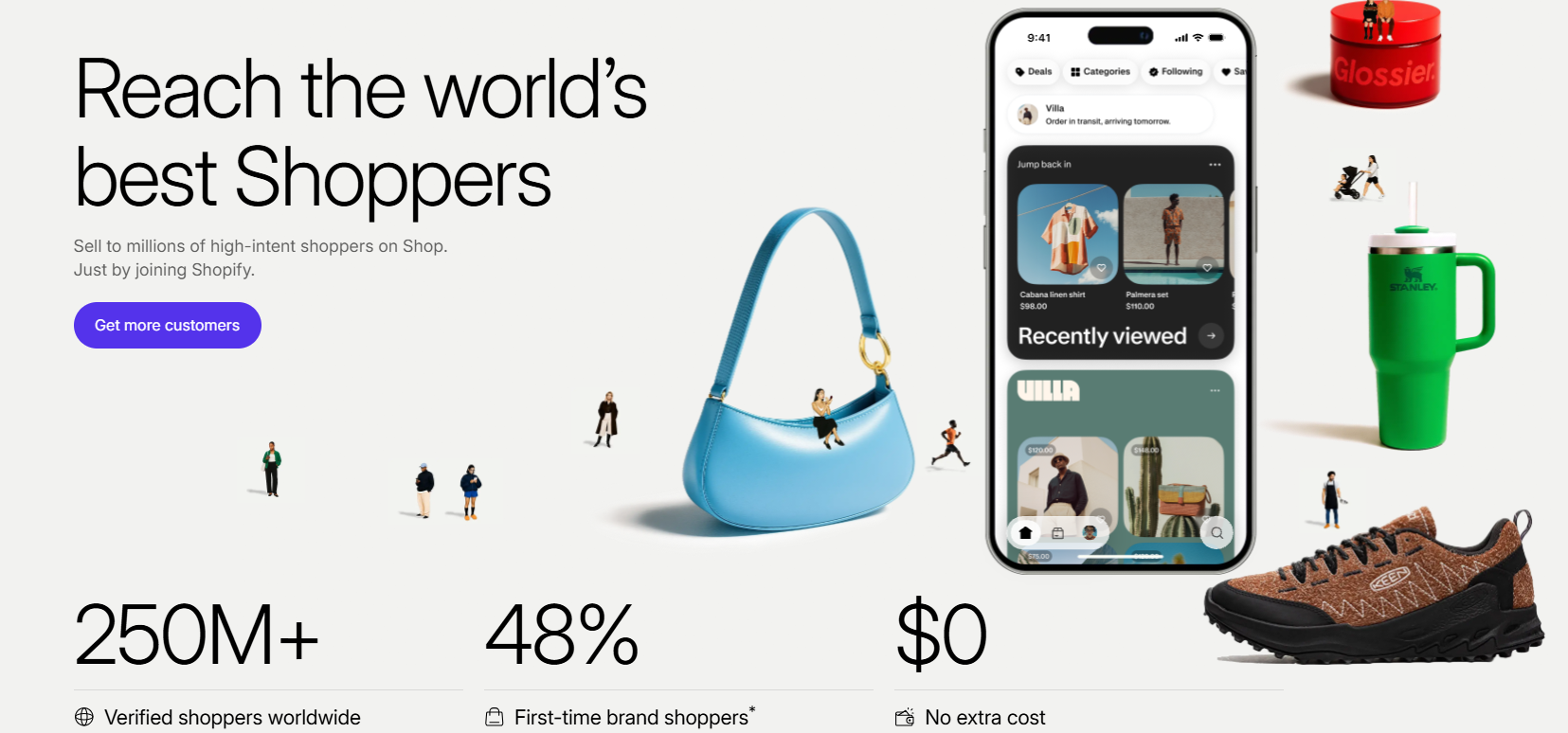
A niche is a defined group of customers with shared interests, needs, or problems.
“Home products” is broad. “Space-saving organization products for small apartments” is more specific.
A focused niche helps you create:
-
Clearer store positioning
-
More relevant product collections
-
Better advertising messages
-
Stronger cross-sells
-
More useful content
-
A recognizable brand
Strong Niche Characteristics
A promising niche often has:
-
A clear target customer
-
Multiple related products
-
Problems customers actively want to solve
-
Products with visible benefits
-
Sufficient selling-price flexibility
-
Opportunities for bundles
-
Potential repeat purchases
-
Stable rather than purely temporary demand
Use tools such as Google Trends, TikTok Creative Center, and the Meta Ad Library to investigate demand and advertising activity.
Shopify also recommends combining keyword research with product research and reviewing historical interest instead of relying only on current search volume.
General Store, Niche Store, or One-Product Store?
A general store carries products from multiple unrelated categories. It is flexible for testing but difficult to brand.
A one-product store concentrates attention on a single offer. It can create a focused customer journey, but the business becomes highly dependent on one product.
A niche store usually provides the best balance for beginners. It creates a clear identity while allowing several related products, bundles, and upsells.
Categories That Require Additional Caution
Be careful with:
-
Supplements
-
Medical devices
-
Cosmetics making health claims
-
Children’s products
-
Batteries
-
Electronics
-
Fragile items
-
Oversized products
-
Copyrighted designs
-
Branded or counterfeit goods
-
Products requiring certifications
How to Find and Validate Winning Products
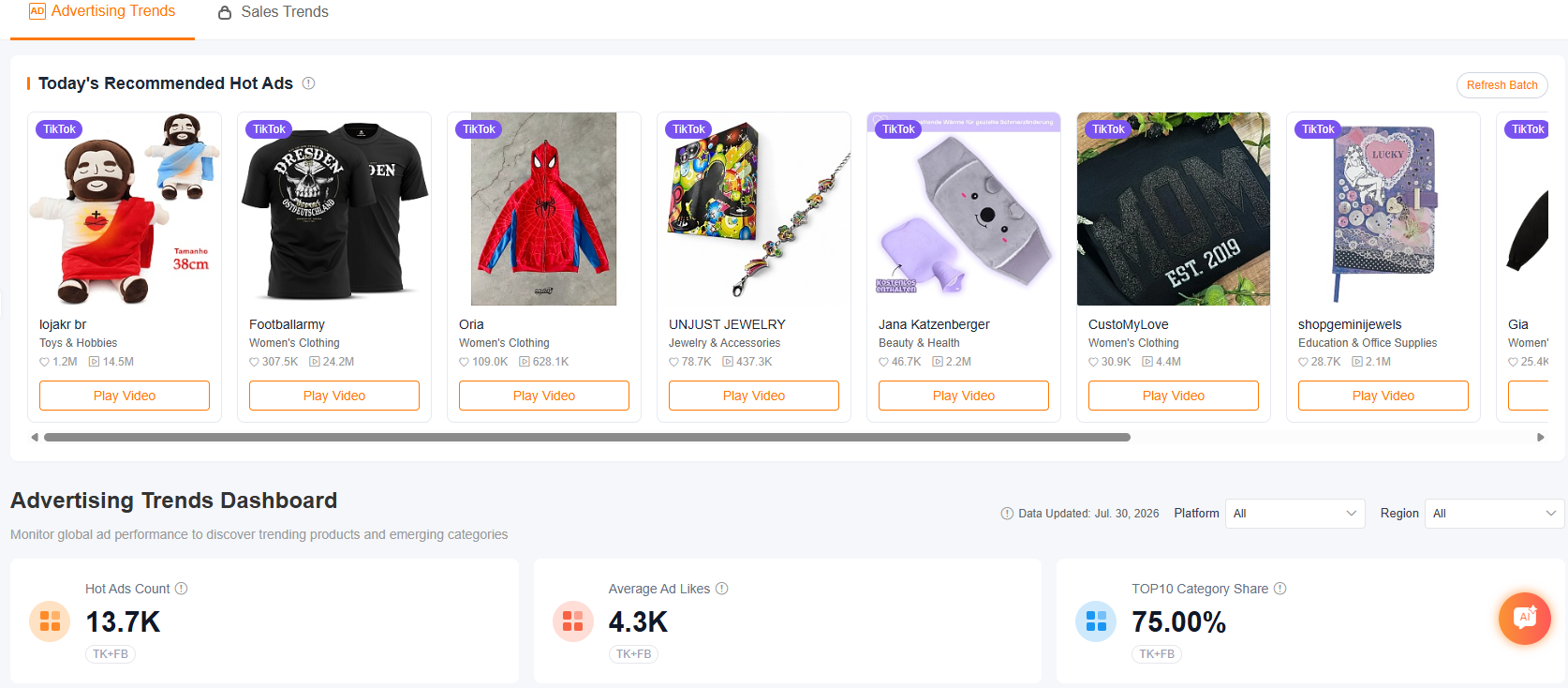
A winning product is not simply a product that is trending on social media.
A useful product must work financially and operationally.
Product Research Criteria
Evaluate whether the product:
-
Solves a recognizable problem
-
Has a clear target customer
-
Can be demonstrated visually
-
Has enough margin after shipping
-
Is reasonably easy to ship
-
Has manageable return risk
-
Is available from reliable suppliers
-
Can support original marketing angles
-
Has bundle or upsell potential
-
Complies with the target market’s rules
Avoid selecting products only because another store appears to be selling them.
You usually cannot see that competitor’s:
-
True advertising spend
-
Refund rate
-
Supplier price
-
Chargeback rate
-
Net margin
-
Inventory agreement
-
Customer lifetime value
Use Customer Complaints as Research
Read low-star reviews on competitor sites and marketplaces.
Look for repeated complaints about:
-
Size
-
Materials
-
Durability
-
Instructions
-
Compatibility
-
Packaging
-
Delivery
-
Missing accessories
These complaints can reveal both risks and opportunities.
For example, if customers repeatedly complain that a product has unclear instructions, you may improve the offer with a better guide or demonstration video. If customers complain that the product breaks easily, you may need a different supplier rather than better marketing.
A Practical Product-Validation Process
Step 1: Confirm Demand
Use search data, social content, marketplace reviews, competitor activity, and customer discussions.
Do not rely on a single viral video.
Step 2: Define the Customer
Identify:
-
Who buys the product
-
Why they buy it
-
When they use it
-
What problem it solves
-
What objections they may have
-
What alternatives they already use
Step 3: Calculate the Landed Cost
Include:
-
Product price
-
Shipping
-
Packaging
-
Payment fees
-
Duties where applicable
-
Expected refunds
-
Advertising
-
Apps
-
Currency conversion
Step 4: Compare Suppliers
Do not select the cheapest supplier automatically.
Compare:
-
Product specifications
-
Processing time
-
Tracking
-
Packaging
-
Communication
-
Return handling
-
Warehouse location
-
Quality control
Step 5: Order a Sample
Test the complete experience from order placement to delivery.
Step 6: Create Original Content
Create several advertising angles:
-
Problem and solution
-
Demonstration
-
Before and after
-
Comparison
-
Unboxing
-
Frequently asked questions
-
Lifestyle use
Step 7: Run a Controlled Test
Set a budget limit and define success criteria before launching.
Step 8: Review the Full Funnel
A weak result does not always mean the product is bad.
Diagnose the funnel:
-
Low click-through rate may indicate weak creative.
-
Good traffic but few add-to-carts may indicate poor positioning or pricing.
-
Add-to-carts without purchases may indicate trust, checkout, shipping, or payment problems.
-
Strong sales with many refunds may indicate a product or expectation problem.
Baymard Institute calculates an average documented cart-abandonment rate of 70.22%, based on 50 ecommerce studies. This does not mean every store should accept poor checkout performance, but it shows why merchants must examine more than top-line traffic.
Metrics to Track
Track:
-
Impressions
-
Click-through rate
-
Cost per click
-
Product-page views
-
Add-to-cart rate
-
Checkout-start rate
-
Purchase conversion rate
-
Customer acquisition cost
-
Average order value
-
Contribution margin
-
Refund rate
-
Delivery success rate
Do not declare a product a winner based on a few purchases.
How to Choose a Reliable Supplier
A supplier affects your product quality, delivery speed, tracking, packaging, and customer satisfaction.
This makes supplier selection one of the most important decisions in dropshipping.
Supplier Evaluation Checklist
Ask the supplier about:
-
Processing time
-
Product availability
-
Inventory synchronization
-
Shipping destinations
-
Shipping methods
-
Tracking availability
-
Product certifications
-
Quality-control procedures
-
Packaging
-
Return and refund handling
-
Replacement procedures
-
Private-label services
-
Volume discounts
-
Peak-season capacity
Questions to Ask Before Listing a Product
-
Is the product currently available?
-
How frequently is inventory updated?
-
What is the normal processing time?
-
Which shipping methods include tracking?
-
What happens if the parcel is lost?
-
Who pays when a product arrives damaged?
-
Can the supplier provide certifications?
-
Can I order a sample?
-
Can the packaging be customized?
-
Can the supplier handle a sudden increase in orders?
Document the answers. Verbal promises are difficult to rely on when customer orders are already delayed.
Use More Than One Supplier When Possible
A backup supplier can protect the business from:
-
Stock shortages
-
Price increases
-
Quality changes
-
Shipping disruptions
-
Factory closures
-
Seasonal capacity problems
The backup supplier should be tested before an emergency occurs.
Using CJdropshipping with Shopify
CJdropshipping provides product sourcing, order fulfillment, Shopify integration, warehouse services, quality inspection, print-on-demand options, and custom packaging.
The official CJdropshipping Shopify app supports product sourcing, product listing, cost estimation, and Shopify order synchronization.
Connect Shopify to CJdropshipping
A standard connection process is:
-
Create a CJdropshipping account.
-
Install the CJdropshipping app from the Shopify App Store.
-
Authorize your Shopify store.
-
Confirm the connection in your CJ account.
-
Search for products or submit a sourcing request.
-
List products to Shopify.
-
Connect any existing Shopify products to the correct CJ variants.
-
Configure shipping preferences.
-
Place a test order.
-
Confirm order and tracking synchronization.
CJ’s official Help Center provides tutorials for store authorization, inventory synchronization, product sourcing, order-status checks, tracking synchronization, and Shopify shipping settings.
How Fulfillment Works
After the Shopify store and CJ account are connected:
-
The customer places an order in Shopify.
-
The order synchronizes to CJ.
-
You confirm the product and shipping method.
-
You pay the product and fulfillment cost.
-
CJ processes and ships the order.
-
Tracking information is returned to Shopify.
-
Shopify can notify the customer.
The integration can reduce manual order entry, but merchants should still review:
-
Product connections
-
Customer addresses
-
Shipping methods
-
Inventory
-
Order exceptions
-
Tracking status
Automation should reduce repetitive work, not eliminate operational oversight.
Product Sourcing
When you cannot find the exact product in the catalog, you can submit a sourcing request.
Provide:
-
Product link or image
-
Required specifications
-
Target cost
-
Expected order volume
-
Destination country
-
Branding requirements
-
Packaging requirements
A detailed sourcing request is more likely to produce a useful quotation than a product image without specifications.
Custom Packaging and Brand Development
CJ offers packaging options such as boxes, mailers, inserts, and other customizable materials. Its official custom-packaging page states that selected packaging options may start at low quantities, depending on the product and packaging type.
Custom packaging is most useful after a product has shown stable demand.
Do not invest heavily in branded packaging before validating:
-
Product quality
-
Conversion
-
Refund rate
-
Monthly order volume
-
Customer feedback
When to Use Local Warehouse Inventory
Local inventory may make sense when:
-
The product has consistent demand
-
Monthly volume is predictable
-
Faster delivery improves conversion
-
The product has a low refund rate
-
The margin supports inventory investment
-
The business can forecast seasonal demand
The transition should be based on sales and fulfillment data, not excitement after a few good days.
How to Build a Shopify Dropshipping Store
Your store does not need to look expensive. It needs to be clear, fast, credible, and easy to use.
Step 1: Define the Brand Before Designing
Write a simple positioning statement:
We help [specific customer] achieve [desired result] through [product category or approach].
Example:
We help apartment owners create more usable living space with practical organization products.
This statement should guide your products, design, copy, content, and advertising.
Step 2: Choose a Name and Domain
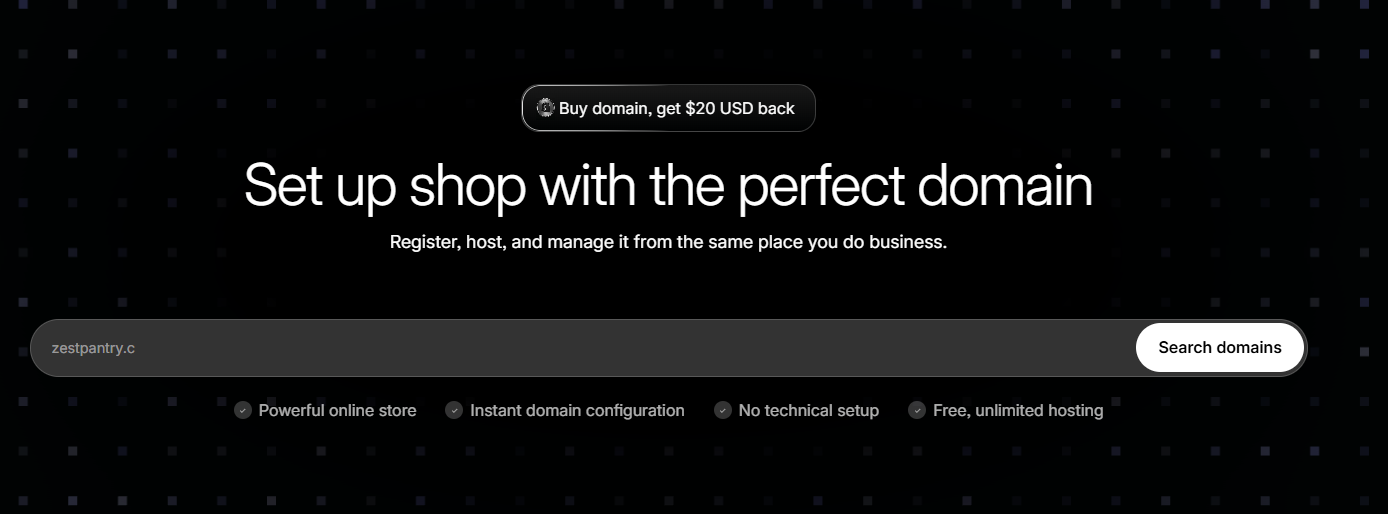
Choose a name that is:
-
Easy to spell
-
Easy to pronounce
-
Not limited to one temporary product
-
Available as a domain
-
Not confusingly similar to another brand
Check relevant trademark databases before building the brand. The U.S. Small Business Administration recommends checking prospective business and product names against the official trademark database where relevant.
Step 3: Choose a Fast Shopify Theme
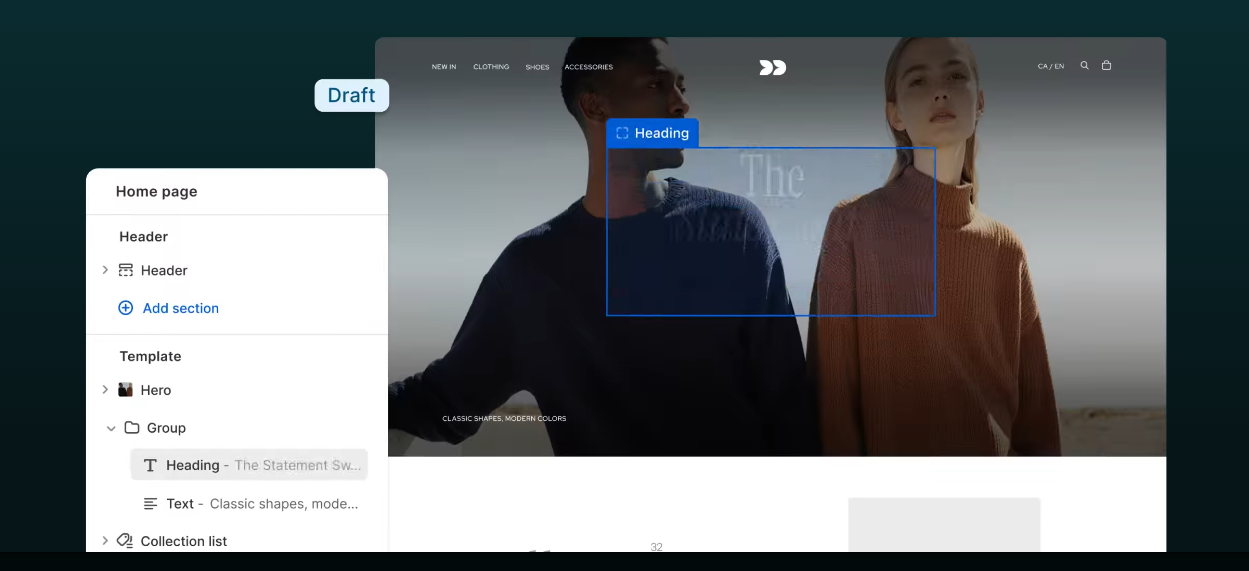
Evaluate:
-
Mobile layout
-
Navigation
-
Collection filtering
-
Product-page flexibility
-
Image performance
-
Cart functions
-
App compatibility
Avoid unnecessary sliders, auto-playing videos, and excessive pop-ups.
Google recommends monitoring Core Web Vitals, including:
-
Largest Contentful Paint within 2.5 seconds
-
Interaction to Next Paint below 200 milliseconds
-
Cumulative Layout Shift below 0.1
These measurements reflect loading performance, responsiveness, and visual stability.
Step 4: Build the Essential Pages
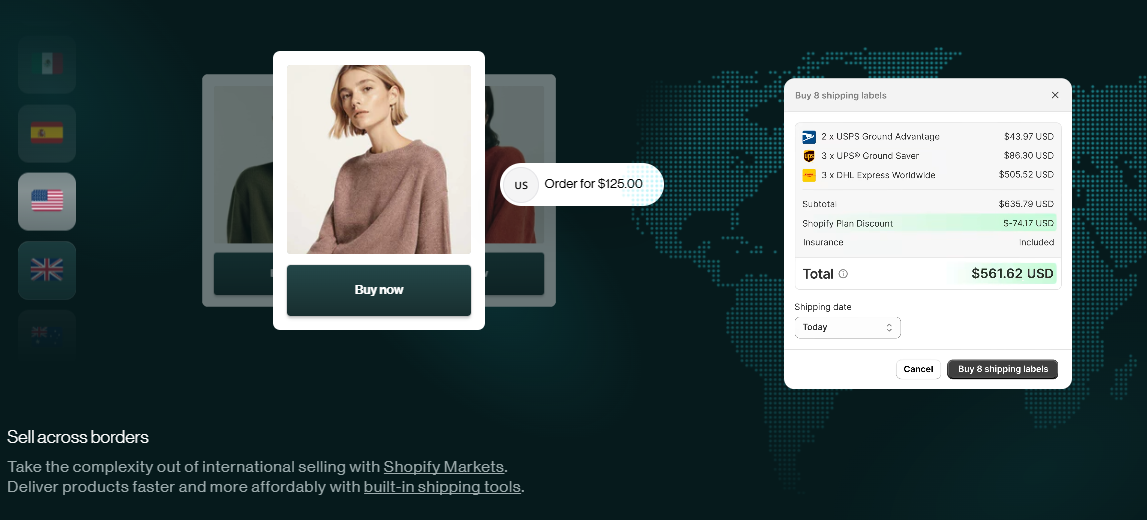
Create:
-
Homepage
-
Collection pages
-
Product pages
-
About Us
-
Contact Us
-
Shipping Policy
-
Return and Refund Policy
-
Privacy Policy
-
Terms of Service
-
FAQ
-
Order Tracking
Do not copy policies without reviewing them. Your policies must match how your business actually operates.
Step 5: Create Simple Navigation

A beginner store may use:
-
Home
-
Shop
-
Best Sellers
-
About Us
-
Track Order
-
Contact
Avoid creating too many categories before you have enough products.
Step 6: Configure Payments and Shipping
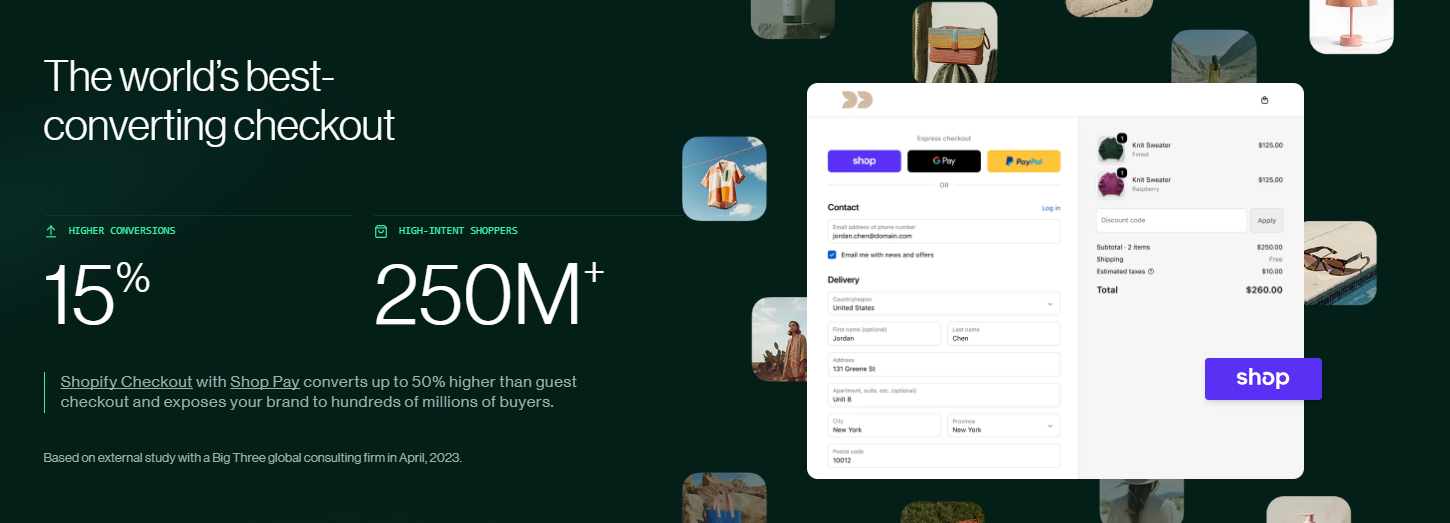
Review:
-
Available payment providers
-
Payment-processing fees
-
Payout schedule
-
Store currency
-
Target markets
-
Shipping zones
-
Free-shipping thresholds
-
Delivery estimates
-
Restricted destinations
Display shipping information before checkout. Hidden delivery times may increase abandonment and disputes.
Step 7: Test the Full Order Process
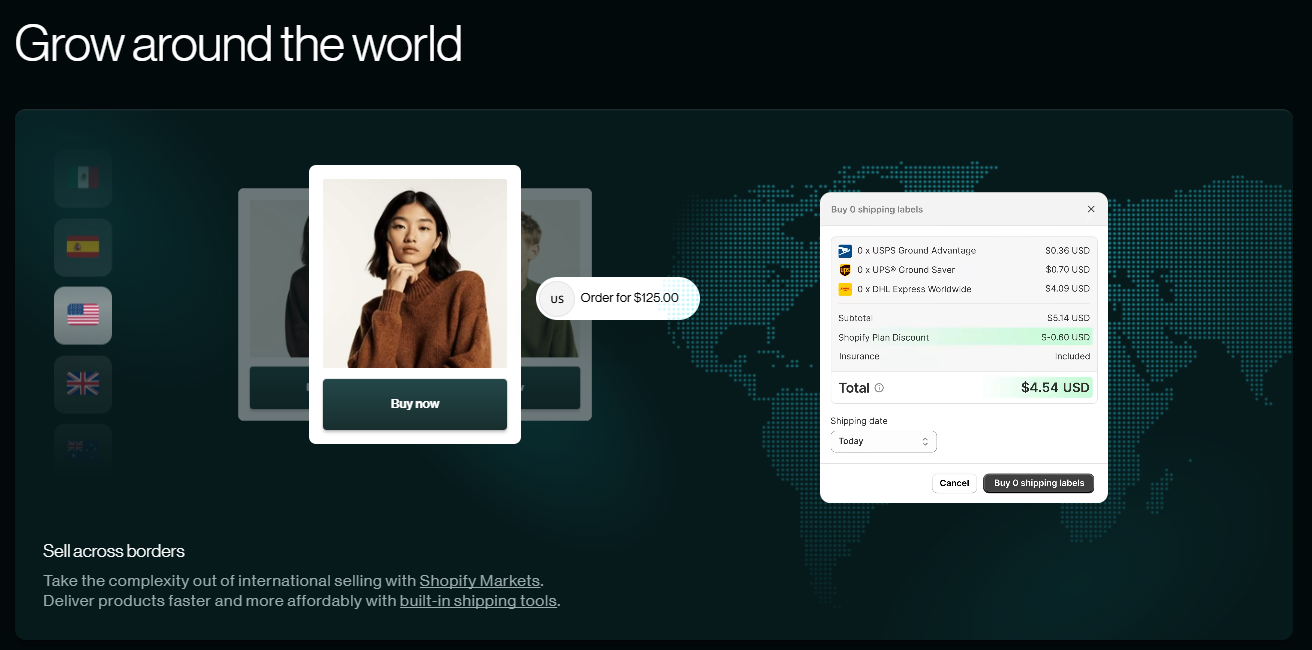
Place a test order and verify:
-
Product variants
-
Discounts
-
Shipping rates
-
Taxes
-
Payment
-
Confirmation emails
-
Supplier synchronization
-
Tracking
-
Cancellation
-
Refunds
Do not launch before testing on both desktop and mobile.
How to Create High-Converting Product Pages
A product page should answer the questions customers need answered before purchasing.
Use a Clear Product Title
Replace long supplier titles with a customer-friendly name.
Instead of:
Multifunctional Household Cleaning Brush Portable Gap Dust Removal Tool Kitchen Bathroom Window Cleaning Accessories
Use:
Flexible Crevice Cleaning Brush
The second title is easier to read and understand.
Lead with the Main Benefit
The first section should explain:
-
What the product is
-
Who it is for
-
What problem it solves
-
Why it is different
Avoid opening with a long brand story.
Use Original Product Media
Include:
-
Clean product images
-
Lifestyle photos
-
Close-up details
-
Size references
-
Demonstration videos
-
Package contents
-
User-generated content where permitted
Do not use images that misrepresent the product.
Recommended Product Description Structure
-
Main benefit
-
Customer problem
-
Product solution
-
Key benefits
-
Features
-
How to use
-
Specifications
-
Package contents
-
Shipping information
-
Return information
-
FAQ
Add Trust Without Making False Claims
Useful trust elements include:
-
Secure payment information
-
Clear contact details
-
Real customer reviews
-
Delivery estimates
-
Return terms
-
Product specifications
-
Authentic product demonstrations
Avoid fake countdown timers, fabricated reviews, and unsupported claims such as “guaranteed results.”
The U.S. Federal Trade Commission provides specific guidance for endorsements, influencers, and reviews. Reviews should reflect real experiences, and material relationships between a brand and an endorser should be disclosed clearly.
How to Price Dropshipping Products
Pricing should begin with costs, but it should not end there.
Calculate the True Cost
Include:
-
Supplier price
-
Shipping
-
Packaging
-
Payment processing
-
Shopify subscription
-
Apps
-
Advertising
-
Refunds
-
Replacements
-
Customer support
-
Taxes
-
Currency conversion
Common Pricing Methods
Cost-Plus Pricing
Add a fixed percentage or amount to the total cost.
This is simple but may ignore customer perception and competitor positioning.
Competitor-Based Pricing
Set prices based on comparable products.
This is useful for context, but competitors may have different supplier costs, margins, or business models.
Value-Based Pricing
Price according to the value the customer perceives.
This works better when the product solves a meaningful problem or your offer includes better content, support, packaging, or guarantees.
Increase Average Order Value
Use:
-
Product bundles
-
Quantity discounts
-
Cross-sells
-
Upsells
-
Free-shipping thresholds
-
Post-purchase offers
The goal is not to force customers to buy more. The goal is to create useful combinations.
How to Market a Shopify Dropshipping Store
Marketing begins with understanding the customer, not selecting an advertising platform.
Define:
-
Customer problem
-
Desired result
-
Purchase motivation
-
Main objection
-
Price sensitivity
-
Preferred content format
-
Platforms used
Organic Short-Form Video
Short-form content is useful for products that can be demonstrated visually.
Test formats such as:
-
Problem and solution
-
Product demonstration
-
Before and after
-
Comparison
-
Unboxing
-
Customer reaction
-
Frequently asked questions
-
“Three ways to use” content
The first few seconds should show the problem, result, or product in action.
Meta Ads
Meta advertising can support:
-
Prospecting
-
Creative testing
-
Retargeting
-
Catalog ads
-
Lookalike audiences
-
Customer retention
Test multiple creatives rather than relying on one video.
Keep the promise in the advertisement consistent with the product page. A dramatic ad followed by a vague product page usually produces weak conversion.
TikTok Ads
TikTok ads often perform better when the content feels native to the platform.
Focus on:
-
Strong opening hook
-
Human demonstration
-
Clear product benefit
-
Fast pacing
-
Captions
-
Several creative variations
-
Credible calls to action
Google Shopping and Search
Google can be valuable when customers already search for the product or problem.
To use Google Shopping effectively, product data should accurately match the landing page. Google requires clear product information and expects the product shown on the landing page to be essentially identical to the item in the submitted product data.
Email Marketing
Set up:
-
Welcome emails
-
Browse-abandonment emails
-
Cart-abandonment emails
-
Checkout-abandonment emails
-
Post-purchase education
-
Review requests
-
Cross-sells
-
Win-back campaigns
Email is not only a discount channel. Use it to answer questions, explain product usage, and reduce post-purchase uncertainty.
Managing Orders, Shipping, and Customer Service
Shipping is one of the most important parts of the customer experience.
Display Honest Delivery Estimates
Separate:
-
Processing time
-
Shipping time
-
Total estimated delivery range
Do not present shipping time as total delivery time if the supplier needs several days to process the order.
In the United States, the FTC’s Mail, Internet, or Telephone Order Merchandise Rule requires sellers to have a reasonable basis for advertised shipping times. If no shipping time is stated, most covered orders must generally be shipped within 30 days. If there is a delay, customers must be informed and given the option to accept the delay or cancel for a refund.
Prepare Customer-Service Templates
Create templates for:
-
Order confirmation
-
Address correction
-
Shipping delay
-
Tracking request
-
Damaged product
-
Missing item
-
Replacement
-
Refund approval
-
Cancellation
Templates improve speed, but personalize the response to the customer’s situation.
Track Supplier Problems
Record:
-
Delayed orders
-
Damaged items
-
Wrong variants
-
Missing packages
-
Tracking failures
-
Customer complaints
Review this data by product and supplier.
A product with high sales but a high complaint rate may damage the business more than it helps.
Legal, Tax, and Product Compliance
Dropshipping is generally legal, but the merchant must comply with the rules that apply to the business, product, customer, and destination market.
This section is general information, not legal or tax advice.
Business Structure and Records
Your business structure can affect taxes, liability, ownership, and filing requirements. The U.S. Small Business Administration recommends evaluating these factors before choosing a structure.
Maintain records of:
-
Sales
-
Product costs
-
Advertising
-
Shipping
-
Refunds
-
Payment fees
-
Software
-
Taxes
-
Supplier payments
The IRS states that businesses may use any recordkeeping system that clearly shows income and expenses.
Product Safety
Before selling, determine whether the product requires:
-
Safety testing
-
Certifications
-
Warning labels
-
Ingredient information
-
Age restrictions
-
Responsible-person information
-
Country-specific documentation
For products sold in the European Union, the General Product Safety Regulation has applied since December 13, 2024. It covers a broad range of consumer products, including products sold online, and introduces requirements involving risk assessment and responsible economic operators in the EU.
Intellectual Property
Do not sell:
-
Counterfeit products
-
Unauthorized branded merchandise
-
Products using protected characters
-
Copied artwork
-
Unauthorized photographs
-
Products that clearly infringe trademarks or patents
A supplier listing does not guarantee that a product is legally safe to sell.
Reviews and Influencers
When paying creators, providing free products, or offering commissions, require clear disclosure of the relationship.
Do not:
-
Purchase fake reviews
-
Write reviews for customers
-
Hide negative reviews selectively
-
Make unsupported performance claims
-
Present paid endorsements as independent opinions
A 30-Day Shopify Dropshipping Launch Plan
Week 1: Research and Validation
-
Choose a niche.
-
Define the target customer.
-
Identify five to ten potential products.
-
Review competitors.
-
Compare suppliers.
-
Calculate expected costs.
-
Order samples.
-
Choose a brand name.
Goal: Finish the week with a focused market, a shortlist of products, and at least one sample in progress.
Week 2: Build the Store
-
Create the Shopify store.
-
Connect the domain.
-
Select a theme.
-
Build the homepage.
-
Create collection pages.
-
Add policies.
-
Configure payments.
-
Configure shipping.
-
Connect the supplier platform.
Goal: Create a complete working store, not a finished masterpiece.
Week 3: Prepare Products and Marketing
-
Review available samples.
-
Create product photos and videos.
-
Rewrite product titles.
-
Write product descriptions.
-
Build product FAQs.
-
Set pricing.
-
Prepare email flows.
-
Create several marketing angles.
-
Test checkout and fulfillment.
Goal: Make sure the product, offer, content, and operations are ready for real customers.
Week 4: Launch and Improve
-
Publish the store.
-
Begin organic content.
-
Start controlled advertising tests if budget permits.
-
Review customer behavior.
-
Analyze product-page performance.
-
Improve weak content.
-
Review profit by order.
-
Contact customers when problems occur.
-
Plan the next test.
Goal: Collect useful data, not chase immediate scale.
How to Scale a Shopify Dropshipping Business
Scale only after the product and operations are stable.
Signs a Product May Be Ready
-
Consistent purchases
-
Sustainable customer acquisition cost
-
Positive contribution margin
-
Stable conversion rate
-
Reliable supplier inventory
-
Acceptable refund rate
-
Predictable delivery
-
Positive customer feedback
Increase Advertising Gradually
Large budget increases can change campaign performance.
Continue testing:
-
New hooks
-
New creators
-
New formats
-
New landing-page messages
-
New offers
-
New audiences
Do not stop creative testing after finding one successful advertisement.
Move Proven Products to Local Inventory
Local inventory may provide:
-
Faster processing
-
More predictable delivery
-
Better packaging control
-
Improved unit costs
-
Fewer stock disruptions
However, inventory introduces financial risk. Use conservative forecasts and maintain cash for advertising, refunds, and operations.
Build a Brand
The long-term path may look like this:
-
Test through dropshipping.
-
Identify repeatable demand.
-
Improve product specifications.
-
Negotiate supplier pricing.
-
Add custom packaging.
-
Purchase limited inventory.
-
Use faster fulfillment.
-
Register brand assets.
-
Develop repeat-purchase campaigns.
-
Expand into related products.
Dropshipping can be the starting method. It does not need to remain the final operating model.
Common Shopify Dropshipping Mistakes
Avoid these common errors:
-
Choosing products only because they are trending
-
Never ordering a sample
-
Copying supplier descriptions
-
Using low-quality images
-
Hiding shipping times
-
Selecting suppliers only by price
-
Installing too many apps
-
Ignoring mobile performance
-
Scaling based on revenue instead of profit
-
Depending on one advertising creative
-
Selling regulated products without research
-
Failing to record expenses
-
Treating customer support as the supplier’s responsibility
-
Importing fake or unverified reviews
-
Quitting before collecting meaningful data
Shopify dropshipping in 2026 is not a shortcut to automatic income. It is a practical way to test products and build an ecommerce business without committing to large inventory at the beginning.
The merchants most likely to build sustainable businesses are those who:
-
Understand their customers
-
Validate products before scaling
-
Work with reliable suppliers
-
Calculate real profit
-
Create original product content
-
Communicate shipping honestly
-
Follow product and advertising rules
-
Improve fulfillment as volume grows
-
Invest in customer retention
-
Develop a recognizable brand
Start with a focused niche and a small number of products. Test the complete customer journey. Keep accurate financial records. Use data to decide what to improve, stop, or scale.
Dropshipping should not be viewed as the final goal. Used correctly, it can help you identify demand, reduce early inventory risk, and build the foundation for a stronger ecommerce brand.
Frequently Asked Questions
How much money do I need to start?
The amount depends on your Shopify plan, domain, samples, software, marketing method, and business-registration requirements. Organic-first sellers may spend less money but require more time. Paid-advertising sellers generally need more testing capital.
How many products should a beginner launch?
A focused store with three to ten related products is often easier to manage than a catalog containing hundreds of unverified items. Product quality and relevance matter more than quantity.
Do I need to order samples?
You are not technically required to order a sample, but selling without checking the product creates unnecessary risk. A sample helps verify quality, shipping, packaging, and the overall customer experience.
Can CJdropshipping connect directly to Shopify?
Yes. CJdropshipping has an official Shopify integration that supports store authorization, product listing, order synchronization, fulfillment, and tracking updates.