
It all began with two friends and a simple idea: “What if phone cases could be fashion statements, not just tech trinkets?” In 2015, two best friends in Lithuania launched Burga to answer exactly that. From day one they focused on style. As the company’s own story goes, “Our eye-catching phone cases quickly gained popularity… as they provided both protection and a stylish flair.”. This fashion-first vision – turning a mundane essential into a high-fashion accessory – set the stage for Burga’s rapid growth. Early on, Burga dropshipped and tested designs on Shopify, relying on on-demand print partners to minimize risk. They uploaded hundreds of chic patterns and let customers decide which sold; this “fast fashion” test model meant only the hits got made in bulk.
From the very start Burga treated phone cases like wardrobe staples. The founders built a brand ethos of “style meets function,” imagining cases as fashion items to complement any outfit. As the company says, they wanted to tap your “inner fashionista” without sacrificing protection.
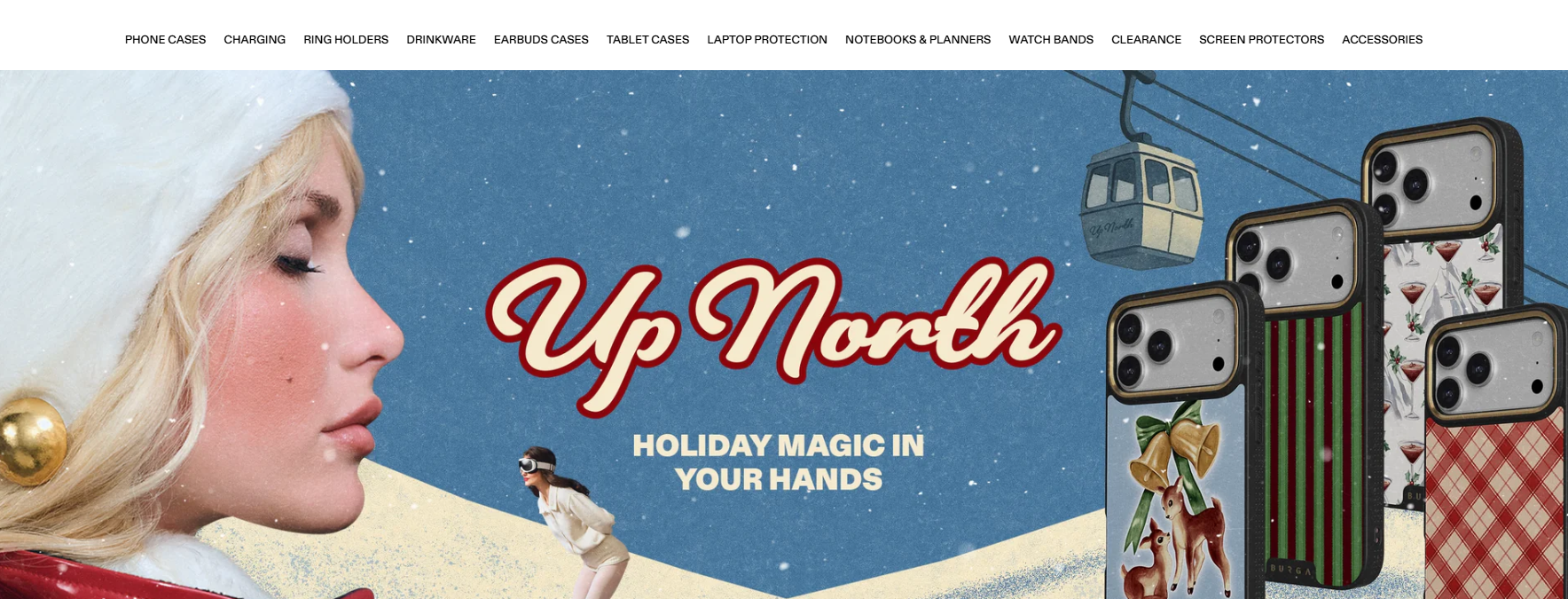
By focusing on design and branding over price, Burga stood out even in a saturated market. A Shopify case study notes that Burga “exemplifies a successful Shopify dropshipping store,” thanks to things like clear product images, intuitive mobile design (so shoppers could easily filter by phone model), and robust product information including warranties, reviews, and promotions. Importantly, Burga marketed its cases as must-have accessories. The FoxEcom blog observes that Burga “applies a ‘fast fashion’ model to tech accessories, positioning their products as essential components of a stylish wardrobe”. In other words, buying a Burga case felt less like lugging around a slab of plastic and more like adding the perfect “accessory” to your look. Even the product pages echo this voice: one Xiaomi case page opens with “Convert your everyday device into a fashion accessory,” promising cases that are “ultra-thin” yet compliment your style. (For example, Burga’s “Fashionista” case claims to deliver “high protection while complementing your style” – literally packaging the case as a style enhancer.) All of this messaging – from site copy to social posts – drove home the idea that Burga cases belong on runways, not just in pockets.
Early Days: Learning by Dropshipping
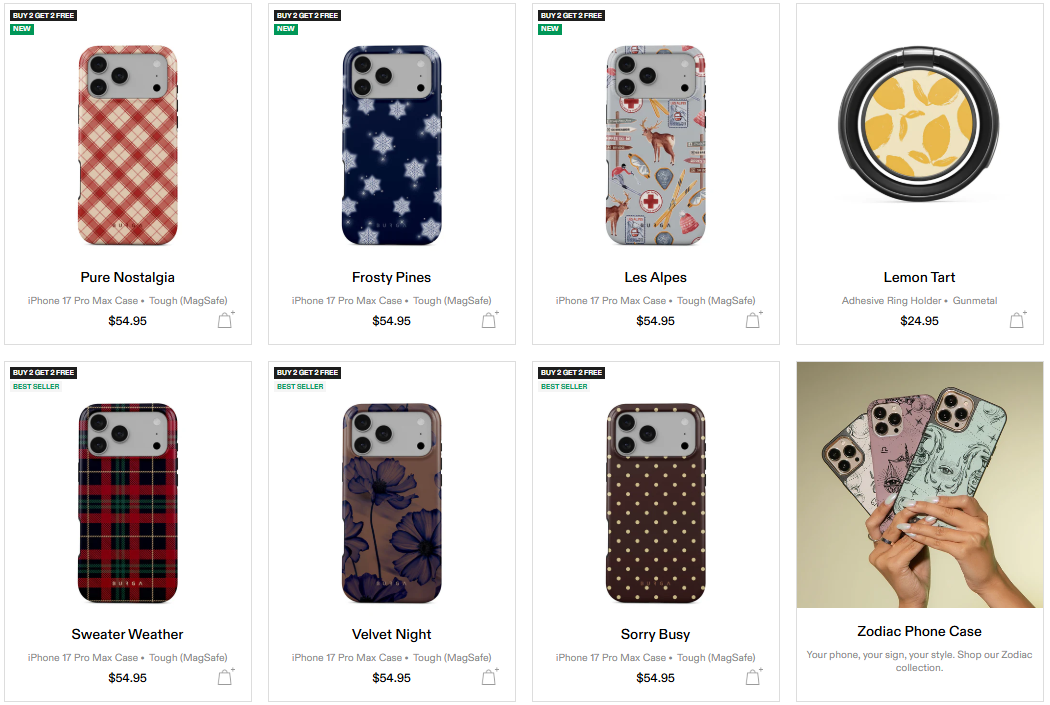
In its garage-startup phase, Burga relied on dropshipping and print-on-demand to test and refine its lineup. Founders could “go from 0 to 300 unique designs” by leveraging on-demand platforms like Dropshipping platform, meaning they spent almost nothing on inventory. Each new iPhone launch or trend (say, a floral print or holiday theme) could be prototyped virtually and added to the site. If a design sold well, it earned its place; if not, it quietly faded away. This lean approach is often called a “fast fashion” strategy, and Burga leaned into it. The FoxEcom dropshipping-case study explicitly recommends: “start by dropshipping print-on-demand cases…winning designs can then be manufactured in bulk and fulfilled through a 3PL for better quality and higher margins.”. In practice, Burga did exactly that: test designs on Shopify, identify bestsellers, then invest in quality manufacturing for the winners.
This path let Burga refine its brand identity early. They weren’t competing on rock-bottom price. Instead, the team focused on imagery and packaging. From day one the site felt like a boutique: clean layout, high-def photos of cases styled with outfits, and “Shop the Look” cross-sells that pushed matching accessories at checkout. Reviews and endorsements were front-and-center, reinforcing trust. A 2025 Printify analysis notes that Burga’s success “lies in clear product images… ample product information – including reviews, warranties, and promotional deals”. By highlighting quality (e.g. military-grade shockproof materials) and brand promise (as a fashion accessory), Burga justified premium pricing. In essence, they turned the commodity of phone cases into a luxury fashion category.
Over the first few years, this strategy paid off. Burga’s site quickly amassed thousands of SKUs. According to an e-commerce analysis, Burga’s official store carried “more than 20,000+ SKUs, with high quantity and fast update,” a key driver of its growth. This meant constant fresh styles – another fast-fashion hallmark. If one design ran out or lost trendiness, a new one was ready to take its place. In short, Burga treated phone cases like Zara treats clothing: always something new on the rack, and always at the cutting edge of style.
Style Over Tech: Positioning Cases as Fashion
From the start, Burga’s founders told a clear story: phone cases aren’t just protective, they’re accessories*. Every marketing channel echoed this. The official About Us page declares Burga’s mission as catering to your “inner fashionista without compromising on functionality”. Social media captions often invite fans to “match your case to your outfit” or call the case the “perfect fashion accessory.” (A now-viral Instagram post even quips: “From the office to the gala, our phone cases are the perfect fashion accessory.” While we can’t quote it directly from Facebook, the sentiment was clear.) Even Burga’s product copy reinforces this ethos: one case description invites you to “elevate your daily style and leave a lasting impression… darling, life’s too short not to be absolutely fabulous”. In short, every touchpoint framed Burga as aspirational and chic.
Burga didn’t just sell tech gear – they sold accessories. Their Instagram and blog spotlight cases alongside jewelry, coffees, and outfits. The “Accessories” image above (earrings on a table) captures that vibe: a Burga case wasn’t much different from a necklace or handbag in their storytelling. This lifestyle branding helped phones become personal style statements. For example, Burga encourages customers to share their outfits with hashtag #myBURGA, effectively using user photos (UGC) as part of their fashion narrative.
The effect? Shoppers began to crave cases the way they crave scarves or watches. Burga capitalized on this by bundling cases just like clothing retailers bundle outfits. Their flagship deal – the famous “Buy 4, Get 2 Free” promotion – was marketed with playful flair: “Drop 4 gorgeous phone cases into your cart and see the price of two magically melt to $0!”. Importantly, the deal wasn’t rigid: customers could mix any designs or phone models, effectively building a “capsule collection” of phone accessories. Not only did this boost average order value, it reinforced the idea of phone cases as items to collect. Emails and social ads frequently teased this bundle: e.g. “Cart is empty? Add 4 and see 2 vanish!” – a nudge that combined FOMO with the allure of freebies.
Internally, Burga also used upsells and “shop the look” widgets: after picking a case, customers might see matching wireless chargers or branded mugs to complete their style set. Meanwhile, throughout the site we see classic urgency tactics: limited-time coupon codes, countdown timers on holiday collections, and even pop-ups. For instance, the “Discounts” page shows a 10% off first order popup (sign up for email) along with bundled deal notes. These small urgency cues (“X15OFF200” for 15% over $200, “limited stock” notes, etc.) kept browsers moving to checkout. Combined with their phone-case-as-fashion angle, these tactics turned casual visitors into enthusiastic buyers.
Marketing Mastery: Social Media, UGC, and Viral Buzz
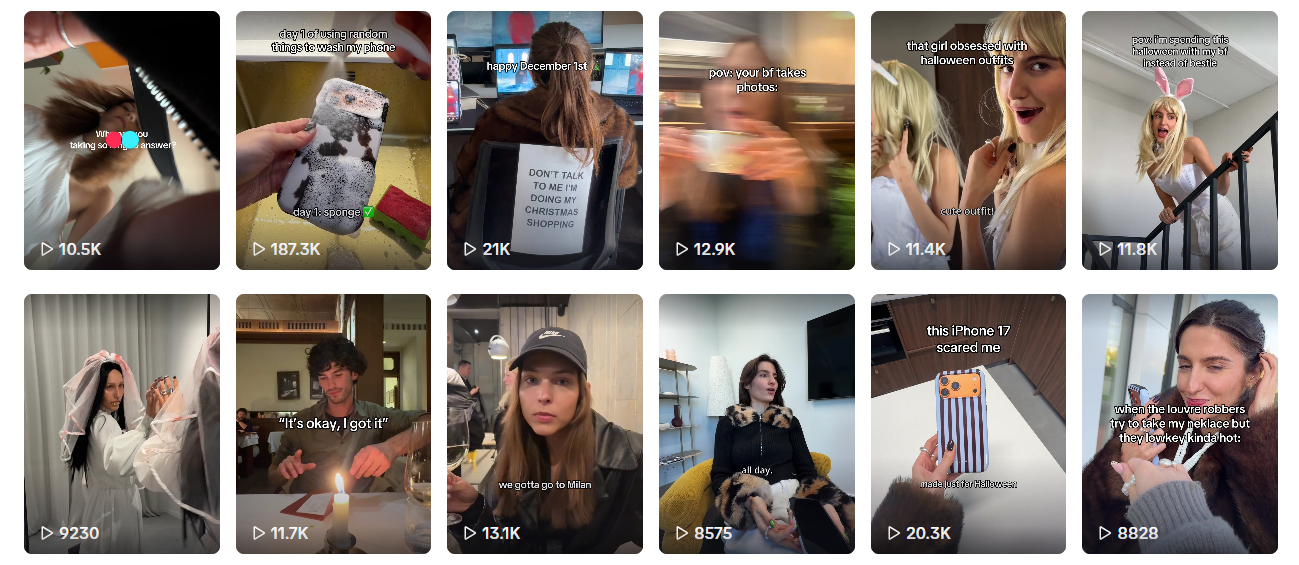
A key reason Burga outpaced typical dropshippers was how they lit up social media. From early on, they invested in Instagram and TikTok content that felt editorial. They hired models to pose with cases on city streets or in chic cafes, and they embraced the influencer economy by launching an affiliate program and content creator partnerships. (Their site openly invites “professional lifestyle and fashion content creators” to join Burga’s campaigns.) The Pay-to-Play paid ads were balanced by a flood of organic user-generated content. You’ll find Burga’s hashtag #myBURGA on thousands of posts featuring real customers styling their cases like jewelry or art pieces. Printify notes the impact of this strategy: “The engaging Instagram feed…features a mix of product showcases and promotional videos, underscoring Burga’s dedication to aesthetic appeal and customer engagement.”. The brand’s Instagram grew rapidly (now ~1.2 million followers) by alternating polished ads with reposted customer photos and “outfit inspiration” reels.
Meanwhile, TikTok became a secret weapon. Burga’s playful, upbeat unboxing and styling videos quickly caught on with Gen Z and millennial audiences. (By 2025 they boast ~370k followers on TikTok.) Viral trends often emerged from fans – e.g. micro-influencers showcasing “Burga haul” videos or using Burga cases as color-coordinators in thrift-shop outfits. We see hints of this in content like the Instagram “spring style challenge” where a creator thrifts an entire outfit inspired by a Burga phone case. Though that specific reel is unsearchable here, the buzz is real: TikTok’s algorithm loves short, visual-driven fashion hacks, and Burga’s visually appealing products fit perfectly.
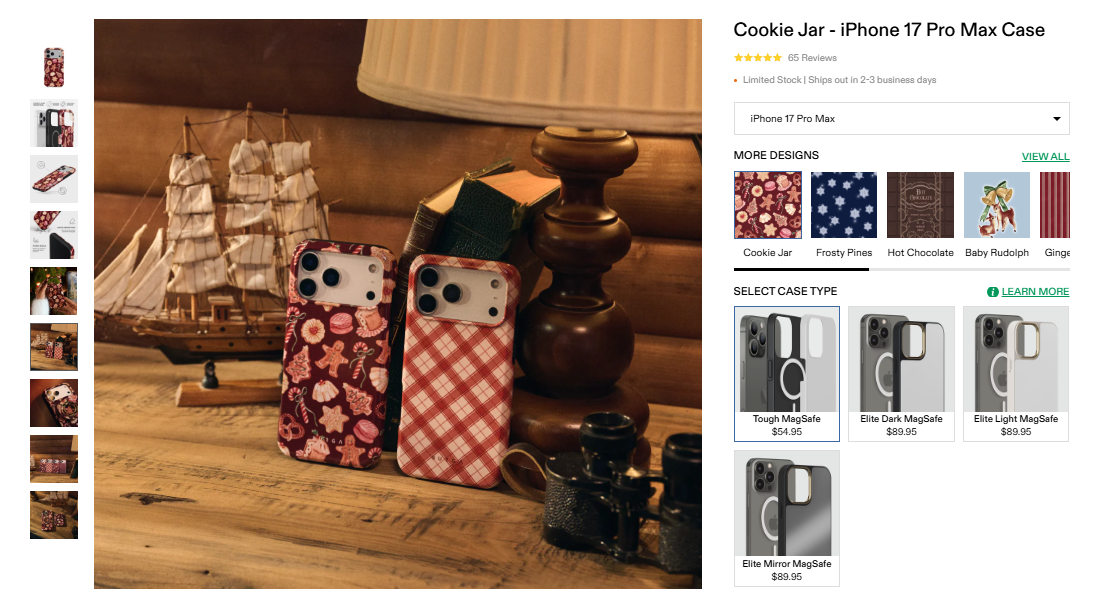
Beyond organic content, Burga used paid ads smartly. A marketing analysis from GoodsFox shows that in a recent week Burga was running 949 ads across Instagram, Facebook, and Meta Audience Network – a staggering volume. Their ads often contrasted “cheap cases vs. Burga style”, highlighting flaws of competitors (like “easily scratched” or “no pattern variety”) and then cutting to glossy shots of Burga designs. One goodsfox screenshot even shows Burga targeting stylish women in Germany and the Netherlands with bright, upbeat videos of models on a beach posing with cases. These ads drove traffic to the site, where the user-friendly interface filtered product by iPhone model, and where scarcity cues (e.g. “Limited Stock – ships in 2-3 days”) created urgency.
All this social proof paid off. By mid-2025 Burga had accumulated over 1.2 million Instagram followers, 370k on TikTok, and millions of likes and shares on user posts. Every mention of Burga felt like a backstage pass into a fashion club for phone lovers. As a result, organic search and word-of-mouth took off too. Instead of fighting Amazon’s price game (their cases are on Amazon, but the real buzz was on Burga.com and social), the brand became known for its trendy designs, fast shipping, and that fun “community” vibe.
From Dropship to Private Label: The Burga Transformation
By building a loyal following and validating their designs, Burga was able to graduate from dropshipping to private-label production. What started on-demand in 2015 had, by the early 2020s, become a fully-fledged brand making its own products. Today, Burga openly proclaims that “phone cases are manufactured in Kaunas, Lithuania – our heart and hub of creativity, where each case is crafted with care and precision.”. In other words, the cases that once shipped from print-on-demand vendors are now mass-produced (though in an agile way) under Burga’s own roof. They’ve invested in quality: their Elite cases mix hard PC exteriors, soft TPU, “CloudGuard” foam layers, and microfiber lining for supreme protection. This vertical integration boosted margins and allowed Burga to control every detail – from packaging to materials.
Notably, Burga balances private labeling with sustainability. Their site boasts a made-to-order philosophy: “we create each phone case only when an order is placed,” which prevents overproduction and waste. This hybrid model—on-demand for variety, yet in-house for quality—became part of the appeal. Customers could feel like their case was personalized and limited (driving urgency), even as Burga’s business scaled. Meanwhile, back-end, the company grew out its logistics: by 2024 they reportedly had hundreds of thousands of satisfied customers worldwide and a 3PL to handle global shipping.
Today Burga’s catalog isn’t just phone cases. The “About Us” copy reveals a fashion range: AirPods cases, charging ring holders, screen protectors, travel mugs, even sunglasses frames (Burga Eyewear debuted in 2023). This diversification turned Burga into a one-stop style shop for gadget lovers. But at the core remains that original pivot: turn daily essentials into fashion accessories. As the GoodsFox analysis puts it, Burga “is a brand that knows how to make a statement with its products… (they) create products that are both functional and fabulous, appealing to… young and fashionable women.”. This all-encompassing, trendy inventory is a far cry from the humble dropship days when each design’s fate hung on an ad test.
Lessons for Aspiring Dropshippers
Burga’s story offers rich lessons for new e-commerce entrepreneurs:
-
Test then scale. They proved concepts cheaply via dropshipping/POD. Only winning designs were scaled up into bulk manufacturing. New dropshippers should likewise experiment broadly with minimal risk, then double down on top performers.
-
Brand, don’t just sell. Burga never competed as a discount case vendor. They brand-builded every step: cohesive aesthetics, a clear message (fashion + protection), and a “brand voice” (fun, sassy, empowering). Even the site is more boutique than tech store. Compete on unique value, not price. As FoxEcom notes, in saturated niches the winner sells design and brand, not just price cuts.
-
Use social proof and UGC. Burga’s community fuels its marketing. Encourage customers to post images (#myBURGA) and repost them. Create shareable content (short TikTok videos, Instagram Reels) that put your product into real-life contexts. Make your Instagram feed as attractive as your homepage, since many shoppers will judge your brand by your social presence.
-
Employ smart promotions. Bundling offers (like “buy 4 get 2 free”) can boost average order size dramatically. Limited-time discounts and first-order pop-ups (e.g. 10% off for email sign-up) are low-hanging fruit to capture leads and nudge hesitant buyers. But design these promotions to fit your brand identity (Burga’s sounded playful and generous, not cheap).
-
Design is everything. For Burga, a case is worthless if it isn’t trendy. They built 20,000+ SKUs and updated designs constantly. That’s extreme, but the lesson is clear: offer enough variety so customers always feel they can find “their one.” Seasonal collections (holidays, florals, etc.) keep the catalog fresh and encourage repeat visitors.
-
Gradual vertical integration. Burga started by dropshipping, then slowly brought production in-house to improve quality and margins. You don’t have to invest in factories day one – test-market first, then invest your profits back into making key products better. (As Burga’s “legit” blog proudly states, now their cases are made to order in Lithuania.)
-
Focus on user experience. Just like Burga’s site lets shoppers filter by exact phone model and type, ensure your store is easy to navigate. Use high-res images, highlight warranty and review information, and optimize the mobile experience. Small conveniences (auto-applying bundle discounts, easy returns) build customer loyalty.
In summary, Burga’s journey reads like a roadmap. They started lean, treated products as fashion items, and gradually reinvested into the brand. They leveraged every tool – bundles, pop-ups, influencer hype, compelling copy – to turn a basic commodity into a coveted accessory. Aspiring dropshippers should study Burga’s playbook: iterate fast, market smart, and always keep a style-forward focus. With these insights, the next big “Success Store” in dropshipping might just be your own.