
From Nanjing to the California Coast: An Unexpected Journey
In the mid-2010s, a little-known startup from Nanjing, China was about to make waves on California beaches. CupShe, founded in 2015 by Chinese entrepreneur Zhao Liming, didn’t start as a swimwear specialist. In fact, its beginnings were rather humble and unfocused: the brand initially dabbled in fast-fashion with a scattershot of clothing SKUs, a “杂货铺” (general store) approach that left its identity blurry. Not surprisingly, sales were unremarkable. The turning point came when Zhao took a seaside vacation and noticed something striking – Americans were sunbathing everywhere, yet stylish, affordable swimsuits were oddly hard to find. The beach culture hid a huge business opportunity that the CupShe team was quick to catch.
In 2016, CupShe boldly pivoted to one narrow category – swimwear – and never looked back. They zeroed in on women’s beach apparel (bikinis, one-pieces, cover-ups) with a clear mission: to inspire “confidence and beauty” through affordable fashion. The brand embraced a sunny, “California spirit” aesthetic, translating that vibe into products with vibrant coral pinks, cobalt blues, and breezy boho prints. Essentially, CupShe set out to bottle the carefree joy of a beach holiday and sell it, one swimsuit at a time. This focused positioning – youthful, fun, and budget-friendly beachwear for the masses – immediately set CupShe apart from both stodgy swim brands and generic fast-fashion sellers.
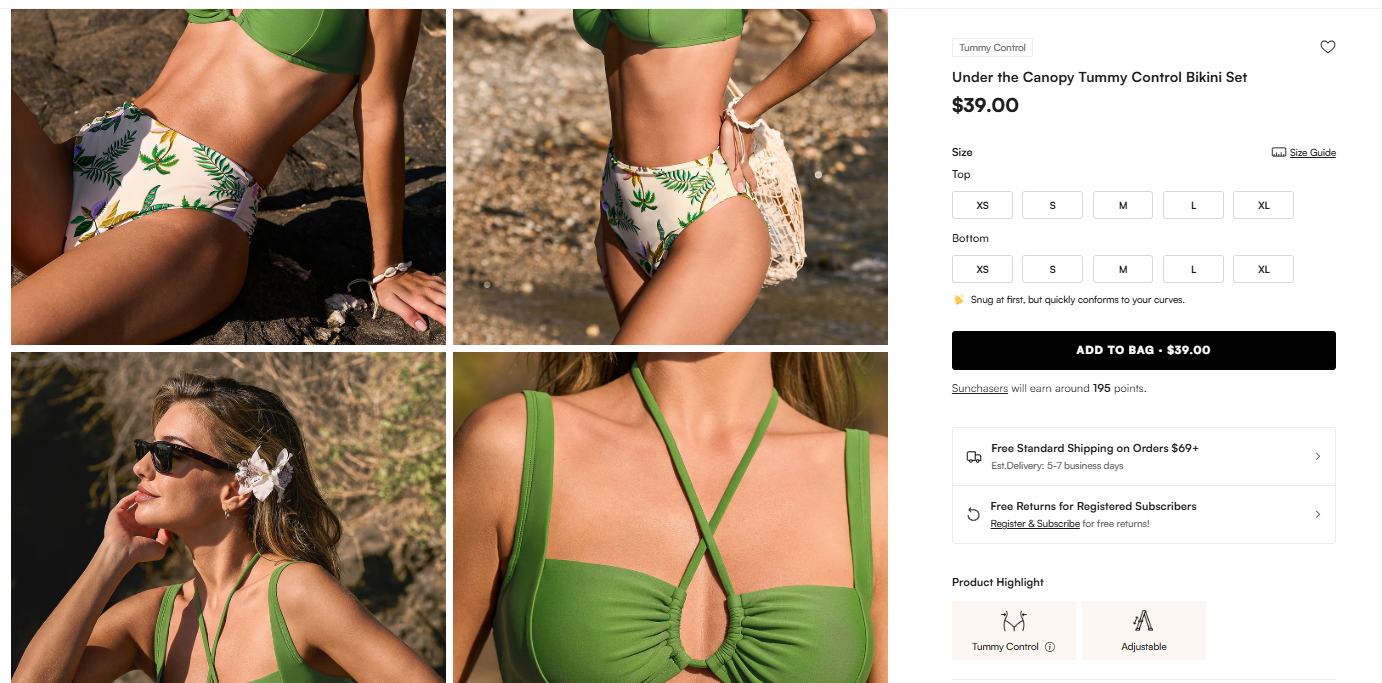
Crucially, CupShe leaned on its Chinese roots to execute this vision. After all, over 70% of the world’s swimwear is manufactured in China, and CupShe tapped that supply chain to the fullest. By owning production and cutting out middlemen, CupShe could offer trendy designs at “factory prices” – most swimsuits retail for only $20–$30, a fraction of what established U.S. brands charge. At the same time, Zhao understood that style and fit could not be compromised by low prices. He stationed CupShe’s design team in the United States, hiring local designers to eliminate any “information gap” in understanding Western tastes. This move paid off: with creatives on the ground in L.A., CupShe could spot emerging swim trends in real-time and adapt quickly, from high-leg cuts to retro floral patterns.
Equally important, CupShe embraced inclusive sizing and diversity well before it became an industry buzzword. The team recognized the diversity of American bodies – across races, ages, and sizes – and made sure to design accordingly. By 2019, CupShe’s line already covered sizes from S through 4X, making it one of the first fast-fashion swim brands to wholeheartedly serve plus-size women. This inclusivity, paired with on-trend styles, struck a chord. As one curvy fashion blogger noted, “CupShe really nails bikinis, and as a size 14 gal it’s always a struggle to find a bikini that flatters – [they do]”.
In short, CupShe found a clear niche: Instagram-worthy swimwear that was inexpensive, stylish, and accessible to all women. Armed with Chinese manufacturing muscle and a savvy localized design/marketing team, CupShe transformed from an “unknown small brand” into a breakout success virtually overnight. By 2021, CupShe was reportedly raking in nearly $300 million in annual revenue, selling in over 40 countries and dominating U.S. beaches from coast to coast. Its mobile app even became the most downloaded swimwear shopping app in America that year – the only swim-focused brand to crack the top 500 shopping apps. Not bad for a company that a few years prior was still figuring out its identity.

Building a DTC Powerhouse: CupShe’s Independent Site
If one element truly turbocharged CupShe’s rise, it was the decision to build and invest in its own direct-to-consumer (DTC) website from day one. Unlike many Chinese brands that rely solely on marketplaces or resellers, CupShe “发家” (got its start) via its independent online store in 2015. This was a bold move at the time – it meant going direct to Western consumers under a standalone brand, not just slapping a label on Amazon listings. But this strategy proved prescient, because CupShe’s site would evolve into the core engine of its growth and brand power.
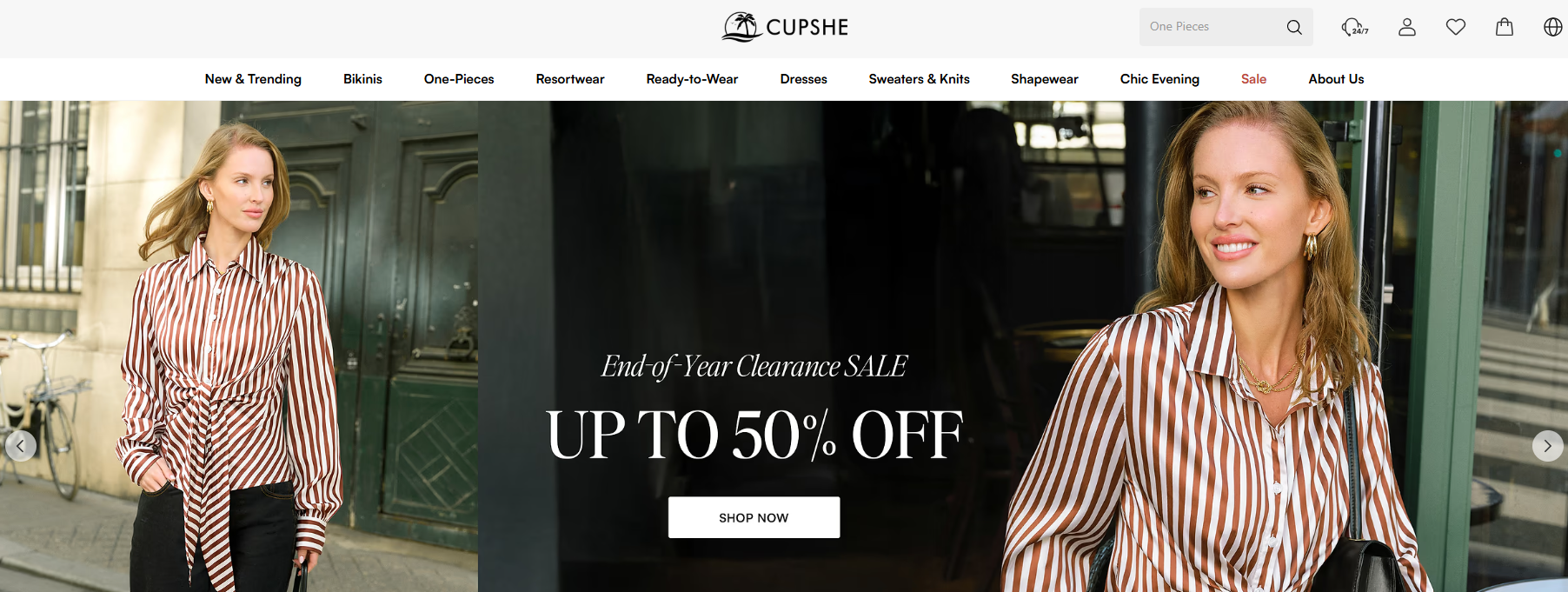
Today, CupShe’s DTC site is a juggernaut that contributes roughly 70% of the company’s sales. Senior marketing director Jessie Han has confirmed that only about 30% of sales come via Amazon, with the vast majority through CupShe’s own web store and app. This is astounding for a brand that first gained traction as an “Amazon bestseller” in swimwear, showing how successfully CupShe has driven shoppers to its own ecosystem. In fact, over the last few years, CupShe’s site has consistently drawn more web traffic than any of its swimwear DTC peers – outpacing even U.S.-founded brands like Summersalt, Andie and Albion Fit, as well as early Chinese rival Zaful. In a recent 3-month period, CupShe’s main site (cupshe.com) garnered 15.56 million visits – an average of about 5.19 million visits per month, eclipsing everyone else in its category.
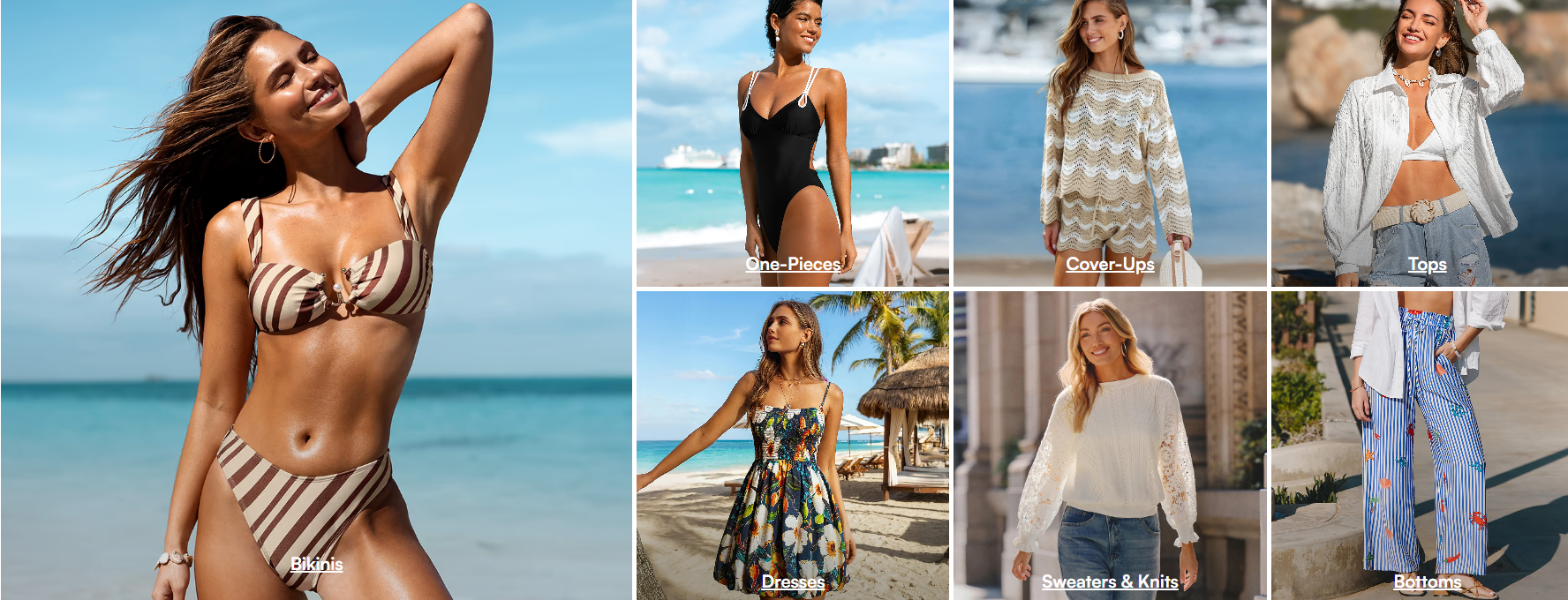
How did CupShe build such a robust direct channel? The key was weaving a compelling brand “experience” into every customer touchpoint online. On the CupShe site and app, visitors aren’t just shopping for cheap bikinis; they are entering CupShe’s sunny, body-positive world. The company has been obsessive about user experience (UX) and content on its site. As one early analysis noted, CupShe integrates its brand values – fun, confidence, adventure – into each interaction, ensuring the “CupShe experience” accompanies consumers at every step.
Visually, the website feels like a digital beach party: vibrant images of smiling women of all shapes in tropical locales, playful call-to-action text like “Hi, Sunchaser” greeting logged-in users, and a community feel (the loyalty program members are literally called “Sunchasers”). Product pages feature customer reviews and often user-generated photos, lending social proof that real women love these suits. The navigation is tailored to discovery – you can shop by body type, occasion, or trending styles, helping each shopper feel represented. It’s clear that CupShe has studied what its young female audience wants from an online shopping journey.
Under the hood, CupShe’s site metrics show just how engaged its visitors are. On average, a user spends nearly 4 minutes per session and browses 4–6 pages per visit – indicating strong interest in the content and products. Many likely scroll through lookbooks, read the blog, or explore multiple categories (CupShe has expanded into dresses, cover-ups, even matching family swim sets, so there’s a lot to see). Bounce rate is around 50–51%, which is slightly higher than some competitors – a signal that CupShe still has room to improve its landing page relevance. But its pages-per-visit trails only premium competitors like Summersalt, an impressive feat for a value-priced brand. Also telling: over 83% of traffic comes from mobile devices, reflecting CupShe’s mobile-first strategy and the strength of its app (which has 2.2 million installs to date). Clearly, CupShe’s young customers are shopping on their phones from the beach or poolside.
Perhaps the strongest testament to CupShe’s brand is its huge volume of direct traffic. In mid-2024, over 40% of CupShe’s site visitors came by typing the URL or clicking a saved bookmark – not through search or ads. This is massive; it means hundreds of thousands of people per month intentionally seek out CupShe’s site by name, a sign of tremendous brand awareness and loyalty. By comparison, paid search ads accounted for about 23% of traffic, and organic search only ~13%. CupShe has built such a following that it doesn’t have to rely as heavily on Google SEO; its customers come straight to the source. (In fact, “cupshe” as a keyword is the top driver of search hits – brand searches make up 77% of its search traffic.) It helps, of course, that CupShe invested early in affiliate marketing and referrals to drive traffic. The brand runs an affiliate program (e.g. via ShareASale) that rewards bloggers and influencers for sending shoppers – a strategy that has paid dividends as referrals became a notable slice of traffic. The bottom line is that CupShe’s independent site isn’t just an online shop; it’s the beating heart of a global swimwear community that CupShe carefully cultivated.

Making a Splash on Social: CupShe’s Influencer & UGC Strategy
CupShe’s meteoric rise wasn’t powered by its website alone. Social media marketing – especially influencer collaborations and user-generated content (UGC) – formed the other pillar of CupShe’s growth strategy. From as early as 2017, CupShe “followed the well-trodden fast-fashion path of social media promotion” . The brand recognized that swimwear is inherently visual and social – it’s the kind of product people love to show off in vacation pics. So CupShe set out to dominate the social feeds of its target customers.
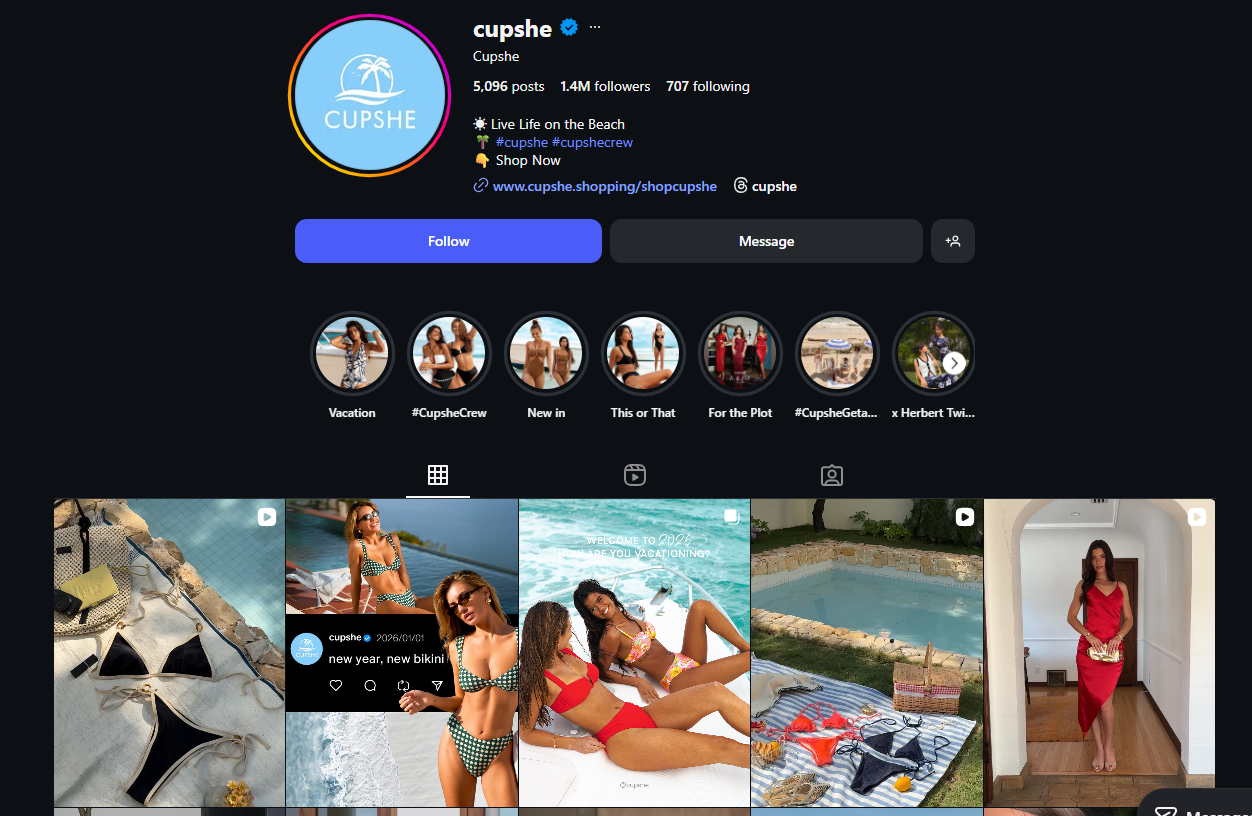
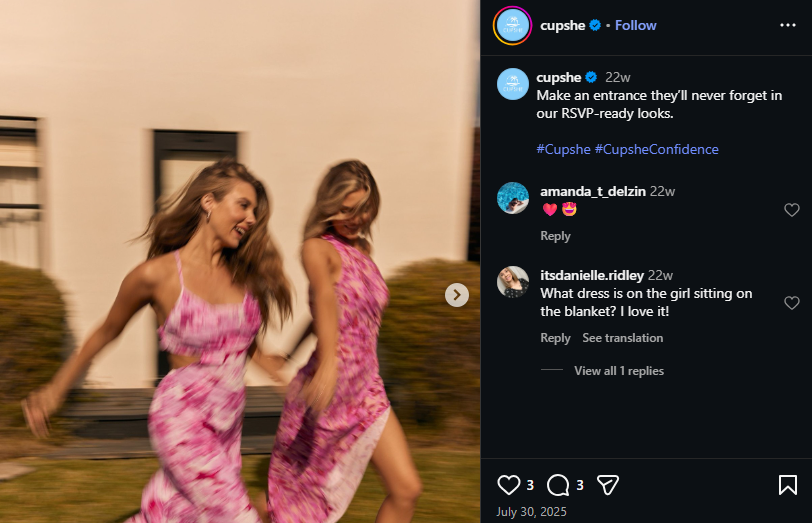
The company’s approach to social media was twofold: build huge official brand accounts filled with glossy content, and simultaneously encourage real customers and micro-influencers to share their authentic CupShe moments. On Instagram and Facebook, CupShe’s official pages amassed over 1 million followers each, becoming bona fide “head accounts” in the swimwear space. Scroll through @cupshe on Instagram and you’ll see why – it’s a sunshine-drenched gallery of tropical travel shots, confident women in bikinis, and feel-good slogans. CupShe smartly mixes professional photos with fan features. In fact, a lot of the posts are regrams of customers or partnered influencers wearing CupShe suits in stylish ways. By highlighting these real-world looks (all tagged #Cupshe), the brand creates a feedback loop: fans feel seen and valued, and new browsers see an active community loving the product. As of mid-2024, the hashtag #Cupshe had over 81,000 posts on Instagram – a trove of free marketing created by users. It’s the beachwear equivalent of a cult following.
On TikTok, CupShe was quick to ride the viral wave of short-form video. The brand’s TikTok account leans into fun, energetic content – think quick-changing bikini haul videos, body-positive dance trends, “bikini hacks” and more. CupShe also partnered with a wide range of TikTok creators, from top beauty influencers to everyday fashion lovers, to showcase its swimsuits in relatable ways. Notably, CupShe didn’t just chase ultra-glamorous models; they worked with plus-size and mid-size creators, moms, college girls, all kinds of “beach babes”, sending the message that everyone can feel confident in a CupShe suit. Many of these influencers would share honest try-on hauls on YouTube and TikTok – and their haul videos often racked up tens or even hundreds of thousands of views. The social proof was powerful: seeing a woman with similar curves rocking a cute CupShe bikini gave new customers the courage to hit “Add to Cart.” As one lifestyle blogger put it, “they’re always my go-to brand for affordable yet trendy styles…especially bikinis” – a sentiment amplified by countless haul videos.
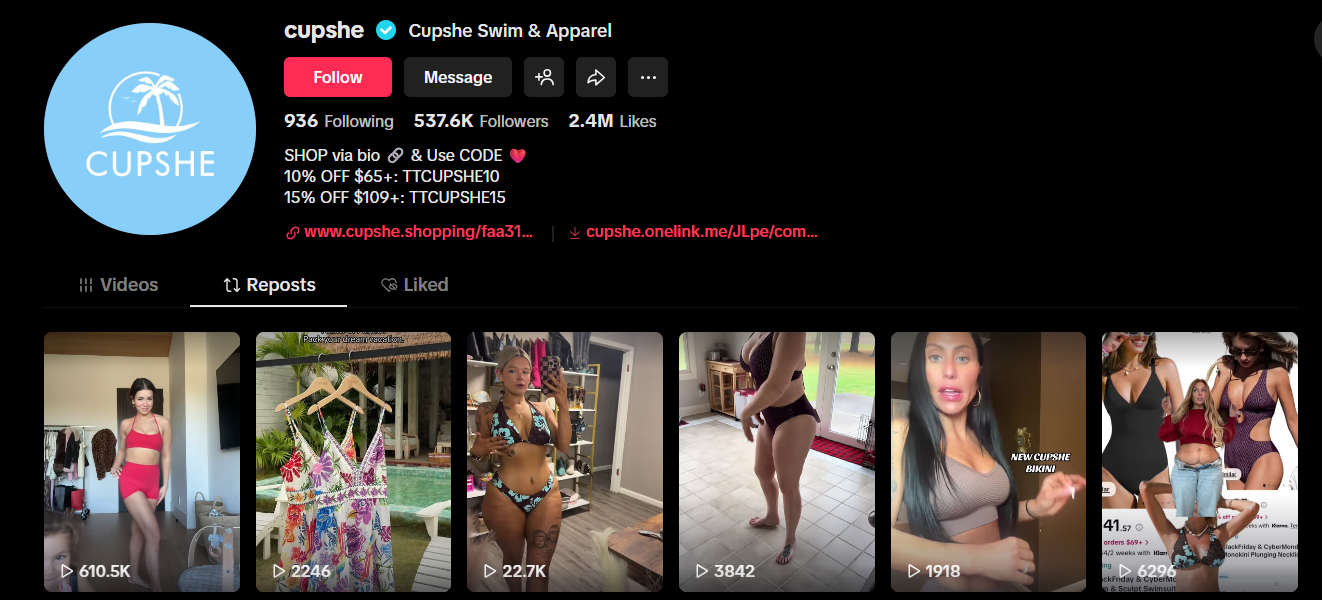
CupShe also wasn’t shy about incentivizing social engagement. They frequently hosted online contests and hashtag challenges to spur UGC creation. For example, CupShe ran a TikTok challenge under #CUPSHEcrew, where they got popular TikTokers to kick it off and invited fans to join in by posting their own swimsuit clips. The campaign caught fire, massively boosting brand exposure. CupShe would also give influencers unique discount codes to share with followers, so content creators could offer their fans a deal (while CupShe tracked the sales impact). This tactic not only drove conversions but made influencers feel like true brand ambassadors with their own mini-collections. By 2023, CupShe’s network of collaborators spanned the spectrum from mega-influencers to micro-UGC creators, all contributing to a steady drumbeat of brand buzz online.

It’s worth highlighting how consistent and “long-term” CupShe’s influencer strategy has been. Rather than sporadic flashy campaigns, CupShe treats influencer marketing as an always-on channel – a “稳定器” (stabilizer) for cross-border e-commerce growth, as Chinese marketing experts observed. Year after year, CupShe has kept investing in social content and relationships, which has compounded its audience. This long-game approach contrasts with brands that burn money on one-off celebrity endorsements or purely paid ads. CupShe’s more grassroots social strategy built authenticity and community that money can’t always buy. When customers scroll social media today, CupShe is everywhere – not as an intrusive ad, but via trusted voices and happy shoppers showing off their latest beach look.
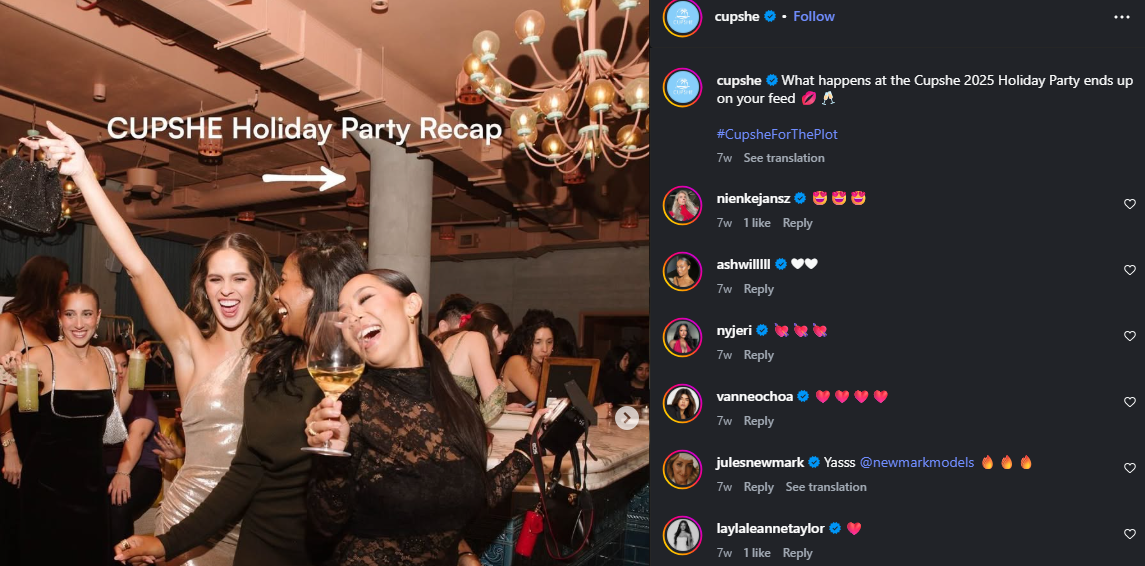
The payoff of this social media prowess is evident in CupShe’s web analytics. Nearly 20% of CupShe’s website traffic now comes directly from social media referrals (more than from unpaid Google searches). That’s a testament to effective content marketing and engagement – users see something on Instagram or Pinterest, click through to CupShe’s site, and often end up buying. (Pinterest, by the way, is another secret weapon: CupShe maintains active Pinterest boards for swim inspiration, seasonal trends, etc., and posts frequent Pins with seasonal keywords to catch searchers. This helps CupShe snag free “organic” traffic on Pinterest and even Google image search, another savvy move for natural growth.)
In sum, CupShe turned social media into a vibrant marketing funnel, where beautiful imagery, real customer voices, and influencer advocacy all converge to drive sales. The brand doesn’t rely on “spray and pray” Facebook ads or gimmicky virality; instead, it built a loyal community. CupShe’s Instagram feels like a happy hour with friends; its TikTok feels like a pool party. That genuine connection with consumers – making them protagonists in the brand story – is something even the richest advertising budget can’t easily replicate.
Product Innovation for the “Insta-Girl” Generation
Of course, all the clever marketing in the world would fall flat if CupShe’s product didn’t live up to the hype. A huge part of CupShe’s success lies in innovating on product design and merchandising to meet the needs of modern young women. The company has been extremely data- and trend-driven in its product development, often outpacing more established swim labels in agility.
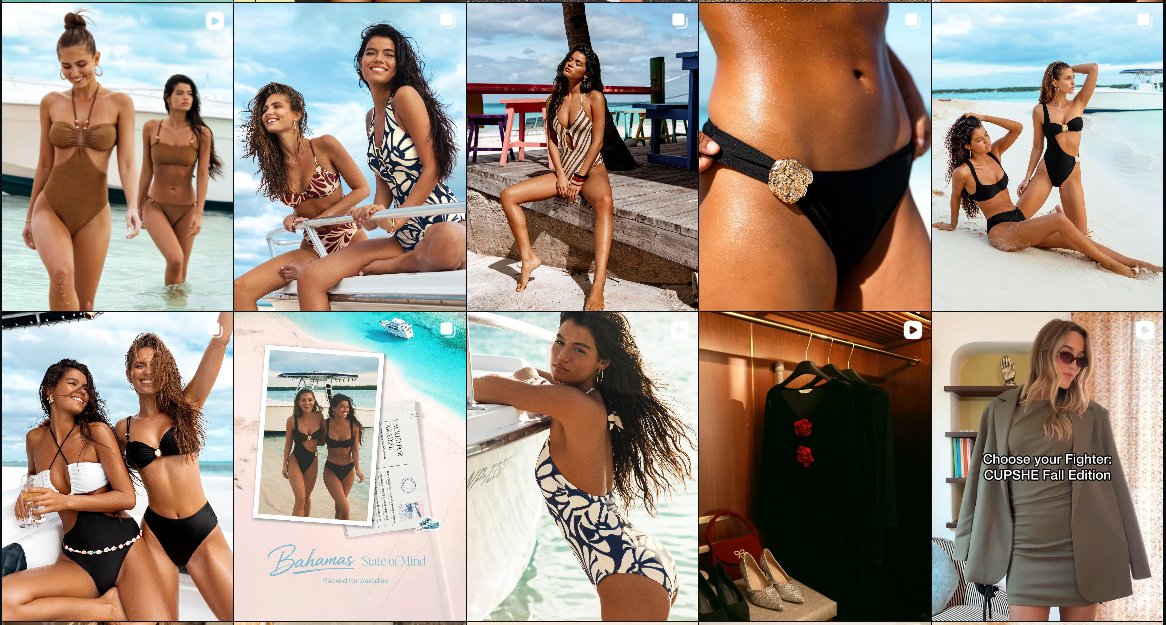
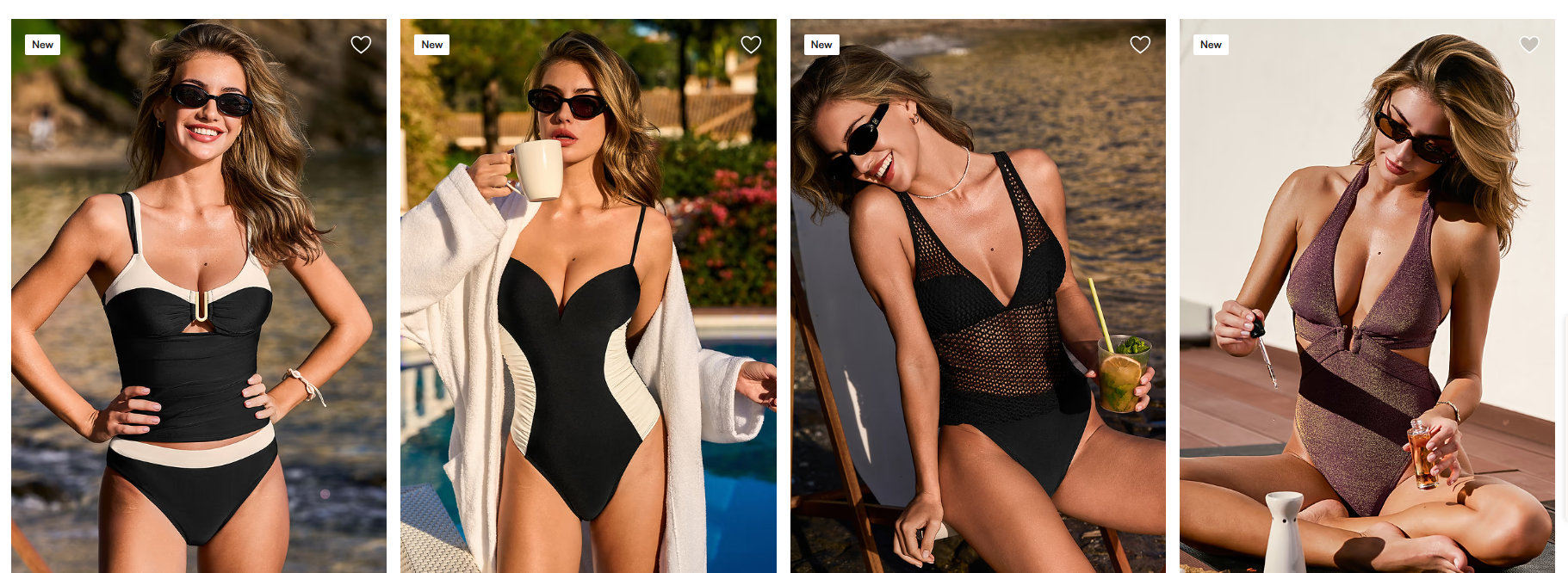
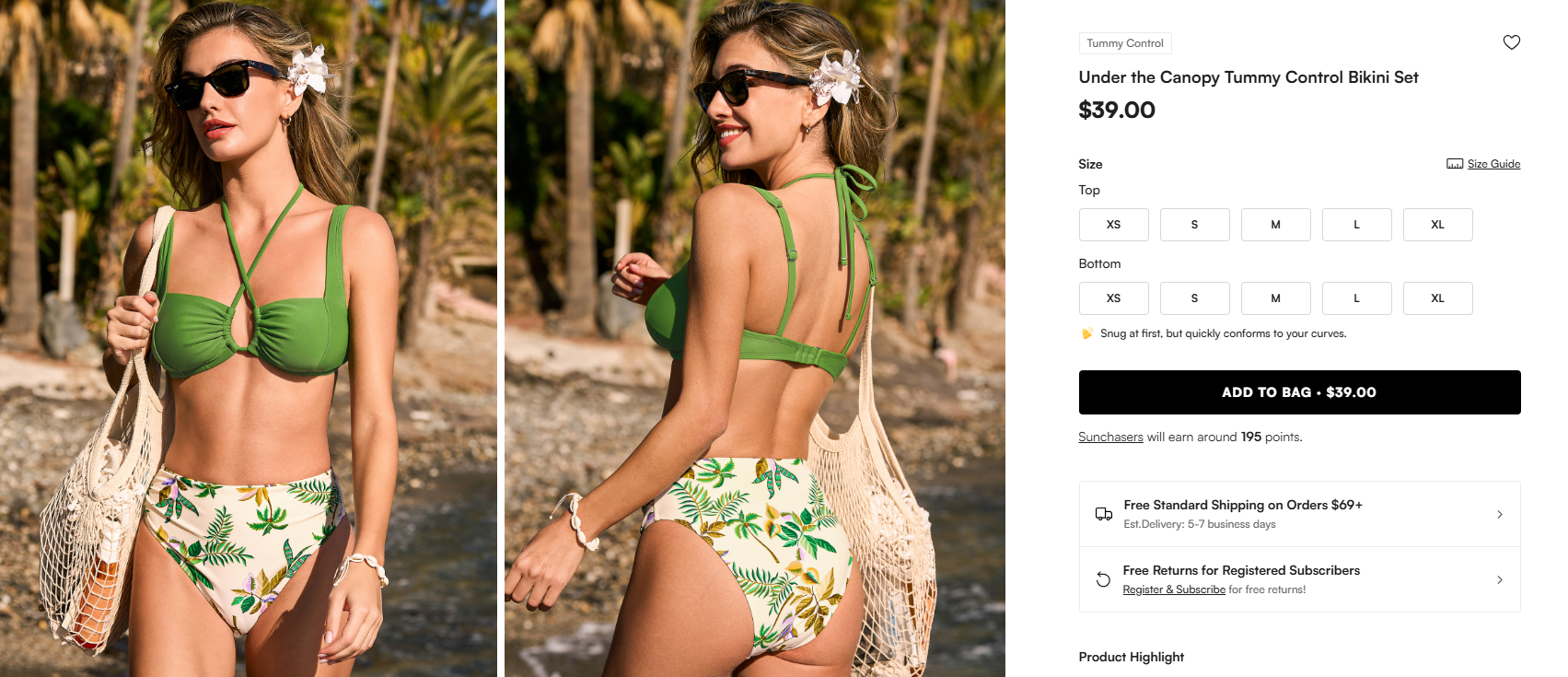
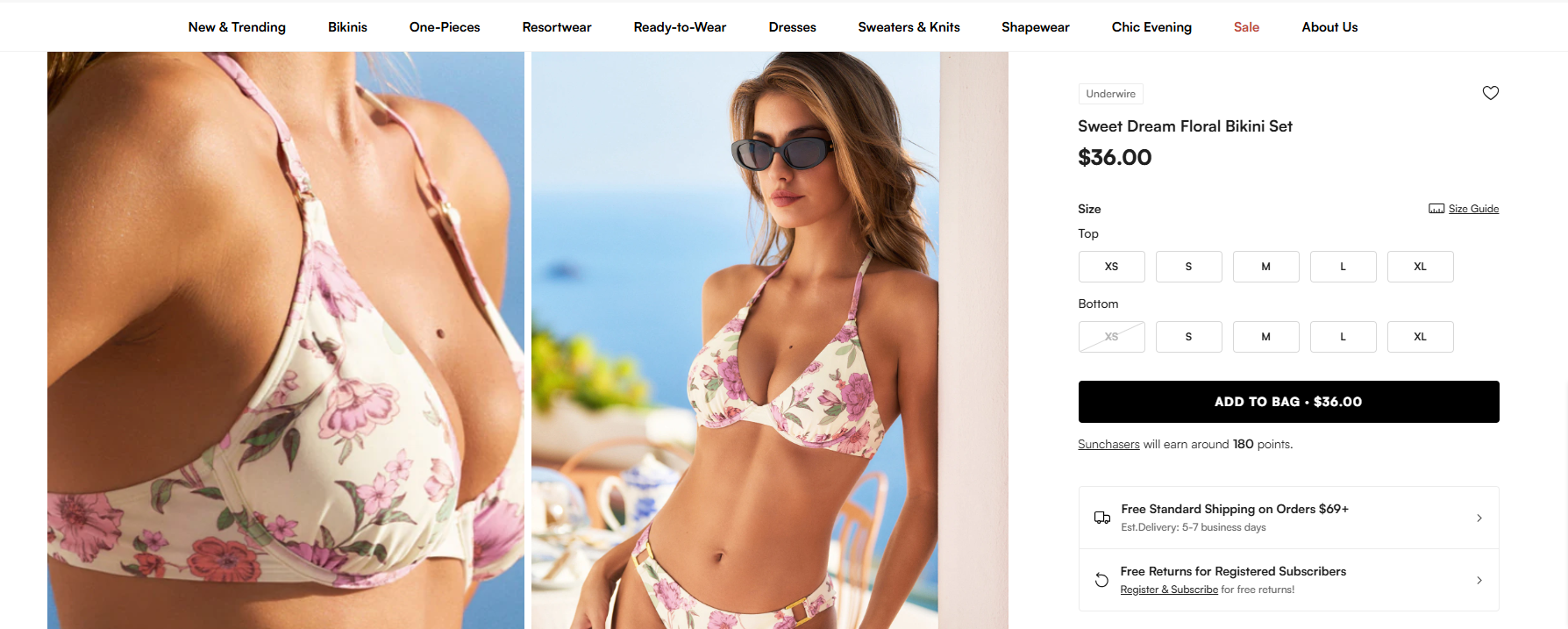
Firstly, CupShe’s product range is built for visual impact. Recognizing that swimsuits are often purchased with Instagram in mind, CupShe leans into eye-catching details that pop on camera. Many of its bikinis and one-pieces feature bold cut-outs, asymmetric straps, lace-up backs, and vibrant patterns – design elements meant to highlight the body’s curves and turn heads. Even its one-piece suits aren’t shy; they might have plunging necklines or side cut-outs to ensure they’re anything but frumpy. This focus on sexy-cute styling helped CupShe stand out in a market where, historically, one could either buy cheap basic swimsuits or super expensive designer ones. CupShe filled that gap by offering trendy, flirty designs at $25 – an irresistible combo for Gen Z and millennial shoppers. As one American customer raved, “I love that CupShe has such a wide variety of styles and the pricing is really affordable”. Variety + value was a winning formula.

Beyond aesthetics, CupShe innovated by simplifying the painful swimsuit shopping experience. Any woman knows that finding the right swimsuit can be a struggle – fits vary, confidence wavers. CupShe tackled this head-on by offering features like a super-detailed size guide (with real customer feedback on fit), easy mix-and-match separates, and even interactive content to help customers choose the right style for their body. While not as high-tech as some bespoke fit-centric startups, CupShe’s broad size run and focus on customer reviews mitigated the usual sizing angst. The brand also regularly launched capsule collections targeted at specific body types or occasions – e.g. a “Long Torso Friendly” one-piece line, a “Maternity Swim” collection, etc. This level of segmentation is typically seen in pricier brands, but CupShe democratized it. They used data (including search queries and feedback) to identify niche needs and quickly design products to fill them.
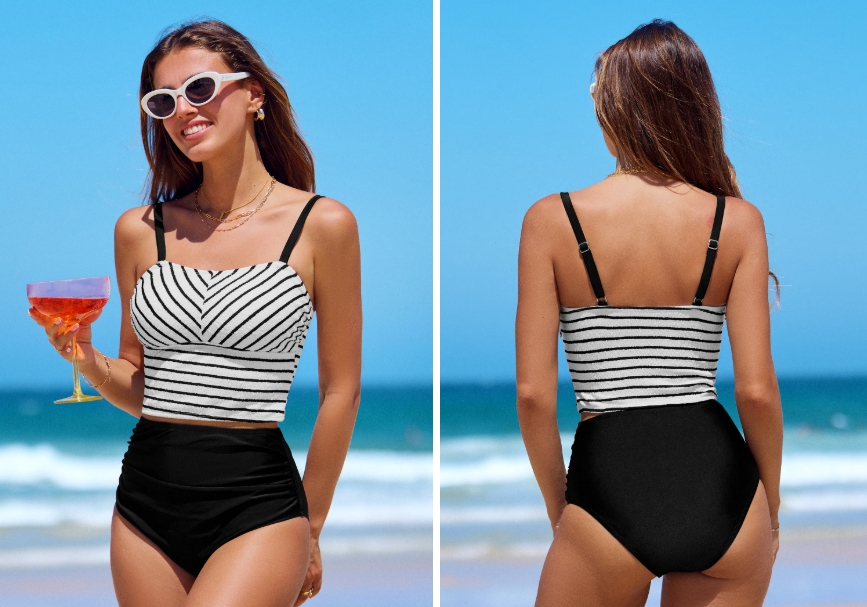
Crucially, CupShe was early to embrace extended sizing and body positivity in its product lines. While Summersalt and Andie (U.S. competitors) also focus on inclusivity, CupShe’s angle was slightly different: it wasn’t just about plus sizes, but about showing different lifestyles in swimwear. The brand’s imagery and influencer picks include young moms, curvy women, petite women, athletic builds, etc., all rocking CupShe confidently. This sends a subtle but powerful message in the products themselves: CupShe’s suits are for “every body” and every moment – whether you’re a size 2 college student partying in Miami or a size 20 mom of three on a family beach trip. By catering to such a broad audience (while still nailing style), CupShe quietly expanded its TAM (total addressable market) beyond what a typical niche DTC might reach.
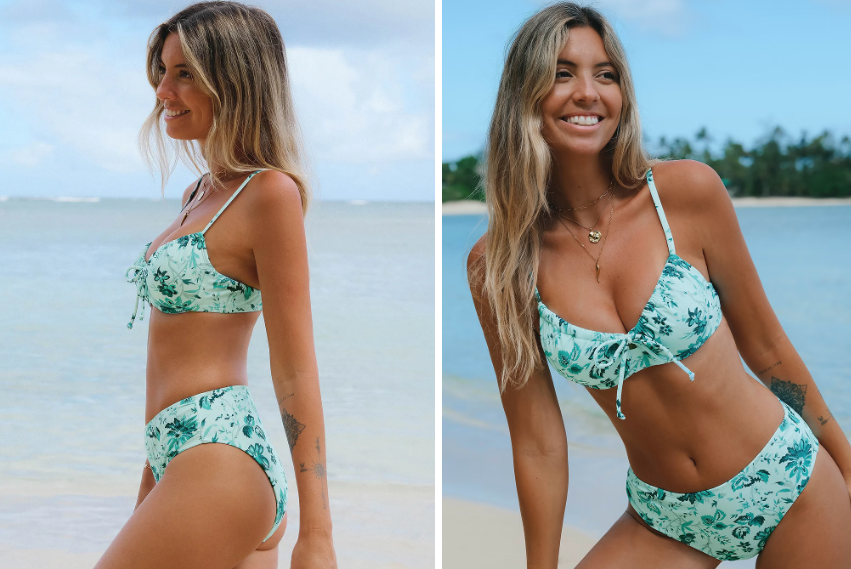
Additionally, CupShe leveraged rapid product cycle innovation – essentially a fast-fashion model – to stay ahead of trends. The design team drops new styles at a dizzying pace, especially leading up to summer. During peak spring break season, CupShe might release dozens of fresh bikinis in a month, responding in real-time to what’s trending on social media. Tie-dye hot this season? CupShe will have tie-dye swimsuits online in weeks. High-waisted retro bottoms back in vogue? They’ll add more of those silhouettes to the lineup. This agility is where CupShe’s Chinese supply chain integration gives it an edge: it can prototype and produce new designs far faster than legacy swim brands that plan collections a year out. Essentially, CupShe brought the “test-and-learn” mindset of fast fashion to swimwear, which historically was a slow, seasonal business. The result: each summer, CupShe’s assortment feels incredibly fresh and tailored to the moment.
Interestingly, CupShe isn’t stopping at swimwear either. Having conquered the bikini drawer, they’re now eyeing the rest of the suitcase. The brand expanded into beachwear and resort clothing (dresses, cover-ups, and accessories) early on, and those categories now feature prominently on its site navigation. More recently, CupShe even introduced lines like activewear and loungewear, aiming to capture customers year-round, not just in summer. It’s a natural evolution: CupShe can leverage its existing customer base and brand ethos (“fun in the sun”) to sell vacation dresses, sunglasses, and more. And because they have that direct channel, launching a new category is as simple as adding a banner on the homepage and sending an email to millions of fans.
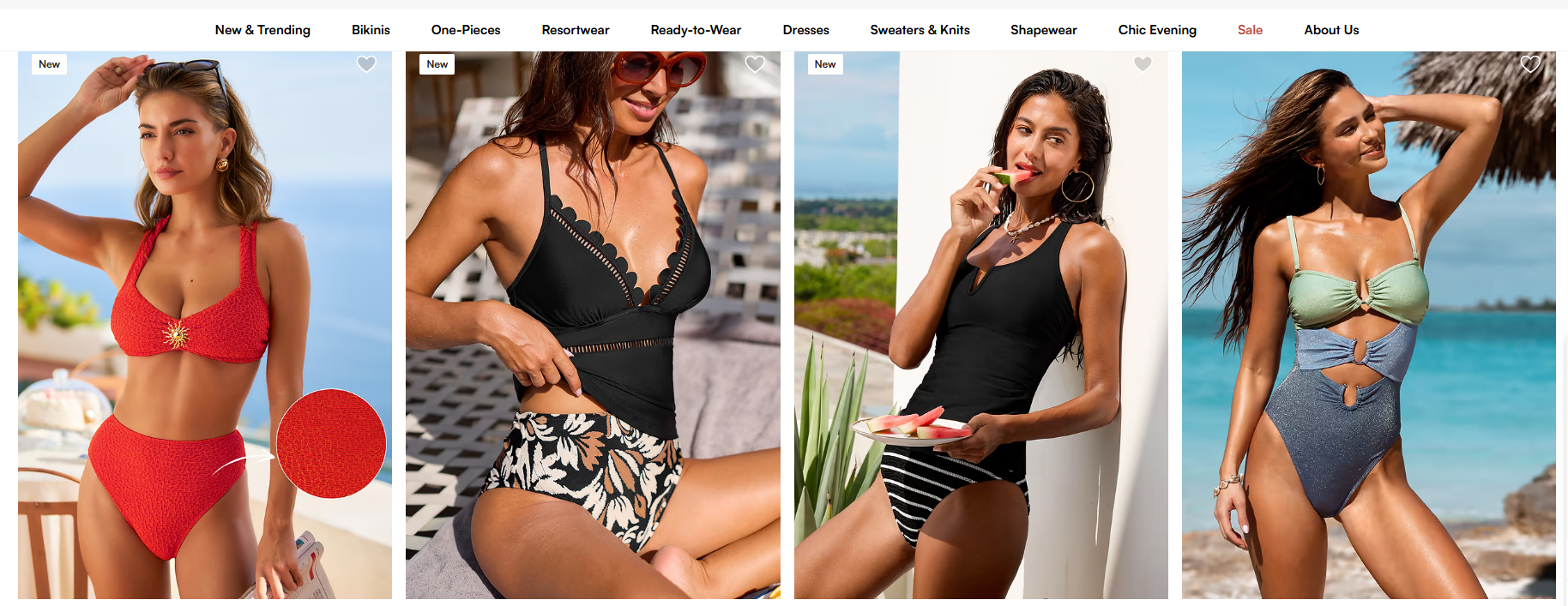
This product diversification is also a strategic response to the classic DTC dilemma: swimwear is highly seasonal. CupShe’s core sales spike in spring and summer, so expanding into dresses, fall apparel, etc., smooths out demand. It mirrors what other swim-focused DTC brands did – e.g. Andie Swim also added pajamas and intimates, Summersalt added travel wear. CupShe, with its fast-fashion DNA, arguably executed this broaden-and-expand playbook even faster. The risk is always that you lose focus, but so far CupShe has managed to keep “beach lifestyle” as the common thread tying its categories together. A cover-up dress or a yoga set on CupShe still carries that breezy, colorful vibe that customers associate with the brand.
At its core, CupShe’s product innovation comes down to listening and adapting – listening to customers (sizing feedback, style requests), watching social media trends like a hawk, and adapting the product line swiftly. This user-centric approach – “identify what modern women want, and give it to them at the right price” – might sound obvious, but many brands fail at it. CupShe excelled, and the reward is a deep well of customer goodwill. Shoppers feel that CupShe “gets it” – that this brand is on their wavelength, solving their swimsuit problems without breaking the bank. That engenders a loyalty that transcends any single cute bikini. CupShe isn’t just selling swimwear; it’s selling confidence, trends, and the promise of good times.
CupShe vs. The Competition: Different Strokes in Swimwear
To truly appreciate CupShe’s rise, it’s useful to compare its approach to other notable swimwear players – both fellow digital upstarts like Andie and Summersalt, and the 800-pound gorilla of online fashion, Shein. Each has taken a distinct path in the quest to win over swimsuit shoppers, highlighting just how sharp CupShe’s execution has been.
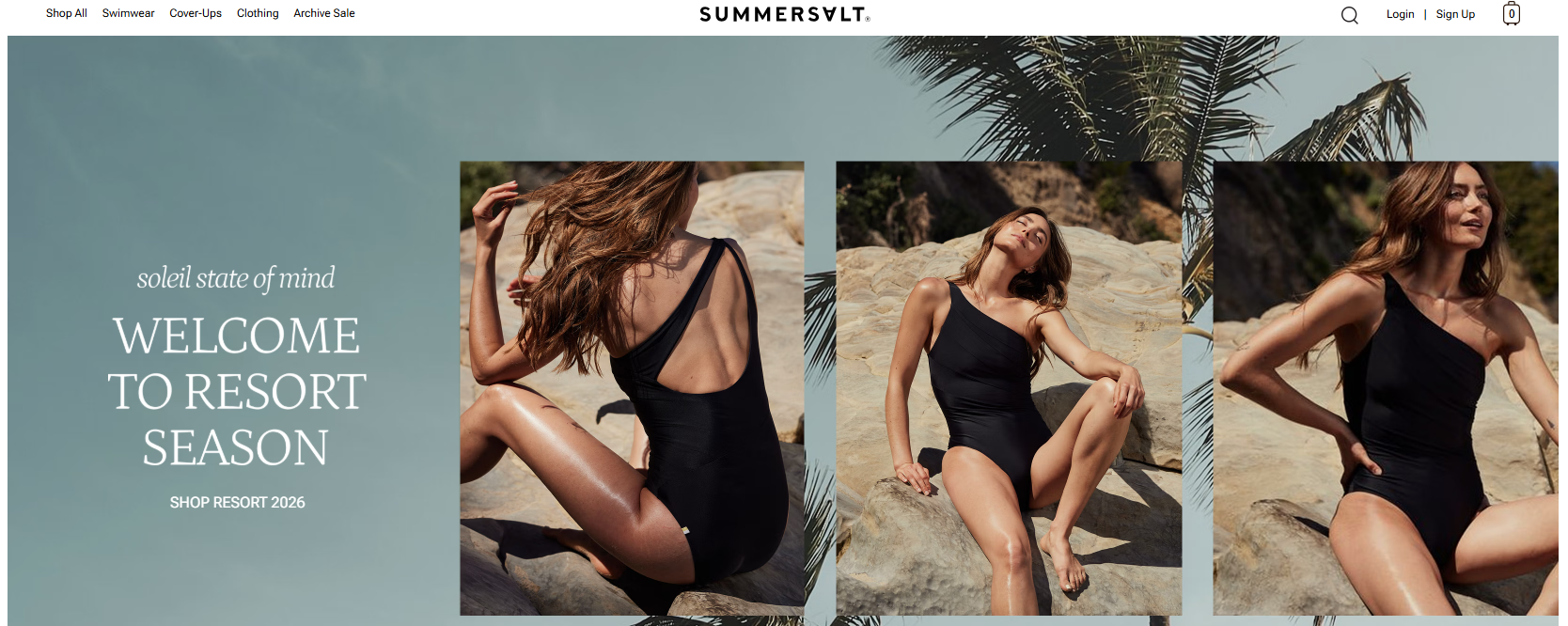
Summersalt, for instance, burst onto the scene around 2017 with a very different playbook. Founded by two women in the U.S., Summersalt positioned itself as a premium, data-driven swimwear brand focused on fit and sustainability. They famously collected body measurements from 10,000 women to engineer their signature swimsuits, like the color-block “Sidestroke” one-piece that became an Instagram favorite. Summersalt’s branding screams inclusivity and empowerment – their campaigns feature real women of all shapes and ages (27 women in one campaign, to be exact, under the slogan “Every Body is a Summersalt Body”). They also tout eco-friendly fabrics and a mid-range price (~$95 per suit). In short, Summersalt went for an aspirational yet inclusive tone, and garnered plenty of press for it. However, what Summersalt didn’t do was undercut on price or flood social media via affiliates. They grew more traditionally, through PR and social campaigns highlighting their values.
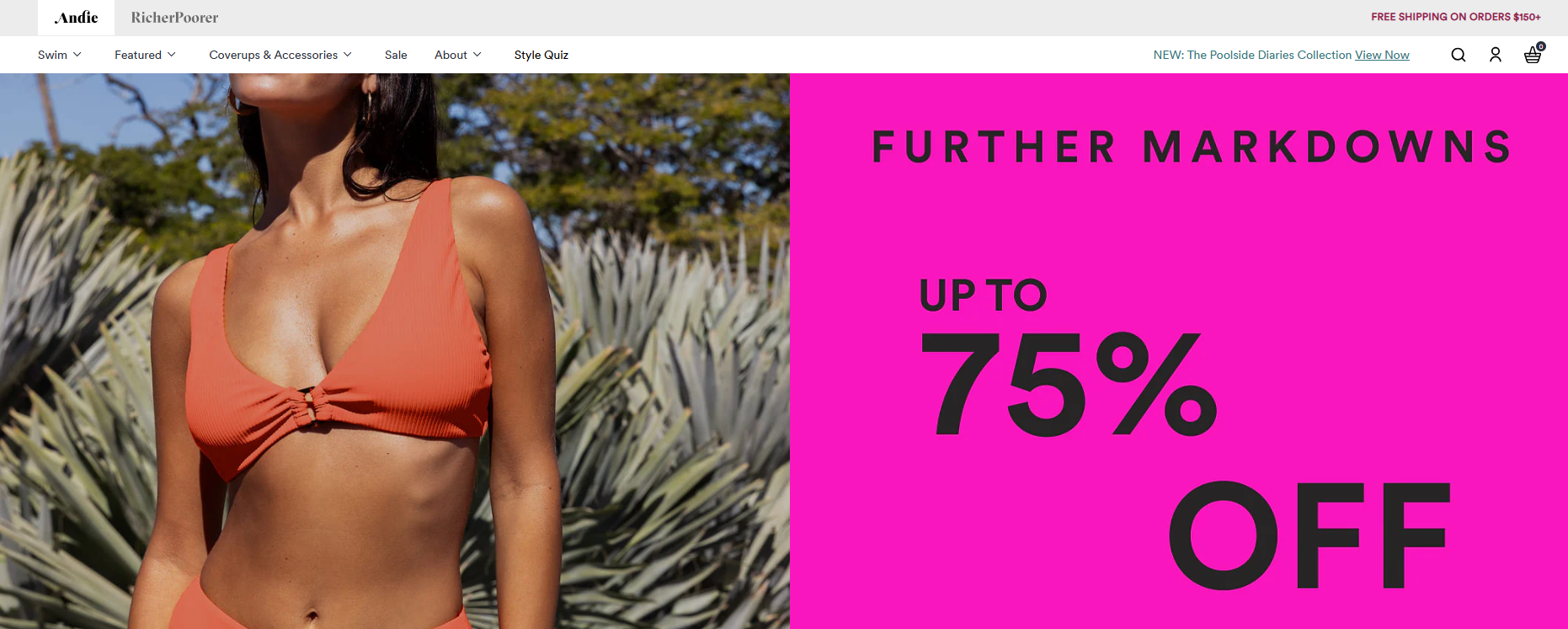
Andie Swim, another U.S. startup (founded 2017 by Melanie Travis), took yet a different angle. Andie’s focus was on making swimsuit shopping ultra-convenient and stress-free. They offered risk-free try-ons (sending multiple suits to try at home) and emphasized classic, timeless styles in solid colors. Andie’s price point is similar to Summersalt’s (around $75-$115), and their marketing often leans on influencers and even celebrities – e.g. a high-profile campaign starring actress Demi Moore and her daughters modeling Andie swimsuits. Andie also invested in things like out-of-home ads and polished photo shoots. Essentially, they tried to bring a bit of old-school department store polish to DTC swimwear, albeit delivered online. The vibe is somewhat different from CupShe: Andie is more about quality and fit (“designed by women, for women” and “timeless one-pieces”), whereas CupShe is about quantity and fun (“hundreds of trendy styles, drop it like it’s hot”).
So where did CupShe excel relative to these Western counterparts? Scale and reach. Despite their branding savvy, neither Summersalt nor Andie has achieved the raw scale that CupShe has. CupShe’s site traffic absolutely dwarfs that of Summersalt and Andie, and by all accounts, CupShe’s revenue (approaching $250–300M by early 2020s) far outstrips Summersalt’s (which was reportedly in the tens of millions) or Andie’s. Part of this is CupShe’s price advantage – they simply sell far more units because a customer can buy 3–4 CupShe bikinis for the price of one Summersalt. Another part is CupShe’s leverage of Amazon as a channel. Summersalt and Andie pride themselves on being DTC-only (controlling the experience), but CupShe had no such qualms about partnering with Amazon to capture additional customers. By listing its popular items on Amazon, CupShe gained exposure to millions of Prime shoppers and often dominated Amazon’s swimwear bestseller ranks. In fact, every peak season, Amazon alone brings CupShe an estimated $5+ million in monthly sales – revenue that purely DTC brands leave on the table. CupShe’s willingness to be omnipresent (website, app, Amazon, etc.) gave it a wider funnel. This “two-line layout: DTC + Amazon” strategy was noted as a smart move in enabling CupShe’s quick international expansion.
CupShe also outpaced competitors in harnessing affiliate influencers and UGC at scale. Summersalt and Andie certainly use influencers, but often in a curated, campaign-driven way (e.g. partnering with a few high-profile women for a seasonal shoot). CupShe, by contrast, unleashed an army of micro-influencers and everyday customers posting content year-round. This generated far more volume of buzz. For example, on YouTube you’ll find countless CupShe haul videos by creators of all sizes – something you see far less of for Summersalt/Andie, which have fewer SKUs and stricter brand aesthetics. By democratizing who could promote the brand, CupShe benefited from a grassroots word-of-mouth effect that those more premium brands couldn’t replicate as easily (it’s hard to get a college student excited to haul $100 swimsuits, but a $25 bikini haul is eminently shareable).
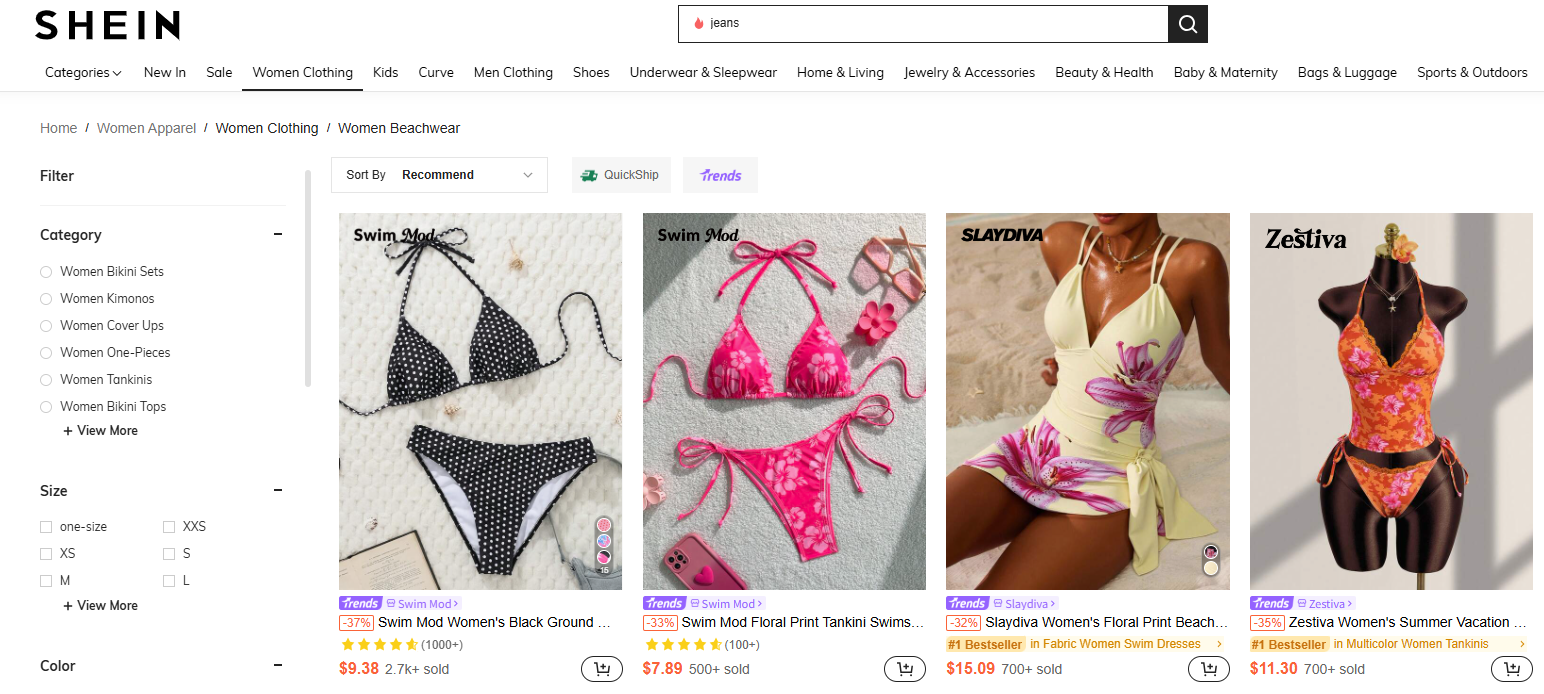
What about Shein, the Chinese fast-fashion giant that sells everything under the sun? It’s true that Shein and CupShe share some DNA – both leverage Chinese supply chains, both target young online shoppers, and both exploded in the late 2010s with social-media-fueled growth. CupShe even gets compared to Shein as being part of the same “ultra-fast-fashion wave”. But CupShe deliberately differentiated itself from Shein in a few ways. Firstly, focus: Shein carries hundreds of thousands of SKUs across all apparel categories, whereas CupShe built its brand around a single category (swim) and related lifestyle items. This focus allowed CupShe to cultivate expertise and brand authority in swimwear that Shein doesn’t have. A customer might remember “CupShe” as a go-to for swimsuits in a way they’d never specifically recall Shein for swim (it’s just one of many things on Shein). Secondly, audience breadth: Shein initially targeted Gen Z with ultra-trendy, youth-centric marketing, whereas CupShe from the start drew a more diverse audience including millennials, moms, and plus-size shoppers. CupShe’s branding isn’t as overtly Gen Z; it’s a bit more grown-up (while still fun), which gave it wider appeal beyond the TikTok teens. Thirdly, channel strategy: Shein is almost entirely reliant on its own app/website and aggressive online ads, while CupShe balanced its direct channel with marketplace presence (Amazon) and organic community building. In doing so, CupShe perhaps sacrificed some margin (Amazon takes a cut) but gained resilience – it had multiple engines driving sales. Finally, one could argue CupShe invested more in brand storytelling relative to Shein’s algorithm-driven approach. Shein is notorious for its data-driven product churn, with less emphasis on crafting a brand narrative or engaging with customers beyond transactions. CupShe, as we’ve seen, put considerable effort into brand values (body positivity, “California girl” lifestyle) and real engagement with its user community. Over the long run, that could give CupShe more brand equity than Shein, at least in the swimwear niche. Indeed, by mid-2024 CupShe’s direct traffic share (40%+) suggests notable brand loyalty, something fast-fashion marketplaces typically struggle to achieve.
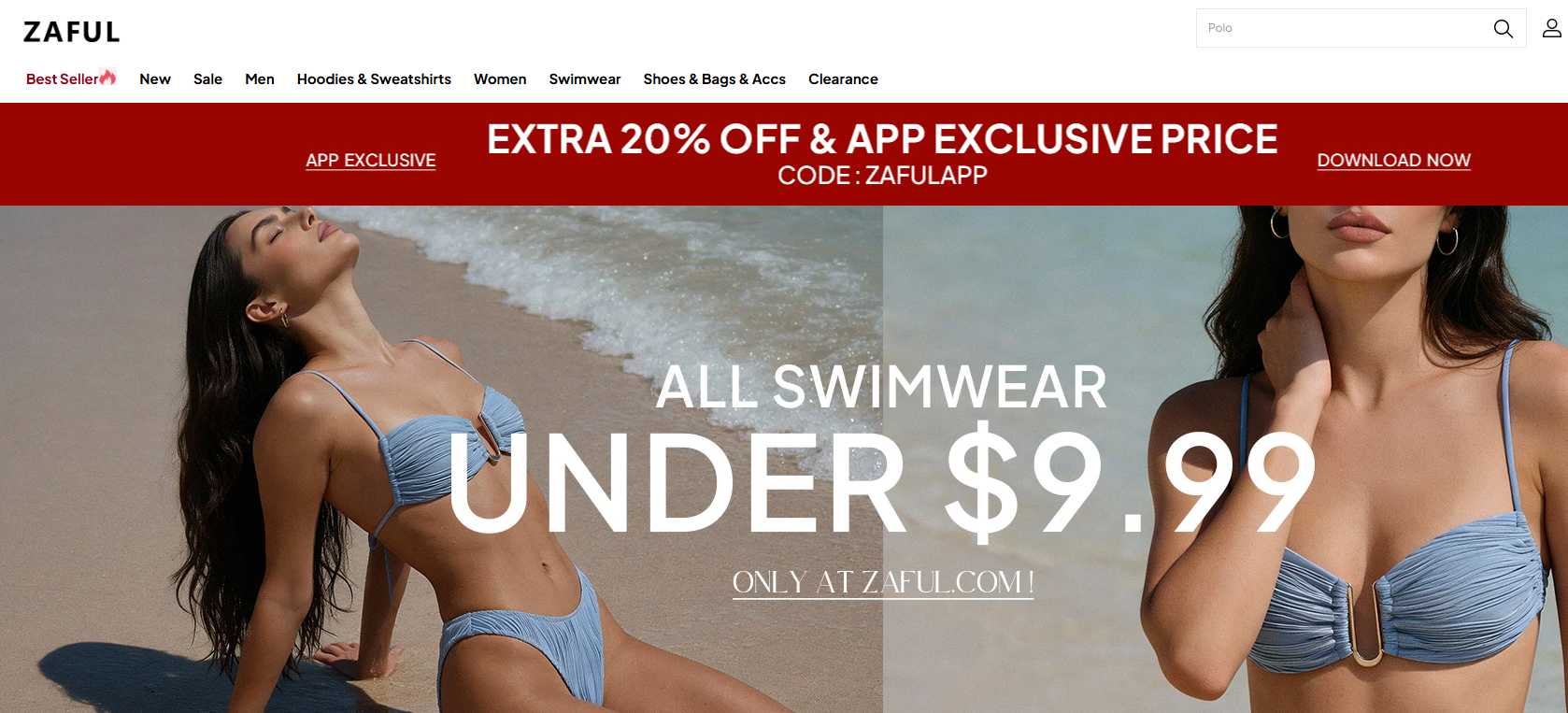
It’s also worth mentioning Zaful, another Chinese swimwear-focused brand that was prominent around the same time. Zaful (backed by tech company ZAFUL) pioneered selling cheap bikinis on Instagram in the mid-2010s and was an early competitor. However, CupShe managed to overtake Zaful in web popularity and likely sales. Why? One reason might be trust and consistency. Zaful garnered a mixed reputation for quality/service, whereas CupShe earned relatively higher customer satisfaction by focusing on product quality (within its price tier) and responsive customer service. CupShe’s decision to establish a U.S. presence (with part of the team in California) meant better insight into customer expectations and perhaps smoother logistics for American buyers. Over time, CupShe simply became the more beloved brand internationally, while Zaful’s brand faded into the background noise of “just another cheap Chinese site.”
In summary, CupShe found a sweet spot between the high-end DTC swim labels and the ultra-cheap fast fashion platforms. It offers much of the accessibility and trendiness of a Shein/Zaful, but with a stronger brand identity and community. And it captures some of the inclusive, aspirational vibes of an Andie/Summersalt, but at far lower prices and with far greater volume. This hybrid positioning – fast fashion meets brand-driven DTC – is what propelled CupShe ahead of the pack. The numbers tell the story: CupShe’s site sits top of the traffic charts, with more monthly visits than almost all its direct competitors combined. It’s not often a brand can claim to beat both Chinese and American rivals on their own turf, but CupShe has managed to do exactly that in swimwear.
Riding the Wave: Global Expansion and the Road Ahead
CupShe’s success in the U.S. market soon gave it the confidence to set sail globally. After all, if sun-kissed Americans loved affordable, stylish swimwear, why wouldn’t beachgoers in Australia, Europe, or Latin America? The company aggressively expanded its international shipping and local marketing over the past few years, and today Cupshe sells to over 40 countries worldwide. Its online storefront is localized for numerous regions (with country-specific sub-sites for the EU, UK, Canada, Australia, etc. in multiple languages). This global push has paid off handsomely. While the United States still accounts for about 63% of CupShe’s web traffic (and presumably a lion’s share of revenue), sizable chunks now come from abroad. Notably, France has emerged as CupShe’s second-largest market by traffic (over 11%), followed by Canada (~6%) and the UK (~5%). European fashionistas have taken to CupShe’s mix of trendy designs and reasonable prices – it aligns well with the continental desire for chic yet attainable beachwear.
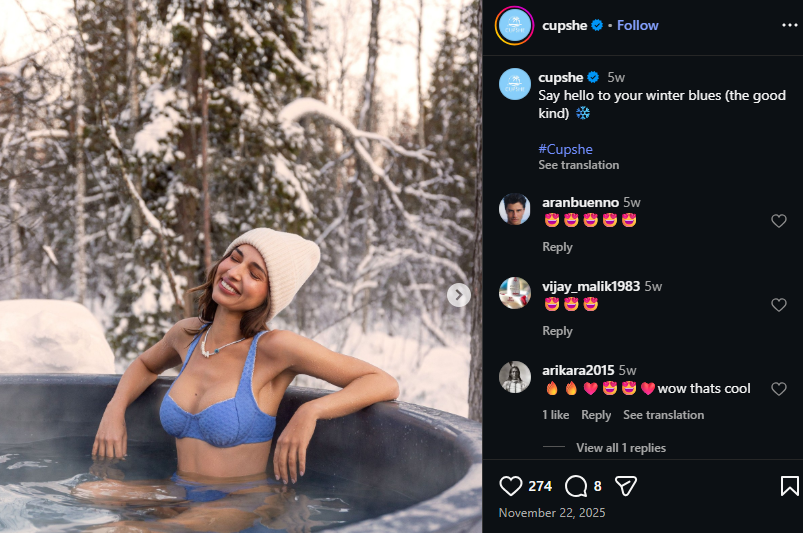
CupShe’s ability to cross borders is also aided by the universal appeal of its niche. Swimwear is a global language of its own; beaches and pools exist everywhere, and the desire to look good in the sun is near-universal. By anchoring its brand in “beach lifestyle” rather than something culturally specific, CupShe could easily adapt its marketing to different locales. A scroll through CupShe’s Instagram might show a Cali girl on Venice Beach in one post and a fashionista by the French Riviera in the next – both equally at home in the brand narrative. This flexibility in storytelling makes CupShe relatable whether you’re in Miami or Marseille.
From a business model perspective, CupShe’s global expansion has been capital-light and digital-first. It did not need to open physical stores or partner with local retailers; instead, it leveraged the same playbook of social media, influencers, and e-commerce in each new market. In regions where Amazon is strong (like Europe), CupShe lists on Amazon’s local marketplaces to capture demand (e.g. Amazon UK, where CupShe swim items also rank highly). In regions where Instagram usage is high, it doubles down on influencer campaigns (for example, collaborating with popular European travel bloggers for content). CupShe also navigated the complexities of international shipping and returns by establishing distribution centers outside China (it reportedly operates warehouses in the U.S. and possibly Europe for faster delivery). This operational savvy means global customers get a reasonably smooth experience, building trust in the brand despite it being foreign. The result is that CupShe today is arguably a truly global DTC brand – a rare feat, as many DTC darlings remain country-bound.
Looking ahead, CupShe appears poised to continue its upward trajectory – potentially toward that coveted billion-dollar brand status in valuation, if not already in actual revenue. In early 2024, CupShe raised a notable venture funding round of over $15 million (around ¥100 million RMB), signaling investor confidence in its growth. Impressively, that was one of its first major external fundraises; CupShe scaled largely via reinvested profits up to that point. The fresh capital is likely earmarked for further brand building and category expansion. CupShe has hinted at moves into adjacent product lines – for instance, modest swimwear for Middle Eastern markets, or children’s swim (they already have some “Mommy and me” matching sets). There’s also talk of pushing into offline experiences, perhaps pop-up shops in key cities or branded beach events, to deepen its community engagement. Given CupShe’s digital DNA, any offline foray will probably be experiential marketing rather than a retail store rollout.
One challenge CupShe will need to navigate is maintaining its brand ethos as it grows even bigger. Rapid expansion and skyrocketing order volume can strain quality control and customer service. Already, some customers note that while CupShe’s quality is generally good for the price, there can be inconsistencies (some suits last years, others maybe a season – expected in fast fashion). Holding onto consumer trust will require vigilance on product quality – not letting standards slip even as the assortment explodes. CupShe will also face fiercer competition as its profile rises. Big legacy players (like Victoria’s Secret or Target) could react by undercutting prices on swimwear, or new challengers might try to imitate CupShe’s model. To stay ahead, CupShe must keep innovating in design and marketing – essentially, never resting on its laurels thinking it has “won”. The beachwear space can change with the tides of trend and consumer preference.
However, if CupShe’s track record is any indication, the brand thrives on riding the waves of change. It has repeatedly shown an ability to adapt – whether that was pivoting into swimwear, jumping on TikTok trends, or embracing new markets. As a marketer observing CupShe’s journey, I’m struck by how intentional each move has been: focusing on a core niche, building an owned brand platform, fostering a genuine community, and balancing low prices with high aspiration. In doing so, CupShe exemplifies a new breed of DTC success story emerging from China – one that marries the best of East and West, of supply chain efficiency and brand creativity.
CupShe’s rise to a billion-dollar brand was no accident; it was a carefully crafted case study in swimwear innovation. They innovated not by inventing some high-tech fabric or radical design, but by reinventing how a swimwear brand engages with its audience and delivers value. From a single Nanjing office to beaches worldwide, CupShe rode a wave of strategy, savvy, and sunshine to the top of the swimwear world. And as countless “sunchasers” slip into their CupShe suits this summer, posting selfies by azure waters, it’s clear this brand has accomplished something deeper than sales – it’s built a global community of confident, beach-loving women who feel seen and stylish, all thanks to a humble little swimsuit.
In the end, that may be CupShe’s most enduring legacy: proving that with the right vision, even a simple bikini brand can make a splash heard ’round the world.