
Hike Footwear launched in early 2024 as a mission-driven barefoot shoe brand, immediately carving out a niche in the comfort and foot-health market. Their tagline, “Healthy Freedom,” reflects a core belief that feet deserve to move naturally and pain-free. In just months, Hike grew explosively: by mid-2024 they were drawing over 1.6 million monthly visitors and generating roughly $2.7 million in monthly revenue. How did a one-year-old Shopify store achieve this? The key was a blend of dropshipping supply, custom branding, print-on-demand expansion, and relentless brand-building. Hike focused on a truly unique product (barefoot-style shoes that address specific foot pain), told a passionate brand story, and engineered its site to maximize every transaction (upsells and cross-sells).
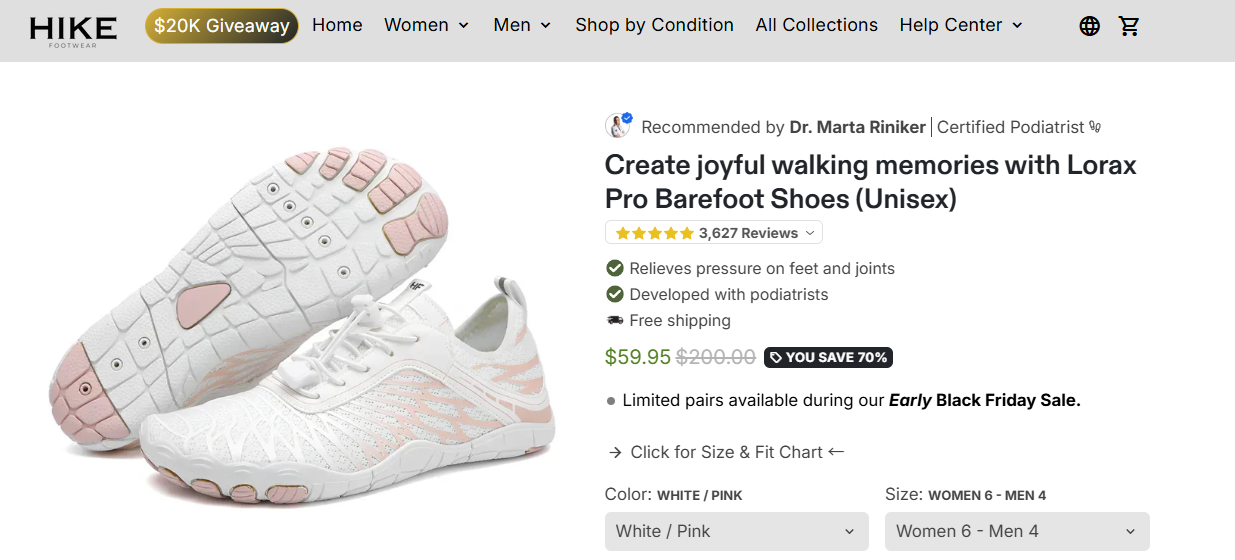
From the outset, Hike positioned itself not just as a generic shoe seller but as an advocate for foot health and sustainability. Their “about us” pages emphasize foot freedom, environmental responsibility, and customer empowerment. Even the site banner promises a 30-day risk-free trial and free shipping on all orders, and a certified podiatrist’s endorsement is prominently displayed on product pages. This mission-driven branding set the tone: customers weren’t just buying shoes, they were joining a “Healthy Freedom” movement. Behind the scenes, Hike kept overhead low by using dropshipping from Chinese suppliers (with custom branding) and printing branded product packaging at scale. They reinvested profits into marketing and customer experience (like the huge holiday giveaway) to sustain rapid growth.
A Product That Solves Real Pain
Hike’s flagship products are barefoot-style shoes: extremely flexible, wide-toed shoes designed to mimic walking naturally, alleviating common foot ailments. Unlike typical fashion sneakers, these shoes “solve specific pain problems” – for example, by providing relief for plantar fasciitis, bunions, knee or back pain. Hike emphasizes that these shoes are engineered by podiatrists to improve foot alignment and circulation, helping the body rather than causing discomfort. This clear problem/solution positioning has been central to their success.
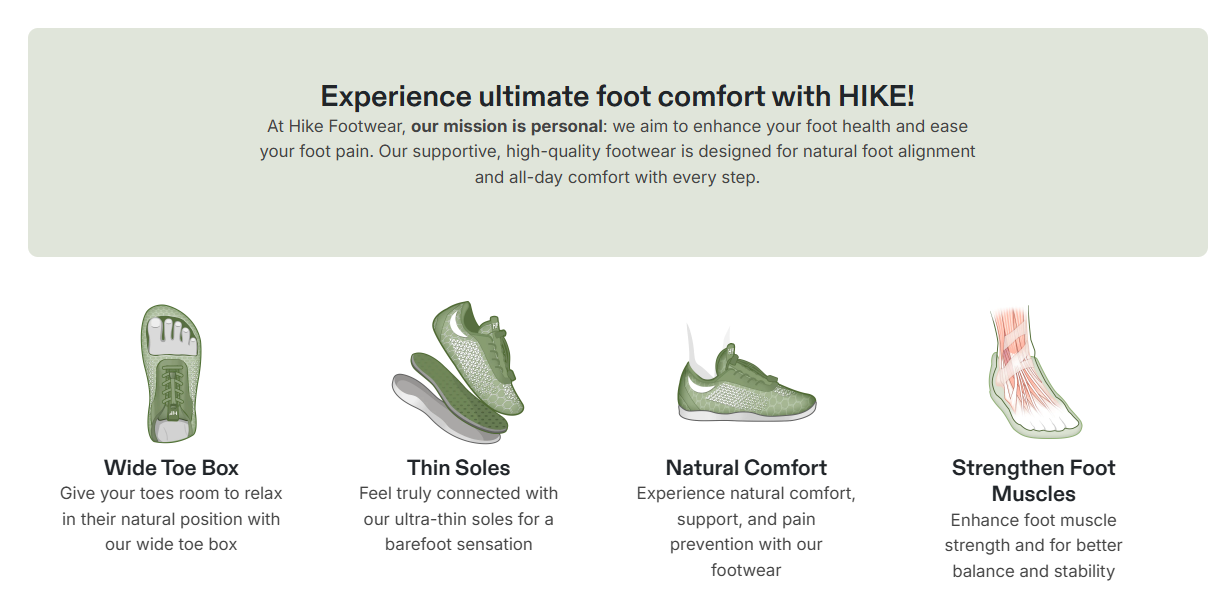
Figure: Hike’s site visuals highlight the barefoot benefit (“Put an end to stiff shoes!”) by contrasting normal shoes with their barefoot design. This educates customers and differentiates the product.
For example, their marketing often contrasts stiff, conventional shoes with Hike’s flexible soles (“Put an end to stiff and immobile shoes!”). This kind of visual storytelling – as seen on their site and ads – quickly conveys why their product is unique. By focusing squarely on health benefits (e.g. reducing joint stress, improving balance) and showing “before vs. after” style imagery, Hike created an emotional hook. Testimonials from customers with foot pain (and even endorsements by real podiatrists, as seen on product pages) reinforced the message: Hike’s barefoot shoes really do improve well-being.
This health-centric approach contrasts with typical fashion-first footwear brands. Instead of just promoting style, Hike’s content educates. Their product pages list technical features (wide toe box, anti-slip soles) alongside lifestyle images of people hiking or doing yoga – all to underline the functional benefits. The brand even offers “shop by condition” guides (e.g. sandals for plantar fasciitis, shoes for flat feet), helping customers self-identify with a need. In short, Hike solved a real problem with a clear customer-first proposition, which set the stage for viral word-of-mouth and high conversion on ads.
Mission-Driven Branding and Storytelling
From day one, Hike Footwear built a brand narrative that went beyond products. Their story centers on “Healthy Freedom”: the idea that feet should move naturally, free of pain or harmful forces. The About Us page repeatedly emphasizes feet health, sustainability, and individual empowerment. For instance, they write “Our journey began with a simple yet profound belief: that your feet deserve the freedom to move naturally… We’re passionate about improving foot health, environmental sustainability, and individual empowerment through our innovative barefoot designs”.
This mission-driven messaging did two things: it spoke directly to pain-point buyers (those with foot or joint issues), and it attracted customers who care about social/environmental impact. Hike capitalized on the growing trend of mindful consumption – highlighting eco-friendly materials and partnerships. They pledge to plant one tree in partnership with WeForest for every four pairs sold, and their site offers customers the chance to donate to reforestation through checkout. These sustainability commitments add authenticity: shoppers feel good that their purchase has a “give-back” component.
Internally, this meant Hike used “social proof” aligned with their mission. Every product description or ad repeats the health rationale; marketing events like the $20K holiday giveaway tie into their community ethos; even the shop layout segments products by foot condition (as if each condition were part of the story they’re solving). They share customer stories (“I love that I can walk pain-free again!”) to make the brand feel like a caring community, not a faceless drop-shipper. In short, Hike built a lifestyle brand – not just a quick-shipping store – by weaving a coherent narrative of health, freedom, and eco-care. This resonated strongly in marketing, driving both trust and word-of-mouth.
Dropshipping Fulfillment and Custom Branding
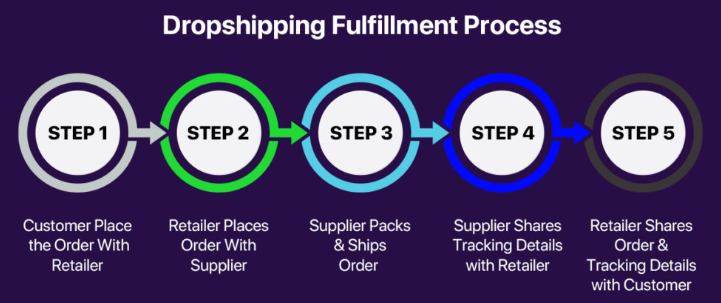
Dropshipping was the backbone of Hike’s fulfillment. Behind the scenes, the actual shoes are manufactured by third-party suppliers in China. For example, suppliers on Alibaba are already selling “Hike Footwear Barefoot Shoes” under generic brands. Hike smartly leveraged this: they launched without any inventory by outsourcing order fulfillment directly to these vendors. Each time a customer ordered on Hike’s Shopify store, the order would be forwarded to a Chinese factory (often via a dropship service) who packed and shipped the product. This low-capital model let them scale traffic fast – Dodropshipping.com reports their store was attracting 1.6 million visits per month on just one year of operation.
However, generic dropshipping can feel cheap or unreliable, so Hike used custom branding to stand out. Instead of plain packaging, they ordered customized boxes and inserts. Their Alibaba suppliers offered “Customized packaging (Min. order: 3,000 pieces)” and graphic printing services. Hike appears to have taken advantage of this – customers often report receiving shoes in nicely printed boxes labeled “Hike.” That attention to unboxing experience bridges the gap between drop-ship vendor and brand. They likely ordered enough units to qualify for OEM branding, meaning each shoe box carries the Hike logo and marketing messages. This packaging customization (albeit requiring volume) turns a commodity product into “Hike’s own” shoes. It also justifies the brand’s higher price points.
Shipping logistics were streamlined around an “international shipping center.” According to their policy, orders are processed and shipped from this global fulfillment hub in roughly 6–10 business days to major markets. In practice, this means Hike probably consolidated inventory or partnered with a Chinese warehouse that sends out packages. Free shipping (often a marketing promise) in reality comes out of their margins, but it eliminates buyer friction. Even though it adds a little delivery wait time, the money-back guarantee and tracking mitigated concerns. By centralizing logistics, Hike kept fulfillment costs predictable and inventory risk nearly zero, while still offering branded packaging and consolidated orders overseas.
Designing a Premium Customer Experience
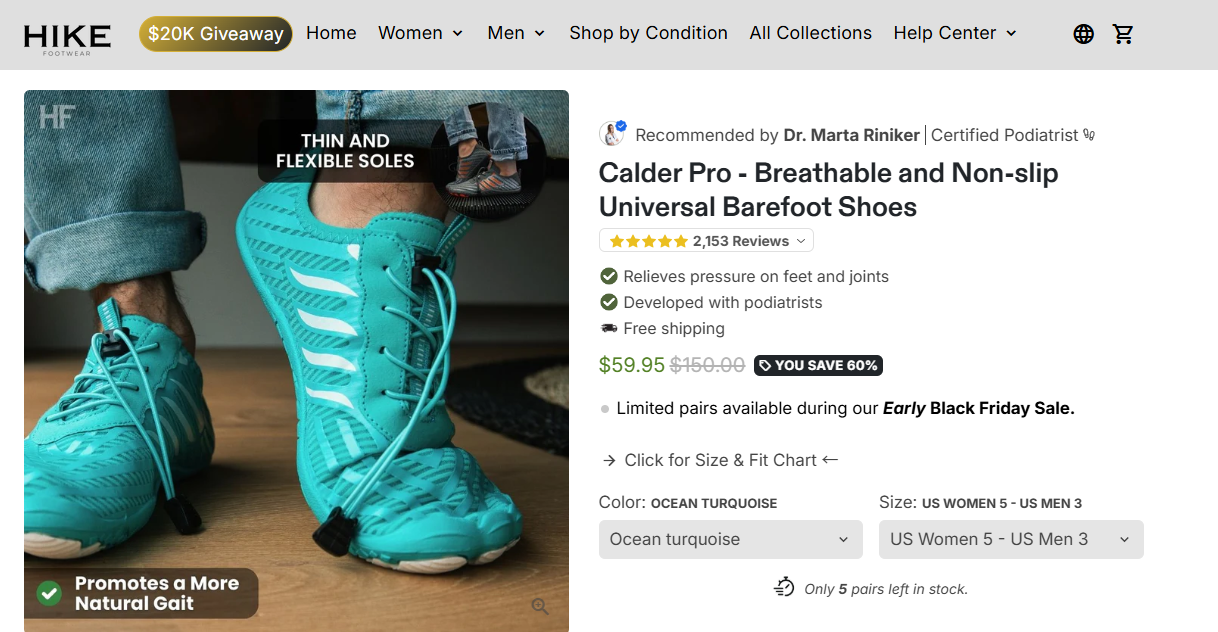
Even with dropshipping, Hike invested heavily in customer experience – both on-site and off. Their website is clean, responsive, and full of trust cues. Sitewide, banners promise “30-day money-back guarantee” and “Free shipping on all orders”. At the bottom of the site, customer service hours and a “Track Your Order” portal are clearly provided, showing there’s real support available. Such policies are rare for small drop-ship stores and signal reliability. The 30-day return promise in particular lets customers try the product essentially risk-free – a powerful trust-builder for an unfamiliar brand.
The online checkout experience itself is optimized for upsells (we’ll detail that later), but it’s also designed for ease. Hike uses Debutify’s Shopify theme and popular apps to speed load times and display dynamic content. For example, size charts and fit guides pop up in a user-friendly way, reducing confusion (and thus returns). They also personalize recommendations. On every page, a callout titled “The perfect combination” pushes their Orthopedic Insoles product at 50% off as a complementary add-on. (E.g., on the shoes pages you’ll see “We recommend pairing your shoes with HIKE® Orthopedic Soles.”) This on-page cross-sell reminds customers that Hike solves foot health holistically, not just with shoes alone.
Packaging and unboxing are similarly on-point. Orders are shipped in sturdy branded boxes (not generic mailers), often with branded tissue or inserts that reinforce the Healthy Freedom message. While we can’t show actual photos here, suppliers confirm Hike used custom boxes. Even simple touches – a thank-you note, care instructions featuring foot health tips, a small QR code link to video – create a boutique feel. These details make the dropship model feel like an up-market brand experience. In effect, Hike created a retail-worthy unboxing that surprised customers who might have expected cheapness.
The checkout and post-purchase flow are also refined. Beyond the upsells, Hike implemented an email system for follow-ups. Customers automatically receive order confirmations, shipping updates, and reminders for the 30-day trial. They gently encourage loyalty by inviting buyers to join the “Hike community” on social media or through their ambassador program. They even run a “Refer a Friend” program (visible in the footer) and sell gift cards – classic retention tools. Overall, every step from landing on the site to opening the box has been orchestrated to feel premium: fast-loading visuals, helpful content, and post-sale communication all cement customer satisfaction.
Upsell Systems and Maximizing Order Value
A key to Hike’s revenue explosion was upselling and cross-selling. Rather than relying on one-off purchases, they engineered the store to capture extra value per order without additional ad spend. They did this through on-page suggestions, checkout offers, and post-purchase funnels.
First, on the site and cart pages, Hike frequently suggests related products. The Orthopedic Insoles are featured as a “perfect combination” (50% off at checkout) – essentially a classic cross-sell. Whenever you add shoes to cart, this complementary insoles offer appears. They also feature accessories like compression socks or bunion pads alongside shoes, raising average cart size. This subtle UX cue (“complete your foot care kit”) tapped into the foot health narrative and boosted average order value (AOV).
Second, Hike used a powerful upsell app (ReConvert, formerly Upsell.com) to add post-purchase one-click offers and thank-you-page suggestions. Over seven months, this became a major revenue source. After a customer checked out, Hike would immediately present a targeted offer: for instance, “Buy a pair of HF Compression Socks for just $19.95” or “Add our Mortons Toe Corrector for 50% off”. These one-click upsells required no additional payment step – just one click to add to the existing order or invoice. Thanks to this funnel, Hike gained an extra $267,803 from these one-click offers. They even filled the thank-you page with yet more optional deals (like gift cards or e-books on foot care), bringing another $281,121 in revenue.
The numbers are striking: in just seven months, Hike Footwear generated about $677,147 in incremental upsell revenue. To put that in perspective, this is as if 13% of all customers chose to buy an additional item after checkout. (ReConvert reports their post-purchase conversion was 13.05% for Hike – meaning roughly 1 in 8 buyers took at least one upsell.) The largest chunk of that, $138,223, came from the simple checkout cross-sell of insoles at half-price. Even more impressively, those insoles averaged a 1.71% conversion at checkout. In essence, the team seized on the fact that a customer already buying Hike shoes was very likely also interested in orthotic insoles – a synergy that most Shopify stores don’t exploit nearly so well.
In practical terms, this means Hike’s average order value jumped significantly without spending more on advertising. Instead of “spending $30 in Facebook Ads to earn $30 back,” they were extracting extra revenue from the same customers. By using targeted, relevant upsells that aligned with their health theme, they turned a one-time buyer into a repeat buyer immediately. And because the customers were already checked out once, the cost-per-sale of these upsells was essentially zero (no more ad buys needed). This cascade of offers – on-site, at checkout, and post-purchase – is a blueprint example of maximizing LTV (lifetime value) in ecommerce.
Actionable Takeaway: If you replicate Hike’s model, audit your store for complementary products or services you can upsell. Use apps or built-in tools to present a “50% off companion” at checkout, and populate your thank-you page with targeted suggestions. The key is relevance: upsells must genuinely add value to the customer (Hike’s insoles fit perfectly into the health narrative). Over time, these systems compound into enormous extra sales, as it did for Hike.
Print-on-Demand Expansion: Growing Catalog Risk-Free
One way Hike expanded their brand without incurring inventory risk was by adding accessory products that could be fulfilled on demand. In addition to shoes, Hike introduced items like compression socks, toe separators, massage balls, and branded accessories. These products complement their core offering and reinforce the health message, but they don’t require holding huge stock. In practice, Hike likely used a hybrid model: some of these accessories are simple enough to be drop-shipped from suppliers, and others could be produced via print-on-demand (POD) services or small-batch orders as needed.
For example, branded socks or foot-care linens can be printed with Hike logos or health tips on demand, similar to how shirt companies do POD. This approach avoids the upfront cost of buying tens of thousands of pairs. Similarly, branded tote bags or T-shirts (if they offered them) could use a POD model to test designs. By ordering just enough for the sales coming in, Hike keeps overhead low. The site does show an “E-Gift Card” and a “WeForest Donations” option, but no obvious apparel line – suggesting they’ve focused on items that align tightly with foot health.
Looking ahead, Hike’s strategy implies that any brand can use POD to extend their collection. An aspiring entrepreneur could use the Hike example by adding custom t-shirts, hats, posters, or even phone cases with motivational or educational designs related to their niche. For instance, Hike-themed sneaker socks or yoga mats could be sold via POD to gauge customer interest. Since the inventory is produced after the sale, there’s no risk of leftover stock if a design flops. This allows the brand to quickly experiment: if a new print sells well, they can scale it up; if not, they simply cut it without losses.
The principle is: Expand the brand ecosystem through POD merch that reinforces the core message. In Hike’s case, anyone buying barefoot shoes might also appreciate a branded water bottle or fitness bracelet – imagine offering “Healthy Freedom” T-shirts or custom foot-art prints. Each new product line, created through POD, broadens the brand’s presence in the customer’s life. It keeps the brand fresh and generates extra revenue on the side, all while carrying essentially no inventory cost. (For example, a print-on-demand shoe design trend is emerging – a forward-looking brand like Hike could jump on that by letting customers customize color patterns on classic models.)
Actionable Insight: To replicate this, list 3–5 products outside your core line that align with your brand story. Set them up via a POD supplier or small batch (printful, printify, etc.). Integrate these into your store as “new collections” or freebies in contests. Watch which designs resonate. Over time, successful POD items can become regular SKUs without the worry of excess stock. This way, like Hike, you can offer more products and stay relevant without tying up capital.
Building Trust Despite Dropshipping
One major challenge for drop-ship brands is skepticism. Consumers often associate unknown e-tailers (especially ones sourcing from China) with poor quality or customer service. Hike overcame this by turning transparency and support into trust signals. Their site leaves few clues that they’re drop-shipping: every sign points to a high-end brand.
First, social proof is everywhere. Every product page boasts a 5-star rating and hundreds of reviews. For example, the HF Stride shoe shows “5.0 – Based on 4,237 reviews”. Such high volume and perfect score tell visitors “real people love this.” Even better, reviews feature full names and photos of happy customers, reinforcing legitimacy. Because Hike incentivizes reviews (perhaps via follow-up emails and loyalty programs), they quickly amassed thousands of positive testimonials. This dramatically outweighs any single negative comment someone might find on Reddit or Facebook. (In fact, while some online chatter calls Hike “shady,” the on-site reviews drown that out in a flood of praise.)
Second, clear guarantees and policies build confidence. Hike’s homepage explicitly states a “30-day money-back guarantee”. Their Shipping and Return pages spell out friendly terms: free shipping (with tracking) and easy returns. For instance, international deliveries may take up to 10 business days, but are insured and traceable. Customers see that lost or damaged parcels are covered by shipping insurance. Importantly, they provide prompt customer support (Mon–Fri EST) and a “Track Your Order” tool. All these elements mirror what a reliable retailer would offer. Even though inventory is overseas, the buyer feels protected.
Third, expert endorsements and branding cues cement credibility. On the product page we saw earlier, “Dr. Marta Riniker, Certified Podiatrist” recommends the shoes – an authority who vouches for product quality. The website’s polished design, professional logos, and urgency tactics (stock countdowns, number of items in cart) also convey legitimacy. For example, many pages show a live count of how many people are looking at a product or have added it to cart, which creates a sense of real-time activity. Even their Instagram presence (tens of thousands of followers) and Facebook ads all display consistent branding. This high-quality face helps mask the fact that the physical goods come from far away.
By combining these trust-building strategies, Hike convinced customers that they were dealing with a serious business, not a fly-by-night dropship shop. The result: repeat buyers and enthusiastic referrals. In fact, ReConvert reported Hike’s post-purchase conversion (upsell acceptance) was 13.05%, suggesting satisfied customers who were open to buying more – a rare feat if they doubted the brand. All in all, Hike’s approach demonstrates that carefully designing every customer touchpoint (reviews, guarantees, branding, support) can overcome the dropship stigma.
Long-Term Brand Operations and Customer Retention
Rapid growth is one thing; sustaining it is another. Hike built systems for long-term operations and retention so that customers keep coming back. Key to this was creating a brand “home base.” Their website is more than a store; it’s a hub for a community. For example:
-
Ambassador & Referral Programs: Hike runs an affiliate/ambassador program (“Become a Creator”) where fans earn commissions for promoting products. This gamifies marketing and taps word-of-mouth. Their footer also advertises a “Refer a Friend” program, likely with store-credit rewards. These encourage loyal customers to recruit new ones, strengthening retention loops.
-
Email & Content Marketing: After purchase, customers are enrolled in email flows that share foot-care tips, exclusive discounts, and new product announcements. The presence of an active blog or guide section (e.g. “Shop by Condition” pages) not only educates users but also helps SEO. Each email keeps Hike in mind and pushes repeat sales.
-
Promotional Calendar: Hike clearly follows a sales calendar – Black Friday, holiday giveaways, seasonal launches (like “Winter Barefoot Shoes,” “Barefoot Sandals”). By announcing big sales (e.g. up to 70% off) and contests (the $20k giveaway), they create urgency and bring back past customers. Their social media also shares user-generated photos, extending engagement beyond the website.
-
Loyalty “sticky” services: Hike’s return policy, though capricious for international returns, is generous enough for US returns (likely free within 30 days as policy implies). This kind of support encourages customers to trust Hike for future purchases. They also offer things like a size guarantee (advice for buying the right fit), which reduces buyer remorse.
-
Product Iteration from Feedback: Notably, Hike emphasizes community feedback on shoe designs. They claim to use customer insights to improve new models. This operation – listen, tweak, relaunch – means the brand evolves with customer needs, increasing loyalty.
All these pieces fit into a coherent “brand operations system.” In practice, Hike likely has a small team or agency (note: SEO and digital marketing results were reported by consultants, and a digital agency named LDX is associated) handling ads, content creation, and fulfillment oversight. They periodically add new SKUs (like a kid’s line or winter boots) to encourage previous customers to shop again. Meanwhile, the robust upsell and email flows ensure one customer can become a repeat buyer multiple times. Over months, this creates a lifecycle: acquisition → sale → upsell → retention email → repeat sale. By treating each customer as a long-term asset, Hike avoids the “ad-spend-only” pitfall of many drop-ship stores.
In summary, Hike’s operational engine includes: strong customer support, a clear returns policy, automated email workflows, community programs (referral/ambassador), and a steady stream of new product launches and promotions. This ecosystem supports customer lifetime value just as much as it does immediate sales.
Key Takeaways and Adaptation for Your Niche
Hike Footwear’s journey offers a blueprint for building a fast-growing brand from dropshipping. The essential lessons include:
-
Pick a Pain Point Niche: Hike succeeded by solving specific foot-health issues. Choose a niche where customers have a real problem (e.g. joint pain, pet owners, outdoor enthusiasts) and craft products around solutions.
-
Build a Mission-Driven Brand: Like Hike’s “Healthy Freedom” philosophy, find a purpose or story bigger than the product. This hooks customers emotionally. Emphasize values (health, sustainability, community) that resonate with your audience.
-
Invest in Design and Trust: Even on a tight budget, make your store look professional. Use custom logos, branded packaging, clear FAQs, and policies that reassure buyers (money-back guarantee, tracking). Encourage real user reviews and showcase them prominently.
-
Leverage Dropshipping with Private Labeling: Work with suppliers who can imprint your brand on products and packaging. Start with minimal stock and gradually invest in inventory for best-sellers.
-
Maximize Revenue Per Customer: Set up upsell and cross-sell funnels everywhere – on-site suggestions, checkout offers, post-purchase deals. Make sure every checkout is an opportunity to add value.
-
Expand Smartly with POD or Similar: Add related items (merch or accessories) through low-risk channels like print-on-demand or small-batch orders. Use these to keep content fresh and draw repeat visits.
-
Focus on Retention: Treat each sale as the start of a relationship. Use email marketing, loyalty programs, and social media to keep customers engaged. Give them reasons to return (new collections, promotions, exclusive communities).
By following these steps – solving real problems, branding strongly, designing slick experiences, and creating upsell/retention systems – an entrepreneur in any niche can imitate Hike’s model. Whether you’re selling ergonomic chairs, pet supplements, or fitness wearables, the principles are the same: differentiate with solution-oriented branding, remove friction for customers, and make every customer transaction as valuable as possible.
Conclusion
Hike Footwear’s meteoric rise from a bare-bones dropship experiment to a multimillion-dollar brand was no accident. They combined smart e-commerce tactics (dropshipping, print-on-demand expansion, upsells) with human-centric branding (health mission, community, trust-building). The result is a company that feels like a professional retailer, not a faceless dropshipper, even though much of their supply chain is on demand. Their story shows that differentiation and experience design can overcome the usual drawbacks of drop shipping.
For aspiring eCommerce entrepreneurs, Hike offers a playbook:
-
Start with a unique, problem-solving product and wrap it in a compelling story.
-
Use dropshipping to get to market quickly, but invest in private labeling and packaging to look legit.
-
Craft a website and post-purchase process that wows: free shipping, easy returns, expert endorsements, and above all, thousands of positive reviews.
-
Layer in upsell funnels and add-on products that fit your niche, boosting revenue per customer.
-
And finally, build a brand ecosystem (emails, social, loyalty) so customers buy again and again.
By adapting these tactics – from Hike’s sensory website and premium packaging to their data-driven upsell systems – other entrepreneurs can replicate parts of this model in different industries. The core insight is that customers will embrace dropship brands if those brands present themselves as genuine helpers, not just online merchants. Hike Footwear’s example proves that a savvy blend of logistics and storytelling can yield both rapid growth and lasting customer loyalty.