
A Practical Guide for Beginners, Plus Why Many Sellers Eventually Move to CJ
If you have been looking for low-cost products to sell online, chances are you have come across Temu.
It is everywhere.
Temu shows aggressively priced items, trendy gadgets, home products, accessories, beauty tools, pet products, and impulse-buy products that seem almost made for ecommerce. For a beginner, the appeal is obvious. You open the app, browse endless cheap products, and start thinking: What if I list these on Shopify, mark up the price, and sell them through my own store?
That question has pulled a lot of new sellers into ecommerce over the last year.
And on the surface, the idea seems simple. Find a product on Temu. Add it to your Shopify store. Get an order. Buy the item on Temu using the customer’s shipping address. Keep the difference as profit.
That is the basic Temu-to-Shopify dropshipping idea.
But while the idea is simple, the reality is more complicated.
Yes, some people do use Temu as a source for testing products. Yes, it can look attractive because the prices are low and the product variety is huge. But Temu was not really built as a traditional dropshipping platform for Shopify sellers. That means there are important limitations, risks, and long-term problems you need to understand before you build a store around it.
This is where many beginners go wrong. They focus only on price and ignore everything else: fulfillment consistency, branding, packaging, shipping reliability, inventory stability, invoice handling, returns, and customer trust.
That does not mean Temu is useless.
It means Temu can be a starting point for product research or short-term testing, but it is usually not the best long-term system if you want to build a serious Shopify brand.
That is also why many sellers who begin with Temu eventually move toward more ecommerce-friendly sourcing options like CJdropshipping (CJ), private agents, or dedicated fulfillment partners once they find a product that sells.
What Does “Dropshipping From Temu to Shopify” Actually Mean?
Before going too far, it helps to define the model clearly.
When people say they want to “dropship from Temu to Shopify,” they usually mean this:
- They create a Shopify store.
- They list products inspired by or sourced from Temu.
- A customer places an order on Shopify.
- The seller manually purchases that item from Temu.
- The seller enters the customer’s shipping details during checkout.
- Temu ships the order directly to the customer.
That is not the same thing as using a classic Shopify dropshipping app that integrates product imports, automatic order syncing, branded invoicing, and supplier-side ecommerce workflows.
Temu is primarily a consumer marketplace. It is designed for end buyers hunting for cheap deals, not necessarily for store owners building consistent fulfillment systems. That difference matters more than many beginners realize.
You can still use Temu in a practical sense. But you need to understand that you are often creating a manual workaround rather than using a purpose-built dropshipping pipeline.
And that is the core tension of this business model.
Temu is attractive because of product cost and trend access.
Temu is difficult because of workflow, branding, and scalability.
If you understand that from the beginning, you are far less likely to build the wrong kind of store.
Why Sellers Want to Use Temu for Shopify Dropshipping
There is a reason so many beginners ask about this model.
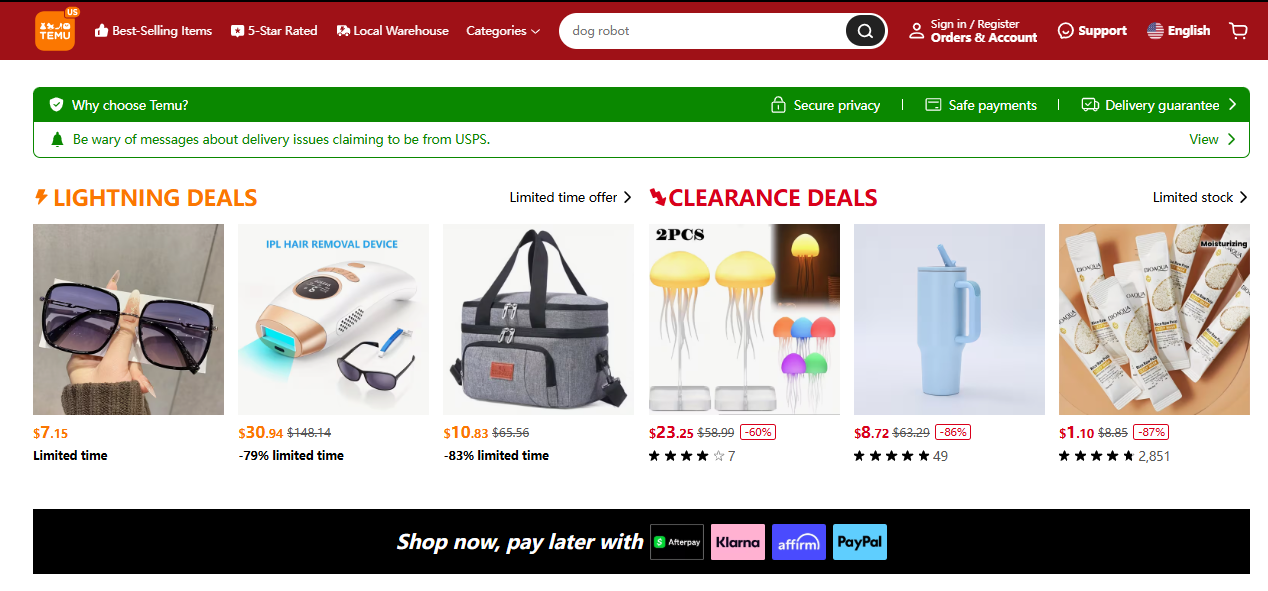
Temu has several things that look incredibly appealing to a new ecommerce seller.
1. Very low product prices
This is the biggest draw. Many products on Temu look cheap enough to leave room for markups, bundles, upsells, or impulse-purchase pricing. When you are new to Shopify, seeing a product priced at a few dollars can make the business seem easy.
2. Huge product variety
Temu has a large catalog across many categories. That makes it attractive for product research. You can browse home goods, gadgets, seasonal products, beauty tools, kitchen items, toys, and accessories in one place.
3. Trend discovery
Temu is often full of viral-looking or “interesting enough to click” products. Even if you never fulfill directly from it long term, it can still help you discover products that might work in paid ads or short-form video content.
4. Low barrier to entry
For a beginner, Temu feels more accessible than negotiating with suppliers or learning more complicated sourcing systems. You do not need to message factories. You do not need to place large bulk orders. You do not need advanced experience to start testing ideas.
5. Easy for manual testing
If you are only testing one or two products and getting very few orders at the beginning, manually placing orders from Temu may feel manageable for a short period.
That is the appeal.
But the same reasons that make Temu feel easy at the start can become the reasons it breaks down once you want to grow.
Can You Legally and Practically Dropship From Temu to Shopify?

This is one of the most important questions, and beginners often ask it the wrong way.
The better question is not only, “Can I do it?”
The better question is, “Can I do it in a way that is sustainable, trustworthy, and operationally clean?”
In practice, sellers do list products found on Temu and fulfill them manually. That does happen.
But you should be careful about assuming that “possible” automatically means “ideal.”
There are several practical issues:
- Temu is not structured like a dedicated Shopify dropshipping backend.
- Product availability can change quickly.
- Packaging and inserts may not fit your brand.
- The product may arrive in a way that makes it obvious it came from a discount marketplace.
- Delivery timelines may not match what your store promises.
- Manual order processing becomes a headache as order volume rises.
- Handling returns and customer disputes can get messy.
There are also brand trust concerns. If a customer receives a parcel that looks like it came from a bargain marketplace, with unexpected packaging or invoices, the experience may feel disconnected from the premium image of your Shopify store.
So yes, you can test products this way in a practical sense.
But if your goal is to build a real brand rather than just flip low-ticket products for quick cash, you need to think beyond the first sale.
That is where sellers start re-evaluating platforms like Temu and looking into alternatives such as CJ, which is much more aligned with ecommerce operations.
Is Temu Good for Beginners?
The honest answer is: Temu can be useful for beginners, but only in a limited way.
It is good for:
- product idea exploration
- price comparison
- trend spotting
- early manual testing with very low order volume
It is not ideal for:
- strong brand building
- consistent long-term fulfillment
- branded packaging control
- efficient order automation
- scaling paid traffic cleanly
- professional supplier relationships
A lot of beginners make the mistake of designing their entire business around the easiest first step. That usually leads to problems later.
A smarter way to think about Temu is this:
Temu can be a testing bridge, not necessarily the final operating system.
This mindset alone can save you a lot of frustration.
Instead of becoming emotionally attached to Temu as your main supplier, you can use it as one input in your process. Once a product starts proving demand, you can move to a better sourcing and fulfillment structure.
That is often where CJdropshipping enters the conversation.
Step-by-Step: How to Dropship From Temu to Shopify
Let’s go through the process in a practical way.
Step 1: Choose a niche or product angle
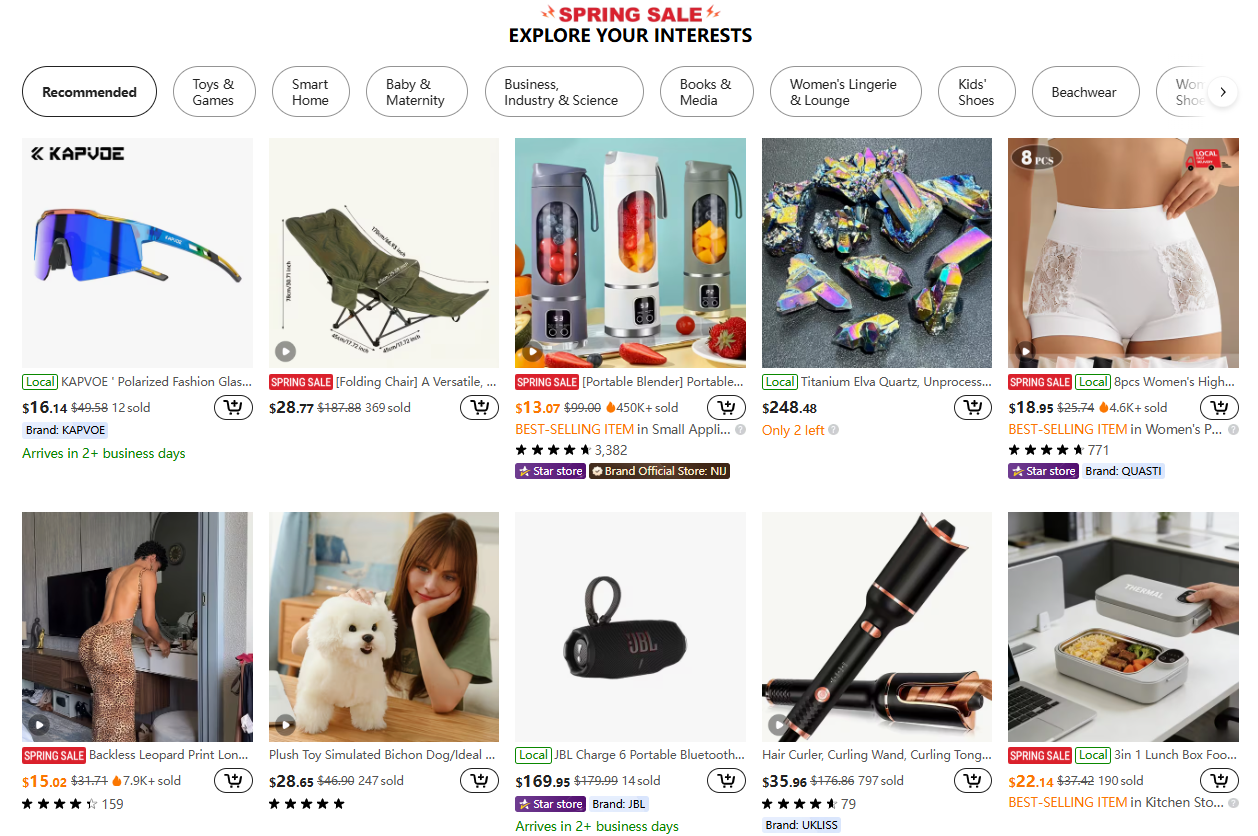
Do not start by randomly importing dozens of cheap items just because they look inexpensive. That usually creates a messy store with no clear identity.
Instead, pick one of these approaches:
- a niche store, like pet accessories, home organization, beauty tools, or kitchen gadgets
- a one-product store around a hero item
- a problem-solving angle, such as travel convenience, desk organization, or self-care tools
- a trend store with a focused aesthetic
Temu has a lot of products, but Shopify customers do not buy from “a marketplace.” They buy from a store that feels intentional.
So before sourcing, decide what kind of store you want to build.
Step 2: Research products on Temu
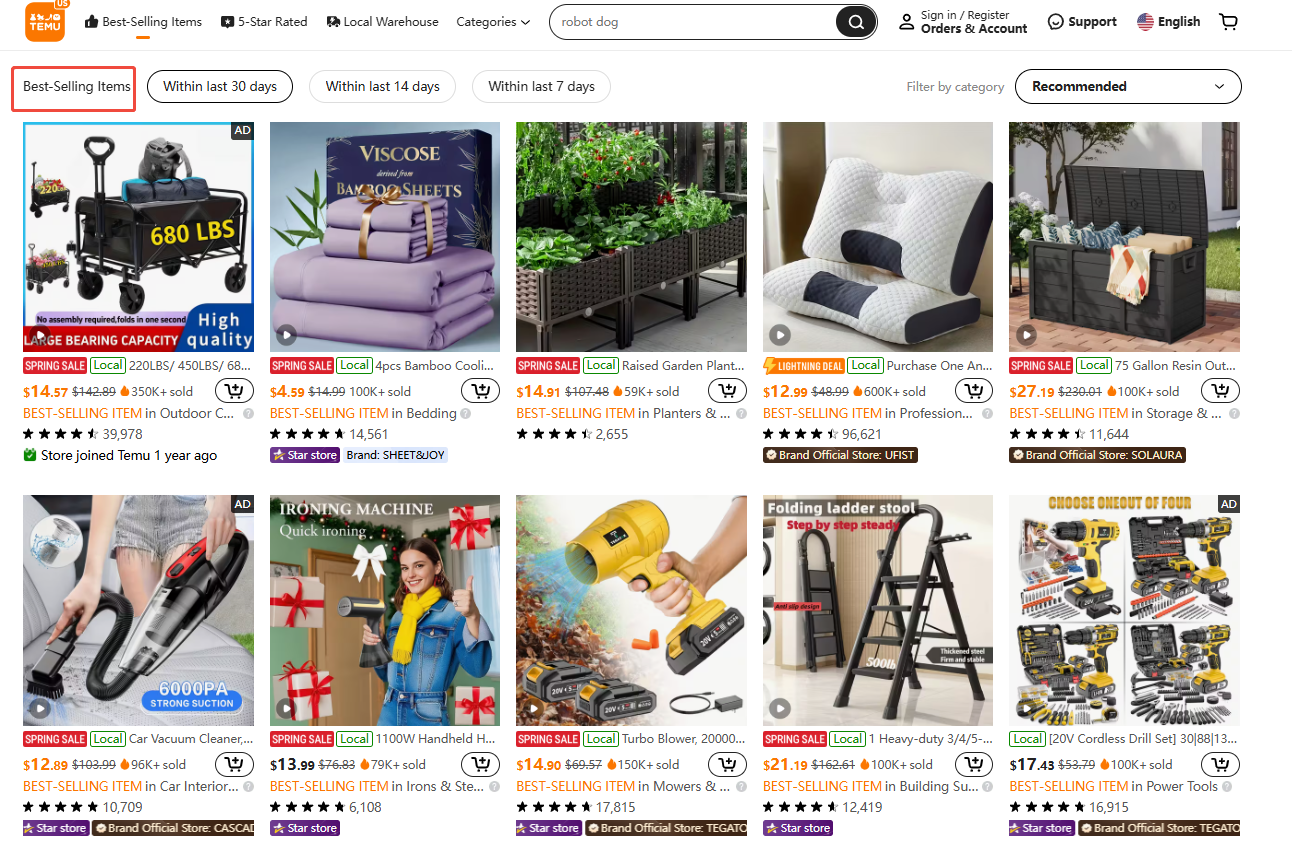
Once you have a niche or theme, browse Temu and evaluate products through a dropshipping lens.
Do not only ask:
- Is it cheap?
Also ask:
- Does it solve a clear problem?
- Would it look good in a video ad?
- Is the perceived value higher than the cost?
- Does it feel impulse-buy friendly?
- Can it survive shipping?
- Is it likely to generate complaints?
- Does it have obvious gift appeal or visual appeal?
- Would someone trust buying this from a standalone Shopify store?
This is where many beginners fail. They pick products that are cheap instead of products that are marketable.
A winning dropshipping product is usually not just affordable. It is visually clear, emotionally appealing, easy to explain, and easy to demonstrate.
Step 3: Check product quality signals
Temu can be tempting because of price, but low price without quality control can destroy your store.
Look closely at:
- customer reviews
- user-uploaded photos
- material quality clues
- product dimensions
- shipping estimates
- variant consistency
- seller reputation patterns, where visible
Try to avoid products that:
- look fragile
- rely on misleading photos
- have too many confusing variants
- have inconsistent sizes
- are likely to disappoint in person
- create safety concerns
- are heavily dependent on premium feel but sold at ultra-low quality
Remember: your customer judges you, not Temu.
If the item arrives looking cheap, your store takes the blame.
Step 4: Order samples first
This step is boring, but skipping it is expensive.
Before listing a Temu product on Shopify, order a sample to yourself.
Check:
- actual product quality
- packaging
- delivery speed
- whether price tags or marketplace-style inserts are included
- whether the product matches the photos
- whether the item feels giftable or flimsy
- whether instructions are clear
- whether the product is worth the price you want to charge
You should also record content while testing the sample. That content can become product-page images, ad footage, UGC-style creatives, or review-style videos later.
A lot of beginner stores fail because they advertise a product they have never physically touched.
Do not do that if you want fewer refunds and more trust.
Step 5: Build your Shopify product listing
Once you have tested the sample and still believe in the item, create the product page in Shopify.
Do not copy the Temu listing title word for word.
That makes your store look lazy, generic, and low trust.
Instead:
- write a cleaner product name
- focus on the core benefit
- use simple, persuasive product descriptions
- include realistic shipping information
- add FAQs
- highlight problem-solution language
- explain what makes the item useful or desirable
- use original images or edited visuals where possible
For example, instead of using a cluttered title like:
“1pc Multifunction Portable Mini Foldable Electric Cleaning Brush Household Kitchen Bathroom Gadget”
You would turn it into something like:
Portable Spin Scrub Brush
Make quick bathroom and kitchen cleaning easier without bulky tools
That sounds more like a brand and less like a marketplace listing.
Step 6: Set your price correctly
Pricing should not be based on greed or guesswork.
If the product costs very little on Temu, it may be tempting to mark it up aggressively. But you still need to consider:
- ad costs
- processing time
- refund risk
- payment fees
- possible replacement orders
- customer acquisition cost
- perceived value
Temu products can have low upfront cost, but that does not automatically mean strong profit.
A better question is:
Can this product support a believable retail price in my brand context?
If it looks like a $3 product and you list it for $29.99 with no strong branding, trust collapses.
If it looks like a clever, useful, well-explained problem-solving product, you have more room.
Pricing is part psychology, part positioning.
Step 7: Take orders on Shopify
Once your product page is live, you can drive traffic through:
- TikTok content
- Instagram Reels
- Facebook ads
- influencer content
- SEO blog content
- organic short-form videos
If you are truly using Temu as a beginner testing source, keep things controlled. Do not launch ten products at once and create operational chaos.
Start small. Watch how the offer behaves.
Step 8: Manually place each order on Temu
When an order comes in on Shopify, you go to Temu and purchase the item using the customer’s shipping details.
This is the core manual part of the model.
You need to:
- buy the exact variant
- enter the customer’s address carefully
- keep records of order matching
- track shipping updates
- communicate realistic delivery expectations
This is manageable at very low order volume.
It becomes painful fast when you start getting more consistent sales.
A few orders a day might feel okay.
A lot more than that, and the workflow starts eating your time and increasing your error risk.
Step 9: Send tracking and handle support
After fulfillment, you need to keep your Shopify customer informed.
This means:
- tracking order status
- updating customers if delays happen
- responding to “where is my order?” messages
- resolving damaged or wrong-item issues
- managing expectations if delivery is slower than hoped
This is where the difference between Temu and a more structured supplier becomes obvious.
Temu may help you source cheaply, but customer support is still your problem.
Step 10: Evaluate whether the product is worth scaling
This is the stage many sellers ignore.
Do not assume that because a product got a few sales, you should keep fulfilling from Temu forever.
Instead, ask:
- Is the product converting consistently?
- Are customers happy?
- Are delivery times acceptable?
- Is support volume manageable?
- Does the product deserve better sourcing?
- Can I improve margins or branding with another supplier?
- Should I switch this winner to CJ or a private sourcing solution?
That last question matters.
Because for many sellers, Temu is where testing starts, while CJ is where scaling becomes more realistic.
The Biggest Problems With Dropshipping From Temu to Shopify
Temu looks simple from the outside, but several weaknesses show up once you move beyond the beginner stage.
1. Manual fulfillment does not scale well
This is the biggest operational problem.
Every order requires manual input. That means more time, more errors, and more stress as volume grows. If you run ads successfully and orders suddenly rise, the system becomes fragile.
A scalable business usually needs better workflow than “copy the address and place each order one by one.”
2. Branding is weak
If you are building a Shopify store, especially one that looks polished, the delivery experience matters.
Customers are buying from your store. They are not expecting an off-brand marketplace parcel. If the packaging feels disconnected from your site, trust takes a hit.
This is one of the biggest reasons many serious sellers eventually move away from Temu.
3. Shipping and experience can be inconsistent
Even when delivery times are acceptable sometimes, consistency matters more than isolated good outcomes.
If one customer receives the item quickly and another waits much longer, your store experience becomes harder to control.
4. Product availability can change
Marketplace-driven platforms can be unpredictable. Listings move. Variants disappear. Prices shift. That makes it hard to run stable offers at scale.
5. Harder to build a long-term brand
A real brand needs more than low-cost sourcing. It needs trust, consistency, repeatability, and room to improve the customer experience over time.
That is difficult when your core model depends on a consumer marketplace that was not really designed for your store’s backend.
6. Returns and disputes are messy
If a customer wants a return, exchange, refund, or replacement, you are the one caught between the customer and the source platform.
That can quickly turn into a time drain.
Why Many Shopify Sellers Move From Temu to CJ
This is where it makes sense to talk about CJdropshipping (CJ).
If Temu is appealing because it is cheap and easy to browse, CJ is appealing because it is much more aligned with how Shopify sellers actually operate.
That does not mean CJ is perfect or that every store should start there immediately. But it does mean that once you start thinking seriously about scaling, CJ often makes more sense than continuing to rely on a manual Temu workflow.
What CJ does better for many sellers
1. Shopify-friendly workflow
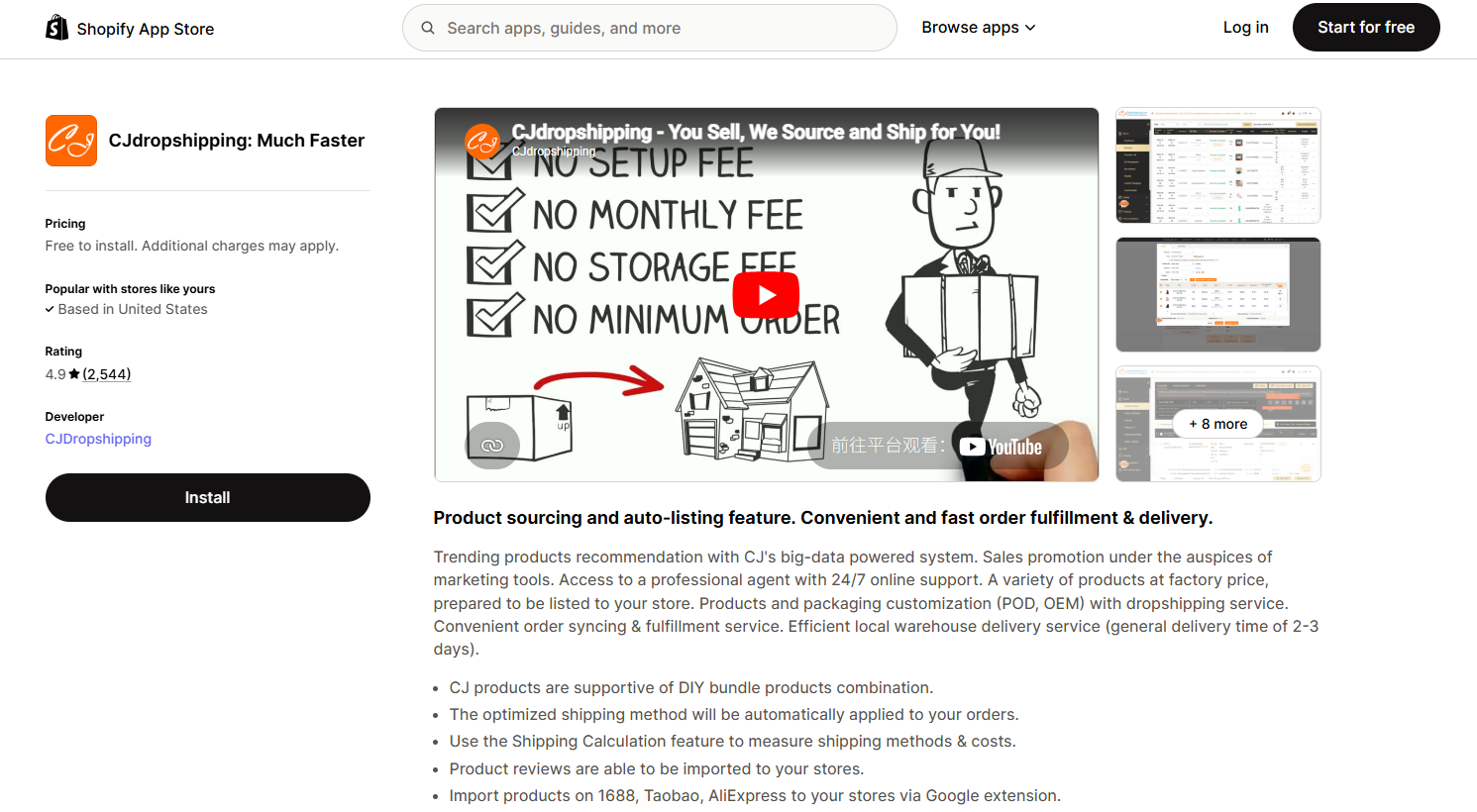
CJ is built with ecommerce sellers in mind. That makes it more practical for product imports, store syncing, order processing, and supplier-side handling(cj shopify app).
2. Better scaling logic
If a product starts working, CJ usually fits growth better than manually ordering each unit from Temu.
3. Sourcing support
Many sellers use CJ not only to fulfill listed products, but also to source similar or improved versions of winning items.
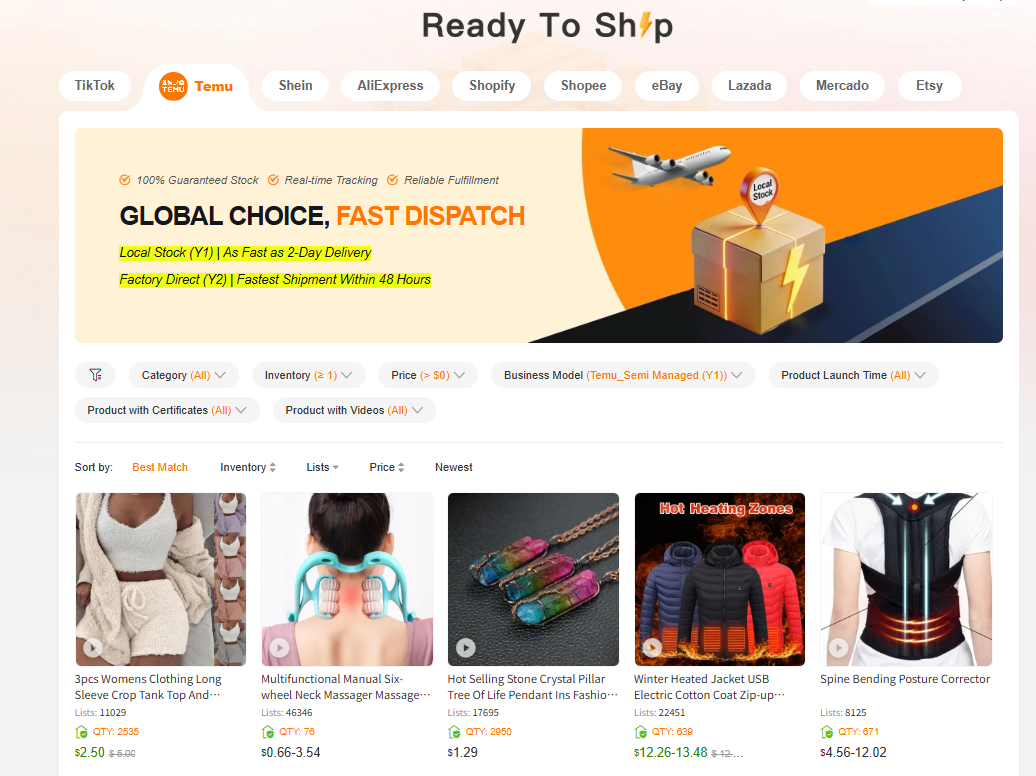
4. More dropshipping-oriented system
That means the business model is closer to what Shopify sellers actually need.
5. Room for branding and smoother operations
As your store matures, systems that support more professional ecommerce operations become more valuable.
This is why a lot of experienced sellers do something like this:
- find product ideas from Temu, TikTok, or marketplaces
- test demand in a lean way
- once a product proves traction, move sourcing or fulfillment to CJ or another better-fit partner
That is often a much smarter progression than trying to build your forever system on Temu.
Temu vs CJ for Shopify Dropshipping
Let’s break the comparison down more clearly.
Temu is better for:
- casual product discovery
- low-cost browsing
- quick idea validation
- beginner curiosity
- very early manual testing
CJ is better for:
- Shopify workflows
- order processing systems
- more scalable fulfillment
- sourcing support
- seller-focused operations
- longer-term ecommerce growth
A lot of beginners assume the cheapest-looking source is automatically the best source.
That is not always true.
The right supplier setup is not just about product cost. It is about:
- reliability
- consistency
- process
- customer experience
- your time
- your ability to scale
- how professional your business feels
That is why CJ often becomes more attractive the moment a seller stops thinking like a casual beginner and starts thinking like an operator.
A Smarter Strategy: Use Temu for Research, Use CJ for Growth
If you want the most practical takeaway from this whole article, it may be this:
Using Temu as a research and testing tool can make sense.
Using CJ as a more structured fulfillment and sourcing partner often makes more sense for growth.
That hybrid logic is more realistic than extreme opinions like:
- “Temu is perfect for everything”
- “Never look at Temu at all”
- “CJ solves every problem instantly”
Reality is more nuanced.
Here is a balanced strategy many sellers would find useful:
Phase 1: Product research
Use Temu, TikTok, Amazon, and social content to identify strong product ideas.
Phase 2: Sample testing
Order samples, create content, validate whether the item is actually good enough to sell.
Phase 3: Lean market test
If needed, manually test demand on Shopify with low volume.
Phase 4: Product validation
Once the product starts converting, assess whether it deserves a better operational setup.
Phase 5: Move to CJ or another structured partner
If the product is real, shift away from fragile manual systems and into something more ecommerce-ready.
This progression reduces risk while still giving you flexibility.
How to Make a Temu-Tested Product Look More Like a Real Brand
One of the biggest mistakes people make when dropshipping from Temu to Shopify is presenting the store like a random reseller page.
If you want better results, you need to improve the offer.
Build a focused store
Even if you only sell one main product, the store should feel intentional. Use clear branding, simple navigation, clean colors, and believable copy.
Rewrite everything
Do not use cluttered marketplace descriptions. Rewrite product titles, descriptions, benefits, FAQs, and image captions in your own brand voice.
Use custom visuals when possible
If you can, take your own sample photos or record video footage. Marketplace images often feel generic and kill trust.
Emphasize the problem and transformation
People do not buy “cheap stuff.” They buy solutions, convenience, confidence, beauty, comfort, or fun.
Set realistic shipping expectations
One of the fastest ways to get chargebacks or complaints is overpromising on delivery. Be clear.
Offer strong support messaging
A good contact page, shipping policy, FAQ, and return policy can make your store feel much more trustworthy.
These steps matter whether you use Temu, CJ, or any other source.
But they matter even more when your backend source is not naturally brand-friendly.
Best Products to Test From Temu Before Moving to CJ
Not every product is equally suitable for this type of model.
If you are going to test with Temu first, the best categories are usually:
- low-risk accessories
- visually demonstrable gadgets
- simple household problem-solvers
- lightweight beauty tools
- pet accessories
- impulse gift items
- desk products
- home organization products
The worst categories are usually:
- high breakage items
- anything safety-sensitive
- products requiring perfect sizing accuracy
- premium-feel items that may disappoint in quality
- heavily branded items
- technical electronics with high support risk
- products needing stable long-term inventory consistency
In other words, the simpler the product, the safer the test.
Then, if the product proves itself, you can look for a stronger source through CJ or other supplier channels.
Common Mistakes Beginners Make When Dropshipping From Temu to Shopify
1. Starting with too many products
A cluttered store built around random low-cost items usually converts badly and becomes hard to manage.
2. Never ordering a sample
If you have not touched the product, you are guessing about quality and customer experience.
3. Copying the Temu listing directly
This makes your store look generic, spammy, and low trust.
4. Ignoring branding mismatch
If your website looks premium but the parcel arrival feels bargain-bin, customers notice.
5. Underestimating support time
Manual fulfillment plus support can become a hidden job very quickly.
6. Sticking with Temu too long
This is one of the biggest traps. A seller gets some traction but never upgrades the backend. Then service problems pile up.
7. Thinking low product cost guarantees profit
Low cost does not mean high margin if refund rates, ad costs, delays, and support issues rise.
When Should You Stop Using Temu and Switch to CJ?

There is no perfect number that applies to every store, but there are strong signs it is time to move on.
You should seriously consider switching from Temu to CJ when:
- a product starts getting repeat daily orders
- manual fulfillment begins taking too much time
- delivery consistency becomes important to your reviews
- you want a cleaner operational workflow
- you want sourcing support for similar items or better variants
- you want a business that feels more professional
- you are running paid ads at scale
- your customer support load is rising
- you want room to improve branding and the post-purchase experience
At that stage, staying with Temu often becomes a false economy.
Yes, the sticker price may still look attractive. But the hidden costs show up elsewhere:
- time
- mistakes
- refund risk
- slower scaling
- weaker customer trust
That is why sellers who start to think seriously about longevity often move toward CJ or other more ecommerce-centered fulfillment systems.
Is Dropshipping From Temu to Shopify Worth It in 2026?
The honest answer is:
It can be worth it as a short-term testing method.
It is usually not the best long-term operating model for building a serious Shopify brand.
That is the most balanced way to see it.
Temu is useful because it gives beginners access to a huge catalog of low-cost product ideas. It lowers the emotional barrier to getting started. It can help you validate concepts without placing bulk inventory orders.
But the business model starts showing cracks as soon as you want more consistency, more efficiency, and more brand control.
That is why a lot of successful sellers do not treat Temu as the destination.
They treat it as one step in the process.
And once a product proves it deserves more attention, they move the operation toward something better structured, like CJ, where Shopify-friendly workflows and ecommerce-focused fulfillment make more sense.
That transition matters.
Because real ecommerce growth usually comes from improving the system behind the product, not just finding the cheapest source once.
Final Thoughts
If you are a beginner, it is completely understandable to be attracted to Temu.
The pricing looks exciting. The products feel testable. The barrier to entry is low. And from the outside, it can seem like a shortcut into Shopify dropshipping.
In some cases, it can be a useful first step.
But do not confuse a first step with a full business model.
If you are serious about building a store that customers trust, you need to think beyond product cost. You need to think about:
- fulfillment quality
- operational flow
- brand perception
- repeatability
- support burden
- long-term scalability
Temu can help you explore.
Temu can help you test.
Temu can even help you find a winner.
But when it is time to operate more seriously, many sellers discover that a platform like CJ fits the Shopify business model much better, especially once winning products start generating real order volume.
That is the real lesson.
Use Temu with open eyes.
Treat it as a tool, not a miracle.
And when your store begins to grow, do not be afraid to graduate into a better fulfillment setup.
That is how small test stores become real ecommerce businesses.
FAQ: How to Dropship From Temu to Shopify
Can I use Temu for Shopify dropshipping?
Yes, sellers can manually source products from Temu and fulfill Shopify orders by placing each order individually using the customer’s shipping address. However, Temu is not a traditional Shopify dropshipping platform, so the process is more manual and less scalable.
Is Temu good for beginners in dropshipping?
Temu can be useful for beginners because it offers low-cost products, easy browsing, and fast product discovery. It is most helpful for product research and small-scale testing rather than long-term brand building.
Is Temu better than CJ for Shopify dropshipping?
Not usually for long-term operations. Temu may be easier for casual testing, but CJ is generally more suitable for Shopify sellers who want better workflows, more structured fulfillment, and room to scale.
Why do dropshippers move from Temu to CJ?
Many sellers move from Temu to CJ because Temu fulfillment is manual and harder to scale. CJ is more aligned with ecommerce operations, making it easier to manage orders, sourcing, and long-term store growth.
Should I build a full brand around Temu products?
You can test products that way, but building a long-term brand entirely around Temu fulfillment is usually difficult. Many sellers test with Temu first, then move winning products to better sourcing systems like CJ.