
Finding low-cost dropshipping products with high profit potential is one of the most practical ways to start an ecommerce business without committing substantial money to inventory. The challenge is identifying products that are inexpensive to source but still offer enough value to attract customers, cover fulfillment expenses, and generate sustainable profits.
A product that costs $2 to source and sells for $20 might appear highly profitable. However, shipping, payment processing, advertising, returns, and packaging can quickly reduce the amount you actually earn.
The most promising products are not necessarily the cheapest. They are products that solve recognizable problems, are relatively easy to ship, offer opportunities for differentiation, and can be marketed profitably to a specific audience.
For 2026, categories such as home organization, pet accessories, beauty tools, travel essentials, and phone accessories continue to provide useful areas for product research. Shopify's 2026 dropshipping product guide also identifies several of these categories among the broader opportunities worth exploring.
This guide examines 12 low-cost product ideas, explains why they may be worth testing, and provides practical strategies for evaluating suppliers, calculating profit margins, and building a business around affordable products.
What Makes a Low-Cost Dropshipping Product Profitable?
A low purchase price is only one part of profitability.
A product becomes commercially attractive when customers perceive its value as greater than the amount they are asked to pay, while the seller can deliver it at a manageable total cost.
For example, a cable organizer might cost relatively little to manufacture. Yet someone who regularly struggles with tangled desk cables may value the convenience of a well-designed organizer set.
The business opportunity comes from providing a useful solution with a clear customer benefit.
Five Characteristics of a Strong Low-Cost Product
1. Low sourcing costs relative to the selling price
A product should leave sufficient room to cover shipping, payment fees, marketing, and refunds.
Sourcing costs should be compared with realistic selling prices, not inflated retail prices chosen solely to make margins appear attractive.
2. Compact size and manageable shipping weight
Smaller products can be easier to fulfill, especially when customers are located in different countries.
However, even lightweight products can become expensive to ship individually. Always evaluate the actual shipping quotation.
3. A recognizable customer problem
Products that solve everyday inconveniences are often easier to explain and demonstrate.
A short video showing how a reusable lint remover works may communicate its value more effectively than a lengthy product description.
4. Low operational complexity
Beginners should generally favor products that do not require complicated installations, extensive technical support, or difficult regulatory approvals.
This helps reduce customer service costs and unexpected fulfillment problems.
5. Potential for bundles and branding
Products that can be sold in sets, combined with related accessories, or customized may offer better opportunities to increase average order value.
For example, individual cable clips may struggle to cover paid advertising costs. A thoughtfully assembled desk organization set could provide a more compelling offer.
Gross Margin vs. Actual Profit Margin
Suppose a product sells for $24.99 and costs $5 to source.
Its product-only gross margin would be approximately 80%.
However, that does not mean the business earns an 80% net profit margin.
Once shipping, transaction fees, advertising, and returns are included, the profit may be significantly smaller.
This distinction matters because sellers sometimes select products based on unrealistic margins.
The goal should be to build reliable contribution profit per order rather than maximize the difference between the selling price and the initial supplier quotation.
12 Best Low-Cost Dropshipping Products to Sell in 2026
The following product ideas have been selected for their relatively simple use cases, potential for compact shipping, visual marketing opportunities, and ability to fit into focused niche stores.
The price ranges below are illustrative sourcing targets and retail pricing hypotheses in USD, not verified current supplier quotes or market-wide selling-price averages.
They should be treated as starting assumptions for research.
Quick Comparison of 12 Product Opportunities
| Product | Target Product Cost | Retail Price to Test |
|---|---|---|
| 1. Cable Organizers and Clips | $0.80–$2.50 | $11.99–$18.99 |
| 2. Foldable Phone Stands | $2.00–$5.00 | $16.99–$24.99 |
| 3. Microfiber Cleaning Cloth Sets | $2.00–$5.00 | $14.99–$23.99 |
| 4. Silicone Drain Hair Catchers | $1.00–$3.00 | $11.99–$17.99 |
| 5. Reusable Pet Hair Removers | $2.00–$5.00 | $16.99–$26.99 |
| 6. Pet Grooming Gloves | $1.50–$4.00 | $13.99–$23.99 |
| 7. Travel Jewelry Organizers | $3.00–$7.00 | $19.99–$33.99 |
| 8. Packing Cube Sets | $5.00–$10.00 | $24.99–$39.99 |
| 9. Heatless Hair Curling Sets | $2.00–$5.00 | $16.99–$28.99 |
| 10. Satin Scrunchie Sets | $1.00–$3.00 | $11.99–$20.99 |
| 11. Makeup Brush Cleaning Mats | $1.00–$3.00 | $11.99–$19.99 |
| 12. Self-Watering Plant Spikes | $1.00–$4.00 | $12.99–$21.99 |
Actual product profitability depends on the final sourcing quotation, product quality, shipping method, market competition, advertising expenses, and sales channel fees.
1. Cable Organizers and Clips

Category: Home Office and Electronics Accessories
Cable organizers are simple products designed to help people keep charging cables, computer wires, and other cords organized.
They address an everyday problem that is easy to demonstrate visually.
Potential customers include remote workers, students, gamers, and people who want a cleaner-looking workspace.
Adhesive cable clips, silicone cable holders, and reusable cable ties are examples of products within this category.
Why they have profit potential
The products are usually compact, relatively inexpensive to produce, and suitable for multipack offers.
Although individual cable clips may have limited value, a coordinated desktop cable-management kit could provide a more appealing product proposition.
Customers are paying for convenience and organization, not just the materials used to manufacture the clips.
How to market them
Create a short before-and-after video featuring a cluttered desk.
Show cables falling behind a table or becoming tangled, followed by a demonstration of the organizer.
Use simple messaging such as "Keep Your Desk Cables Organized."
Practical selling strategy
Rather than selling two basic clips individually, test a set containing multiple shapes or sizes.
This can increase perceived usefulness without substantially increasing packaging complexity.
What to check before sourcing
Evaluate adhesive strength, surface compatibility, durability, and whether the organizers can accommodate common cable sizes.
Poor adhesive performance can lead to returns and negative reviews.
2. Foldable Phone Stands

Category: Mobile Accessories and Desk Essentials
Foldable phone stands support smartphones in a convenient viewing position.
They can be used for video calls, watching content, following recipes, or keeping a phone accessible while working.
The product's appeal comes from its simple functionality and the variety of situations in which customers can use it.
Why they have profit potential
Phone stands are generally compact, and some models offer adjustable angles, non-slip surfaces, or collapsible designs.
These features can create opportunities to differentiate a product beyond its purchase price.
A well-built stand can also be positioned as part of a home-office accessory collection.
How to market them
Demonstrate the stand in multiple realistic environments, such as a desk, kitchen counter, or bedside table.
Videos should show how the angle adjustment works and whether the stand remains stable during use.
Practical selling strategy
Target a specific audience rather than marketing the product to everyone.
For example, a home-office store could bundle a phone stand with cable organizers.
This creates a more coherent offer than two unrelated low-cost products.
What to check before sourcing
Test stability, hinge durability, device compatibility, and material quality.
Avoid unsupported ergonomic or health claims.
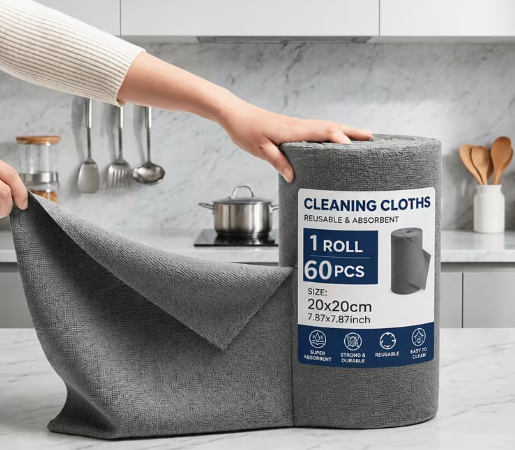
3. Microfiber Cleaning Cloth Sets
Category: Home Cleaning and Household Essentials
Microfiber cleaning cloths are practical accessories used for dusting and maintaining various household surfaces.
They are familiar products with multiple everyday applications.
Potential customers include homeowners, car enthusiasts, and people who prefer reusable cleaning accessories.
Why they have profit potential
Individual cloths are inexpensive, but selling them in coordinated sets may increase their commercial value.
Different colors, sizes, and textures can help differentiate a collection.
For instance, a set designed for different household cleaning tasks may be more useful than a generic single cloth.
How to market them
Create demonstrations showing the cloths on appropriate household surfaces.
Focus on realistic performance rather than exaggerated claims.
Clearly explain fabric composition, washing instructions, and recommended applications.
Practical selling strategy
Test a multipack organized by use case, such as a household cleaning collection or car interior cleaning kit.
Packaging and clear instructions may improve the customer experience.
What to check before sourcing
Examine fabric thickness, edge stitching, lint production, and washing durability.
Never claim that a cloth is scratch-proof or suitable for every surface without reliable supporting evidence.
4. Silicone Drain Hair Catchers

Category: Bathroom and Home Organization
Silicone drain hair catchers are small accessories designed to help prevent hair and debris from entering compatible drains.
Their selling proposition is straightforward: an inexpensive tool that helps address a common household inconvenience.
They can appeal to customers interested in practical bathroom accessories.
Why they have profit potential
Many designs are lightweight and compact, which can make shipping manageable.
They are also suitable for multipack offers, particularly when customers have several bathrooms or sinks.
Because the product is functional rather than purely decorative, marketing can focus on a recognizable problem.
How to market them
Demonstrate the catcher fitting a compatible drain and show how it can be removed for cleaning.
Use close-up videos that clearly communicate the design.
Practical selling strategy
Offer size variations or sets designed for clearly specified drain types.
Customers should be able to determine whether the product will fit before purchasing.
What to check before sourcing
Fit compatibility is the primary concern.
Check dimensions, material flexibility, stability, drainage performance, and cleaning requirements.
Inaccurate compatibility claims can create significant return rates.
5. Reusable Pet Hair Removers

Category: Pet Accessories and Household Cleaning
Pet hair removers are designed to collect loose pet hair from suitable surfaces such as upholstery and certain fabrics.
They appeal to pet owners who want practical tools for maintaining their homes.
Depending on the design, products may use reusable brushes, rollers, or specialized collection surfaces.
Why they have profit potential
The customer problem is recognizable and easy to demonstrate.
Reusable products can also offer a clear functional benefit without requiring consumable refills.
Pet owners may be interested in complementary products, which creates opportunities for specialized stores.
How to market them
Use authentic demonstrations on suitable furniture or fabrics.
Show the amount of hair collected and how the tool is cleaned.
Avoid using heavily edited demonstrations that create unrealistic performance expectations.
Practical selling strategy
Build a pet hair management collection that includes a reusable remover and a complementary grooming accessory.
Make sure the product descriptions distinguish between tools intended for furniture and products intended for use directly on animals.
What to check before sourcing
Test performance on multiple appropriate fabrics, cleaning durability, and whether the tool could damage delicate surfaces.
6. Pet Grooming Gloves

Category: Pet Grooming Accessories
Pet grooming gloves are designed to help owners remove loose hair and groom their pets.
Many styles feature soft rubber or silicone grooming surfaces.
They may appeal to people who want a grooming accessory that is easy to handle.
Why they have profit potential
The product is generally compact and can be demonstrated through pet-care content.
Some customers may also prefer gloves over traditional grooming brushes, depending on the animal's coat and comfort.
The pet category offers opportunities for related-product recommendations.
How to market them
Create informative videos demonstrating gentle grooming techniques appropriate to the pet.
Explain glove sizing, materials, cleaning instructions, and the types of coats the product is designed for.
Practical selling strategy
Test a pet grooming collection containing compatible tools rather than offering only one generic accessory.
A product bundle can help differentiate your store and encourage higher order values.
What to check before sourcing
Inspect stitching, strap durability, grooming surface quality, and fit.
Do not claim that a grooming glove treats medical conditions or is suitable for all animals.
7. Travel Jewelry Organizers

Category: Travel Accessories and Gift Products
Travel jewelry organizers provide separate compartments for storing rings, necklaces, earrings, and other accessories while traveling.
They appeal to customers who want to keep smaller personal items organized.
Common designs include compact cases with zippers, soft interior linings, and multiple storage sections.
Why they have profit potential
Unlike products bought purely for low price, organizers can be positioned around convenience, design, and gift presentation.
Material choices and thoughtful interior layouts may increase perceived value.
They also offer opportunities for personalized packaging or branding.
How to market them
Create a packing demonstration showing how different accessories fit into the case.
Use close-up photographs of the interior compartments, closures, and materials.
Avoid relying only on attractive exterior photography.
Practical selling strategy
Develop a travel organization collection with coordinated colors and complementary packing accessories.
For suitable products, explore gift packaging or personalized branding.
What to check before sourcing
Verify zipper strength, compartment dimensions, interior materials, and overall construction.
The case should be accurately represented in listing photographs.
8. Packing Cube Sets

Category: Travel and Organization
Packing cubes help travelers organize clothing and accessories inside luggage.
They are useful for separating items by category, simplifying unpacking, and maintaining order during trips.
Common sets include several cube sizes, sometimes with additional accessory bags.
Why they have profit potential
Packing cubes can be sold as coordinated sets rather than individual items.
This creates a natural opportunity for higher order value.
Their product benefits are also easy to communicate through practical travel demonstrations.
How to market them
Show how a traveler organizes clothing using several packing cubes.
Focus on convenience and organization rather than promising unrealistic increases in luggage capacity.
Practical selling strategy
Position products around specific travel needs, such as weekend trips, business travel, or family packing.
A carefully selected collection can be more compelling than a generic assortment.
What to check before sourcing
Evaluate zipper durability, seam quality, packed dimensions, material thickness, and set contents.
Remember that larger multipacks may have higher shipping costs than other products on this list.
9. Heatless Hair Curling Sets

Category: Beauty and Hair Accessories
Heatless hair curling sets are styling accessories designed to help users create curls or waves without heated styling tools.
Typical sets include a flexible curling rod and fabric accessories used to secure the hair.
They can be demonstrated through short-form beauty content.
Why they have profit potential
These products often have simple construction and can be packaged compactly.
Different materials, colors, and sets allow sellers to create distinct product offers.
The main commercial advantage is the ability to demonstrate the styling process visually.
How to market them
Use realistic styling demonstrations, explain the steps, and show the results on suitable hair types.
Do not guarantee the same outcome for every customer.
Practical selling strategy
Create a hair-accessory collection with matching scrunchies and other compatible styling items.
Original instructions and thoughtful packaging can help distinguish the product.
What to check before sourcing
Examine fabric softness, stitching, durability, and washing instructions.
Avoid unsupported claims that the product prevents all hair damage or delivers salon-quality results for everyone.
10. Satin Scrunchie Sets

Category: Fashion and Hair Accessories
Satin scrunchies are hair accessories made with satin or satin-like fabrics.
They are available in many colors, sizes, and decorative styles.
Their appeal comes from everyday usefulness and the ability to complement different outfits.
Why they have profit potential
Individual scrunchies can have low sourcing costs.
However, selling one low-priced item may not leave sufficient room for shipping and advertising.
Curated sets provide a more practical ecommerce offer.
Color combinations, fabric quality, and presentation can help create differentiation.
How to market them
Use clear product photography showing fabric texture, color combinations, and realistic styling examples.
Avoid unnecessary appearance-related promises.
Practical selling strategy
Offer coordinated multipacks based on colors or styling preferences.
If your store focuses on hair accessories, bundle scrunchies with compatible styling products.
What to check before sourcing
Check stitching, elastic durability, fabric consistency, and color accuracy.
When appropriate, explain the actual fiber composition rather than using material terms loosely.
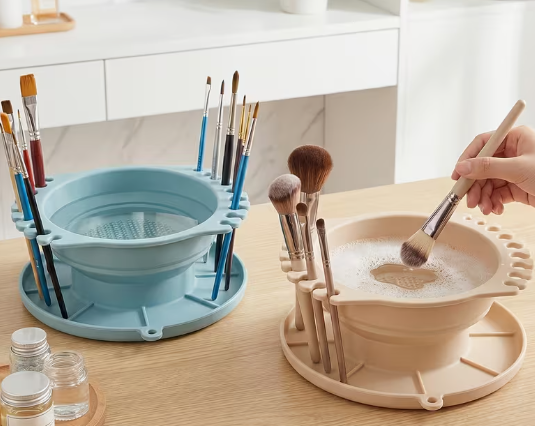
11. Silicone Makeup Brush Cleaning Mats
Category: Beauty Accessories
Makeup brush cleaning mats are reusable accessories with textured surfaces designed to help clean cosmetic brushes.
They often feature different surface patterns and may include suction cups for securing the mat.
The product's functionality makes it suitable for demonstration-based marketing.
Why they have profit potential
Cleaning mats can be compact, affordable to source, and easy to ship.
They may also fit into beauty accessory collections alongside brush organizers or storage products.
Their value proposition is based on convenience and a practical maintenance task.
How to market them
Create a demonstration showing the mat being used to clean appropriate makeup brushes according to the manufacturer's instructions.
Explain the different textures and how the product is maintained.
Practical selling strategy
Bundle the mat with compatible cosmetic accessory organizers.
Use clear instructions to improve product understanding.
What to check before sourcing
Evaluate silicone quality, texture, suction performance, dimensions, and durability.
Avoid unsupported hygiene or skincare claims.
12. Self-Watering Plant Spikes

Category: Gardening and Indoor Plant Accessories
Self-watering plant spikes are accessories designed to release water gradually into compatible plant containers.
Some designs work with standard bottles or other water reservoirs.
They may appeal to people who maintain indoor plants and want a convenient watering accessory.
Why they have profit potential
Compact plastic designs may be relatively inexpensive to source and easy to package.
The product also provides a straightforward demonstration opportunity.
Gardening stores can pair watering accessories with other small plant-care products.
How to market them
Show how the product fits into an appropriate planter and explain how its watering mechanism operates.
Demonstrate setup without guaranteeing that plants can be left unattended for a particular number of days.
Practical selling strategy
Test multipacks aimed at people who maintain several houseplants.
Provide clear compatibility information and explain that watering needs vary by plant, soil, container, and environment.
What to check before sourcing
Evaluate material strength, fit, water-release consistency, and packaging.
Avoid fragile glass versions unless your supplier can provide dependable protective packaging.
Which Low-Cost Dropshipping Products Should Beginners Choose?
The best product depends on your audience, marketing ability, and available fulfillment options.
However, the twelve products can be divided into several practical groups.
For simple problem-solving demonstrations: Cable organizers, drain hair catchers, reusable pet hair removers, and makeup brush cleaning mats are worth investigating.
For lifestyle and gift-oriented marketing: Travel jewelry organizers, satin scrunchie sets, and heatless curling accessories provide opportunities for coordinated visual collections.
For specialized niche stores: Pet grooming gloves, packing cubes, and plant-watering accessories may fit audiences with clearly defined interests.
For multipack offers: Microfiber cleaning cloths, cable organizers, satin scrunchies, and selected home accessories provide natural bundling opportunities.
Avoid selecting a product solely because it appears in a list of promising opportunities.
Your best option is the one that performs well when tested against real customer demand, product quality, competition, shipping costs, and customer acquisition expenses.
How to Calculate Profit Margins for Low-Cost Dropshipping Products
Finding a product with a low sourcing cost is only the beginning.
Before launching, calculate how much money remains after all expenses directly associated with an order.
Step 1: Identify Your Complete Variable Costs
These may include:
-
Supplier product price
-
Shipping and fulfillment
-
Packaging expenses
-
Payment processing
-
Marketplace commissions
-
Advertising and customer acquisition
-
Refund and replacement allowances
-
Applicable import duties or other variable charges
Fixed overhead, software subscriptions, and taxes must also be considered when evaluating overall business profitability.
Step 2: Calculate Contribution Profit
A useful formula is:
Contribution Profit = Selling Price − Variable Product and Order Costs − Customer Acquisition Cost
For example, consider an illustrative product bundle sold for $24.99.
| Item | Amount |
|---|---|
| Selling price | $24.99 |
| Product sourcing | $4.50 |
| Shipping and fulfillment | $4.80 |
| Payment processing | $1.05 |
| Customer acquisition | $6.00 |
| Returns allowance | $1.20 |
| Packaging | $0.65 |
| Contribution profit | $6.79 |
The contribution margin is approximately 27.2%.
This is not net profit because the example excludes fixed overhead, income taxes, and other potentially applicable charges.
All values are hypothetical and should be replaced with actual quotes and business data.
Step 3: Calculate Your Break-Even Advertising Cost
Advertising can quickly turn an apparently profitable product into an unprofitable one.
In the example above, the product generates $12.79 before advertising after accounting for the other listed variable costs.
This means an advertising acquisition cost of $12.79 would eliminate contribution profit.
If you want to retain at least $5 in contribution profit per order, your maximum acceptable acquisition cost would be:
$12.79 − $5.00 = $7.79
This is a more useful advertising benchmark than simply comparing revenue with advertising spending.
Step 4: Evaluate Your Average Order Value
Products priced below $15 may be difficult to advertise profitably when they are purchased individually.
You can investigate higher order values through:
-
Multipack offers
-
Complementary product bundles
-
Quantity discounts
-
Related-product recommendations
-
Free-shipping thresholds based on actual costs
However, increasing order value is only valuable when the additional products create enough incremental profit.
A bundle should improve customer value and business economics at the same time.
How to Find Reliable Suppliers for Low-Cost Products
Supplier reliability has a direct effect on profitability.
A cheaper product is not a good deal if it causes frequent complaints, quality problems, or fulfillment delays.
Compare Total Landed Cost, Not Just Purchase Price
Two suppliers may offer the same type of product at different prices.
For example:
| Supplier | Product Cost | Shipping | Combined Cost |
|---|---|---|---|
| Supplier A | $2.00 | $5.50 | $7.50 |
| Supplier B | $3.20 | $3.00 | $6.20 |
Although Supplier A offers a lower product price, Supplier B provides a lower combined product and shipping cost.
This is an illustrative comparison, but it highlights why product cost alone can be misleading.
Additional fees, duties, packaging, and return costs should also be included where applicable.
Order Samples Before Scaling
Product photographs do not always reveal manufacturing quality.
Samples allow you to evaluate actual materials, construction, packaging, dimensions, and functionality.
For example, a foldable phone stand may look identical to a competitor's model in photographs but differ substantially in stability and hinge strength.
A test order can also help evaluate actual shipping performance.
Check Processing Time and Inventory Availability
Ask your supplier how long it normally takes to prepare orders.
Confirm whether stock information is updated regularly and what happens when a product becomes unavailable.
A supplier with slightly higher prices may be more valuable if it fulfills orders reliably and reduces cancellations.
Evaluate Communication and Support
Before choosing a supplier, test how clearly it responds to questions.
Ask about product specifications, packaging, shipping options, damaged orders, and refunds.
Poor communication during supplier evaluation can become a much larger problem once customers begin placing orders.
How CJdropshipping Helps Sellers Source Low-Cost Products
One of the challenges of selling affordable products is managing multiple suppliers, shipping options, and product variations while maintaining acceptable margins.
CJdropshipping provides supply chain services that ecommerce sellers can use to research products, coordinate sourcing, and manage fulfillment.
For sellers exploring low-cost dropshipping products, the most useful services may include product sourcing, order fulfillment, branding support, and product customization.

1. Product Sourcing and Supplier Comparison
Not every product idea is immediately available in an existing catalog.
Through CJdropshipping's Product Sourcing service, sellers can submit sourcing requests for products they want to sell.
Requests can include product links, reference images, specifications, and other relevant details.
For example, if you identify a cable organizer with a particular material or design, you can submit the product details to investigate suitable sourcing options.
This can help sellers move beyond simply choosing the first supplier they encounter.
Compare the resulting quotation, product specifications, shipping expenses, and minimum quantity requirements before making a decision.
2. Dropshipping Fulfillment and Logistics
Low-cost products can become difficult to sell profitably when shipping represents a large percentage of the selling price.
CJdropshipping offers order processing, shipping coordination, and fulfillment services for supported products and destinations.
Sellers can compare available shipping methods and evaluate how inventory locations affect delivery times and costs.
The most appropriate option depends on the product, target market, inventory availability, and shipping requirements.
Before publishing delivery estimates, confirm processing and transit times for the specific order route.
3. Custom Packaging and Branding
A generic product can be difficult to differentiate when competitors offer similar items.
Packaging is one way to develop a more recognizable customer experience.
CJdropshipping provides Custom Packaging services that sellers can explore for branded packaging materials, labels, inserts, and other options.
For example, a seller building a travel accessory brand could use consistent packaging across jewelry organizers and packing cubes.
Branding does not automatically justify a higher selling price, but it can help create a more coherent product experience.
Availability, costs, and minimum order requirements vary by packaging option.
4. Print on Demand and Product Customization
Some inexpensive products can be differentiated through original designs.
CJdropshipping's Print on Demand service supports suitable personalized products, including selected apparel, accessories, gifts, and home decoration items.
For a seller developing a niche brand, customization may help reduce reliance on generic products that compete mainly on price.
However, customized products may have different production times and costs.
Request specific quotations before assuming that a customized product will maintain the same margins as an unbranded version.
5. Supporting Growth Beyond Initial Product Testing
Dropshipping can be useful for testing demand before purchasing large quantities of inventory.
Once a product generates consistent profitable orders, sellers can evaluate other sourcing arrangements.
CJ also offers options related to bulk purchasing, ODM product development, and inventory fulfillment.
This allows sellers to explore a progression from testing an existing product to developing a more differentiated offering.
For example, a store might begin with a standard jewelry organizer.
After identifying repeated customer preferences, the seller could explore improved compartment designs, new materials, or custom packaging.
A sourcing partner can assist with evaluating these possibilities, although production feasibility and costs depend on the specific requirements.
Explore CJdropshipping's sourcing and fulfillment solutions to evaluate products, supplier quotations, and shipping options for your store.
How to Test Low-Cost Dropshipping Products Before Scaling
Even a promising product should be validated before receiving a substantial marketing budget.
A structured test can help determine whether customers are interested, whether your supplier is reliable, and whether the product generates an acceptable contribution margin.
Step 1: Select Three Products With Clear Customer Benefits
Avoid testing twelve unrelated products simultaneously if your budget and operational capacity are limited.
Choose a small group serving a similar audience.
For example, a home-office collection might include cable organizers, a foldable phone stand, and another suitable desk accessory.
This makes store positioning and marketing more consistent.
Step 2: Build Informative Product Pages
Each listing should explain what the product does, who it is for, what is included, and any important compatibility limitations.
Use clear photographs and accurate specifications.
Google's Merchant Center product data guidance also emphasizes accurate product details, availability, shipping information, and other essential listing attributes.
Step 3: Produce Several Original Marketing Creatives
Test different ways of communicating the product's value.
For a cable organizer, one creative might show a cluttered desk.
Another might focus on product installation.
A third could demonstrate a coordinated desk setup.
These concepts help identify which product benefits resonate with the audience.
Step 4: Track Meaningful Performance Metrics
Monitor:
| Metric | What It Tells You |
|---|---|
| Conversion rate | How often store visits result in orders |
| Average order value | Revenue generated per order |
| Customer acquisition cost | Marketing cost required to acquire a buyer |
| Contribution margin | Profit remaining after variable expenses |
| Return rate | Potential product or expectation problems |
| Delivery performance | Supplier and shipping reliability |
| Customer feedback | Opportunities for product improvement |
Avoid relying on view counts or advertising clicks alone.
A video may attract substantial attention without generating profitable sales.
Step 5: Decide Whether to Continue, Improve, or Stop
After gathering sufficient data, evaluate each product.
If the product attracts visitors but few purchases, investigate pricing, product pages, customer expectations, and competition.
If the product converts well but generates weak profits, review shipping and customer acquisition costs.
If customers report repeated quality problems, investigate the supplier before scaling.
Only increase spending when the evidence supports doing so.
How to Increase Profit Margins Without Increasing Product Prices
Raising prices is not the only way to improve profitability.
Several operational improvements can make a meaningful difference.
Negotiate Better Sourcing Terms
As sales become more predictable, ask suppliers whether larger or more consistent order volumes could improve purchasing terms.
However, do not purchase unnecessary inventory solely to obtain a lower unit price.
Evaluate carrying costs and unsold inventory risk.
Reduce Packaging and Shipping Costs
Product dimensions and packaging choices can influence shipping rates.
Ask suppliers whether alternative packaging can safely reduce volume or unnecessary weight.
Do not compromise product protection to save a small amount on shipping.
Increase Average Order Value
Bundles and multipacks may allow you to spread customer acquisition and fulfillment costs across a larger order.
For example, a travel store could offer jewelry organizers and packing cubes as complementary products.
The combination should make sense to the customer rather than simply increase the checkout total.
Improve Customer Experience
Clear product information and realistic delivery expectations can reduce avoidable customer complaints.
Accurate descriptions also help prevent returns caused by misunderstandings about product size, materials, or compatibility.
Focus on Repeat Customers
A store with a recognizable niche may have more opportunities for repeat purchases than a store selling unrelated products.
For example, customers who purchase pet grooming accessories might return for other relevant pet-care products.
Repeat business still needs to be earned through product quality, dependable fulfillment, and useful communication.
Common Mistakes When Selling Cheap Dropshipping Products
Mistake 1: Confusing Low Product Cost With High Profit
A $1 sourcing price does not guarantee profitability.
Always include shipping, fees, advertising, and expected returns in your calculations.
Mistake 2: Choosing Products With No Differentiation
If customers can find an identical product everywhere, competing only on price becomes difficult.
Consider product quality, specialized audiences, original content, useful bundles, and branding.
Mistake 3: Ignoring Product Quality
Poor materials or construction can lead to refunds and negative reviews.
Samples and supplier checks are important even for inexpensive products.
Mistake 4: Offering Unrealistic Shipping Promises
Delivery expectations can strongly influence purchasing decisions.
Google's shipping and returns guidance emphasizes the importance of accurate shipping information.
For sellers serving the United States, the FTC's online order delivery rules are also important when determining shipment promises and handling delays.
Mistake 5: Scaling Before Understanding Customer Acquisition Costs
A product can generate impressive revenue while losing money after advertising.
Calculate break-even acquisition costs and contribution profit before increasing marketing budgets.
Frequently Asked Questions
1. What are the best low-cost dropshipping products for beginners?
Beginners can investigate compact, easy-to-demonstrate products such as cable organizers, microfiber cleaning cloth sets, phone stands, and selected household accessories.
These products generally have straightforward uses and may be suitable for bundles.
However, the best option depends on target customers, supplier reliability, competition, and total fulfillment costs.
2. Can low-cost dropshipping products really have high profit margins?
Yes, some low-cost products can generate attractive margins, but a low sourcing price is not enough.
Actual profitability depends on the selling price, shipping, payment fees, advertising, returns, and other expenses.
Products with strong differentiation and efficient fulfillment may offer better opportunities than generic products competing entirely on price.
3. How can I find inexpensive products on CJdropshipping?
You can search the CJdropshipping product catalog or submit a sourcing request if a suitable product is not available.
When requesting sourcing, provide accurate reference images, product specifications, target quantities, and destination markets.
Compare the resulting product quotation and shipping costs before listing the item.
4. Should I sell individual cheap products or bundles?
Both approaches can work.
Individual products may be useful for testing demand, but low selling prices can make advertising costs difficult to recover.
Bundles may increase average order value when the combined products solve a related customer need.
Compare the contribution profit of each approach rather than relying only on revenue.
Final Thoughts: Start With Low Costs, Build for Sustainable Profit
Low-cost dropshipping products can help entrepreneurs test ecommerce opportunities without making substantial initial inventory commitments.
However, low sourcing costs alone do not create a successful business.
The strongest opportunities combine practical customer benefits, competitive total costs, reliable suppliers, and marketing that communicates real value.
Start with a small number of products. Verify quality, compare total landed costs, and calculate realistic contribution margins before scaling.
As your store develops, look for opportunities to improve product quality, build coordinated collections, strengthen customer relationships, and develop recognizable branding.
Whether you are testing home accessories, pet supplies, travel organizers, or beauty tools, a disciplined approach to sourcing and fulfillment can make affordable products more commercially sustainable.
With access to product sourcing, fulfillment coordination, and customization services, CJdropshipping can help sellers evaluate products and explore supply chain options as their businesses grow.
The goal is not simply to sell the cheapest products. It is to build a business that delivers enough customer value to earn consistent, sustainable profits.