
Running a dropshipping business means moving money across several different systems.
A customer may pay for an order in US dollars through your Shopify store. Your payment processor may settle the funds several days later. Your supplier may ask to be paid in RMB or EUR, while your advertising platform charges your card in another currency.
Every step can involve processing fees, exchange rate markups, settlement delays, or account restrictions.
That is why choosing the best payment methods for a dropshipping business is not simply about adding a checkout button to a website. A complete payment setup must cover three separate needs:
-
Accepting payments from customers
-
Receiving and managing sales revenue
-
Paying suppliers, agents, warehouses, and other partners
PayPal, Stripe, credit cards, and digital wallets are useful for customer checkout. However, international dropshipping businesses also need an efficient way to manage multiple currencies and pay suppliers in different countries.
This is where WorldFirst stands out.
WorldFirst is not primarily a consumer checkout gateway. Instead, it can serve as the financial bridge between your ecommerce revenue and your global supply chain. For dropshippers operating across several markets, that makes it one of the most practical payment solutions to consider in 2026.
What Payment Challenges Do Dropshipping Businesses Face?
A local retail business may collect revenue and pay expenses in one currency. Dropshipping businesses often have a much more complicated payment flow.
The customer, seller, payment processor, supplier, warehouse, and logistics provider may all be located in different countries.
This creates several common challenges.
1. Receiving Payments From International Markets
A dropshipping store may sell to customers in the United States, United Kingdom, Europe, Canada, and Australia at the same time.
Customers usually prefer to pay in their local currencies and use familiar payment methods. A seller therefore needs a checkout system that supports major cards, wallets, and regional options.
However, accepting a payment is only the beginning. The seller must also decide where the revenue will be settled, in which currency it will be received, and how it will eventually be used.
2. Paying Suppliers in Different Countries
Dropshipping suppliers may request payment in US dollars, Chinese yuan, euros, or another currency.
Payment methods can also vary. Some suppliers accept cards or PayPal, while others prefer bank transfers, marketplace payments, or direct business payments.
These requirements become more complicated as the seller works with additional factories, sourcing agents, warehouses, and fulfillment partners.
3. Managing Currency Conversion Costs
Currency conversion can quietly reduce the profit on every order.
For example, a seller might receive revenue in euros, automatically convert it into US dollars, and then convert those dollars again when paying a supplier in another currency.
Each conversion may include a fee or exchange rate markup. The cost may appear small on an individual transaction, but it becomes significant across hundreds or thousands of orders.
4. Dealing With Settlement Delays
A customer may pay today, but the money may not immediately become available to the merchant.
Payment processors and ecommerce platforms have their own settlement schedules. New accounts, sudden increases in sales, disputes, refunds, and risk reviews may delay access to funds.
Meanwhile, many dropshipping suppliers will not process an order until payment has been received.
The gap between customer payment and supplier payment can place pressure on working capital.
5. Managing Multiple Stores and Platforms
A growing seller may operate through several channels, such as:
-
WooCommerce
-
Amazon
-
TikTok Shop
-
eBay
-
Etsy
-
Regional marketplaces
Without a central system, the business may end up managing several balances, bank accounts, currencies, payout schedules, and transaction records.
The right payment structure should make this process easier rather than create another administrative burden.
WorldFirst: Our Recommended Payment Solution for Dropshipping Businesses
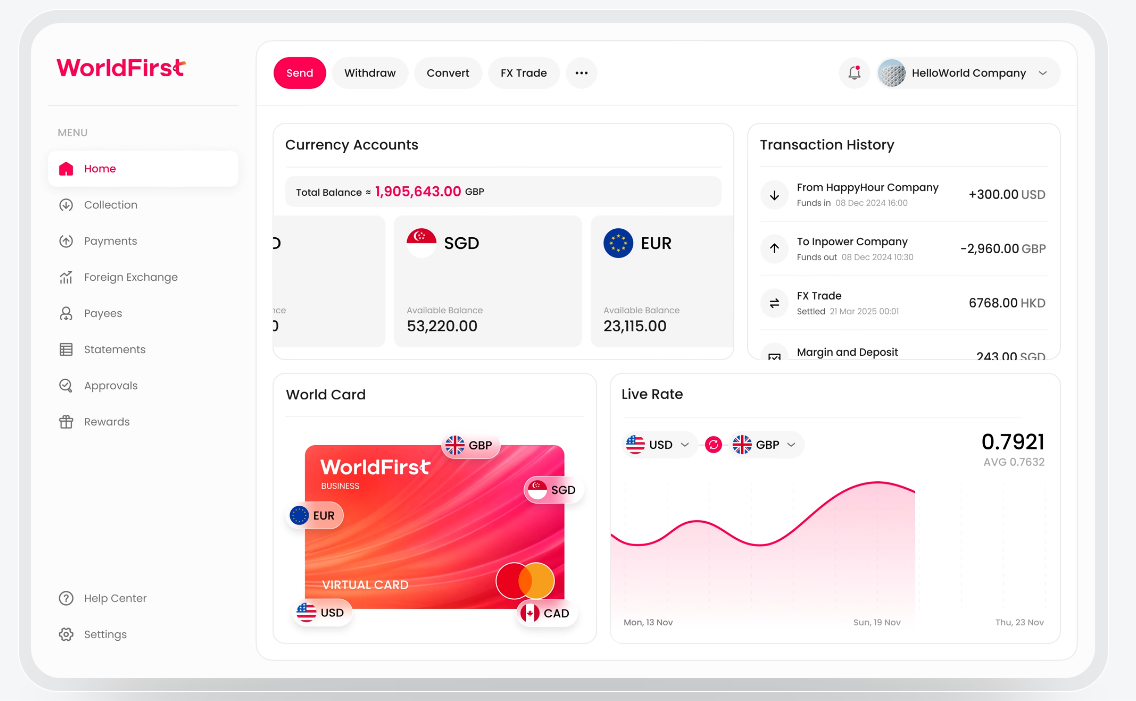
WorldFirst is our main recommendation for international dropshipping businesses that need to receive ecommerce revenue, hold multiple currencies, exchange funds, and pay overseas suppliers.
It should not necessarily replace PayPal, Stripe, Shopify Payments, or another checkout provider. Those services are designed to help customers pay at the point of sale.
WorldFirst plays a different role.
It can become the central account through which a seller manages cross-border business funds after the customer has completed the purchase.
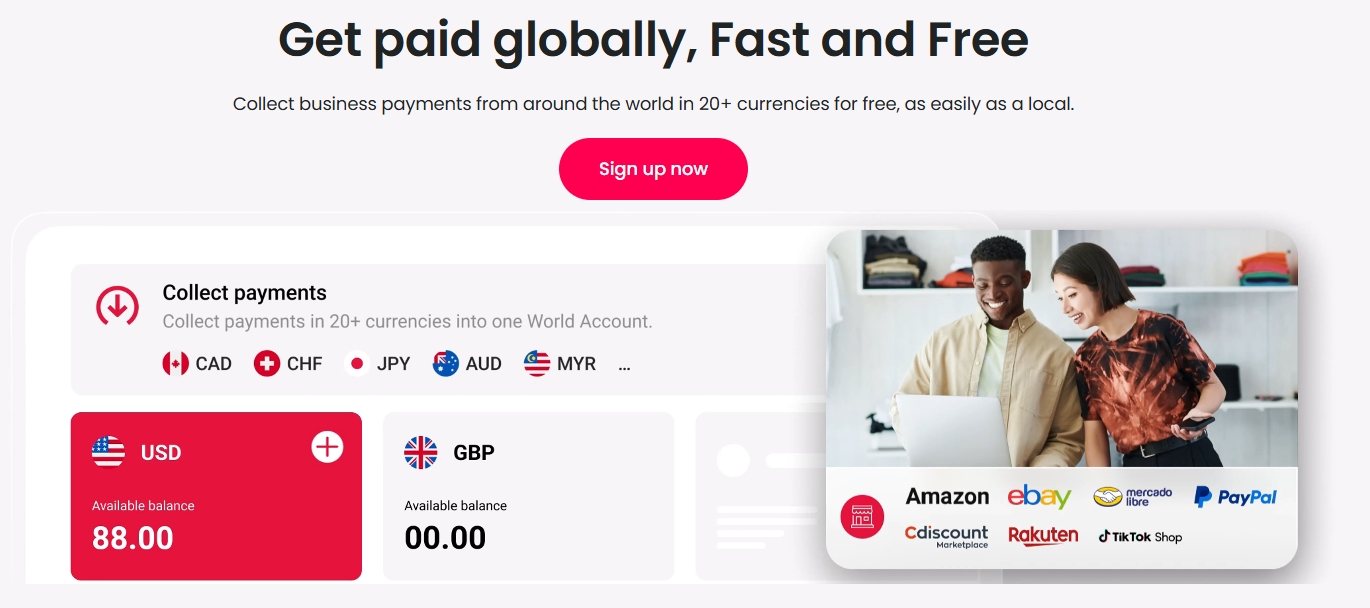
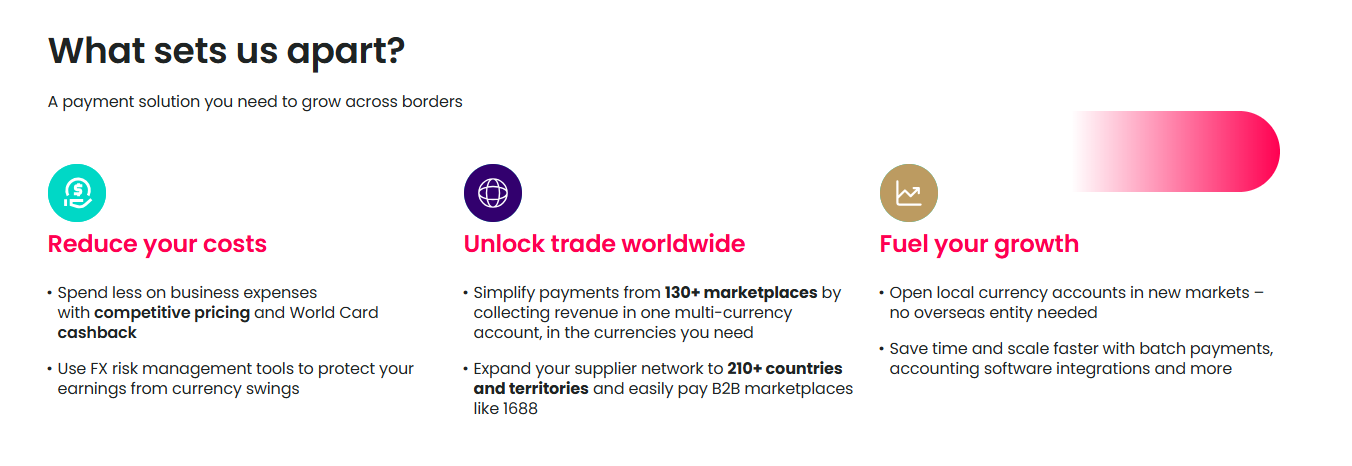
According to WorldFirst, its global ecommerce solution allows eligible businesses to collect payouts from more than 130 marketplaces and service providers, receive funds in more than 20 currencies, and pay suppliers in over 100 currencies. Features, supported currencies, and availability can vary by the company’s registration country.
For a dropshipping business, this can create a more connected payment flow:
Customer checkout → ecommerce revenue → currency management → supplier payment
Instead of treating each payment stage as a separate problem, sellers can build a system in which revenue is collected, held, converted, and used more efficiently.
Key Advantages of WorldFirst for Dropshipping Businesses
1. Manage Multiple Currencies in One Account
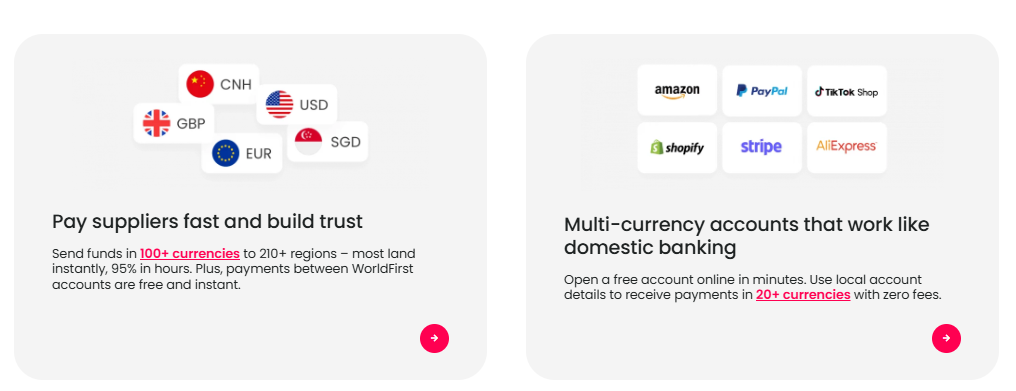
Dropshipping businesses rarely operate within one country.
A seller may generate revenue in US dollars, British pounds, euros, Australian dollars, and other currencies. Converting every payout into one base currency can create unnecessary costs.
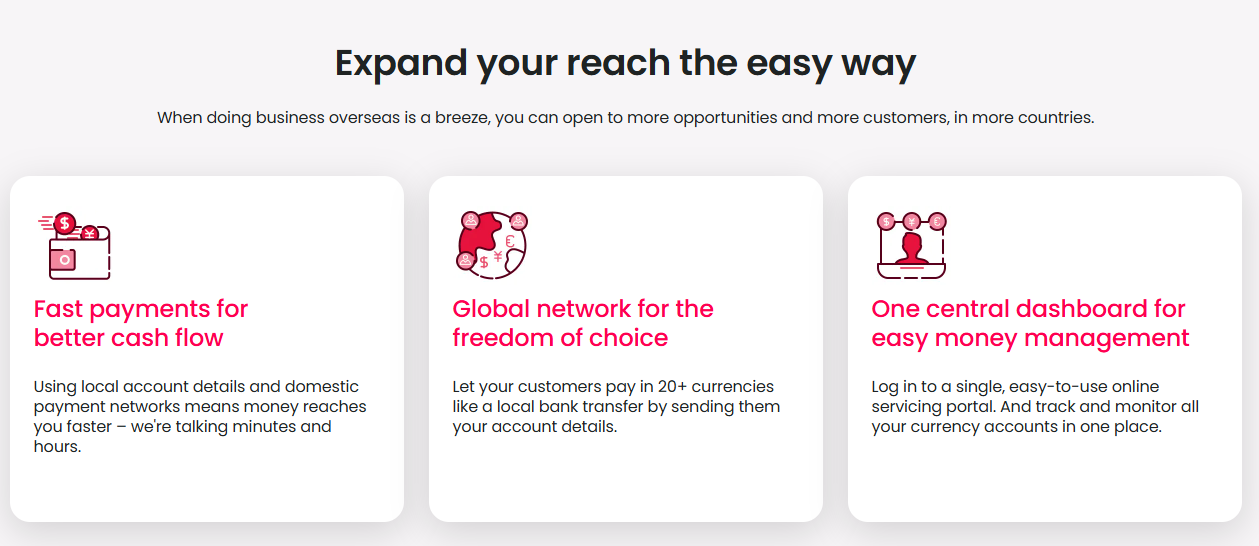
A multi-currency business account allows the seller to keep funds in different currencies and decide when a conversion is actually needed.
For example, a business could:
-
Receive US dollar revenue from a supported marketplace
-
Hold part of that revenue in dollars
-
Use the dollar balance to pay a supplier that invoices in dollars
-
Convert only the remaining amount needed for other business expenses
This approach gives the seller more control over how and when money moves between currencies.
It also makes it easier to separate revenue by market. Rather than mixing every payment into one domestic bank account, the business can maintain a clearer view of its international balances.
2. Receive Ecommerce Revenue From Multiple Markets
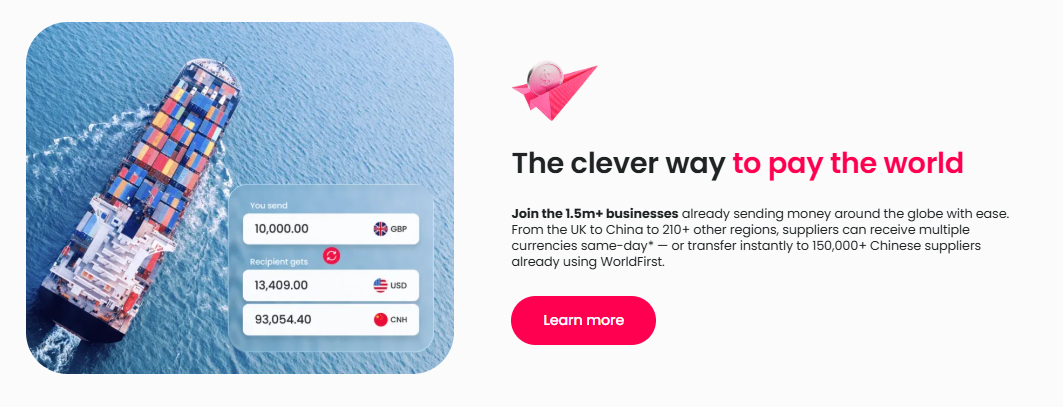
When a business sells through several marketplaces, managing individual payouts can become difficult.
Different platforms may have different payout schedules, currencies, and withdrawal requirements. A centralized multi-currency account can help the seller bring eligible marketplace revenue into one place.
WorldFirst states that its ecommerce seller solution supports collections from more than 130 marketplaces and service providers. Its global offering is designed to help online sellers collect marketplace payouts, hold funds, convert currencies, and make international payments through the same platform.
This can be particularly useful for sellers expanding from a single Shopify store into international marketplaces.
Before opening an account, merchants should confirm that their specific marketplace, company location, and required settlement currency are supported.
3. Pay Global Suppliers More Efficiently
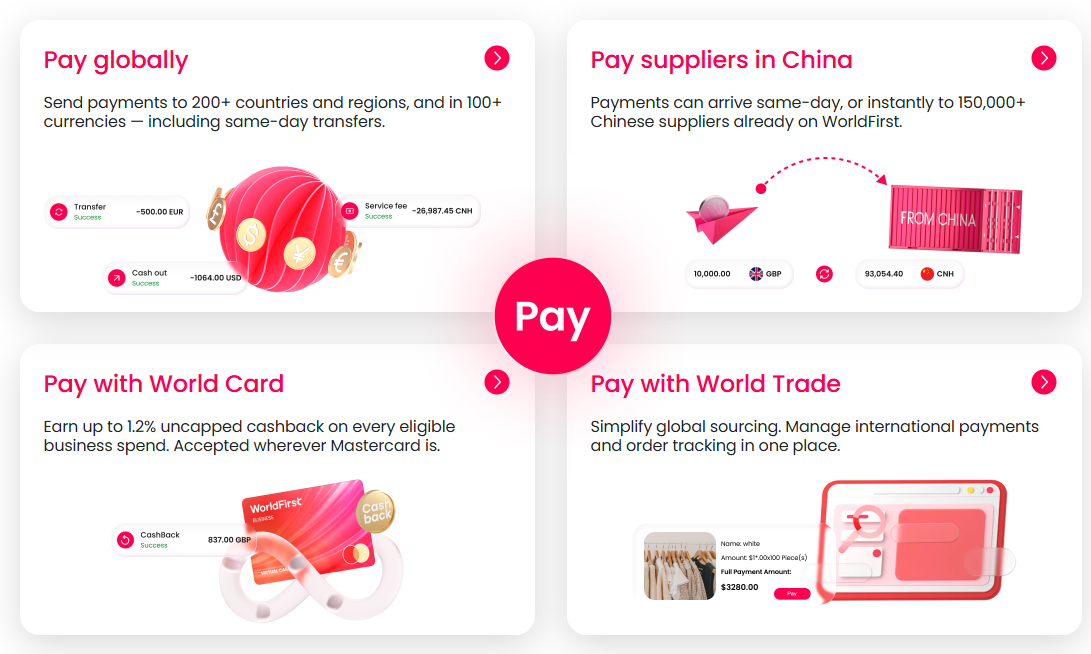
Supplier payments are one of the most important parts of a dropshipping operation.
A delay in paying a supplier can delay order processing, tracking updates, and final delivery. This can quickly lead to customer complaints, refund requests, and payment disputes.
WorldFirst allows eligible businesses to make payments to international suppliers in multiple currencies. This can be used for more than individual dropshipping orders.
Potential payment recipients include:
-
Product suppliers
-
Manufacturers
-
Sourcing agents
-
Packaging companies
-
Warehouses
-
Fulfillment providers
-
Freight forwarders
-
Quality inspection services
-
Freelancers and overseas contractors
Instead of using one system to receive revenue and another unrelated system to pay suppliers, businesses can manage both sides of the operation more closely.
4. Gain More Control Over Currency Conversion
A low transfer fee does not always mean a low total cost.
The exchange rate used by the payment provider can have a greater impact than the visible transaction fee. Sellers should therefore compare the final amount that the recipient will receive, not just the advertised transfer price.
WorldFirst explains that its foreign exchange pricing starts with the interbank rate and adds a disclosed markup. Exact rates and fees depend on the region, currency pair, transaction amount, and account terms.
The practical advantage for dropshippers is control.
Rather than automatically converting every payout, a seller may be able to hold supported currencies and convert them when needed. This can reduce repeated conversions and make supplier costs easier to calculate.
5. Simplify Payments to Chinese Suppliers
China remains an important sourcing market for dropshipping, private labeling, product customization, and bulk purchasing.
Paying Chinese suppliers can be challenging when the seller does not have a local bank account or when the supplier prefers a domestic sourcing platform.
One of the most relevant WorldFirst features for China-based sourcing is its connection with 1688.
World Pay is described by WorldFirst as an official payment solution developed with 1688. Eligible international buyers can use their WorldFirst balance to complete purchases from 1688 suppliers without first transferring the money to a Chinese bank card. Availability and checkout procedures depend on the buyer’s region and account eligibility.
This may be useful for sellers sourcing:
-
Fashion accessories
-
Home products
-
Beauty tools
-
Electronics accessories
-
Customized packaging
-
Private-label products
-
Replacement inventory
-
Product bundles
It can also help businesses move beyond standard consumer marketplaces and build more direct relationships with manufacturers and wholesalers.
6. Reduce Dependence on Traditional International Bank Transfers
Traditional bank transfers remain useful, especially for established supplier relationships and large invoices.
However, they can also involve:
-
Fixed transfer charges
-
Correspondent bank fees
-
Unclear exchange rate markups
-
Manual payment instructions
-
Slower processing
-
Additional reconciliation work
A dedicated cross-border business account may be more practical for regular supplier payments.
This does not mean bank transfers should be removed entirely. They can still serve as a valuable backup. The goal is to avoid relying on them for every transaction when a more streamlined option is available.
7. Improve Cash Flow Visibility
Dropshipping businesses often focus on sales revenue without looking closely enough at available cash.
Revenue shown in an ecommerce dashboard is not always the same as money available to spend.
Some funds may still be:
-
Waiting for settlement
-
Reserved for refunds
-
Held in another currency
-
Needed for advertising expenses
-
Assigned to supplier invoices
-
Required for tax obligations
-
Tied up in payment disputes
Keeping multiple currency balances and supplier payments in one business platform can provide a clearer view of the company’s working capital.
This helps owners make better decisions about advertising budgets, product testing, inventory purchases, and expansion.
8. Support Growth Across Multiple Markets
A payment setup that works for a small store may become inefficient once the business expands.
A growing dropshipping company may add:
-
More sales channels
-
New customer markets
-
Additional suppliers
-
Local warehouses
-
Private-label inventory
-
Contractors in different countries
-
Higher monthly transaction volumes
At this stage, the business needs more than a basic payment processor. It needs a structure for managing international income and expenses.
WorldFirst can serve as part of that structure by bringing currency management, marketplace collections, and global supplier payments into one account.
How Dropshipping Businesses Can Use WorldFirst
The exact setup process depends on the company’s country, legal structure, and account eligibility. However, the general workflow usually follows several steps.
Step 1: Open a Business Account
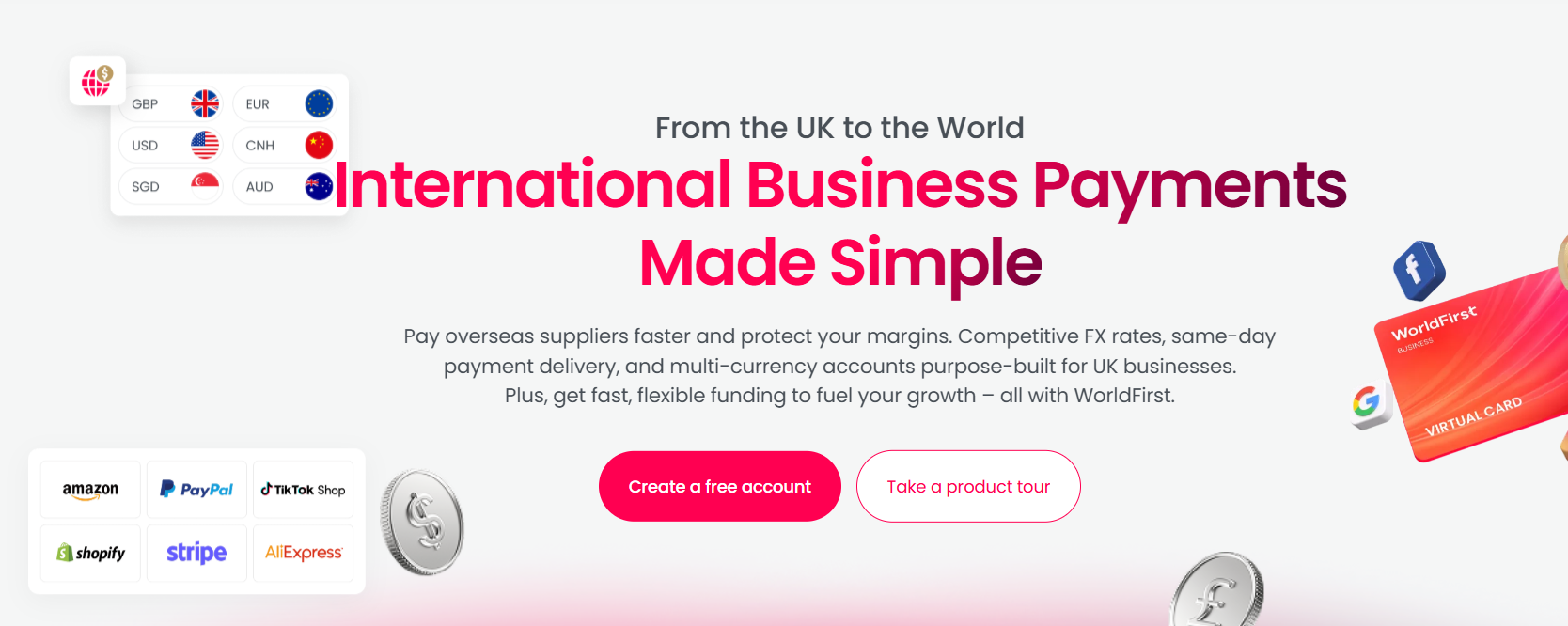
The seller registers using accurate business information.
Depending on the region and business structure, WorldFirst may request documents related to:
-
Company registration
-
Business ownership
-
Identity verification
-
Website or marketplace activity
-
Expected transaction volume
-
Products being sold
-
Supplier relationships
-
Source of funds
The information should match the details shown on the seller’s ecommerce platforms and business records.
Using consistent information can also reduce problems during future compliance reviews.
Step 2: Activate the Required Currency Accounts
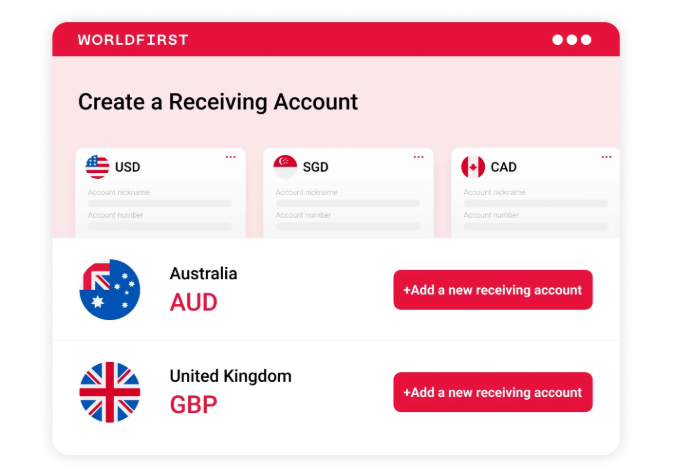
The seller chooses the currencies needed for receiving revenue and paying business expenses.
A US-focused store may primarily need US dollars. A seller expanding into Europe may also need euros, while a business selling in the UK may need British pounds.
There is no reason to activate every available currency. Start with the currencies directly connected to your sales markets and supplier invoices.
Step 3: Connect Eligible Revenue Sources
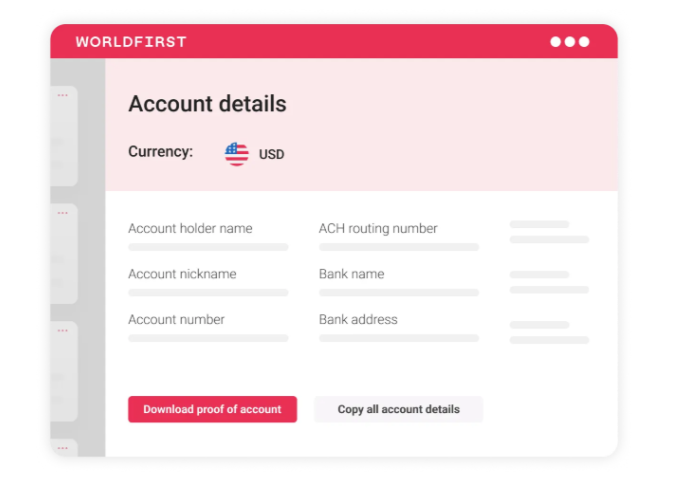
The merchant can then set up supported marketplace or business payouts using the account details provided.
Before changing any payout information, verify:
-
The account holder name
-
Supported payout currencies
-
Marketplace requirements
-
Minimum withdrawal amounts
-
Settlement schedules
-
Regional restrictions
Run a small test payout before moving large volumes through a new account.
Step 4: Hold or Convert the Funds
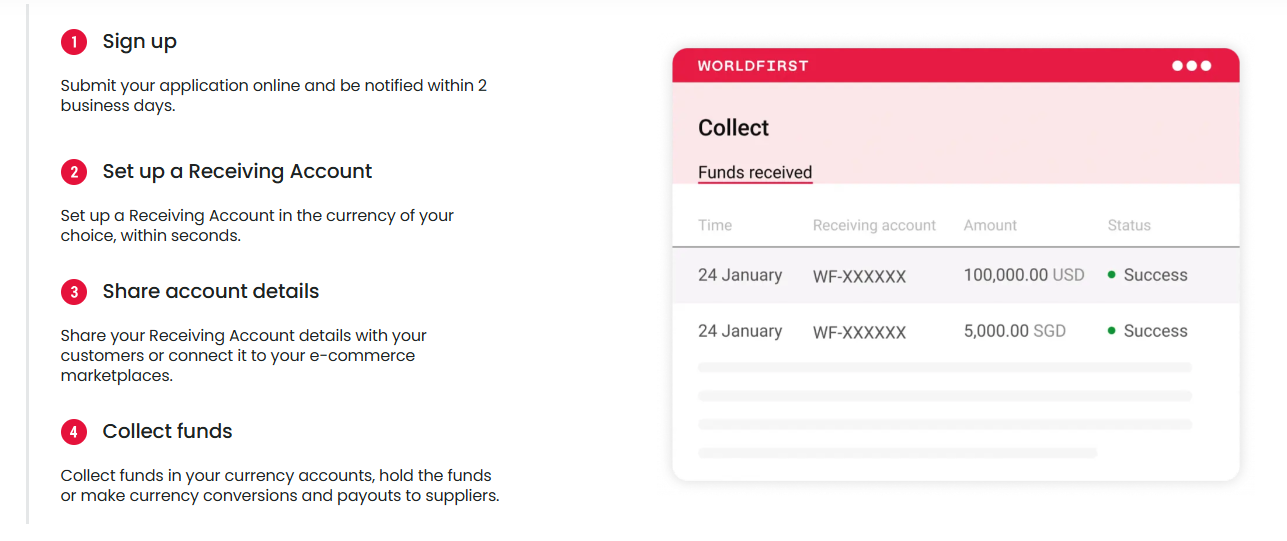
Once revenue arrives, the seller can decide whether to keep it in the original currency or convert it.
The decision should be based on upcoming expenses.
For example, keeping US dollars may make sense when the business needs to pay:
-
A supplier that invoices in dollars
-
A US warehouse
-
A software subscription
-
A contractor with a dollar invoice
-
Advertising costs billed in dollars
Converting funds only when necessary can help avoid the cost of changing currencies several times.
Step 5: Pay Suppliers and Service Providers
The seller can use available balances to pay eligible suppliers and business partners.
Before confirming a payment, check:
-
Recipient name
-
Bank details
-
Invoice number
-
Payment currency
-
Transfer fee
-
Exchange rate
-
Expected delivery time
-
Final amount received by the supplier
For a new supplier, confirm the payment instructions through a second communication channel. Business email accounts can be compromised, and fraudulent bank detail changes are a real risk in international trade.
Step 6: Reconcile Revenue and Expenses
At the end of each week or month, match payments with the corresponding business records.
A clear reconciliation process should connect:
-
Marketplace payouts
-
Store orders
-
Currency conversions
-
Supplier invoices
-
Transfer confirmations
-
Refunds
-
Chargebacks
-
Warehouse fees
-
Shipping expenses
This makes profit calculations more reliable and reduces problems during tax preparation or financial reporting.
The Recommended Payment Stack for Dropshipping
No single payment method is ideal for every stage of a dropshipping transaction.
The strongest setup combines different tools based on what each tool does best.
Customer Checkout
For customer-facing payments, consider:
-
Stripe
-
Shopify Payments
-
PayPal
-
Credit and debit cards
-
Apple Pay
-
Google Pay
-
Buy now, pay later services
-
Relevant local payment methods
Stripe supports multiple payment categories, including cards, bank payments, wallets, real-time payments, and buy now, pay later options. Its Checkout product can be used to create a hosted or embedded payment form for online stores.
PayPal Checkout can allow eligible merchants to offer PayPal, cards, wallets, and other supported options, depending on the merchant’s market and integration.
Cross-Border Revenue and Currency Management
For managing international business funds, our primary recommendation is:
WorldFirst
This is the stage where the seller receives eligible ecommerce payouts, holds supported currencies, converts funds, and prepares supplier payments.
Supplier Payments
For supplier payments, consider:
-
WorldFirst
-
A supplier platform’s payment system
-
Traditional bank transfer as a backup
-
PayPal or card payments when accepted and cost-effective
The best choice depends on the invoice amount, destination country, supplier relationship, payment protection, and total cost.
How the Full Payment Flow Works
A practical payment flow may look like this:
The customer places an order
↓
Stripe, PayPal, or another gateway processes the checkout
↓
The ecommerce platform or processor settles the revenue
↓
WorldFirst receives or manages eligible international business funds
↓
The seller holds or converts the required currency
↓
The seller pays the supplier, sourcing agent, or fulfillment provider
↓
The supplier processes and ships the order
This structure gives every payment tool a clear role.
Other Payment Methods for Dropshipping Businesses
WorldFirst is our main recommendation for cross-border business payments, but it is not the only tool a seller needs.
Several other payment methods remain important.
1. PayPal
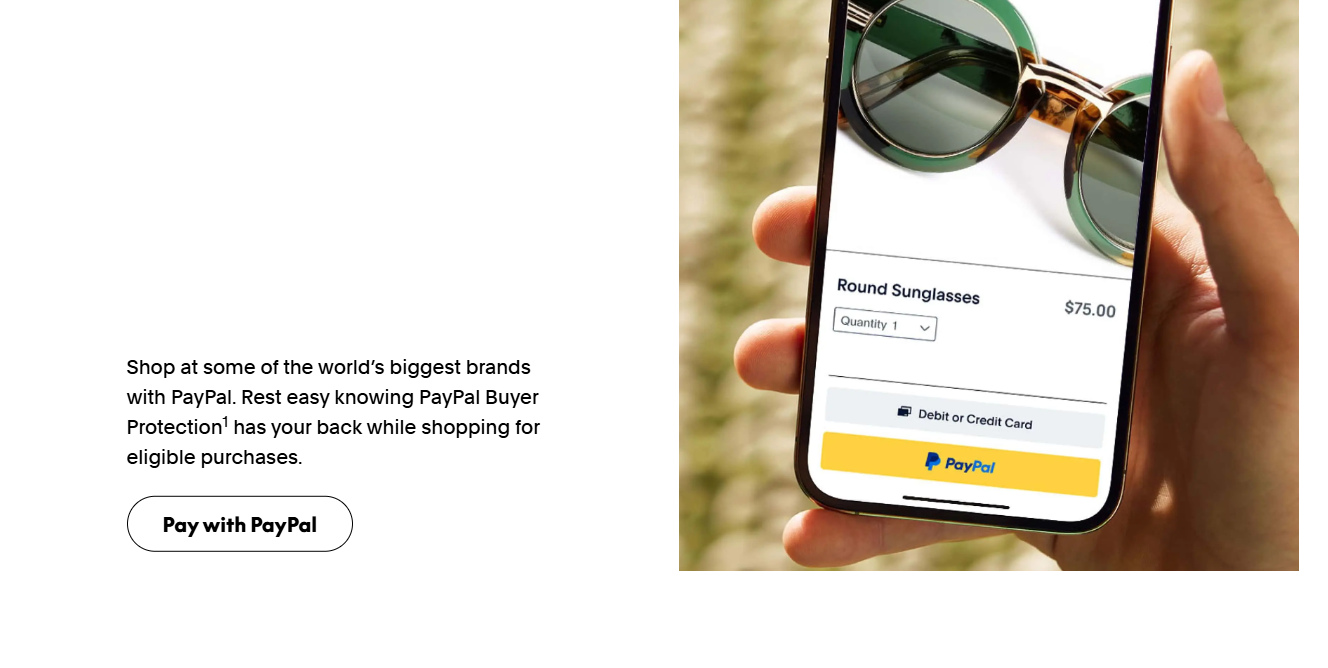
PayPal is one of the most familiar payment options for online shoppers.
It can be especially valuable for a new store because customers may feel more comfortable paying through a recognized account rather than entering their card details directly on an unfamiliar website.
Advantages of PayPal
-
Familiar to many online shoppers
-
Relatively easy to add to ecommerce stores
-
Can support PayPal balance and card payments
-
Useful as an additional checkout option
-
Provides transaction and dispute records
Potential Limitations
-
Account reviews may temporarily restrict funds
-
Refunds and disputes can affect cash flow
-
Cross-border fees may reduce margins
-
Currency conversion may add to the total cost
-
It is not a complete multi-currency treasury solution
PayPal works best as part of a broader payment setup rather than the only payment option available.
2. Stripe
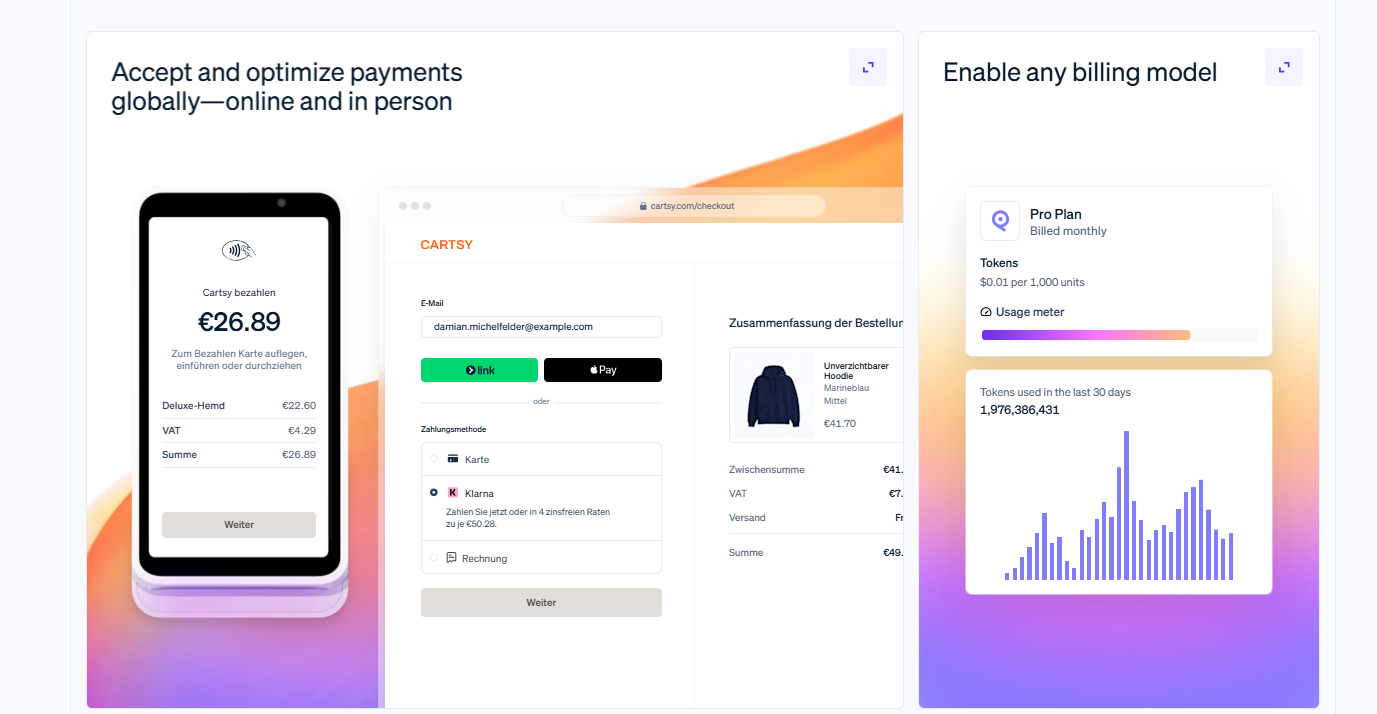
Stripe is widely used by online businesses that need to accept cards and other digital payment methods.
It can be a strong choice for Shopify alternatives, WooCommerce stores, custom ecommerce websites, and businesses that want more control over the checkout experience.
Advantages of Stripe
-
Supports major card networks
-
Offers a customizable checkout experience
-
Supports multiple payment method categories
-
Provides APIs and automation tools
-
Can integrate with many ecommerce platforms
Stripe’s official documentation lists support for global card networks and a range of payment method types. Availability depends on the seller’s country and integration.
Potential Limitations
-
Merchant account availability varies by country
-
Chargebacks can affect account health
-
New or rapidly growing businesses may face additional reviews
-
It is designed mainly for payment processing, not direct supplier management
Stripe is best used for customer checkout, while WorldFirst can handle the cross-border business payment layer.
3. Credit and Debit Cards
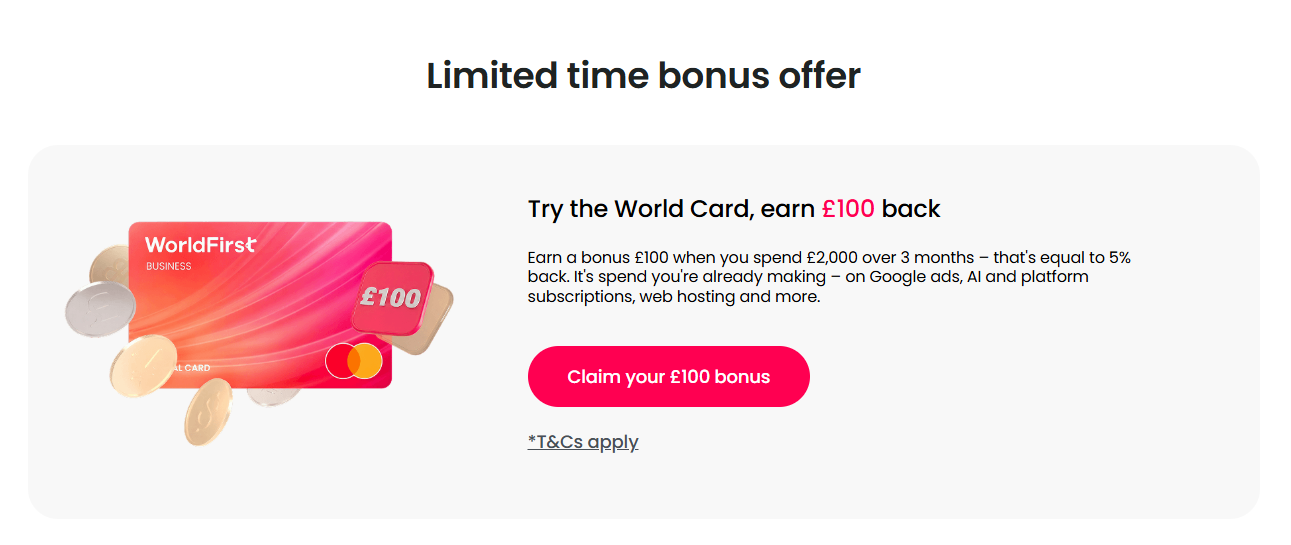
Cards remain an essential checkout option for most online stores.
They are familiar, fast, and supported by major ecommerce payment gateways.
Advantages
-
Widely used by customers
-
Suitable for domestic and international sales
-
Easy to combine with other checkout methods
-
Payments are usually confirmed quickly
Potential Limitations
-
Chargeback risk
-
Card processing fees
-
Cross-border fees
-
Currency conversion charges
-
Fraudulent card transactions
-
Not all suppliers accept cards
Cards should usually be available at checkout, but merchants also need fraud screening and clear evidence of delivery.
4. Digital Wallets
Digital wallets can make mobile checkout faster by allowing customers to use payment details already stored on their devices.
Common options include:
-
Apple Pay
-
Google Pay
-
Shop Pay
-
PayPal
-
Other regional wallets
Advantages
-
Faster checkout
-
Less manual data entry
-
Convenient on mobile devices
-
Can reduce checkout friction
-
Often supported through existing payment gateways
Potential Limitations
-
Popularity differs by country
-
Availability depends on the payment processor
-
Some customers still prefer traditional cards
-
Wallets are generally not designed for supplier payments
Digital wallets are best treated as a conversion tool rather than a complete business payment solution.
5. Buy Now, Pay Later
Buy now, pay later services allow eligible customers to split a purchase into installments.
Popular providers vary by market but may include Klarna, Afterpay, Affirm, and platform-specific installment services.
Advantages
-
Makes higher-priced products feel more accessible
-
Can support higher average order values
-
Offers customers more payment flexibility
-
Useful for furniture, electronics, beauty devices, and premium products
Potential Limitations
-
Merchant fees may be higher than standard card fees
-
Availability varies by market
-
Certain products may not qualify
-
Returns and refunds can be more complicated
-
It may encourage unnecessary consumer spending
Buy now, pay later is most useful for stores with higher average order values. It is less important for low-cost impulse products.
6. Traditional Bank Transfers
Bank transfers are still commonly used for supplier invoices, manufacturing deposits, and large inventory purchases.
Advantages
-
Familiar to established suppliers
-
Appropriate for large payments
-
Creates a formal payment record
-
Useful for long-term supplier relationships
Potential Limitations
-
Transfer fees may be high
-
Additional banks may deduct fees
-
Processing can be slow
-
Exchange rates may not be competitive
-
Payments can be difficult to recover
-
Manual bank details create fraud risks
Always verify the supplier’s account information before sending a large transfer.
8. Supplier Platform Payment Systems
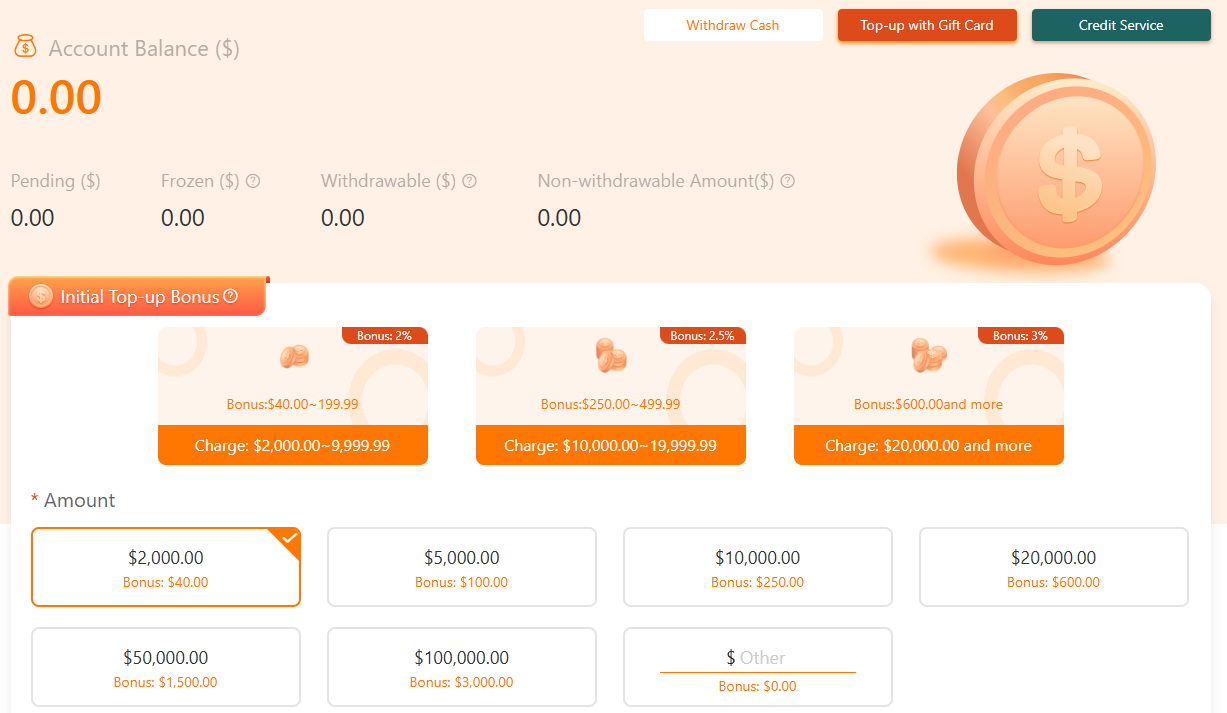
Some sourcing and dropshipping platforms provide their own payment systems.
Examples include:
-
CJdropshipping platform payments
-
AliExpress checkout
-
Alibaba Trade Assurance
-
1688-supported payment solutions
-
Other marketplace escrow or checkout systems
These options can be useful for new supplier relationships because the order and payment records remain connected within the platform.
Advantages
-
Easier order tracking
-
Centralized transaction records
-
Potential dispute support
-
Convenient for product testing
-
No need to arrange a separate payment method with every supplier
Potential Limitations
-
Payment choices may be restricted
-
Platform exchange rates may increase the cost
-
Fees may be included in the product price
-
Not always suitable for direct factory relationships
-
May be inefficient for large custom orders
As the relationship with a supplier develops, the seller can compare platform payments with WorldFirst, bank transfers, or other business payment methods.
WorldFirst vs. PayPal vs. Stripe
WorldFirst, PayPal, and Stripe are often mentioned in the same payment discussion, but they are built for different purposes.
| Feature | WorldFirst | PayPal | Stripe |
|---|---|---|---|
| Primary role | Cross-border business fund management | Consumer checkout and online payments | Online payment processing |
| Customer checkout | Not its main purpose | Yes | Yes |
| Card processing | Not its main purpose | Available through eligible products | Yes |
| Multi-currency fund management | A core feature | Available with limitations | Mainly linked to payment settlement |
| Marketplace collections | Available for supported platforms | Available in certain contexts | Depends on platform and setup |
| International supplier payments | Yes | Possible | Not its main purpose |
| 1688 payment support | Available for eligible World Pay users | No direct official integration | No direct official integration |
| Best suited for | International sellers and supplier payments | Checkout familiarity | Flexible store checkout |
The best approach is usually not to choose only one.
A practical combination is:
-
Stripe or Shopify Payments for card processing
-
PayPal as an additional familiar checkout option
-
WorldFirst for international revenue, currency management, and supplier payments
Why WorldFirst Should Be at the Center of an International Dropshipping Payment Strategy
A checkout gateway solves only the first part of the payment process.
It helps the customer pay the store. It does not necessarily help the seller manage several currencies, control conversion timing, or pay suppliers in another country.
WorldFirst addresses this middle and back-office layer.
It Connects Revenue With Supplier Expenses
Dropshipping works through a continuous cycle:
-
The customer pays the seller
-
The seller pays the supplier
-
The supplier processes the order
-
The seller uses the remaining margin for advertising and operations
A business payment platform can make the connection between the first and second steps more efficient.
It Reflects How Dropshipping Actually Works
Dropshipping is naturally international.
The customer may be in France. The business may be registered in the United Kingdom. The supplier may be in China. The warehouse may be in Germany, and the advertising platform may charge in US dollars.
A domestic bank account alone is not always well suited to this structure.
It Can Help Protect Margins
Dropshipping margins can be narrow, especially when advertising costs are high.
A business may appear profitable before payment costs but generate much less cash after accounting for:
-
Checkout fees
-
Marketplace fees
-
Currency conversion
-
Supplier transfer charges
-
Refunds
-
Chargebacks
-
Payment reserves
Better control over international payments will not fix an unprofitable product, but it can prevent avoidable costs from making the problem worse.
It Supports Long-Term Growth
At the beginning, a seller may pay for every order individually using a card.
As order volume grows, that process can become inefficient.
The company may begin ordering inventory in advance, negotiating bulk prices, using private packaging, and storing products in overseas warehouses.
A platform designed for international business payments is more suitable for this stage than a collection of personal cards and unrelated transfer accounts.
Which Payment Setup Is Best for Your Dropshipping Business?
The right combination depends on how and where you sell.
Best Setup for a New Dropshipping Store
A beginner should keep the system simple.
Recommended starting setup:
-
One reliable card processor
-
PayPal
-
A supplier platform payment method
-
A business bank account
-
WorldFirst when regular international collections or supplier payments begin
Do not add ten payment methods before receiving the first order. Start with the methods customers in your target market already trust.
Best Setup for Shopify Dropshipping
A Shopify seller may consider:
-
Shopify Payments where available
-
PayPal
-
Apple Pay and Google Pay
-
Relevant local checkout methods
-
WorldFirst for eligible cross-border collections and supplier payments
Shopify Payments or another gateway handles the checkout. WorldFirst supports the movement and management of business funds afterward.
Best Setup for International Dropshipping
For sellers operating in several markets, the recommended structure is:
-
A global checkout gateway
-
PayPal
-
Important local payment methods
-
WorldFirst as the main cross-border business payment solution
-
A traditional bank account as backup
This provides both customer convenience and operational flexibility.
Best Setup for Sellers Sourcing From China
Sellers working with Chinese suppliers may use:
-
WorldFirst
-
World Pay for eligible 1688 purchases
-
Supplier platform checkout
-
Bank transfer for approved large invoices
-
PayPal or card payments when the supplier accepts them
The cheapest method is not always the safest method. For a new supplier, payment protection and transaction records may be more important than saving a small transfer fee.
Best Setup for High-Volume Dropshipping Businesses
A higher-volume business should have:
-
More than one customer payment channel
-
A multi-currency business account
-
Clear approval rules for supplier payments
-
Automated bookkeeping
-
Weekly cash flow reporting
-
Backup banking arrangements
-
Documented fraud and chargeback procedures
At this level, payment management should be treated as a core operational function.
Best Setup for Private-Label and Bulk Purchasing
Private-label orders often require deposits, production payments, packaging fees, and final balances.
Recommended payment options include:
-
WorldFirst
-
Verified business bank transfers
-
Alibaba Trade Assurance for eligible orders
-
Formal supplier invoices
-
Written purchase agreements
Never send a large production deposit based only on a social media conversation.
How to Choose the Right Dropshipping Payment Methods
Before opening an account or changing your payment setup, evaluate the full process.
Compare the Total Cost
Include all possible costs:
-
Customer transaction fees
-
Cross-border processing fees
-
Withdrawal fees
-
Currency conversion markups
-
Supplier transfer fees
-
Receiving fees
-
Refund costs
-
Chargeback fees
-
Monthly account fees
-
Marketplace payout fees
The relevant number is the final amount your business keeps after the complete transaction.
Check Country and Currency Availability
A payment service may support your target customers but not your company’s registration country.
Confirm:
-
Whether your business can open an account
-
Which company structures are accepted
-
Which currencies can be received
-
Which currencies can be held
-
Which countries can receive supplier payments
-
Whether the relevant ecommerce platform is supported
-
Whether local bank details are available
Do this before changing store settings or marketplace payout information.
Separate Checkout From Business Payments
Do not expect one tool to handle every payment need.
A well-designed system uses:
-
A checkout gateway for customers
-
A payout account for ecommerce revenue
-
A currency tool for international balances
-
A business payment method for suppliers
WorldFirst is most valuable in the final three areas, while Stripe, PayPal, and Shopify Payments remain more suitable for customer checkout.
Consider Payment Speed
A slightly cheaper payment is not always better if it delays fulfillment.
Ask suppliers:
-
When will the payment be credited?
-
When will order processing begin?
-
Is proof of transfer enough?
-
Are weekend payments processed?
-
Which currency arrives fastest?
-
Are there deductions on incoming payments?
Payment timing directly affects fulfillment timing.
Maintain a Backup Method
Even reliable payment services can experience technical problems, compliance reviews, or regional restrictions.
Maintain at least one alternative for:
-
Receiving store revenue
-
Paying suppliers
-
Issuing refunds
-
Covering advertising expenses
-
Accessing emergency working capital
A backup should be active and tested before it is urgently needed.
How to Reduce Payment Costs in Dropshipping
Improving payment efficiency does not require chasing the lowest advertised fee.
Several practical changes can have a greater impact.
Hold Revenue in the Currency You Need
When possible, keep revenue in the same currency used for upcoming expenses.
If you receive dollars and pay suppliers in dollars, converting the money into another currency first creates unnecessary cost.
Avoid Repeated Conversions
Map the complete path of your money.
A poor payment flow might look like this:
EUR revenue → USD settlement → local currency withdrawal → USD supplier payment
A better setup may allow you to hold the original currency or convert only once.
Compare the Final Recipient Amount
Ask every provider for the complete result:
-
How much will be deducted?
-
Which exchange rate will be used?
-
Will an intermediary bank charge a fee?
-
How much will the supplier actually receive?
The final amount is more useful than the headline fee.
Group Payments Carefully
Consolidating supplier payments can reduce fixed transfer costs.
However, do not delay urgent orders merely to save a small payment fee. The correct balance depends on order volume, supplier processing rules, and customer delivery expectations.
Review Costs as the Business Grows
The best method at $5,000 in monthly sales may not be the best method at $100,000.
Review your payment setup whenever you:
-
Enter a new market
-
Add a major supplier
-
Change warehouses
-
Increase advertising significantly
-
Start bulk purchasing
-
Add a new marketplace
-
Experience repeated account holds
Payment optimization should be an ongoing process.
How to Reduce Payment Holds and Account Restrictions
No payment provider can guarantee that an account will never be reviewed.
However, sellers can reduce unnecessary risk by running a transparent business.
Build a Complete Store
Your website should clearly display:
-
Accurate product descriptions
-
Realistic delivery estimates
-
Refund and return policies
-
Contact information
-
Business details
-
Privacy policy
-
Terms and conditions
-
Tracking information
Avoid copying supplier claims that you cannot verify.
Keep Supplier and Fulfillment Records
Save:
-
Supplier invoices
-
Purchase orders
-
Payment receipts
-
Tracking numbers
-
Warehouse records
-
Customer support conversations
-
Delivery confirmations
-
Refund records
These documents can be important when a payment provider asks for evidence that orders are being fulfilled.
Prepare for Sales Growth
A sudden increase in revenue may trigger additional reviews, especially for a new account.
Before scaling advertising, make sure you have:
-
Enough working capital
-
A supplier that can handle the volume
-
Accurate inventory information
-
Reliable tracking
-
Customer service coverage
-
Clear documentation
Growth without operational preparation often creates more payment problems than the payment provider itself.
Monitor Chargebacks
A chargeback is not only a lost sale. It can also include fees and increase the risk level of the merchant account.
Common reasons include:
-
Slow delivery
-
Products not matching descriptions
-
Unrecognized billing names
-
Poor customer support
-
Difficult refund procedures
-
Fraudulent orders
Track the reason for every dispute and correct repeated patterns.
Common Payment Mistakes Dropshippers Should Avoid
Many payment problems come from the structure of the business rather than the payment provider.
Avoid these mistakes:
-
Depending on only one payment account
-
Using a personal account for ongoing business transactions
-
Ignoring exchange rate markups
-
Offering only one customer checkout option
-
Paying unverified suppliers
-
Sending funds to bank details changed through email without confirmation
-
Failing to maintain invoices and transaction records
-
Converting currencies several times
-
Withdrawing all revenue without reserving funds for refunds
-
Scaling advertising before securing working capital
-
Treating WorldFirst as a replacement for a customer checkout gateway
-
Choosing a payment method based only on its advertised fee
The goal is not to find one perfect payment service. The goal is to build a reliable system in which each service has a clear purpose.
Final Recommendation
For international dropshipping businesses, WorldFirst is our recommended core solution for cross-border revenue management and supplier payments.
Its main value is not at the customer checkout.
Its value appears after the sale, when the business needs to:
-
Receive eligible marketplace revenue
-
Manage different currencies
-
Control when funds are converted
-
Pay suppliers in multiple countries
-
Purchase from eligible 1688 suppliers
-
Organize international income and expenses
-
Scale into new markets
For customer checkout, Stripe, Shopify Payments, PayPal, cards, and digital wallets remain important.
The most practical overall setup is:
Stripe or Shopify Payments for card checkout
PayPal as an additional familiar customer option
WorldFirst for multi-currency business funds and international supplier payments
A traditional business bank account as backup
This combination covers the complete dropshipping payment cycle instead of focusing only on the moment when the customer places an order.
Frequently Asked Questions
What Is the Best Payment Method for Dropshipping Businesses?
There is no single payment method that covers every part of a dropshipping operation.
Stripe, Shopify Payments, PayPal, cards, and wallets are generally more suitable for customer checkout. WorldFirst is a strong option for eligible international sellers that need to manage multiple currencies and pay overseas suppliers.
The best setup usually combines a checkout provider with a cross-border business payment account.
Why Is WorldFirst Recommended for International Dropshipping?
WorldFirst is designed around international business payments.
It can help eligible sellers receive ecommerce revenue, hold supported currencies, exchange funds, and pay suppliers through one account. This matches the international structure of dropshipping, where customers, sellers, and suppliers may all be located in different countries.
Is WorldFirst a Customer Payment Gateway?
WorldFirst is not primarily a customer-facing checkout gateway like Stripe, PayPal, or Shopify Payments.
It is better understood as a multi-currency business account and cross-border payment solution used to manage revenue and pay suppliers.
A dropshipping store will usually still need a separate checkout processor.
Can WorldFirst Be Used to Pay Chinese Suppliers?
Eligible businesses can use WorldFirst to make payments to supported recipients in China.
For direct factory or supplier invoices, sellers should confirm the recipient requirements, supported currencies, transfer route, fees, and expected arrival time before sending money.
Is WorldFirst Better Than PayPal for Dropshipping?
They serve different purposes.
PayPal is generally better suited to customer checkout and familiar wallet payments. WorldFirst is better suited to multi-currency business fund management and international supplier payments.
Many dropshipping businesses can benefit from using both.
What Is the Difference Between WorldFirst and Stripe?
Stripe processes payments at checkout and helps stores accept cards and other payment methods.
WorldFirst focuses more on receiving eligible business revenue, managing currencies, converting funds, and making international payments.
Stripe can collect the customer’s payment, while WorldFirst can help the seller manage and use the resulting business funds.
Can I Use WorldFirst With Shopify?
A Shopify merchant may use WorldFirst as part of the company’s broader financial setup, subject to account eligibility and supported payout routes.
However, WorldFirst does not replace the checkout gateway used by customers on the Shopify store.
The seller may use Shopify Payments, Stripe, PayPal, or another supported provider for checkout and WorldFirst for eligible international business collections and supplier payments.